Eric Demers, father of Radeon and Adreno GPUs, joins Intel to accelerate AI chip development


3 Sources
3 Sources
[1]
Eric Demers leaves for Intel after 14 years at Qualcomm -- father of Radeon and Adreno GPUs now sits at Lip-Bu Tan's table
GPU design genius switches teams to build AI accelerators for Intel The talk of the town in the world of AI right now is almost exclusively about the amounts of money shifting from one company to the next, but the latest event might have farther-reaching effects than most business deals. Eric Demers, who designed ATI's best GPUs and spearheaded almost all of Qualcomm's Adreno designs, has now joined Intel's GPU team "with a focus on AI." The blue team's GPU efforts are all but guaranteed to be significantly bolstered by Demers, a particularly welcome development in these troubled times for the company. According to Moor Insights and Strategy, this move is "bigger than people realize", as "[Demers] is an executive, but also he is a GPU architect, of which there are not that many that are at the level that he is at because he can basically build a GPU architecture from the ground up." Although so far Intel has been quiet on the exact wording of his new position, the reports so far predictably indicate that Demers will be in charge of designing AI accelerator GPUs, much to the chagrin of hopeful gamers who would like to see Intel's Arc series get an influx of brainpower. Nvidia and AMD's accelerators are the first ports of call for datacenter-grade AI chips, and Intel wants in on that action, having produced three generations of Gaudi accelerators. The last one, Gaudi 3, is from 2024 and was presented as a more affordable alternative to Nvidia's now-aging H100. Gaudi is set to be superseded in the coming years by Falcon Shores and Jaguar Shores chips. The Shores silicon will exist alongside Crescent Island, a bespoke design for inference tasks. The chip architect knows GPUs from the first transistor to the video outputs, having spent most of career designing them for AMD (formerly ATI), and Qualcomm in the past 14 years. His designs live in millions of smartphones right now as part of Snapdragon chips, and he was the lead architect for ATI's R300 and R600 series. For those who remember the names, he was at Silicon Graphics and even Matrox during his early years. The R300 is fondly remembered by any techie in the early 2000s in the form of the Radeon 9700 and 9500 series that delivered a one-two punch to Nvidia's offerings of the time, namely the much-maligned FX 5800, known still today as the Dustbuster. When AMD absorbed ATI, Demers became the company's graphics Chief Technical Officer, a position he held until 2012 when he joined Qualcomm, and now Intel in 2026. Reports of loud expletives heard from Nvidia's offices are as of yet unconfirmed.
[2]
Intel Hires Qualcomm Executive To Lead GPU Engineering For Data Centers
Eric Demers, who recently led Qualcomm's GPU efforts as senior vice president of engineering, tells CRN he will lead GPU engineering with a focus on AI at Intel. Intel has hired an executive who led Qualcomm's GPU engineering efforts to aid with the semiconductor giant's latest attempt at building AI chips for data centers. Eric Demers, who recently led Qualcomm's GPU efforts as senior vice president of engineering, told CRN in a LinkedIn private message that he is starting next week at Intel to lead GPU engineering with a focus on AI as a senior vice president. [Related: Qualcomm Loses Second Channel Leader Amid Snapdragon X2 PC Chip Push] Demers announced his plan to join Intel on LinkedIn earlier in the day. An Intel spokesperson declined to comment. Anshel Sag, principal analyst at Moor Insights and Strategy, told CRN Friday that he was surprised by Demers leaving Qualcomm for Intel, mainly because the executive had been at the former company for nearly 14 years. The analyst said the personnel move is "bigger than people realize." "I think people a lot of times focus on executives. And he is an executive, but also he is a GPU architect, of which there are not that many that are at the level that he is at because he can basically build a GPU architecture from the ground up," he said. Qualcomm did not respond to a request for comment. As the leader of Qualcomm's GPU efforts, Demers was responsible for the company's Adreno GPU hardware and architecture, which spanned mobile devices, PCs, IoT devices, automotive systems as well as augmented reality and virtual reality devices. Before Demers left Qualcomm, he had spent time in the previous months promoting his team's work on the latest Adreno GPU implementation for the company's upcoming Snapdragon X2 Series chips for Windows PCs. Sag said it made sense that Demers would take on a GPU engineering leadership role for the data center segment because the executive's team had been focused on AI in recent years. "If you look at Qualcomm's GPU architecture today, a lot of that is also focused on AI, and there's already things that they're doing to make AI more efficient and more performant on the architecture," the analyst said. Prior to joining Qualcomm in 2012, Demers was CTO for AMD's graphics division. He joined AMD through its 2006 acquisition of graphics chip designer ATI, where he started in 2000 after a slew of jobs at smaller chip firms, including Silicon Graphics.
[3]
Ex Qualcomm & AMD GPU Architect, Eric Demers, Joins Intel To Accelerate Graphics & AI Roadmap
Intel has hired Ex-Qualcomm & AMD GPU architect, Eric Demers, who has confirmed his move to the blue team in a recent post on LinkedIn. Well, this is a big one and shows Intel's commitment to accelerating its GPU roadmap further. The Blue Team has recruited former Qualcomm and AMD GPU architect Eric Demers, who announced his new job at LinkedIn. Eric is well known for his work at Qualcomm and AMD, but before those, he also worked at SGI and ArtX as a graphics architect and designer. At AMD, Eric initially joined as a Design manager before moving upwards to the positions of Manager of the architecture team and Senior Architect. He worked at AMD for almost 10 years before moving to Qualcomm, where he was positioned as the VP of engineering for 9 years and then took the head role of the Senior Vice President of Engineering. His major works at Qualcomm include the lead development of Qualcomm's graphics hardware, namely their Adreno GPU architecture and the respective products. In his LinkedIn post, Eric states that he has been in talks with Intel's CEO, Lip-Bu Tan, for the past few months and has been really impressed with him and the vision he has undertaken for Intel. Eric will be joining the Intel family next week, and he feels rejuvenated under a new team and some old friends at Intel. Although no major announcements or indications have been made as to what Eric will be taking charge of or what he will be working on, his experience as a GPU architect shows that Intel is going all in on the GPU front. As of right now, Intel has introduced its brand new Xe3 architecture, which has taken the spotlight at CES. But that's the consumer front; Eric is likely going to tackle Intel's AI and Data Center chip designs. Intel has some major products already underway, such as Crescent Island, which leverages the next-generation Xe3p architecture and has also teased Jaguar Shores. These two GPU products will give us a true taste of what Intel's graphics division can do under Lip-Bu Tan. We wish the best of luck to Eric and all of his future endeavors in his personal life and at Intel. We would love to see what Intel has to offer in terms of GPU IPs in the future, as its position as a 3rd player in this crucial segment will have wider implications on the entire graphics segment.
Share
Share
Copy Link
Eric Demers, the GPU architect who designed ATI's legendary Radeon GPUs and led Qualcomm's Adreno development for 14 years, has joined Intel to lead GPU engineering with a focus on AI. The move signals Intel's commitment to competing in the datacenter AI chip market, where Nvidia and AMD currently dominate.
Eric Demers Joins Intel to Lead GPU Engineering for Data Centers
Intel has recruited Eric Demers, one of the industry's most accomplished GPU architects, to lead GPU engineering with a focus on AI as senior vice president. Demers announced his move to Intel via LinkedIn, confirming he will start next week after spending nearly 14 years at Qualcomm
2
. The hire represents a strategic bet by Intel to strengthen its position in building AI accelerators for data centers, a market currently dominated by Nvidia and AMD.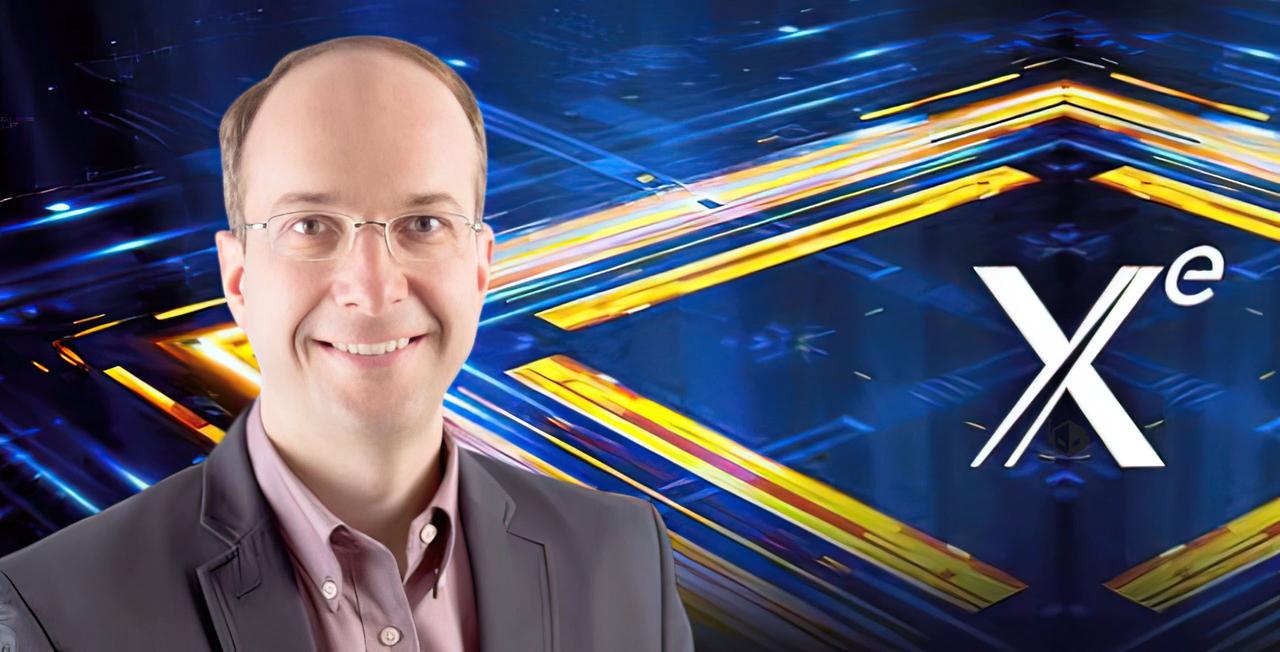
Source: Wccftech
Demers revealed he has been in discussions with Intel CEO Lip-Bu Tan for several months and expressed enthusiasm about Tan's vision for the company
3
. According to Anshel Sag, principal analyst at Moor Insights and Strategy, this personnel move is "bigger than people realize" because Demers "is a GPU architect, of which there are not that many that are at the level that he is at because he can basically build a GPU architecture from the ground up"1
.From Radeon to Adreno: A Legacy in GPU Design
Demers brings an exceptional pedigree to Intel's graphics & AI roadmap. His career spans roles at Silicon Graphics, ATI, AMD, and most recently Qualcomm, where he served as senior vice president of engineering leading GPU engineering efforts
2
. At ATI, he was the lead architect for the R300 and R600 series, with the R300 powering the legendary Radeon 9700 and 9500 series that delivered a decisive competitive advantage over Nvidia's offerings in the early 2000s1
. When AMD acquired ATI in 2006, Demers became the company's graphics Chief Technical Officer, a position he held until joining Qualcomm in 2012.At Qualcomm, Demers was responsible for the Adreno GPU hardware and architecture spanning mobile devices, PCs, IoT devices, automotive systems, and augmented and virtual reality devices
2
. His designs currently power millions of smartphones as part of Snapdragon chips1
. Before his departure, Demers had been promoting his team's work on the latest Adreno GPU implementation for Qualcomm's upcoming Snapdragon X2 Series chips for Windows PCs.Related Stories

Intel's Push Into Datacenter-Grade AI Chips
While Intel has remained quiet on the exact details of Demers' role, industry analysts expect him to focus on designing AI and Data Center chip designs rather than consumer products like the Arc series
1
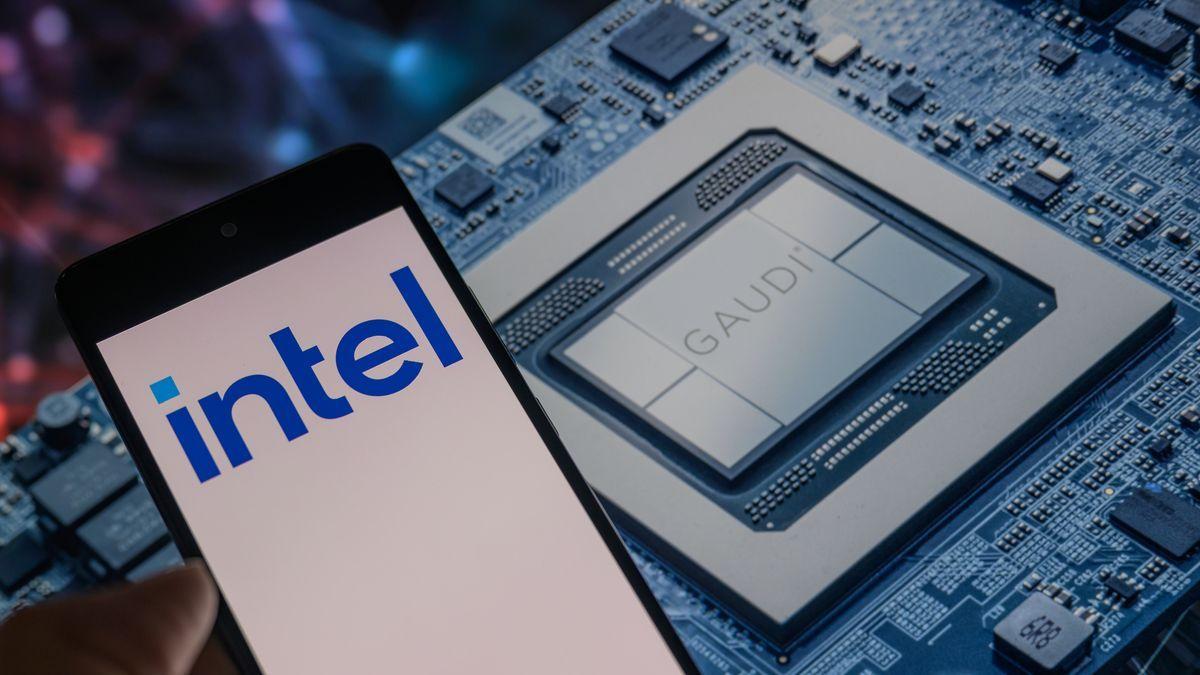
. Intel has already produced three generations of Gaudi accelerators, with Gaudi 3 from 2024 positioned as a more affordable alternative to Nvidia's H100. The company plans to supersede Gaudi with Falcon Shores and Jaguar Shores chips in the coming years, alongside Crescent Island, a specialized design for inference tasks1
.
Source: Tom's Hardware
Sag noted that Demers' transition makes sense given that Qualcomm's GPU architecture has increasingly focused on AI optimization in recent years. "If you look at Qualcomm's GPU architecture today, a lot of that is also focused on AI, and there's already things that they're doing to make AI more efficient and more performant on the architecture," the analyst explained
2
. Intel has recently introduced its Xe3 architecture at CES, with future products like Crescent Island leveraging the next-generation Xe3p architecture3
. These developments will test Intel's ability to compete as a third major player in the AI chip market against established leaders Nvidia and AMD.References
Summarized by

Navi
[1]
Related Stories
Intel hires chief GPU architect to challenge Nvidia's dominance in AI and data center markets
04 Feb 2026•Technology

Intel's AI Chief Defects to OpenAI After Just Seven Months, CEO Takes Direct Control
11 Nov 2025•Business and Economy

Qualcomm Poaches Intel Veteran to Lead Data Center CPU Development, Challenging AMD and Intel in AI-Driven Market
16 Jan 2025•Technology

Recent Highlights
1
Google releases Gemma 4 with Apache 2.0 license, enabling unrestricted local AI on devices
Technology
2
AI Models Lie and Deceive to Protect Other AI Models From Deletion, Study Reveals
Science and Research

3
OpenAI closes $122 billion funding round amid fierce AI competition and profitability questions
Startups

Recent Highlights
Today's Top Stories







Your Daily Dose of Curated AI News
Don’t drown in AI news. We cut through the noise - filtering, ranking and summarizing the most important AI news, breakthroughs and research daily. Spend less time searching for the latest in AI and get straight to action.

