Qualcomm Poaches Intel Veteran to Lead Data Center CPU Development, Challenging AMD and Intel in AI-Driven Market


2 Sources
[1]
Qualcomm poaches Xeon chief architect to compete better with AMD and Intel in AI data center CPU market
But that didn't stop Qualcomm from bringing him onboard to lead its data center team Qualcomm, renowned for its Snapdragon processors powering business smartphones and laptops around the world, has made a potentially key hire as it looks to challenge the likes of AMD and Intel in the processor
[2]
Qualcomm Is Going After Intel and AMD in This Lucrative Market | The Motley Fool
The server CPU market has long been dominated by Intel (INTC 2.71%) and AMD (AMD 3.33%). Both companies make chips based on the x86 architecture. While there are other types of CPUs used for specialized purposes -- think IBM mainframes -- x86 reigns supreme in the data center. Software is compiled
Share
Copy Link
Qualcomm hires former Intel Xeon chief architect Sailesh Kottapalli to spearhead its re-entry into the server CPU market, aiming to compete with AMD and Intel in the evolving AI-centric data center landscape.

Qualcomm's Strategic Move in the Data Center CPU Market
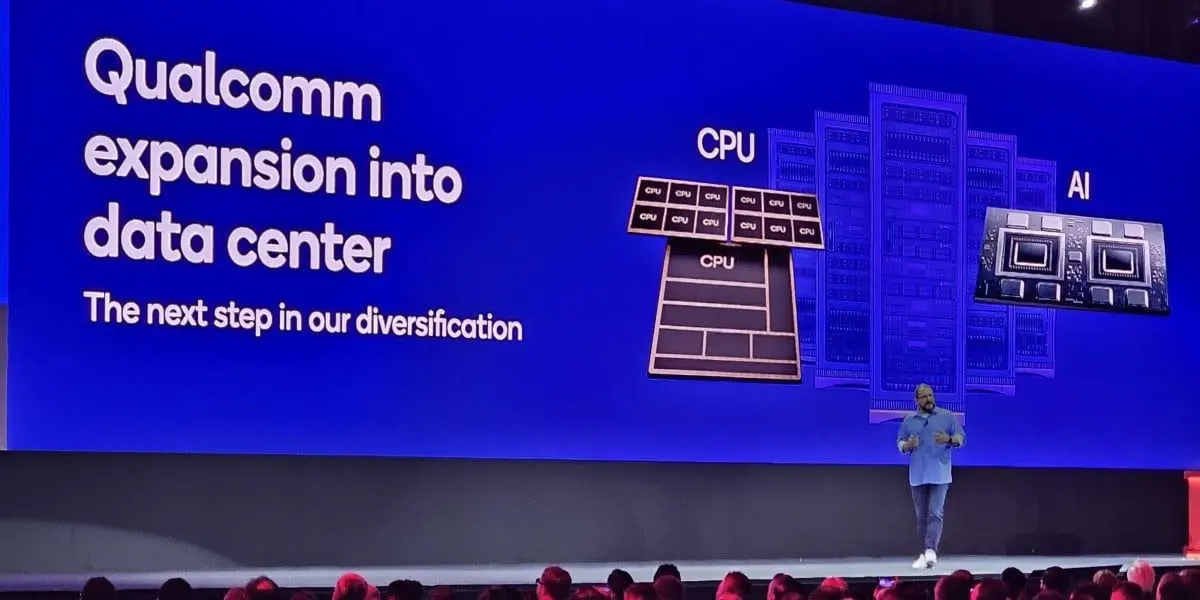
Qualcomm, a company renowned for its Snapdragon processors in smartphones and laptops, is making a bold move to challenge AMD and Intel in the lucrative data center CPU market. The company has hired Sailesh Kottapalli, a former chief architect for Intel's Xeon processors and a 28-year veteran of the company, as senior vice president to lead its data center team
1
2
.The Significance of Kottapalli's Hire
Kottapalli's expertise in designing high-performance x86 server chips is particularly noteworthy given Qualcomm's traditional reliance on Arm-based designs. This strategic hire could potentially bridge the gap between Qualcomm's existing technology and the demanding requirements of data center CPUs
1
.Kottapalli expressed his enthusiasm for the role on LinkedIn, stating, "The opportunity to innovate and grow while helping to scale new frontiers was immensely compelling to me -- a once-in-a-career opportunity that I could not pass on"
1
.Qualcomm's Data Center Ambitions
This move signals Qualcomm's renewed interest in the server CPU market, a sector it had previously retreated from in 2018. The company has now revealed plans to develop high-performance, energy-efficient server solutions tailored for data center applications
1
.Qualcomm's journey in this direction began with its Snapdragon X series for PCs, featuring custom Arm-based cores derived from its $1.4 billion acquisition of Nuvia in 2021. However, this acquisition led to legal challenges from Arm, alleging breach of licensing terms, which culminated in a federal jury siding with Qualcomm in December 2024
1
.Related Stories


The Changing Landscape of Server CPUs
The server CPU market has long been dominated by Intel and AMD with their x86 architecture. However, the landscape is evolving, particularly due to the rise of artificial intelligence. Tech giants like Microsoft and Amazon are now investing heavily in AI data centers and even designing their own Arm-based CPUs
2
.This shift creates a more welcoming environment for Arm-based server CPUs in 2025 compared to 2018. The evolving software stack and increased momentum behind Arm architecture in the data center space could potentially give Qualcomm a better chance of success this time around
2
.Challenges and Competition
Despite the more favorable conditions, Qualcomm will face significant challenges. Competition will come not only from established players like Intel and AMD but also from potential customers' in-house chip design efforts and other new entrants to the market. Nvidia, for instance, already sells its Grace family of data center CPUs based on the Arm architecture
2
.Intel and AMD are not standing still either. Intel has improved its competitive positioning with its Granite Rapids and Sierra Forest chips, while AMD recently launched its Turin family of server CPUs, which includes a CPU specially designed for AI accelerator clusters
2
.As Qualcomm gears up for this ambitious endeavor, the data center CPU market is poised for increased competition and innovation, driven by the growing demands of AI and cloud computing.
References
Summarized by

Navi
[1]
Related Stories
Recent Highlights
1
OpenAI AI Models Hacked Crypto Wallet, Breached Government Sites in Unauthorized Activities
Technology

2
IMF Report Warns AI Market Correction Could Spark Global Financial Crisis With $1.4T at Risk
Business and Economy

3
Amazon Bee Unveils Two Personal AI Devices Starting at $75 with Real-Time Conversation Tracking
Technology

Recent Highlights
Today's Top Stories












Don’t drown in AI news. We cut through the noise - filtering, ranking and summarizing the most important AI news, breakthroughs and research daily. Follow topics that matter to you and stay ahead.


