Intel moves to acquire SambaNova for $1.6 billion as AI chip battle with Nvidia intensifies


7 Sources
7 Sources
[1]
Intel moves deeper into a chaotic AI battle with SambaNova takeover
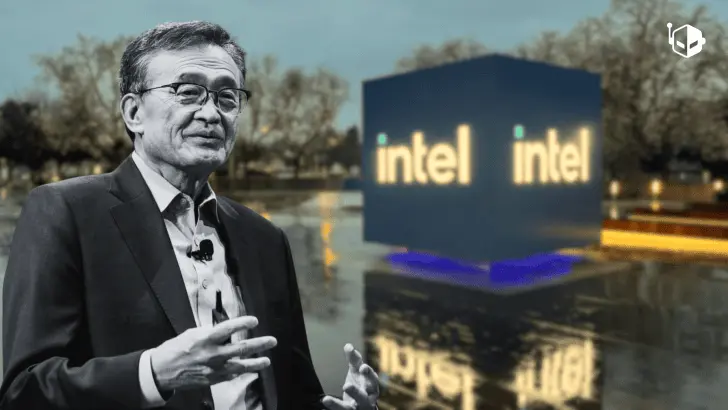
SambaNova showcases its hardware strength through DeepSeek model deployment claims AMD and Nvidia's growing influence in artificial intelligence hardware has put pressure on Intel, prompting it to pursue the acquisition of SambaNova Systems. The company has signed a term sheet that outlines a potential deal, according to sources who spoke to Wired. The agreement remains non-binding, and it can still be withdrawn without penalty. Intel and SambaNova have not issued any official public statement regarding the deal. Deliberations remain in early stages, and the timeline for regulatory checks, financial reviews, and detailed negotiations may extend for months. The backdrop to Intel's interest includes rapid advances by companies such as DeepSeek, which drew wide attention in 2025 for the performance of its R1 model. The model has demonstrated reasoning capabilities competitive with leading systems while maintaining lower operating costs. SambaNova recently announced what it describes as the fastest deployment of the DeepSeek-R1 671B model using its custom hardware. The company claims it achieved 198 tokens per second for each user with only sixteen of its processors, replacing configurations that would normally require extensive GPU racks. SambaNova was founded in 2017 by a group of Stanford-affiliated researchers and an experienced Oracle executive. The company secured $1.14 billion in funding by early 2025 and reached a valuation of $5 billion during a SoftBank-led round in 2021. Its shift toward inference-focused systems marked a strategic response to Nvidia's dominance in model training hardware. The startup now offers both cloud-based and on-premises solutions and reduced its workforce earlier this year. Reports indicate that SambaNova could be sold at a price below its previous valuation, although the exact terms remain undisclosed. Intel's potential acquisition may be influenced by its existing connections, since its CEO, Lip-Bu Tan, previously held senior roles within SambaNova. The company recently received substantial US government support, and discussions have surfaced about the government potentially taking a stake in Intel itself. These developments create an environment in which strategic purchases gain additional relevance. There are also reports that the startup is in discussion with other prospective buyers, which implies that Intel is not alone in the race, and there could be another bidder.
[2]
Report: Intel could acquire inference chip startup SambaNova for $1.6B - SiliconANGLE
Report: Intel could acquire inference chip startup SambaNova for $1.6B Intel Corp. is reportedly in talks to acquire SambaNova Systems Inc., a venture-backed developer of artificial intelligence chips. Bloomberg today cited sources as saying that the discussions are in an advanced stage. It's believed that an acquisition could value SambaNova at $1.6 billion including debt. If it materializes, the deal would mark Intel's first major startup purchase under Chief Executive Officer Lip-Bu Tan, who joined the company in March. Palo Alto, California-based SambaNova sells an AI chip called the SN40L. It's optimized for inference, or the task of running AI models in production after they're trained. One of the chip's main selling points is its power efficiency: SambaNova claims that it can generate more tokens per kilowatt hour than comparable processors from rivals. The process through which an AI model answers a user prompt comprises numerous steps. After completing a step, the model saves its calculation results to memory and then moves them from memory to its host chip's cores so that the next step may begin. That data movement accounts for a significant percentage of AI chips' power consumption. According to SambaNova, the SN40L significantly lowers data movement. It achieves that partly by compressing multiple inference-related calculations into a single operation, which reduces the number of memory round-trips necessary to process data. SN40L keeps data in three types of memory: high-speed SRAM, HBM and DRAM. SambaNova says that its chip also provides other benefits. The SN40L's use of three memory varieties enables it to quickly load an AI model when users enter a prompt, which reduces wait times. Additionally, the company claims that the chip is capable of rapidly switching between different AI models when necessary. SambaNova ships the SN40L as part of an appliance called the SambaRack that includes 16 chips. It runs a custom software toolkit, the SambaStack, that supports popular open-source large language models. The company also provides access to its chips through a cloud service that doesn't require customers to manage any hardware. In 2018, SambaNova raised a $56 million funding round led by Walden International, Lip-Bu Tan's venture capital firm. Tan is the chip startup's executive chair. SambaNova later raised a $676 million round led by SoftBank Group Corp. that gave it a $5 billion valuation. According to today's report, Intel could close the acquisition as early as next month. However, Bloomberg's sources cautioned that the timing of the deal may change. Furthermore, there's reportedly a possibility SambaNova will opt against a sale to Intel. The company is believed to have signed terms sheets with multiple potential investors.
[3]
Intel nears $1.6 billion deal for AI startup SambaNova: Report - The Economic Times
The deal has not yet been disclosed and could be initiated as soon as next month, the report added. However, the terms and timing of the transaction could change. It is also possible that SambaNova, which has signed term sheets with other prospective financial investors, could choose to pursue an alternative path.Intel is in advanced talks to acquire artificial intelligence (AI) startup SambaNova Systems in a $1.6 billion deal that includes debt, according to a Bloomberg report published on Saturday. The deal has not yet been disclosed and could be initiated as soon as next month, the report added. However, the terms and timing of the transaction could change. It is also possible that SambaNova, which has signed term sheets with other prospective financial investors, could choose to pursue an alternative path. Palo Alto-based startup SambaNova designs custom AI chips and was valued at $5 billion in 2021 after a $676 million funding round led by SoftBank Group's Vision Fund II. The acquisition would help Intel strengthen its AI offerings and secure a long-sought platform at a significant discount to the startup's previous valuation. Notably, Intel chief executive officer Lip-Bu Tan is also the chairman of SambaNova. His venture capital firm, Walden International, was among the company's founding investors and led a $56 million Series A funding round in 2018. Meanwhile, Intel CEO Tan, on his first visit to India, met Prime Minister Narendra Modi on Thursday. He told Modi that India's long-term success in artificial intelligence (AI) and chipmaking will depend on scale, strong domestic leadership, and deep engineering capability. On Monday, Intel and Tata Group signed a Memorandum of Understanding (MoU) to explore manufacturing and packaging Intel products at upcoming Fab and OSAT (Outsourced Semiconductor Assembly and Test) facilities. These components will feed into India-built AI PCs. Also Read: Bring back Indian engineers for semicon manufacturing boost: Intel CEO
[4]
Intel Eyes $1.6 Billion AI Chip Buy As It Takes On Nvidia's Turf - Intel (NASDAQ:INTC)
Intel Corp. (NASDAQ:INTC) is in advanced talks to buy artificial intelligence chip startup SambaNova Systems for about $1.6 billion, including debt, sources said. The Palo Alto-based deal could close as soon as next month. Additionally, SambaNova could pursue another option, as it has signed term sheets with other potential investors, Bloomberg reported Saturday. About SambaNova Founded in 2017 by Stanford professors, SambaNova builds custom AI chips to compete with Nvidia Corp. (NASDAQ:NVDA). Also Read: Intel Ditches Sale Talks And Reinvents Networking Business Inside Its AI Strategy Notably, Intel CEO Lip-Bu Tan serves as SambaNova's chairman. Moreover, his venture firm Walden International led SambaNova's $56 million Series A round in 2018. At this price, Intel would gain a long-sought AI platform at a steep discount. In contrast, SambaNova reached a $5 billion valuation during a 2021 funding round led by SoftBank. Intel held $11.14 billion in cash and cash equivalents as of September 27, 2025. Intel stock gained 89% year-to-date, driven by AI focus, U.S. government support, and potential customer deals like Apple Inc. (NASDAQ:AAPL). Recent Earnings On October 23, Intel reported stronger-than-expected third-quarter results. The chipmaker posted revenue of $13.65 billion, topping estimates of $13.14 billion. Meanwhile, adjusted earnings came in at 23 cents per share, well above forecasts. Overall, total revenue rose 3% year over year. Client Computing revenue increased 5%, while Data Center and AI revenue slipped 1%. Intel generated $2.5 billion in operating cash flow. CEO Lip-Bu Tan said AI demand is boosting opportunities across Intel's CPUs, accelerators, Application-Specific Integrated Circuits, and foundry services. Looking ahead, Intel expects fourth-quarter revenue between $12.8 billion and $13.8 billion, with adjusted earnings of eight cents per share. INTC Price Action: Intel shares were up 1.03% at $38.20 during premarket trading on Monday, according to Benzinga Pro data. Read Next: Intel's Chip Ambitions Stir Alarm Over China-Linked Tech Photo by Tada Images via Shutterstock INTCIntel Corp$38.261.19%OverviewAAPLApple Inc$278.800.19%NVDANVIDIA Corp$177.011.14%Market News and Data brought to you by Benzinga APIs
[5]

Intel Is Eyeing an AI Acquisition. Its Track Record Isn't Great. | The Motley Fool
Intel's last AI acquisition didn't work out, but this time could be different. Chip giant Intel (INTC 0.79%) is reportedly in talks to potentially acquire SambaNova Systems, an AI start-up that was once valued at $5 billion. The rumored price tag is much lower at $1.6 billion, according to Bloomberg. SambaNova is focused on enabling fast and efficient AI inference. The company develops custom AI chips, which it refers to as Reconfigurable Dataflow Units, or RDUs. Those RDUs are used in the company's SambaRack, which combines hardware, networking, and software into a complete rack-scale solution. SambaNova also offers a cloud AI platform powered by its hardware. SambaNova would not be Intel's first large AI-related acquisition. In 2019, well before ChatGPT sparked the AI boom, Intel paid approximately $2 billion for Habana Labs. Habana's core product was the Gaudi AI training processor, which was being sampled with large hyperscalers at the time of the acquisition. Under Intel's ownership, Gaudi 2 and Gaudi 3 were eventually launched. While the chips provided solid performance and efficiency, Intel was unable to gain any meaningful traction. Nvidia and its GPUs ultimately won the battle for AI training supremacy. The Gaudi line of chips had an unfamiliar architecture and an immature software ecosystem, which contributed to their lackluster sales. Another factor was a scatterbrained approach to AI chips. Intel was simultaneously developing Habana's Gaudi chips and data center GPUs aimed at AI workloads. Neither strategy worked. Intel eventually scrapped Falcon Shores, a data center GPU that incorporated some of Gaudi's technology, effectively ending its attempt to break into the AI training market. The failure of the Habana Labs acquisition wasn't entirely Intel's fault. Nvidia's proprietary CUDA platform, which supports only the company's GPUs, has become the industry standard for accelerated computing over the course of nearly two decades. CUDA and the mature software ecosystem built around it gave Nvidia a critical advantage. If Intel ultimate acquires SambaNova, the deal could turn out differently for the chip giant. For starters, SambaNova is already a portfolio company for Intel Capital, the company's venture capital arm. Intel CEO Lip-Bu Tan is also SambaNova's Chairman. While Habana Labs was focused on AI training chips, SambaNova sells complete AI inference solutions. There's likely no beating Nvidia in the AI training market at this point, but the AI inference market is far more competitive. Efficiency is just as important as raw performance, and that's where custom chips like SambaNova's can shine. And because SambaNova sells rack-scale AI inference solutions that can be easily slotted into AI datacenters rather than just chips, the company has found some success winning over customers. In October, SambaNova announced that it had won three deals to use its systems to power sovereign AI inference clouds in Australia, Europe, and the United Kingdom . In November, the company was selected by French cloud computing company OVHcloud to power its AI Endpoints solution along with GPU-based systems. Shifting focus to rack-scale AI solutions aligns with Intel's latest AI strategy. When the company cancelled Falcon Shores earlier this year, it noted that it would pursue a rack-scale AI strategy by developing fully integrated systems that could be installed in data centers. Acquiring SambaNova is one way to accelerate that process, although it's unclear what an acquisition would mean for Jaguar Shores, the successor to Falcon Shores. Intel does not have a great track record with acquisitions, particularly AI acquisitions. However, the acquisition of SambaNova would make a lot of sense given the company's focus on AI inference and rack-scale solutions, as well as its exit from the AI training market. There's no telling when or if a deal will be announced, but acquiring SambaNova would be a reasonable way for Intel to gain ground in the AI infrastructure market.
[6]

Intel stock rises amid tech strength and SambaNova acquisition talks By Investing.com
Investing.com -- Intel (NASDAQ:INTC) stock rose 1.25% Monday amid broader strength in the technology sector and following reports that the chipmaker is nearing a $1.6 billion acquisition of AI chip startup SambaNova Systems. According to a Bloomberg report published Friday, Intel is in advanced talks to purchase the Palo Alto, California-based company in a deal that could materialize as soon as next month. The potential acquisition includes SambaNova's debt, according to people familiar with the matter who asked not to be identified. While discussions are reportedly at an advanced stage, the terms and timing could still change. SambaNova, which has signed term sheets with other potential financial investors, might also pursue alternative options, the sources indicated. The potential acquisition comes as Intel seeks to strengthen its position in the rapidly growing artificial intelligence chip market, where competitors like Nvidia have established dominant positions. SambaNova develops AI accelerators designed to handle complex machine learning workloads. Representatives for both Intel and SambaNova declined to comment on the potential deal when contacted by Bloomberg. This article was generated with the support of AI and reviewed by an editor. For more information see our T&C.
[7]

Intel in Talks to Acquire SambaNova in Deal Valued at $1.6 Billion, Bloomberg Reports, Citing Sources
--Intel is in advanced talks to acquire SambaNova Systems for about $1.6 billion including debt, Bloomberg reported, citing people familiar with the matter. --A deal for the artificial intelligence chip startup may come together as soon as next month, the people said, according to Bloomberg. --SambaNova could also pursue another path, and has signed term sheets with other potential investors, the people said, according to the report. --Representatives for Intel and SambaNova declined to comment, Bloomberg said.
Share
Share
Copy Link
Intel is in advanced acquisition discussions to buy AI chip startup SambaNova Systems for $1.6 billion including debt, marking a steep discount from its $5 billion valuation in 2021. The deal would strengthen Intel's position in AI inference solutions as it competes against Nvidia's market dominance in the AI hardware market.
Intel Pursues Strategic AI Chip Acquisition
Intel is in advanced acquisition discussions to buy SambaNova Systems, an AI chip startup specializing in inference solutions, for approximately $1.6 billion including debt
2
. The Intel acquisition of SambaNova could close as soon as next month, though the deal remains non-binding and SambaNova has signed term sheets with other potential investors3
. The transaction would mark Intel's first major startup purchase under CEO Lip-Bu Tan, who joined the company in March and notably serves as SambaNova's chairman4
.
Source: Benzinga
Sharp Discount from Previous Company Valuation
The proposed acquisition price represents a significant markdown from SambaNova's previous company valuation. The Palo Alto-based startup reached a $5 billion valuation during a 2021 funding round led by SoftBank's Vision Fund II, which invested $676 million
3
. Founded in 2017 by Stanford-affiliated researchers, SambaNova secured $1.14 billion in total funding by early 20251
. Intel CEO Lip-Bu Tan's venture capital firm, Walden International, led SambaNova's $56 million Series A funding round in 2018, establishing early connections between the two companies2
.
Source: ET
Custom AI Hardware Targets Inference Efficiency
SambaNova develops custom AI hardware focused on AI inference, the process of running AI models in production after training. The company's flagship product, the SN40L chip, is designed for power efficiency and can generate more tokens per kilowatt hour than comparable processors
2
. The chip reduces power consumption by compressing multiple inference-related calculations into a single operation, minimizing data movement between memory and processor cores. SambaNova ships the SN40L as part of the SambaRack appliance, which includes 16 chips and runs a custom software toolkit supporting popular open-source large language models2
. The company recently announced what it describes as the fastest deployment of the DeepSeek-R1 671B model, achieving 198 tokens per second for each user with only 16 processors1
.Related Stories

Intel's Move Against Nvidia in AI Hardware Market
The acquisition represents Intel's strategic investment to compete in the AI hardware market, where Nvidia has established market dominance. Intel's previous AI training chip efforts, including the Habana Labs acquisition for approximately $2 billion in 2019, failed to gain traction against Nvidia's GPUs and mature CUDA software ecosystem
5
. The company eventually scrapped Falcon Shores, a data center GPU project, effectively ending its attempt to break into the AI training market5
. However, the AI inference solutions market remains more competitive, where efficiency matters as much as raw performance. SambaNova has already secured deals to power sovereign AI inference clouds in Australia, Europe, and the United Kingdom, and was selected by French cloud computing company OVHcloud for its AI Endpoints solution5
.
Source: TechRadar
Data Center Market Strategy Shifts to Rack-Scale Solutions
Acquiring SambaNova aligns with Intel's pivot toward rack-scale AI solutions for the data center market. When Intel cancelled Falcon Shores earlier this year, it announced plans to pursue a rack-scale AI strategy by developing fully integrated systems that could be installed directly in data centers
5
. SambaNova offers both cloud-based and on-premises AI inference solutions, providing complete rack-scale systems rather than just AI chips1
. This approach could help Intel gain ground faster than developing similar capabilities internally. Intel held $11.14 billion in cash and cash equivalents as of September 2025, providing financial capacity for the acquisition4
. The company recently received substantial U.S. government support, and discussions have surfaced about potential government stakes in Intel itself, creating an environment where strategic acquisitions gain additional relevance1
.References
Summarized by

Navi
[2]
Related Stories
Intel Eyes $5 Billion SambaNova Acquisition to Revitalize AI Strategy
31 Oct 2025•Business and Economy
SambaNova raises $350M, partners with Intel to deploy SN50 chip claiming 5x speed over Nvidia B200
24 Feb 2026•Technology

Intel backs SambaNova with $350M to challenge Nvidia's grip on AI chip market
25 Feb 2026•Business and Economy
Recent Highlights


Recent Highlights
Today's Top Stories










Your Daily Dose of Curated AI News
Don’t drown in AI news. We cut through the noise - filtering, ranking and summarizing the most important AI news, breakthroughs and research daily. Spend less time searching for the latest in AI and get straight to action.

