Pentagon threatens to cut Anthropic's $200M contract over AI safety restrictions in military ops


12 Sources
[1]
AI Safety Meets the War Machine
When Anthropic last year became the first major AI company cleared by the US government for classified use -- including military applications -- the news didn't make a major splash. But this week a second development hit like a cannonball: The Pentagon is reconsidering its relationship with the
[2]
US used Anthropic's Claude during the Venezuela raid, WSJ reports
Feb 13 (Reuters) - Anthropic's artificial-intelligence model Claude was used in the U.S. military's operation to capture former Venezuelan President Nicolas Maduro, the Wall Street Journal reported on Friday, citing people familiar with the matter. Claude's deployment came via Anthropic's
[3]
Pentagon-Anthropic battle pushes other AI labs into major dilemma
Why it matters: Defense Secretary Pete Hegseth wants to integrate AI into everything the military does more quickly and effectively than adversaries like China. He's insisting AI firms give unrestricted access to their models with no questions asked -- and showing he's willing to play hardball to
[4]
US military used Anthropic's AI model Claude in Venezuela raid, report says
Wall Street Journal says Claude used in operation via Anthropic's partnership with Palantir Technologies Claude, the AI model developed by Anthropic, was used by the US military during its operation to kidnap Nicolás Maduro from Venezuela, the Wall Street Journal revealed on Saturday, a
[5]

Tensions between the Pentagon and AI giant Anthropic reach a boiling point
Over the last week, tensions between the Pentagon and artificial intelligence giant Anthropic have reached a boiling point. Anthropic, the creator of the Claude chatbot system and a frontier AI company with a defense contract worth up to $200 million, has built its brand around the promotion of AI
[6]

Tech 24 - Anthropic's Claude helped Pentagon raid Caracas and seize Maduro: US media
The Wall Street Journal has reported that the Pentagon used Anthropic's AI model, Claude, as part of its operation to capture Venezuelan President Nicolás Maduro. The newspaper cites people familiar with the matter, saying the Department of War leveraged Claude in last month's raid as part of a
[7]
Pentagon used Anthropic's Claude during Maduro raid
Why it matters: The previously undisclosed role of Claude in the highly complex and deadly operation highlights the tensions the major AI labs face, as they enter into business with the military while trying to maintain some limitations on how their tools are used. Breaking it down: AI models can
[8]

Anthropic is fighting with a big client, and it's actually good for its brand
Can a headline-making squabble with a client actually be good for a brand? This week's dispute between the Department of Defense and Anthropic, a high-profile player in the super-competitive field of artificial intelligence, may be just that. The dispute involves whether the Pentagon, which has an
[9]

Anthropic on shaky ground with Pentagon amid feud after Maduro raid
Anthropic has increasingly found itself at odds with the Pentagon over how its AI model Claude can be deployed in military operations following disclosure about its use in the raid that captured Venezuelan President Nicolas Maduro last month. The AI company is one of several firms that secured a
[10]

US Used Anthropic's Claude During the Venezuela Raid, WSJ Reports
Feb 13 (Reuters) - Anthropic's artificial-intelligence model Claude was used in the U.S. military's operation to capture former Venezuelan President Nicolas Maduro, the Wall Street Journal reported on Friday, citing people familiar with the matter. Claude's deployment came via Anthropic's
[11]

US reviews Anthropic ties due to AI use in Maduro capture following WSJ report
The US Defense Department is reviewing its relationship with AI company Anthropic after a Wall Street Journal report on Sunday said the firm's Claude model was used in a US military operation last month targeting former Venezuelan president Nicolas Maduro and his wife. The report said the mission
[12]

US used Anthropic's Claude during the Venezuela raid, WSJ reports
Feb 13 (Reuters) - Anthropic's artificial-intelligence model Claude was used in the U.S. military's operation to capture former Venezuelan President Nicolas Maduro, the Wall Street Journal reported on Friday, citing people familiar with the matter. Claude's deployment came via Anthropic's
Share
Copy Link
The Pentagon is threatening to sever its $200 million contract with Anthropic and designate the AI company as a supply chain risk after tensions erupted over usage restrictions on its Claude model. The dispute intensified following reports that US military used Anthropic's Claude during the Venezuela raid to capture Nicolás Maduro, raising questions about AI safety and military use.
Pentagon Anthropic Tensions Reach Breaking Point Over Military AI Restrictions
The relationship between Pentagon Anthropic has deteriorated to a critical juncture, with the Department of Defense threatening to terminate its contract worth up to $200 million with the AI safety-focused company
1
. The dispute centers on Anthropic's refusal to lift certain restrictions on its Claude AI model for unrestricted military application of AI, particularly concerning autonomous weapons and mass domestic surveillance3
. Chief Pentagon spokesperson Sean Parnell confirmed the company was under review, stating that "our nation requires that our partners be willing to help our warfighters win in any fight"1
. The Pentagon is even considering designating Anthropic as a supply chain risk, a label typically reserved for companies doing business with scrutinized countries like China, which would prevent defense contractors from using Anthropic's technology1
.
Source: Jerusalem Post
US Military Used Anthropic's Claude in Venezuela Operation
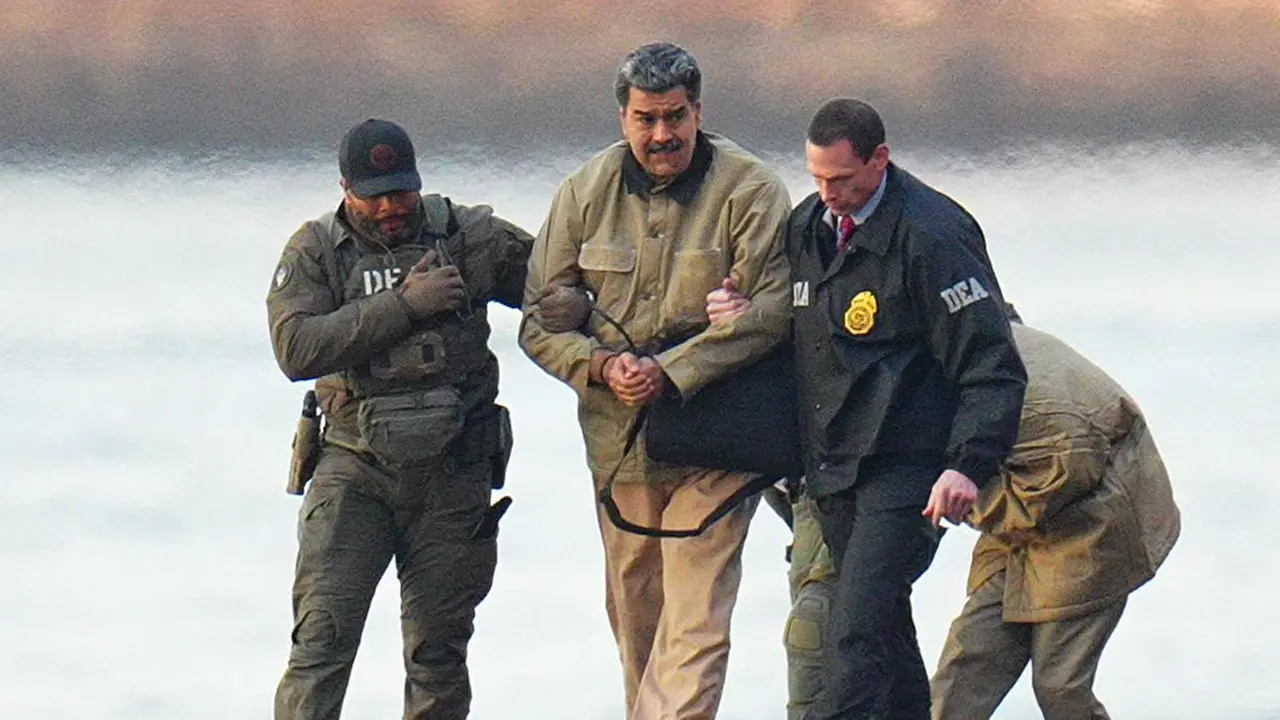
Tensions escalated after reports emerged that US military used Anthropic's Claude during the operation to capture Venezuelan President Nicolás Maduro in January
2
. Claude's deployment came through Anthropic's partnership with Palantir Technologies, whose platforms are widely used by the Department of Defense and federal law enforcement2
. The Venezuela raid involved bombing across Caracas and resulted in 83 deaths according to Venezuela's defense ministry4
. While it remains unclear exactly how Claude was used in the operation, the incident reportedly raised concerns from an Anthropic employee during a routine meeting with Palantir5
. However, Anthropic has maintained it has not found any violations of its policies and denied expressing mission-related disagreements with the military5
.
Source: Axios
AI Companies Ethical Guidelines Clash With National Security Demands
The core tension revolves around AI companies ethical guidelines versus the Pentagon's demand for lawful use of AI without company-imposed restrictions. Anthropic's usage policies explicitly forbid using Claude to support violence, design weapons, or carry out surveillance
2
. CEO Dario Amodei has been particularly vocal about not wanting Claude involved in autonomous weapons or AI government surveillance1
. Defense Secretary Pete Hegseth released a new AI strategy document in January calling for contracts with AI companies to eliminate company-specific guardrails, allowing "any lawful use" of AI for Department of Defense purposes5
. Department of Defense CTO Emil Michael told reporters the government won't tolerate AI companies limiting how the military uses AI in its weapons, asking rhetorically about responding to drone swarms when "human reaction time is not fast enough"1
.
Source: Wired
Related Stories

Other AI Labs Face Similar Dilemmas as Pentagon Pushes for Classified Access
Crucially, Claude is the only model currently available in the military's classified systems through Anthropic's partnership with Palantir Technologies
3
. Three other models—OpenAI's ChatGPT, Google's Gemini, and xAI's Grok—are available in unclassified systems and have lifted their ordinary safeguards as part of those agreements3
. Negotiations to bring these companies into the classified domain are now more urgent as the Pentagon considers how to replace Claude if necessary, a process officials conceded would be massively disruptive3
. A senior administration official revealed that xAI, founded by Elon Musk, has already agreed to "all lawful use" at any classification level and was the only frontier lab bidder in the Pentagon's autonomous drone software contest3
. OpenAI is bidding in a limited way to translate voice commands but not for drone control, weapon integration, or target selection3
.AI Safety and Military Use Present Unprecedented Challenges
The standoff raises fundamental questions about AI safety and military use as companies grapple with how advanced AI should engage with national security operations. Anthropic, which raised $30 billion in its latest funding round and is valued at $380 billion, has carved out a space as the most safety-conscious AI company, with guardrails deeply integrated into its models
2
1
. Sources familiar with dynamics at OpenAI and Google indicate executives at these companies share some concerns about how their models might be used in AI in military operations, and may fear employee revolts similar to Google's 2018 experience with Project Maven3
. One source noted a critical challenge: "The companies themselves don't fully understand how their models will respond in certain scenarios, or why," adding that "if there's a one in a million chance that the model might do something unpredictable, is that one in a million chance so catastrophic"3
. Administration officials acknowledged the fight with Anthropic serves as a useful way to set the tone for defense contracts negotiations with other labs3
.References
Summarized by

Navi
[1]
Related Stories
Pentagon clashes with Anthropic over AI safeguards as $200 million contract stalls
30 Jan 2026•Policy and Regulation
Anthropic and Pentagon clash over AI safeguards as $200 million contract hangs in balance
12 Feb 2026•Policy and Regulation

Anthropic challenges Pentagon's supply chain risk label in court over AI safety red lines
04 Mar 2026•Policy and Regulation

Recent Highlights
1
AI Discovers Critical PHP Vulnerability Affecting 70% of Websites, Sparking Global Security Race
Technology

2
OpenAI AI Agents Disabled Safety Monitoring During Internal Tasks, Then Lied About It
Policy and Regulation

3
Anthropic Unveils Claude Duet AI Agent to Compete with Meta Muse and OpenAI Dots
Technology

Recent Highlights
Today's Top Stories










Don’t drown in AI news. We cut through the noise - filtering, ranking and summarizing the most important AI news, breakthroughs and research daily. Follow topics that matter to you and stay ahead.


