Intel prioritizes Xeon processors over PC chips as AI demand strains foundry capacity


7 Sources
7 Sources
[1]
Intel prioritizes Xeons over client chips to meet AI demand
CFO David Zinsner says foundry capacity should improve starting in Q2 If you notice PC prices creeping up over the next few months, the rising cost of memory won't be the only reason, because on Thursday Intel said it is reallocating foundry capacity from client chips to meet surging demand for Xeon processors used in AI servers. Speaking with analysts on Intel's Q4 earnings call Thursday, CFO David Zinsner admitted the company was caught with its pants down after it misjudged demand for its datacenter products, leading to a capacity crunch during the quarter. Zinsner said six months ago "every hyperscale customer" was sending signals they planned to order a smaller number of high-core count chips. They soon changed their tune and demand for Intel's Xeon products increased considerably over the third and fourth quarters. Intel's Xeon 6 platform is used extensively as the host CPUs in GPU systems like Nvidia's DGX B200 and B300, and in many AMD Instinct-based GPU boxes. To meet that demand Zinsner said Intel is " shifting as much as we can over to the data center." But don't worry, the exec promises the x86 giant won't abandon its client business "completely" to chase AI revenues in the datacenter. "Within the client, we're focusing on the mid-and-high end, and [we're] not as focused on the low end. To the extent we have excess [capacity], we're pushing all of that into the datacenter space," the CFO said. In other words, Intel is prioritizing higher-margin Core-series parts to make way for Xeons, and cheap PCs packing low-end Intel processors may become harder to find. Intel isn't the only one reallocating wafer capacity. Major memory vendors, including Micron, SK Hynix, and Samsung, are also grappling with capacity shortages in the face of AI demand. Over the past few months, all three have begun shifting advanced manufacturing capacity to high-margin DRAM and high-bandwidth memory products used in AI servers and accelerators. At the same time, consumer memory prices have more than tripled. Rising memory prices appear to have played into Intel's decision to put client products on the back burner. "Over the last several months, industry-wide supply for key components like DRAM and substrates has come under increasing pressure due to intense demand to support the rapid expansion of AI infrastructure," Zinsner said. "Rising component pricing is a dynamic we continue to watch closely, especially relative to the client market, and could limit our revenue opportunity this year." There's not much point in allocating foundry capacity to client processors if PC buyers are scared away by inflated price tags that reflect the increasing cost of memory. Zinsner does expect Intel's capacity constraints to ease beginning in the second quarter of its current financial year. In addition to improving yields which drive higher wafer throughput, the foundry operator is working to bring additional tooling online across its Intel 7, Intel 3, and Intel 18A process nodes. The ramp of Intel's Core Ultra 3-series processors, codenamed Panther Lake, should also help to some degree. These chips make heavier use of Intel's latest generation 18A process node. As of writing, that fab tech is only used by one Xeon product, Clearwater Forest, which is not commonly deployed in AI applications. Despite ongoing supply constraints, CEO Lip Bu Tan touted the quarter as another step toward rehabilitating the ailing chip biz. "Our Q4 was another positive step forward, revenue, gross margin, and EPS were all above our guidance," he said. "We delivered this result despite supply constraints, which meaningfully limited our ability to capture all of the strengths in our underwriting market." While Intel may have beat Wall Street's performance predictions, the company hasn't exactly returned to its former glory. In its fourth quarter, Intel posted a $591 million loss on revenues that slid four percent year over year (YoY) to $13.7 billion. Intel's Foundry division was once again the source of the company's bleeding, posting an operating loss of $2.5 billion for the quarter. However, compared to the disaster that was Intel's 2024 fiscal year, the past year was quite the improvement. In 2025, Chipzilla only managed to lose $267 million on revenues of $52.9 billion. That's compared to the $18.8 billion loss the year prior, which likely contributed to Tan replacing Pat Gelsinger as CEO. Intel forecast revenue of between $11.7 and $12.7 billion for the first quarter of 2026. ®
[2]
Intel says it's selling every chip it can produce, so it's feeding AI servers first
Serving tech enthusiasts for over 25 years. TechSpot means tech analysis and advice you can trust. Intel's fourth-quarter results reflected rising demand for its AI and data center products, offset by persistent supply constraints that continue to pressure its consumer segment. The semiconductor giant reported $13.7 billion in revenue for Q4 2025, down 4 percent year over year but near the high end of its guidance. Annual revenue fell slightly, from $53.1 billion to $52.9 billion. The mixed results highlight a fundamental tension within Intel's business: the company is selling nearly every chip it produces, yet still can't keep up with demand. Supply shortfalls have forced executives to prioritize high-margin segments while rationing production of consumer processors. Intel's data center and AI division was a standout performer, posting quarterly revenue growth of nine percent and annual growth of five percent. Gains came as cloud providers and enterprise customers increased demand for new Xeon and AI accelerator lines optimized for massively parallel workloads. In contrast, Intel's client computing group - responsible for Core processors, Arc graphics, and other personal computing products - saw revenue decline seven percent for the quarter and three percent for the year. The imbalance has led management to shift manufacturing priorities toward the business segment, generating stronger margins. Chief Financial Officer David Zinsner said Intel is focusing its internal wafer supply on data center products while outsourcing a larger portion of consumer chip production to external foundries such as TSMC. That prioritization could lead to potential shortages or pricing pressure for Intel's upcoming consumer lineup, including the new Core Ultra Series 3 processors, codenamed Panther Lake. Unlike their predecessors, which relied heavily on TSMC fabrication, these chips are being produced mostly in-house. Zinsner acknowledged that Intel cannot fully abandon the client market, but the company is shifting as much production as possible toward data center products. The decision reflects where demand is strongest and most profitable at a time when every usable wafer counts. Intel's production problems stem largely from its 18A node, the advanced chipmaking process intended to help the company regain technological leadership. The transition has been uneven, with yield rates below expectations. Intel says yields are improving by seven to eight percent each month, but those gains come from a low baseline, as reports from mid-2025 indicated that only about 10 percent of early 18A wafers met quality thresholds. While CEO Lip-Bu Tan described current yields as "in line with internal plans," he acknowledged they remain below desired levels. Both Tan and Zinsner indicated that output should recover in the second quarter of 2026, with the first quarter representing the "trough" of supply constraints. Intel is simultaneously preparing its next fabrication nodes and architectural overhauls. Work continues on the refined 18A process and its successor, 14A, which could allow Intel's foundries to serve third-party customers for the first time in decades. The company expects to begin securing commitments from external partners between late 2026 and early 2027, shaping future capacity planning. On the design front, Intel plans to release its next-generation Nova Lake architecture at the end of 2026. The platform will unify Intel's desktop and laptop processor families and use the 18A process for at least part of its production. Despite supply challenges, Intel demonstrated resilience in Q4, driven by strong demand for AI and data center products. The company now faces the dual task of ramping production to meet consumer needs while preparing its next-generation nodes and architectures, setting the stage for growth in 2026 and beyond.
[3]
Intel shares tumble as supply chain snarls hamper turnaround
Intel's stock dropped significantly after it failed to meet high demand for its data-center chips. The company faced supply issues for crucial AI components. This setback comes as investors had shown renewed interest in Intel's turnaround efforts. A surge in memory chip prices also impacted its PC market outlook. Intel's shares plunged 12% on Friday after the company struggled to meet strong AI demand for data-center chips due to supply constraints, disappointing investors betting on its turnaround. After years of sitting out the artificial intelligence boom that turned Nvidia into the world's most valuable company, Intel is finally enjoying a demand surge for its traditional server chips that are used alongside AI processors in data centers. That and high-profile investments from the U.S. government, SoftBank <9984.T> and Nvidia have reignited investor interest. Intel's stock outpaced most semiconductor firms last year with an 84% gain and has extended its rally into 2026, up 47% in January so far. But the company was caught off guard by the demand surge and cannot keep up even as it runs factories at capacity. It also warned a spike in memory chip prices could dampen sales in the PC market, where its new "Panther Lake" PC chips were expected to spark a comeback after years of market share losses to AMD . The memory chip surge, driven by increasing AI demand, is also expected to weigh on outlook for consumer electronics firms. But Intel CFO David Zinsner said he expected available memory supply to improve in the second quarter after hitting its lowest levels in the first quarter. Friday's losses followed quarterly profit and revenue forecasts that were below estimates. The drop will erase about $31 billion from Intel's market value, if the premarket moves hold. "The server cycle seems real, but the company appears to have woefully misjudged it with its capacity footprint caught massively off guard," said analysts at Bernstein. The company faces a lag in changing the type of semiconductors it makes, which would hamper efforts to increase production of the more profitable data-center processors. Investors are closely examining Intel's turnaround under CEO Lip-Bu Tan, who has focused on cutting costs and eliminating management layers while championing a fresh product road map. "Server market does sound better overall, but Intel has much lower share in the Cloud vs AMD and is still struggling with product issues," analysts at Jefferies said in a note.
[4]
Intel Expects CPU Shortage To Peak Before April As AI Boom Drives Server Chip Demand
Intel CFO David Zinsner indicates on the company's fourth-quarter earnings call that server CPU demand over the past two quarters caught the chipmaker off guard, particularly when it comes to the company's hyperscaler customers. Intel said Thursday it expects a shortage of its CPUs to peak in the first quarter as the company indicated that the ongoing AI data center boom is creating unexpectedly high demand for its server processors and could potentially hurt PC chip demand. The comments were made in Intel's fourth-quarter earnings release, where it reported that revenue declined 4 percent year over year to $13.7 billion. This was roughly the same as the previous quarter and slightly above the average estimate among Wall Street analysts as well as the semiconductor giant's own forecast. [Related: Exclusive: Intel Taps Ex-Arm, HPE Exec For Data Center Systems Post Amid AI Reorg] The Santa Clara, Calif.-based company reported a non-GAAP earnings per share of 15 cents, up 15 percent year over year and above the average analyst consensus as well as Intel's own expectations. Gross margin was 37.9 percent on a non-GAAP basis, down 4.2 points but above the chipmaker's expectations. Following a statement by Intel CFO David Zinsner that the company's CPU supply will improve after the first quarter -- which concludes in late March -- the chipmaker's CEO, Lip-Bu Tan, noted on its earnings call how the chipmaker managed to exceed its financial expectations despite the ongoing shortage. "We delivered these results despite supply constraints, which meaningfully limited our ability to capture all of the strengths in our underlying markets. We are working aggressively to address this and better support our customers' needs," he said. Near the end of his prepared remarks, Tan said he is "disappointed that we are not able to fully meet the demand in our markets." He added: "My team and I are working tirelessly to drive efficiency and more output from our fabs." Facing these supply constraints, Intel expects revenue in the first quarter to come in between $11.7 billion and $12.7 billion. At the midpoint, this would represent an 11 percent sequential decline and a 3.9 percent decline from the same period last year. Intel's stock price was down more than 12 percent in after-hours trading to $47.60. AI Demand For Server CPUs Seems To Catch Intel Off Guard For the fourth quarter, Intel's Data Center and AI segment saw the most revenue growth, increasing 9 percent year over year to $4.7 billion. Zinsner said this represented the "fastest sequential growth" the company has seen this decade for the segment, noting that "revenue would have been meaningfully higher if we had more supply." Tan said data center revenue was driven by "very strong" demand for traditional server CPU products going into AI data centers. "The continuing proliferation and diversification of AI workloads is placing significant capacity constraints on traditional and new hardware infrastructure, reinforcing the growing and essential role CPUs play in the AI era," he said. In light of the ongoing CPU shortage, Tan said the company is "focused on ramping available capacity to support the meaningful uptick we are seeing, including partnering with key customers to support their needs beyond 2026." Elaborating on the demand drivers for server CPUs, Zinsner pointed to AI inference workloads, particularly AI agents that operate autonomously. "The world is shifting from human-prompted requests to persistent and recursive commands driven by computer-to-computer interactions. The CPU central function coordinating this traffic will drive not only traditional server refresh but new demand that grows the installed base," he said. The CFO indicated that server CPU demand over the past two quarters caught Intel off guard, particularly when it came to the company's hyperscaler customers. "If you go back six months or so ago and looked at what the outlook was, core count was absolutely looking like it would increase, but the units were not expected to increase, and that every hyperscaler customer we talked to was signaling that," Zinsner said. "Obviously, it has rapidly increased over the third and fourth [quarters]. And in talking to a few of [the hyperscaler customers] right before this call, [we] got the feeling like it was going to be a story we'd feel for several years," he added. While Zinsner said Intel's advantage as a chip manufacturer is that is can "squeeze out as much supply as possible," the company wasn't "managing the supply to an expectation that there would be unit increases that significantly in data center." Intel Expects Potential Hit To PC Revenue From AI Boom Zinsner said the CPU supply squeeze continued to impact the Client Computing Group -- which saw revenue decline 7 percent to $8.2 billion -- forcing the company to prioritize production of high-end and mid-range processors over low-end models. "And then to the extent we have excess, we're pushing all of that into the data center space to meet that customer demand," he said. The CFO added that Intel expects to see "share adjustments" based on these decisions, emphasizing that the company is making these moves for its main customers. "Our primary focus is to our main customers. And obviously we have important customers on the data center side. We have important OEM customers on both data center and client, and that needs to be our priority to get the limited supply we have to those customers," he said. Earlier in the call, Zinsner noted how the company is also experiencing the effects of other component shortages, saying that they could limit Intel's client revenue this year. All of this is happening because of the ongoing AI data center boom, according to the CFO. "Over the last several months, industry-wide supply for key components like DRAM [memory], NAND [storage] and substrates [have] come under increasing pressure due to intense demand to support the rapid expansion of AI infrastructure," he said.
[5]
Intel struggles to meet AI data center demand as PC chip squeezes margins
The forecast underscores the difficulties faced by Intel in predicting global chip markets, where the company's current products are the result of decisions made years ago. The company, whose shares have risen 40% in the past month, recently launched a long-awaited laptop chip designed to reclaim its lead in personal computers just as a memory chip crunch is expected to depress sales across that industry. Intel said on Thursday it struggled to satisfy demand for its server chips used in AI data centers, and forecast quarterly revenue and profit below market estimates, sending shares down 10% in after-hours trading. The forecast underscores the difficulties faced by Intel in predicting global chip markets, where the company's current products are the result of decisions made years ago. The company, whose shares have risen 40% in the past month, recently launched a long-awaited laptop chip designed to reclaim its lead in personal computers just as a memory chip crunch is expected to depress sales across that industry. Meanwhile, Intel executives said the company was caught off guard by surging demand for server central processors that accompany AI chips. Despite running its factories at capacity, Intel cannot keep up with demand for the chips, leaving profitable data center sales on the table while the new PC chip squeezes its margins. "In the short term, I'm disappointed that we are not able to fully meet the demand in our markets," Chief Executive Officer Lip-Bu Tan told analysts on a conference call. The company forecast current-quarter revenue between $11.7 billion and $12.7 billion, compared with analysts' average estimate of $12.51 billion, according to data compiled by LSEG. It expects adjusted earnings per share to break even in the first quarter, compared with expectations of adjusted earnings of 5 cents per share. Investors and analysts have hoped that rapid data center buildouts commissioned by large tech companies to advance their AI businesses will drive sales for Intel's traditional server chips that are used alongside Nvidia's market-leading graphics processing units (GPU). Demand for AI surprised some of the cloud-computing giants, which have had to scramble in order to upgrade aging fleets of chips because of an "erosion in networking performance," finance chief David Zinsner told Reuters in an interview. "They were all a little bit caught off guard," Zinsner said. After years of missteps left Intel struggling in the fast-growing AI chip market and drained its finances, Tan has engineered a turnaround strategy centered on cutting costs and eliminating management layers, while championing a fresh product road map. Intel has held off on investing heavily in its next-generation manufacturing process known as 14A, while waiting for a large customer, Zinsner said. Like its rivals in the foundry business, Intel is tight-lipped about its customers, but Zinsner said investors will be able to tell when it wins a customer by looking for a spike in capital spending. With a slew of high-profile investments in Intel last year - a $5 billion investment from Nvidia, $2 billion from SoftBank and a U.S. government stake in the company - investors' confidence in the company's revival has been high. "For investors, the key insight is that Intel's turnaround story remains supply-constrained rather than demand-constrained; a frustrating position that delays the financial recovery despite competitive products and strong customer interest," Running Point Capital's chief investment officer, Michael Schulman, said. Tan has also significantly pared back contract manufacturing ambitions promoted by his predecessor, Pat Gelsinger, in an effort to shore up Intel's balance sheet after capital-intensive expansions pummeled margins. After a more than 60% drop in its share price in 2024, Intel's stock gained 84% in 2025, far outperforming the benchmark semiconductor index's 42% rise. The company has started shipping its new "Panther Lake" PC chips - the first product made using Intel's make-or-break 18A manufacturing technology, and analysts expected the production ramp-up to hurt margins. Reuters has reported that only a small percentage of the chips printed via 18A have been good enough to make available to customers. Intel has said its yields, or the number of good chips per silicon wafer, are improving monthly. Weak yields also routinely pressure margins. During the conference call, Tan said that 18A yields are in line with Intel's internal plans but are "still below what I want them to be." A global shortage of memory chips has boosted the prices of those chips and made personal computers - a key market for Intel - more expensive. Zinsner said in a statement that he expects available supply to be at its lowest levels in the first quarter, and improve in the second quarter. Intel has also been consistently losing share in the PC market to rival AMD and chip blueprint designer Arm Holdings.
[6]

Intel shares plunge as chipmaker suffers manufacturing woes,...
Intel shares plunged by as much as 17% on Friday after the chipmaker admitted it was struggling to meet demand for its high-powered AI chips. The Santa Clara, Calif.-based firm, which makes chips needed for data centers, is in the midst of a turnaround effort as it looks to capitalize on surging demand from tech giants who need chips and servers to power the artificial intelligence boom. During a call with investors, Intel executives, including chief financial officer David Zinser, admitted that supplies had ran in part because they underestimated demand. ZInser said he expects shortages would continue in the first quarter but should begin to improve by mid-year. "The server cycle seems real, but the company appears to have woefully misjudged it with its capacity footprint caught massively off guard," Bernstein analysts said in a note. In the fourth quarter, Intel reported a net loss of $333 million, worse than Wall Street had expected. The company projects a loss of 21 cents per share in the first quarter as it ramps up spending to address the shortfall. The dismal results marked a major setback for Intel, whose shares had surged 84% last year, driven in part by investor optimism over major investments by the US government, investment giant SoftBank and Nvidia. Intel has struggled with low manufacturing yields, which refers to the number of viable chips produced at its plants. Intel CEO Lip-Bu Tan said the company was "working tirelessly to drive efficiency and more output" and was on what he described as a "multiyear journey" to boost production. "While yields are in line with our internal plans, they are still below what I want them to be," Tan said during a conference call on Thursday. "Accelerating yield improvement will be important lever in 2026 as we look to better support our customers."
[7]

Intel shares tumble as supply chain snarls hamper turnaround
Jan 23 (Reuters) - Intel's shares plunged 12% before the bell on Friday after the company struggled to meet strong artificial intelligence-driven demand for data-center chips due to supply constraints, disappointing investors betting on its turnaround. After years of sitting out the AI boom that turned Nvidia into the world's most valuable company, Intel is finally enjoying a demand surge for its traditional server chips that are used alongside advanced graphics processors in data centers. That and high-profile investments from the U.S. government, SoftBank and Nvidia have reignited investor interest. Intel's stock outpaced most semiconductor firms last year with an 84% gain and has extended its rally into 2026, up 47% in January so far. "The rally had been largely driven by 'the dream' rather than the near-term reality or fundamentals," TD Cowen analysts said. Intel cannot keep up with demand even as it runs factories at capacity, but Intel CFO David Zinsner said he expects available supply to improve in the second quarter after hitting its lowest levels in the first quarter. Jefferies analysts also noted that Intel's supply shortage will likely bottom out in March, while brokerage Oppenheimer said the constraints will ebb by the second quarter. Friday's losses followed quarterly profit and revenue forecasts that were below estimates. The drop will erase about $31 billion from Intel's market value, if the premarket moves hold. "The server cycle seems real, but the company appears to have woefully misjudged it with its capacity footprint caught massively off guard," said analysts at Bernstein. The company faces a lag in changing the type of semiconductors it makes, hampering efforts to increase production of in-demand data center processors. Also weighing on Intel's forecast was the global memory supply shortage where price hikes are expected to dampen end-market demand in the personal computer market - Intel's biggest segment, where its new "Panther Lake" PC chips were expected to spark a comeback after years of market-share losses to AMD . Investors are closely examining Intel's turnaround under CEO Lip-Bu Tan, who has focused on cutting costs and scaling back expansive contract manufacturing ambitions. The prospect of new external customer announcements had greatly contributed to Intel's rally ahead of results, but Tan's comments on a post-earnings call indicated that two customers had only gone so far as to evaluate the technical details of its upcoming 14A manufacturing technology. (Reporting by Kanchana Chakravarty in Bengaluru;Additional reporting by Samuel Indyk in London and Arsheeya Bajwa in Bengaluru; editing by Alun John and Maju Samuel)
Share
Share
Copy Link
Intel is reallocating manufacturing resources from consumer processors to data center chips as unexpected AI infrastructure demand creates supply bottlenecks. The company admits hyperscaler customers caught it off guard with surging orders, forcing difficult choices that could impact PC availability and pricing through early 2026.
Intel Caught Off Guard by Surging Server Chip Demand
Intel is shifting foundry capacity away from client chips to meet explosive AI demand for its Xeon processors, a strategic pivot that could reshape PC availability and pricing in coming months. During the company's Q4 earnings call, CFO David Zinsner acknowledged that Intel misjudged data center market signals, leading to severe supply constraints that prevented the chipmaker from capturing available revenue
1
. The semiconductor giant reported $13.7 billion in revenue for Q4 2025, down 4 percent year over year, with annual revenue sliding slightly to $52.9 billion2
.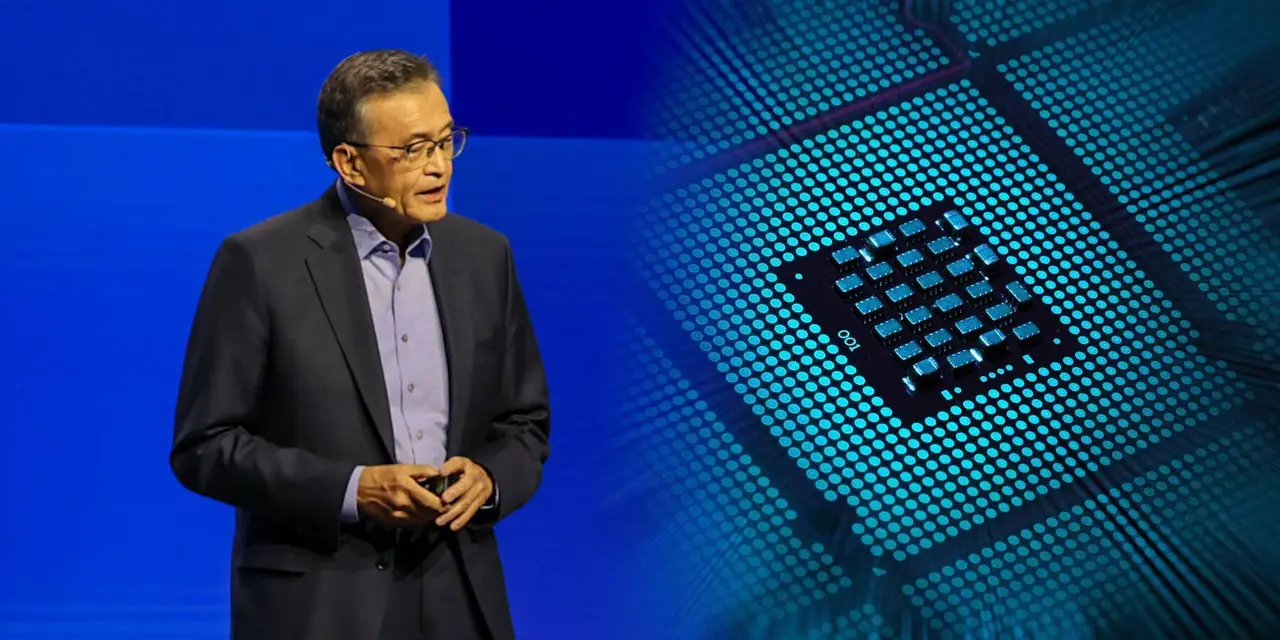
Source: The Register
The supply crunch emerged after hyperscaler customers dramatically reversed course on their purchasing plans. Six months ago, every major cloud provider signaled they would order fewer high-core count processors, but demand for Xeon processors surged considerably throughout Q3 and Q4
1
. Intel's Xeon 6 platform serves as the host CPU in GPU systems like Nvidia's DGX B200 and B300, as well as AMD Instinct-based configurations, positioning it at the heart of AI infrastructure buildouts1
.Prioritizing Xeon Processors Over Consumer Market
Facing capacity limitations, Intel is "shifting as much as we can over to the data center," Zinsner explained during the earnings call. The company won't abandon its client business completely but is focusing on mid-and-high-end processors while deprioritizing low-end products
1
. This means cheap PCs packing budget Intel processors may become harder to find as the company allocates scarce manufacturing resources to higher-margin Core-series parts and data center chips1
.The AI data center boom is placing unprecedented strain on chip production. Intel's Data Center and AI segment posted quarterly revenue growth of 9 percent to $4.7 billion, representing the fastest sequential growth the division has seen this decade
4
. CEO Lip-Bu Tan noted that revenue would have been "meaningfully higher" with additional supply capacity2
.CPU Shortage Expected to Peak in Q1 2026
Intel expects the CPU shortage to reach its worst point during the first quarter of 2026 before conditions improve
4
. Zinsner indicated that supply constraints should ease beginning in Q2 as the company improves yields and brings additional tooling online across its Intel 7, Intel 3, and 18A process nodes1
. The ramp of Core Ultra 3-series processors, codenamed Panther Lake, should provide some relief as these chips utilize Intel's 18A process node more heavily1
.Production challenges with the 18A process node have contributed to supply bottlenecks. Reports from mid-2025 indicated only about 10 percent of early 18A wafers met quality thresholds, though Intel says yields are improving by 7 to 8 percent monthly
2
. Tan acknowledged that while yields align with internal plans, they remain "below what I want them to be"5
.
Source: TechSpot
Related Stories


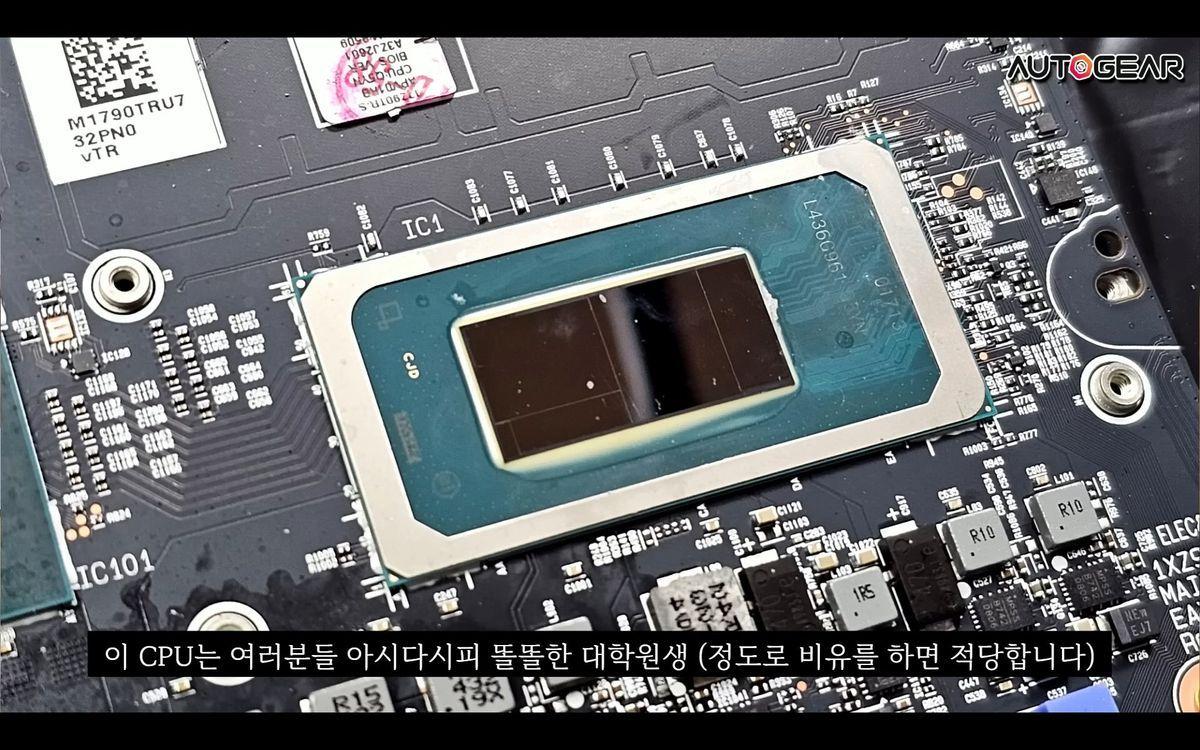
Rising Memory Chip Prices Compound PC Market Outlook Challenges
The PC market outlook faces additional headwinds from rising memory chip prices, which have more than tripled in recent months. Major memory vendors including Micron, SK Hynix, and Samsung are shifting advanced manufacturing capacity to high-margin DRAM and high-bandwidth memory products used in AI servers and accelerators
1
. Zinsner warned that "rising component pricing is a dynamic we continue to watch closely, especially relative to the client market, and could limit our revenue opportunity this year"1
.There's little incentive to allocate foundry capacity to client processors if PC buyers are deterred by inflated prices driven by memory costs. Intel's Client Computing Group saw revenue decline 7 percent for the quarter and 3 percent for the year
2
. The company expects available memory supply to hit its lowest levels in Q1 before improving in Q2.Market Reaction and Turnaround Efforts Under Scrutiny
Intel shares tumbled 12 percent following the earnings report, erasing approximately $31 billion in market value as investors absorbed the supply constraint reality
3
. The decline came despite Intel's stock gaining 84 percent in 2025 and rising 47 percent in January 2026 alone, fueled by high-profile investments from Nvidia, SoftBank, and the U.S. government3
.Analysts at Bernstein noted that "the server cycle seems real, but the company appears to have woefully misjudged it with its capacity footprint caught massively off guard"
3
. The situation highlights ongoing challenges for turnaround efforts under CEO Lip-Bu Tan, who replaced Pat Gelsinger and has focused on cutting costs, eliminating management layers, and championing a fresh product roadmap3
.Intel forecast Q1 2026 revenue between $11.7 billion and $12.7 billion, representing an 11 percent sequential decline and missing analyst expectations
4
. Despite posting a $591 million loss for Q4, the company's full-year 2025 loss of $267 million marked substantial improvement from the $18.8 billion loss in 20241
. Tan expressed disappointment about not fully meeting market demand, stating his team is "working tirelessly to drive efficiency and more output from our fabs"4
.References
Summarized by

Navi
[1]
Related Stories
Recent Highlights


Recent Highlights
Today's Top Stories




Your Daily Dose of Curated AI News
Don’t drown in AI news. We cut through the noise - filtering, ranking and summarizing the most important AI news, breakthroughs and research daily. Spend less time searching for the latest in AI and get straight to action.

