Intel Faces AI Challenges Amid Leadership Transition and Market Competition


9 Sources
[1]
Is iconic chip maker Intel struggling on the AI front? Release of its new chip has been delayed further; here's the reason for it
Intel, once a leader in the semiconductor industry, is facing challenges in the rapidly growing field of artificial intelligence (AI). The company had high hopes for its Gaudi accelerator chips, designed to enhance AI application performance. However, sales have not met expectations, leading Intel
[2]
Chipmaker Intel beats revenue expectations amidst Q4 loss
Intel reported a fourth-quarter loss on Tuesday, but better than expected revenue as the US chip giant continues to struggle to stake its place in the artificial intelligence revolution. The company's Client Computing Group, which includes PC chips, saw revenue fall 9 percent to $8 billion in the
[3]
Intel's quarterly revenue tops expectations as investors await new CEO
Intel exceeded December-quarter expectations, but its current-quarter forecast missed predictions. The company struggles with low demand for data center chips and awaits a new CEO. Interim Co-CEO Michelle Johnston Holthaus announced a halt on a new AI chip design. Intel faces competition from
[4]
Intel delays AI GPU, stock reacts: Is it falling further behind Nvidia?
Intel reported December-quarter results on Thursday that exceeded analysts' low expectations, while its revenue forecast for the current quarter fell short as the company faces weak demand for its data center chips and awaits a new CEO's appointment. The chipmaker, headquartered in Santa Clara,
[5]
Chipmaker Intel beats revenue expectations amidst Q4 loss
Intel reported a fourth-quarter loss on Tuesday, but better than expected revenue as the US chip giant continues to struggle to stake its place in the artificial intelligence revolution. The company posted a net loss of $126 million for the quarter ending December 28, compared to a profit of $2.67
[6]
Intel's Quarterly Revenue Tops Expectations as Investors Await New CEO
Intel reported fourth-quarter revenue fell seven percent from a year ago Intel on Thursday posted December-quarter results that beat analysts' low expectations, while its forecast for current-quarter revenue missed estimates as the chipmaker grapples with tepid demand for its data center chips and
[7]

Intel Curbs Falcon Shores From Market, Quarterly Revenue Falls by 7%
Intel is set to face tough questions from investors about its search for a new CEO as it announced its quarterly results on Thursday. Revenue came in at $14.26 billion, beating the projected $13.81 billion. However, revenue declined 7% year-over-year, marking the third consecutive quarter of
[8]

Intel's stock inches up on solid earnings and revenue beat - SiliconANGLE
Shares of the troubled chipmaker Intel Corp. rose more than 3% after-hours on the back of solid fourth quarter results that topped expectations, overshadowing somewhat disappointing guidance. The company reported earnings before certain costs such as stock compensation of 13 cents per share,
[9]

Intel next-gen GPUs scrapped, E-Core Xeons delayed
Intel capped off a tumultuous year with a reality check for its product roadmaps. Plans to commercialize the American giant's next-gen GPU architecture, codenamed Falcon Shores, have been scrapped, while its next generation of many-cored CPUs has been delayed until 2026, interim co-CEO Michelle
Share
Copy Link
Intel reports Q4 2024 loss but beats revenue expectations, delays AI chip development, and struggles to compete in the AI market while searching for a new CEO.

Intel's Financial Performance and Market Position
Intel, once a leader in the semiconductor industry, is facing significant challenges in the rapidly growing field of artificial intelligence (AI). The company reported a net loss of $126 million for the fourth quarter of 2024, compared to a profit of $2.67 billion in the same period last year
1
2
. Despite this loss, Intel's revenue of $14.3 billion exceeded analysts' expectations, leading to a 2% increase in share price during after-hours trading2
.For the full year 2024, Intel recorded a substantial net loss of $18.8 billion, a stark contrast to the $1.7 billion profit in 2023
2
. This significant downturn is largely attributed to restructuring charges and challenging market conditions. The company's market valuation has dropped to approximately $90 billion, a fraction of AI chip leader Nvidia's value2
.AI Chip Development and Competition
Intel's struggles in the AI market are evident in its recent decisions and market performance:
- The company has shelved its forthcoming graphics processing unit (GPU) design called Falcon Shores, leaving it without major new products for AI customers
3
. - Intel abandoned its 2024 forecast of selling over $500 million worth of Gaudi accelerator chips, designed to enhance AI application performance
1
4
. - The company is facing intense competition from Nvidia, which has emerged as the world's preeminent AI chip provider
2
4
.
Leadership Changes and Strategic Shifts
Intel is currently undergoing a significant leadership transition:
- Former CEO Pat Gelsinger was ousted in January 2025 after the board lost confidence in his turnaround plans
2
4
. - The company is currently led by interim co-CEOs Michelle Johnston Holthaus and David Zinsner while searching for a permanent CEO
3
4
. - Intel is refocusing its product strategy into three main areas: client and edge computing, traditional data centers, and AI data centers
1
.
Related Stories

Future Outlook and Challenges
As Intel navigates this challenging period, several factors will influence its future:
- The company expects first-quarter revenue between $11.7 billion and $12.7 billion, below analysts' average forecast of $12.87 billion
3
. - Intel is investing heavily in becoming a contract manufacturer of chips for other companies, raising concerns about cash flow pressures
3
. - The company faces potential impacts from tariffs proposed by the Trump administration, which may affect customer buying patterns
3
5
. - Intel reported strong momentum in AI components for personal computers, aiming to ship more than 100 million AI PCs by the end of 2025
5
.
Market and Industry Context
Intel's challenges are set against a backdrop of broader industry trends:
- The global PC market, Intel's largest revenue source, saw only modest growth in shipments last year
4
. - Intel continues to lose market share in the PC and server CPU markets to rival AMD
4
. - The company is exploring a minority stake sale in Altera, its field-programmable gate array chip business acquired in 2015 for $14.5 billion
4
.
As Intel continues its search for a permanent CEO, investors and industry observers await clarity on the company's future direction and its strategy to regain competitiveness in the AI chip market.
References
Summarized by

Navi
[5]
Related Stories
Intel prioritizes Xeon processors over PC chips as AI demand strains foundry capacity
23 Jan 2026•Business and Economy
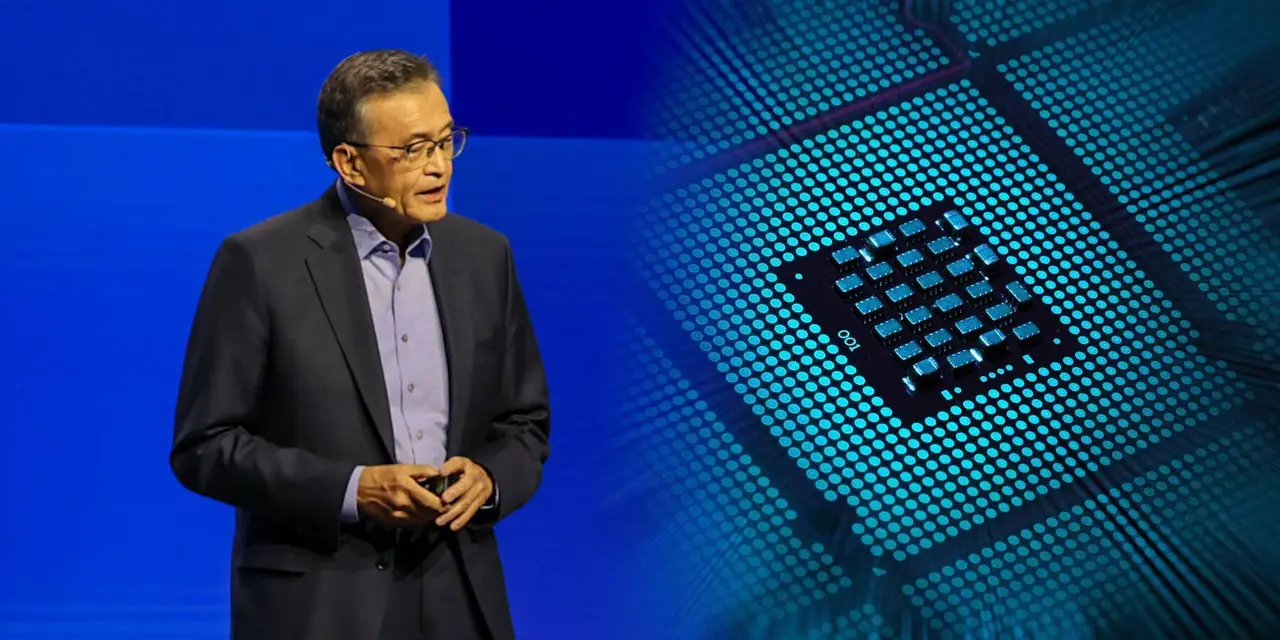
Intel's Turnaround Strategy: CEO Lip-Bu Tan Urges Patience Amid AI and Manufacturing Challenges
25 Apr 2025•Business and Economy
Intel's AI Resurgence: Gelsinger's Vision and Strategic Partnerships
25 Sept 2024

Recent Highlights



Recent Highlights
Today's Top Stories






Don’t drown in AI news. We cut through the noise - filtering, ranking and summarizing the most important AI news, breakthroughs and research daily. Follow topics that matter to you and stay ahead.


