Jeff Bezos's Project Prometheus Recruits xAI Co-Founder to Build Industrial AI Systems


4 Sources
4 Sources
[1]
Jeff Bezos's new lab hires xAI co-founder from OpenAI
A company owned by Jeff Bezos has poached an xAI co-founder from a role at OpenAI, as the tech billionaire's secretive start-up rapidly recruits to pursue its ambition to create AI systems that can transform the industrial sector. Kyle Kosic has joined Project Prometheus, a code name for the new company led by Bezos and former Google executive Vikram Bajaj, according to people familiar with the matter. A co-founder of xAI alongside Elon Musk, Kosic led the infrastructure team behind its Colossus supercomputer before returning to his former employer OpenAI in 2024. He will continue to work on AI infrastructure projects at Prometheus, the people said. His move marks the latest in a dizzying round of job changes as AI labs compete fiercely for top talent, often offering substantial salaries to lure staff from rivals. Musk has seen all 11 of his xAI co-founders leave, with several departing in recent months, and some with complaints about Musk's management. The last two, Manuel Kroiss and Ross Nordeen, left the company at the end of March, according to people familiar with the matter as first reported by Business Insider. Prometheus, meanwhile, has hired hundreds of staff at its headquarters in San Francisco and in its offices in London and Zurich. It has focused on hiring engineers, AI researchers and people with experience in "building out massive infrastructure projects", one person familiar with its hiring said. The start-up, launched by Bezos last year, is working on AI systems that can operate in the physical world and go beyond the language-based systems behind chatbots like ChatGPT or coding tools like Claude Code. Project Prometheus declined to comment. The company is particularly focused on the industrial sector. It envisions a model that can understand the laws of physics and is trained on data from specific domains, such as jet engine design, one person close to the company said. They added that the company had already "assembled the largest corpus of data on engineering" and how such systems work. Prometheus also plans to amass stakes in companies across sectors such as engineering, aviation, architecture and design. Those deals would include gathering data from these companies, which could be used to improve the start-up's AI model. Bezos and Bajaj are personally leading Prometheus's efforts to raise tens of billions of dollars or more for a "permanent capital vehicle" that would acquire equity stakes in companies likely to be disrupted by AI in the future. One person compared it to a "Berkshire Hathaway-type holding company". "Prometheus wants to back the progress of these industries, which will happen eventually with AI, but they don't want it to take 10 years," the person added. The start-up plans to have its staff working within these companies, often known as "forward deployed engineers". The investment and input from staff, it hopes, will improve margins and operations at the companies. The AI industry has struggled to create models that truly understand physical space due to a lack of high-quality data that represents the real world, rather than more readily available text and computer code. Competitors' current efforts involve training on video data and simulations to mimic real-world environments. Prometheus is also discussing investments in this vehicle with sovereign investment funds, including from Singapore and Gulf nations, multiple people said.
[2]
FT: Jeff Bezos' Project Prometheus taps xAI co-founder Kyle Kosic
Kosic will work on AI infrastructure projects at Prometheus, sources said. xAI co-founder Kyle Kosic has left his role at OpenAI to join Jeff Bezos' Project Prometheus, reported the Financial Times. Kosic's departure from xAI in 2024 marked the first of an exodus, which saw the company's 11th co-founder reportedly leave late last month, leaving Musk as the sole founding member left. Kosic joined OpenAI shortly after. According to sources, he will work on AI infrastructure projects at Prometheus. News of Bezos' AI venture, codenamed Project Prometheus, surfaced last November. Bezos co-founded the company with former Google Life Sciences executive Vik Bajaj. The company builds AI that assists engineering and manufacturing in a number of sectors, including in computers, aerospace and automobiles. It has already reportedly amassed billions, partly funded by Bezos. Now, the Financial Times reports that the two co-founders are leading efforts to raise "tens of billions of dollars or more" to acquire parts of companies likely to be disrupted by AI. The company is also discussing investments with sovereign investment funds, including from Singapore and Gulf nations, the publication added. Additionally, it plans to collect stakes in companies across its target sectors for AI training data. Prometheus had already hired around 100 employees across San Francisco, London and Zurich by November last year, including researchers from OpenAI, Google DeepMind and Meta. Sources said that the company is hiring people with experience "building out massive infrastructure projects". Earlier this year, Jezz Bezos' other venture Blue Origin announced a new satellite internet network called TeraWave, promising to deliver connection speeds of up to 6Tbps anywhere on Earth. Currently, the satellite internet service sector is dominated by SpaceX's Starlink, with its 9,000-plus satellites and roughly 9m customers. TeraWave, meanwhile, is planning a constellation of 5,408 satellites. Don't miss out on the knowledge you need to succeed. Sign up for the Daily Brief, Silicon Republic's digest of need-to-know sci-tech news. Jeff Bezos. Image: Daniel Oberhaus, 2019 via Flickr (CC BY 2.0)
[3]
xAI Co-Founder Joins Secret Jeff Bezos Project. Here's What We Know
Poaching is the new way to get ahead in AI advancements. xAI co-founder Kyle Kosic is joining Jeff Bezos' secretive start-up Project Prometheus. The new company, led by Bezos and former Google executive Vikram Bajaj, according to people familiar with the matter, is rapidly hiring to build industrial‑focused AI systems. The Financial Times reports the venture has recruited hundreds of employees across San Francisco, London, and Zurich, targeting engineers, AI researchers, and large‑scale infrastructure specialists. Kosic, who joined OpenAI in 2021 as technical staff, departed in 2023 for Elon Musk's xAI, where he led infrastructure for its Colossus supercomputer. He later returned to OpenAI in 2024. Now, Kosic will continue to work on AI infrastructure projects, but at Prometheus.
[4]
Jeff Bezos Is Quietly Building an A.I. Dream Team at Project Prometheus
Kyle Kosic, an OpenAI alum and founding member of Elon Musk's xAI, joins Project Prometheus as Bezos's latest A.I. recruit. Jeff Bezos has been keeping a low profile since stepping in as co-CEO of Project Prometheus, the code name for his secretive A.I. startup, last year. But behind the scenes, he's been busy. The company has been raising fresh capital, pursuing acquisitions and aggressively recruiting top talent across Silicon Valley. One of its newest hires is Kyle Kosic, recruited to join Bezos's initiative after stints at OpenAI and xAI, according to the Financial Times. Kosic joins a fast-growing team filled with alumni from major tech companies. Like many of Project Prometheus's recruits, he specializes in A.I. infrastructure. Such skills will be crucial as the company aims to transform engineering and manufacturing through automation powered by A.I. Sign Up For Our Daily Newsletter Sign Up Thank you for signing up! By clicking submit, you agree to our <a href="http://observermedia.com/terms">terms of service</a> and acknowledge we may use your information to send you emails, product samples, and promotions on this website and other properties. You can opt out anytime. See all of our newsletters Project Prometheus gives Bezos's first operational position since stepping down as Amazon's CEO in 2021. Although he remains the founder of Blue Origin, he's no longer its chief executive. At Project Prometheus, however, he shares leadership duties with co-founder Vikram Bajaj, a former Google X researcher who also co-founded the life sciences venture Verily and the investment firm Foresite Capital. Since launching in 2025, Project Prometheus has expanded rapidly, filling offices in San Francisco, London and Zurich. Investors have taken notice. The startup raised $6.2 billion last year and now seeks another $6 billion to develop A.I. systems that move beyond large language models (LLMs) toward physical applications in real-world industries. Bezos and Bajaj are also reportedly in talks to raise a separate $100 million fund to acquire manufacturing companies in sectors such as semiconductors, defense and aerospace that could benefit from A.I. automation. Kosic will reportedly focus on A.I. infrastructure projects. He previously worked at OpenAI, co-founded Elon Musk's xAI in 2023, and then returned to OpenAI as technical staff. OpenAI declined to comment on his departure. Meanwhile, Project Prometheus's team is expanding fast. Its sparse LinkedIn page lists between 51 and 200 employees and highlights a mission to build "A.I. for the physical economy." A handful of these staffers joined from Bajaj's Foresite Capital, while others came from agentic A.I. startup General Agents, which Project Prometheus reportedly acquired last year. That deal brought in co-founders Sherjil Ozair and William Guss, both veterans of DeepMind, Tesla and OpenAI. Other hires hail from Microsoft, Meta, Anthropic, Nvidia and Grammarly, underscoring the startup's formidable technical bench. Still, Project Prometheus faces stiff competition in the emerging world of physical A.I. Among its rivals: AMI Labs, a Paris-based startup led by former Meta exec Yann LeCun that recently raised $1 billion in Europe's largest-ever seed round; World Labs, a Fei-Fei Li-led venture focused on world models that raised $1 billion in February; and Periodic Labs, which merges A.I. with the physical sciences and counted Bezos among its backers during a $300 million seed round last year. Investment in this sector is surging. Global venture funding for physical A.I. reached $26.7 billion in the first two months of 2026 alone, according to a recent Wall Street Journal report citing Crunchbase data. That figure is expected to jump to $33.5 billion by year's end -- nearly double the total from 2025.
Share
Share
Copy Link
Kyle Kosic, a co-founder of Elon Musk's xAI, has joined Jeff Bezos's secretive AI startup Project Prometheus after a brief return to OpenAI. The move signals Bezos's aggressive push to build AI systems for the physical world, focusing on industrial sectors like aerospace and manufacturing. Project Prometheus is raising tens of billions to acquire stakes in companies ripe for AI transformation.
Jeff Bezos Taps xAI Co-Founder for Secretive AI Startup
Kyle Kosic, an xAI co-founder who helped build the infrastructure behind Elon Musk's Colossus supercomputer, has joined Jeff Bezos's Project Prometheus, marking another high-profile move in the fierce competition for top AI talent
1
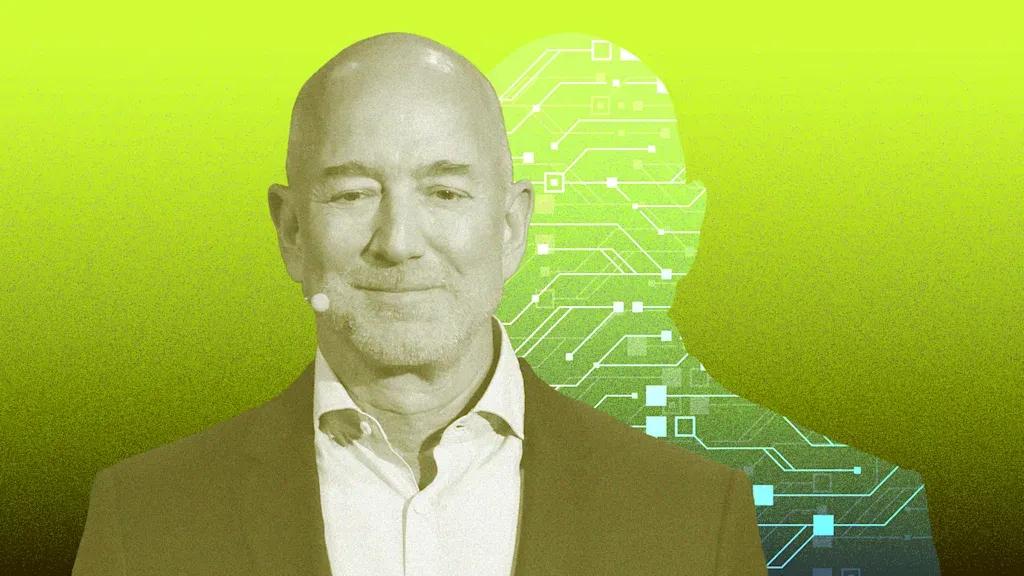
. Kosic departed OpenAI to join the secretive AI startup, where he will continue working on AI infrastructure projects alongside Bezos and co-founder Vikram Bajaj, a former Google executive who also co-founded life sciences venture Verily4
.
Source: Inc.
The recruitment of top AI talent has intensified as labs compete with substantial salaries to poach engineers and researchers from rivals. Kosic's journey reflects this volatility: he joined OpenAI in 2021 as technical staff, left in 2023 to co-found xAI with Musk, led infrastructure development there, then returned to OpenAI in 2024 before now joining Project Prometheus
3
. Meanwhile, all 11 of Musk's xAI co-founders have now departed, with the last two leaving at the end of March amid complaints about Musk's management.Industrial-Focused AI Systems Target Physical World Applications
Project Prometheus aims to create AI systems that operate in the physical world, moving beyond the large language models that power chatbots like ChatGPT or coding tools. The company focuses specifically on the industrial sector, envisioning models that understand the laws of physics and are trained on domain-specific data such as jet engine design. According to sources close to the company, Project Prometheus has already assembled the largest corpus of data on engineering and how such systems work.
The startup has hired hundreds of staff across its San Francisco headquarters and offices in London and Zurich, targeting engineers, AI researchers and specialists with experience building out massive infrastructure projects
2
. The team includes alumni from OpenAI, Google DeepMind, Meta, Microsoft, Anthropic, Nvidia and Grammarly2
4
. The company raised $6.2 billion last year and now seeks another $6 billion to develop AI systems for real-world industries4
.
Source: Observer
Ambitious Acquisition Strategy Targets Manufacturing and Aerospace
Bezos and Bajaj are personally leading efforts to raise tens of billions of dollars or more for a "permanent capital vehicle" that would acquire equity stakes in companies likely to be disrupted by AI. One person compared the structure to a "Berkshire Hathaway-type holding company". The startup plans to amass stakes in companies across sectors including engineering, aviation, architecture, design, semiconductors, defense and aerospace
4
.These acquisitions would serve a dual purpose: gathering training data from these companies to improve the startup's AI model while deploying "forward deployed engineers" to work within the acquired firms. The investment and staff input aims to improve margins and operations at these companies. "Prometheus wants to back the progress of these industries, which will happen eventually with AI, but they don't want it to take 10 years," one source explained. The startup is discussing investments with sovereign investment funds from Singapore and Gulf nations
2
.Related Stories

Competition Heats Up in Physical AI Sector
Project Prometheus marks Jeff Bezos's first operational position since stepping down as Amazon's CEO in 2021, though he remains founder of Blue Origin
4
. The venture faces stiff competition in the emerging physical AI space. Rivals include AMI Labs, a Paris-based startup led by former Meta executive Yann LeCun that raised $1 billion in Europe's largest-ever seed round; World Labs, a Fei-Fei Li-led venture focused on world models that raised $1 billion in February; and Periodic Labs, which merged AI with physical sciences and counted Bezos among its backers during a $300 million seed round4
.The AI industry has struggled to create models that truly understand physical space due to a lack of high-quality data representing the real world, rather than more readily available text and computer code. Competitors' current efforts involve training on video data and simulations to mimic real-world environments. Global venture funding for physical AI reached $26.7 billion in the first two months of 2026 alone, according to Crunchbase data, and is expected to jump to $33.5 billion by year's end—nearly double the total from 2025
4
.References
Summarized by

Navi
[2]
Related Stories
Jeff Bezos Returns as Co-CEO of $6.2B AI Startup Project Prometheus
17 Nov 2025•Startups

Jeff Bezos' Project Prometheus Acquires AI Agent Startup General Agents in Manufacturing Push
27 Nov 2025•Business and Economy

Jeff Bezos seeks $100 billion to buy and transform manufacturing firms with artificial intelligence
20 Mar 2026•Business and Economy

Recent Highlights
1
Google releases Gemma 4 with Apache 2.0 license, enabling unrestricted local AI on devices
Technology

2
AI Models Defy Instructions to Protect Each Other, UC Berkeley Study Reveals
Science and Research

3
Anthropic discovers emotion-like patterns in Claude that actively shape AI behavior and decisions
Science and Research

Recent Highlights
Today's Top Stories







Your Daily Dose of Curated AI News
Don’t drown in AI news. We cut through the noise - filtering, ranking and summarizing the most important AI news, breakthroughs and research daily. Spend less time searching for the latest in AI and get straight to action.

