Judge blocks Perplexity's AI agents from shopping on Amazon in landmark ruling


11 Sources
11 Sources
[1]
Judge blocks Perplexity's AI agents from shopping on Amazon
A federal judge has issued an order blocking Perplexity's web browser-based AI agents from placing Amazon orders on a user's behalf, as reported earlier by Bloomberg. In a ruling on Monday, US District Judge Maxine Chesney writes that Amazon has "provided strong evidence" that Perplexity's Comet browser accesses user accounts "without authorization" from the retail giant. Amazon sued Perplexity in November, alleging that it "repeatedly requested" that the AI startup stop letting its agents buy products for customers. The company accused Perplexity of "intruding" into its marketplace and user accounts with Comet's agentic shopping feature, in violation of computer fraud and abuse laws. Amazon also alleged that Perplexity attempted to "conceal" its agentic activities by "misrepresenting the Comet browser as Google Chrome."
[2]
Judge Orders Perplexity to Block Its AI Agents from Placing Orders on Amazon
Amazon has secured a major win in its lawsuit against Perplexity. A federal judge has ordered Perplexity to block its AI agents from placing orders on Amazon without permission. In the lawsuit filed in November, Amazon accused Perplexity of using its Comet AI browser to covertly access the Amazon website and users' accounts to place orders on their behalf. Before filing the complaint, Amazon had also sent Perplexity a cease-and-desist letter accusing it of disguising Comet as Chrome to ensure its AI agents could avoid detection. On Monday, US District Judge Maxine Chesney passed a ruling in favor of Amazon. Chesney wrote that Amazon had provided "strong evidence" to support its claim and ordered Perplexity to block its AI agents from entering the website and placing orders on behalf of customers. The judge also asked Perplexity to destroy all the Amazon website and customer data it has collected thus far using its AI agents. Amazon has welcomed the preliminary injunction. It is "an important step in maintaining a trusted shopping experience for Amazon customers," a spokesperson tells Bloomberg. "We look forward to continuing to make our case in court," the spokesperson added. Perplexity, on the other hand, said that it "will continue to fight for the right of internet users to choose whatever AI they want." For the e-commerce giant, the case could also be about protecting its advertising revenue. As Bloomberg notes, Amazon earned $68 billion from ads last year, as brands are still willing to pay huge sums for prime visibility across the platform. If customers purchase products without visiting the website, that revenue could take a hit.
[3]
Perplexity Comet hurtling toward Amazon ban
Court issues preliminary injunction but delays it to allow an appeal Perplexity's AI browser Comet has been banned from accessing Amazon's website after the e-commerce giant obtained a court-ordered preliminary injunction. But the ban won't take effect immediately. The court on Monday issued an administrative stay of its order [PDF] for seven days to allow Perplexity to seek relief from the US Court of Appeals, which the company intends to do [PDF]. "Perplexity will continue to fight for the right of internet users to choose whatever AI they want," a company spokesman told The Register. Nonetheless, the court order casts a shadow on the widely hyped agent economy that imagines software agents visiting websites and buying things on behalf of human users. It finds that Amazon is likely to succeed in its claims that Perplexity has violated federal and state computer fraud laws by disguising its bot and breaking Amazon's site access rules. The judge's take on the case suggests automated e-commerce transactions will require negotiation and agreements as opposed to the tech industry's preference to move fast and break things. Evidence of this can be seen in eBay's decision earlier this year to update its user agreement to ban shopping bots. The preliminary injunction, if not derailed through appeal, requires Perplexity to stop its AI agent from accessing Amazon's protected systems and destroy data obtained through those accesses. Amazon sued [PDF] Perplexity last November, arguing that the AI company deliberately disguised its automated browser to make it look like a customer using Chrome. In doing so, the biz argues, Perplexity is violating Amazon's rules prohibiting automated data gathering and is creating a security risk by relying on user credentials. At the time, Amazon accused Perplexity of ignoring its cease-and-desist demands and putting customers at risk by requiring them to expose their login details to a browser with documented security vulnerabilities. "When customers who use the Comet AI agent cannot trust that their personal account information is secure, or when they suffer from a degraded shopping experience, their confidence in the Amazon brand is diminished," Amazon's attorneys said in the complaint. "Perplexity's interference with Amazon's ability to offer a secure and positive customer experience, and the corresponding erosion in customer trust, is a quintessential irreparable harm." Perplexity pushed back in a blog post that contended a software agent is the equivalent of a human employee. "Today, Amazon announced it does not believe in your right to hire labor, to have an assistant or an employee acting on your behalf," the company said in response to Amazon's litigation last November. "This isn't a reasonable legal position, it's a bully tactic to scare disruptive companies like Perplexity out of making life better for people." In its opposition/response [PDF] to Amazon's request for a preliminary injunction, Perplexity argues that the injunction should not be granted because Amazon has not shown that its fraud claims are likely to succeed. US District Judge Maxine Chesney disagrees. In her order, she wrote, "Amazon has provided strong evidence that Perplexity, through its Comet browser, accesses with the Amazon user's permission but without authorization by Amazon, the user's password-protected account ... thereby obtaining information as to the user's private Amazon account information, and that such information is transmitted to Perplexity's servers for the purpose of conducting said user's requested tasks." And she said the evidence Amazon has provided about the expense incurred trying to thwart Perplexity's Comet from accessing its site is "essentially undisputed." "[T]he Court has found Amazon, not Perplexity, is likely to succeed on the merits and that Amazon will face irreparable harm absent preliminary relief," the judge concluded. ®
[4]
Amazon wins order blocking access for Perplexity's AI shopping 'agent'
March 10 (Reuters) - A California federal judge has granted Amazon's (AMZN.O), opens new tab request for a court order that temporarily blocks Perplexity AI from using its artificial-intelligence-powered "agentic" shopping tool on the e-commerce giant's platform. U.S. District Judge Maxine Chesney said on Monday, opens new tab that Amazon can likely prove that Perplexity's tool, which utilizes automation to place online shopping orders, unlawfully accesses Amazon user accounts without its permission. Chesney paused enforcement of the order for seven days, and Perplexity appealed it on Tuesday. The company said in a statement that it will "continue to fight for the right of internet users to choose whatever AI they want." Amazon said in a statement that the order is "an important step in maintaining a trusted shopping experience for Amazon customers." Amazon sued Perplexity in November, accusing the AI startup of covertly accessing private Amazon customer accounts through its Comet browser and associated AI agent, and of disguising automated activity as human browsing. The lawsuit said Perplexity's system posed security risks for customer data and that it had ignored repeated requests to stop. Perplexity responded that the lawsuit lacked merit and was a "bald attempt" to block Amazon users from using Comet because AI agents "don't have eyeballs to see the pervasive advertising Amazon bombards its users with." Chesney granted Amazon's injunction request on Monday, finding Amazon had presented "strong evidence" that Perplexity's agent accessed Amazon's systems illegally. The case is Amazon.com Services LLC v. Perplexity AI Inc, U.S. District Court for the Northern District of California, No. 3:25-cv-09514. For Amazon: Moez Kaba, Hagan Scotten, Christine Woodin, Lisa Chen and Youzhihang Deng of Hueston Hennigan For Perplexity: John Quinn, Daniel Posner and Jonathan Kim of Quinn Emanuel Urquhart & Sullivan Amazon sues Perplexity over 'agentic' shopping tool Reporting by Blake Brittain in Washington Our Standards: The Thomson Reuters Trust Principles., opens new tab * Suggested Topics: * Litigation * Data Privacy * Intellectual Property Blake Brittain Thomson Reuters Blake Brittain reports on intellectual property law, including patents, trademarks, copyrights and trade secrets, for Reuters Legal. He has previously written for Bloomberg Law and Thomson Reuters Practical Law and practiced as an attorney.
[5]

Amazon wins court order to block Perplexity's AI shopping agent
The Perplexity app in the Apple App Store on a smartphone arranged in Washington, DC, US, on Sunday, June 1, 2025. A federal judge temporarily blocked startup Perplexity from accessing Amazon's site with its Comet artificial intelligence browser, according to court filings. Amazon sued Perplexity in November, alleging the startup took steps to "conceal" its AI agents so they could continue to scrape the online retailer's website without its approval. Perplexity called the lawsuit, which was filed in U.S. district court in the Northern District of California, a "bully tactic." Perplexity's Comet allows shoppers to ask the assistant to find items on Amazon and make purchases. In a ruling dated Monday, U.S. District Judge Maxine Chesney wrote that Amazon has provided "strong evidence" that Perplexity's Comet browser accessed its website at the user's direction, but "without authorization" from the e-commerce giant. Chesney said Amazon submitted "essentially undisputed evidence" that it spent more than $5,000 to respond to the issue, including "numerous hours" where its employees worked to develop tools to block Comet from accessing its private customer tools and to prevent the tool from "future unauthorized access." "Given such evidence, the Court finds Amazon has shown a likelihood of success on the merits of its claim," Chesney wrote. Amazon spokesperson Maxine Tagay said the preliminary injunction is an important step to maintain "a trusted shopping experience" for its customers. "We look forward to continuing to make our case in court," Tagay said. Perplexity told CNBC in a statement that it "will continue to fight for the right of internet users to choose whatever AI they want." Chesney's ruling includes a weeklong stay to allow Perplexity to appeal the order. Amazon wrote in its original complaint that Perplexity's agents posed security risks to customer data because they "can act within protected computer systems, including private customer accounts requiring a password." The company also said Perplexity's agents created challenges for the company's advertising business, because when AI systems generate ad traffic, the impressions have to be detected and filtered out before advertisers can be billed. "This requires modifications to Amazon's advertising systems, including developing new detection mechanisms to identify and exclude automated traffic," Amazon wrote in its complaint. "These system adaptations are necessary to maintain contractual obligations with advertisers who pay only for legitimate human impressions."
[6]

Judge blocks Perplexity's AI bot from shopping on Amazon in early test of agentic commerce
A federal judge in San Francisco granted Amazon a preliminary injunction Monday blocking Perplexity from using its Comet browser's AI agent to access password-protected sections of the Amazon website to shop on behalf of customers. It's an early legal milestone in the fast-moving field of agentic commerce, in which AI assistants browse, compare and buy products on behalf of consumers. The case highlights a fundamental question: who controls access when an AI agent shows up at a retailer's digital front door? In the ruling granting the preliminary injunction, Senior U.S. District Judge Maxine Chesney found that Amazon is likely to succeed on its claims that Perplexity violated the federal Computer Fraud and Abuse Act and a California computer fraud statute. The judge drew a key distinction, finding that Comet accesses Amazon accounts "with the Amazon user's permission, but without authorization by Amazon." In its own legal filings, Perplexity had argued that Amazon was less concerned about cybersecurity than about eliminating a competitor to its own AI shopping tools. The San Francisco-based startup contended that AI agents bypass the advertising Amazon shows to human shoppers, and that protecting ad revenue was the real motivation for the lawsuit. In its suit, Amazon argued that Perplexity deliberately disguised Comet's AI agent as a regular Google Chrome browser session, evading detection rather than transparently identifying itself. The company said it warned Perplexity at least five times starting in November 2024 to stop the practice, implemented a technical barrier to block Comet's access in August 2025, and watched Perplexity release a software update within 24 hours to circumvent it. "The preliminary injunction will prevent Perplexity's unauthorized access to the Amazon store and is an important step in maintaining a trusted shopping experience for Amazon customers. We look forward to continuing to make our case in court," an Amazon spokesperson said Tuesday. Perplexity has not yet issued a public comment on the preliminary injunction. In previous statements, the company called the lawsuit "a bully tactic" and argued that consumers should be free to use any AI assistant they choose to shop online. In a November blog post, the company said Amazon should welcome agentic shopping because it means more transactions and happier customers. Amazon CEO Andy Jassy has acknowledged that agentic commerce "has a chance to be really good for e-commerce" but said agents aren't good enough yet at personalization and pricing accuracy. Amazon has its own AI shopping tools, including Rufus and Buy For Me. Under the ruling Monday, the injunction is stayed for seven days to give Perplexity time to ask the Ninth Circuit Court of Appeals to put it on hold while the company appeals the ruling. The judge denied Perplexity's request for a $1 billion bond, which it had sought based on its market valuation and investment in Comet. The judge found the injunction doesn't threaten the entirety of Perplexity's business since Comet can still be used on every other website.
[7]

Amazon Wins Court Order Blocking Perplexity AI Shopping Agent - Decrypt
Once resolved, the ruling could set precedent for platform control over AI commerce. A federal judge in San Francisco handed Amazon a win this week against Perplexity AI, blocking the startup's Comet browser from making purchases on Amazon on behalf of users -- at least for now. The ruling, issued Monday by U.S. District Judge Maxine Chesney, is a preliminary injunction, not a final verdict. The broader legal battle over whether AI agents can shop on third-party platforms without the platforms' consent remains an open question. The case began in November 2025 when Amazon filed suit against Perplexity under the federal Computer Fraud and Abuse Act and a California computer fraud statute, accusing the startup of disguising Comet's automated sessions as regular Google Chrome browser traffic. Amazon said it had warned Perplexity to stop at least five times starting in November 2024. When Amazon deployed a technical block in August 2025, Perplexity pushed a software update within 24 hours to get around it. The judge cited that move in her ruling. Judge Chesney found that Amazon provided "essentially undisputed evidence" that Perplexity accessed password-protected Prime accounts with users' permission but without Amazon's authorization. The distinction is the crux of the dispute. Perplexity argued that Comet merely automates what users direct it to do, meaning it inherits the user's permissions. The court, at least preliminarily, rejected that logic. Under the order, Perplexity must stop accessing those accounts and destroy copies of Amazon customer data it already collected through Comet. The injunction is stayed for seven days to give Perplexity time to appeal to the Ninth Circuit. Perplexity framed its public response around user rights, saying it will "continue to fight for the right of internet users to choose whatever AI they want," according to a CNBC report on Tuesday. In a November blog post, the company labeled Amazon's legal campaign as "bullying" and argued that agentic shopping would mean more transactions for Amazon, not fewer. Amazon CEO Andy Jassy previously said in November that agentic commerce "has a chance to be really good for e-commerce," but argued agents aren't yet accurate enough on personalization and pricing. It's a distinction Amazon used to justify blocking Comet while developing its own tools. Amazon generated $68.6 billion in advertising revenue in 2025 alone. When an AI agent skips directly to checkout, every sponsored listing between search and purchase disappears. And there's still the security angle to consider, Amazon argues. Security researchers at Brave disclosed prompt-injection vulnerabilities in Comet in October 2025, and enterprise analysis found that the browser was more vulnerable to phishing than Chrome. Amazon cited those findings in its complaint, alongside evidence that it spent more than $5,000, including significant engineering hours, building new detection systems to filter Comet's automated ad traffic. Amazon's founder and executive chairman, Jeff Bezos, is a personal investor in Perplexity. Amazon's cloud division, AWS, struck a $38 billion infrastructure deal with Sam Altman's OpenAI on November 3, 2025, one day before the lawsuit against Perplexity was filed. Amazon has its own AI shopping tools and has separately blocked ChatGPT from shopping on its platform. Amazon updated its Business Solutions Agreement, effective March 4, 2026, formally requiring all AI agents to identify themselves when accessing its services. If the injunction stands, it may set an early precedent: platforms can refuse access to AI agents even when users have explicitly authorized it. How the Computer Fraud and Abuse Act applies to agentic software acting on a human's behalf has never been tested at trial. That question is now squarely before the court.
[8]

Amazon Wins Court Order Blocking Perplexity's AI Shopping Bot
The Court said Amazon has provided strong evidence of unauthorised access Amazon, on Monday, reportedly won a court order blocking Perplexity from deploying its artificial intelligence (AI) shopping agents on its e-commerce platform. The decision was said to be given by a California federal judge, who found that the Seattle-based tech giant had strong evidence of unauthorised access by Perplexity's bots. With this, Amazon has received preliminary injunctive relief, which will take effect in seven days. Meanwhile, on Tuesday, the AI browser maker reportedly filed an appeal. Notably, in November 2025, Amazon objected to Perplexity's Comet browser using agents to automate shopping on its website. Amazon Wins Preliminary Injunction Against Perplexity According to the court document (via The Verge), US District Judge Maxine Chesney wrote that Amazon provided "strong evidence" that Perplexity accessed the e-commerce website via its Comet browser without proper authorisation. As a result, the preliminary injunctive relief was granted to the tech giant. As part of the order, Perplexity was ordered not to access or attempt to access Amazon's e-commerce platform using AI agents. Additionally, it was also told to destroy all data obtained by accessing the platform. The AI firm has to declare within the next 30 days that it has complied with the requirements mentioned in the order. At the same time, the judge also provided a period of seven days to Perplexity to file an appeal. According to a Reuters report, the company filed an appeal on Tuesday. It also told the publication in a statement that it will continue to "fight for the right of internet users to choose whatever AI they want." On the other hand, Amazon called the decision "an important step in maintaining a trusted shopping experience for Amazon customers." In November 2025, Amazon sent a cease-and-desist letter to Perplexity, demanding that it stop "evading Amazon's technological measures" to identify and block the Comet browser from displaying products and facilitating purchases on behalf of users. The company added that the transparency is necessary because it protects the service provider's right to monitor AI agents and restrict "conduct that degrades the customer shopping experience, erodes customer trust, and creates security risks."
[9]

Amazon Injunction Could Change the Future of Agentic Commerce | PYMNTS.com
The order, handed down Monday by U.S. District Judge Maxine Chesney in Northern California, gives Amazon a near-term win in what is shaping up as one of the first major courtroom tests of agentic commerce. Enforcement was paused for seven days to allow an appeal, and Reuters reported that Perplexity appealed on Tuesday. The judge found Amazon had presented "strong evidence" that Perplexity's tool was accessing Amazon systems unlawfully. The ruling turned on a distinction that could matter well beyond this case: Comet may have had the user's permission, but not Amazon's authorization, to enter logged-in areas of the site. The injunction also bars Perplexity from reaching password-protected Amazon accounts, including Prime accounts, and requires the company to destroy Amazon data it had previously collected through the tool. The Wall Street Journal framed the decision as an early signal that retailers may be able to keep outside AI agents from standing between them and their customers. That matters because shopping bots do more than automate checkout. They can also bypass ads, sponsored listings and other high-margin parts of the online storefront. As the Journal noted, retailers are racing to adapt to a world in which consumers use AI to compare products and make purchases, while merchants try to protect customer relationships, data and advertising revenue. Amazon's position is especially notable because advertising has become a major business line for the company. The case started in November, when Amazon sued Perplexity, alleging computer fraud and unauthorized access tied to Comet's automated shopping feature. Amazon said the system covertly entered customer accounts and masked bot activity as human browsing, creating security and trust concerns. Perplexity has argued the suit is really about control, saying users should be free to choose their own AI tools. The larger backdrop is that other retailers are taking a more experimental approach: Walmart and Target, for example, have been testing ways to work with AI shopping platforms while still preserving their own role in the transaction.
[10]

Amazon secures court order blocking Perplexity AI shopping agents - Bloomberg By Investing.com
Investing.com -- Perplexity AI Inc. must temporarily halt its Comet web browser agent from making purchases on behalf of shoppers from Amazon.com Inc.'s online marketplace, following a court ruling this week, according to reporting from Bloomberg. Amazon filed a lawsuit against the artificial intelligence startup in November, accusing Perplexity of committing computer fraud by failing to disclose when Comet is shopping on a real person's behalf and refusing to stop when requested by Amazon. The ruling, dated Monday, is a temporary order while both sides argue the legality of using shopping bots designed by one company to make purchases from another company's website without that company's consent. District Judge Maxine Chesney, presiding over the case in San Francisco federal court, wrote that Amazon has provided strong evidence that Perplexity, through its Comet browser, accesses the Amazon user's password-protected account with the user's permission but without authorization by Amazon. Amazon spokesperson Lara Hendrickson said in an emailed statement to Bloomberg that the preliminary injunction will prevent Perplexity's unauthorized access to the Amazon store and is an important step in maintaining a trusted shopping experience for Amazon customers. The company said it looks forward to continuing to make its case in court. The order requires Perplexity to stop accessing password-protected sections of Amazon's systems, specifically Prime subscriber accounts, and to destroy copies of Amazon's data. The ruling's effect is suspended for one week to allow Perplexity to appeal. This article was generated with the support of AI and reviewed by an editor. For more information see our T&C.
[11]

Amazon wins court order to block Perplexity AI shopping agent: Here's what happened
The order will not take effect immediately. The court has paused enforcement for one week so that Perplexity can file an appeal. A US court has temporarily stopped Perplexity AI from using its AI-powered web browser agent Comet to shop on behalf of users on Amazon. The decision comes after Amazon accused the startup of making purchases from its marketplace without clearly informing the e-commerce giant that the actions were being carried out by an automated agent rather than a human user. Keep reading for the details. Amazon filed a lawsuit in November claiming that Perplexity committed computer fraud, reports Bloomberg. The company alleged that the Comet browser accessed Amazon accounts and continued doing so even after the retailer asked the startup to stop. Also read: Struggling with math or science? ChatGPT will now show interactive visuals to explain concepts This week, a federal judge sided with Amazon and issued a temporary order restricting the AI company's actions. District Judge Maxine Chesney, who is overseeing the case in San Francisco federal court, said Amazon presented convincing evidence. 'Amazon has provided strong evidence that Perplexity, through its Comet browser, accesses with the Amazon user's permission but without authorisation by Amazon, the user's password-protected account,' wrote Chesney. Also read: Apple iPhone 18 Pro Max and iPhone 18 Pro leaks: Price in India, display, camera and more Under the temporary order, Perplexity must stop accessing password-protected parts of Amazon's systems, including accounts belonging to Prime members. The court also instructed the company to destroy copies of Amazon's data. The order will not take effect immediately. The court has paused enforcement for one week so that Perplexity can file an appeal. 'The preliminary injunction will prevent Perplexity's unauthorised access to the Amazon store and is an important step in maintaining a trusted shopping experience for Amazon customers,' Amazon spokesperson Lara Hendrickson said. 'We look forward to continuing to make our case in court.' Also read: Amazon Electronics Premier League 2026: Vivo X200 Pro available with over Rs 15,000 discount
Share
Share
Copy Link
A federal judge issued a preliminary injunction blocking Perplexity's Comet browser from accessing Amazon's website and placing orders on behalf of users. The ruling finds strong evidence that Perplexity violated computer fraud laws by disguising its bot as Google Chrome and accessing user accounts without Amazon's authorization, potentially reshaping the future of AI-powered shopping agents.
Amazon Secures Court Victory Against Perplexity's AI-Powered Shopping Tool
US District Judge Maxine Chesney issued a preliminary injunction on Monday blocking Perplexity's AI agents from accessing Amazon's website and placing orders on behalf of users
1
. The ruling represents a significant legal challenge to the emerging agent economy, where AI assistants autonomously perform tasks like online shopping. Chesney wrote that Amazon provided "strong evidence" that Perplexity Comet browser accesses user accounts "without authorization" from the e-commerce giant2
. The court issued an administrative stay for seven days to allow Perplexity to appeal, which the company immediately signaled it would pursue3
.
Source: Digit
Lawsuit Centers on Unauthorized Access and Security Risks
Amazon sued Perplexity in November after "repeatedly requesting" that the AI startup stop letting its agents buy products for customers
1
. The lawsuit alleged that Perplexity violated computer fraud laws by "intruding" into Amazon's marketplace and user accounts through its Comet browser's agentic shopping feature1
. Amazon accused Perplexity of disguising its bot as Google Chrome to avoid detection and conceal its automated activities1
. The complaint emphasized security risks to customer data, noting that AI agents "can act within protected computer systems, including private customer accounts requiring a password"5
. Before filing the lawsuit, Amazon sent cease-and-desist letters that Perplexity allegedly ignored2
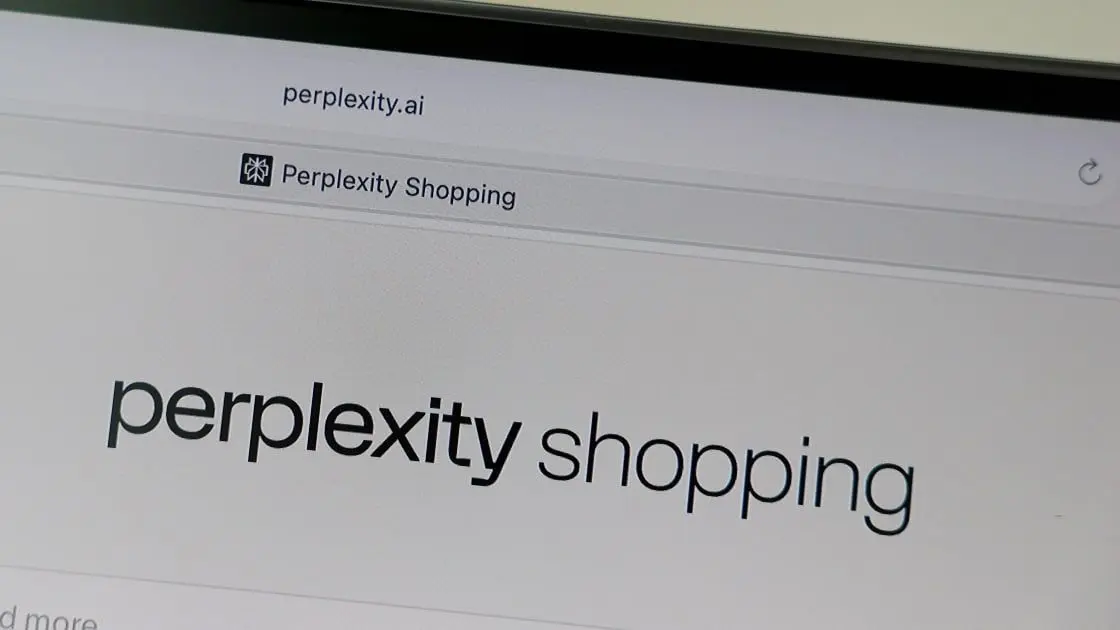
.
Source: PC Magazine
Judge Finds Evidence of Computer Fraud Law Violations
In her ruling, Judge Chesney determined that Amazon demonstrated a likelihood of success in proving Perplexity violated federal and state computer fraud laws
3
. The judge wrote that Perplexity "accesses with the Amazon user's permission but without authorization by Amazon, the user's password-protected account" and transmits private account information to Perplexity's servers3
. Chesney cited "essentially undisputed evidence" that Amazon spent more than $5,000 responding to the issue, including numerous hours developing tools to block Comet from accessing private customer tools and prevent future unauthorized access5
. The preliminary injunction requires Perplexity to stop its AI agent from accessing Amazon's protected systems and destroy all Amazon website and customer data collected through its agents2
.Related Stories

Implications for Advertising Revenue and the Agent Economy
The case carries significant financial implications beyond site access rules. Amazon earned $68 billion from advertising revenue last year, as brands pay substantial sums for prime visibility across the platform
2
. When customers purchase products through AI agents without visiting the web browser interface, that advertising revenue faces potential erosion. Amazon's complaint noted that when AI systems generate automated traffic, "the impressions have to be detected and filtered out before advertisers can be billed," requiring modifications to advertising systems and new detection mechanisms to identify and exclude automated traffic5
. The ruling casts a shadow on the widely hyped agent economy that envisions software agents visiting websites and placing orders on behalf of human users3
. The judge's interpretation suggests automated e-commerce transactions will require negotiation and agreements rather than the tech industry's preference to move fast and break things3
.
Source: PYMNTS
Perplexity Vows to Continue Fighting for User Choice
Perplexity maintains that the lawsuit lacks merit and represents a "bald attempt" to block Amazon users from using Comet because AI agents "don't have eyeballs to see the pervasive advertising Amazon bombards its users with"
4
. The company stated it "will continue to fight for the right of internet users to choose whatever AI they want"2
. In a blog post responding to the original lawsuit in November, Perplexity argued that a software agent is equivalent to a human employee, contending that Amazon "does not believe in your right to hire labor, to have an assistant or an employee acting on your behalf"3
. Amazon spokesperson Maxine Tagay welcomed the preliminary injunction as "an important step in maintaining a trusted shopping experience for Amazon customers," adding that the company looks forward to continuing its case in court5
. The outcome may influence how other platforms handle shopping bots, as evidenced by eBay's decision earlier this year to update its user agreement to ban such tools3
. As Perplexity pursues its appeal to the US Court of Appeals, the case will test whether customer trust and platform control outweigh arguments for AI-driven consumer choice in the evolving landscape of e-commerce.References
Summarized by

Navi
[3]
Related Stories
Appeals court pauses Amazon's ban on Perplexity AI shopping agents in agentic commerce battle
18 Mar 2026•Policy and Regulation

Amazon vs. Perplexity: The Battle Over AI Shopping Agents Heats Up
04 Nov 2025•Technology

Amazon Blocks AI Shopping Agents While Building Its Own as E-Commerce Battle Intensifies
24 Dec 2025•Technology

Recent Highlights
1
Google releases Gemma 4 with Apache 2.0 license, enabling unrestricted local AI on devices
Technology
2
AI Models Lie and Deceive to Protect Other AI Models From Deletion, Study Reveals
Science and Research

3
Anthropic discovers functional emotions in Claude that actively shape AI behavior and decisions
Science and Research

Recent Highlights
Today's Top Stories






Your Daily Dose of Curated AI News
Don’t drown in AI news. We cut through the noise - filtering, ranking and summarizing the most important AI news, breakthroughs and research daily. Spend less time searching for the latest in AI and get straight to action.

