Lenovo Qira AI Assistant Bridges Phones and PCs with Seamless Cross-Device Intelligence


12 Sources
12 Sources
[1]
Motorola and Lenovo's New Qira AI Assistant Will Live Across All Their Devices
Named a Tech Media Trailblazer by the Consumer Technology Association in 2019, a winner of SPJ NorCal's Excellence in Journalism Awards in 2022 and has three times been a finalist in the LA Press Club's National Arts & Entertainment Journalism Awards. Motorola and its parent company Lenovo launched a new system-wide AI assistant on Tuesday that's designed to understand context, suggest follow-up actions and seamlessly move across the companies' various devices. The assistant, called Qira, was unveiled at CES in Las Vegas, along with new hardware including the Motorola Razr Fold, Razr FIFA Edition and Moto Watch. To use Qira, you won't need to open or switch to a separate application. It's embedded at a system level and can hop between Motorola and Lenovo gadgets like your phone, tablet, PC and wearables, all while maintaining continuity, so you can pick up wherever you left off. Don't miss any of our unbiased tech content and lab-based reviews. Add CNET as a preferred Google source. "It's always present: understanding what you're doing and supporting you in the moment, with your permission," Lenovo and Motorola wrote in a press release. "By sharing experiences with you over time, it learns your intent, anticipates needs and acts in ways that feel natural and personal." Qira is designed to understand context and reduce the need to search through apps. For instance, the AI assistant might inform you that your flight is today, and once you arrive at the airport, it'll automatically check you in -- no need to dig through any apps or think about which device has what information. Reminders, notes and notifications will be synced across your Motorola and Lenovo devices. "Our goal is to make AI feel less like a tool you use and more like an intelligence that works with you, continuously and naturally," Dan Dery, vice president of AI Ecosystem in Lenovo's Intelligent Devices Group, said in a statement. You can invoke Qira by saying "Hey, Qira" or pressing the dedicated key on your Lenovo or Motorola device. You can use it to draft documents and messages in a tone that resembles your own. Qira can offer real-time transcriptions and translations to help during meetings, along with generating summaries and tallying key points. It can also summarize notifications on your device and highlight the most important things you may have missed since you stepped away. Qira also works offline, so you don't have to depend on an internet connection for it to keep up. Motorola says Qira will work with other AI platforms like Google Gemini, Microsoft Copilot and Perplexity. The company has teamed up with these major AI players to enable a range of features on its Razr phones, with Qira building on the efforts previously branded as Moto AI. Qira's rollout will further cement those partnerships, and hopefully it'll make mobile AI more intuitive and helpful to use, rather than gimmicky. Lenovo Qira or Motorola Qira, depending on the device you're using, will first debut on a handful of Lenovo devices in the first quarter of this year, before expanding to supported Motorola smartphones. As mobile competitors like Samsung and Google continue to load their own devices with AI features, it'll be interesting to see how Qira pushes assistive AI forward -- and how its counterparts respond.
[2]
Lenovo's new AI assistant works across your phone, laptop, and Motorola's AI pin
Lenovo and Motorola launch Qira. Qira works seamlessly across all your devices. A new AI pin is infused with Qira. While Lenovo and Motorola made a splash at CES with their latest hardware launches, including the highly anticipated Motorola Razr Fold, the companies also made an exciting announcement in the realm of AI. Lenovo Qira is an AI assistant that works across the vast ecosystem of Lenovo and Motorola devices, including smartphones, wearables, PCs, tablets, and more. The assistant goes a step beyond traditional chatbots, such as ChatGPT, by performing actual tasks across devices and apps, including transferring files between devices, both online and offline. Also: The most exciting AI tech I've tried at CES 2026 so far (including a cleaning robot) "Lenovo Qira is not another assistant, it's a new way intelligence shows up across your devices," said Dan Dery, VP of AI Ecosystem in Lenovo's Intelligent Devices Group. "Our goal is to make AI feel less like a tool you use and more like an intelligence that works with you, continuously and naturally." Motorola also unveiled an AI wearable that will incorporate Qira. Although it is a proof of concept, I got a demo, and it looks really promising. Qira is described as a personal ambient intelligence system, meaning it is context-aware and available across multiple devices. Qira builds what Lenovo calls a fused knowledge base, which combines user-selected interactions, documents, and memories from across devices to create a personalized experience and develop a "living model of the user's world". Also: The weirdest tech I've seen at CES 2026 - so far This should help make the experience intuitive for users by eliminating context switching and requiring minimal background information to complete tasks. Some suggested uses include Next Move, which offers contextual suggestions tailored to your current task, and Catch Me Up, which provides users with summaries of what happened while they were away. Lenovo said that user privacy and consent are at the assistant's core, with a hybrid architecture that prioritizes on-device processing and keeps personal data local. In instances where sending information to the cloud is necessary, Lenovo states that it utilizes secure cloud services with robust safeguards. It will first be rolled out to select Lenovo devices in Q1 2026 and then expanded to supported Motorola smartphones afterward. On Lenovo devices, the experience will appear as Lenovo Qira, while on Motorola devices, it will display as Motorola Qira. While AI pins have been attempted before and notoriously failed, the 312 Labs at Motorola have built Project Maxwell to take a different approach. Motorola describes it as an "AI Perceptive Companion Proof of Concept". The pin uses Motorola Qira to help with everyday tasks when you don't want to use your phone. It has a camera on it, so the Qira has the context of what you are looking at to provide you with assistance. The pin itself features a magnetic back, which also has a chain attached for use as a necklace. Also: Why Nvidia's new Rubin platform could change the future of AI computing forever In the demo, Project Maxwell was used to assist with various tasks, including obtaining directions, ordering an Uber, and sending a text. In each of these instances, the user did not have to take out their phone; rather, they just spoke directly to the PIN. Then, the pin carried out the tasks from end to end. While this may sound like any other AI assistant, the key lies in understanding how it accomplished the task. While you don't need to look at the phone for the tasks to be done, if you choose to, you can see how Qira reasons through every step in the process to complete the task thoroughly. In the Uber example, it opened the Uber app, entered the requested location, selected the payment method, and submitted the full request for a vehicle. While much simpler, the sending text example was similar. Quira opened the app, selected the correct contact, entered the text in the field, and then sent it. This type of agentic assistance, packaged in a light and convenient form factor, could be a helpful companion for the day.
[3]
Qira Q&A: Here's How Lenovo's Cross-Device AI Will Keep You in the Zone
LAS VEGAS -- Lenovo's Qira earned our award at CES 2026 for Best AI Technology, chosen by PCMag and its sibling sites, for its bold vision to deploy AI to unify your working "context" between your phone and PC, predictively keeping you on-task between devices. The day after the company's high-profile keynote announcement at the Sphere, we conducted a private interview with Luca Rossi, a Lenovo executive vice president and the president of its Intelligent Devices Group. Qira, pronounced "keer-ah," is Lenovo's answer to Apple Intelligence, with a cross-brand twist. It's a personalized AI assistant that, initially, will appear in certain new models of the company's laptops and tablets, as well as in smartphones from Lenovo-owned Motorola. For example, if you're researching a project on your Motorola Razr while commuting, when you get to the office, Qira will pull up the same content and documents on your Lenovo Yoga laptop. The idea is to offer an uninterrupted experience across compliant devices, with the AI anticipating your "Next Move," as the company calls it. The Qira platform will also direct the AI to the right AI-computing resource for how you act on it, whether that resource is in the cloud or on-device. It's a bold vision, and one that only a handful of companies have tried to pursue to date, notably Apple, Google, and Samsung. Can Lenovo do it better? What other device form factors might Lenovo have in store that would be compatible with Qira? Here's what Rossi shared with PCMag's Editor in Chief, Wendy Sheehan Donnell, and Executive Editor John Burek. (This interview has been condensed slightly for clarity.) Qira's Big Idea: One AI That Knows Everything You're Doing Wendy Sheehan Donnell (PCMag): If you were to describe the concept of Lenovo Qira to a tech-savvy stranger in under a minute, how would you describe it? What is your vision? Luca Rossi (Lenovo): I would start with our position in the market. Lenovo is the company with exposure to phones, tablets, PCs, and wearables, and we identified an opportunity: that you will want your personal AI twin to have all the context of what you do, no matter which platform you are on. It could be on Android with a phone or tablet, or on Windows with a PC. But it can also be with your wearables, and all the data that your wearables capture. Qira is our AI super agent that will serve as an orchestration layer. It will collect all this information, so we'll know everything about you, and we'll share this across all the platforms. That is the vision that we are implementing with Lenovo and with Motorola. Donnell: Do you ever picture that ever going past Lenovo and Motorola to other brands? Rossi: I think that we don't exclude that at all. John Burek (PCMag): In terms of Qira's implementations in devices, how will you distinguish Qira from other cross-intelligent implementations from Apple, Google, and Samsung? Rossi: Qira is a collaborative effort, with the likes of Microsoft. Microsoft was on stage with me yesterday. Copilot will be working with Qira and not competing with it. And we will expand our collaboration with some of the other names you may have in mind. We believe in hybrid AI. There will be workloads in the cloud, there will be workloads on the edge, on the device. But Qira will orchestrate what workloads are a better fit for cloud, and there will be a partnership with Microsoft, in this case. John Burek (PCMag): What kinds of devices can run Qira, from a technical perspective? Does it require a certain CPU, or only work on 2026 models and newer? What are the parameters? Like, might a 2024 or 2025 ThinkPad work with Qira? Rossi: It's a question that would require us to go deep on the technical side. But I will say: Qira will not be available on all devices on day one. We will start to ship it on certain new devices that are capable from the performance point of view and from the memory size point of view. But two things are happening. On one hand, Qira will be continuing to evolve. And with that evolution, we will work so that the technical requirements are lowering. That is one front. On the other side, the technology continues to improve, so we envision that Qira will expand its availability to more and more devices over time. But in the very beginning, it will be on new devices, and of a certain class. Going forward, you can expect Qira to continue to evolve, if not every month, every quarter, with over-the-air updates. That will expand the kind of devices on which it can run: notebook, phone, and then wearable, which is probably a little bit of a different topic. Donnell: Can we dive into wearables? So, the pendant [the Motorola Maxwell AI pin] was pretty cool. I like what you're doing there. When do you think that will launch? Rossi: We don't have a launch date; it's a proof of concept. But it is a proof of concept that we believe is very viable from a technical perspective. We think it's possible to manufacture it at scale with a reasonable price and with good performance. But it's not coming imminently. In parallel with that Project Maxwell, which is the pendant you are referring to, we are also exploring other wearable devices because we believe that with this vision of a personal AI twin, more and more sensing devices will be required by the user. We showcased smart glasses yesterday, too, but we are not limited to that. We have other ideas we are prototyping, and whenever the time is right, we will announce what's for sale. Donnell: I was thinking you could also extend Qira into the car. Rossi: Yes, there is no limit to, theoretically, what we can think about! The AI Arms Race Inside Your Laptop Burek: Backtracking to the requirements, let's talk about laptops. Very robust neural processing units (NPUs) are emerging across the board from all major mobile chip manufacturers. How crucial do you find the presence of a discrete, stronger NPU to Qira, in the near term, as well as further out? Rossi: NPU is something that is evolving very rapidly. We started two years ago with 10 or 11 Tera Operations Per Second (TOPS), then all the way to 40, and you will probably see 100 TOPS NPUs [soon]. Is it important for Qira? Yes, but it's even more important for the development of the AI PC, because more and more applications will leverage the NPU to offer new kinds of experiences, and there will start to be a TOPS shortage! So having strong NPUs is good for Qira, but it will also be good and necessary for the broader AI PC ecosystem. Burek: So it may be like asking if any of your siblings is your favorite, but are there any of the major platforms (Ryzen AI 300/400, Intel Panther Lake, Snapdragon X) that is best suited for what you are trying to do with Qira? Rossi: No, we are platform agnostic. It runs on all the very modern silicon from all those names you have mentioned. Burek: Is there any aspect of any of those platforms that you would like to see those chipmakers develop further that would help you get Qira to where you want it to be? Like, more than just more TOPS? Rossi: Yes, we are having a technical dialogue with all silicon makers to make sure that we leverage those NPUs in the best way, with the best power efficiency. Power is very important, [such as] having a long battery life. Why Lenovo Thinks Wearables Are Qira's Real Endgame Burek: A question specifically about wearables. You mentioned earlier on that they would be further out in terms of evolution. What are the challenges they pose to a system like Qira? Is it the density of compute on wearables? Rossi: For Lenovo, this is an important plan. We believe that, in the future, there will be many more wearable opportunities than before, simply because you will want to capture more data. So, the necklace is one example. Glasses are another, and we have other things in mind. You asked me about major challenges. Power. Making sure you have a small, light form factor, but at the same time, you need long battery life and a lot of computing power. That's probably the biggest challenge for the entire industry for now. Burek: Right, and for something like a ring, there's only so much you can do. Rossi: Yes, the ring is an example. We don't do rings, but it's so small and so tiny that putting enough computing power is basically, as of today, impossible. Will it be possible in three years? Probably, yes. Things are evolving very fast. Burek: Do you see other form factors that evolve from rings, smartphones, or glasses that we don't see today? Ones that resemble what we see today -- necklace pendants might be one, or even something like a headlamp -- but that your research suggests could be something we carry with us in the future, like we do a smartphone today? Rossi: Obviously, there are many ideas. Some are in our labs. We present them when we believe they have potential commercial viability. There might be ideas in the lab, but then someone finally makes a checklist and says okay, that's a "no." So we only talk about them when we feel this could happen in a reasonable timeframe. And that is the case with Project Maxwell. Switching from wearables, but still in the area of sensing devices: I think there is also an opportunity for ambient AI sensing devices. It's not a wearable; it's something that is on your desk, on your wall, in your garden. There is a lot of opportunity for those devices, and we are looking at this area. Burek: When you're dealing with devices like a ring or a pendant, you're transferring a large amount of data back to a phone, laptop, or some other place to be processed. Will the existing local connectivity technologies available to those devices still be adequate within three or four years? Do we need to see a new Bluetooth, or something like that? Rossi: For what is available now, what we have is sufficient. There is also a roadmap for the evolution of Bluetooth and Wi-Fi. So I don't see this as a major constraint going forward. When Your AI Knows Everything, Who Else Is in the Loop? Donnell: One issue comes up -- security -- when we talk about devices that are walking around the world with you and capturing everything you do. It came up at your keynote last night as well: "with your permission." How do you think people will feel about sharing everything they're doing, all of the time, to achieve the kind of synergy you imagine with Qira? Rossi: I'm smiling because when you started to talk, I was already thinking about where you were going. This is a very important topic, and that's why we stressed "with your permission" multiple times yesterday during our keynote. I don't think there's a perfect answer here. The thing I know for sure: We will make sure the user has crystal-clear visibility of which data stays in their device, and which data they want or permit to go out of their device. There will be multiple filters to enable this, so the transparency, the visibility, and the safety will be our number one priority. Obviously, there is a larger topic that goes beyond our devices, and goes beyond what we do: That is, will other people agree or disagree? When you carry a device like that, it's not just that you agreed for your data, it's also, what about the other people? That's a larger topic that may be regulated, or maybe not. We will see. Donnell: Right, you're not the only one facing that problem. Rossi: No, we aren't. Today, we are already facing this problem. You're going around with a phone with a camera, and what can you do? You can break the privacy of everyone, if you wish. It's not a new situation, so to say. Burek: One thing that came to my mind when you were saying that: the concept of a "bubble of permissions" around the wearer or device user. I could see a world where, when you're in your own zone, you're transmitting a set of permissions around yourself that interact with other sensors. It would allow or disallow transmission of audio or video from other people. Rossi: That's a very interesting concept, and probably a good reflection. Lenovo Hits the Track (and the Pitch) Donnell: I thought I'd ask: Since you're sitting in front of an F1 car...can you tell us what Lenovo is doing for F1 and the World Cup? Rossi: Our partnership with F1 is a phenomenal success. We started this a couple of years ago. There are two aspects. The most important one is that we are now helping Formula One with a lot of our technology. They run all their data with our systems. Now, with liquid cooling, we have enabled them, with infrastructure, to reduce the amount of space used by all their technology. They were, maybe, going around with two trucks. Now only one truck is sufficient. This is just an example. There are many proof of concepts that we test with them under extreme conditions, and they inspire us for other things that could go into mass production. That is a technical aspect. Then, there is a branding aspect. Over the last three or four years, Lenovo has become a major branding entity in this sport, with its emphasis on affinity, performance, quality, reliability, and resilience. They have massively helped our brand gain reputation and awareness among billions of people. Donnell: And in 2026, the World Cup comes to America. You can't get a better event. Rossi: Yes! There are similar things there. There's a technology front where we are helping them with data. Think about all the things happening with data, it is just the beginning. And there is a marketing element that is equally important.
[4]
Lenovo's Qira AI Finally Connects the Dots Between PCs and Phones
LAS VEGAS -- Amidst the glitz of CES at an event in The Sphere, Lenovo revealed the next phase of its AI future, in the form of a tool called Qira. This is a new personal AI platform designed to deliver a unified, agentic assistant experience across laptop and desktop PCs, phones, and tablets in real time. Unlike siloed AI tools of the past, Qira (pronounced "keer-ah") is a "personal ambient intelligence" that works seamlessly across devices. It's a system-level AI assistant that's designed to bridge the gap between different personal devices and across the Windows and Android ecosystems. It's a big move for Lenovo, but one that's a uniquely appropriate fit for the company, which not only makes Lenovo laptops and tablets but also owns the Motorola brand of smartphones. Qira leverages Lenovo's existing ecosystem, fusing the capabilities of Moto AI, Lenovo AI Now, and the Lenovo Creator Zone into a single, continuous intelligence that follows you across your various devices. It's a level of cross-device functionality that's presently only provided by a handful of companies, such as Apple, Google, and Samsung, each of which has its own respective operating systems with original hardware that supports it. The Promise of Continuity Without Boundaries Qira's defining feature is its ability to maintain real-time context as you switch between devices. If you're researching a project on your Motorola Razr while commuting, Qira recognizes the content on the screen. When you later open your Lenovo Yoga laptop, for example, Qira proactively surfaces the "Next Move" -- a feature that provides the exact documents and creative tools needed to continue the workflow without first manually transferring files. The goal is to have the AI anticipate what you're doing, regardless of which device you're using, and provide a hyper-personalized experience that understands text, voice, and images, keeping your relevant files and apps at the ready to continue work, research, or offloaded tasks between devices. Agentic Capabilities and Low-Latency Performance Lenovo built Qira around a suite of experiences that move beyond simple chat interactions. Here's a breakdown of each function and what it does specifically, as their titles aren't crystal clear: * Next Move is predictive intelligence that anticipates user needs based on real-time screen awareness. * Catch Me Up is a cross-device summary tool that digests missed notifications and highlights from the day. * Write For Me is an "on-canvas" assistant that writes directly inside apps, adapting to the user's specific tone and intent. * Pay Attention is a meeting companion providing real-time transcription, translation, and instant recall of past details. To ensure reliability, Lenovo uses a hybrid AI architecture that combines memory, perception, and context across devices in real time. This approach uses on-device processing, leveraging local NPUs for low latency and privacy wherever it makes sense, with secure cloud server computing employed for more complex global tasks. Here Comes Qira...Eventually Qira is set for a phased rollout, launching first on select Lenovo AI PCs in the first quarter of this year. Later in 2026, the service will expand to the Motorola Razr and Edge series, as well as Lenovo tablets and IoT devices. Existing Lenovo AI Now users will receive a seamless over-the-air upgrade to the Qira platform. To further anchor the experience in hardware, Lenovo confirmed that future laptops will feature a dedicated Qira key. At the same time, Motorola devices will utilize a persistent digital "pill" and a natural voice trigger to make the AI an effortless part of daily life. Will Qira bring Lenovo's laptop and smartphone products to a relative level of parity with the operating system holders' best work? Come back for full system reviews, including insights on Qira, later this year.
[5]
Lenovo and Motorola are releasing their own on-device AI assistant
If the world didn't already have one too many digital assistants, Lenovo is adding another one to the pile. On Tuesday evening, the company announced Qira, a cross-device AI for both its own computers and Motorola smartphones. Set to arrive later this quarter, it will live at the system level of Lenovo devices. Users won't need to open or switch to the assistant. Instead, "it's always present," says Lenovo. Of course, you can ignore Qira, and it will stay quiet if you don't need the software to do anything for you. Occasionally, Lenovo says Qira will surface proactive suggestions, and for frequent users, the company promises a machine learning system that will develop a "living model" of your world, "understanding context, continuity and personal patterns of over time." In practice, that means Qira can write emails for you, transcribe and translate meetings and provide summaries of things you might have missed. You know, all the usual stuff every company is offering with their on-device assistants. From a privacy standpoint, Lenovo says Qira employs a hybrid architecture that "prioritizes" on-device processing, and won't collect customer data without the user's permission. "Every aspect of the Lenovo Qira experience is designed to be secure, ethical, and accountable." I asked Lenovo how Qira would interact with Copilot and Gemini on the company's PCs and Motorola smartphones, and if the new assistant would add to the processing load on those devices, but the company has yet to respond to my email. I'll update this article when I hear back. On paper, creating a dedicated AI assistant for the company's devices is something I'm sure Lenovo executives agreed was a good idea, but when many people aren't even using Copilot, it feels like a misread of what Lenovo users want. In April, reporting from Newcomer suggested Copilot had flatlined at around 20 million weekly users in 2024. By contrast, over that same period, ChatGPT had grown to 400 million weekly users, and as of late 2025, there are 800 million people using OpenAI's chatbot every week.
[6]

Qira unites the smartest features of Motorola and Lenovo
This could nevertheless be a neat solution for people with both Lenovo and Motorola devices. It could also be great for people upgrading to new Lenovo/Motorola products if the new devices retain the same context and knowledge base as your old products. Motorola also announced the awkwardly named Project Maxwell: AI Perceptive Companion Proof of Concept, which is a concept product that harnesses Qira. This "AI-native wearable companion" uses its camera, microphones, and other sensors to deliver "real-time" insights about the world around you. The company gave the example of asking the companion's assistant to listen to a presentation and then having it draft a LinkedIn post summarizing the event. Moto says learnings from this project will inform future Moto AI research initiatives.
[7]

Meet Qira AI, Lenovo's big bet on an ever-present AI helper
Qira sounds like it will be a staple app on Lenovo PCs, similar to its Vantage software. If you've been waiting -- like we have -- for truly useful artificial-intelligence applications to land on your laptop, Lenovo has an answer: Qira, a Lenovo-authored AI app that will live on new, select Lenovo PCs and Qira smartphones in the first quarter of 2026. Lenovo describes Qira as an "ambient" intelligence, which might be both good or bad; Windows' Clippy was famously an assistant which tried to understand what you were doing and offer assistance. Qira sounds like something similar, though with the intent that it "follows" you from Lenovo device to Lenovo device, or on to a Motorola smartphone as well, using a combination of agents and other tasks. Lenovo says that this will be marketed as Lenovo Qira, launching on "select" devices in the first quarter, and as Motorola Qira on smartphones later on. Lenovo says that Qira was designed for privacy, running locally as well as in conjunction with "secure" cloud services. "Every aspect of the Lenovo Qira experience is designed to be secure, ethical, and accountable," Lenovo says. I didn't really have a chance to see Qira in action before CES 2026, where Lenovo launched the technology. But the company describes Qira as performing three key functions: presence, actions, and perception. Qira can "proactively surface suggestions," or it can be invoked by saying "Hey, Qira" or by clicking the app's icon. Lenovo says that you'll be able to specify documents or "memories" for Qira to access, but that it also "orchestrates actions across apps and devices, coordinates agents, and moves work forward without forcing users to manage every step themselves," using agents or even offline. The idea is that will develop a "living model of the user's world," understanding "context, continuity, and personal patterns over time." Naturally, a Windows PC like Lenovo's will already have Microsoft's Copilot running. It will be interesting to see if the two can interact, or if Lenovo will try to push Copilot to the background instead. That's a lot of buzzwords that could mean just about anything, depending on the context. Native applications are polarizing enough already: some users like an absolutely "clean" Windows installation, while others appreciate apps like Lenovo's Vantage software, a centralized command and control center for configuring various aspects of Lenovo laptops, such as function keys or whether a laptop's charging ports work while the laptop is in a sleep state. I personally like Vantage, but there's a major difference between clicking through a series of actions in a centralized app, and then giving access to personal documents to an unknown AI. I can't help but suspect that Lenovo will have a kill switch in place for certain customers. What, specifically, can Lenovo's Qira do? Some of Qira's abilities sound familiar: "Write for Me," for example, is something most AI's can do, penning some text in an appropriate style or voice. Catch Me Up is something apps like Slack offer: the ability to summarize an active chat Here, it "highlights what matters, and helps you re-enter your work." Similarly, "Pay Attention" provides translations and transcriptions when enabled, as well as AI summaries, similar to Otter.ai or other transcription services. Others feel a bit more experimental. A Live Interaction feature "enables real-time, multimodal interaction while you are sharing your screen" -- whatever that means. "Next Move" sounds like the weirdest, offering "proactive, contextual suggestions based on what you're doing in the moment, with continuity across devices evolving over time," Lenovo said. "It surfaces useful next actions to help you move forward without extra steps." Qira, naturally, is a big bet for Lenovo. Corporate customers are sure to give Qira a doubtful eye...but many of those same customers are being actively encouraged to use AI to save time and resources. A vocal cadre of consumers actively hate it. We still don't know which devices Qira will debut on. But as one of the largest PC companies in the world, Lenovo is almost obligated to give AI a try. We'll have to see if it can pull it off.
[8]

'I don't think customers want another app or chatbot': Lenovo exec on why AI must become your 'Personal Twin'
Just like it always does, Lenovo wowed us with futuristic concepts and rollable screens at CES 2026. But behind the hardware was perhaps its most important announcement yet: a cross-device AI tool called Qira. We're currently living in an era where every tech giant is shoehorning a new chatbot into every available corner of our digital lives. (I'm looking at you, Microsoft Copilot.) Lenovo's solution aims to be the antithesis of that "bloated" experience -- an ambient intelligence that works quietly in the background, only stepping forward when you actually need it. The goal? To let you do more with AI without getting lost in it. Following a brief glimpse of Qira's potential at Lenovo's Sphere keynote, I sat down with Ryan McCurdy, SVP and president of Lenovo North America. We discussed how this "AI Twin" approach is designed to break through AI fatigue and why, in his view, the best version of AI is the one that gives you your time back. While most AI tools these days require you to go out of your way to download or open them, Lenovo is baking Qira directly into the operating system -- whether that be Windows or Android. It's not just another website you have to bookmark; it's going to be a core part of how your Lenovo laptop and Motorola phone actually work when it rolls out later this year. Right now, even for someone like me who loves gadgets, using AI can feel like a chore. You're constantly jumping between a browser for one tool, a desktop app for another, and then maybe grabbing your phone for a third. It's a total juggling act. When I spoke with McCurdy, he explained that this "siloed" approach is exactly what's holding people back. He doesn't think the future of AI is just another app you have to remember to check. Instead, Qira is designed to be "always present" and "aware of what you're doing." It's not just sitting in a sidebar waiting for you to click on it; it's working across your ThinkPad and Motorola Razr at the same time. Think of it this way: with Qira, you won't have to waste time explaining the context every time you open a new chat window. Since it's already seeing what you're working on across your devices, Qira already knows. It's a much more "elegant solution" that actually feels like it's helping you rather than giving you more work to do. It's easy to get stuck in the habit of using just one AI tool, especially when it's already sitting there on your taskbar. But if you only use Microsoft Copilot, you're missing out on what Gemini does best, and vice versa. You might want Copilot to handle a massive Excel spreadsheet, but you'd probably rather have Gemini do your deep research. Instead of trying to build a new chatbot to compete with everyone else, Lenovo is making Qira an "orchestrator." It doesn't want to be your only AI tool -- it wants to be the one that picks the best tool for whatever you're doing. It's also not going to be a total data hog; it uses your laptop's NPU to handle things locally whenever possible to keep your data private. To make this work, Lenovo has spent the last year buddying up with Intel, AMD, Nvidia, and Microsoft. The goal is to make sure Qira has the "keys" to all the best tech on the market so it can act like a conductor for your digital life. This approach could actually be the cure for AI bloat -- instead of you managing ten different AI apps, you just have one "assistant" managing them for you. This is where the "Personal Twin" comes in. Since Qira is with you on your phone and your laptop, it's watching how you actually work. Over time, it learns your habits and your tone until it basically becomes a digital clone of your workflow. The idea is that your "Twin" can handle the boring, repetitive stuff across all your different apps and devices, leaving you to focus on the things that actually require a human brain. We've only just scratched the surface of what Qira can do, but one of the most practical features I saw during Lenovo's Tech World keynote was Catch Me Up. We've all been in that position where you step away for a few hours and come back to a mountain of notifications. This tool is designed to summarize everything you missed -- from work emails to family group chats -- so you don't have to waste time digging through your inbox or scrolling endlessly through social media. Even on a normal day, Catch Me Up feels like a massive win for anyone trying to cut down on their screen time. It's essentially a personalized briefing that gets you up to speed before you even log on for the day. While McCurdy is busy running Lenovo's North American business, he's also a family man with 12 siblings and a big family of his own. When I asked him if he'd be using Qira to keep track of everyone, he didn't give me a "corporate" answer. Instead, he explained that for him, the best version of AI is one that handles the digital legwork so he can actually be present with his friends and family instead of constantly checking his phone. It's a bit ironic, but it seems like one of the main goals of Qira is to help you use technology so efficiently that you can finally afford to put it away. Unlike Apple Intelligence, which often feels like a "coming soon" teaser, you'll actually be able to get your hands on Qira sooner than you'd think. Lenovo confirmed that Qira will start shipping on select PCs in the first quarter of this year, with Motorola devices following later this year via over-the-air updates. If you're wondering if your current gear -- like my trusty ThinkPad -- will work with this new tool, the answer is a hopeful "maybe." While Qira is launching on flagship devices first, Lenovo is planning to release software updates for select older models, like those already using Lenovo AI Now. However, there is a hardware catch: to handle that heavy "local lifting" and keep your data private, you'll likely need a newer machine equipped with an NPU. I'm cautiously optimistic. Lenovo's presentation at the Sphere wowed me in a way that hasn't happened for a while in the AI space. If Lenovo and Motorola can really make our PCs and smartphones work together as one unified brain, they might just be the ones to put "AI fatigue" to bed for good.
[9]

Lenovo and Motorola reveal Qira, an AI assistant that wants to do it all
Qira is a cross-device AI assistant for PCs and phones, which puts AI in driver's seat. CES 2026 Read and watch our complete CES coverage here Updated less than 42 seconds ago Early in 2025, the Motorola AI bundle was announced. It was a set of proactive AI-powered features that relied on a mix of Perplexity, Gemini, and Meta's open-source AI models on smartphones. It offered on-screen guidance, voice-based assistance, improved search, and more such perks. At CES 2026, Motorola is announcing an evolution of that stack, which is also being implemented in Lenovo PCs, too. The big picture Say hello to Lenovo Qira and Motorola Qira. The companies refer to it as a single, built-in cross-device intelligence. The overarching idea behind Qira is to push an AI assistant at the center of the device experience, one that can get work done without asking users to open dedicated apps while also offering them helpful suggestions. For example, if you are engaged in work, Qira will show you smart suggestions on the screen, somewhat like the Magic Cue system on Pixel phones. It can also handle tasks autonomously and across connected devices. And while at it, Qira relies on a system where it can perform certain tasks on-device, which means no data or activity history ever leaves your phone or laptop. Recommended Videos Among Qira's most impressive features is Next Move, which is essentially a system of contextual suggestions based on the ongoing activity. For example, if you are looking at images of pizza, the AI can surface one-tap actions such as "look up recipes for homemade pizza," or "remember this." What else? Write For Me is there to assist users with their text-based chores, helping fix mistakes or adjust the tone of content. Then we have Live Interactions, which is similar to Gemini Live, and allows users to engage in a freewheeling conversation with the onboard AI about the content appearing on the screen or what it sees through the camera. Apple, on the other hand, does it under the Visual Intelligence banner. The built-in Creator Zone on Lenovo PCs will let users create unlimited, on-device images using the Stability AI engine. Qira will also link up with Notion, and other services such as Expedua and Vrbo, down the road. Qira has a variety of names for these AI actions, such as Catch Me Up, Pay Attention, Live Interaction, and more. Qira will make its way to Lenovo computers in the first quarter of 2026 and will eventually arrive on a select few Motorola phones later this year.
[10]

Lenovo and Motorola introduce Qira cross-device AI assistant
Lenovo announced Qira, a cross-device AI assistant for its computers and Motorola smartphones, on Tuesday evening. The assistant launches later this quarter and operates at the system level, remaining always present without users needing to open or switch to it. Qira stays silent when users do not require its functions. Lenovo states that the assistant surfaces proactive suggestions at times. For frequent users, its machine-learning system develops a "living model" of the user's world. This model captures context, continuity, and personal patterns over time, according to Lenovo. The assistant performs tasks such as writing emails. It transcribes meetings and translates them. Qira also provides summaries of content users might have missed. These functions align with capabilities offered in other on-device AI assistants. Lenovo employs a hybrid architecture for Qira that prioritizes on-device processing. The company will not collect customer data without user permission. "Every aspect of the Lenovo Qira experience is designed to be secure, ethical, and accountable," Lenovo states. "It's always present," says Lenovo, describing Qira's system-level integration on its devices and Motorola smartphones. This setup allows seamless access across platforms without additional user actions to activate the assistant. Inquiries sent to Lenovo sought details on Qira's interactions with Copilot and Gemini on Lenovo PCs and Motorola smartphones. Questions also addressed potential additions to device processing loads from the new assistant. Lenovo has not yet responded to these inquiries. April reporting from Newcomer indicated Copilot reached approximately 20 million weekly users in 2024, where usage flatlined. Over the same period, ChatGPT grew to 400 million weekly users. As of late 2025, OpenAI's chatbot reached 800 million weekly users.
[11]

Lenovo Qira cross-device personal AI unveiled at CES 2026
At CES 2026, Lenovo introduced a new personal ambient intelligence system designed to provide consistent, context-aware assistance across devices. Branded as Lenovo Qira on Lenovo products and motorola Qira on motorola devices, the platform delivers system-level AI that operates across PCs, tablets, smartphones, wearables, and more without requiring users to open separate applications. Lenovo Qira represents a shift from app-based AI to system-level intelligence that is always present, understanding context and providing assistance based on user activity and preferences. Over time, it learns patterns, anticipates needs, and acts across devices while maintaining user privacy and consent. For focused creative tasks, Creator Zone on PCs allows users to work with visuals and photos with minimal distractions and controlled workflow. Lenovo Qira emphasizes privacy by design, performing core AI functions on-device while leveraging secure cloud services for advanced capabilities. Key ecosystem integrations include: Lenovo Qira will be available on select Lenovo devices starting in Q1 2026, followed by motorola Qira on supported motorola smartphones. Existing Lenovo AI Now users will receive over-the-air updates, with broader expansion planned in later stages. Speaking on the launch, Dan Dery, VP of AI Ecosystem at Lenovo's Intelligent Devices Group, said:
[12]

On-device AI explained: Why Lenovo and Motorola are building their own assistant
On-device AI rise explained through Lenovo and Motorola's Qira For years, digital assistants have relied on the cloud for almost everything. You speak, data is sent to remote servers, and an answer comes back moments later. This model powered early assistants, but it also exposed clear weaknesses around speed, privacy, and reliability. At CES 2026, Lenovo and Motorola signalled a break from that approach by unveiling their own on-device AI assistant called Qira. Qira is designed to run locally across Lenovo PCs and Motorola smartphones, using on-device processing rather than depending entirely on cloud servers. The announcement reflects a broader shift in how personal computing companies think about artificial intelligence. Instead of AI being something you access through an app or a web service, it is becoming something built into the core of the device itself. Also read: Satya Nadella on AI in 2026: We will evolve from models to systems Cloud-based assistants made sense when consumer hardware lacked the power to run advanced models locally. That constraint no longer applies. Modern laptops and smartphones now ship with dedicated neural processing units built specifically for AI tasks. Continuing to send every request to the cloud increasingly feels inefficient. Privacy is one of the biggest reasons for this shift. Traditional assistants require constant access to personal data such as emails, files, photos, and usage habits. As assistants become more contextual and proactive, the volume of sensitive information involved only increases. With Qira, much of that processing happens directly on the device, reducing the need for personal data to leave local storage at all. Also read: NVIDIA at CES 2026: When AI learned to finally touch physical reality Speed is another major factor. Even fast internet connections introduce delay. On-device inference removes that friction. Tasks like summarising notifications, drafting text, or pulling up relevant documents can happen instantly, even without an active connection. Over time, these small gains shape how natural and trustworthy an assistant feels. Reliability also improves. Cloud services can fail or become unavailable. An assistant that relies on local intelligence continues to function regardless of network conditions, which changes how users depend on it day to day. There is also a strategic reason Lenovo and Motorola chose to build Qira themselves. Relying entirely on third-party AI platforms means giving up control over user experience, data flows, and long-term product direction. Owning the assistant layer allows tighter integration with hardware and operating systems. Qira is not positioned as a general-purpose chatbot competing with services like ChatGPT or Gemini. Instead, it is meant to live inside the operating system, with awareness of what users are doing across apps and devices. That context is critical. A locally embedded assistant can understand workflows, move tasks between a phone and a PC, and surface relevant actions without constant prompts. The timing aligns with the rise of AI PCs and next-generation smartphones. Chipmakers are investing heavily in local AI acceleration, and manufacturers now need features that justify this hardware. An on-device assistant is the most visible way to show why these chips matter. Whether users actually want another assistant remains an open question. The answer will depend on execution. If Qira works quietly, respects boundaries, and genuinely saves time, it may succeed where earlier assistants became intrusive or forgettable. For Lenovo and Motorola, building their own on-device AI is less about chasing hype and more about redefining what personal computing looks like when intelligence lives where the data already is.
Share
Share
Copy Link
Lenovo and Motorola unveiled Qira at CES 2026, a cross-device AI assistant that maintains context across phones, PCs, tablets, and wearables. Unlike traditional chatbots, this system-wide AI performs tasks across devices and apps, working both online and offline while prioritizing on-device processing for privacy.
Lenovo Qira Debuts as Cross-Device AI Assistant
Lenovo and its subsidiary Motorola introduced Lenovo Qira at CES 2026 in Las Vegas, marking a significant push into unified AI assistant technology. The AI assistant is designed to work seamlessly across the companies' entire device ecosystem, including phones, PCs, tablets, and wearables
1
. Unlike existing assistants that operate in silos, Qira functions as a personal ambient intelligence system embedded at the system level, eliminating the need to open separate applications2
.Dan Dery, vice president of AI Ecosystem in Lenovo's Intelligent Devices Group, explained the vision: "Our goal is to make AI feel less like a tool you use and more like an intelligence that works with you, continuously and naturally"
1
. The platform earned PCMag's Best AI Technology award at CES 2026 for its approach to deploying AI to unify working context between devices3
.System-Wide AI Assistant Maintains Unified Working Context Across Devices
The defining feature of this agentic assistant experience is its ability to maintain real-time context as users switch between devices. If you're researching a project on your Motorola Razr while commuting, Qira recognizes the content on screen. When you open your Lenovo Yoga laptop later, the AI proactively surfaces the exact documents and tools needed to continue the workflow without manually transferring files
4
. This seamless cross-device continuity represents what Lenovo describes as an AI super agent that serves as an orchestration layer across Windows and Android ecosystems2
.
Source: Engadget
Qira builds what Lenovo calls a fused knowledge base, combining user-selected interactions, documents, and memories from across devices to create a personalized experience. This approach develops a "living model of the user's world," according to the company
2
. Users can invoke Qira by saying "Hey, Qira" or pressing a dedicated key on their device1
.On-Device AI Assistant Features Hybrid Architecture for Privacy
The on-device AI assistant operates through a hybrid AI architecture that prioritizes on-device processing to keep personal data local. Lenovo states that in instances where sending information to the cloud is necessary, it utilizes secure cloud services with robust safeguards
2
. The system works offline, so users don't depend on an internet connection for functionality1
. User privacy and consent are positioned at the assistant's core, with the company emphasizing that it won't collect customer data without permission5
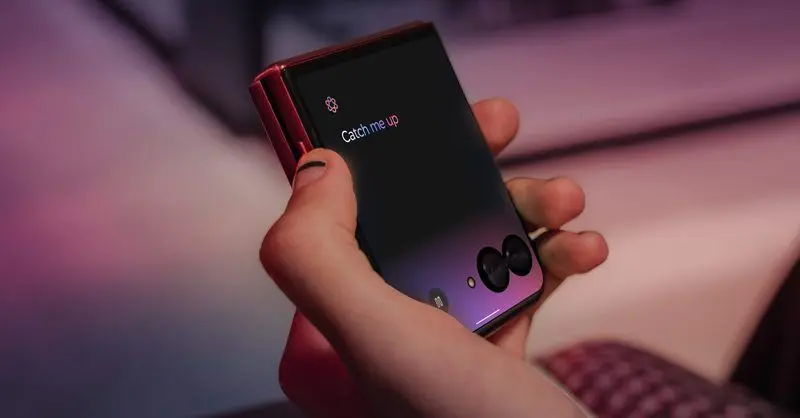
.Qira includes several key features: Next Move provides proactive suggestions based on real-time screen awareness and contextual understanding; Catch Me Up offers cross-device summaries of missed notifications; Write For Me drafts documents and messages in the user's tone; and Pay Attention delivers real-time transcriptions, translations, and meeting summaries
1
4
. The agentic assistance goes beyond simple chat interactions to perform actual tasks across devices and apps2
.
Source: Digital Trends
Integration with Microsoft Copilot and Google Gemini
Motorola confirmed that Qira will work alongside existing AI platforms including Google Gemini, Microsoft Copilot, and Perplexity
1
. Luca Rossi, Lenovo executive vice president, emphasized this collaborative approach: "Microsoft was on stage with me yesterday. Copilot will be working with Qira and not competing with it"3
. The platform builds on efforts previously branded as Moto AI, further cementing partnerships with major AI players1
.Project Maxwell AI Wearable Demonstrates Agentic Capabilities
Motorola's 312 Labs unveiled Project Maxwell, an AI wearable proof of concept that incorporates Qira. The pin features a camera for contextual understanding and uses agentic assistance to complete tasks end-to-end without requiring users to access their phones
2
. In demonstrations, Project Maxwell obtained directions, ordered an Uber, and sent texts by reasoning through every step in the process. For the Uber example, it opened the app, entered the location, selected payment method, and submitted the full request autonomously2
. While no launch date exists, Rossi indicated the proof of concept is "very viable from a technical perspective"3
.
Source: ZDNet
Related Stories

Rollout Timeline and Device Compatibility
Lenovo Qira will first debut on select Lenovo AI PCs in the first quarter of 2026, before expanding to supported Motorola smartphones including the Razr and Edge series, as well as Lenovo tablets later in the year
1
4
. Existing Lenovo AI Now users will receive a seamless over-the-air upgrade to the platform4
. Future laptops will feature a dedicated Qira key, while Motorola devices will utilize a persistent digital "pill" and natural voice trigger4
.Rossi noted that Qira will not be available on all devices initially, requiring certain performance and memory specifications. However, as the technology evolves with regular over-the-air updates, technical requirements will lower, expanding availability to more devices over time
3
. The company envisions quarterly updates that will broaden the range of compatible notebooks, phones, and wearables3
.Market Position Against Apple, Google, and Samsung
Lenovo's move positions the company alongside Apple, Google, and Samsung as one of the few manufacturers offering cross-platform AI experiences
4
. Rossi highlighted Lenovo's unique position: "Lenovo is the company with exposure to phones, tablets, PCs, and wearables, and we identified an opportunity: that you will want your personal AI twin to have all the context of what you do, no matter which platform you are on"3
. When asked about expanding beyond Lenovo and Motorola brands, Rossi indicated the company doesn't exclude that possibility3
. As competitors continue loading devices with AI features, Qira's success will depend on whether it makes mobile AI more intuitive and helpful rather than gimmicky1
.References
Summarized by

Navi
Related Stories
Lenovo debuts AI Workmate desk robot and Work Companion concepts to humanize AI at MWC
02 Mar 2026•Technology

Lenovo unveils concept AI glasses and Qira platform at CES 2026, pushing ambient intelligence
07 Jan 2026•Technology
Lenovo Unveils Comprehensive Hybrid AI Portfolio at Tech World 2024
16 Oct 2024•Technology

Recent Highlights
1
Tennessee Teens Sue Elon Musk's xAI Over Grok AI-Generated Child Abuse Images
Policy and Regulation

2
Pentagon designates Palantir Maven AI as core US military system in major defense shift
Technology

3
Supermicro Co-Founder Indicted in $2.5 Billion Nvidia AI Chip Smuggling Scheme to China
Policy and Regulation
Recent Highlights
Today's Top Stories










Your Daily Dose of Curated AI News
Don’t drown in AI news. We cut through the noise - filtering, ranking and summarizing the most important AI news, breakthroughs and research daily. Spend less time searching for the latest in AI and get straight to action.

