Lenovo unveils concept AI glasses and Qira platform at CES 2026, pushing ambient intelligence


12 Sources
12 Sources
[1]
Lenovo's joining the bandwagon with concept AI glasses
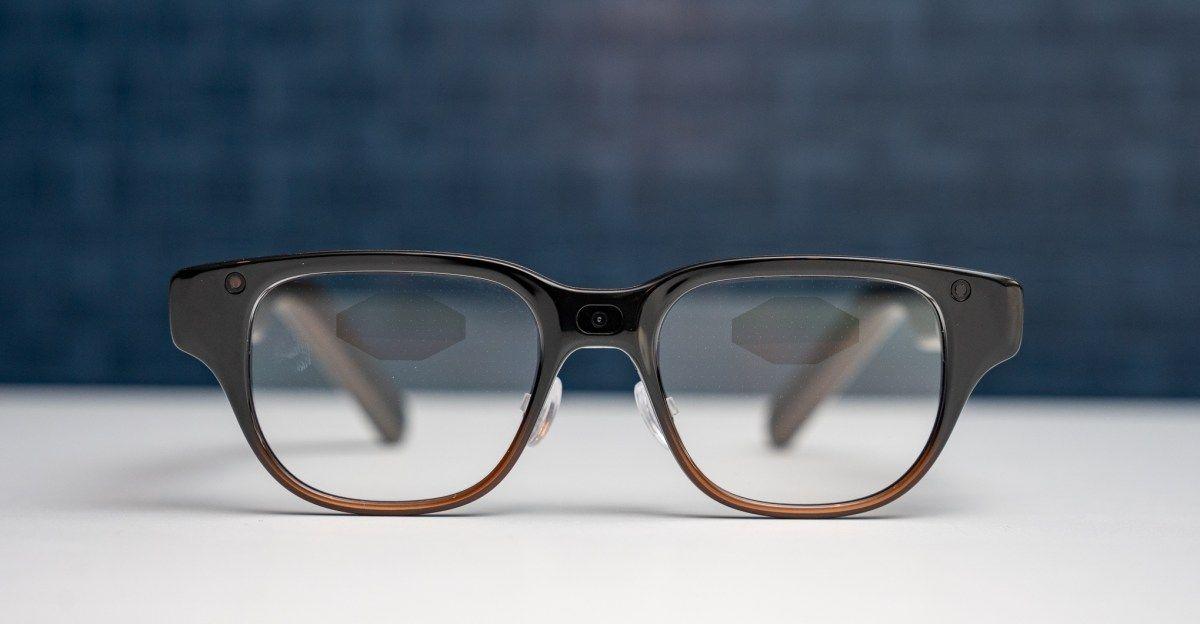
Lenovo is the latest tech company to get bit by the smart glasses bug. The company just showed off a pair of concept AI glasses at CES 2026. While these weren't a working prototype, we have some idea of where Lenovo's head is at. The lightweight frames weigh about 45g and have a 2MP camera right above the nose bridge. You can also sort of see the binocular display in our photos. A nearby spec sheet hinted at a green monochrome display in both lenses -- something we saw quite a lot of at last year's show. Supposedly, there's also a 28-degree field of view, 1,500 nits of brightness, two microphones, two speakers, and a 214mAh battery. Feature-wise, Lenovo says the glasses will have a mix of touch and voice controls, hands-free calling, music playback, and the ability to tether to a phone or PC. Connecting to PCs is pretty dang rare for smart glasses at the moment, especially for ones with this type of display tech. Other details were scant, but Lenovo says live translation, intelligent image recognition, and the ability to get summarized notifications from several devices are also on the table. This is a somewhat baffling mix of features and specs. After all, a 2MP camera isn't nearly good enough for photos and Meta's glasses feature a 12MP camera. It's also unclear what Lenovo envisions for connecting to PCs versus a smartphone, since most AI glasses are currently envisioned as on-the-go devices. But hey, perhaps that's why Lenovo's content to keep this a "concept" device for now.
[2]
Lenovo Debuts Qira AI Platform and Concept Devices in CES Launch
Lenovo showcased various concept devices at CES, including a laptop with a rolling display, a wearable gadget with a built-in camera, and a Smart Sense Display that can detect users and provide tailored settings. Lenovo Group Ltd. unveiled a new artificial intelligence platform and several proof-of-concept devices, an attempt by the world's best-selling PC maker to show it can be a serious player in AI. The platform, called Qira, was designed to work across products from Lenovo and its Motorola brand, the company said Tuesday at a CES keynote in Las Vegas. The AI is incorporated at the system level, Lenovo added -- what it calls "ambient" artificial intelligence. Because of the deep software integration, users will not need to open a separate app to use it, as they would with popular chatbots such as OpenAI's ChatGPT. Beijing-based Lenovo made the announcements in a presentation hosted from the Sphere, one of the marquee events of the weeklong CES trade show schedule. Many other tech giants, such as Samsung Electronics Co. and LG Electronics Inc., have also used the occasion to make the case for AI as a must-have in the next generation of laptops, TVs, phones, wearables and other consumer devices. Get the Tech Newsletter bundle. Get the Tech Newsletter bundle. Get the Tech Newsletter bundle. Bloomberg's subscriber-only tech newsletters, and full access to all the articles they feature. Bloomberg's subscriber-only tech newsletters, and full access to all the articles they feature. Bloomberg's subscriber-only tech newsletters, and full access to all the articles they feature. Bloomberg may send me offers and promotions. Plus Signed UpPlus Sign UpPlus Sign Up By submitting my information, I agree to the Privacy Policy and Terms of Service. In addition to the AI platform, Lenovo showed off a new Legion laptop prototype that includes a display that rolls out sideways to provide a widescreen experience. It was part of a lineup of boundary-pushing design ideas from Lenovo that also included another laptop with an expanding screen. Lenovo Qira is at the heart of Lenovo's AI glasses concept, which would work wirelessly with a connected smart device and provide features like live translation, image recognition and context. Although the glasses were on display at a media event during CES, they were not operational. Lenovo didn't share many specifics, other than that the device weighs 45 grams, has a camera and two microphones and projects information onto the lens. Battery life is rated for as much as eight hours, which would put it on par with recent smart glasses from Meta Platforms Inc., the category leader. Also at the show, Lenovo's Motorola unveiled its first folding phone that opens like a book, the Razr Fold. Motorola added to the slate of concept devices with an AI wearable gadget with a built-in camera, dubbed Project Maxwell. It too would run on the Qira platform, with envisioned functions like translations or taking automatic snapshots throughout the day for a digital journal. Lenovo's Smart Sense Display concept would use cameras to detect particular users and provide tailored settings for each. Using its built-in camera, it would identify poor posture or signs of eye fatigue -- effectively transforming the display into an unexpected wellness tracker. Earlier Tuesday, the gaming accessories brand Razer Inc. -- also not an established player in artificial intelligence -- declared an AI revamp of its own, unveiling a series of new products for gamers, consumers and coders. The company plans to invest more than $600 million in AI over the next couple of years, Chief Executive Officer Min-Liang Tan said in an interview.
[3]
Lenovo just revealed a concept for AI-powered smartglasses at CES
Lenovo just revealed a new smartglasses concept design at CES 2026. The appropriately-named Lenovo AI Glasses Concept promises to transform "how users interact with their surroundings and unifies their workflow." They look like a standard pair of specs and not all that different from something like Meta's Ray-Ban Display glasses. A pair weighs just 45 grams and the battery lasts eight hours, which is just enough time to get through a standard workday. The glasses are wirelessly tethered to a smart device, which is what does most of the computational heavy lifting. They do include Lenovo and Motorola's proprietary AI platform called Qira, which delivers "sub-millisecond live translation and intelligent image recognition." There's also something called the Catch Me Up feature, which is an AI-generated recap of various notifications from various devices. The hardware allows for touch and voice control and includes teleprompter software. The concept glasses include speakers, as Lenovo is advertising music playback as a feature. We don't know when or if these smart glasses will ever hit store shelves. Lenovo tends to drop several intriguing concept designs each year at CES and not all of them make it to market.
[4]
Rokid isn't alone, Lenovo also has its own concept AI glasses to show off at CES
The company is no stranger to unique concept devices, including last year's IFA showcase, which revealed a concept laptop with a rotating display. Glasses aren't new territory for Lenovo either; a few years ago, the company experimented with the T1 Glasses, which were essentially virtual monitors you wear. This latest concept is thankfully much more ambitious. The glasses tether wirelessly to a smart device and feature touch and voice controls, hands-free calling, music playback, and even a teleprompter for presentations. There's also Lenovo Qira technology, which uses AI from a paired smartphone or PC to deliver sub-millisecond live translation and intelligent image recognition. You'll also be able to keep up with your communications across multiple devices using Catch Me Up, a feature that displays summarized notifications from multiple devices.
[5]

Lenovo debuts world's first ambient, cross-device AI system at CES 2026
These suggestions evolve over time and remain consistent across devices. Write For Me helps users draft emails, documents, and notes directly on their current canvas. The system adapts to tone and intent without forcing app switching or blank-page starts. Live Interaction enables real-time multimodal engagement during screen sharing or camera use. Qira responds to both voice and visuals, keeping interactions fluid. Catch Me Up helps users re-enter work after stepping away. It summarizes activity, highlights key changes, and restores context quickly. Pay Attention supports meetings and conversations with real-time transcription and translation when enabled. It captures key points and creates summaries users can revisit later. For deeper creative focus, Lenovo introduced Creator Zone. The feature enables visual creation and photo editing with fewer distractions. Lenovo built Qira using a hybrid AI architecture. On-device processing keeps personal data local, while secure cloud services extend functionality with user control.
[6]

"Nobody can avoid AI - but it will not replace humans" - Lenovo CEO explains why your next work PC could be an AI-enabled device
Predicting the future and developing a robust roadmap is also a challenge, Lenovo admits The CEO of Lenovo has predicted around half of enterprise-ready computers will be AI PCs by the end of 2026 as the technology becomes more commonplace. Yuanqing Yang, also known as YY, told TechRadar Pro he was hopeful about the continuing spread and availability of AI PCs, but admitted cost would be an issue in pushing for 100% adoption. "Our prediction is that by the end of this year, around fifteen percent of PCs will be AI PCs," he told us at a media Q&A at CES 2026, hinting that devices embedded with Lenovo's new Qira AI model would help push adoption even higher. Stating his belief that "AI is definitely not a bubble," YY also declared his belief that AI will become a central part of our working lives looking forward. "Nobody can avoid AI, but AI will not replace humans, it will only empower each of us in the future, help you remember more, do more, and be more creative...it will help you be more competitive in every area," he added. "One of the fundamental principles with which we develop AI is our belief in responsible AI," added Tolga Kurtoglu, SVP & Chief Technology Officer, Lenovo. "I don't see a world without AI," he said, "we think of AI as unleashing human potential, we think of it augmenting people...almost like a symbiotic team which is an extension of you, helps you be more productive and efficient in what you want to get accomplished." Asked how far ahead the company looks in terms of its development strategy, Kurtoglu admitted the fast pace of AI development poses issues for companies the size and breadth of Lenovo. "For the AI era, I think a five-year roadmap is a pipe dream," he said, "I always emphasize three things, it's about agility, adaptability and speed - it's not about predicting what will be happening in five years time, it's about changing what the dynamics of the market and always increasing your rate of learning from the market." "That doesn't mean we don't have a roadmap - but with the pace of innovation we see, five years is way too long...(and) our aim is not to predict the future, our aim is to learn as fast as possible, from the end users perspective, so we can innovate on top of that knowledge."
[7]

Lenovo CEO addresses AI skeptics at CES: 'Nobody can avoid it.'
Last night, at a live keynote event at The Sphere in Las Vegas, Lenovo leaders announced a personal AI assistant called Qira designed to work across Lenovo and Motorola devices, along with a new line of futuristic AI laptops and devices. Unsurprisingly, artificial intelligence has been the dominant theme at CES 2026, with companies like Lenovo and Samsung outlining a vision of a future in which AI is integrated into every aspect of our lives, from sunrise to sunset. AI wearables, like the concept Project Maxwell AI wearable Lenovo announced at CES, will see and hear everything you see and hear to better assist you. Meanwhile, AI will be integrated across every device. CES has brought us AI smartphones, AI laptops, AI TVs, AI washing machines -- AI, essentially, everything. The morning after the Lenovo Tech World Event at The Sphere, I got the chance to participate in a question-and-answer session with Yang and Lenovo's Chief Technology Officer, Tolga Kurtoglu. So, I asked them what they would say to AI skeptics. What about the consumers who don't want AI to see and hear everything they do? Who don't want an AI washing machine or refrigerator? "I strongly believe AI will be the trend," Yang said. "Nobody can avoid it. But AI will not replace you; it will only empower you, empower each of us, so that is why we think utilization will help you so that you can do more, be more creative. So that will be the trend that you cannot avoid." Kurtoglu also had a blunt answer: "I don't see a world without AI." However, Kurtoglu also emphasized the importance of responsible AI development in Lenovo's approach. "One of the fundamental principles with which we develop AI is our belief in responsible AI. Of course, there are guardrails and very strict processes that we follow as a company as we build our own AI. And then globally and locally, there are regulations and compliance requirements about privacy and security and other things that we follow very strictly," Kurtoglu said. Check out the full list of Best of CES 2026 finalists, as selected by CNET Group, here. Likewise, Lenovo stressed the opt-in nature of Qira and its AI tools repeatedly during its keynote at The Sphere, and Kurtoglu echoed this sentiment to Mashable. "If you want to participate and get the value-add[ed] that AI brings to you, you opt in, and you give your permission, and then you get what the AI enables for you. Otherwise, if you don't want to participate, of course, it's all up to you. We're going to continue to follow our strong belief in responsible AI development." However, as AI gets integrated into virtually all types of hardware, opting out isn't so simple. Lenovo itself states that AI PCs will account for 70 percent of the global market by 2028. Laptops and smartphones are following a similar trend, although not all consumers share the same enthusiasm for AI as industry leaders. In a recent survey, CNET found that just 11 percent of smartphone users upgrade their devices because they want to take advantage of new AI tools. (Disclosure: CNET and Mashable are both owned by Ziff Davis.) During the media Q&A, Yang also addressed concerns that we're approaching an AI bubble, downplaying these concerns. "We believe AI is not a bubble," Yang said. "The demand will be booming, so everybody will have their personal AI, and every enterprise will need to leverage their data to generate intelligence. So, the demand is just beginning. It's not a bubble at all."
[8]

Lenovo unveils AI agent to bridge PCs, phones and wearables at CES
Las Vegas (AFP) - Lenovo, the world's top PC maker, unveiled its own AI assistant Tuesday at the CES tech show in Las Vegas, promising a tool that follows users seamlessly across laptops, smartphones and connected devices. The Beijing-based company commanded 28 percent of global PC market share in the third quarter of 2025, ahead of rivals HP at 21.5 percent and Dell at 14.5 percent, according to US research firm Gartner. Lenovo's new artificial intelligence agent, dubbed Qira, is designed as an autonomous interface capable of performing tasks rather than simply generating content on demand, a move Lenovo hopes will showcase the breadth of its product portfolio. Unlike rivals focused on single categories, Lenovo was the only major manufacturer whose offering spanned laptops, tablets and smartphones -- under its Motorola brand, acquired in 2014 -- as well as servers and even supercomputers. The company also unveiled prototypes of connected glasses and an AI-powered pendant, still in testing, that captures "important moments" with user consent by recording conversations, said Motorola's Angelina Gomez. Codenamed the AI Perceptive Companion, the pendant features a microphone and camera and "sees what you see and hears what your hear," Lenovo vice president Luca Rossi told reporters. An interaction with Qira can start via the pendant, continue on a smartphone and end on a laptop, with the agent retaining user context across devices. It can summarize the highlights of a user's day, draft and send emails, or even select photos from archives to post on social media. Lenovo stressed it is not positioning Qira as a rival to Microsoft's Copilot and announced the integration of Copilot into Motorola smartphones. For major hardware makers, the challenge now is proving the utility of generative AI in everyday applications rather than simply flaunting cutting-edge tech. Amid lingering geopolitical tensions with Washington, Lenovo was the only Chinese firm to take center stage at CES, choosing Las Vegas's futuristic Sphere venue for its showcase. Executives emphasized the company's global footprint, with most revenue generated outside China and several top managers from overseas.
[9]

Lenovo AI Concept Devices Bring Intelligence to Displays and Glasses - Phandroid
Artificial intelligence is finding its way into every corner of tech, and Lenovo's CES 2026 showcase proves the company is betting big on AI-powered hardware. The tech giant unveiled four AI concept devices that reimagine how we interact with displays, manage smart homes, and access information on the go. From gaming monitors that provide real-time assistance to smart glasses weighing just 45 grams, these prototypes signal where consumer technology might head. The AI Frame Gaming Display proof of concept solves a problem many gamers run into during intense matches. Built-in AI figures out what game you're playing and zooms in on important stuff, showing it in the top-right corner. Your minimap becomes easier to read, and you won't miss crucial details when things get chaotic. This works especially well for shooters and MOBA games. The zoomed image gets AI enhancement so it stays clear when every second counts. Cursor Tracking follows where players look on screen, adjusting the zoomed picture accordingly. AI Game Assistance identifies boss fights and difficult mission sections across multiple games, providing real-time guidance through tough challenges. The monitor dynamically readjusts to show both gameplay and a smaller guidance window. Adaptive AI Lighting provides atmospheric lighting that changes based on in-game events. Take damage and the lighting shifts colors to indicate you're getting hit. Meanwhile, the Lenovo Personal AI Hub Concept goes in a completely different direction. Project Kubit packs two ThinkStation PGX compact AI workstations running on NVIDIA GB10 Grace Blackwell Superchip, all tucked behind a transparent touchscreen. The hub pulls data from your PCs, phones, wearables, and smart home gear to power some seriously capable AI features. You control everything with touch or voice commands based on how you actually use your tech every day. Lenovo's AI Glasses Concept weighs just 45 grams and lasts up to 8 hours on a charge. These glasses connect wirelessly to your phone or laptop and handle touch and voice controls, hands-free calls, a teleprompter mode for presentations, and music playback. You can stay on top of everything without constantly grabbing your phone. Powered by Lenovo Qira, the glasses tap into AI from your paired devices for crazy fast live translation and smart image recognition. The Catch Me Up feature shows you a summary of notifications from all your devices when you start your day. For anyone looking at lightweight wearables, the best smart glasses in 2025 already pack some cool features, but Lenovo's concept pushes AI integration way further. The AI-Powered Personalized Display Concept adjusts itself based on who's using it. This multi-user display changes what it shows depending on your profile, what time it is, and where you are. It automatically tweaks brightness and color temperature to match your body's natural rhythm. The display also keeps an eye on your posture and checks for eye strain. Basically, it tries to keep you comfortable while you work. These Lenovo AI concept devices are still just prototypes, so don't expect pricing or release dates anytime soon. However, they show where AI could make everyday tech actually more useful. Similar to how smart home hubs picked up AI recently, Lenovo's concepts prove AI is moving beyond just software updates into the hardware itself. Whether it's helping you get better at games or making sure you're not wrecking your eyes staring at a screen all day, these prototypes hint at a future where AI actively helps instead of just sitting there waiting for commands.
[10]

Lenovo Showcases AI-Powered Glasses, Other Concept Devices at CES
New smart accessories include a self-charging keyboard and solar mouse Lenovo showcased a slew of proof-of-concept products at the Consumer Electronics Show (CES) 2026 on Wednesday. Among the highlights is the Lenovo ThinkPad Rollable XD Concept, which features a rollable screen that expands vertically when more workspace is needed. The brand also unveiled the Personal AI Hub Concept, touting it as a central, on-device artificial intelligence (AI) ecosystem. Other announcements included Lenovo AI Glasses Concept, AI-powered display concepts, and several smart accessory concepts. Lenovo ThinkPad Rollable XD Concept As per the company, the Lenovo ThinkPad Rollable XD Concept builds upon the company's recent innovative PC designs, including the ThinkPad X1 Fold and the ThinkBook Plus Gen 6 Rollable AI laptop. It sports a vertically expanding OLED display that can extend from a compact 13.3-inch laptop screen into a taller 16-inch workspace with a single button press. Photo Credit: Lenovo The ThinkPad Rollable XD Concept supports Swipe to X touch gestures and voice controls, enabling users to quickly launch apps or switch modes. It features a 180-degree Corning Gorilla Glass Victus 2 cover for durability. The concept PC is equipped with AI-backed features like live translation, voice assistant, multi-modal, and lid-closed interactions. You can read more about the CES 2026 announcements so far here Lenovo Personal AI Hub Concept At CES, the company introduced Project Kubit. Dubbed as the Personal AI Hub Concept, it is a personal edge cloud device for supporting AI-enabled applications across PCs, smartphones, wearables, and smart home solutions. It comprises two Lenovo ThinkStation PGX compact AI workstations, which are powered by the Nvidia GB10 Grace Blackwall Superchip. The Personal AI Hub Concept sports a touchscreen display and supports voice-based interactions. Lenovo claims it harvests data across platforms, granting an individual access to advanced analytics and AI-enabled applications. Lenovo AI Glasses Concept Lenovo also showcased its wearable glasses at the tech trade show, dubbed the Lenovo AI Glasses Concept. It is said to be lightweight smart glasses equipped with built-in displays and on-device AI processing capabilities. Leveraging the display, the glasses can overlay contextual information, such as notifications, navigational directions, translations, and some productivity prompts into the user's field of view. Photo Credit: Lenovo The glasses are powered by the new Lenovo Qira platform, offering AI capabilities from paired smartphones and PCs to deliver sub-millisecond live translation and intelligent image recognition. Apart from this, it also has the Catch Me Up feature, which provides summaries of the messages and calls, eliminating the need to go through each notification. The Lenovo AI Glasses Concept weigh 45g and can provide up to eight hours of battery life, as per the company. Lenovo claims AI Glasses Concept prioritises low power consumption and smooth pairing with PCs and smartphones. However, it is positioned as an assistive accessory, rather than for immersive content consumption. AI-Powered Display Concepts The new Lenovo Smart Sense Display Concept, showcased at CES, has a 27-inch Ultra HD display that can automatically connect wirelessly to multiple personal devices, including a mobile phone, laptop, and tablet. Users can cast content from their devices for multi-screen collaboration. Photo Credit: Lenovo The display supports natural-language interaction with a smart assistant to access devices and applications via touch or voice command. For multitasking, it has features like flexible window management and 'drag and drop' functionality. Smart Accessories In addition to standalone devices, Lenovo also showcased several smart accessory concepts at CES. To begin with, the Adaptable Keyboard Concept is an adaptable and compact keyboard that supports adjustable stroke and optical actuation controls. Photo Credit: Lenovo The Lenovo Self-Charging Kit Concept, meanwhile, is a set of a keyboard and a mouse, powered by light-harvesting technology that operates as low as 50 lux. The mouse is solar-powered and can be charged even with indoor lighting.
[11]

CES 2026: Lenovo Showcases Cross-Device AI Agent, Copilot+ PCs
'We are entering a new era of personal AI: one designed around users, built on trust, and shaped by their control,' says Luca Rossi, president of Lenovo's Intelligent Devices Group. The Qira cross-device artificial intelligence agent and a host of agent-native and AI-powered devices under the ThinkPad, ThinkCentre and Yoga brands are some of Lenovo's standout reveals from CES 2026. The Beijing-based computer maker positions Qira as a personal ambient intelligence system that works across Lenovo and Motorola PCs, smartphones, tablets, wearables and other devices, the vendor said in a statement Tuesday. Lenovo bought Motorola Mobility from Google in 2014. "With Lenovo and Motorola Qira, we are entering a new era of personal AI: one designed around users, built on trust, and shaped by their control," Luca Rossi, president of Lenovo's Intelligent Devices Group, said in a statement. "By democratizing AI and enabling a single AI super agent to work seamlessly across many devices - from AI laptops to AI phones to agent-native wearables - we are delivering Smarter AI for All and turning personal AI into a powerful, real-world differentiator." [RELATED: Qualcomm: Snapdragon X2 Plus PC Chips Bring Big Speed Boosts For 'Modern Professionals'] Lenovo has about 120,000 partners worldwide, according to CRN's 2025 Channel Chiefs. CES, an annual consumer technology conference, runs through Friday in Las Vegas. With Qira, users can leverage the agent to continue working across devices, according to Lenovo. It also brings together information and insights in the background. The system only processes inputs when users choose to enable them. It can surface content related to what the user is working on and bring them over to services when they want to take action, according to Lenovo. On the hardware side, Lenovo showed off some proof-of-concept innovations at CES 2026 including the ThinkPad Rollable XD, the Lenovo Personal AI Hub, Lenovo AI Glasses and a wearable AI companion from Motorola's 312 Labs. The ThinkPad Rollable XD concept shows dynamically expanding displays that adapt to different work modes, according to Lenovo. The computer maker has pursued the "rollable" design with other products in its portfolio like the ThinkBook Plus Gen 6 Rollable, which is among the CES Innovation Awards honorees for 2026. The ThinkBook rollable offers users a 14-inch display that expands vertically to 16.7 inches, according to an online listing. Users can work on a split screen or treat the display as one large screen without the need for an external monitor. The Lenovo Personal AI Hub concept, also known as Project Kubit, offers an edge-cloud personal AI device for high-performance AI closer to the user and across multiple devices, according to Lenovo. The AI glasses concept integrates personal AI into everyday workflows, according to Lenovo. And the Motorola AI companion, called Project Maxwell, gives users a context-aware intelligence that works across devices in the Qira ecosystem. Commercial AI PCs Lenovo promoted during the event include the ThinkPad X1 Carbon and ThinkPad X1 two-in-one Aura Edition Copilot+ PC models as the leads for the vendor's premium commercial lineup. Copilot+ refers to PC brands able to run Microsoft's Windows 11 operating system and powered by silicon capable of 40-plus trillion operations per second (TOPS) for unlocking AI use cases. Lenovo positioned its PC portfolio as, overall, seeking to marry performance, security and durability for modern IT environments, according to Tuesday's statement. The ThinkPad X9 15p Aura Edition Copilot+ PC is aimed at professional users. And the ThinkCentre X AIO Aura Edition Copilot+ PC promises users a desktop with modern design and intelligent features, according to Lenovo. Consumer AI PCs include the Yoga Pro 9i Aura Edition Copilot+ PC as a premium option for creators. An online listing prices a 16-inch Intel version of the laptop starting at $1,869.99. The Yoga AIO i Aura Edition desktop adds immersive visuals and adaptive design for users, according to Lenovo.
[12]

'Nobody Can Avoid It': Lenovo's Stark AI Warning at CES 2026
During the event, Lenovo introduced Qira, a personal AI assistant for Lenovo and Motorola devices. Additionally, the company launched a new range of laptops with artificial intelligence while presenting futuristic ideas. They discussed a gadget that will allow AI to monitor user activities through vision and auditory cues and subsequently offer support as per the context. These revelations were indicative of a wider trend in . AI was the talking point in almost every category at the exhibition, be it cellular phones and computers working on digital imaging, or household appliances like washing machines. This dynamic highlights how soon this technology will become a part of daily chores and livelihood.
Share
Share
Copy Link
Lenovo showcased concept AI glasses and its new Qira AI platform at CES 2026, marking the PC maker's push into ambient intelligence. The 45-gram wearable features live translation, intelligent image recognition, and an 8-hour battery. The Qira platform works across Lenovo and Motorola devices without requiring separate apps, positioning the company to compete in the AI hardware space.
Lenovo Enters Smart Glasses Race with AI-Powered Concept at CES 2026
Lenovo joined the growing competition in AI-powered smartglasses at CES 2026, unveiling concept AI glasses that weigh just 45 grams and promise up to eight hours of battery life
1
. The lightweight frames feature a 2MP camera positioned above the nose bridge and a binocular display with green monochrome projection in both lenses1
. With a 28-degree field of view, 1,500 nits of brightness, two microphones, two speakers, and a 214mAh battery, the specs reveal Lenovo's ambitions to become a serious player in the wearable AI market1
.
Source: The Verge
The world's best-selling PC maker showcased these concept devices during a presentation at the Sphere in Las Vegas, one of the marquee events of the weeklong CES trade show
2
. While the glasses were not operational at the media event, Lenovo shared enough details to signal its direction in ambient AI technology2
.Qira AI Platform Powers Cross-Device Intelligence
At the heart of Lenovo's AI strategy sits Qira, a new cross-device AI system designed to work seamlessly across products from Lenovo and Motorola
2
. The Qira AI platform is incorporated at the system level, delivering what Lenovo calls ambient AI—intelligence that doesn't require users to open separate apps like ChatGPT2
. This deep software integration enables sub-millisecond live translation and intelligent image recognition directly through the glasses when wirelessly tethered to a smart device3
.
Source: Interesting Engineering
Lenovo built Qira using a hybrid AI architecture that keeps personal data local through on-device processing while extending functionality via secure cloud services with user control
5
. The glasses themselves rely on a paired smartphone or PC to handle most computational heavy lifting3
.Features Target Productivity and Communication
The AI-powered smartglasses support a mix of touch and voice controls, enabling hands-free calling, music playback, and the ability to tether to both phones and PCs
1
. Connecting to PCs is notably rare for smart glasses with this type of display technology, suggesting Lenovo envisions workplace applications beyond typical on-the-go scenarios1
.A standout feature called Catch Me Up delivers summarized notifications from multiple devices, helping users stay connected across their digital ecosystem
3
4
. The glasses also include teleprompter software for presentations, positioning them as productivity tools rather than purely consumer devices3
4
.Related Stories

Questions Remain About Specs and Market Positioning
The 2MP camera raises questions about Lenovo's intended use cases, as it falls significantly short of Meta's 12MP camera in its Ray-Ban smart glasses
1
. This lower resolution suggests photo capture isn't a priority, with the camera likely focused on image recognition tasks instead. The eight-hour battery life would put the glasses on par with recent smart glasses from Meta, the current category leader2
.Lenovo's decision to keep these as concept devices reflects the experimental nature of the specs and feature mix
1
. The company has a history of showcasing intriguing concept designs at CES that don't always reach market, including the T1 Glasses from a few years ago that functioned as virtual monitors4
.Broader AI Push Includes Multiple Concept Devices
Beyond the glasses, Lenovo showcased several other concept devices at CES 2026, including a Legion laptop prototype with a display that rolls out sideways for widescreen viewing and a Smart Sense Display that uses cameras to detect users and provide tailored settings
2
. The Smart Sense Display would identify poor posture or eye fatigue, transforming it into a wellness tracker2
.
Source: Bloomberg
Motorola, owned by Lenovo, unveiled Project Maxwell, an AI wearable gadget with a built-in camera that would run on the Qira platform with functions like translations and automatic snapshots for digital journaling
2
. The company also introduced its first folding phone that opens like a book, the Razr Fold2
.Qira's capabilities extend beyond wearables, with features like Write For Me that helps draft emails and documents directly on the current canvas, and Creator Zone for visual creation with fewer distractions
5
. Pay Attention supports meetings with real-time transcription and translation when enabled5
. These features position Lenovo to compete with tech giants like Samsung Electronics and LG Electronics, which have also used CES to make the case for AI as essential in the next generation of consumer devices2
.References
Summarized by

Navi
[4]
[5]
Related Stories
Lenovo debuts AI Workmate desk robot and Work Companion concepts to humanize AI at MWC
02 Mar 2026•Technology

Lenovo Qira AI Assistant Bridges Phones and PCs with Seamless Cross-Device Intelligence
07 Jan 2026•Technology
Lenovo Unveils Comprehensive Hybrid AI Portfolio at Tech World 2024
16 Oct 2024•Technology

Recent Highlights
1
Tennessee Teens Sue Elon Musk's xAI Over Grok AI-Generated Child Abuse Images
Policy and Regulation

2
Pentagon designates Palantir Maven AI as core US military system in major defense shift
Technology

3
Supermicro Co-Founder Indicted in $2.5 Billion Nvidia AI Chip Smuggling Scheme to China
Policy and Regulation
Recent Highlights
Today's Top Stories










Your Daily Dose of Curated AI News
Don’t drown in AI news. We cut through the noise - filtering, ranking and summarizing the most important AI news, breakthroughs and research daily. Spend less time searching for the latest in AI and get straight to action.

