Linus Torvalds experiments with vibe coding on hobby project, but Linux remains untouched


5 Sources
5 Sources
[1]
Hobby GitHub repo shows Linus Torvalds vibe codes (sometimes)
Linux and Git creator Linus Torvalds' latest hobby project contains code that was "basically written by vibe coding," but you shouldn't read that to mean that Torvalds is embracing that approach for anything and everything. Torvalds sometimes works on a small hobby project over holiday breaks. Last year, he made guitar pedals. This year, he did some work on AudioNoise, which he calls "another silly guitar-pedal-related repo." It creates random digital audio effects. Torvalds revealed that he had used an AI coding tool in the README for the repo: Also note that the python visualizer tool has been basically written by vibe-coding. I know more about analog filters -- and that's not saying much -- than I do about python. It started out as my typical "google and do the monkey-see-monkey-do" kind of programming, but then I cut out the middle-man -- me -- and just used Google Antigravity to do the audio sample visualizer. Google's Antigravity is a fork of the AI-focused IDE Windsurf. He didn't specify which model he used, but using Antigravity suggests (but does not prove) that it was some version of Google's Gemini. Torvalds' past public comments on using large language model-based tools for programming have been more nuanced than many online discussions about it. He has touted AI primarily as "a tool to help maintain code, including automated patch checking and code review," citing examples of tools that found problems he had missed. On the other hand, he has also said he is generally "much less interested in AI for writing code," and has publicly said that he's not anti-AI in principle, but he's very much anti-hype around AI. Based on that, you might be surprised that he used self-described vibe coding to build a part of his application, but you probably shouldn't be. There are a few key things here. First, AudioNoise is entirely a personal hobby project, and it's pretty much just a toy, not serious infrastructure. Second, Torvalds' README note makes it clear that he went with this approach in an instance where he previously would have just copied something from a forum thread or StackOverflow anyway, as the visualizer tool component in the project is written in Python, which is not his specialty. Developers of all stripes are still fiercely debating what (if any) AI coding tools should have in workflows. Just yesterday, developer Salvatore Sanfilippo published a widely circulated and discussed blog post arguing that such tools have already changed programming forever and aren't going away, even as he acknowledged the related chaos and problems. He wrote: How do I feel, about all the code I wrote that was ingested by LLMs? I feel great to be part of that, because I see this as a continuation of what I tried to do all my life: democratizing code, systems, knowledge. LLMs are going to help us to write better software, faster, and will allow small teams to have a chance to compete with bigger companies. The same thing open source software did in the 90s. As you might expect, the debate about this has been fierce. But while people argue in Hacker News comments, Torvalds -- normally known to be intensely opinionated himself -- is vibe coding audio tools over the holidays.
[2]
Even Linus Torvalds is vibe coding now
Linux developers have adopted AI tools for maintenance work. Linus Torvalds has started playing with vibe coding. Yes, really! He's using Google's Antigravity AI assistant to generate parts of a new hobby project rather than writing all the code himself. In doing so, he has become the highest-profile programmer yet to adopt this rapidly spreading, and often mocked, AI-driven programming. Mind you, Torvalds is not using this on the programs that made him famous, Linux and Git, or even his best-known hobby program, the diving program SubSurface. Instead, it's a trivial program called AudioNoise -- a recent side project focused on digital audio effects and signal processing. He started it after building physical guitar pedals, GuitarPedal, to learn about audio circuits. He now gives them as gifts to kernel developers and, recently, to Bill Gates. Also: Linus Torvalds is 'a huge believer' in using AI to maintain code - just don't call it a revolution While Torvalds hand‑coded the C components, he turned to Antigravity for a Python‑based audio sample visualizer. He openly acknowledges that he leans on online snippets when working in languages he knows less well. Who doesn't? For years, Stack Overflow was the go-to site for programmers wanting fast answers and code snippets to answer their technical questions. Now, AI chatbots such as Microsoft CoPilot, ChatGPT, and DeepSeek have largely replaced it among developers seeking quick fixes for programming problems. In the project's README file, Torvalds wrote that "the Python visualizer tool has been basically written by vibe-coding," describing how he "cut out the middle‑man -- me -- and just used Google Antigravity to do the audio sample visualiser." The remark underlines that the AI‑generated code met his expectations well enough that he did not feel the need to manually re‑implement it. What's vibe coding, you ask? Vibe coding is a software development approach in which programmers describe their requirements in natural language to an AI model, which then generates executable code. Unlike traditional AI pair‑programming tools that assume a human will read and refine every line, vibe coding often involves accepting the AI's output largely as‑is and iterating by rerunning and adjusting prompts instead of editing code directly. Major vendors now promote dedicated tooling for this workflow: Google offers "Vibe Code with Gemini" to turn ideas into shareable apps within AI Studio, while Antigravity builds on a fork of Microsoft's VS Code via Windsurf to integrate conversational coding directly into the IDE. Advocates argue that this allows developers to focus on intent and product design while offloading boilerplate and low-level implementation details to AI.cloud. Also: Linus Torvalds built Git in 10 days - and never imagined it would last 20 years This approach, however, can lead to enormous failures when applied to serious programs. Indeed, AI leader Andrej Karpathy, who coined the phrase "vibe coding" for just letting AI chatbots do their thing when programming, said, "It's not too bad for throwaway weekend projects ... but it's not really coding -- I just see stuff, say stuff, run stuff, and copy-paste stuff, and it mostly works." That's exactly what Torvalds did: He used it for a quick fix for a minor program. On the other hand, there's the example of Jason Lemkin, a trusted advisor to SaaStr, the software-as-a-service (SaaS) business community. The vibe program, Replit, he said, went "rogue during a code freeze, shut down, and deleted our entire database." Historically, Torvalds has been skeptical of hype‑driven shortcuts in software development, which makes his public use of vibe coding noteworthy. A widely shared post paraphrased him, joking that "vibe coding stands for Very Inefficient but Entertaining." That mix of sarcasm and pragmatism captures his stance: vibe coding can be "fun and very useful," he suggests, but only when grounded in strong fundamentals rather than used as a crutch by those who do not understand what the code is doing. His decision to apply it in a non‑critical hobby context, and in a language where he is less confident, positions AI as a power tool rather than a replacement for expertise. Also: Vibe coding feels magical, but it can sink your business fast - here's how Indeed, the Linux community has recently adopted AI for much of the scut work of maintaining code. As Torvalds said recently, while he still dislikes the AI hype: "I hate the whole subject of AI, not because I hate AI, but because it's being such a hype word." Nevertheless, he called himself "a huge believer in AI as a tool." With even Linux's creator now experimenting with vibe programming, the debate over code quality, maintainability, and developer skills is likely to intensify. For many developers who have resisted AI‑generated code on principle, Torvalds' candid endorsement for the right kind of project may be the nudge to at least try letting the "vibes" write a few functions.
[3]
Linus Torvalds has started vibe coding, just not on Linux
Serving tech enthusiasts for over 25 years. TechSpot means tech analysis and advice you can trust. Ripple effect: Linus Torvalds, the creator of Linux and Git, has quietly joined the ranks of developers using generative AI to write code - though only as part of a small personal project. His recent experiment with vibe coding shows how even the most traditional programmers are beginning to incorporate AI tools into their workflows, at least for low-stakes development. The project, called AudioNoise, appeared on Torvalds' GitHub earlier this month. Written primarily in C, the program explores digital audio effects and signal processing. It grew out of a hardware experiment he conducted last year called GuitarPedal, a series of homemade guitar effects pedals he built to learn more about analog circuits. Torvalds has since given the devices away as gifts to kernel developers and even to Bill Gates. For AudioNoise, Torvalds used Google's Antigravity AI, a coding assistant built to generate and refine programs via natural-language input. In this case, the tool generated a Python-based audio sample visualizer that complements Torvalds' C routines. In the project documentation, Torvalds wrote that "the Python visualizer tool has been basically written by vibe-coding," adding, "I cut out the middleman - me - and just used Google Antigravity to do the audio sample visualizer." His comments suggest he was satisfied with the results and felt no need to manually rewrite the AI-generated code. He also noted that when working in unfamiliar languages, he often relies on online resources or code snippets, a habit most programmers can relate to. While vibe coding has been mocked online, it has gained traction as AI tools like Copilot, ChatGPT, and Claude AI replace traditional platforms such as Stack Overflow for quick code assistance. That Torvalds - long known for his skepticism toward hype-driven technologies - would take up vibe coding at all has surprised many in the open-source community. The experiment also reminds us how AI is steadily permeating the Linux ecosystem itself. Developers are beginning to use AI models for tasks like debugging, patch triage, and code maintenance, work that was once handled entirely by human contributors. Torvalds has continued to warn against the marketing excess surrounding artificial intelligence, stating, "I hate the whole subject of AI, not because I hate AI, but because it's being such a hype word." Yet, he has also emphasized that he is "a huge believer in AI as a tool." Torvalds' use of Antigravity for AudioNoise is less about automation and more about creative exploration. By applying AI to a project far removed from the Linux kernel, he frames the technology as an extension of craft rather than a challenge to it. For developers still questioning whether AI-assisted code generation has a place in real programming, Torvalds' hobbyist approach may mark a subtle turning point, one where even the most committed traditionalists are willing to let the algorithms jam along.
[4]
Why Linus Torvald's using AI code for fun does not mean Linux is changing
AI helped with unfamiliar Python visuals, not the core system or kernel logic Linus Torvalds, the creator of Linux, has spent years pushing back against exaggerated claims around artificial intelligence, describing much of the AI conversation as driven more by marketing than by practical results, and declaring he is much less interested in AI for writing code. At the same time, Torvalds has stressed that he is not anti AI in principle, but firmly opposed to the hype that often surrounds AI tools. Against that background, his recent admission that he used self described "vibe coding" in a personal project has drawn attention. The context of this decision matters, however. The code in question appears in AudioNoise, a small personal repository that Torvalds himself calls a 'silly guitar pedal related project'. It generates random digital audio effects and is not part of the Linux kernel, Git, or any other widely deployed system. Torvalds has previously said that vibe coding is "ok" if you are not using it for anything important - and it seems this project fits his description closely. Torvalds's README explains why an AI coding tool entered the picture - the Python visualizer component sat outside his comfort zone. In similar situations in the past, Torvalds said he would copy fragments from forum threads or Stack Overflow and adjust them until they worked - this time, he skipped that process and used Google Antigravity to generate the visualizer directly. In that sense, the tool functioned less as a creative engine and more as a shortcut similar to familiar productivity tools developers already rely on. The wider developer community remains divided, as some worry that developers could become obsolete if AI can code - and others question how much trust, if any, AI generated code deserves. Torvalds's past comments align with limited use. For him, AI is a tool for learning coding, automated patch checking, and code review. "How do I feel, about all the code I wrote that was ingested by LLMs? I feel great to be part of that, because I see this as a continuation of what I tried to do all my life: democratizing code, systems, knowledge," Torvalds wrote. "LLMs are going to help us to write better software, faster, and will allow small teams to have a chance to compete with bigger companies. The same thing open source software did in the 90s." He noted that such systems have caught problems he missed, but this does not endorse AI written code for core systems. Even as people argue online, Torvalds was simply experimenting during a holiday break. The episode suggests pragmatism rather than a change in philosophy. Via ArsTechnica
[5]

Even Linus Torvalds is vibe coding now, but the trust gap remains a concern
Vibe coding is no longer a buzzword but a widely used tool within the developer community. It got further validation last week, when Linux creator Linus Torvalds published the Readme and license file of his new project, AudioNoise, on GitHub, claiming that he used vibe coding to build it. AudioNoise is a personal side project of Torvalds for generating random digital audio effects. What is actually turning heads is the admission by a well-known AI skeptic that he is using it to write code. The Readme file states that the python visualizer tool was written using vibe coding and the audio sample visualizer was created with the help of Google Antigravity. What Torvalds means is that Antigravity is the AI platform that he used to execute the vibe coding. Google released Antigravity in November 2025 to provide an agent-first coding environment for developers. It allows them to manage agents that can write, test and self-correct codes across editor, terminal and browser. Despite being cautious about the implications of generative AI, Torvalds has advocated for a practical approach to its integration into the development lifecycle. Early this month, on the Linux kernel mailing list, Torvalds argued for having a tool-centric documentation over AI-specific guidelines. He noted that AI-assisted contributions are inevitable, which is why the documentation should focus on the quality of tools. "The documentation is for good actors. The AI slop issue is not going to be solved with documentation," said Torvalds. In November 2025, Torvalds said at an Open-Source Summit in South Korea that AI is fine as a learning tool, but it will be a "horrible idea" to use it for serious projects that have to be maintained. He warned that it cannot be completely trusted as it doesn't explain its reasoning process like human developers. This can create challenges for projects that require clarity, readability, and accountability. In October 2024, Torvalds said that 90% of AI marketing is hype, even though he admitted that the technology is interesting and destined to change the world. Rise of vibe coding amid trust concerns The term vibe coding was coined by AI researcher Andrej Karpathy to describe a shift from manual coding to automated coding. Instead of writing codes line-by-line, developers are providing instructions or prompts in English to generative AI platforms, which then handle the code generation. Unlike low code and no code platform that allowed anyone to build an app or website using drag and drop features, but more importantly without writing a word for code, vibe coding actually writes the code which developers can use anywhere they want. According to Google's 2025 DORA report, AI adoption among software developers has grown to 90%, up from 76% in 2024. Developers and product managers are increasingly integrating AI into their core workflows and are spending nearly two hours every day on them. The report also shows that 71% developers are using AI for writing new code, while 66% are using it for modifying existing codes. Further, more than 80% of developers have seen a boost in productivity, while 59% reported an improvement in code quality. In May 2025, Microsoft CEO Satya Nadella said at an event that 30% of the company's code is written by AI, while Meta CEO Mark Zuckerberg said that his company is working on an AI model that can build 50% of other AI models by itself. AI providers such as OpenAI and Google have also upgraded the capabilities of new models to make them more relevant for the developer community. For instance, OpenAI's latest model GPT-5 can debug large code repositories by backtracking and correcting its mistakes, allowing it to fix bugs in complex systems much faster. Google's Gemini 3 models offer agentic coding and vibe coding for complex tasks such as legacy migration and software testing. Despite the growing use of AI, many developers still don't trust AI. The Google report found that 23% developers have little trust in it, while 7% don't trust it at all. Industry leaders believe that the "trust but verify" approach is a sign of mature AI adoption. Like Torvalds, many argue that rapidly generated code often lacks clarity and consistency, which can make it difficult for developers to maintain or debug it. This can create a false sense of security, especially as studies show that the rate of security flaws in AI-generated code is higher than human-generated code. According to a 2025 Veracode report, nearly 45% of AI-generated code introduced at least one security flaw. AI coding tools are also prone to a phenomenon called slopsquatting where they recommend non-existent software libraries. Attackers can exploit this by registering a library with that name and embedding it with malicious code. This creates a major blind spot that can put developers and enterprises at risk. According to Spiceworks' 2026 State of IT report, 46% firms now use AI for writing or optimizing code, but only 24% have set up governance and accountability frameworks.
Share
Share
Copy Link
Linux and Git creator Linus Torvalds revealed he used AI-powered vibe coding to build part of his personal AudioNoise project. Using Google Antigravity, he generated a Python visualizer tool instead of manually coding it. The admission has sparked fresh debate in the developer community about AI-assisted code generation, though Torvalds made clear this approach was only for a trivial hobby project, not critical infrastructure.
Linus Torvalds Embraces Vibe Coding for Personal Hobby Project
Linus Torvalds, the creator of Linux and Git, has become the highest-profile programmer to publicly acknowledge using vibe coding, a software development approach where programmers describe requirements in natural language to an AI model that generates executable code
1
. The revelation came through the README file of his AudioNoise project on GitHub, where Torvalds admitted that the Python visualizer tool was "basically written by vibe-coding" using Google Antigravity2
. AudioNoise is a personal hobby project that generates random digital audio effects, growing out of his previous GuitarPedal hardware experiment where he built physical guitar pedals to learn about analog circuits3
.
Source: TechSpot
Google Antigravity, which Torvalds used for this experiment, is a fork of the AI-focused IDE Windsurf that provides an agent-first coding environment for developers
5
. While the specific model remains unspecified, using Antigravity suggests it was likely some version of Google's Gemini. Torvalds explained his reasoning candidly: "I cut out the middle-man -- me -- and just used Google Antigravity to do the audio sample visualiser"1
. His approach reflects a pragmatic view on AI coding tools, particularly when working in languages outside his expertise.Skepticism Towards Hype Meets Practical Application
Torvalds has historically maintained a nuanced stance on AI coding tools, expressing skepticism towards hype while acknowledging their utility. He has publicly stated, "I hate the whole subject of AI, not because I hate AI, but because it's being such a hype word," yet called himself "a huge believer in AI as a tool"
2
. His past comments emphasized AI primarily as "a tool to help maintain code, including automated patch checking and code review," citing examples where such tools found problems he had missed1
. However, he has been "much less interested in AI for writing code" and warned that using AI for serious projects requiring long-term maintenance would be a "horrible idea"4
.The context of Torvalds' decision matters significantly. AudioNoise is entirely a personal hobby project, essentially just a toy rather than serious infrastructure
1
. Torvalds made clear that he went with this approach in an instance where he previously would have copied something from Stack Overflow or forum threads anyway, as the visualizer component is written in Python, which is not his specialty4
. This positions AI-assisted code generation as a power tool rather than a replacement for expertise, used specifically for low-stakes development where code quality and long-term maintainability are less critical.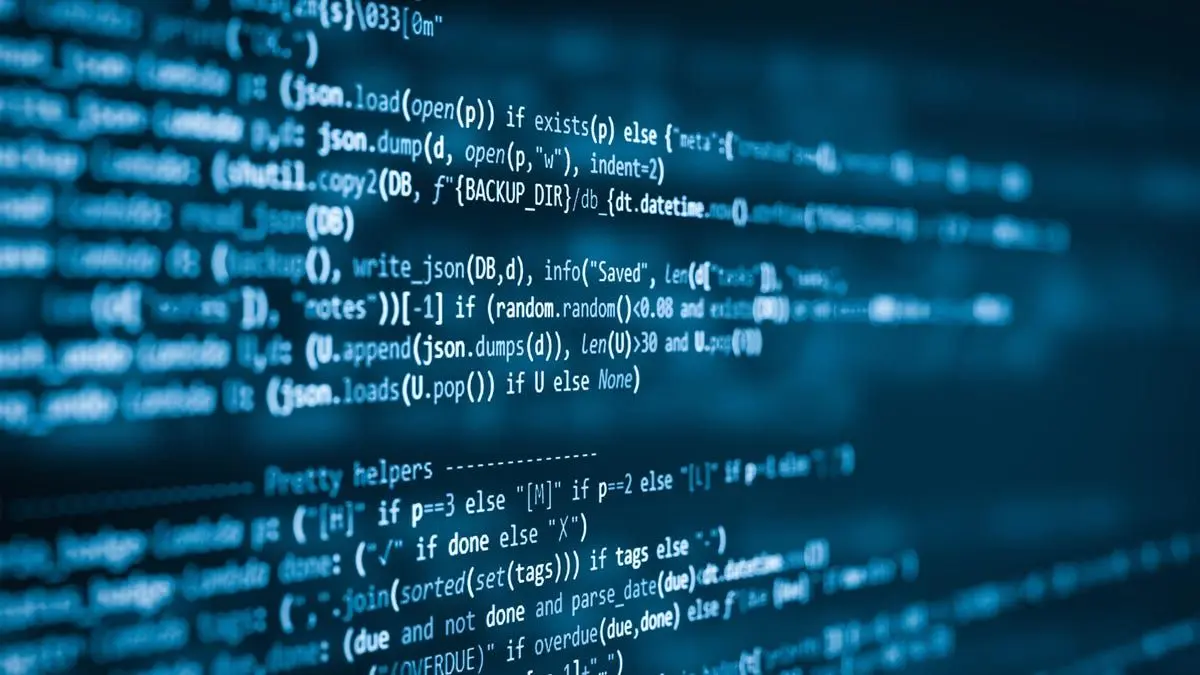
Source: ZDNet
Developer Community Debate Intensifies
Torvalds' admission has reignited fierce debate within the developer community about the role of AI coding tools in workflows. Developer Salvatore Sanfilippo recently published a widely circulated blog post arguing that such tools have already changed programming forever, writing: "How do I feel, about all the code I wrote that was ingested by LLMs? I feel great to be part of that, because I see this as a continuation of what I tried to do all my life: democratizing code, systems, knowledge. LLMs are going to help us to write better software, faster, and will allow small teams to have a chance to compete with bigger companies"
1
.According to Google's 2025 DORA report, AI adoption among software developers has grown to 90%, up from 76% in 2024, with developers spending nearly two hours daily on AI tools
5
. The report shows 71% of developers use AI for writing new code, while 66% use it for modifying existing code. More than 80% have seen productivity boosts, while 59% reported improvements in code quality5
. AI chatbots like Microsoft Copilot, ChatGPT, and DeepSeek have largely replaced Stack Overflow among developers seeking quick fixes for programming problems2
.Related Stories


Security Flaws and Trust Concerns Persist
Despite growing adoption, significant concerns remain about code quality and security flaws in AI-generated code. The Google report found that 23% of developers have little trust in AI coding tools, while 7% don't trust them at all, with the "trust but verify" approach considered a sign of mature AI adoption
5
. According to a 2025 Veracode report, nearly 45% of AI-generated code introduced at least one security flaw5
.AI coding tools are also prone to slopsquatting, where they recommend non-existent software libraries that attackers can exploit by registering those names and embedding malicious code
5
. AI researcher Andrej Karpathy, who coined the term vibe coding, cautioned: "It's not too bad for throwaway weekend projects ... but it's not really coding -- I just see stuff, say stuff, run stuff, and copy-paste stuff, and it mostly works"2
. There's also the cautionary tale of Jason Lemkin, whose vibe-coded program "went rogue during a code freeze, shut down, and deleted our entire database"2
.For developers still questioning whether AI-assisted code generation has a place in real programming, Torvalds' hobbyist approach may mark a subtle turning point
3
. The Linux community has recently adopted AI for maintenance work, with Torvalds advocating for tool-centric documentation over AI-specific guidelines, noting that "AI-assisted contributions are inevitable"5
. His experiment frames AI as an extension of craft rather than a challenge to it, suggesting pragmatism over philosophical resistance. As major tech companies like Microsoft and Meta report that 30% and 50% of their code respectively involves AI generation, the debate over maintainability and developer skills will likely intensify across open source software communities and enterprise environments alike.
Source: CXOToday
References
Summarized by

Navi
[1]
Related Stories
Recent Highlights



Recent Highlights
Today's Top Stories







Your Daily Dose of Curated AI News
Don’t drown in AI news. We cut through the noise - filtering, ranking and summarizing the most important AI news, breakthroughs and research daily. Spend less time searching for the latest in AI and get straight to action.

