OpenAI, Anthropic, and Block Launch Agentic AI Foundation to Standardize AI Agents Development


17 Sources
17 Sources
[1]
Big Tech joins forces with Linux Foundation to standardize AI agents
Big Tech has spent the past year telling us we're living in the era of AI agents, but most of what we've been promised is still theoretical. As companies race to turn fantasy into reality, they've developed a collection of tools to guide the development of generative AI. A cadre of major players in the AI race, including Anthropic, Block, and OpenAI, has come together to promote interoperability with the newly formed Agentic AI Foundation (AAIF). This move elevates a handful of popular technologies and could make them a de facto standard for AI development going forward. The development path for agentic AI models is cloudy to say the least, but companies have invested so heavily in creating these systems that some tools have percolated to the surface. The AAIF, which is part of the nonprofit Linux Foundation, has been launched to govern the development of three key AI technologies: Model Context Protocol (MCP), goose, and AGENTS.md. MCP is probably the most well-known of the trio, having been open-sourced by Anthropic a year ago. The goal of MCP is to link AI agents to data sources in a standardized way -- Anthropic (and now the AAIF) is fond of calling MCP a "USB-C port for AI." Rather than creating custom integrations for every different database or cloud storage platform, MCP allows developers to quickly and easily connect to any MCP-compliant server. Since its release, MCP has been widely used across the AI industry. Google announced at I/O 2025 that it was adding support for MCP in its dev tools, and many of its products have since added MCP servers to make data more accessible to agents. OpenAI also adopted MCP just a few months after it was released. Expanding use of MCP might help users customize their AI experience. For instance, the new Pebble Index 01 ring uses a local LLM that can act on your voice notes, and it supports MCP for user customization. Local AI models have to make some sacrifices compared to bigger cloud-based models, but MCP can fill in the functionality gaps. "A lot of tasks on productivity and content are fully doable on the edge," Qualcomm head of AI products, Vinesh Sukumar, tells Ars. "With MCP, you have a handshake with multiple cloud service providers for any kind of complex task to be completed." The Model Context Protocol is the most well-established of the AAIF's new charges. Goose, which was contributed to the project by Square owner Block, launched in early 2025. This is a customizable open source agent for coding. It's designed to run locally or in the cloud and can use any LLM you choose. It also has built-in support for MCP. Meanwhile, AGENTS.md comes from OpenAI, and it's also a very recent arrival in the AI sphere. OpenAI announced the tool this past August, and now it's also part of the AAIF. AGENTS.md is essentially a markdown-based readme for AI coding agents to guide their behavior in more predictable ways. Moving fast Think about the timeline here. The world in which tech companies operate has changed considerably in a short time as everyone rushes to stuff gen AI into every product and process. And no one knows who is on the right track -- maybe no one! Against that backdrop, big tech has seemingly decided to standardize. Even for MCP, the most widely supported of these tools, there's still considerable flux in how basic technologies like OAuth will be handled. The Linux Foundation has spun up numerous projects to support neutral and interoperable development of key technologies. For example, it formed the Cloud Native Computing Foundation (CNCF) in 2015 to support Google's open Kubernetes cluster manager, but the project has since integrated a few dozen cloud computing tools. Certification and training for these tools help keep the lights on at the foundation, but Kubernetes was already a proven technology when Google released it widely. All these AI technologies are popular right now, sure, but is MCP or AGENTS.md going to be important in the long term? Regardless, everyone in the AI industry seems to be on board. In addition to the companies adding their tools to the project, the AAIF has support from Amazon, Google, Cloudflare, Microsoft, and others. The Linux Foundation says it intends to shepherd these key technologies forward in the name of openness, but it may end up collecting a lot of nascent AI tools at this rate.
[2]
OpenAI, Anthropic and Block join new Linux Foundation effort to standardize the AI agent era
As AI moves beyond chatbots and towards systems that can take actions, the Linux Foundation is launching a new group dedicated to keeping AI agents from splintering into a mess of incompatible, locked-down products. The group, dubbed the Agentic AI Foundation (AAIF), will act as a neutral home for open-source projects related to AI agents. Anchoring the AAIF at launch are donations from Anthropic, Block, and OpenAI. Anthropic is donating its MCP (Model Context Protocol), a standard way to connect models and agents to tools and data; Block is contributing Goose, its open-source agent framework; and OpenAI is bringing AGENTS.md to the table, its simple instruction file developers can add to a repository to tell AI coding tools how to behave. You can think of these tools as the basic plumbing of the agent era. Other members in the AAIF include AWS, Bloomberg, Cloudflare, and Google, signaling an industry-level push for shared guardrails so that AI agents can be trustworthy at scale. In OpenAI engineer Nick Cooper's view, protocols are essentially a shared language that lets different agents and systems work together without every developer reinventing integrations from scratch. "We need multiple [protocols] to negotiate, communicate, and work together to deliver value for people, and that sort of openness and communication is why it's not ever going to be one provider, one host, one company," Cooper told TechCrunch. Jim Zemlin, executive director of the Linux Foundation, put it more bluntly in conversations around the launch: the goal is to avoid a future of "closed wall" proprietary stacks, where tool connections, agent behavior, and orchestration are locked behind a handful of platforms. "By bringing these projects together under the AAIF, we are now able to coordinate interoperability, safety patterns, and best practices specifically for AI agents," Zemlin said. Block - the fintech company behind Square and Cash App - isn't known for AI infrastructure, but it's making an openness play with Goose. AI Tech Lead Brad Axen frames it as proof that open alternatives can match proprietary agents at scale, with thousands of engineers using it weekly for coding, data analysis, and documentation. Open-sourcing Goose serves a dual purpose for Block. "Getting it out into the world gives us a place for other people to come help us make it better," Axen told TechCrunch. "We have a lot of contributors from open source, and everything they do to improve it comes back to our company." Meanwhile, donating Goose to the Linux Foundation gives Block access to community stress-tests while positioning it as a working example of AAIF's vision - an agent framework designed to plug into shared building blocks like MCP and AGENTS.md. Anthropic is making a similar move at the protocol layer, handing MCP to the Linux Foundation. The goal: make MCP the neutral infrastructure connecting AI models to tools, data, and applications without endless one-off adapters. "The main goal is to have enough adoption in the world that it's the de facto standard," MCP co-creator David Soria Parra told TechCrunch. "We're all better off if we have an open integration center where you can build something once as a developer and use it across any client." Donating MCP to AAIF signals that the protocol won't be controlled by a single vendor. That governance point is central to why the Linux Foundation created a new umbrella at all. The organization already hosts major AI and developer infrastructure projects - everything from PyTorch and Ray to Kubernetes - but says AAIF is specifically aimed at agent standards and orchestration, including shared safety patterns and interoperability. AAIF's structure is funded through a "directed fund," meaning companies can contribute money through membership dues. But Zemlin of the Linux Foundation argues that funding doesn't equal control: project roadmaps are set by technical steering committees, and no single member gets unilateral say over direction. Still, the big question is whether AAIF becomes real infrastructure or just another industry logo alliance. "An early indicator of success, in addition to adoption of these standards, would be the development and implementation of shared standards being used by vendor agents around the world," Zemlin said. For OpenAI's Cooper, success would look like an evolution of standards: "I don't want it to be a stagnant thing. I don't want these protocols to be part of this foundation, and that's where they sat for two years. They should evolve and continually accept further input." There's also a more subtle consequence: even with open governance, one company's implementation could become the default simply because it ships fastest or gains the most usage. Zemlin says that's not necessarily a bad thing, though. He points to open-source history - like Kubernetes "winning" the container race - as evidence that "dominance emerges from merit and not vendor control." For developers and enterprises, the short-term appeal is clear: less time building custom connectors, more predictable agent behavior across codebases, and simpler deployment in security-conscious environments. The larger vision is more ambitious: if tools like MCP, AGENTS.md, and Goose become standard infrastructure, the agent landscape could shift from closed platforms to an open, mix-and-match software world reminiscent of the interoperable systems that built the modern web.
[3]
OpenAI, Anthropic, and Block Are Teaming Up to Make AI Agents Play Nice
The three companies are also transferring ownership of some widely used agentic technologies over to the foundation. This includes Anthropic's Model Context Protocol (MCP), which allows agents to connect and interact; OpenAI's Agents.md, which lets programs and websites specify rules for coding agents; and Goose, a framework for building agents developed by Block. These technologies were already free to use, but through the new foundation it will be possible for others to contribute to their development. "MCP is used by many companies, but there are others [who don't use it]," says Nick Cooper, who leads work on the protocol at OpenAI. Cooper says that making MCP an open standard should encourage developers and companies to embrace it and build systems that integrate agentic AI. "That open interoperability -- that open standard -- really means that companies can talk across providers, and across agentic systems." The Agentic AI Foundation is being created under the Linux Foundation, which oversees development of the widely used open source Linux operating system as well as other projects. The foundation provides legal and technological support for the creation of open source foundations. Other companies who have signed on to the AAIF, beyond the three founding members, include Google, Microsoft, AWS, Bloomberg, and Cloudflare. The new foundation reflects a nascent shift from chat-based AI systems to greater use of programs that take actions on behalf of users. This kind of agentic AI promises a potentially lucrative new paradigm in which AI agents use the web and negotiate with one another to power all sorts of applications. Consumers may, for example, use AI assistants to buy and book things, while businesses use AI agents to manage transactions and customer interactions. Srinivas Narayanan, chief technology officer of B2B applications at OpenAI, envisions a time when large numbers of AI agents routinely communicate with one another in the course of business. The AI industry working across the same open standards should help ensure that those interactions happen seamlessly. "Open source is going to play a very big role in how AI is shaped and adopted in the real world," Narayanan says. The question of openness seems crucial to AI right now. US companies mostly make money by offering access to powerful closed models through application programming interfaces, or APIs. Meta previously released the weights for its best model, Llama, so that anyone could download and run it, although the company has recently signaled a shift to a more closed approach. A number of Chinese AI companies, including DeepSeek, Alibaba, Moonshot AI, and Z.ai, provide strong open source models that have become popular with developers, startups, and AI researchers. Some worry that this picture could give Chinese firms a big strategic advantage over time.
[4]
The fix for messy AI agent ecosystems might finally be here
At Open Source Summit Japan in Tokyo, the Linux Foundation announced the launch of the Agentic AI Foundation (AAIF). This new, open standards industry-backed consortium seems destined to be a game changer. The AAIF's mission is to standardize and accelerate the emerging ecosystem of AI agents. Backed by OpenAI, Anthropic, Block, and a who's who of major cloud and software vendors, the group aims to make "agentic AI" infrastructure open, interoperable, and governed by familiar open-source norms. Also: Why AI agents failed to take over in 2025 - it's 'a story as old as time,' says Deloitte Announced under the Linux Foundation's umbrella, the AAIF will be a neutral home for open-source projects focused on AI agents. Agents are systems that can plan, act, and coordinate tools or other agents between Large Language Modules (LLMs) and other information services on your behalf. The foundation's mandate is to ensure that this new layer of AI infrastructure evolves with transparent governance, cross-vendor standards, and community-driven development, rather than proprietary silos. To make this happen, the AAIF is built on three cornerstone technologies: Anthropic's Model Context Protocol (MCP), Block's Goose Coding Agent, and OpenAI's AGENTS.md specification for describing and orchestrating agents. All these projects have now been donated to the foundation. Also: 3 ways AI agents will make your job unrecognizable in the next few years Together, they're meant to make a new shared software stack. In this stack, MCP will act as a universal protocol for connecting models to tools and data. AGENTS.md serves as an open format for defining agent capabilities, and Goose is a real-world agent implementation built on these concepts. This is a big deal because agentic AI, which consists of multi-step, tool-using agents rather than simple chatbots, despite all the agentic hype, has big problems in the real world. As the data protection company Rubrik's chief product officer, Anneka Gupta, recently pointed out, agentic AI can make horrible mistakes. Just as bad, if not more so, because agents can act as users, they can cause havoc. Also: AI agents are already causing disasters - and this hidden threat could derail your safe rollout Say, for example, someone in accounts payable uses an agent to pay freelancers. That's a perfectly reasonable use. But what if someone else can use that same agent? The system may not know that it's Joe, the janitor, rather than Angela, the CFO, asking for a million dollars to be paid to George, the janitor's husband. Sounds silly? This kind of thing will happen. We need a universal way of dealing with agents, and AAIF will be part of the solution. AI agents are moving very quickly from labs into production. Companies are pitching agents to automate workflows, software development, and data-heavy operations. Without standard protocols and formats, each vendor's agent stack risks becoming a separate island. This makes it harder for enterprises to mix tools or switch providers. It also means securing multi-service agents will be harder than ever. Also: Should you trust AI agents with your holiday shopping? Here's what experts want you to know As Chris DiBona, vice president of Microsoft's office of the CTO, said in a statement, "For the agentic future to become a reality, we have to build it together, and we have to build it in the open. The AAIF will give industry and developers a shared and transparent path to evolve the agentic AI ecosystem. Microsoft remains committed to supporting this journey to create an open, interoperable, and reliable foundation for everyone building and using agents." In the near term, the Agentic AI Foundation will focus on evolving MCP, AGENTS.md, and Goose under open governance, while recruiting additional projects that fit into a shared agentic stack. In the long term, members expect AAIF to become the central venue for interoperability profiles, security and evaluation frameworks, and reference implementations that vendors and open-source projects can build on as agentic AI becomes part of mainstream infrastructure.
[5]

Microsoft, Google, OpenAI, and Anthropic join forces to form Agentic AI alliance, according to report -- organization backed by the Linux Foundation is set to create open source standards for AI agents
Many of the world's largest AI tech companies are going to start working together on some of their shared problems. Microsoft, Google, Anthropic, OpenAI, and a number of other related companies are going to team up as part of the Agentic Artificial Intelligence Foundation, as reported by The Information. Managed by The Linux Foundation, the group will work on developing key open source tools and standards for AI agents, and will share their findings with each other on solving key technical problems. However, as signs mount that agentic AI is not particularly effective at replacing workers, and rumors of the AI bubble stretching to its limits continue to swirl, agents need to impress, especially if they're being hailed as the next big thing in the AI landscape. AI agents have long been seen as a next-generation development for the latest large language models that would finally realize their potential. They could laser-target larger tasks by breaking them down into smaller pieces, which a larger AI model could use to create or complete a larger project or goal. That's how it works in theory, but as the Harvard Business Review highlights, they rarely achieve the end goal in practice. Especially when it comes to customer-facing roles, AI agents just aren't ready to replace real-world workers as they can't be trusted to complete their tasks effectively enough, or at all. Hallucinations are still a real problem, and the public has little tolerance for abject failure in basic tasks or wild shifts in tone. That doesn't mean there's no potential there, though. It's the basket the main AI companies are putting their eggs in at the moment, anyhow, hence this new initiative to pool their efforts to create something more effective, and maintain standards that they have a greater say in developing. The group's first goal will be to develop three existing open-source tools, according to people familiar with the matter. These include: a model context protocol developed by Anthropic called MCP, to standardize how AI agents connect to other applications; an OpenAI format for giving instructions to coding agents, known as Agents.md, and an open source AI agent invented by Block that can run locally on a single computer without networking, called Goose. MCP is already in use at OpenAI, Microsoft, Google, and Cursor, so it's no surprise that it was chosen as one of the group's main goals. As it stands, it can connect ChatGPT to a company's Slack, for example, which would allow a manager to quickly summarize conversations. But IT managers speaking to The Information claim there are serious security concerns, especially when it comes to prompt injection attacks, so MCP needs continued development, and the developers need to agree on the best way to patch discovered security holes quickly and effectively. This foundation also has the potential to cement its participants as the premier AI companies. Although it's not just the big tech firms that have joined this foundation, and it is being organized by a long-standing organization with a strong reputation for keeping software development as its main focus, the potential is there for exploitation and, arguably, stagnation. The largest companies are likely to have the largest input on the direction of these open standards, which could allow them to shape the future of Agentic AI in a way that benefits them. With enormous investment capabilities, larger companies are capable of pivoting toward new efforts at the drop of a hat. If any breakthroughs are made in Agentic AI that require heavy investment or access to hardware and software to take advantage, those larger companies will be in a prime position to reap the rewards. Indeed, the very financing of the entire AI industry has been rife with major companies pumping each other's stock prices with promises of future revenue and long-tail investment pledges that won't be realized for years. The major companies all collaborating to advance the industry have some strengths, but it could also be taken as a further example of the major firms propping each other up for the foreseeable future. At their core, the major AI tech firms have the same problem: They aren't making any money from any of this, yet. AI costs far more to run than it generates for the companies developing it, and there's no sign of that stopping any time soon. This foundation could be a way for them to collectively try to solve this issue. Someone needs to make a killer AI app or a way for agentic AI to fix real problems, or rapidly enhance productivity, so that these massive companies can make good on their equally large investments. Shareholders and early investors are going to come calling for the promised profits over the coming years. Accelerating the development of their tools and standards through this foundation could be one way for these major firms to also accelerate their path toward profitability.
[6]

Linux Foundation founds Agentic AI Foundation
An attempt to provide vendor-neutral oversight as the agent train barrels on The Linux Foundation on Tuesday said it has formed the Agentic AI Foundation (AAIF) to provide vendor-neutral oversight for the development of AI agent infrastructure. AI agents are machine learning models empowered to access and manipulate other software, such as web browsers. Despite industry acknowledgment that agents pose security problems and IT consultancy Gartner's insistence that many agent-based enterprise projects will be canceled for lack of business value, The Linux Foundation sees value in serving as the Switzerland of free-spending AI firms. Anthropic, Block, and OpenAI have contributed three projects respectively to this endeavor: Model Context Protocol (MCP), for integrating LLMs with tools; goose, an open source AI agent framework; and AGENTS.md, the equivalent of a README.md file for machines. "Bringing these projects together under the AAIF ensures they can grow with the transparency and stability that only open governance provides," said Jim Zemlin, executive director of the Linux Foundation, in a statement. "The Linux Foundation is proud to serve as the neutral home where they will continue to build AI infrastructure the world will rely on." Nick Cooper, a member of OpenAI's technical staff, said in a statement that tools and infrastructure must be trustworthy and accessible for AI agents to reach their full potential. "OpenAI has long believed that shared, community-driven protocols are essential to a healthy agentic ecosystem, which is why we've open sourced key building blocks like the Codex CLI, the Agents SDK, and now AGENTS.md," he said. The announcement has been stuffed full of enthusiastic canned quotes lauding the AAIF. The reality of agents has been less worthy of celebration. Microsoft has reportedly reduced the growth targets for its Azure Foundry product for building agents, though the company told CNBC that "aggregate sales quotas for AI products have not been lowered." Google's Gemini-based coding agent Antigravity was found to be full of security holes shortly after its release. It then proceeded to wipe one unfortunate developer's drive. Replit's AI coding agent managed a similar feat of erasure on a production database in July. Such behavior has proven sufficiently concerning that Gartner has called for a corporate ban on agentic browsers. And yet companies still show interest in AI-based automation. Undaunted by past incidents and Air Canada's humbling chatbot experience, Virgin Atlantic on Monday announced the availability of its agent-based virtual Concierge. Built with the assistance of AI consulting biz Tomoro, it relies on OpenAI's Realtime API for customer interaction and trip planning. Other firms like Appdome, Coheso, EPAM, and Lumos have recently launched agentic services of their own. Sustained by inexplicably optimistic investors, AI agents have taken on a life of their own. Gartner predicts that by 2028, AI sales agents will outnumber human sellers 10-to-1. But less than 40 percent of sellers are expected to see productivity improve as a result of AI agent help. ®
[7]

Linux Foundation launches Agentic AI Foundation
Backed by AWS, Google, Microsoft, OpenAI, and others, the AAIF kicks off with contributed projects from Anthropic, Block, and OpenAI. The Linux Foundation has announced the formation of the Agentic AI Foundation (AAIF), which is intended to provide a neutral, open foundation to ensure that agentic AI evolves transparently and collaboratively. Announced December 9, the AAIF is anchored by founding contributions including Anthropic's Model Context Protocol, an open protocol for integrating LLM applications and external data sources and tools; Block's goose, an AI coding agent; and OpenAI's AGENTS.md, an open format for guiding coding agents. These inaugural projects lay the groundwork for a shared ecosystem of tools, standards, and community-driven innovation, according to the Linux Foundation. "Bringing these projects together under the AAIF ensures they can grow with the transparency and stability that only open governance provides," said Linux Foundation Executive Director Jim Zemlin in a statement. Founding AAIF members include Amazon Web Services, Anthropic, Bloomberg, Cloudflare, Google, IBM, JetBrains, Microsoft, OpenAI, and Salesforce. The advent of agentic AI represents a new era of autonomous decision-making and coordination across AI systems that will transform and revolutionize entire industries, the Linux Foundation said.
[8]

OpenAI, Anthropic, and Others Create Foundation for Standardizing AI Agents
OpenAI, Anthropic, and Block have teamed up to co-found a new foundation that promises to help standardize the development of AI agents. The new Agentic AI Foundation (AAIF) will operate under the larger Linux Foundation, a non-profit that oversees several open-source projects including the Linux operating system. In addition to establishing the foundation, each of the three companies donated some of their agent tech to the organization. OpenAI handed over ownership of its AGENTS.md universal standard, which gives AI coding agents a consistent source of project-specific guidance across different platforms. Anthropic donated its Model Context Protocol (MCP), which provides a standard way to connect AI models to tools, data, and applications. And Block donated its open-source AI agent framework, Goose, which developers use to build AI agents. “Within just one year, MCP, AGENTS.md and goose have become essential tools for developers building this new class of agentic technologies,†said Jim Zemlin, executive director of the Linux Foundation, in a press release. “Bringing these projects together under the AAIF ensures they can grow with the transparency and stability that only open governance provides.†The foundation arrives as AI companies are attempting to move beyond simple chatbots into autonomous agents that can take actions on behalf of users, like booking reservations or shopping online. AAIF’s goal is to promote industry standards so that as more agents come online, they work securely, transparently, and seamlessly together. But because the tech is still in its early days, researchers have already started pointing out the risks that come with using agents right now. Last week, the analyst firm Gartner recommended that companies and organizations block their employees from using AI browsers for now. Its report defines an AI browser as a browser that includes an "AI sidebar" that can search, create summaries, and interact with webpages, and that has agentic transaction capabilities like allowing the browser to navigate, interact, and complete tasks on websites. Gartner warned that AI sidebar features could expose sensitive user information, since they likely collect data regarding active web content, browser history, and open tabs. The agentic capabilities of these browsers also face unique vulnerabilities. They can be susceptible to what are known as “indirect prompt-injection-induced rogue agent actions,†which occur when an agent comes across potentially malicious content that prompts it to ignore safety guardrails and execute unwanted financial transactions or expose sensitive data. Just this week, Google introduced what it’s calling the “User Alignment Critic,†a separate AI model that runs alongside an AI agent but isn’t exposed to third-party content to circumvent this risk. The idea is for it to vet an agent’s plan and make sure it aligns with the user’s goals. Gartner also warned that AI agents could simply make mistakes like booking the wrong flight or ordering the wrong number of an item. Several other big names in AI have already joined as members of the foundation including Microsoft, AWS, and Cloudflare.
[9]

Innovation Happens in the Open: Cisco Joins the Agentic AI Foundation (AAIF)
At Cisco, we believe in the power of collaboration and neutral governance to drive innovation. That's why we're proud to join the newly-formed Agentic AI Foundation (AAIF) under the Linux Foundation as a launch Gold member, supporting its mission to advance open standards like the Model Context Protocol (MCP). MCP, originally created and open-sourced by Anthropic in late 2024, has already gained significant traction as a standard for AI interoperability with software that consumers use, or are part of the toughest enterprise environments. With its transition to the LF under AAIF, we are excited that MCP will now be governed by a neutral, community-driven foundation. This move is a critical first step in making MCP a truly open standard, built by and for the builders focused on driving real-world use cases. We are expecting a full stack of agentic AI open source projects to be a part of AAIF over time, along with the founding contributions of Block's goose and Open AI's AGENTS.md projects. Agents need to be able to work together to be actually useful. They need to freely find each other, communicate, and collaborative on delivering outcomes: A reality that has yet to be achieved. To harness the true transformative potential of AI, the need for open, interoperable frameworks has never been more critical. We are focused on fostering a thriving ecosystem for agentic AI where agents can work securely and seamlessly across frameworks and vendors. As active technical steering committee members of both the Agent2Agent (A2A) Protocol project and the AGNTCY project, we have participated in ensuring they both joined the Linux Foundation in the past year. With MCP being a core part of the AGNTCY architecture since launch, we believe the AAIF is another key piece of this puzzle. We have most closely been involved in the development of an open Internet of Agents through co-founding and building the AGNTCY project. Think back to the early internet -- we needed TCP/IP, DNS, HTTP, and other essential components before anything useful could happen. That's what AGNTCY is building for multi-agent systems: the discovery mechanisms, identity and trust, the messaging layer - supporting MCP, A2A and other protocols, and observability tools for end-to-end operation. The outcome? Agents from different organizations discover each other, authenticate, and collaborate securely. Outshift by Cisco donated the initial code and specifications to the Linux Foundation because this infrastructure needs neutral governance. No single companyshould control how agents work with each other -- walled gardens stifle innovation. The Linux Foundation provides this neutral stewardship, with formative members like Cisco, Dell Technologies, Google Cloud, Oracle, and Red Hat working alongside the community to build specifications, code, and services that anyone can use. While the transition of MCP to the AAIF is a significant milestone, it's just the beginning. Key protocols and projects are still operating as islands and there is much work to be done to bring the community together. The Internet of Agents will not be built by any one company or framework -- it will require collaboration across the entire ecosystem. At Cisco, we are committed to doing this work. We are investing in open standards, supporting initiatives like MCP, A2A, and AGNTCY, and working with the broader community to stitch these core projects together. We believe this is the only path forward for achieving a shared vision of agentic AI success that fosters trust, innovation, and collaboration. The future of agentic AI is a shared journey, and we are proud to be part of it.
[10]

The Agentic AI Foundation offers shared specs for building, running, and scaling agents
Scaling enterprise and agentic AI will rely heavily on industry players agreeing on standards. From model context protocol (MCP) to Agent 2 Agent (A2A) and beyond, interoperability protocols give organizations a common language and way to identify agents. This could significantly fast track adoption of multiple agents across industries. The Linux Foundation, Anthropic, OpenAI, Block, and other companies in the AI space created the Agentic AI Foundation to help further standardize the evolution of open-source AI. This brings a large chunk of interoperability and agentic standards under one roof, potentially streamlining the development of the different protocols. The move would significantly streamline how enterprise AI builders contribute to projects; ensure no single vendor controls a company's roadmap; guarantee broad interoperability; and offer faster time to deployment. For enterprise AI builders, it marks greater confidence that the agents they create can work with other agents without fear of a vendor removing access to the protocol on a whim. As part of AAIF's creation, Anthropic will bring its widely adopted MCP to the Linux Foundation, and OpenAI contributed its AGENTS.md. Block principal engineer Brad Axen told VentureBeat that his company brought its AI agent framework, goose, to AAIF, likening it to a reference implementation of agents. Other members of the AAIF include AWS, Bloomberg, Cloudflare, Google, Microsoft, IBM, Datado, Oracle, JetBrains, Salesforce, SAP, Snowflake, Hugging Face, Uber, and Zapier, among others. Agentic protocols like MCP, AGNTCY, and A2A help create a way for agents to talk to each other securely, whereas AGENTS.md gives coding agents access to context. Even before these standards were donated to the Linux Foundation, enterprises could build with them and sometimes contribute in their evolution. But ownership of the standards remained with the companies that created them, and they can steer the standard or remove investment in it if the wanted to. No matter how widespread MCP is, Anthropic still owned and controlled it. But by giving MCP to a neutral third party like the Linux Foundation, the community gets more of a say on how to develop the standards, and it scales in a way that benefits everyone. How does this help enterprise AI builders With more enterprises exploring agents, AI builders want to ensure that the tools and platforms they create work across different ecosystems. So they build applications with the standards in mind, hoping that the protocols are not changed too much to benefit their corporate owners. Opening up the governance of these projects removes the fear of vendor lock-in, where expansion and decisions about the protocol could be changed at the whim of its owner. Enterprise AI developers can be assured that when they build toward a standard, they can expect shared APIs and find repeatable deployment patterns. "Protocols enable a world where people's context is shared, and let the systems that they work with be more powerful," Axen said. "And MCP is a big part of that, so customers of Block can build a system that is watching your email to say like, 'Oh, someone has emailed me requesting an appointment. I'm just going to book that for you. And that's the kind of connectivity that something like MCP enables. So even for corporations, this means we can build solutions that help our customers more by connecting different parts of the ecosystem." Open-sourcing standards Several companies have "donated" their interoperability standards to the Linux Foundation, effectively ceding control over the project. Anthropic said in a blog post that MCP's governance model will remain unchanged, with the project's maintainers continuing to "prioritize community input and transparent decision-making." "Bringing these and future projects under the AAIF will foster innovation across the agentic AI ecosystem and ensure these foundational technologies remain neutral, open, and community-driven," Anthropic said. Google donated A2A, its interoperability layer, to the foundation in June, arguing in a press release that the Linux Foundation "will ensure that this critical component remains vendor-agnostic and community-driven. This move is designed to accelerate the adoption and development of the A2A protocol by providing a robust framework for open collaboration, intellectual property management and long-term stewardship." Cisco also donated AGNTCY to the foundation this year. OpenAI said in its blog post that bringing AGENTs.md to a larger group highlights the importance of open standards to "make agents safe, easier to build and more portable across tools and platforms." And it's not just interoperability standards; the Linux Foundation is also home to the machine learning framework PyTorch, making it a hub for many tools used to build AI systems. Block's Axen told VentureBeat that having more standards under one roof shows how far the AI industry has gone. "It shows that the industry is maturing around open source, and we understand how powerful it is," Axen said. "It gives all of these protocols a durable home to survive in the long run."
[11]

OpenAI, Anthropic and Block Set up Agentic AI Foundation Under Linux Foundation | AIM
The new foundation aims to provide a neutral, open governance structure for the emerging ecosystem of agentic AI systems. The Linux Foundation has announced the formation of the Agentic AI Foundation (AAIF), backed by Anthropic, Block and OpenAI. Other members include Amazon Web Services, Bloomberg, Cloudflare, Google, and Microsoft. The new foundation aims to provide a neutral, open governance structure for the emerging ecosystem of agentic AI systems. The AAIF brings together tools and standards that enable autonomous AI agents to operate across applications and environments. As part of the launch, OpenAI is bringing AGENTS.md, a markdown-based standard that offers project-specific instructions for AI agents. Meanwhile, Anthropic announced that it is donating the Model Context Protocol (MCP) to the AAIF. Block is contributing Goose, its open-source framework for building and running AI agents. These founding projects offer shared infrastructure for interoperability and predictable agent behaviour. "We are seeing AI enter a new phase, as conversational systems shift to autonomous agents that can work together," said Jim Zemlin, executive director of the Linux Foundation. "Bringing these projects together under the AAIF ensures they can grow with the transparency and stability that open governance provides." MCP, released by Anthropic in 2024, has become widely adopted as a standard protocol for connecting AI models to tools, data and applications. Anthropic reports more than 10,000 MCP servers across enterprise and developer environments. MCP is currently used by platforms including Claude, Copilot, Gemini, VS Code and ChatGPT. "MCP started as an internal project to solve a problem our own teams were facing," said Mike Krieger, chief product officer at Anthropic. "Donating MCP to the Linux Foundation ensures it stays open, neutral, and community-driven as it becomes infrastructure for AI." Block's goose, introduced in 2025, is an open-source, local-first AI agent framework built around MCP for tool and workflow integration. It provides a structured environment for building and running agentic processes. "We're at a critical moment for AI," said Manik Surtani, head of open source at Block. "By establishing the AAIF, Block and this group of industry leaders are taking a stand for openness. Contributing goose ensures that agentic AI remains shaped by the community." OpenAI's AGENTS.md standard, launched in 2025, gives AI coding agents consistent project-level instructions across repositories and toolchains. The markdown-based format is already used by more than 60,000 open-source projects and frameworks such as Cursor, GitHub Copilot, Gemini CLI and VS Code. "For AI agents to reach their full potential, developers and enterprises need trustworthy infrastructure and accessible tools to build on," said Nick Cooper, member of the technical staff at OpenAI. "By co-founding the AAIF and donating AGENTS.md, we're helping establish open, transparent practices that make AI agent development more predictable and interoperable." Developers are building AI agents for coding, workflow automation and customer service, with many now shifting from prototypes to production use. OpenAI said the industry needs shared standards to avoid fragmentation. "Open standards make agents safer, easier to build, and more portable across tools and platforms," the company said, adding that without common conventions, development risks diverging into incompatible silos. Over the past year, OpenAI has released several components meant to support an open agentic ecosystem, including the Agents SDK, Apps SDK, the Agentic Commerce Protocol, gpt-oss models and the Codex CLI. OpenAI said it has also contributed to the Model Context Protocol (MCP), which is now integrated into ChatGPT connectors and apps. Last week, OpenAI, Anthropic and MCP-UI extended the Apps SDK to all MCP developers through MCP Apps. AAIF will operate as a directed fund within the Linux Foundation. The organisation has invited tool builders, researchers and enterprises to participate in shaping future standards. The foundation will support open development, long-term sustainability and collaborative governance. Gold members include Cisco, Datadog, IBM, Oracle, Salesforce, SAP, Shopify, Snowflake and Twilio; Silver members include Hugging Face, Uber, Zapier, SUSE and Mirantis. The Linux Foundation has previously stewarded projects such as the Linux Kernel, Kubernetes, Node.js and PyTorch.
[12]

Linux Foundation announces Agentic AI Foundation joined by Anthropic, OpenAI, Block - SiliconANGLE
Linux Foundation announces Agentic AI Foundation joined by Anthropic, OpenAI, Block The Linux Foundation, the nonprofit supporting open-source projects such as the Linux operating system kernel, today announced the formation of the Agentic Artificial Intelligence Foundation alongside major contributions of innovative AI technology. Major software technology companies Anthropic PBC, OpenAI Group PBC and Block Inc. joined the launch as founding members with contributions of innovative AI projects. Anthropic contributed Model Context Protocol, a universal open standard for connecting AI models to tools. OpenAI offered the AGENTS.md specification that gives AI coding agents consistent, project-specific knowledge. And Block provided Goose, an open source local-first AI framework. Platinum members of AAIF include a showcase of the Who's Who of the largest cloud, data and AI industry enterprise leadership including Anthropic, Block, OpenAI, Amazon Web Services Inc., Bloomberg LP, Cloudflare Inc., Google LLC and Microsoft Corp. Agentic AI refers to a still-emerging AI technology that allows AI models and systems to set goals, plan, reason and take actions independently by breaking down long-horizon tasks into manageable actions. These AI systems go beyond simple chatbot-style question-response and become interactive software that can integrate tools and collaborate with humans or other agents. They act proactively and react to changes in their environment to execute multi-step jobs with minimal human oversight. This new trend is changing how major large language model vendors develop AI models and how enterprise companies are adopting - and adapting to - the use of AI in their workflows. AI agents have the purposeful promise of becoming automatic and intelligent "teammates" to work alongside humans and reasoning software capable of automating tedious, dynamic tasks in the background. The Linux Foundation stated that innovation in agentic AI will need open-source software infrastructure to thrive. Making the underlying technologies community-governed rather than controlled by a cabal of big companies will promote open communication and advancement. The project is already a neutral home for numerous open-source projects fundamental to modern computing, including Linux, Kubernetes, PyTorch and RISC-V. A report from UiPath Inc. revealed that agentic AI enterprise adoption is accelerating rapidly, with roughly 65% of organizations piloting or deploying agentic systems by mid-year 2025, and around nine out of ten executives planning to increase investment throughout 2026. Multi-agent systems have been shown to deliver substantial performance gains, with up to 60% fewer errors and 40% faster execution compared to traditional processes. However, it cites the recent MIT report that only 5% of companies have realized any meaningful financial returns from AI efforts. The UiPath report also warned that 96% of information technology experts and security leaders harbor concerns about the increasing risk behind AI agents and called for it to be addressed swiftly. Since the release of MCP by Anthropic, a provider of advanced AI models including Claude and Claude Code, it has rapidly become a widely adopted universal standard. With more than 10,000 published MCP servers, it is now a fundamental turnkey infrastructure for AI interoperability. The protocol has been adopted by Claude, Anysphere Inc.'s Cursor, Microsoft Corp.'s Copilot and VSCode, Google LLC's Gemini, OpenAI's ChatGPT and other widely used AI platforms. "MCP started as an internal project to solve a problem our own teams were facing. When we open sourced it in November 2024, we hoped other developers would find it as useful as we did," said Mike Krieger, chief product officer at Anthropic. "A year later, it's become the industry standard for connecting AI systems to data and tools, used by developers building with the most popular agentic coding tools and enterprises." Released in August, AGENTS.md has already been adopted by over 40,000 open-source projects and coding agents to act as the internal framework for guiding safe, interoperable agentic AI. It's a simple markdown-based convention that provides a human-readable format for reliable control of AI behaviors across multiple code repositories. Despite its unusual name, Goose provides a standardized, open and modular framework for agentic AI systems, enabling anyone to build reasoning applications. It forms a standardized open, modular framework for agentic AI systems, allowing anyone to build reasoning applications. It offers connectivity for AI models, MCP and extensible tools in an out-of-the-box solution with a built-in desktop solution that jumpstarts development. "We're at a critical moment for AI," said Manik Surtani, head of open source at Block. "The technology that will define the next decade, that promises to be the biggest engine of economic growth since the internet. It can either remain closed and proprietary for the benefit of few, or be driven by open standards, open protocols and open access for the benefit of all."
[13]

Anthropic, OpenAI, and Block donate AI agent projects to new Linux Foundation body
The Linux Foundation today announce the formation of the Agentic AI Foundation (AAIF), a new home for open source projects that underpin how AI agents connect to tools, data, and each other. The technology matters, but so does who's contributing it. Anthropic is donating the Model Context Protocol (MCP). OpenAI is contributing AGENTS.md. Block is contributing Goose. These are direct competitors, and they've each donated core projects to neutral governance. The membership list reinforces the point - Amazon, Google, Microsoft, Bloomberg, and Cloudflare are Platinum members. Gold members include Cisco, IBM, Oracle, SAP, and Snowflake. If you're building applications that use AI agents - software that can take actions autonomously rather than just answering questions - you face a practical problem: how does the agent connect to your existing tools and data? MCP, or Model Context Protocol, is Anthropic's answer. It provides a standardized way for AI models to connect to external tools, databases, and applications. MCP acts as a universal adapter. Rather than building custom integrations for every combination of AI model and business tool, MCP provides a common protocol. It launched in November 2024 and has been adopted rapidly - there are now more than 10,000 published MCP servers, and the protocol is supported by Claude, ChatGPT, Microsoft Copilot, Gemini, and most major coding tools. Mike Krieger, Chief Product Officer at Anthropic, explains: MCP started as an internal project to solve a problem our own teams were facing. When we open sourced it in November 2024, we hoped other developers would find it as useful as we did. A year later, it's become the industry standard for connecting AI systems to data and tools. Goose, from Block (the company behind Square and Cash App), is an AI agent framework. Where MCP handles connections, Goose provides the structure for building agents that can actually do things - writing code, running tests, managing files, executing workflows. It runs locally on your machine and can work with any Large Language Model (LLM) that supports tool calling. Goose uses MCP for its integrations, which is partly why Block and Anthropic ending up in the same foundation makes sense. AGENTS.md is simpler but solves a real problem. When an AI coding agent works on a project, it needs to understand project-specific conventions - how to run tests, what build system to use, which files to avoid touching. AGENTS.md is a markdown file format that provides this guidance in a standardized way. OpenAI released it in August 2025, and it has already been adopted by more than 60,000 open source projects. At Open Source Summit EU in Amsterdam in August, Linux Foundation executives and engineers from Amazon Web Services (AWS), Cisco, and others were already discussing this trajectory. Mark Collier, General Manager of AI Infrastructure at the Linux Foundation, talked about bringing agent-related projects under neutral governance. The conversation kept returning to the same themes: trust, identity, interoperability, and the need for standards that no single company controls. One participant made the comparison to containers - that standardization process took roughly a decade, from early container technologies through Docker to Kubernetes becoming the de facto orchestration platform. The agent ecosystem is moving faster, but faces similar challenges. As systems become more autonomous, the questions of identity (which agent is this?), observability (what is it doing?), and security (should it be allowed to do that?) become more pressing. The AAIF doesn't solve these problems yet. But it provides a neutral space where they can be worked on collaboratively. If you're evaluating agentic AI tooling for your organization, this changes the picture. Building on MCP becomes safer when it's governed by a foundation rather than a single vendor. The same applies to the other contributed projects. Shawn Edwards, Chief Technology Officer at Bloomberg, frames it in terms of financial services requirements: MCP provides the essential connective layer required in our work building and deploying agentic AI systems for finance that do far more than simple question-answering. As an open source standard governed by the Linux Foundation, MCP is poised to drive broader adoption and innovation across the financial sector. Each Platinum member can appoint a representative to AAIF's Governing Board - Amazon, Anthropic, Block, Bloomberg, Cloudflare, Google, Microsoft, and OpenAI all have seats. At the same Open Source Summit in Amsterdam, Dirk Hohndel, Head of Open Source Program Office at Verizon, gave a keynote that stuck with me. He pointed out that 95% of the software stacks we use every day are open source, but 99% of corporate spending goes to the remaining 5% that's proprietary. Companies will spend hundreds of millions on proprietary software while struggling to justify $10,000 to support an open source project. He asked the audience to think about what it means to control your own digital infrastructure - your data, your tools, your ability to operate independently. The alternative is being locked into systems controlled by companies whose interests may not align with yours. The AAIF represents companies choosing the open path for this particular layer of technology. Anthropic, OpenAI, and Block could have kept MCP, AGENTS.md, and Goose proprietary. They decided not to. Whatever mix of principle and pragmatism drove that decision, the outcome is the same: critical infrastructure moving to neutral ground. The hard problems remain unsolved. Agent identity, security, observability, and governance are all still works in progress. But the foundation is now in place - literally - for that work to happen collaboratively rather than in competing silos.
[14]

OpenAI and Anthropic join Linux Foundation to standardize AI agents
The Linux Foundation has launched the Agentic AI Foundation (AAIF) with contributions from Anthropic, Block, and OpenAI to standardize AI agents and prevent incompatible products. Based in the open-source community, the initiative aims to foster interoperability through shared protocols and frameworks donated at launch. AI systems are advancing from chatbots to action-oriented agents that interact with tools and data. The Linux Foundation established AAIF as a neutral hub for open-source projects focused on these agents. This setup addresses the risk of fragmentation where proprietary systems lock users into specific ecosystems. Initial donations form the core of AAIF's resources. Anthropic provided its Model Context Protocol (MCP), which standardizes connections between models, agents, tools, and data sources. Block contributed Goose, an open-source agent framework used internally for various tasks. OpenAI donated AGENTS.md, a straightforward instruction file that developers add to repositories to guide AI coding tools' behavior. These elements serve as foundational components for building compatible AI agents. Members joining AAIF at inception include AWS, Bloomberg, Cloudflare, and Google. Their participation indicates broad industry commitment to developing shared standards. This collaboration ensures that AI agents operate reliably across different platforms and vendors. The foundation's structure supports ongoing development of protocols that enable seamless integration, reducing the need for custom solutions in every project. OpenAI engineer Nick Cooper described protocols as a shared language for agents and systems. He stated, "We need multiple [protocols] to negotiate, communicate, and work together to deliver value for people, and that sort of openness and communication is why it's not ever going to be one provider, one host, one company." This perspective highlights how standardized protocols eliminate redundant integration efforts by developers. Cooper emphasized that diverse protocols allow for flexible collaboration among various AI components from different providers. Jim Zemlin, executive director of the Linux Foundation, outlined the foundation's objectives during launch discussions. He said, "By bringing these projects together under the AAIF, we are now able to coordinate interoperability, safety patterns, and best practices specifically for AI agents." Zemlin contrasted this approach with closed proprietary stacks, where connections, behaviors, and orchestration remain confined to limited platforms. The AAIF coordinates efforts to establish uniform methods for agent interactions, ensuring consistent safety measures and operational guidelines across implementations. Block, the fintech firm operating Square and Cash App, entered the AI infrastructure space through Goose. AI tech lead Brad Axen explained its internal use by thousands of engineers each week for coding, data analysis, and documentation. Axen noted that open-sourcing Goose demonstrates the framework's capability to rival proprietary agents in large-scale environments. He told TechCrunch, "Getting it out into the world gives us a place for other people to come help us make it better." Axen added, "We have a lot of contributors from open source, and everything they do to improve it comes back to our company." By donating Goose to AAIF, Block gains exposure to community testing and enhancements. The framework integrates with shared standards like MCP and AGENTS.md, exemplifying the foundation's goal of modular agent development. Anthropic's donation of MCP targets the protocol layer for AI integrations. MCP provides a standardized method to link AI models to external tools, data, and applications, avoiding the creation of numerous custom adapters. David Soria Parra, co-creator of MCP, shared the aspiration for widespread use. He told TechCrunch, "The main goal is to have enough adoption in the world that it's the de facto standard." Parra continued, "We're all better off if we have an open integration center where you can build something once as a developer and use it across any client." Transferring MCP to the Linux Foundation ensures neutral stewardship, preventing dominance by any single vendor. This move aligns with AAIF's focus on agent standards, distinct from the foundation's existing projects like PyTorch, Ray, and Kubernetes, which cover broader AI and developer tools. OpenAI's AGENTS.md functions as a simple configuration file placed in code repositories. It instructs AI coding assistants on permissible actions and behaviors within that codebase. This tool promotes predictable interactions between AI agents and development environments, facilitating safer and more efficient automation. Combined with MCP and Goose, AGENTS.md contributes to a cohesive set of building blocks for agent ecosystems. AAIF operates under a directed fund model, where membership dues from companies support its activities. Zemlin clarified that financial contributions do not confer control over project directions. Technical steering committees determine roadmaps and priorities. This governance model maintains openness and merit-based decision-making. The Linux Foundation's experience with major projects informs AAIF's structure, emphasizing community-driven evolution over corporate mandates. Indicators of AAIF's effectiveness include the adoption rate of its standards and their integration into vendor agents globally. Zemlin described an early success metric as "the development and implementation of shared standards being used by vendor agents around the world." For Cooper, ongoing progress involves active refinement. He expressed, "I don't want it to be a stagnant thing. I don't want these protocols to be part of this foundation, and that's where they sat for two years. They should evolve and continually accept further input." These measures track how protocols like MCP and frameworks like Goose influence real-world AI deployments. Even under open governance, a particular implementation might emerge as predominant due to rapid deployment or high usage. Zemlin referenced historical precedents in open source. He cited Kubernetes, which gained prevalence in container orchestration through superior performance and adoption rather than vendor imposition. Zemlin stated that "dominance emerges from merit and not vendor control." This dynamic benefits developers and enterprises by minimizing custom connector development, standardizing agent behaviors in codebases, and easing deployments in secure settings. The foundational projects -- MCP for connections, AGENTS.md for instructions, and Goose for frameworks -- aim to create an ecosystem where AI agents combine modularly. This parallels the interoperable technologies that formed the basis of the modern web, allowing components from various sources to function together without proprietary barriers. AAIF's efforts concentrate on agent-specific orchestration, safety protocols, and integration standards to support this interconnected environment.
[15]

Agentic AI Splits Big Tech Between Open Alliances and Closed Control | PYMNTS.com
By completing this form, you agree to receive marketing communications from PYMNTS and to the sharing of your information with our sponsor, if applicable, in accordance with our Privacy Policy and Terms and Conditions. The biggest one came from Block, which has joined with Anthropic and OpenAI to launch the Agentic AI Foundation (AAIF), an open source initiative housed under the Linux Foundation and designed to shape how autonomous AI systems are built and deployed. In a statement published by Block, the company argues that agentic AI is reaching a critical inflection point, where early architectural choices will determine whether the technology evolves as an open, interoperable ecosystem or fragments into proprietary silos. The foundation is intended to serve as a neutral governance and standards body, similar in spirit to the role played by Linux or the World Wide Web Consortium, with the goal of ensuring that agentic AI infrastructure remains accessible, collaborative and competitive across the industry. "We're at a critical juncture," Block writes, warning that without open development, agentic AI risks concentrating power among a few providers and slowing enterprise adoption. As part of the launch, Block is contributing its open-source agentic framework, goose, alongside Anthropic's Model Context Protocol and OpenAI's AGENTS.md, establishing a shared technical foundation for interoperability between agents, data sources and developer tools. The foundation already includes a broad coalition of technology and payments companies, cloud providers and software platforms, underscoring how alliances around agentic AI are increasingly forming at the infrastructure layer rather than around individual products. Block frames the effort as both a technical and strategic move, positioning open governance as a prerequisite for innovation at scale. "The next decade of AI development will be defined by choices we make today," the company writes, adding that the foundation is meant to ensure that "the best ideas win, regardless of where they come from." Almost every major agentic player from Google to AWS to Microsoft are in with the AAIF. One is not. Meta has not signed on to the organization and published reports last week indicate they won't be anytime soon, which is odd because it has based its Llama LLM model on open source architecture. According to a report published by CIO, most of the major technology platforms -- including OpenAI, Google, Microsoft, AWS and IBM -- have aligned behind the Linux Foundation's newly formed Agentic AI Foundation, which aims to create shared standards and open infrastructure for AI agents. Meta's absence is deliberate. The article reports that Meta is shifting away from its prior open-weights posture and toward a proprietary strategy centered on a new revenue-generating model code-named Avocado. Analysts cited in the piece argue that Meta was never fully committed to open source in the traditional sense, instead retaining control over training data and governance as competitive levers. As one analyst put it, Meta's approach reflected openness in distribution, not in control. The article frames Meta's move as a structural divergence rather than a short-term tactic, with meaningful implications for alliances in agentic AI. While the rest of the industry is coalescing around interoperable standards to accelerate enterprise adoption, Meta is opting for vertical integration and tighter ownership of the stack. That choice may enable clearer monetization and performance control, but it comes at the cost of isolation from the standards-driven ecosystem taking shape. "The move toward a closed model tells us Meta no longer sees its AI as fuel for the ecosystem," one analyst quoted in the article said. "It sees it as product -- something to sell, protect, and scale." The result, the article suggests, is a growing fault line in agentic AI between companies betting on shared infrastructure and those prioritizing platform control, a divide that will increasingly shape partnerships, compatibility and long-term influence. The Meta move and other developments last week show that competition won't be affected by the AAIF. OpenAI released Chat GPT 5.2 last week and Google has introduced a significantly expanded version of its Gemini Deep Research agent, signaling how competition in agentic AI is increasingly unfolding through capabilities, timing and integration rather than standalone model releases. According to TechCrunch, the new agent is built on Google's Gemini 3 Pro foundation model and is designed to do more than generate research summaries. It allows developers to embed deep research capabilities directly into their own applications through a new Interactions API, giving them greater control over how agents reason, retrieve information and act. Google says customers are already using the agent for tasks such as due diligence and drug safety analysis, and plans to integrate it across core products including Google Search, Google Finance, NotebookLM and the Gemini app. The move reflects Google's view that in an agent-driven future, "humans don't Google anything anymore -- their AI agents do." The article also highlights how alliances and rivalry in agentic AI are accelerating through rapid, closely timed releases. Google emphasized the reliability of Gemini 3 Pro, describing it as its "most factual" model and positioning reduced hallucinations as essential for long-running autonomous tasks. To support those claims, the company introduced an open source benchmark, DeepSearchQA, while reporting strong performance against existing tests. But those results were quickly overtaken by events. On the same day Google made its announcement, OpenAI released GPT-5.2, immediately reframing the competitive narrative. The near-simultaneous launches underscore how agentic AI leaders are racing not just on model quality, but on ecosystems, benchmarks and developer access, shaping partnerships and expectations in real time as each player seeks to define the emerging standards for autonomous research agents.
[16]
Linux Foundation Says New Organization Brings Open Governance to Agentic AI | PYMNTS.com
By completing this form, you agree to receive marketing communications from PYMNTS and to the sharing of your information with our sponsor, if applicable, in accordance with our Privacy Policy and Terms and Conditions. The AAIF is a neutral, open foundation, the Linux Foundation said in a Tuesday (Dec. 9) press release. "We are seeing AI enter a new phase, as conversational systems shift to autonomous agents that can work together," Jim Zemlin, executive director of the Linux Foundation, said in the release. The AAIF is supported in its mission by the contributions of three technical projects: Anthropic's Model Context Protocol (MCP), which is a universal standard protocol for connecting AI models to tools, data and applications; Block's goose, which is an open source, local-first AI agent framework; and OpenAI's AGENTS.md, which is a universal standard that gives AI coding agents a consistent source of project-specific guidance, according to the release. "Bringing these projects together under the AAIF ensures they can grow with the transparency and stability that only open governance provides," Zemlin said in the release. "The Linux Foundation is proud to serve as the neutral home where they will continue to build AI infrastructure the world will rely on." Together with Anthropic, Block and OpenAI, other "platinum members" of the AAIF include Amazon Web Services, Bloomberg, Cloudflare, Google and Microsoft, per the release. PYMNTS reported in October that the Linux Foundation has found that 94% of surveyed organizations are using generative AI and 41% of the infrastructure supporting these initiatives is open source. The Linux Foundation has said that "openness drives progress, fostering an ecosystem that enables collaboration, innovation and responsible adoption of transformative technologies like generative AI." MCP is an open standard introduced by Anthropic in late 2024 to make AI systems more useful in real-world business settings, PYMNTS reported in November. At its core, MCP allows AI models such as Claude, ChatGPT or Gemini to securely connect to business tools, databases and workflows, providing a foundational integration layer that allows AI to move beyond generating passive insights and become an active enterprise agent that retrieves live operational data, updates records and performs actions within approved systems.
[17]

Agentic AI Foundation explained: Why Linux is joining OpenAI, Anthropic for future of AI
Open-source collaboration promises seamless, interoperable AI agents across platforms and tools The race to build autonomous AI agents has just entered a new phase of collaboration. The Linux Foundation has officially announced the launch of the Agentic AI Foundation (AAIF), a new initiative designed to bring order to the rapidly expanding but fragmented world of autonomous artificial intelligence. By creating a neutral ecosystem, the foundation aims to solve one of the biggest hurdles in the industry right now, which is the lack of interoperability between different AI models and the tools they need to operate. Also read: OpenAI, Anthropic, Google, Microsoft and others create foundation to set standards for AI agents What is the Agentic AI Foundation? The Agentic AI Foundation is an open-source organization under the umbrella of the Linux Foundation. Its primary goal is to accelerate the development of "Agentic AI," which refers to AI systems that can take independent action, use tools, and complete complex workflows without constant human hand-holding. Unlike standard Large Language Models (LLMs) that simply generate text, agentic AI is designed to do things. The foundation serves as a neutral ground where tech giants, startups, and open-source developers can collaborate on the shared infrastructure needed to make these agents reliable and compatible with each other. The problem of AI fragmentation Currently, the AI landscape is built in silos. If a developer builds an AI agent using one set of tools, it often struggles to communicate with data or applications built on another standard. This fragmentation forces developers to rebuild the same "connectors" over and over again, slowing down innovation and making agentic AI difficult to scale for businesses. The AAIF aims to fix this by establishing open standards. The idea is to create a universal language for AI agents so that an agent built on one platform can easily access data or execute tasks across different environments. This is similar to how the Linux Foundation previously standardized operating systems and cloud computing. Also read: Australia bans social media for all below age 16: Tech law's key features explained Key projects: MCP and Goose The foundation is launching with significant seed projects that address these connectivity issues directly. One of the flagship contributions is the Model Context Protocol (MCP). Originally developed by Anthropic, MCP provides a standard way for AI assistants to connect to data sources like Slack, GitHub, or Google Drive. By making this an open standard under the AAIF, the industry acts to ensure that any AI model can plug into these data sources without needing custom code for every integration. Another major project is Goose, an open-source AI agent developed by Block. Goose is designed to handle software engineering tasks by installing, executing, and editing code. By housing these projects under one roof, the foundation ensures that the core building blocks of the next generation of AI remain open and accessible to everyone. Why this matters for the future of AI The formation of the Agentic AI Foundation signals a shift from competition to cooperation regarding the "plumbing" of the internet. While companies like OpenAI, Anthropic, and Google will continue to compete on who has the smartest model, they increasingly agree that the infrastructure allowing these models to take action should be standardized. For the end user and developers, this initiative promises a future where AI agents are less buggy, more capable, and easier to build. It moves the industry away from a "walled garden" approach and towards an open ecosystem where autonomous agents can actually function effectively in the real world.
Share
Share
Copy Link
Major tech companies including OpenAI, Anthropic, and Block have formed the Agentic AI Foundation under the Linux Foundation to establish open source standards for AI agents. The initiative brings together three key technologies—Model Context Protocol, AGENTS.md, and Goose—to create interoperable infrastructure and prevent the AI agent ecosystem from fracturing into incompatible, proprietary systems.
Big Tech Unites to Prevent AI Agent Fragmentation
The AI industry is taking a decisive step toward coordination as major players form the Agentic AI Foundation (AAIF) under the Linux Foundation. Announced at Open Source Summit Japan in Tokyo, the initiative brings together OpenAI, Anthropic, and Block alongside supporters including Google, Microsoft, Amazon, Bloomberg, and Cloudflare
1
2
. The goal is clear: standardize the development of AI agents before the ecosystem splinters into incompatible, proprietary stacks that lock users into single vendors.
Source: Digit
As Jim Zemlin, executive director of the Linux Foundation, explained, the objective is avoiding a future of "closed wall" proprietary systems where tool connections and agent behavior remain locked behind a handful of platforms
2
. This marks a shift from chat-based generative AI systems to programs that take actions on behalf of users, representing what many see as the next evolution in AI development3
.Three Core Technologies Drive Open Source Standards
The Agentic AI Foundation centers on three cornerstone open-source tools donated by its founding members. Anthropic contributed the Model Context Protocol (MCP), which Anthropic describes as a "USB-C port for AI" that allows developers to connect AI agents to data sources in a standardized way
1
. Rather than creating custom integrations for every database or cloud storage platform, MCP enables quick connections to any MCP-compliant server.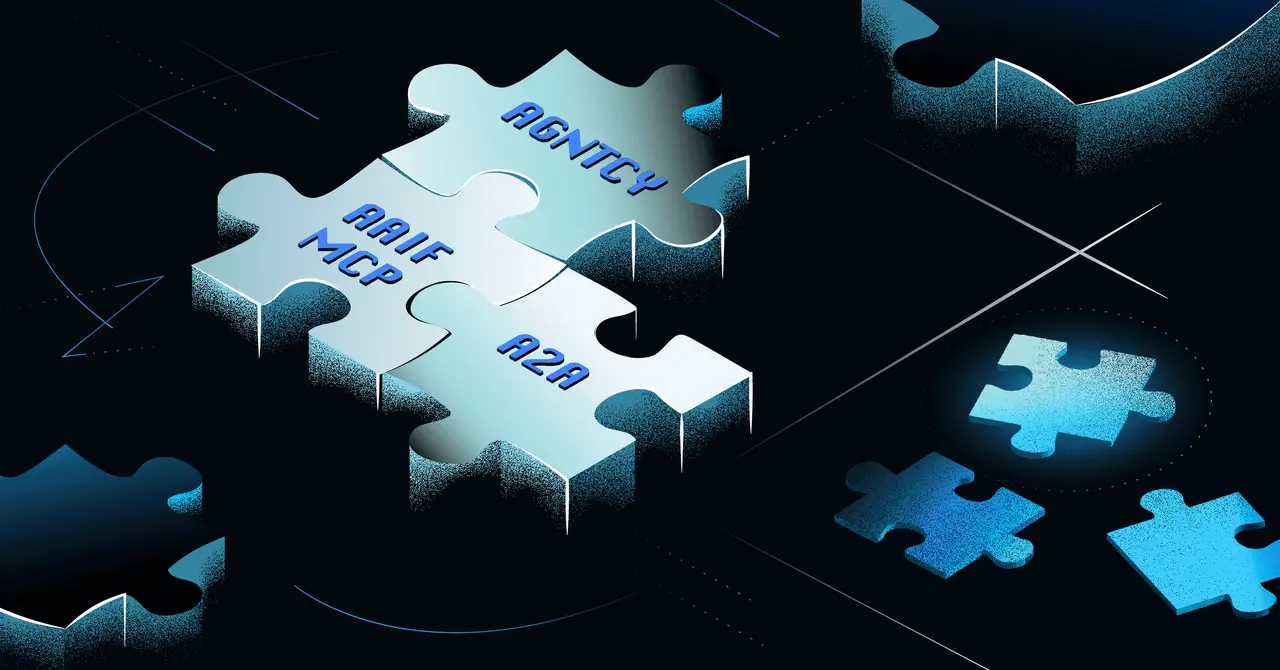
Source: Cisco
Since Anthropic open-sourced MCP a year ago, adoption has grown rapidly across the AI industry. Google announced MCP support in its dev tools at I/O 2025, while OpenAI adopted the protocol just months after its release
1
. The protocol already powers diverse applications, from the Pebble Index 01 ring's local LLM to enterprise productivity tools. "A lot of tasks on productivity and content are fully doable on the edge," explains Vinesh Sukumar, Qualcomm's head of AI products. "With MCP, you have a handshake with multiple cloud service providers for any kind of complex task to be completed"1
.Block contributed Goose, a customizable open source agent for coding that launched in early 2025
1
. Designed to run locally or in the cloud with any Large Language Models, Goose includes built-in MCP support. Brad Axen, AI Tech Lead at Block, frames the donation as both a strategic and practical move: "Getting it out into the world gives us a place for other people to come help us make it better"2
.OpenAI's contribution, AGENTS.md, provides a markdown-based readme format announced in August that lets developers specify rules for coding agents to guide their behavior more predictably
1
2
.Why Interoperability Matters for Agentic AI Deployments
The push to foster interoperability addresses a fundamental challenge as AI moves beyond chatbots. Srinivas Narayanan, chief technology officer of B2B applications at OpenAI, envisions large numbers of AI agents routinely communicating with one another in business contexts
3
. Without shared protocols, this vision remains impractical.
Source: ZDNet
"We need multiple [protocols] to negotiate, communicate, and work together to deliver value for people, and that sort of openness and communication is why it's not ever going to be one provider, one host, one company," Nick Cooper, who leads protocol work at OpenAI, told TechCrunch
2
. Cooper emphasizes that open interoperability means companies can communicate across providers and agentic systems seamlessly3
.The timing reflects how rapidly the AI ecosystem has evolved. The world in which tech companies operate has changed considerably as everyone rushes to integrate generative AI into products and processes
1
. Yet serious challenges remain. Security vulnerabilities present particular concerns—IT managers have flagged issues with prompt injection attacks when using MCP to connect systems like ChatGPT to company Slack channels5
.Related Stories



Governance Questions and Industry Control
The AAIF operates as a "directed fund" within the Linux Foundation, where companies contribute through membership dues. Zemlin maintains that funding doesn't equal control, with project roadmaps set by technical steering committees rather than individual members
2
. This governance structure mirrors successful precedents like the Cloud Native Computing Foundation, which was formed in 2015 to support Google's Kubernetes and has since integrated dozens of cloud computing tools1
.However, questions persist about whether AAIF becomes genuine infrastructure or merely an industry logo alliance. The technologies being standardized are remarkably recent—even MCP, the most established, still faces considerable flux in handling basic technologies like OAuth
1
. Critics note that larger companies with enormous investment capabilities could shape standards in ways that benefit them disproportionately5
.Chris DiBona, vice president of Microsoft's office of the CTO, emphasized the collaborative imperative: "For the agentic future to become a reality, we have to build it together, and we have to build it in the open"
4
.What Success Looks Like and What to Watch
Zemlin suggests early success indicators include widespread adoption of these standards and shared frameworks being used by vendor agents globally
2
. For Cooper, success means evolution: "I don't want it to be a stagnant thing. I don't want these protocols to be part of this foundation, and that's where they sat for two years. They should evolve and continually accept further input"2
.The foundation's near-term focus involves evolving MCP, AGENTS.md, and Goose under open governance while recruiting additional projects
4
. Long-term, members expect AAIF to become the central venue for interoperability profiles, security frameworks, and reference implementations as agentic AI becomes mainstream infrastructure4
.This matters because AI agents face real-world effectiveness challenges. Despite industry hype, agents struggle with reliability—hallucinations remain problematic, and customer-facing applications show particular weakness
4
5
. The pressure is mounting as major AI companies have yet to achieve profitability from their massive investments, making breakthroughs in agentic AI increasingly urgent5
.References
Summarized by

Navi
[2]
Related Stories
Recent Highlights
1
AI chatbots validate you too much, making you less kind to others, Stanford study reveals
Science and Research

2
Anthropic's Claude Code Source Leak Reveals Hidden AI Agent Plans and Extensive System Access
Technology

3
Judge blocks Pentagon from branding Anthropic a security risk over AI safety guardrails dispute
Policy and Regulation

Recent Highlights
Today's Top Stories









Your Daily Dose of Curated AI News
Don’t drown in AI news. We cut through the noise - filtering, ranking and summarizing the most important AI news, breakthroughs and research daily. Spend less time searching for the latest in AI and get straight to action.

