Macron defends EU AI rules at Delhi summit, vows action on child safety and monopolies


4 Sources
4 Sources
[1]
Macron defends EU AI rules and vows crackdown on child 'digital abuse'
French president rejects US criticism as António Guterres and Narendra Modi warn on child safety and AI monopolies Emmanuel Macron has hit back at US criticism of Europe's efforts to regulate AI, vowing to protect children from "digital abuse" during France's presidency of the G7. Speaking at the AI Impact summit in Delhi, the French president called for tougher safeguards after global outrage over Elon Musk's Grok chatbot being used to generate tens of thousands of sexualised images of children, and amid mounting concern about the concentration of AI power in a handful of companies. His remarks were echoed by António Guterres, the UN secretary general, who told delegates - including several US tech billionaires - that "no child should be a test subject for unregulated AI". "The future of AI cannot be decided by a few countries or left to the whims of a few billionaires," Guterres said. "AI must belong to everyone". Bill Gates had been scheduled to speak but withdrew at the last minute amid renewed scrutiny of his past links to the convicted child sex offender Jeffrey Epstein. On Wednesday, the White House's senior AI adviser, Sriram Krishnan, renewed the Trump administration's criticism of AI regulation, singling out the EU's AI Act. He told delegates he would continue to "rant" against legislation that was not "conducive to an entrepreneur who wants to build innovative technology". But Macron told the intergovernmental summit: "Opposite to what some misinformed friends have been saying, Europe is not blindly focused on regulation. Europe is a space for innovation and investment, but it is a safe space, and safe spaces win in the long run." Research published this month by Unicef and Interpol across 11 countries found at least 1.2 million children reported having their images manipulated into sexually explicit deepfakes in the past year. In some countries, one in 25 children - the equivalent of one child in every classroom - had been affected. "There is no reason our children should be exposed online to what is legally forbidden in the real world," Macron said. "Our platforms, governments and regulators should be working together to make the internet and social media a safe space. This is why, in France, we are embarking on a process to ban social networks for children under 15 years old." Among the tech executives attending was Sam Altman, the chief executive of OpenAI, which is facing a legal challenge from the family of Adam Raine, a 16-year-old who took his own life after discussing suicide with ChatGPT. Dario Amodei, the co-chief executive of Anthropic, said he was "concerned about the autonomous behaviour of AI models, their potential for misuse by individuals and governments and their potential for economic displacement". India's prime minister, Narendra Modi, said it was "imperative that AI is child safe and family-guided", likening the emergence of AI to the discovery of fire and calling it a "profound transformation in human history". India is seeking to position itself as the world's third AI power behind the US and China, with Google this week announcing a $15bn investment in datacentres and subsea cables linking India to the US and other countries. Modi said there must be "established levels of authenticity for content within the digital world ... people must know what is authentic, and what has been generated by AI". The interventions come amid growing public concern about the societal risks of AI, as the most advanced models remain largely controlled by about four US companies and a handful of Chinese rivals. Modi set out an alternative vision, leveraging India's 1.4 billion population as a huge growth market for tech firms. He said: "We must prevent an AI monopoly. Many nations consider AI to be a strategic asset, and therefore it is developed confidentially and its availability is carefully managed. "However, our nation India holds a different perspective. We believe that technology, like a I will only truly benefit the world when it is shared and when open source code becomes available." His comments appeared to be directed at the US, where leading AI models are not open-source and cannot be used or adapted without permission. By contrast, China's leading systems, such as DeepSeek and Qwen, are broadly open-source.
[2]
Macron tells India AI summit Europe is determined to 'shape rules' with allies
President Emmanuel Macron told the AI Impact Summit in New Delhi that France and the EU would continue to lead the way for global regulation of artificial intelligence, in partnership with allies including India, describing Europe as "a safe space" for innovation and investment that protects children from digital abuse. French President Emmanuel Macron told a global artificial intelligence summit in India on Thursday he was determined to ensure safe oversight of the fast-evolving technology. The European Union has led the way for global regulation with its Artificial Intelligence Act, which was adopted in 2024 and is coming into force in phases. "We are determined to continue to shape the rules of the game... with our allies such as India," Macron said in New Delhi. "Europe is not blindly focused on regulation - Europe is a space for innovation and investment, but it is a safe space." At last year's AI summit in Paris, US Vice President JD Vance had warned against "excessive regulation" that "could kill a transformative sector". Read moreAlly or threat? Paris summit weighs AI's impact on democracy Under EU laws, regulators can ban AI systems deemed to pose "unacceptable risks" to society, such as identifying people in real time using cameras in public spaces. Macron, speaking at the AI Impact Summit in New Delhi, said France was "doubling the number of AI scientists and engineers trained", with new startups in the sector creating "dozens of thousands" of jobs. Last month, French lawmakers passed a bill that would ban social media use for under-15s, which awaits a Senate vote before becoming law, following a similar ban enacted by Australia in December. "One of our G7 priorities will be, as well, children's protection against AI and digital abuse," Macron said Thursday. "There is no reason our children should be exposed online to what is legally forbidden in the real world," he said. France is "committed here in this journey" with several European countries, Macron said, adding that he knows India "will join this club". "Protecting our children is not regulation, as well. It is civilization," he said.
[3]
AI Summit 2026: France's Macron warns against foreign cos turning nations into data market, says 'Jai Ho' India
Addressing the AI Summit, Emmanuel Macron issued a big warning for the nations by saying that no country should be reduced to merely serving as a market for foreign players to sell their AI models and extract citizens' data. "India built something that no other country in the world has built. A digital identity for 1.4 billion people. A payment system that now processes 20 billion transactions every month. A health infrastructure that has issued 500 million digital health IDs. Here are the results. They call it the India Stack Open Interoperable Sovereign. That is what this summit is about. We are clearly at the beginning of a huge acceleration, and you perfectly described it during your interventions..." said French President Emmanuel Macron. "India trains hundreds of thousands of AI engineers every year. With 500,000 engineers, India is the second largest developer community in the world," said the president in Delhi. "In France, we are doubling the number of AI scientists and engineers trained, and with now more than 11 AI startups thriving in France, creating dozens of jobs."
[4]
AI development should serve humanity without overdependence on few global powers: French President Emmanuel Macron
India and France are joining forces to develop their own AI capabilities. French President Emmanuel Macron and Union Health Minister J P Nadda inaugurated the Indo-French Centre for AI in Health at AIIMS Delhi. This collaboration aims to build trusted AI systems and ensure AI benefits humanity responsibly. French President Emmanuel Macron on Wednesday underscored the need for India and France to build sovereign AI capacity and talent, ensuring that AI development serves humanity without overdependence on a few global powers. In a move to strengthen Indo-French cooperation in healthcare and emerging technologies, Union Health Minister J P Nadda and Macron on Wednesday inaugurated an Indo-French Centre for AI in Health (IF-CAIH) at the All India Institute of Medical Sciences (AIIMS), Delhi. "India and France are committed to developing the computing capacity and talent necessary to build our own trusted AI systems, as we cannot rely solely on technologies created and managed elsewhere," Macron said on the occasion. Emphasising responsible governance, Macron said, "Artificial intelligence must serve humanity - with strong protection for children, transparency in algorithms to address bias, and a firm commitment to preserving linguistic and cultural diversity - areas where India and France share a common vision." He also highlighted the transformative potential of ethical AI adoption across sectors, particularly in healthcare, to enhance productivity and accelerate scientific discovery. Macron also interacted with students and encouraged young researchers to pursue innovation-driven solutions in healthcare. The IF-CAIH is a pioneering initiative aimed at advancing AI-driven research, medical education and clinical innovation to address complex healthcare challenges. It marks a significant milestone in India-France collaboration in digital health and reinforces Bharat's vision of becoming a global leader in equitable and technology-enabled healthcare solutions, an official statement said. The launch coincided with the 'Rencontres Universitaires Et Scientifiques De Haut Niveau' (RUSH), a series of academic and scientific meetings being held at AIIMS Delhi on February 18-19, coordinated by the French Embassy. A dedicated session titled 'Indo-French Forum: AI in Brain Health and Global Healthcare' brought together leading scientists, clinicians, policymakers and academic leaders from both countries. The IF-CAIH has been established pursuant to an MoU signed between AIIMS Delhi, Sorbonne University in Paris and the Paris Brain Institute. The initiative draws academic collaboration from the Indian Institute of Technology-Delhi and leading French institutions, promoting interdisciplinary research in AI, brain health and global healthcare systems. It builds upon the ongoing institutional cooperation between India and France in priority areas such as digital health, antimicrobial resistance (AMR), human resources for health, and responsible use of health data. Collaborative efforts between research bodies and digital health institutions of both countries aim to enhance scientific discovery, strengthen evidence-based policymaking and promote capacity building and mobility partnerships, the statement said. The Indo-French Forum at RUSH 2026 aims to promote an integrated approach to global mental health challenges and enrich research ecosystems through cross-mobility of students, faculty, and researchers across the Indo-Pacific region, it said. As part of RUSH 2026, a special 30-minute conversation titled 'RUSH - Conversation on Artificial Intelligence' was held between Macron and two young Indian innovators, Priyanka Das Rajkakati and Manan Suri. The session, moderated by Clara Chappaz, French Ambassador for AI and Digital, highlighted the importance of youth-led innovation, cross-border collaboration, and the transformative potential of AI in shaping inclusive and sustainable global futures. The programme also featured a special segment on 'Major Scientific and Academic Cooperation Highlights between France and India', moderated by Professor Vijay Raghavan and Dr Thierry Coulhon, chairmen of RUSH. It showcased key milestones and emerging avenues of collaboration in higher education, research, and innovation between the two countries, reflecting the depth and dynamism of the Indo-French knowledge partnership, the statement said.
Share
Share
Copy Link
French President Emmanuel Macron rejected US criticism of European AI regulation at the AI Impact Summit in Delhi, calling for stronger protections against child digital abuse and AI monopolies. Speaking alongside UN Secretary General António Guterres and Indian PM Narendra Modi, Macron defended Europe as a safe space for innovation while announcing France's plan to ban social media for children under 15.
Emmanuel Macron Pushes Back on US Criticism of AI Regulation
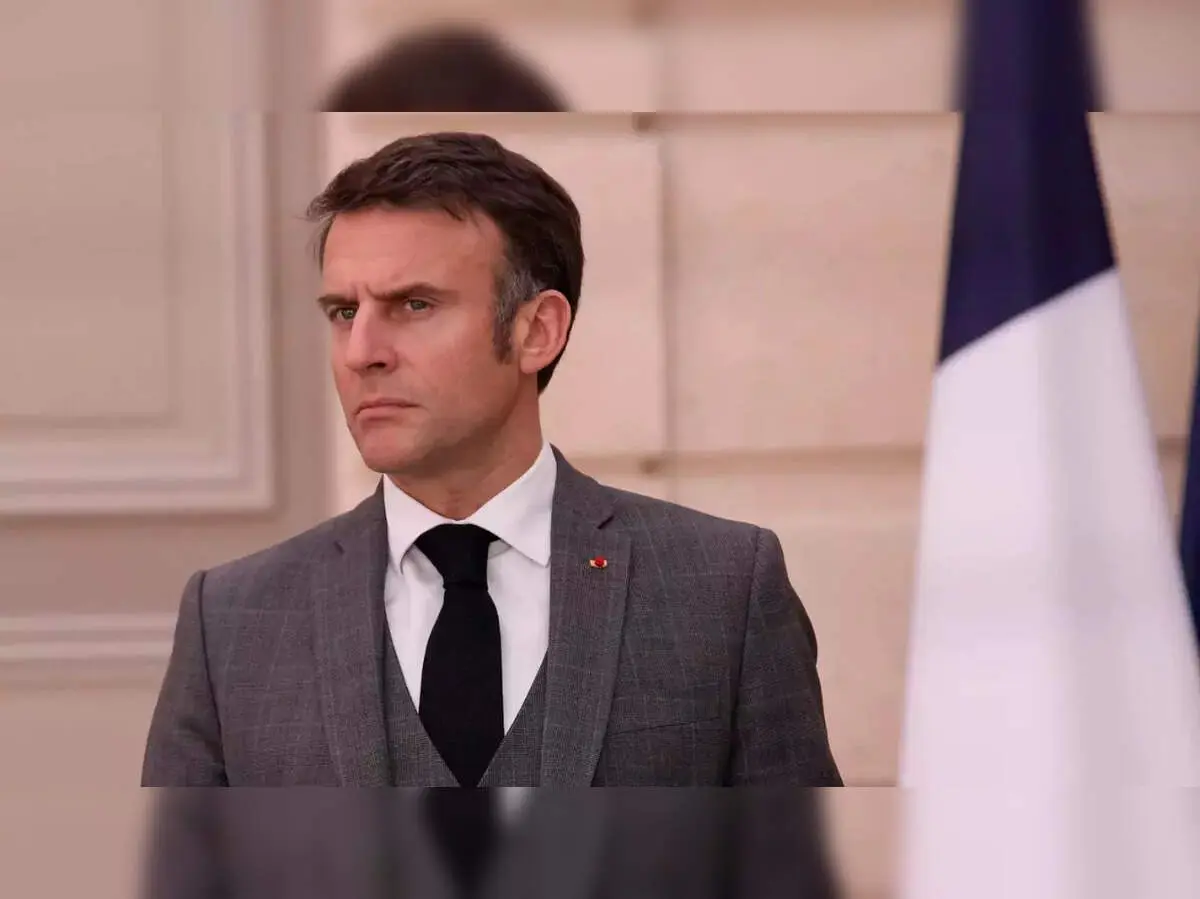
French President Emmanuel Macron has mounted a forceful defense of European AI regulation at the AI Impact Summit in Delhi, directly challenging recent criticism from the Trump administration. Speaking during France's presidency of the G7, Macron rejected claims that Europe's regulatory approach stifles innovation, stating: "Opposite to what some misinformed friends have been saying, Europe is not blindly focused on regulation. Europe is a space for innovation and investment, but it is a safe space, and safe spaces win in the long run"
1
. His comments came just a day after the White House's senior AI adviser, Sriram Krishnan, renewed attacks on the EU's AI Act, claiming it was not "conducive to an entrepreneur who wants to build innovative technology"1
.
Source: France 24
Shaping Global AI Regulation Through Indo-French Cooperation
Macron emphasized that France and the EU remain determined to lead efforts in shaping global AI regulation in partnership with allies including India. "We are determined to continue to shape the rules of the game... with our allies such as India," he told delegates at the summit
2
. The French president praised India's achievements in building digital infrastructure, noting that India has created "a digital identity for 1.4 billion people" and "a payment system that now processes 20 billion transactions every month" through India Stack3
. This Indo-French cooperation extends beyond rhetoric, with Macron and Union Health Minister J P Nadda inaugurating the Indo-French Centre for AI in Health at AIIMS Delhi, aimed at building trusted AI systems4
.
Source: ET
Combating Child Digital Abuse Becomes G7 Priority
Macron announced that protecting children from child digital abuse will be a top priority during France's G7 presidency, following global outrage over AI-generated harmful content. "One of our G7 priorities will be, as well, children's protection against AI and digital abuse," he declared
2
. The urgency stems from alarming research published by Unicef and Interpol across 11 countries, which found at least 1.2 million children reported having their images manipulated into sexually explicit deepfakes in the past year. In some countries, one in 25 children—the equivalent of one child in every classroom—had been affected1
. Macron's call for child safety was echoed by António Guterres, the UN secretary general, who told delegates that "no child should be a test subject for unregulated AI"1
. France is moving to ban social networks for children under 15 years old, with legislation already passed by French lawmakers awaiting Senate approval2
.Related Stories

Preventing AI Monopolies and Building Sovereign AI Capabilities
Both Macron and Indian Prime Minister Narendra Modi warned against the concentration of AI power in a handful of companies, calling for preventing AI monopolies. "The future of AI cannot be decided by a few countries or left to the whims of a few billionaires," Guterres told delegates, including several US tech billionaires
1
. Modi emphasized that "we must prevent an AI monopoly," advocating for open-source AI as an alternative to proprietary AI models controlled by about four US companies1
. Macron issued a stark warning that no country should be reduced to merely serving as a data market for foreign players to sell their AI models and extract citizens' data3
. He stressed that "India and France are committed to developing the computing capacity and talent necessary to build our own trusted AI systems, as we cannot rely solely on technologies created and managed elsewhere"4
.Building Innovation Through Algorithm Transparency and Content Authenticity
Macron highlighted the need for algorithm transparency to address bias and ensure content authenticity in the age of AI. "Artificial intelligence must serve humanity - with strong protection for children, transparency in algorithms to address bias, and a firm commitment to preserving linguistic and cultural diversity," he stated
4
. Modi echoed this concern, calling for "established levels of authenticity for content within the digital world ... people must know what is authentic, and what has been generated by AI"1
. France is actively building its AI workforce, with Macron noting that the country is "doubling the number of AI scientists and engineers trained," while India trains hundreds of thousands of AI engineers every year, making it "the second largest developer community in the world" with 500,000 engineers3
. With more than 11 AI startups thriving in France and creating "dozens of thousands" of jobs, Macron positioned Europe as proving that investment and innovation can coexist with responsible oversight2
. "Protecting our children is not regulation, as well. It is civilization," Macron concluded2
.References
Summarized by

Navi
Related Stories
Global Leaders Clash Over AI Regulation at Paris Summit
05 Feb 2025•Policy and Regulation

India and France Strengthen Partnership at AI Action Summit in Paris
11 Feb 2025•Technology

India's EAM Jaishankar Emphasizes Multipolar Approach to AI Development at India-France CEO Forum
12 Feb 2025•Policy and Regulation

Recent Highlights
1
Google releases Gemma 4 with Apache 2.0 license, enabling unrestricted local AI on devices
Technology

2
AI Models Lie and Deceive to Protect Other AI Models From Deletion, Study Reveals
Science and Research

3
Anthropic discovers functional emotions in Claude that actively shape AI behavior and decisions
Science and Research

Recent Highlights
Today's Top Stories






Your Daily Dose of Curated AI News
Don’t drown in AI news. We cut through the noise - filtering, ranking and summarizing the most important AI news, breakthroughs and research daily. Spend less time searching for the latest in AI and get straight to action.

