Meta pivots to AI smart glasses after Reality Labs loses $19 billion on VR in 2025


6 Sources
6 Sources
[1]
Mark Zuckerberg says a future without smart glasses is 'hard to imagine'
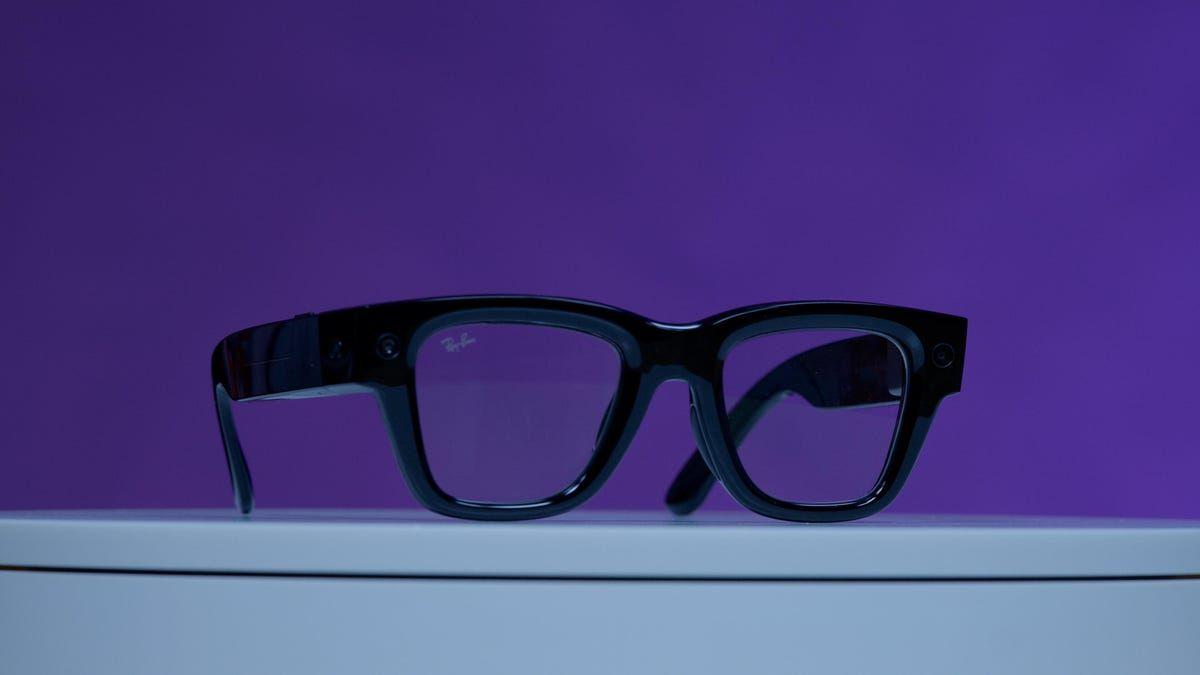
Mark Zuckerberg spoke about his ambitions for Meta's AI smart glasses business during Meta's Q4 2025 earnings call on Wednesday. After pivoting its Reality Labs investments away from the metaverse, Meta is doubling down on its production of AI wearables, as well as its own AI models. "Billions of people wear glasses or contacts for vision correction. And I think that we're at a moment similar to when smartphones arrived, and it was clearly only a matter of time until all those flip phones became smartphones," Zuckerberg said. "It's hard to imagine a world in several years where most glasses that people wear aren't AI glasses." He added that sales of Meta's glasses tripled within the last year, and he believes that they're "some of the fastest growing consumer electronics in history." Take Zuckerberg's outlook with a grain of salt. After all, he also thought that we would go to work and hang out with our friends in the metaverse -- legs optional -- and that didn't work out. But based on how tech's biggest players are allocating their money and effort, it does seem like AI glasses are poised for a big moment, even if it's not on the scale of the smartphone. Google is expected to launch a line of smart glasses this year, following a $150 million deal with Warby Parker. Apple is also reportedly planning to unveil smart glasses in the next year or two, moving some staff to that project instead of working on a lighter Vision Pro, according to Bloomberg. Meanwhile, Snap announced Tuesday that it would spin its AR glasses, Specs, into a new subsidiary to allow for "greater operational focus and allignment." Even OpenAI, a company that has not yet ventured into hardware, is pursuing AI wearables, though it seems more focused on something like an AI pin or earbuds, rather than glasses. Apple is also rumored to be working on an AirTag-sized AI device -- though hopefully those efforts turn out better than the Humane AI pin. For now, Meta is leading the way in pushing smart glasses to market, with several different models already on sale. That includes Oakley smart glasses designed to be worn while exercising, which is the most promising use case we've personally seen for these devices thus far.
[2]
Mark Zuckerberg says Reality Labs will (eventually) stop losing so much money
Mark Zuckerberg says there's an end in sight to Reality Labs' years of multibillion-dollar losses following the company's layoffs to the metaverse division earlier this year. The CEO said he expects to "gradually reduce" how much money the company is losing as it doubles down on AI glasses and shifts away from virtual reality. Speaking during Meta's fourth-quarter earnings call, Zuckerberg was clear that the changes won't happen soon, but sounded optimistic about the division that lost more than $19 billion in 2025 alone. "For Reality Labs, we are directing most of our investment towards glasses and wearables going forward, while focusing on making Horizon a massive success on mobile and making VR a profitable ecosystem over the coming years," he said. "I expect Reality Labs losses this year to be similar to last year, and this will likely be the peak, as we start to gradually reduce our losses going forward." The company cut more than 1,000 employees from Reality Labs earlier this month, shut down three VR studios and announced plans to retire its app for VR meetings. Meta has also paused plans for third-party Horizon OS headsets. Instead, Meta is doubling down on its smart glasses and and wearables business, which tie in more neatly to Zuckerberg's vision for creating AI "superintelligence." During the call, Zuckerberg noted that sales of Meta's smart glasses "more than tripled" in 2025, and hinted at bigger plans for AR glasses. "They're [AI glasses] going to be able to see what you see, hear what you hear, talk to you and help you as you go about your day and even show you information or generate custom UI right there in your vision," he said.
[3]
'A moment similar to when smartphones arrived': Meta reveals where the money is going in 2026 -- and it's not VR
It's official: Meta's VR division is bleeding money. In Meta's latest earnings call, its Reality Labs department lost a staggering $6.02 billion in its fourth quarter while bringing in $955 million, putting Quest VR headsets in a dire state. That isn't to say Meta hasn't seen a successful year, though. With a revenue of $59.89 billion in the fourth quarter and $200.97 billion in full-year revenue, the company has seen a 24% and 22% year-over-year increase, respectively. But it's Meta's advertising business pulling this weight. Reality Labs, the home for its Quest VR headsets, smart glasses and metaverse projects, hasn't been profitable. Despite Oculus founder Palmer Luckey stating Meta's recent 1,500 layoffs "is not a disaster," it's clear the company's most exciting department for consumers is facing strong headwinds. But Meta has long-term plans in place, one that makes AI and smart glasses a top priority for the tech giant. In fact, as CEO Mark Zuckerberg states, expect Meta to make heavy investments "towards glasses and wearables going forward" to make "VR a profitable ecosystem." Well, one more than the other, it seems. With the Meta Ray-Ban Display smart glasses being the company's highlight in 2025, with still no sight of the highly anticipated Meta Quest 4, Zuckerberg and co. may be done with VR after all, and the writing is on the wall. While the Meta Quest 4 is reportedly in the works, the company's latest earnings report and recent layoffs spell a shift in focus. Smart glasses are having their moment, and we've seen Meta double down on this in its Meta Connect 2025 event, releasing its next-gen Meta Ray-Ban Display, Ray-Ban Meta (gen 2) and Oakley Meta Vanguard specs. Zuckerberg calls AI glasses "a moment similar to when smartphones arrived," so it's only fitting that he continues to say that "the bulk of our 'new' R&D and capital for 2026 is going into the AI compute for glasses." With Google's Android XR glasses fueling the smart specs race, Apple reportedly ditching its Vision Pro headset and looking into Apple smart glasses and Samsung even confirming plans for its first smart specs during its earnings call, it's only fair for Meta to be doubling its efforts to stay on top of the smart spec industry. In any case, this looks to lean heavily towards the development of AI and AR in smart glasses over VR headsets, as any mention of a successor to its Meta Quest 3 and Meta Quest 3S, or advancements on the virtual reality front, isn't in the conversation. Even CFO of Meta, Susan Li, backs this up: "We've realized efficiencies in our hardware supply chain for Quest, and as Mark mentioned, the headcount reductions in the VR teams allow us to lean harder into the 'Personal Superintelligence' scaling without the total loss line growing further." While there's nothing to say Meta is completely abandoning its VR plans, there's reason to believe the company is prioritizing focus on a new wave of tech driven by smart glasses. Unfortunate, considering Quest is one of the best VR headsets you can get today. With AI and smart glasses now in focus, that leaves little room for Meta's Quest VR headsets to grow. While this (hopefully) doesn't mean plans for the Quest 4 will be scrapped, many otherwise VR projects won't see the light of day. Since Meta closed first-party XR studios, including Armature Studio, Twisted Pixel and Sanzaru Game, we now almost certainly won't see a Batman: Arkham Shadow sequel, or even a Harry Potter VR title -- as they've reportedly been canceled. VR gaming continues to be a key factor for the Quest 3 and Quest 3S, so this isn't a good look for the future of the headsets. Of course, Meta also tried pushing its Quest VR devices as productivity machines, although that didn't work out for the Quest Pro. While we've seen some recent updates, like Meta Horizon TV turning the headsets into quality devices for binge-watching shows, there haven't been many major updates since. Is Meta quietly giving up on its VR dreams? It may be more of a niche, but those invested in VR, looking for what's coming next, may not have much to look forward to, as AI and AR glasses take priority to see bigger revenue gains.
[4]
Meta teases 'future headsets' despite VR troubles, and an AI upgrade straight from science fiction
Zuckerberg also suggested Meta wants to use AI to let you jump into videos Based on recent layoffs many had been wondering if this was the beginning of the end for Meta's VR plans, but the company has reaffirmed that it's still working on new tech in the space - including new hardware and a possible AI integration that's truly sci-fi. Speaking to investors following its latest quarterly earnings report, CEO Mark Zuckerberg didn't talk too much about VR, perhaps unsurprisingly, instead focusing on smart glasses for which sales have "more than tripled" in the last year. Initially not a great sign for VR's future. However, Meta CFO Suan Li turned our hopes around when responding to a question from Deutsche Bank's Benjamin Black on Reality Labs. She said, "We continue to have optimism in the future of VR," adding, "We are investing continually - going forward, rather, in building future headsets." She said this before putting a slight damper on our VR hopes by explaining what we already knew, that "consumer adoption of VR has generally been on a slower growth path than wearables, and we are rebalancing our Reality Labs portfolio to reflect this. " No more detail than that was revealed about these "future headsets", but leaks have pointed to two possible devices that will land in 2026 and/or 2027. One would be a 'Quest 4' that's a large but more typical upgrade on its predecessor, and again come with a higher end and slightly lower end model like we saw with the Quest 3 and Quest 3S. Then there's the headset I've dubbed the Quest Pro 2. It's set to be ultra-lightweight - with a design more similar to glasses or goggles than a headset - thanks to the battery and compute power being transferred to a puck you carry in your pocket. It would also be more productivity-focused rather than putting an emphasis on gaming. The other major improvement we could see in VR is an emphasis on AI. Of course this is to be expected in the AI age, but Zuckerberg highlighted a truly sci-fi future use case during the presentation: "There's definitely a version of the future where any video that you see, you can like tap on and jump into it." Now, the way Zuckerberg describes this future, it certainly isn't one that we'll see next week or maybe even in the next few years, but this would be a further enhancement of the AI-led tools we're already seeing. which can turn 2D scenes into stereoscopic 3D. Beyond VR, Zuckerberg's words also suggest it might be a tool we see come to mobile platforms - which is also now the main focus for its Horizon metaverse. Being able to generate worlds from pictures - from our digital memories - would be a powerful creative tool for these kinds of immersive social experiences across platforms, and could be the differentiating factor Meta needs as its AI models lag behind rivals such as ChatGPT, Gemini and others. These vague hardware references and AI promises don't give us a firm timeline of when Meta's next VR developments will drop, but it at least teases a next step that feels less utterly miserable for us VR fans. The question remains, however, if Meta can win back some favor, or if upcoming devices like the Steam Frame will eat Meta's lunch, as I suspect it might.
[5]

Meta lost $19.1 billion on VR last year despite the mother of all pivots to AI including plans for AI-generated gaming
Forget the Metaverse, an "explosion" of new AI media formats are headed your way. A bottomless pit of money. This, as far as one can tell, appears to be the situation at Meta. Its latest earnings report (via TechCrunch) reveals the company burned another $19.1 billion on VR last year. Oh, and at the same time, it is reportedly planning to invest $135 billion in AI this year to include AI-generated games. Sorry, what? Meta's losses on VR and what was once going to be the life-altering Metaverse are actually up on 2024, when it hosed $17.7 billion on the endeavour. Just for context, the VR division at Meta generated $2.2 billion in sales in 2025, which, to be frank, is more than I'd have thought. So, what's next for Meta's VR vision? More losses, of course. Meta CEO Mark Zuckerberg said the division was expected to make a similar loss in 2026, albeit perhaps not quite as much, thereby making 2025 the peak, or should that be trough, for VR losses at the company. "For Reality Labs [Meta's VR division], we are directing most of our investment towards glasses and wearables going forward," Zuckerberg said on an earnings call with investors, "while focusing on making Horizon a massive success on Mobile and making VR a profitable ecosystem over the coming years." Perhaps the real context here is that Meta's revenues are nevertheless massive and still increasing, with the company raking in $200.97 billion overall in 2025, 22% up on 2024. That's why Meta can afford to blow all this cash. That was mostly funded by an overall increase in ad impressions of 12% and an increase in price per ad of 9%. Anywho, it seems that the company is still going to invest staggering sums in VR for the foreseeable future, despite the apparent fact that Zuckerberg and Meta are currently engaged in the mother of all pivots away from the Metaverse in favour of AI. "Soon, we'll see an explosion of new media formats that are more immersive and interactive, and only possible because of advances in AI," Zuckerberg said in that earnings call. What exactly will that be? AI that can "generate great personalized content," apparently, that builds on the AI-generated Vibes feed it already offers users. The Verge says Zuckerberg has "hinted" that it will include allowing users to create games using language prompts, which can then be shared with friends. "There's definitely a version of the future where any video that you see, you can tap on and jump into it and experience it in a more meaningful way," Zuckerberg said. So, there you have it. Meta will apparently blow another $20 billion, or thereabouts, on VR glasses this year and then let you turn videos into games of some kind. What to make of all this is up to you. It's all too much for my tiny brain to compute.
[6]
Mark Zuckerberg says it's 'hard to imagine' a future without AI glasses - but there's bad news from the metaverse
There's no doubt the best smart glasses of today are better than they've ever been, but they're yet to really go mainstream - something Meta boss Mark Zuckerberg is confident will happen in the future, even as his digital metaverse company posted a hefty $6 billion loss for the last financial quarter. Speaking on an earnings call (via TechCrunch), Zuckerberg went on the record as saying "it's hard to imagine a world in several years where most glasses that people wear aren't AI glasses" - comparing the wearable revolution he's anticipating to the move from classic flip phones to smartphones. Zuckerberg pointed out that billions of people worldwide wear glasses or contacts for vision correction, which is a lot of potential customers. He also said that sales of Meta smart specs (including the Ray-Ban Meta Gen 2) have tripled within the last year. There's certainly plenty of interest from tech manufacturers: Google and Samsung have smart glasses on the way, with Samsung separately confirming that its long-anticipated AR glasses are coming later this year. Apple is rumored to be working on its own pair, and earlier this week Snapchat developer Snap announced a new subsidiary called Specs to drive its future smart glasses products. Zuckerberg will be hoping that the smart glasses category turns out better than his efforts to date in making the metaverse happen: as CNBC reports, Meta Reality Labs posted a $6 billion loss for the last quarter of 2025, up from $4.43 billion the quarter before. The metaverse, you may remember, is the completely virtual world that Meta hoped we would all be living in by now - it's partly why the company was renamed from Facebook to Meta. While a sizable number of us enjoy gaming in VR, there hasn't been much interest from users in spending a substantial chunk of their time as digital avatars. Meta isn't completely giving up on the metaverse, and there have been suggestions that Horizon (which is the official name of Meta's metaverse) could become more of a Roblox clone, with more of a focus on mobile devices. We'll have to see what happens, but those financial losses are continuing to go in the wrong direction. The future for smart glasses looks somewhat brighter, especially with the continuing advances in AI assistants to power them.
Share
Share
Copy Link
Meta is redirecting its Reality Labs division away from virtual reality and toward AI-powered smart glasses after losing $19.1 billion on VR in 2025. CEO Mark Zuckerberg says smart glasses sales tripled last year and predicts most eyewear will become AI glasses within years, comparing the moment to the smartphone revolution. The strategic shift follows layoffs of over 1,000 Reality Labs employees and studio closures.
Meta Abandons Metaverse Dream for AI Smart Glasses Push
Meta is executing a dramatic strategic shift to AI, moving its Reality Labs division away from virtual reality after the unit lost a staggering $19.1 billion in 2025
5
. Despite these substantial financial losses—up from $17.7 billion in 2024—CEO Mark Zuckerberg declared during Meta's fourth-quarter earnings call that the company is doubling down on AI wearables and smart glasses1
. The pivot represents a significant departure from the metaverse vision that once dominated Meta's roadmap.
Source: TechRadar
Reality Labs Division Faces Peak Losses Before Gradual Recovery
Mark Zuckerberg told investors that Reality Labs losses in 2026 will be "similar to last year" but expects 2025 to mark the peak as the company begins to "gradually reduce" its losses going forward
2
. The Reality Labs division generated only $955 million in Q4 2025 while losing $6.02 billion in that quarter alone3
. CFO Susan Li explained that "the bulk of our new R&D and capital for 2026 is going into the AI compute for glasses," signaling where Meta's investments in AI will concentrate3
.Future of Smart Glasses Compared to Smartphone Revolution
Zuckerberg positioned AI smart glasses as the next transformative technology platform, stating it's "hard to imagine a world in several years where most glasses that people wear aren't AI glasses"
1
. He compared the moment to when flip phones transitioned to smartphones, noting that "billions of people wear glasses or contacts for vision correction"1
. Meta's smart glasses sales "more than tripled" in 2025, which Zuckerberg believes makes them "some of the fastest growing consumer electronics in history"1
.
Source: PC Gamer
AI Integration Promises Sci-Fi Capabilities
The future AI integration Meta envisions extends beyond basic features. Zuckerberg described smart glasses that will "be able to see what you see, hear what you hear, talk to you and help you as you go about your day and even show you information or generate custom UI right there in your vision"
2
. He also teased AI-generated content capabilities, suggesting "there's definitely a version of the future where any video that you see, you can tap on and jump into it"4
. This includes plans for users to create games using language prompts that can be shared with friends5
.VR Headsets Take Back Seat as Industry Shifts
The pivot to AI leaves Meta Quest VR headsets in uncertain territory. Meta cut over 1,000 employees from Reality Labs earlier this month, shut down three VR studios including Armature Studio, Twisted Pixel, and Sanzaru Games, and retired its app for VR meetings
2
. Projects like a Batman: Arkham Shadow sequel and a Harry Potter VR title have reportedly been canceled3
. However, CFO Susan Li stated "we continue to have optimism in the future of VR" and confirmed Meta is "investing continually in building future headsets," though consumer adoption of VR "has generally been on a slower growth path than wearables"4
.Tech Giants Race to Dominate Wearable Technology Market
Meta's aggressive push into AI wearables comes as competition intensifies. Google is expected to launch smart glasses this year following a $150 million deal with Warby Parker
1
. Apple is reportedly planning to unveil smart glasses within the next year or two, moving staff from Vision Pro development to this project1
. Even OpenAI is pursuing AI wearables, though focused on devices like AI pins or earbuds rather than glasses1
. Meta currently leads with several models already on sale, including Oakley smart glasses designed for exercise1
.
Source: Engadget
Related Stories

Profitability Remains Elusive Despite Strong Overall Revenue
While Reality Labs continues bleeding money, Meta's overall business remains strong with $200.97 billion in full-year revenue for 2025, representing 22% year-over-year growth
5
. The company's advertising business drives this performance, with ad impressions up 12% and price per ad increasing 9%5
. This financial cushion allows Meta to continue investing heavily in emerging technologies, with reports suggesting the company plans to invest $135 billion in AI this year5
. Zuckerberg's track record on predictions remains mixed—his metaverse vision failed to materialize as promised—but the industry-wide movement toward AI wearables suggests this bet may have more substance than his previous pivot.🟡 teased AI-generated content capabilities, suggesting "there's definitely a version of the future where any video that you see, you can tap on and jump into it"4
. This includes plans for users to create games using language prompts that can be shared with friends5
.VR Headsets Take Back Seat as Industry Shifts
The pivot to AI leaves Meta Quest VR headsets in uncertain territory. Meta cut over 1,000 employees from Reality Labs earlier this month, shut down three VR studios including Armature Studio, Twisted Pixel, and Sanzaru Games, and retired its app for VR meetings
2
. Projects like a Batman: Arkham Shadow sequel and a Harry Potter VR title have reportedly been canceled3
. However, CFO Susan Li stated "we continue to have optimism in the future of VR" and confirmed Meta is "investing continually in building future headsets," though consumer adoption of VR "has generally been on a slower growth path than wearables"4
.Tech Giants Race to Dominate Wearable Technology Market
Meta's aggressive push into AI wearables comes as competition intensifies. Google is expected to launch smart glasses this year following a $150 million deal with Warby Parker
1
. Apple is reportedly planning to unveil smart glasses within the next year or two, moving staff from Vision Pro development to this project1
. Even OpenAI is pursuing AI wearables, though focused on devices like AI pins or earbuds rather than glasses1
. Meta currently leads with several models already on sale, including Oakley smart glasses designed for exercise1
.Source: Engadget
Profitability Remains Elusive Despite Strong Overall Revenue
While Reality Labs continues bleeding money, Meta's overall business remains strong with $200.97 billion in full-year revenue for 2025, representing 22% year-over-year growth
5
. The company's advertising business drives this performance, with ad impressions up 12% and price per ad increasing 9%5
. This financial cushion allows Meta to continue investing heavily in emerging technologies, with reports suggesting the company plans to invest $135 billion in AI this year5
. Zuckerberg's track record on predictions remains mixed—his metaverse vision failed to materialize as promised—but the industry-wide movement toward AI wearables suggests this bet may have more substance than his previous pivot.References
Summarized by

Navi
[3]
[4]
Related Stories
Meta layoffs slash Reality Labs workforce as Zuckerberg pivots hard from metaverse to AI
12 Jan 2026•Business and Economy

Meta ends metaverse era as Horizon Worlds loses VR access after $80 billion investment
18 Mar 2026•Technology

Meta Unveils New VR Headset, AI Updates, and Futuristic AR Glasses at Connect Event
25 Sept 2024

Recent Highlights


Recent Highlights
Today's Top Stories








Your Daily Dose of Curated AI News
Don’t drown in AI news. We cut through the noise - filtering, ranking and summarizing the most important AI news, breakthroughs and research daily. Spend less time searching for the latest in AI and get straight to action.

