Meta abandons metaverse vision as Horizon Worlds pivots to mobile-first strategy


2 Sources
2 Sources
[1]
Meta's metaverse leaves virtual reality | TechCrunch
Meta has announced a major update for its immersive virtual world, Horizon Worlds, on Thursday that will see it leave the metaverse behind. The tech giant said it's shifting focus for Horizons Worlds to be "almost exclusively mobile" and that it's "explicitly separating" its Quest VR platform from the virtual world. Meta's Reality Labs division for VR and smart glasses development has lost nearly $80 billion since 2020. The update to Horizon Worlds, and other recent moves, signal that Meta is significantly rethinking its VR ambitions. Last month, the company reportedly laid off roughly 1,500 employees from its Reality Labs division -- about 10% of the unit's staff -- and shut down several VR game studios. Additionally, it was reported that the VR fitness app Supernatural, which Meta acquired in 2023, will no longer produce new content and will move into "maintenance mode." Horizon Worlds originally launched in 2021 as a VR platform and later rolled out to the web and mobile. Meta said Thursday that to "truly change the game and tap into a much larger market, we're going all-in on mobile." By going mobile-first, Horizon Worlds is positioning itself to compete with popular platforms like Roblox and Fortnite. "We're in a strong position to deliver synchronous social games at scale, thanks to our unique ability to connect those games with billions of people on the world's biggest social networks," Samantha Ryan, Reality Labs' VP of content, said in a blog post. "You saw this strategy start to unfold in 2025, and now, it's our main focus." Ryan went on to note that Meta is still focused on VR hardware. "We have a robust roadmap of future VR headsets that will be tailored to different audience segments as the market grows and matures," Ryan wrote. Meta's metaverse ambitions have effectively been abandoned in favor of AI. After shifting its Reality Labs investments away from the metaverse, Meta is now focused on developing AI wearables and advancing its own AI models. During Meta's latest earnings call last month, Meta CEO Mark Zuckerberg said, "It's hard to imagine a world in several years where most glasses that people wear aren't AI glasses." The exec also stated that sales of Meta's glasses tripled within the last year, calling them "some of the fastest growing consumer electronics in history."
[2]
Meta's VR metaverse is ditching VR
Meta, after laying off about 10 percent of its Reality Labs division, closing three VR studios, stopping new content for VR fitness app Supernatural, and discontinuing its metaverse for work, is announcing a major change for its Horizon Worlds metaverse platform. Instead of attempting to make the 3D social platform work for both VR and mobile, Meta is "explicitly separating" its "Quest VR platform from our Worlds platform" and "shifting the focus of Worlds to be almost exclusively mobile," Samantha Ryan, Reality Labs' VP of content, says in a blog post. The new approach sets Meta up to better compete with platforms like Roblox and Fortnite, which also offer user-generated experiences that can be played on your phone. Horizon Worlds originally launched for VR, but "to truly change the game and tap into a much larger market, we're going all-in on mobile." "We're in a strong position to deliver synchronous social games at scale, thanks to our unique ability to connect those games with billions of people on the world's biggest social networks," Ryan says. "You saw this strategy start to unfold in 2025, and now, it's our main focus." As for VR software, Ryan says Meta is focusing on supporting third-party developers. "While we're proud of the world-class work from Oculus Studios over the years, among 1P and 3P apps, 86% of the effective time people spend in their VR headsets is with third-party apps." But Meta is still planning to make VR hardware; "we have a robust roadmap of future VR headsets that will be tailored to different audience segments as the market grows and matures," according to Ryan. (That new hardware, which could include a new mainline Quest headset, might cost a higher price.) Meta CTO Andrew Bosworth made similar comments about Meta's shift in strategy in a recent episode of the Access podcast, which is hosted by former Verge staffer Alex Heath. After the not-so-successful bet on the metaverse, Meta CEO Mark Zuckerberg now sees AI as the new social media, a vision that could include AI-generated games that users can share with others on their feeds. "There are 3D versions of that, and there are 2D versions of that and Horizon, I think, fits very well with the kind of immersive 3D version of that," Zuckerberg said on the company's latest earnings call.
Share
Share
Copy Link
Meta is abandoning its metaverse ambitions by shifting Horizon Worlds to an almost exclusively mobile platform, explicitly separating it from Quest VR. After losing nearly $80 billion in Reality Labs since 2020, the tech giant is refocusing on AI wearables and positioning Horizon Worlds to compete with Roblox and Fortnite.
Meta's Strategic Shift Away From Virtual Reality
Meta announced a fundamental transformation for its Horizon Worlds metaverse platform on Thursday, declaring it will shift focus to be "almost exclusively mobile" while "explicitly separating" its Quest VR platform from the virtual world
1
2
. This marks a dramatic departure from the company's previous metaverse vision, effectively signaling that Meta is moving focus from virtual reality to pursue opportunities in mobile platforms and artificial intelligence. The tech giant's Reality Labs division has accumulated substantial financial losses of nearly $80 billion since 2020, prompting this significant course correction1
.
Source: TechCrunch
Positioning to Compete With Roblox and Fortnite
By adopting a mobile-first approach, the Horizon Worlds metaverse platform is now positioned to compete with Roblox and Fortnite, both of which have built massive audiences through user-generated experiences accessible on smartphones. "To truly change the game and tap into a much larger market, we're going all-in on mobile," Samantha Ryan, Reality Labs' VP of content, stated in a blog post
1
. Ryan emphasized Meta's unique advantage: "We're in a strong position to deliver synchronous social games at scale, thanks to our unique ability to connect those games with billions of people on the world's biggest social networks"2
. Horizon Worlds originally launched in 2021 as a VR platform before expanding to web and mobile, but this new strategy represents a complete reversal of priorities.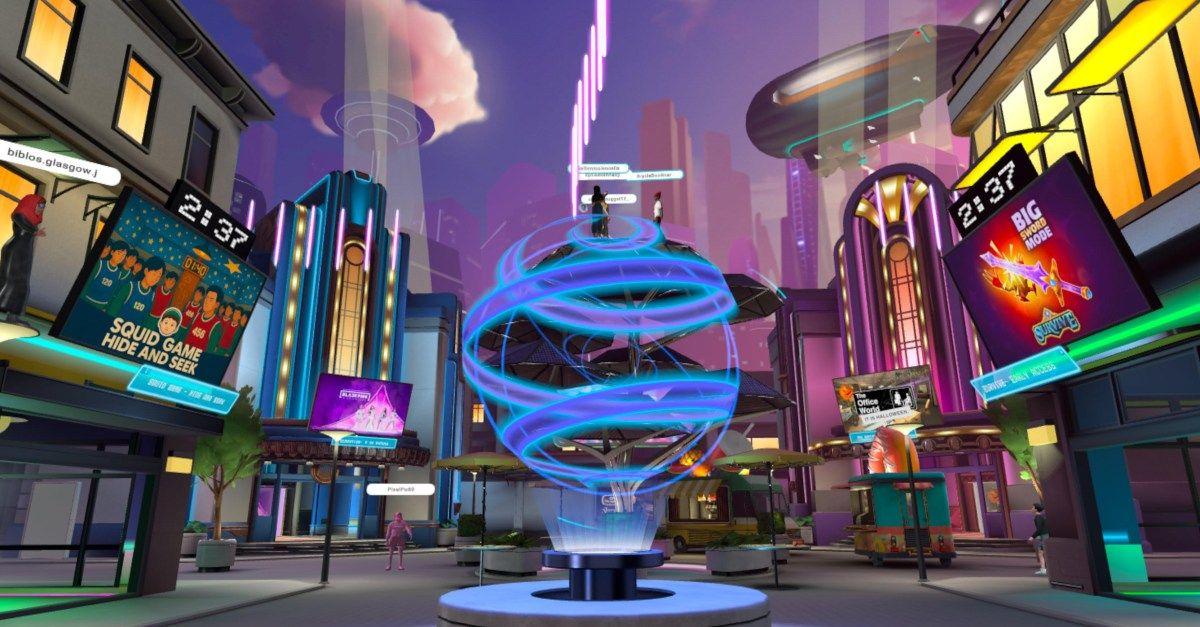
Source: The Verge
Reality Labs Restructuring and Layoffs
The pivot follows significant restructuring within Meta's Reality Labs division. Last month, the company laid off roughly 1,500 employees from Reality Labs—approximately 10% of the unit's staff—and shut down several VR game studios
1
. Additionally, Supernatural, the VR fitness app Meta acquired in 2023, will no longer produce new content and will move into "maintenance mode"1
. These layoffs signal Meta's determination to cut costs in areas that haven't delivered expected returns while reallocating resources toward more promising ventures.Related Stories

Mark Zuckerberg's Evolving Vision and New Focus on Artificial Intelligence
Mark Zuckerberg's evolving vision now centers on AI rather than the metaverse. During Meta's latest earnings call last month, the CEO stated, "It's hard to imagine a world in several years where most glasses that people wear aren't AI glasses"
1
. Mark Zuckerberg also revealed that sales of Meta's AI wearables tripled within the last year, calling them "some of the fastest growing consumer electronics in history"1
. On the same earnings call, Zuckerberg described AI as "the new social media," envisioning AI-generated games that users can share on their feeds, with Horizon fitting into "the kind of immersive 3D version of that"2
.Future of VR Headsets and Third-Party VR Content
Despite abandoning the metaverse concept, Ryan confirmed that Meta maintains "a robust roadmap of future VR headsets that will be tailored to different audience segments as the market grows and matures"
1
. However, the company is shifting its software strategy to support third-party developers rather than creating first-party content. Ryan noted that "among 1P and 3P apps, 86% of the effective time people spend in their VR headsets is with third-party apps"2
. Meta CTO Andrew Bosworth echoed these strategic changes in a recent episode of the Access podcast2
. The mobile platforms strategy for Horizon Worlds, combined with continued hardware development and third-party VR content support, suggests Meta is hedging its bets across multiple fronts while clearly prioritizing AI wearables and mobile experiences over the immersive virtual reality experiences that once defined its metaverse ambitions.🟡 eagerness=🟡None🟡, thoughts=🟡NoneReferences
Summarized by

Navi
[1]
[2]
Related Stories
Meta ends metaverse era as Horizon Worlds loses VR access after $80 billion investment
18 Mar 2026•Technology

Meta layoffs slash Reality Labs workforce as Zuckerberg pivots hard from metaverse to AI
12 Jan 2026•Business and Economy

Meta pivots to AI smart glasses after Reality Labs loses $19 billion on VR in 2025
29 Jan 2026•Business and Economy

Recent Highlights


Recent Highlights
Today's Top Stories










Your Daily Dose of Curated AI News
Don’t drown in AI news. We cut through the noise - filtering, ranking and summarizing the most important AI news, breakthroughs and research daily. Spend less time searching for the latest in AI and get straight to action.

