Corning lands $6 billion Meta deal for AI data centers, stock surges to near-record highs


7 Sources
7 Sources
[1]
Meta inks deal to pay Corning up to $6 billion for fiber-optic cables in AI data centers
Corning's stock is up more than 75% in the past year amid soaring fiber demand from customers like Meta, Nvidia, OpenAI, Google, AWS and Microsoft. As Meta tries to rapidly construct massive data centers to keep pace with the artificial intelligence craze, it's turning to a 175-year-old glass manufacturer for help. Meta has committed to paying Corning up to $6 billion through 2030 for fiber-optic cable in its AI data centers, Corning CEO Wendell Weeks told CNBC in an exclusive interview about the deal from a cable factory in Hickory, North Carolina. Corning is expanding the facility to accommodate growing demand from Meta and other big spenders like Nvidia, OpenAI, Google, Amazon and Microsoft as part of an extended industry buildout that's reaching into the trillions of dollars. When the project is complete, Corning says it will be the largest fiber-optic cable plant in the world. "Almost every phone call I get from my customers is trying to see, how do we get them more?" Weeks said. "I think next year the hyperscalers will be our biggest customers." Shares of Corning, once a boom-and-bust dot-com era story, have risen more than 75% in the last year, with optical communications as the company's largest and fastest-growing business segment. Corning is among a wider swath of providers to the data center boom seeing historic levels of demand as the stack gets refreshed for the AI age. Meta's AI strategy, on the other hand, has puzzled Wall Street. The stock, which underperformed the market in 2025, had its worst day in three years in October after the company announced ambitious AI spending but without a clear monetization plan. The next month, Meta committed to spending $600 billion in the U.S. by 2028, on data centers and the infrastructure they require. Corning is part of that. Meta's plan for 30 data centers includes 26 facilities in the U.S. "We want to have a domestic supply chain that's available to support that," Joel Kaplan, Meta's chief global affairs officer, said in an interview. In addressing concerns that China could win the AI race, Kaplan said, "If we as a country don't make the right policy choices and the right investments, that's a real risk." Two of Meta's largest data centers currently under construction are its Prometheus one-gigawatt site in New Albany, Ohio, and five-gigawatt Hyperion site in Richland Parish, Louisiana. Both will include Corning fiber-optic cable as part of the new deal. Having lived through a prior tech bubble, Corning is familiar with the narrative that's emerging in parts of the market, with skeptics questioning whether all of this building turns into new, sustainable businesses. AI announced more than $1 trillion in compute deals in 2025, leading some industry experts to predict a new bubble is forming. Fiber brought Corning huge success in the dot-com boom due to demand for communications equipment. The stock multiplied by about eightfold from the beginning of 1997 through its peak in September 2000, before losing over 90% of its value over a roughly two-year market collapse. "What we learned then was that it wasn't enough to do great innovations," Weeks said. With respect to the current data center buildout and the possibility of a slowdown, Weeks said fiber-optic demand has grown at about 7% annually on average, "so we'll find a good use for it." He said he's also "not concerned about Meta being successful in this space," because, "In the end, really technical excellence, willingness to commit to the infrastructure, compute matters." Key to Corning's level of confidence is that its business is diversified with "some more stable, high cash flow businesses in our mix." "We're built to withstand bad weather," Weeks said. Meta Marshall, an analyst covering networking equipment at Morgan Stanley, said "there is volatility on the fiber side," but that Corning can likely manage through it. "The market will still need TVs and phones and cars and auto glass and vials for medications," said Marshall, who has the equivalent of a hold rating on the stock. Corning has had to re-invent itself time and again to get to this point. Founded in the gold rush era, the company built glass for Edison's light bulbs in the late 1870s, and over the following decades moved into Pyrex cookware, car filters, spacecraft windows, TV screens and vials for Covid vaccines. Since the launch of the iPhone in 2007, Apple has been a key customer, relying on Corning's glass for its flagship device. Apple announced a $2.5 billion deal in August, to manufacture all the cover glass for the iPhone and Apple Watch at a Corning plant in Harrodsburg, Kentucky. In 1970, Corning invented the first glass fiber that was useful for long-distance communication. Fiber-based broadband makes up the majority of the internet's backbone, with billions of miles of cable connecting continents, data centers, businesses and homes. Fiber can transmit data at nearly the speed of light. Unlike traditional copper phone lines that transmit information as electrical signals, fiber-optic cables are tiny bendable strands of glass through which data is sent as photons -- lasers emitting pulses of light -- at far higher speed, using less energy. "Moving photons is between five and 20 times lower power usage than moving electrons," Weeks said. "As power becomes a bigger and bigger issue, fiber inevitably gets closer and closer and closer to the compute." Demand for Corning's fiber has skyrocketed of late in part because AI data centers require more fiber than traditional cloud computing infrastructure. Revenue in Corning's optical communications business, which includes fiber, jumped 33% in the third quarter to $1.65 billion, while total sales rose 14% to $4.27 billion. Corning said in its earnings release that enterprise sales of optical communications soared 58% in the quarter, "driven by the continued strong adoption of Corning's new Gen AI products." Weeks described it as a "whole separate network" that's "trying to create the connections just like it is between the neurons in your brain." All those connections require so much fiber that Corning invented a brand new type specifically for AI, called Contour. Weeks' name is on the patent. He showed CNBC the new cable that fits twice as many fiber strands into a standard size conduit, and reduces a set of 16 connectors down to a single one. Weeks told CNBC development of the new AI products began more than five years ago, long before the 2022 debut of ChatGPT, following a conversation he had with a leader in generative AI. "They were saying, 'Listen, you need to put in a lot more capacity,'" Weeks recalled, without naming the person. "He's like, 'No, you totally don't get it. This is what's going to happen and how much compute is going to be needed, how the scaling laws are working.'" Mike O'Day, Corning's head of fiber optics, told CNBC that the company has now made over 1.3 billion miles of optical fiber. Weeks says 8 million miles will be needed in Meta's Louisiana data center alone. Keeping up with demand is Corning's current challenge. It may get even harder as fiber eventually replaces copper inside server racks like those used by Nvidia. Copper cables still dominate when it comes to connecting chips within a server, but Weeks says the change to fiber is "inevitable" once the number of graphics processors in each rack climbs into the hundreds. At that scale of connectivity, Weeks said, "Fiber optics become much more economical and much more power efficient." Corning and Meta both report fourth-quarter earnings on Wednesday.
[2]
The AI boom's most unexpected winner? A 175-year-old company called Corning | Fortune
You might know Corning for its iconic kitchen brands, like Pyrex and CorningWare. You might remember that Thomas Edison relied on the company to develop the glass for the lightbulb, or that In 1970, Corning invented the first glass fiber that was useful for long-distance communication, while in 2007 Steve Jobs turned to Corning, which is based in Corning, NY, to create the hard-to-shatter glass that now wraps every iPhone. You probably don't think of it as an AI company, but a new deal with Meta shows how radically the AI boom is reshaping America's industrial landscape. The 175-year-old Corning, a longtime fixture of the Fortune 500, has reinvented itself once again -- this time as a critical supplier to the world's largest AI data centers. Meta announced today that it has committed to paying Corning up to $6 billion through 2030 for fiber-optic cable to wire its expanding fleet of AI data centers. In a CNBC interview, Corning CEO Wendell Weeks disclosed that Corning is expanding a North Carolina manufacturing facility to accommodate growing demand from Meta and other companies including Nvidia, OpenAI, Google, Amazon and Microsoft. When the project is complete -- with funding from Meta -- Corning says it will be the largest fiber-optic cable plant in the world. The news today sent Corning's stock soaring 16%. Instead of sending information as electrical signals through copper wire, fiber uses strands of ultra-pure glass -- each one thinner than a human hair -- to carry data as pulses of light. In AI data centers, fiber optic cable links tens of thousands of GPUs, allowing them to function as a single supercomputer cluster. Shay Boloor, chief market strategist at Futurum Equities, told Fortune the Meta deal is "big" for Corning, likely doubling its annual revenue from that one deal alone from under a half-billion to closer to a billion per year once the plant is fully ramped up. The deal also likely won't be the last one for Corning, as hyperscalers look to lock in supply. "I wouldn't be surprised to see Microsoft do a similar Corning deal, because a lot of these data center investors are moving past plant construction and they really fear that shortages are going to show up once they get to that next stage," Boloor said. As my colleague Kristin Stoller reported in Fortune last year, it hasn't always been smooth sailing for Corning. In the 1990s, Weeks was a Corning vice president tapped to run a new optical fiber business to power the burgeoning internet -- an innovation that drove Corning's valuation to nearly $100 billion at the height of the internet bubble in 2000. That bubble burst the following year, sending the company's stock price plummeting from some $100 to $1. But even when Corning lost 99% of its value and had to lay off half its employees, Weeks continued to develop the company's fiber tech, which is continuing to pay off during the AI data center boom. Over the past six months, Corning's stock has risen over 100%. The Meta deal comes at a moment when power has become the biggest bottleneck for hyperscalers, said Boloor, pushing companies to do everything they can to work around a constraint that is only getting worse. Today's AI data centers pack racks of GPUs that must be physically connected at what he calls "insane speeds." "Electricity does not move through air, and data does not teleport between racks -- the power flows through copper, and the data flows through fiber," he explained. As AI inference -- the day-to-day output of models -- booms, the "amount of fiber per data center is going to explode."
[3]
This Specialty Glassmaker's Stock Is Soaring on an AI Data Center Deal With Meta
The company is a supplier to several tech heavyweights including Nvidia and Apple, and has been a big beneficiary of the AI boom. A deal with Meta Platforms (META) is the latest piece of good news boosting Corning (GLW) stock. Corning and Meta announced $6 billion deal for Corning to supply the Facebook and Instagram parent with fiber optic technology and cables for its AI data centers. Corning said the deal will allow it to expand its manufacturing footprint in North Carolina with a new facility and increases in hiring. Corning shares were up 17% around $111 in Tuesday afternoon trading following the announcement, near their record set during the dot-com bubble of 2000, while Meta shares were down less than 1%. Corning's stock soared more than 80% last year, following a 50% rise in 2024, thanks in part to a boost from AI-driven business. The company, which is a supplier to tech giants such as Nvidia (NVDA) and Apple (AAPL), routinely topped estimates and lifted its forecasts in 2025. Wall Street analysts have said they expect Corning's AI exposure and partnership with Apple could also provide more opportunities for future growth, including potentially making the complex glass required for a foldable iPhone. Of the six analysts with current ratings tracked by Visible Alpha, five have issued "buy" ratings, compared to one "hold," though the stock has already surpassed their mean target around $100 with its recent gains. Investors could get further insights into Corning's business when the company reports fourth-quarter earnings before the market opens on Wednesday. Meta is also set to release its latest results tomorrow, among a trio of the Magnificent Seven due to report.
[4]
Corning Shares Jump After $6B Meta Data Center Deal - Corning (NYSE:GLW)
Corning Incorporated (NYSE:GLW) shares are trading higher Tuesday after the company announced a $6 billion agreement with Meta Platforms (NASDAQ:META) to accelerate U.S. data center infrastructure for AI. * Corning stock is at critical resistance. What's driving GLW to record levels? Corning, Meta Announce Multiyear Data Center Agreement Under the agreement, Corning will supply Meta with its latest optical fiber, cable and connectivity solutions designed to meet the density and scale requirements of advanced AI data centers. The partnership is intended to support Meta's applications, technologies and AI initiatives. To support the agreement, Corning said it will expand manufacturing capabilities across its North Carolina operations, including a significant capacity expansion at its optical cable manufacturing facility in Hickory, North Carolina, where Meta will serve as the anchor customer. Corning also plans to add a new optical cable manufacturing facility in Hickory. The company said the agreement is expected to support employment growth in North Carolina of approximately 15% to 20%, sustaining a skilled workforce of more than 5,000 employees across the state. The workforce includes scientists, engineers and production teams at Corning's optical fiber and cable manufacturing facilities. "This long-term partnership with Meta reflects Corning's commitment to develop, innovate, and manufacture the critical technologies that power next-generation data centers here in the U.S.," said Corning chairman and CEO Wendell Weeks. Meta said the collaboration supports its efforts to build advanced data centers in the U.S. using domestically manufactured technology and infrastructure. Earnings Around The Corner Corning is scheduled to report fourth-quarter earnings on Wednesday before the market open. Analysts estimate earnings per share of 70 cents alongside revenue of $4.35 billion. The company has beat estimates in six consecutive quarters, according to Benzinga Pro. In the most recent quarter, Corning reported EPS of 67 cents against an estimate of 66 cents, with revenue of $4.23 billion, slightly above the $4.20 billion estimate. "We expect continued strong growth in the fourth quarter, driven by ongoing robust demand for our Gen AI products and sales of solar wafers. We're guiding to core sales of approximately $4.35 billion, with core EPS growing faster than sales to a range of $0.68 to $0.72. Additionally, we are on track to achieve our Springboard operating margin target of 20% in the fourth quarter, a year ahead of plan," said executive vice president and CFO Ed Schlesinger. "This represents a 370-basis-point improvement from our Q4-2023 starting point - and establishes a strong return profile as we continue to grow sales." GLW Price Action: At the time of writing, Corning shares are trading 18.99% higher at $112.99, according to data from Benzinga Pro. Image via Shutterstock GLWCorning Inc $110.7016.6% Overview METAMeta Platforms Inc $671.50-0.13% This content was partially produced with the help of AI tools and was reviewed and published by Benzinga editors. Market News and Data brought to you by Benzinga APIs
[5]

Why Corning Stock Soared Today
The artificial intelligence (AI) boom is going to require a whole lot of fiber. Shares of Corning (GLW +15.58%) jumped on Tuesday after the glass maker struck a blockbuster $6 billion deal with Meta Platforms (META +0.09%). By the close of trading, Corning's stock price was up more than 15%. Accelerating the AI revolution Under the terms of the deal, Corning will supply Meta with its most advanced optical fiber, cable, and connectivity products. The two companies will work together to build AI data centers faster, as Meta races to keep pace with its rivals. To satisfy the booming, AI-driven demand for its products, Corning plans to expand its manufacturing operations in North Carolina. Meta will serve as the anchor client for a major capacity buildout at Corning's optical cable facility in Hickory. Once construction is complete, the plant will be the largest of its kind, according to Corning CEO Wendell Weeks. "Building the most advanced data centers in the U.S. requires world-class partners and American manufacturing," Meta executive Joel Kaplan said in a press release. "We're proud to partner with Corning -- a company with deep expertise in optical connectivity and commitment to domestic manufacturing -- for the high-performance fiber optic cables our AI infrastructure needs." Business is booming The 175-year-old materials science leader is enjoying soaring sales of its AI-focused solutions. Corning's optical communications enterprise revenue leaped 58% year over year in the third quarter, fueled by companies' strong interest in its new generative AI products.
[6]

Corning forecasts first-quarter sales above estimates on strong optical fiber demand
Jan 28 (Reuters) - Corning on Wednesday forecast first-quarter sales above estimates, boosted by resilient demand for its fiber-optic products, which generate nearly 40% of the company's revenue. The Gorilla Glass maker, a key supplier to Apple, has stepped up investment in its optical communications business as major technology companies race to expand data-center infrastructure to support rising AI workloads. On Tuesday, Corning inked an up to $6 billion multi-year deal with Meta Platforms to supply fiber-optic cables for the social media giant's AI-focused data centers. Corning's optical connectivity hardware is central to handling the heavy computing and data-transmission requirements of modern AI infrastructure. The company's shares have risen about 26% this year, extending their 84% gain in 2025. For the first quarter of 2026, Corning expects core sales in the range of $4.2 billion to $4.3 billion, the mid-point of which is above analysts' estimates of $4.23 billion, according to data compiled by LSEG. The company's optical communications division recorded net sales of $1.70 billion for the fourth quarter, in line with estimates. Core sales for the quarter beat expectations at $4.41 billion, compared with estimates of $4.35 billion. (Reporting by Kritika Lamba in Bengaluru; Editing by Jonathan Ananda)
[7]
Meta Strikes Up to $6 Billion Deal With Corning for Data-Center Fiber-Optic Cables
Meta has struck a multiyear deal worth up to $6 billion to buy fiber-optic cable from Corning, a move aimed at advancing the expansion of its U.S. data-center network for artificial-intelligence systems. As part of the deal, Corning, known for making specialty glass, ceramics, and fiber-optic products, said on Tuesday that it will supply Meta with its newest generation of optical fiber, cable and connectivity hardware, components that form the backbone of modern-day AI data centers. The move is part of Meta's plan to build major data centers across the U.S. and to source advanced technology made domestically, the companies said. To meet the demand, Corning plans to expand manufacturing capacity across its North Carolina operations, including a scale-up at its optical-cable facility in Hickory, where Meta will serve as the anchor customer, the companies said. The news sent Corning shares up 8.2% to $102.73 in premarket trading. Corning Chairman and Chief Executive Wendell Weeks said the partnership shows its commitment to supplying the necessary products to support the critical technologies such as AI and their physical infrastructure. "The investment will expand our manufacturing footprint in North Carolina, support an increase in Corning's employment levels in the state by 15% to 20%, and help sustain a highly skilled workforce of more than 5,000," Weeks said.
Share
Share
Copy Link
Meta has committed to paying Corning up to $6 billion through 2030 for fiber-optic cables in its AI data centers, sending the 175-year-old glassmaker's stock soaring 16%. The deal supports Meta's plan to build 30 data centers, including 26 in the U.S., as part of a $60 billion infrastructure investment. Corning will expand its North Carolina manufacturing facility to become the world's largest fiber-optic cable plant.
Corning Secures Historic $6 Billion Deal With Meta for AI Data Centers
Meta has committed to paying Corning up to $6 billion through 2030 for fiber-optic cables in its AI data centers, marking one of the most significant supply agreements in the ongoing AI boom
1
. The announcement sent Corning stock surging 16% to near-record levels around $111, approaching its dot-com bubble peak from 20003
. The 175-year-old glassmaker has emerged as an unexpected winner in the AI infrastructure buildout, with shares climbing more than 75% over the past year as demand for advanced optical fiber accelerates1
.Corning CEO Wendell Weeks revealed the deal details from a cable factory in Hickory, North Carolina, where the company is undertaking a major manufacturing expansion to meet soaring demand from hyperscalers including Nvidia, OpenAI, Google, Amazon, and Microsoft
1
. "Almost every phone call I get from my customers is trying to see, how do we get them more?" Weeks said, adding that hyperscalers will likely become Corning's biggest customers next year1
.
Source: Fortune
Manufacturing Expansion Creates World's Largest Fiber Plant
Under the $6 billion deal, Corning will supply Meta with its latest optical fiber, cable, and connectivity solutions designed to meet the density and scale requirements of modern AI data centers
4
. The partnership supports Meta's ambitious plan to build 30 data centers, including 26 facilities in the U.S., as part of a $60 billion commitment to data center infrastructure through 20281
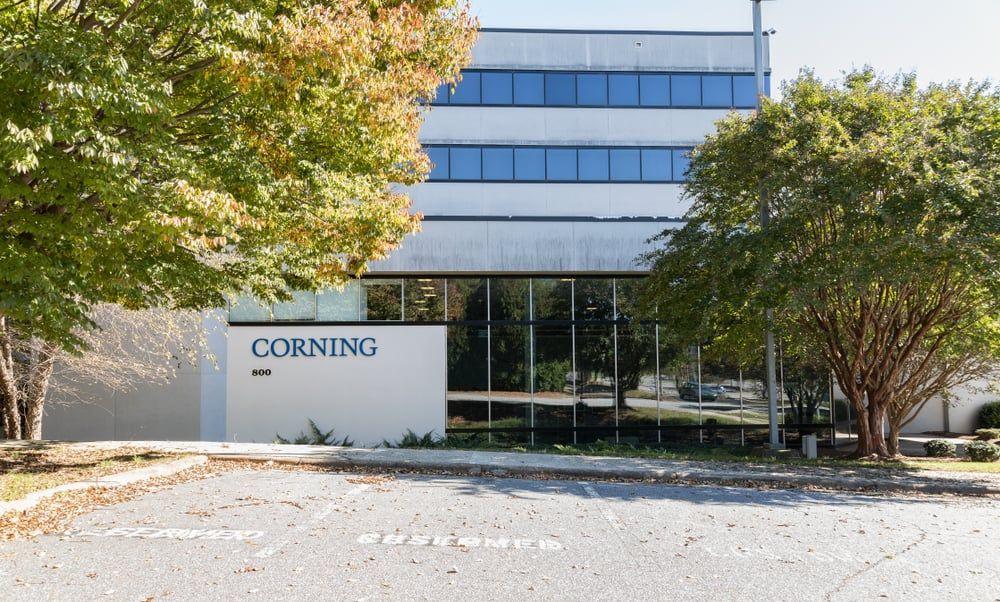
.To accommodate the agreement, Corning is expanding its optical cable manufacturing facility in Hickory, North Carolina, where Meta will serve as the anchor customer
4
. When complete, the facility will be the largest fiber-optic cable plant in the world1
. The company also plans to add a new optical cable manufacturing facility in the same location4
. This expansion is expected to support employment growth in North Carolina of approximately 15% to 20%, sustaining a skilled workforce of more than 5,000 employees across the state4
.
Source: Benzinga
Fiber-Optic Cables Enable AI Supercomputing at Scale
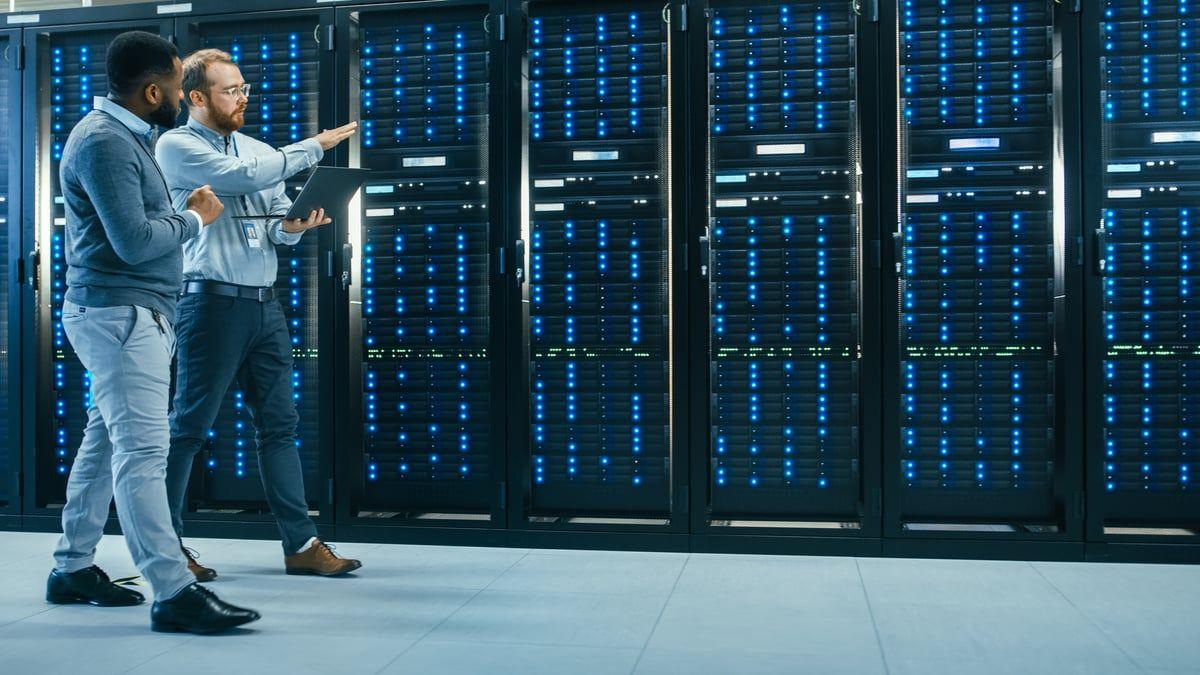
The deal highlights the critical role of fiber-optic technology in powering AI infrastructure. Instead of sending information as electrical signals through copper wire, fiber uses strands of ultra-pure glass—each one thinner than a human hair—to carry data as pulses of light at nearly the speed of light
2
. In AI data centers, fiber-optic cable links tens of thousands of GPUs, allowing them to function as a single supercomputer cluster2
.
Source: Motley Fool
Shay Boloor, chief market strategist at Futurum Equities, told Fortune the Meta deal is "big" for Corning, likely doubling its annual revenue from that one deal alone from under a half-billion to closer to a billion per year once the plant is fully ramped up
2
. As AI inference booms, "the amount of fiber per data center is going to explode," Boloor explained, noting that "data does not teleport between racks—the data flows through fiber"2
.Related Stories




From Dot-Com Bubble Survivor to AI Boom Winner
Corning's current success comes after the company learned hard lessons from the tech bubble of the early 2000s. Fiber brought Corning huge success in the dot-com boom, with the stock multiplying by about eightfold from the beginning of 1997 through its peak in September 2000, before losing over 90% of its value over a roughly two-year market collapse
1
. The company's valuation reached nearly $100 billion at the height of the internet bubble in 2000, only to plummet from $100 to $1 per share, forcing Corning to lay off half its employees2
."What we learned then was that it wasn't enough to do great innovations," Weeks said
1
. This time around, Weeks expressed confidence that the company is better positioned, noting that fiber-optic demand has grown at about 7% annually on average and that Corning's diversified business includes "some more stable, high cash flow businesses in our mix"1
. "We're built to withstand bad weather," Weeks added1
.Strong Financial Performance and More Deals Expected
Corning's optical communications enterprise revenue leaped 58% year over year in the third quarter, fueled by strong interest in its new generative AI products
5
. The company has beat earnings estimates in six consecutive quarters and is scheduled to report fourth-quarter earnings, with analysts estimating earnings per share of 70 cents alongside revenue of $4.35 billion4
.Industry analysts expect the Meta deal won't be the last major agreement for Corning. "I wouldn't be surprised to see Microsoft do a similar Corning deal, because a lot of these data center investors are moving past plant construction and they really fear that shortages are going to show up once they get to that next stage," Boloor said
2
. Of the six analysts with current ratings tracked by Visible Alpha, five have issued "buy" ratings compared to one "hold," though the stock has already surpassed their mean target around $100 with its recent gains3
.Joel Kaplan, Meta's chief global affairs officer, emphasized the strategic importance of domestic supply chains in the AI race. "We want to have a domestic supply chain that's available to support that," Kaplan said, adding that "if we as a country don't make the right policy choices and the right investments, that's a real risk" in competing with China
1
. The collaboration between Meta and Corning demonstrates how the AI boom is reshaping America's industrial landscape, turning a 175-year-old company once known for Pyrex cookware and iPhone glass into a critical supplier for next-generation technology2
.References
Summarized by

Navi
[5]
Related Stories
Recent Highlights
1
Google releases Gemma 4 with Apache 2.0 license, enabling unrestricted local AI on devices
Technology
2
AI Models Lie and Deceive to Protect Other AI Models From Deletion, Study Reveals
Science and Research

3
OpenAI closes $122 billion funding round amid fierce AI competition and profitability questions
Startups

Recent Highlights
Today's Top Stories






Your Daily Dose of Curated AI News
Don’t drown in AI news. We cut through the noise - filtering, ranking and summarizing the most important AI news, breakthroughs and research daily. Spend less time searching for the latest in AI and get straight to action.

