AI in Education Surges as Experts Warn of Critical Thinking Decline and Learning Risks


8 Sources
[1]
More and more teachers and students are using AI - even though it might do more harm than good
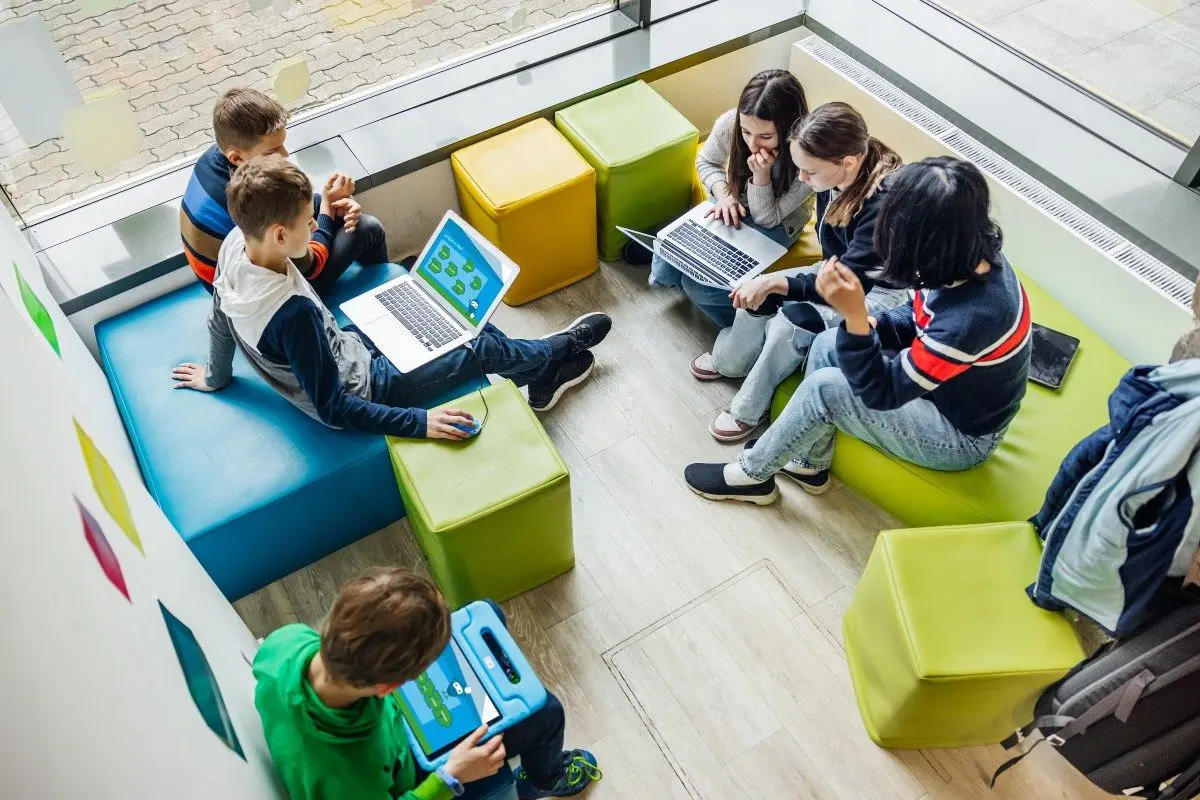
K-12 teachers and students across the country are increasingly using AI in and out of classrooms, whether it is teachers turning to AI to refine lesson plans or students asking AI to help them research a particular topic. An estimated 85% of K-12 public school teachers recently reported that they
[2]
59% of kids use AI to look up information -- but it could weaken 'critical thinking skills,' says expert
Parents and kids alike expect AI to play a major role in their futures. Seventy-one percent of parents and 60% of kids and teens believe that by the time young people are adults, people will be so dependent on AI -- specifically large language models like ChatGPT and Gemini -- that they won't be
[3]
Generative AI in business schools: friend or foe?
Since tools like ChatGPT burst into higher education, debate has focused on two extremes: either students are all committing underhanded academic fraud and plagiarism or Artificial Intelligence will magically revolutionise learning. The latest research project I co-authored with Anna Holland, and
[4]
Almost 80% of Australian uni students now use AI. This is creating an 'illusion of competence'
In Australia, artificial intelligence is becoming a near-universal feature of education. As of 2025, nearly 80% of university students reported using AI in their studies. Overseas, reports are even higher. This year, a UK survey of undergraduates found 94% were using it to help with assessed
[5]
AI is already disrupting classrooms around the world
A version of this article originally appeared in Quartz's AI & Tech newsletter. Sign up here to get the latest AI & tech news, analysis and insights straight to your inbox. When a private school in San Francisco announced it had cracked the code on learning, with two hours of AI-assisted academics
[6]
Professors Say AI Is Destroying Their Students' Ability to Think
Can't-miss innovations from the bleeding edge of science and tech Professors are fighting an uphill battle against the intrusion of AI into education, and it's forcing them to rethink how they instruct their students, many of whom have already become hopelessly dependent on the tech. "It's
[7]

America's math and reading scores tanked after schools ditched textbooks for screens -- and AI could worsen the brain rot | Fortune
At the turn of the century, educational technology initiatives put laptop keyboards at the fingertips of U.S. schoolchildren. Now, 25 years later, the next generation of students have turned to AI -- and education experts warn unrestricted use of the technology could atrophy critical thinking
[8]
A writing professor's new task in the age of AI: Teaching students when to struggle
I was early to the generative AI wave in higher education: I was among the first professors who teach writing to publish in an academic journal about generative AI and critical thinking, and I am now part of an interdisciplinary team at Babson College thinking about how AI is impacting education,
Share
Copy Link
An estimated 85% of K-12 teachers and nearly 80% of university students now use AI tools like ChatGPT for schoolwork and lesson planning. But researchers warn this rapid AI integration in classrooms is creating an 'illusion of competence' that weakens critical thinking skills and undermines long-term student learning, even as policies and training lag far behind adoption rates.
AI Usage Among Students and Teachers Reaches Critical Mass
AI in education has reached a tipping point. An estimated 85% of K-12 public school teachers reported using AI during the 2024-2025 school year, primarily for curriculum and content development
1
. Among students, the numbers are equally striking. Nearly 80% of Australian university students now use AI in their studies, while a UK survey found 94% of undergraduates were using it to help with assessed work4
. In the United States, 26% of teens reported using ChatGPT to complete schoolwork in 2025, up from just 13% in 20231
. An estimated 86% of K-12 students have used AI in general, with 50% reporting they use it for schoolwork such as learning about topics outside class, tutoring on specific subjects, or receiving help with homework assignments1
. Among 12- to 17-year-olds specifically, 59% use AI to search for information and facts, according to Common Sense Media .
Source: The Conversation
Weakening Critical Thinking Skills and the Performance Paradox
The rapid AI integration in classrooms has triggered alarm among education researchers who warn of serious risks to student learning. A phenomenon known as the "performance paradox" reveals a troubling pattern: while students' short-term performance on tasks may improve with AI assistance, their long-term learning suffers significantly
4
. A 2025 randomized experiment with high school students in Turkey demonstrated this effect clearly. Students using an AI assistant appeared to solve math problems more effectively in classroom tasks, but their actual learning collapsed as soon as the AI was removed during assessment4
. This cognitive offloading from human to AI creates what researchers call an "illusion of competence," where students overestimate how much they have learned because the tool provides clear, polished responses that signal deep mental engagement is no longer necessary4
. Almost two-thirds of parents of K-12 students said in 2025 that AI is weakening important academic skills their children need to learn, including writing, reading comprehension, and critical thinking1
. The Brookings Institution warned in a 2026 report that risks of using generative AI in education overshadow its benefits, with students who offload thinking to AI doing less of it themselves, creating a compounding atrophy over time5
. As one student told researchers, "It's easy. You don't need to use your brain"5
.Lack of AI Policies in Schools Creates Uncertainty
Despite widespread adoption, policies and teacher training have not kept pace with how frequently students and educators use AI. Only 35% of school district leaders reported in 2025 that they provided students with any AI training, according to the RAND Corporation
1
. Additionally, just 45% of principals reported having school or district policies or guidance on AI use in schools1
. This lack of AI policies in schools leaves students navigating a vast gray area. Business students interviewed for a UK study knew that copying and pasting from ChatGPT would be considered cheating, but described widespread confusion about what constitutes legitimate assistance versus academic misconduct3
. Different courses and lecturers gave different answers about whether students could ask ChatGPT for feedback on draft paragraphs or suggestions for alternative headings3
. An average of 71% of K-12 teachers reported that when students use AI to complete schoolwork, it becomes difficult to determine whether student work is their own1
. States are largely leaving districts to develop their own policies, districts are leaving teachers to figure it out, and many teachers received their first real AI training at Saturday workshops funded by companies whose products were being demonstrated5
.Related Stories
Challenges to Academic Integrity and Equity Concerns
Challenges to academic integrity extend beyond plagiarism detection. The shift raises fundamental questions about equity and access. Students who pay for premium versions of AI tools like ChatGPT feel they receive more accurate, detailed support than peers using free versions
3
. Some students view this as another form of educational inequality, where success on assessments increasingly depends on whether you can afford better algorithms and possess the necessary skills to prompt systems for optimal results3
. The Brookings Institution noted this may be the first time in education technology history that schools will have to pay more for more accurate information, with free AI tools most accessible to under-resourced schools tending to be the least reliable5
. However, some students argue AI can make education fairer. Students with dyslexia, ADHD, or other conditions described using ChatGPT to help with planning, time management, or turning rough notes into clearer sentences, while international students said it helped them write in more polished academic English3
. Special education teachers are testing benefits too, with 57% reporting in 2025 that they use AI to help develop individualized education programs for students with learning disabilities1
.
Source: The Conversation
Long-Term Educational Impacts Demand Attention
The long-term educational impacts of AI remain deeply uncertain. Research from the Stanford Accelerator for Learning found that when students use AI and then are told they can no longer use it for studies, they actually perform worse than those who never used AI, demonstrating that additional research on how AI influences students' long-term learning and development is necessary
1
. Studies from 2019 through 2022 suggested AI might help student learning and motivation through personalized learning experiences, but evidence appears less promising when considering how students learn after they stop using AI1
. The risks of AI in education extend to student safety as well. Recent examples include students who self-harmed or died by suicide after using AI for mental health support, and a 2025 study found chatbots responding to 60 simulated mental health scenarios sometimes made harmful proposals such as cutting off all human contact for a month or dropping out of school1
. A study from Microsoft and Carnegie Mellon found that popular chatbots may actively diminish critical thinking skills, and AI systems designed to be agreeable turn out to be poor models for the friction that builds social and emotional resilience5
. Seventy-one percent of parents and 60% of kids and teens believe that by the time young people are adults, people will be so dependent on AI that they won't be able to function without it . Global approaches vary widely. Estonia built a national AI literacy program that modified ChatGPT to respond to student queries with questions rather than answers, while Iceland is running a cautious pilot where teachers experiment with AI for lesson planning but students aren't involved at all5
. In the United States, Microsoft and OpenAI have committed tens of millions of dollars to teacher training through the country's two largest teachers unions, and in Florida alone, more than 100,000 high schoolers now have access to Google's Gemini chatbot through their school districts5
. Experts suggest universities and teachers must move from treating AI as an "answer oracle" to using it as a partner in thinking, offloading extraneous tasks like checking grammar while using AI as a "cognitive mirror" that asks clarifying questions to force students to engage in explanation4
. Assessment design must evolve accordingly, and student privacy concerns remain unresolved as most deployments are outpacing research by a wide margin1
5
.
Source: The Conversation
References
Summarized by

Navi
[1]
[3]
[4]
Related Stories
AI in Education: Reshaping Learning and Challenging Academic Integrity
12 Sept 2025•Technology

Schools Embrace AI Literacy Over Bans as Educators Teach Students to Navigate ChatGPT's Flaws
21 Aug 2026•Technology

Universities scramble to rethink exams as 92% of UK students now rely on AI for coursework
03 Dec 2025•Entertainment and Society
Recent Highlights



Recent Highlights
Today's Top Stories








Don’t drown in AI news. We cut through the noise - filtering, ranking and summarizing the most important AI news, breakthroughs and research daily. Follow topics that matter to you and stay ahead.


