Meta launches Meta Compute initiative to build gigawatt-scale AI infrastructure this decade


14 Sources
14 Sources
[1]
Mark Zuckerberg says Meta is launching its own AI infrastructure initiative | TechCrunch
When Meta announced capital expenditure projections last year, the company made it known that it planned to spend big to build out capacity for its AI business. "We expect that developing leading AI infrastructure will be a core advantage in developing the best AI models and product experiences," said Susan Li, Meta CFO, during an earnings call last summer. Now, the tech giant appears to be making good on that promise. On Monday, CEO Mark Zuckerberg announced the launch of Meta Compute, a new initiative designed to bolster the tech giant's AI infrastructure. Zuckerberg said the company intended to drastically expand its energy footprint in the coming years. "Meta is planning to build tens of gigawatts this decade, and hundreds of gigawatts or more over time. How we engineer, invest, and partner to build this infrastructure will become a strategic advantage," Zuckerberg said, in a post on Threads. For reference, a gigawatt is a measurement of electrical power equivalent to a billion watts. The energy-hungry AI business means that America's electrical consumption could spike exponentially over the next decade (from 5 GW to 50, according to one estimate). Zuckerberg has named three executives that he says will be spearheading the new project. One of those people is Santosh Janardhan, the company's head of global infrastructure. Janardhan, who has been with the company since 2009, will lead work on "technical architecture, software stack, silicon program, developer productivity, and building and operating our global datacenter fleet and network," Zuckerberg said. Also involved is Daniel Gross, who joined the company just last year. Gross is the co-founder of Safe Superintelligence, along with former OpenAI chief scientist Ilya Sutskever. Zuckerberg said that Gross would be leading a new group within Meta that is "responsible for long-term capacity strategy, supplier partnerships, industry analysis, planning, and business modeling." Finally, Zuckerberg said that Dina Powell McCormick, a former government official who recently joined Meta as the company's president and vice chairman, would be responsible for working with governments to help "build, deploy, invest in, and finance Meta's infrastructure." There's obviously a race to build out genAI-ready cloud environments, and Capex projections announced last year showed most of Meta's peers had similar ambitions. Microsoft has been busy partnering with AI infrastructure providers wherever it can and, in December, Google parent company Alphabet announced the acquisition of data center firm Intersect. TechCrunch reached out to Meta for more information about the new initiative.
[2]
Meta sets up 'Meta Compute' organization for gigawatt-scale AI data centers -- initiative is said to consumer hundreds of gigawatts over time
Meta is setting up Meta Compute, an organization that will be responsible for an aggressive expansion of its computing infrastructure, reports Reuters. Meta Compute plans to deploy infrastructure that will consume tens of gigawatts of power already this decade and scale to hundreds of gigawatts over a longer horizon, Mark Zuckerberg announced on Monday. Meta Compute will be jointly led by Santosh Janardhan, head of global infrastructure and co-head of engineering, and Daniel Gross. "Today we are establishing a new top-level initiative called Meta Compute," Zuckerberg wrote in a post over at Threads. "Meta is planning to build tens of gigawatts this decade, and hundreds of gigawatts or more over time. How we engineer, invest, and partner to build this infrastructure will become a strategic advantage." Janardhan's responsibility remains general and deeply technical: it will span Meta's overall system architecture, in-house silicon efforts, software stack, developer tools, as well as the buildout and day-to-day operation of the company's worldwide data center fleet and network. Gross will run a newly created group focused on long-range capacity planning and developing supply chain that is capable of delivering equipment that will consume gigawatts of power (i.e., that is a lot of chips and servers). His responsibilities include defining Meta's future compute needs, managing strategic supplier relationships, following industry dynamics, and developing planning and business models to support infrastructure expansion at multi-gigawatt scale. Given the responsibilities of Janardhan and Gross, Meta is establishing Meta Compute to systematically expand AI-scale infrastructure at a level far beyond traditional data-center growth. As advanced AI models now demand compute measured in tens of gigawatts and hundreds of gigawatts over time, Meta indeed needs to secure sophisticated hardware and construct actual buildings. A dedicated organization allows Meta to plan power, land, networking, and system architecture years in advance, rather than scaling reactively as demand rises. The new structure also centralizes ownership of the full technical stack -- from software and system architecture to in-house silicon, networks, and data centers -- to ensure that hardware and software decisions are made together to maximize efficiency. At the same time, Meta Compute separates operational execution from long-term capacity strategy and supply chain creation. Both executives will coordinate closely with Dina Powell McCormick, who has joined Meta as president and vice chair. Dina Powell McCormick will work closely with the compute and infrastructure organizations to ensure that Meta's multi-billion-dollar investments align with the company's objectives and deliver tangible economic benefits in the regions where the company operates. In addition, she will lead initiatives to establish new strategic capital alliances and develop new approaches to boost Meta's long-term investment capacity. Meta establishes its Meta Compute organization at an interesting period. On the one hand, the company spent $72 billion on its AI initiatives in 2025 alone. On the other hand, these investments have yet to pay off as the company's Llama 4 model received a muted response and the company is not considered as a major AI leader like Google, Microsoft, or OpenAI.
[3]
Zuckerberg eyes massive DC expansion with Meta Compute play
Meta has formed a new initiative called "Meta Compute" to oversee the planning, deployment, and operations of its growing fleet of AI datacenters. "Meta is planning to build tens of gigawatts this decade, and hundreds of gigawatts or more over time. How we engineer, invest, and partner to build this infrastructure will become a strategic advantage," wrote CEO Mark Zuckerberg in a post to his Twitter clone, Threads, on Monday. The news comes just hours after Zuckerberg revealed that Dina Powell McCormick, who previously spent 16 years at Goldman Sachs and served as an advisor to President Trump, had joined the company as President and Vice Chairman. According to Zuck, Meta Compute will be led by Santosh Janardhan, the company's head of global infrastructure, and Daniel Gross, who joined Meta's Superintelligence team in mid-2025. "Santosh will continue to lead our technical architecture, software stack, silicon program, developer productivity, and building and operating our global datacenter fleet and network," he explained. "Daniel will lead a new group responsible for long-term capacity strategy, supplier partnerships, industry analysis, planning, and business modeling." Both executives will work closely with McCormick, who Zuck noted would be focusing much of her energy on "partnering with governments and sovereigns to build, deploy, invest in, and finance Meta's infrastructure." The initiative comes as Meta continues to spend lavishly in pursuit of delivering "personal superintelligence" to the masses. Meta forecast $72 billion capital expenditure in pursuit of that goal during its fiscal 2025, and higher spending in the following year. However, compared to its competitors, Meta doesn't have much to show for all of its spending. Following the lackluster reception of its open-source Llama 4 models, a talent war with OpenAI, and the departure of machine learning guru Yann Lecun, the company's next-gen foundation models remain shrouded in mystery. After touting open source model development, Zuckerberg has reportedly abandoned Llama and pivoted to building proprietary models under the codenames Avocado and Mango. However, at the same time, Meta continues to release models like its Segment Anything Series (SAM) in the open. Despite missing the mark on Llama 4, Zuckerberg clearly hasn't given up on his generative AI aspirations and is pushing ahead with ever more grandiose infrastructure projects. Meta is currently working on multiple gigawatt-scale datacenter construction projects across Ohio, Louisiana, and Texas, plus other locations. To keep this expansion from running out of steam, Meta last week signed three new long-term contracts with TerraPower, Oklo, and Vistra for nuclear energy. Combined with the company's existing commitments with Constellation Energy, the Social Network has now contracted for roughly 6.6 gigawatts of atomic power. ®
[4]
Meta to establish 'Meta Compute' initiative to build gigawatt-scale capacity
Jan 12 (Reuters) - Meta (META.O), opens new tab will establish Meta Compute to construct tens of gigawatts of computing infrastructure this decade and hundreds of gigawatts more in the future, CEO Mark Zuckerberg said on Monday. The Meta Compute effort will be spearheaded by Santosh Janardhan, Meta's head of global infrastructure and co-head of engineering, and Daniel Gross, according to Zuckerberg's social media post. They will collaborate closely with Dina Powell McCormick, who has joined Meta as president and vice chairman, he said. Janardhan will continue to oversee Meta's technical architecture, software stack, silicon program, developer productivity and the construction and operation of the company's global data center fleet and network. Gross will take the lead on a newly formed group focused on long-term capacity strategy, supplier partnerships, industry analysis, planning and business modeling. Meta has been scrambling to stay relevant in Silicon Valley's artificial-intelligence race after its Llama 4 model met with a poor reception. It committed as much as $72 billion in 2025 capital spending. Reporting by Jaspreet Singh in Bengaluru; Editing by Shailesh Kuber Our Standards: The Thomson Reuters Trust Principles., opens new tab
[5]

Mark Zuckerberg announces new 'Meta Compute' initiative for its data center and AI projects
On the heels of Mark Zuckerberg announcing that Meta's former board member, Dina Powell McCormick, would be formally joining the company as president and vice chairman, the CEO has shared new details about her purview at the company. The executive will play a key role overseeing Meta's sprawling infrastructure investments as part of a newly announced initiative called Meta Compute. "Meta is planning to build tens of gigawatts this decade, and hundreds of gigawatts or more over time," Zuckerberg said in an update. "How we engineer, invest, and partner to build this infrastructure will become a strategic advantage." Zuckerberg said that Meta's head of global engineering Santosh Janardhan will lead the "top-level initiative" and that recent hire and former Safe Superintelligence CEO Daniel Gross will "lead a new group responsible for long-term capacity strategy, supplier partnerships, industry analysis, planning, and business modeling." McCormick is expected to "work on partnering with governments and sovereigns to build, deploy, invest in, and finance Meta's infrastructure." Meta has been investing heavily in infrastructure to fuel its AI "superintelligence" ambitions. The company also recently announced three agreements to buy massive amounts of nuclear power to help power its data centers. Zuckerberg has previously said he expects Meta to spend $600 billion on AI infrastructure and jobs by 2028.
[6]

Meta launches Meta Compute to handle massive AI infrastructure expansion
Tens of gigawatts are planned this decade, with hundreds expected in the future Meta has established a new internal organization to oversee the expansion of its computing infrastructure for advanced AI tools. The new Meta Compute initiative operates at a top level within the company and reports directly to CEO Mark Zuckerberg, who says it plans to deploy tens of gigawatts this decade. Over a longer timeframe, the company expects capacity to scale into the hundreds of gigawatts, far exceeding traditional data center growth patterns. The timing of Meta Compute is notable, as the company spent roughly $72 billion on AI related efforts in 2025, yet the financial payoff remains unclear. Meta has emphasized that these investments aim to deliver economic benefits in the areas where data centers are built. This issue has grown more sensitive as communities question the impact of large facilities on electricity prices and water usage. The new organization brings software, hardware, networking, and facilities planning under one umbrella. Meta has indicated that this structure is meant to ensure hardware and software decisions stay aligned, which is needed as AI workloads place different demands on systems compared to earlier cloud services. Meta Compute will be jointly led by Santosh Janardhan and Daniel Gross, with responsibilities split between execution and long range planning. Janardhan continues to oversee deeply technical areas, including system architecture, in house silicon development, software layers, and the global data center fleet. Gross will focus on defining future compute requirements, building supply chains capable of delivering hardware at multi gigawatt scale, and developing planning models that account for industry shifts and resource constraints. Together, their remit reflects an attempt to treat power, land, equipment, and networking as a single coordinated problem. "Today we are establishing a new top level initiative called Meta Compute," Zuckerberg wrote in a post on Threads. "Meta is planning to build tens of gigawatts this decade, and hundreds of gigawatts or more over time. How we engineer, invest, and partner to build this infrastructure will become a strategic advantage." At the same time, Meta Compute separates long term capacity strategy from day to day data center operations, which continue under existing infrastructure teams. This division suggests Meta is trying to avoid reactive expansion driven only by near term demand.
[7]

Meta launches new "Meta Compute" initiative to build AI infrastructure
Why it matters: The announcement, coming shortly after the firm named prominent banking executive and former Republican official Dina Powell McCormick as president, suggests Zuckerberg sees Meta's ability to build out AI infrastructure as a strategic long-term advantage over its Big Tech peers. Zoom in: In a statement posted to his Facebook account, Zuckerberg said Meta plans to build tens of gigawatts this decade, "and hundreds of gigawatts or more over time." * "How we engineer, invest, and partner to build this infrastructure will become a strategic advantage," he wrote. Between the lines: The new effort will be led by former Google executive Santosh Janardhan -- who serves as Meta's head of global infrastructure and co-head of engineering -- as well as Daniel Gross, who joined Meta last year from Safe Superintelligence, where he served as CEO and co-founder. * Both leaders will work closely with Powell McCormick, who will be focused on partnering with governments and sovereigns "to build, deploy, invest in, and finance Meta's infrastructure," Zuckerberg noted. Zoom out: Meta previously said it intends to invest $600 billion in American infrastructure and jobs, "including industry-leading AI data centers" by 2028, but it has not offered many details around how that deployed capital fits into the company's long-term strategic vision. * The new unit announced Monday -- focused specifically on AI infrastructure, and with executives reporting to Zuckerberg -- suggests Meta's CEO is taking a more hands-on approach to the company's AI infrastructure strategy to pioneer its next phase of growth. What to watch: The creation of Meta Compute formalizes Meta's infrastructure efforts in a way that could help the company better manage the political and economic scrutiny that often comes with building data centers.
[8]

Zuckerberg Announces Meta Compute to Scale Long-Term AI Infrastructure | AIM
The company plans to build "tens of gigawatts" of computing capacity this decade. Meta on January 13 announced the launch of a new top-level initiative called Meta Compute to build a large-scale computing infrastructure for its long-term AI plans. In a post on Facebook, CEO Mark Zuckerberg said the company plans to build "tens of gigawatts" of computing capacity this decade, with capacity expected to grow to "hundreds of gigawatts or more over time." He added that the way Meta engineers, invests in, and partners to build this infrastructure will become a "strategic advantage". Meta said the new initiative will be led by Santosh Janardhan, head of global infrastructure and co-head of engineering at Meta, along with Daniel Gross, who is overseeing long-term AI capacity planning at the company. Gross joined the company last year. He co-founded Safe Superintelligence, alongside former OpenAI chief scientist Ilya Sutskever. Janardhan will continue overseeing technical architecture, software systems, silicon efforts, developer productivity, and the company's global data centre and network operations. Gross will head a new group focused on long-term capacity planning, supplier partnerships, industry analysis, planning and business modelling. Zuckerberg said the two leaders will work closely with former US deputy national security advisor Dina Powell McCormick, who recently joined Meta as the president and vice chairman. Her role includes engaging with governments and sovereign partners to help build, deploy, invest in and finance Meta's infrastructure. "I'm looking forward to working closely with Daniel, Santosh, Dina and their teams to scale Meta Compute and deliver personal superintelligence to billions of people around the world," Zuckerberg wrote. The announcement signals Meta's intent to treat large-scale compute capacity as a core pillar of its future AI strategy, alongside software and model development. The social media giant recently announced agreements linked to nuclear energy projects that could support up to 6.6 GW of new and existing electricity capacity in the United States by 2035, as the company plans for rising power demand from its data centres and AI infrastructure. According to Meta, the agreements cover extended operations at existing nuclear plants, development of advanced nuclear reactors and long-term energy procurement. Meta said the projects will supply power to grids that support its operations, including its Prometheus AI supercluster in New Albany, Ohio. Meta said the projects are expected to create thousands of construction jobs and hundreds of long-term operational roles, mainly in Ohio and Pennsylvania. The company added that it pays the full cost of energy used by its data centres, with the electricity delivered into regional grids. The agreements include support for advanced nuclear developers TerraPower and Oklo, as well as long-term power purchases from operating plants owned by Vistra. Meta also referenced an earlier nuclear agreement signed with Constellation Energy last year.
[9]

Meta Platforms creates new organization to lead its AI infrastructure buildout - SiliconANGLE
Meta Platforms creates new organization to lead its AI infrastructure buildout Meta Platforms Inc. is launching a new infrastructure division called Meta Compute that will be tasked with overseeing its aggressive data center buildout for artificial intelligence. Reuters reported that Meta plans to deploy new infrastructure that will ultimately consume tens of gigawatts of power this decade and scale to encompass hundreds of gigawatts in the long term. These efforts will now be headed up by the Meta Compute organization, which will be led by Meta's head of global infrastructure and co-head of engineering Santosh Janardhan alongside former Safe Superintelligence Inc. co-founder Daniel Gross. "We are establishing a new top-level initiative called Meta Compute," wrote Meta founder and Chief Executive Mark Zuckerberg in a post on Threads. "Meta is planning to build tens of gigawatts this decade and hundreds of gigawatts or more over time. How we engineer, invest and partner to build this infrastructure will become a strategic advantage." The main goal of Meta Compute is to systematically expand the company's AI infrastructure at a scale that goes far beyond traditional data center growth. While Meta already operates a global network of enormous data centers, what it's trying to do is unprecedented. With advanced AI models demanding compute power that's measured in tens of gigawatts, the company needs to acquire more sophisticated hardware and construct hundreds of buildings to house it in. By creating a dedicated organization to handle this, the company hopes to be able to secure the land, hardware and energy it will need proactively, rather than struggle to keep up with demand reactively. According to Zuckerberg, Janardhan will be focused on the technical aspects of Meta's buildout, including the company's overall system architecture strategy, its in-house silicon efforts, its software stack, development tools and the day-to-day operation of its global data center fleet. As for Gross, he'll be tasked with running a newly created group that's focused on long-range capacity planning and developing the supply chain needed to ensure that the company has all of the chips, servers and networking gear required to fill up its new data centers. As part of his responsibilities, he'll have to define Meta's future computing needs ahead of time, manage its strategic supplier relationships, stay up to date with the latest industry dynamics and develop and plan new business models to support the company's expansion at multi-gigawatt scale. Zuckerberg said the new initiative will also centralize ownership of Meta's technical stack, from the software and system architecture to the silicon, networks and data centers, ensuring that any investment decisions are made with maximum efficiency in mind. It also allows Meta to separate operational execution from long-term capacity planning and supply chain creation. Janardhan and Gross will be working closely with Dina Powell McCormick, who joined the company today as its new President and Vice Chair. One of her roles will be to ensure that Meta's multibillion-dollar infrastructure investments are aligned with the company's strategic objectives and provide tangible economic benefits in the regions where it operates. She's also being tasked with leading the company's efforts to cement new strategic capital alliances in order to enhance its long-term investment capacity. The creation of Meta Compute may also improve accountability regarding the company's massive data center buildout. In fiscal 2025, the company spent $72 billion on capital expenditures, with the vast majority of that going towards building new data centers for AI. Yet, these investments are yet to pay off for Meta, with its most advanced AI model Llama 4 receiving a somewhat muted response. While Meta has made a name for itself in open-source AI, Llama 4 is widely considered to be less capable than leading foundational models from companies like Google LLC and OpenAI Group PBC.
[10]

Zuckerberg launches Meta Compute to build massive AI energy grid
Meta Platforms Inc. has launched Meta Compute, an initiative to expand its artificial intelligence infrastructure, according to an announcement by CEO Mark Zuckerberg on Monday. The company projects to build "tens of gigawatts this decade" and "hundreds of gigawatts or more over time" of electrical power capacity, Zuckerberg said. Meta CFO Susan Li previously stated in an earnings call last summer that developing leading AI infrastructure would be a core advantage for AI models and product experiences. A gigawatt measures electrical power equivalent to 1 billion watts. Zuckerberg named three executives to spearhead the project. Santosh Janardhan, Meta's head of global infrastructure, will lead efforts on technical architecture, software stack, silicon programs, developer productivity, and the building and operation of the data center fleet and network. Janardhan joined Meta in 2009. Daniel Gross, who joined Meta last year and co-founded Safe Superintelligence, will lead a new group responsible for long-term capacity strategy, supplier partnerships, industry analysis, planning, and business modeling. Dina Powell McCormick, Meta's president and vice chairman, will work with governments on building, deploying, investing in, and financing Meta's infrastructure. Powell McCormick is a former government official. Meta's capital expenditure projections last year indicated plans for significant investment in AI capacity. Other technology companies have also pursued AI infrastructure expansion; Microsoft has partnered with AI infrastructure providers, and Alphabet Inc., Google's parent company, acquired data center firm Intersect in December.
[11]

Meta Unveils 'Meta Compute' Initiative, Pledging Massive AI Data Center Buildout And Nuclear Power Deals In Push For Superintelligence - Meta Platforms (NASDAQ:META)
Meta Platforms Inc. (NASDAQ:META) is launching a new AI infrastructure group called Meta Compute as Chief Executive Officer Mark Zuckerberg accelerates multibillion-dollar investments in data centers and long-term energy supplies to pursue advanced artificial intelligence. Meta Centralizes AI Infrastructure And Leadership On Monday, Meta said that "Meta Compute" will oversee the company's global fleet of data centers, computing capacity, and supplier partnerships as it ramps up work on frontier AI and what Zuckerberg has described as personal superintelligence. The initiative will be co-led by Santosh Janardhan, Meta's head of global infrastructure, and Daniel Gross. Janardhan will continue running the company's technical foundations and data center operations, while Gross will lead a new team focused on long-term capacity planning and strategic partnerships. "They will collaborate closely with Dina Powell McCormick, who has joined Meta as president and vice chairman," Zuckerberg wrote in a post on Threads. Nuclear Power Deals Support Massive AI Expansion Zuckerberg said Meta plans to build "tens of gigawatts" of computing capacity this decade and "hundreds of gigawatts or more over time," a scale that could consume as much electricity as small cities. Meta has committed as much as $72 billion in capital spending in 2025, much of it aimed at AI infrastructure, following a lukewarm reception for its latest Llama model. To secure long-term power, Meta signed 20-year agreements to buy electricity from three nuclear plants operated by Vistra and is working with companies developing small modular nuclear reactors. Meta Cuts Jobs And Powers Up AI Expansion On Tuesday, it was reported that Meta plans to cut over 10% of its Reality Labs workforce to focus on next-generation AI, shifting funding from virtual reality to wearables. CTO Andrew Bosworth called a key in-person meeting amid the restructuring. Last year, the company also reshaped its AI strategy, moving away from Llama models after Llama 4 underperformed. Zuckerberg appointed Alexandr Wang as chief AI officer, while Chief AI Scientist Yann LeCun left to start his own venture. Meta spent $14.3 billion to acquire Wang's team and raised 2025 capital spending above $70 billion. Meta also entered electricity trading and accelerated U.S. power plant construction. Its Louisiana data center required multiple gas-fired plants, with nationwide AI demand projected to quadruple over the next decade. Zuckerberg emphasized aggressive investment to pursue "superintelligence" capabilities. Disclaimer: This content was partially produced with the help of AI tools and was reviewed and published by Benzinga editors. Image via Shutterstock METAMeta Platforms Inc$641.00-0.15%OverviewMarket News and Data brought to you by Benzinga APIs
[12]

Meta establishes new top-level initiative for computing infrastructure By Investing.com
Investing.com -- Meta Platforms CEO Mark Zuckerberg announced the creation of a new top-level initiative called Meta Compute, focused on building significant computing infrastructure over the coming years. In a post on Threads, Zuckerberg revealed plans to build "tens of gigawatts this decade, and hundreds of gigawatts or more over time." He emphasized that how the company engineers, invests, and forms partnerships to build this infrastructure will become a strategic advantage for Meta. The initiative will be led by Santosh Janardhan and Daniel Gross. Janardhan will continue overseeing technical architecture, software stack, silicon program, developer productivity, and the operation of Meta's global datacenter fleet and network. Gross will head a new group responsible for long-term capacity strategy, supplier partnerships, industry analysis, planning, and business modeling. Both leaders will work closely with Dina Powell McCormick, who recently joined Meta as President and Vice Chairman. McCormick's role involves partnering with governments and sovereigns to build, deploy, invest in, and finance Meta's infrastructure. Zuckerberg stated he looks forward to working with the team to "scale Meta Compute and deliver personal superintelligence to billions of people around the world." This article was generated with the support of AI and reviewed by an editor. For more information see our T&C.
[13]

Meta Unveils Meta Compute", its ambitious computing infrastructure at the gigawatt scale
On Monday Meta launched "Meta Compute", a new strategic initiative aimed at building massive computing infrastructure to support its artificial intelligence ambitions. The group plans to deploy several dozen gigawatts of capacity by the end of the decade, and hundreds of additional gigawatts over the longer term. The project is part of a broader technological catch-up effort following the mixed reception of its Llama 4 model and a record $72bn investment in 2025. Leadership of "Meta Compute" has been entrusted to Santosh Janardhan, head of global infrastructure, and Daniel Gross, a former investor and entrepreneur specializing in cutting-edge technologies. Janardhan will retain oversight of the technical architecture, data centers, the chip program and development tools. Gross will lead a new unit focused on capacity planning, strategic partnerships and long-term economic modeling. Mark Zuckerberg said that the project will be carried out in close coordination with Dina Powell McCormick, recently appointed Meta's president. With "Meta Compute", the company aims to position itself as a central player in very large-scale AI infrastructure, a field that has become critical amid competition from Google, Microsoft and OpenAI. This ramp-up marks a new phase in Meta's industrial strategy, centered on deploying massive capacity to support the development and training of its future artificial intelligence models.
[14]

Mark Zuckerberg announces Meta Compute, calls its top-level initiative: Check details
"How we engineer, invest, and partner to build this infrastructure will become a strategic advantage," Zuckerberg said. Meta CEO Mark Zuckerberg has shared new details about a major infrastructure push at the company, following his recent announcement that former board member Dina Powell McCormick is joining Meta as president and vice chairman. The effort is part of a newly announced Meta Compute, which Zuckerberg describes as a "top-level initiative." On his social accounts, Zuckerberg announced, "Meta is planning to build tens of gigawatts this decade, and hundreds of gigawatts or more over time." "How we engineer, invest, and partner to build this infrastructure will become a strategic advantage." Also read: Meta plans to lay off hundreds of employees in Reality Labs division: Report Zuckerberg further stated that Meta's head of infrastructure, Santosh Janardhan, will continue to lead the company's technical architecture, software stack, silicon program, developer productivity, and building and operating our global datacenter fleet and network. Meanwhile, Daniel Gross, a recent hire and former CEO of Safe Superintelligence, will take charge of a new group that focuses on long-term planning. This team will handle capacity strategy, work with suppliers, study industry trends, and manage planning and business models. Janardhan and Gross will work closely with Dina Powell McCormick, who just joined Meta as President and Vice Chairman to work on partnering with governments and sovereigns to build, deploy, invest in, and finance Meta's infrastructure. Also read: Apple turns to Google Gemini to fix Siri's long-standing AI problems: Here's why The announcement highlights how central infrastructure has become to Meta's AI ambitions. The company is investing heavily to support what Zuckerberg has described as AI superintelligence.
Share
Share
Copy Link
Mark Zuckerberg announced Meta Compute, a new top-level initiative to aggressively expand the company's AI infrastructure. Meta plans to build tens of gigawatts of computing capacity this decade and hundreds of gigawatts over time. The effort will be led by infrastructure chief Santosh Janardhan and former Safe Superintelligence co-founder Daniel Gross, working closely with newly appointed president Dina Powell McCormick.
Meta Compute Signals Aggressive AI Infrastructure Expansion
Mark Zuckerberg announced the launch of Meta Compute on Monday, a new top-level initiative designed to dramatically expand Meta's AI infrastructure footprint
1
. The social media giant plans to build tens of gigawatts of computing capacity this decade and scale to hundreds of gigawatts or more over time, positioning infrastructure development as a core strategic advantage2
. This AI-driven expansion comes as Meta committed $72 billion in capital expenditure for 2025 alone, with projections suggesting the company expects to spend $600 billion on AI infrastructure and jobs by 20285
.
Source: Engadget
Leadership Structure for Gigawatt-Scale AI Data Centers
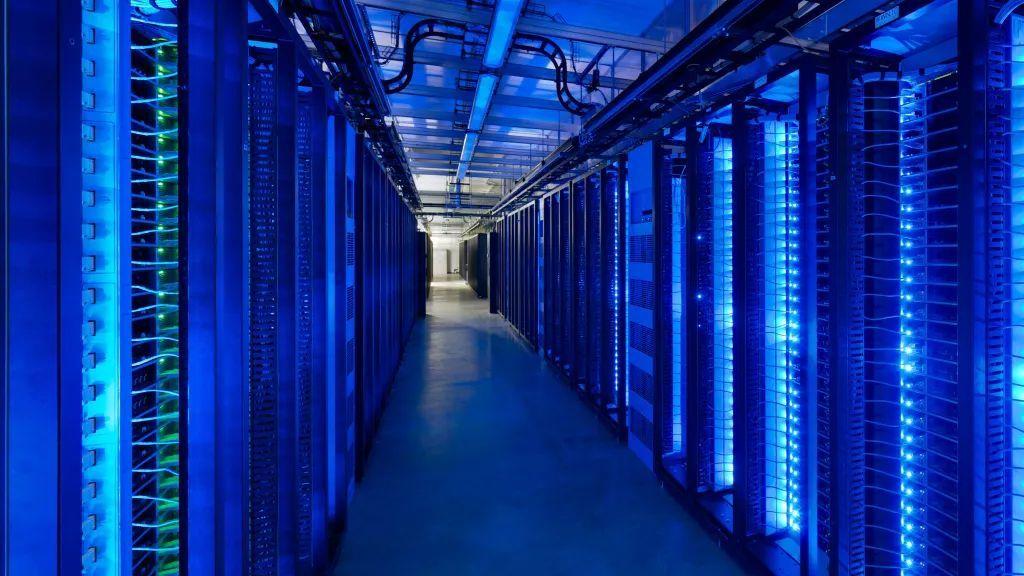
Santosh Janardhan, Meta's head of global infrastructure and co-head of engineering since 2009, will lead the technical execution of Meta Compute
1
. His responsibilities span technical architecture, the silicon program, software stack, developer productivity, and building and operating Meta's global data center fleet and network4
. Daniel Gross, who joined Meta in 2025 as co-founder of Safe Superintelligence alongside former OpenAI chief scientist Ilya Sutskever, will lead a newly created group focused on long-term capacity strategy, supplier partnerships, industry analysis, capacity planning, and business modeling3
.
Source: Tom's Hardware
Strategic Government Partnerships and Nuclear Energy Commitments
Dina Powell McCormick, who recently joined Meta as president and vice chairman after 16 years at Goldman Sachs and service as an advisor to President Trump, will work on partnering with governments and sovereigns to build, deploy, invest in, and finance Meta's infrastructure
3
. Her role includes establishing strategic capital alliances and developing approaches to boost Meta's long-term investment capacity2
. Meta recently signed three new long-term contracts with TerraPower, Oklo, and Vistra for nuclear energy, bringing its total contracted atomic power to roughly 6.6 gigawatts when combined with existing Constellation Energy commitments3
.Related Stories
Racing to Support Advanced AI Models Amid Competition
The initiative addresses the energy-hungry demands of advanced AI models, as America's electrical consumption for AI could spike from 5 gigawatts to 50 gigawatts over the next decade
1
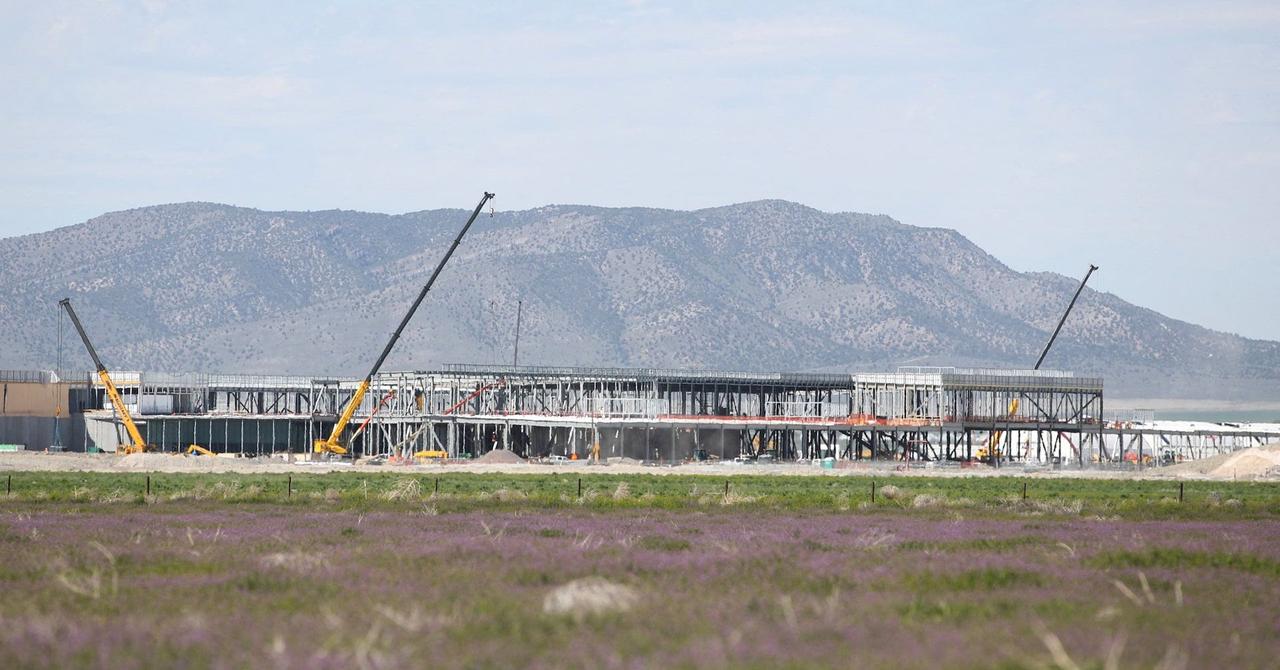
. Meta is currently working on multiple gigawatt-scale data centers construction projects across Ohio, Louisiana, and Texas3
. The timing proves critical as Meta faces stiff competition in the genAI space, with Microsoft partnering aggressively with AI infrastructure providers and Google parent company Alphabet acquiring data center firm Intersect in December1
.Pursuing AI Superintelligence Ambitions Despite Llama 4 Reception
Meta establishes Meta Compute at a pivotal moment in its AI journey. The company's Llama 4 model received a lackluster reception, and Meta is not currently considered a major AI leader like Google, Microsoft, or OpenAI
2
. Following the muted response, Zuckerberg has reportedly pivoted from open-source development to building proprietary models under the codenames Avocado and Mango, though Meta continues releasing models like its Segment Anything Series in the open3
. The dedicated organization allows Meta to plan power, land, networking, and system architecture years in advance rather than scaling reactively, centralizing ownership of the full technical stack from software and system architecture to in-house silicon to maximize efficiency2
. As Meta pursues its AI superintelligence ambitions, the company's ability to secure sophisticated hardware, construct facilities, and deliver tangible economic benefits in regions where it operates will determine whether its massive investments translate into AI leadership5
.
Source: Axios
References
Summarized by

Navi
[1]
[2]
[3]
Related Stories
Meta's Ambitious AI Infrastructure: Building Multi-Gigawatt Data Centers to Lead the AI Race
15 Jul 2025•Technology

Meta Unveils Massive $65 Billion AI Investment Plan for 2025
25 Jan 2025•Business and Economy

Meta Ventures into Power Trading as AI Drives Electricity Demand
19 Sept 2025•Business and Economy
Recent Highlights
1
Tennessee Teens Sue Elon Musk's xAI Over Grok AI-Generated Child Abuse Images
Policy and Regulation

2
Pentagon designates Palantir Maven AI as core US military system in major defense shift
Technology
3
Supermicro Co-Founder Indicted in $2.5 Billion Nvidia AI Chip Smuggling Scheme to China
Policy and Regulation
Recent Highlights
Today's Top Stories












Your Daily Dose of Curated AI News
Don’t drown in AI news. We cut through the noise - filtering, ranking and summarizing the most important AI news, breakthroughs and research daily. Spend less time searching for the latest in AI and get straight to action.

