Meta prepares to slash metaverse budget by 30% after $70 billion in losses, pivots to AI


11 Sources
11 Sources
[1]
Meta could axe up to one-third of its 'metaverse' budget next year
Meta may slash its budget for metaverse projects by up to 30 percent next year, according to a report from Bloomberg. Sources tell the outlet the potential cuts haven't been finalized, but they would impact the unit that works on Meta's Quest virtual reality headsets, along with its social platform Horizon Worlds. Meta, which changed its name from Facebook to align itself with the metaverse, has poured billions into building out its vision for virtual worlds over the past few years. But CEO Mark Zuckerberg has since shifted the company's focus to developing AI superintelligence with a series of high-profile hires. It most recently added former Apple UI designer Alan Dye to its team, who will oversee the design of "hardware, software and AI integration for its interfaces."
[2]
Zuckerberg's metaverse dream is collapsing after billions in losses
Serving tech enthusiasts for over 25 years. TechSpot means tech analysis and advice you can trust. Bottom line: After burning tens of billions and stubbornly insisting the metaverse would eventually justify the cost, Mark Zuckerberg appears to be backing away from his most ambitious project. Once its defining obsession, it appears that Meta's boss has finally decided to cut his losses: the metaverse could be on the way out. Reality Labs encompasses several areas of Meta's VR/AR business, but Bloomberg writes that two of them will be hit hardest: Horizon Worlds and virtual reality. Zuckerberg is planning to slash Reality Labs' budget by 30%, with the cuts coming as early as January 2026. A Meta spokesperson confirmed some elements of the report, stating that "we are shifting some of our investment" from the metaverse group toward AI glasses and wearables as it looks to capitalize on the "momentum" in the segment. Meta has placed a lot of effort into its smart glasses products recently. In September, the company unveiled the second-generation Ray-Ban Meta, the Oakley Meta Vanguard, and the Meta Ray-Ban Display. Meta's stock was up 3.4% on the back of the news, and it's easy to understand why. Since Meta started reporting Reality Labs' revenue in Q4 2020, the division has reported total operating losses of around $70-75 billion (not million). Zuckerberg has had an unwavering faith in the concept. His belief that an immersive AR/VR metaverse would one day be as popular as smartphones resulted in Facebook changing its corporate name to Meta in 2021. The CEO repeatedly said that the industry will be worth billions or even trillions of dollars after 2030 - Meta even commissioned a report in 2023 that claimed the metaverse could contribute $760 billion to the US GDP by 2035. But then the generative AI revolution took off. The tech industry found a new obsession as the idea of everyone interacting in a virtual world became less popular. Now, of course, Meta is pouring billions into AI. For 2025, the company raised its capital-expenditure forecast to about $70-72 billion, a figure that links heavily to AI infrastructure such as data centers, compute hardware, cloud, and related investments. Meta (and most of the tech industry) will no doubt hope that this time, the huge spending does pay off. But Zuckerberg doesn't seem worried either way. "If we end up misspending a couple of hundred billion dollars, I think that that is going to be very unfortunate, obviously," he said in September. "But what I'd say is I actually think the risk is higher on the other side."
[3]
Meta pivots to AI smart glasses as metaverse bet struggles
The strategic shift to the Metaverse was the reason why Facebook changed its name to Meta in 2011. "We aren't planning any broader changes than that," said Meta's spokesperson, without commenting on whether the shift in investments will result in layoffs. Now, the company is seeking to build on an early advantage on AI-enabled glasses, after the positive reception to the latest models launched in September. The glasses feature a small display within the lens that can describe what it sees and even translate text. That feature is widely seen as a breakthrough that enhances the technology's usefulness while making the design more compact. Many players in the industry, including firms in China, have also joined the race to build smart glasses and wearable technology. Meta has struggled in recent years to convince investors about the metaverse. Many have been sceptical over its vision for an immersive digital space and the demand for virtual reality (VR) headsets, which are key to that technology. The company has invested heavily in such headsets and its metaverse platform, Horizon Worlds, where users can interact as avatars. Demand for other technologies, especially artificial intelligence (AI), have also surged ahead while Meta prioritised the metaverse. The firm has recently shifted its focus to building large AI models, like the software integrated into WhatsApp, and developing smart gadgets like its new glasses.
[4]
Meta Weighs Cuts to Its Metaverse Unit
Meta is considering making cuts to a division in its Reality Labs unit that works on the so-called metaverse, said three employees with knowledge of the matter. The cuts could come as soon as next month and amount to 10 to 30 percent of employees in the Metaverse unit, which works on virtual-reality headsets and a V.R.-based social network, the people said. The numbers of potential layoffs are still in flux, they said. Other parts of the Reality Labs division develop smart glasses, wrist bands and other wearable devices. The total number of employees in Reality Labs could not be learned. Meta does not plan to abandon building the metaverse, the people said. Instead, executives expect to shift the savings from the cuts into investing in its augmented reality glasses, the people said. Meta introduced the glasses -- which have built-in cameras and microphones that allow users to take phone calls and listen to music -- with Ray-Ban in 2021. More recently, Meta incorporated an artificially intelligent assistant into the glasses that users can interact with using their voices. The glasses have been a surprise hit, with sales surpassing internal targets in recent years, the people said. A Meta spokesman declined to comment. The potential cuts were earlier reported by Bloomberg. Mark Zuckerberg, the company's chief executive and founder, rebranded his company to Meta from Facebook in 2021 as he pursued a far-flung vision of what social networking could look like in a virtual reality-based version of the internet. He has chased that vision since 2014 when he purchased Oculus, a virtual reality start-up that became the foundation for Meta's hardware division. But paving the road to that future has been difficult. Though Meta made significant technical advances in virtual reality devices, consumers have not widely embraced the technology. Reality Labs, which builds the hardware and software for Mr. Zuckerberg's metaverse vision, has posted more than $70 billion in losses over the past four years. Investors have grown wary of those rising costs and their concerns have ratcheted up recently as Meta has also spent heavily on artificial intelligence. The company has said it expects to spend tens of billions of dollars on data centers and A.I. development for the foreseeable future. Meta is weighing the metaverse cuts as competitive pressure on virtual reality devices has lessened. In 2021, Apple and Google were furiously working on competing virtual reality devices. But as those companies' efforts have slowed, Meta executives came to believe that the company could decelerate the rate at which it pursues virtual reality efforts, two of the people said. Reality Labs is made up of a Metaverse unit and a wearables unit. Within the Metaverse unit, executives are considering making the deepest cuts to V.R. jobs, two of the people said. At Meta's developer conference this year, Mr. Zuckerberg debuted three new lines of smart glasses, including a new version that has a small screen inside the lenses. The glasses are powered by a voice-based artificial intelligence assistant that can talk to the user through a speaker and see through a camera. On Wednesday, Mr. Zuckerberg announced that he had hired Alan Dye, a longtime designer at Apple, to lead a new creative studio inside the Reality Labs division that would be focused on design, fashion and technology. Mr. Dye will report to Andrew Bosworth, Meta's chief technology officer who leads Reality Labs. "We're entering a new era where AI glasses and other devices will change how we connect with technology and each other," Mr. Zuckerberg said in a post to Threads on Wednesday. "With this new studio, we're focused on making every interaction thoughtful, intuitive, and built to serve people."
[5]

Mark Zuckerberg is Making Big Cuts to the Metaverse After $77 Billion Loss
After renaming his company to reflect its shift toward the metaverse in 2021 when he declared it as the next frontier, Mark Zuckerberg is now set to make big cuts to Meta's Reality Labs. The Wall Street Journal estimates that Zuckerberg's foray into the immersive online world has lost Meta an eye-watering $77 billion and, as Meta plans its 2026 budget, the company is planning to divert funds from the metaverse to artificial intelligence. News that Zuckerberg is planning to change course led to at least a 3% jump in Meta's shares on Thursday. Investors have been critical of the metaverse for years. One analyst from market research company Forrester calls the Reality Labs division a "leaky bucket" and predicted earlier this year that it would close metaverse projects. "Within our overall Reality Labs portfolio, we are shifting some of our investment from metaverse toward AI glasses and wearables given the momentum there," a Meta spokeswoman says. "We aren't planning any broader changes than that." Sources tell Bloomberg that the metaverse hasn't taken off the way Zuckerberg expected it to and he is now looking at cutting Meta's virtual reality group by as much as 30%. This will affect Horizon Worlds, a virtual platform where players can chat with other players while represented as avatars. Ultimately, immersive headsets have not replaced devices such as smartphones and computers -- and Zuckerberg has talked less and less about the metaverse since 2021. His vision of people working and playing while immersed in a VR headset just hasn't chimed with the public. Users of the Meta Quest and Apple Vision Pro report that the goggles feel heavy and get uncomfortable after prolonged use. In the intervening four years the big story in technology has been the rise of generative AI, an industry Zuck now firmly has his sights set on in the form of Llama, Meta AI, and a next-gen AI-powered version of the Meta Ray-Bans that have a built-in augmented reality display. The Meta Ray-Bans have been the one major success from the Reality Labs division, which as the Meta spokesperson says, will continue to get investment.
[6]

Meta eyes big cuts to its metaverse budget in the AI era
Mark Zuckerberg built a $70 billion ghost town. Now, Meta is quietly killing the lights in parts of the metaverse, trimming Reality Labs spending, and talking up AI and the core apps that actually make money -- instead of legless meetings in virtual conference rooms. According to Bloomberg News, Meta is considering slashing its metaverse spending by as much as 30% in 2026 -- although no plans are final yet -- after meetings at Zuckerberg's Hawaii compound laid out a slimmer future for its namesake ambitions. That includes Meta Horizon Worlds, the Quest virtual reality unit, and the broader VR group that accounts for the bulk of metaverse spending. Layoffs could hit as early as January. Shares rose about 4% on the news as investors, who have spent most of the decade begging Meta to stop treating virtual worlds like a blank check, cheered the shift as one more sign that Zuckerberg's grand experiment is finally being resized to reality.
[7]

Meta's Zuckerberg plans deep cuts for Metaverse efforts | Fortune
Meta Platforms Inc.'s Mark Zuckerberg is expected to meaningfully cut resources for building the so-called metaverse, an effort that he once framed as the future of the company and the reason for changing its name from Facebook Inc. Executives are considering potential budget cuts as high as 30% for the metaverse group next year, which includes the virtual worlds product Meta Horizon Worlds and its Quest virtual reality unit, according to people familiar with the talks, who asked not to be named while discussing private company plans. Cuts that high would most likely include layoffs as early as January, according to the people, though a final decision has not yet been made. The proposed metaverse cuts are part of the company's annual budget planning for 2026, which included a series of meetings at Zuckerberg's compound in Hawaii last month, the people said. Zuckerberg has asked Meta executives to look for 10% cuts across the board, which has been the standard request during similar budget cycles the past few years, they added. The metaverse group was asked to cut deeper this year given that Meta has not seen the level of industry-wide competition over the technology that it once expected, they said. The majority of the proposed cuts are likely to hit Meta's virtual reality group, which makes up the bulk of metaverse-related spend, the people said. Cuts would also target Horizon Worlds. The entire metaverse effort has drawn scrutiny from investors, who have seen it as a drain on resources, as well as from watchdogs, who have alleged that children's privacy and safety have been compromised in the virtual worlds. Shares of Meta jumped as much as 5.7% after markets opened in New York, their biggest intraday gain since July 31. A spokesperson for Meta declined to comment. Meta's vision for the metaverse has not taken off despite Zuckerberg's conviction, which he still has, that people will one day work and play in virtual worlds. In 2021, as Facebook was facing fallout for user safety and privacy issues, Zuckerberg rebranded the whole company around the idea of the metaverse and started spending heavily on the vision. The metaverse group sits within Reality Labs, the Meta division focused on long-term bets like VR headsets and AR glasses. That group has lost more than $70 billionsince the start of 2021. Zuckerberg has largely stopped mentioning the metaverse in public and on company earnings calls, and is instead focused on developing the large AI models that underpin AI chatbots and other generative AI products, as well as the hardware products that are more linked to those experiences, like Meta's Ray-Ban smart display glasses.Play Video Some analysts and investors have long advocated that Zuckerberg rid himself of Reality Labs products that continue to drain resources without providing much revenue in return. In April, Mike Proulx, a vice president at research and advisory firm Forrester, predicted that Meta would "shutter its metaverse projects, like Horizon Worlds" before the end of the year. Meta's "Reality Labs division continues to be a leaky bucket," he said in an email at the time, pointing to the unit's losses. Shuttering metaverse efforts, Proulx said, "would allow the company to give more focus to its AI projects including Llama, Meta AI, and AI glasses." Meta is still committed to building consumer hardware, and recently hired Apple Inc.'s top design executive to help.
[8]

Meta to cut metaverse budget and team - to no-one's great surprise
For many years now Mark Zuckerberg seems to have been the only one with any great belief in the future of his so called 'metaverse', but reality may now be hitting home. The name change from Facebook to Meta was driven by Mark Zuckerberg's belief that we would all hang out in virtual reality spaces for work and play - the so-called metaverse, but according to sources speaking to Bloomberg, the Facebook owner's metaverse build will now see significant divestment, with as many as 30pc of the group being cut as early as this January. The group behind the 'metaverse' build sits within Meta's Reality Labs division, which is responsible for more promising technologies like its AI smart glasses and other wearables. Indeed, Meta just this week poached highly regarded Apple design executive Alan Dye for its team, signalling a serious focus on consumer hardware and devices. The cuts will come to the teams behind Meta's Horizon Worlds and Quest virtual reality groups, although the sources cited did say nothing was yet confirmed. It's hard to see past the cuts coming now or in the near future, as the metaverse clearly never took off. Meta confirmed to Bloomberg that indeed the company would be "shifting some of our investment from Metaverse toward AI glasses and wearables given the momentum there". Wall Street was delighted with the reporting, and Meta's shares soared by 7pc in the hours after the news broke, according to CNN. Investors have long bemoaned the drain on Meta's resources that the metaverse proved to be. Zuckerberg went all in on the metaverse, but these days he is on record predicting that smart glasses will one day replace smartphones. He's not alone in this belief. Chinese retail and technology giant Alibaba officially entered the market recently with its Qwen-powered Quark AI Glasses available for purchase in China. And Apple recently entered the fray, reportedly pausing work on a cheaper and lighter variant of its Vision Pro headset and pivoting towards smart glasses that compete with Meta. "Glasses are going to be the next major computing platform," Meta CEO Mark Zuckerberg claimed last year. His belief is that the tech will slowly replace smartphones in the 2030s. Meta has been working on smart glasses for a number of years, releasing the Ray-Ban Stories in 2021 and Ray-Ban Meta in 2023. The company's latest development in the line, the Meta Ray-Ban Display glasses, retail for $799, and come with AI capabilities - although the glasses failed a public demonstration in a glitch-filled performance in Zuckerberg's own hands earlier this year. "Looking ahead, AI glasses open the door to a revolutionary way of connecting and interacting with computers in the AI era," Wu Jia, vice-president, Alibaba Group said when the Quark AI glasses were launched. Whether the smart glasses bet pays off remains to be seen but, to most of us casual observers, they certainly seem a more realistic bet than the vision for the future promised by the metaverse. Don't miss out on the knowledge you need to succeed. Sign up for the Daily Brief, Silicon Republic's digest of need-to-know sci-tech news.
[9]

Metaverse in big trouble? Meta, Facebook's parent company, plans big cuts as Zuckerberg's vision faces potential failure; here's what you need to know
Meta, Facebook's parent company, is reportedly planning significant resource cuts for its metaverse division, potentially by 30% in 2026, including layoffs. This strategic shift aims to redirect investments towards AI glasses and other wearables within Reality Labs, reflecting a re-evaluation of metaverse profitability despite Zuckerberg's continued belief in virtual worlds. The Metaverse, Mark Zuckerberg's vision that took shape in 2021, does not seem to be delivering as desired, as Meta, the parent company of Facebook, is planning to make meaningful cuts in resources for building and developing it. Metaverse was Zuckerberg's effort that he once projected as the future of the company and the reason for changing its name from Facebook Inc. Meta's vision for the metaverse has not turned out as lucrative and profitable for Zuckerberg as he had hoped, despite his conviction. The billionaire, however, still believes that people will one day work and play in virtual worlds. The idea of the metaverse became a reality in 2021, when Facebook was facing fallout for user safety and privacy issues. Amid tough circumstances, Zuckerberg rebranded the whole company around the idea of the metaverse and began spending large amounts on the vision. The metaverse group is a part of Reality Labs, the Meta division focused on long-term bets like VR headsets and AR glasses. That group has reportedly lost more than $70 billion since the start of 2021. The potential budget cuts for the metaverse group are expected to be as high as 30% in 2026. It includes the virtual worlds product Meta Horizon Worlds and its Quest virtual reality unit, Bloomberg reported, citing people familiar with the talks who spoke on the condition of anonymity while discussing private company plans. The high cuts will include layoffs as early as January 2026, people familiar with the matter told Bloomberg. A final decision, however, has not yet been made. Confirming the claims pertaining to budget cuts and resource reduction for the metaverse, Meta confirmed a reduction in resources and said that savings are expected to funnel toward other futuristic projects within Meta's Reality Labs division, including AI glasses and other wearables. "Within our overall Reality Labs portfolio, we are shifting some of our investment from Metaverse toward AI glasses and wearables given the momentum there. We aren't planning any broader changes than that," Bloomberg quoted a spokesperson as saying in a statement. The proposed metaverse cuts are part of the company's annual budget planning for 2026, which included a series of meetings at Zuckerberg's compound in Hawaii last month, people familiar with the company said. The proposed cuts are expected to hit Meta's virtual reality group. It comprises the bulk of metaverse-related spending. Cuts would also target Horizon Worlds. People familiar with the development told Bloomberg that Zuckerberg has asked Meta executives to look for 10% cuts across the board. This has been the standard request during similar budget cycles the past few years. After not witnessing the expected industry-wide competition over the technology, the metaverse group was asked to cut deeper this year.
[10]

Meta's Zuckerberg plans deep cuts for metaverse efforts
Meta Chief Executive Mark Zuckerberg is expected to meaningfully cut resources for building the so-called metaverse, an effort that he once framed as the future of the company and the reason for changing its name from Facebook. Executives are considering potential budget cuts as high as 30% for the metaverse group next year, which includes the virtual worlds product Meta Horizon Worlds and its Quest virtual reality unit, according to people familiar with the talks, who asked not to be named while discussing private company plans. Cuts that high would most likely include layoffs as early as January, according to the people, though a final decision has not yet been made. Meta confirmed a reduction in resources for the metaverse, and said savings are expected to funnel toward other futuristic projects within Meta's Reality Labs division, including AI glasses and other wearables. "Within our overall Reality Labs portfolio we are shifting some of our investment from Metaverse toward AI glasses and wearables given the momentum there. We aren't planning any broader changes than that," the spokesperson said in a statement.
[11]

Meta Considers 30% Budget Cuts for Metaverse Group Amid Shift to AI | PYMNTS.com
By completing this form, you agree to receive marketing communications from PYMNTS and to the sharing of your information with our sponsor, if applicable, in accordance with our Privacy Policy and Terms and Conditions. The proposed cuts are part of Meta's annual budget planning for 2026, and they could lead to layoffs as soon as January, Bloomberg reported Thursday (Dec. 4), citing unnamed sources. Mark Zuckerberg, CEO of Meta, has also asked executives to look for 10% budget cuts across the company, according to the report. Meta did not immediately reply to PYMNTS' request for comment. The company's metaverse group includes the Meta Horizon Worlds virtual worlds product and the Quest virtual reality unit, according to the report. Zuckerberg rebranded the company formerly known as Facebook and began spending heavily on the metaverse efforts in 2021, the report said. The metaverse effort has been questioned by investors who see it as a waste of resources and criticized by watchdogs who allege that its virtual worlds compromise children's privacy and safety, per the report. In addition, it has not drawn the sort of competition that Meta expected to see from others in the industry. Since the beginning of 2021, Meta's Reality Labs division, which includes the metaverse group, has lost over $70 billion, according to the report. PYMNTS reported in October that Meta's building of infrastructure without a clear definition of what success looks like potentially derailed its metaverse. At that point, Reality Labs' operating losses exceeded $4 billion per quarter. That report added that Meta is pouring billions of dollars into its biggest artificial intelligence bet. It added that Zuckerberg told analysts during an Oct. 29 earnings call that he is "very focused on establishing Meta as the leading frontier AI lab." Meta Chief Financial Officer Susan Li said during the call that the company expects capital expenditures to be "notably larger in 2026 than in 2025," with the main costs being data centers, cloud contracts and AI talent. On Wednesday (Dec. 3), Zuckerberg said in a series of posts on Threads that Meta is establishing a new creative studio in Reality Labs focused on AI glasses and other devices and that the company's metaverse design and art teams will join it.
Share
Share
Copy Link
Meta is planning to cut its metaverse budget by up to 30 percent as early as January 2026, affecting Reality Labs units working on Quest VR headsets and Horizon Worlds. After accumulating over $70 billion in losses since 2020, Mark Zuckerberg is redirecting investments toward AI-powered smart glasses and wearables, where Meta Ray-Bans have exceeded internal sales targets.
Meta Plans Major Metaverse Budget Cuts After Years of Heavy Losses
Meta is preparing to slash its metaverse budget by up to 30 percent as early as January 2026, marking a dramatic retreat from Mark Zuckerberg's metaverse dream that once defined the company's identity
1
2
. The metaverse budget cuts will primarily impact Reality Labs, the division responsible for Quest VR headsets and Horizon Worlds, Meta's virtual platform where users interact as avatars3
. Since Meta started reporting Reality Labs revenue in Q4 2020, the division has accumulated approximately $70-75 billion in operating losses, with some estimates reaching $77 billion2
5
.
Source: Quartz
Strategic Shift to AI-Powered Smart Glasses Gains Momentum
Meta confirmed it is redirecting investments from metaverse projects toward AI-powered smart glasses and wearables, capitalizing on unexpected success in this segment
1
. A Meta spokesperson stated the company is "shifting some of our investment" from the metaverse group toward AI glasses and wearables given the "momentum" in the segment2
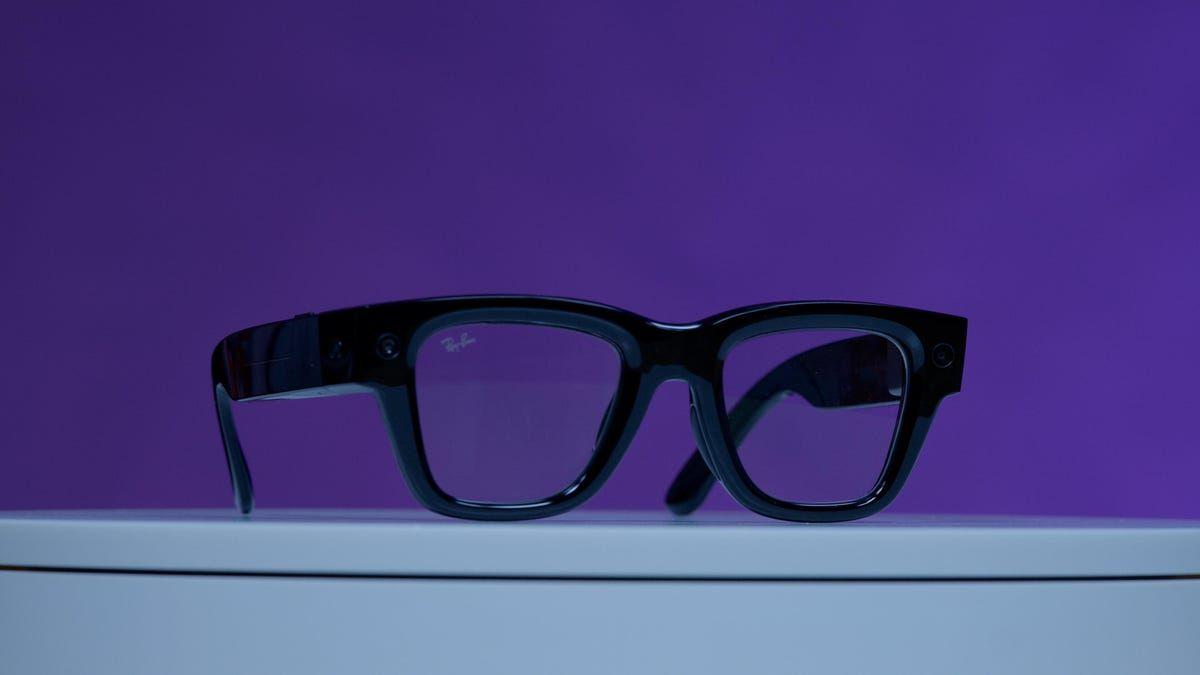
. The Ray-Ban Meta smart glasses, introduced in partnership with Ray-Ban in 2021 and updated in September with augmented reality glasses featuring built-in displays, have surpassed internal sales targets in recent years4
3
. The latest models feature a small display within the lens that can describe what it sees and translate text, representing a breakthrough that enhances functionality while maintaining compact design3
. Meta recently unveiled the second-generation Ray-Ban Meta, the Oakley Meta Vanguard, and the Meta Ray-Ban Display in September2
.
Source: Fortune
Investor Skepticism Lifts as Meta Refocuses on Artificial Intelligence
Meta's stock jumped 3.4 percent following news of the budget cuts, reflecting investor skepticism about the metaverse that has persisted for years
2
5
. Mark Zuckerberg rebranded Facebook to Meta in 2021, aligning the company with his vision for immersive Virtual Reality (VR) worlds, but the generative AI revolution shifted industry priorities2
4
. For 2025, Meta raised its capital expenditure forecast to approximately $70-72 billion, heavily linked to AI infrastructure including data centers, compute hardware, and cloud investments2
. The company now focuses on building AI superintelligence with high-profile hires, most recently adding former Apple UI designer Alan Dye to oversee design of "hardware, software and AI integration for its interfaces"1
4
.
Source: Japan Times
Related Stories

Competitive Landscape Shifts as VR Adoption Stalls
Meta executives believe they can decelerate Virtual Reality (VR) efforts as competitive pressure has lessened, with Apple and Google slowing their VR device development that was furious in 2021
4
. Despite significant technical advances in virtual reality devices, consumers have not widely embraced the technology, with users of the Meta Quest and Apple Vision Pro reporting that headsets feel heavy and uncomfortable after prolonged use4
5
. Augmented Reality (AR) and wearables now represent the growth area, with many players including firms in China joining the race to build smart glasses and wearable technology3
. Meta has developed Llama and Meta AI as part of its artificial intelligence strategy, alongside next-generation AI-powered versions of Meta Ray-Bans with built-in augmented reality displays5
. One analyst from Forrester called Reality Labs a "leaky bucket" and predicted earlier this year it would close metaverse projects, though Meta maintains it won't abandon building the metaverse entirely5
4
.References
Summarized by

Navi
Related Stories
Meta layoffs slash Reality Labs workforce as Zuckerberg pivots hard from metaverse to AI
12 Jan 2026•Business and Economy

Meta ends metaverse era as Horizon Worlds loses VR access after $80 billion investment
18 Mar 2026•Technology

Meta Scales Back Metaverse Spending Amid Financial Pressures and Competition
19 Jul 2024

Recent Highlights


Recent Highlights
Today's Top Stories










Your Daily Dose of Curated AI News
Don’t drown in AI news. We cut through the noise - filtering, ranking and summarizing the most important AI news, breakthroughs and research daily. Spend less time searching for the latest in AI and get straight to action.

