Big Tech AI spending faces investor demand test as Meta soars and Microsoft stumbles


24 Sources
24 Sources
[1]
Zuckerberg teases agentic commerce tools and major AI rollout in 2026
Mark Zuckerberg says Meta users will start to see new AI models and products from the company in a matter of months. "In 2025, we rebuilt the foundations of our AI program," Zuckerberg said on an investor call Wednesday, referring to the company's recently restructured AI lab. "Over the coming months, we're going to start shipping our new models and products... and I expect us to steadily push the frontier over the course of the new year." But while Zuckerberg didn't give specific timelines or products, he highlighted AI-driven commerce as a particular area of focus for Meta. "This also has implications for commerce," Zuckerberg continued. "New agentic shopping tools will allow people to find just the right set of products from the businesses in our catalog." That proposal echoes broader interest in AI-powered shopping assistants across the industry. Both Google and OpenAI have built platforms for agent-enabled transactions, with companies like Stripe and Uber signed on as partners. But while other AI labs have already built significant technical infrastructure, Meta believes its access to personal data will prove uniquely valuable. "We're starting to see the promise of AI that understands our personal context, including our history, our interests, our content and our relationships," Zuckerberg said on the call. "A lot of what makes agents valuable is the unique context that they can see, and we believe that Meta will be able to provide a uniquely personal experience." In December, Meta acquired the general-purpose agent developer Manus, which provides similar technology. At the time, Meta said it would "continue to operate and sell the Manus service, as well as integrate it into our products." The investor call was timed to the release of Meta's most recent quarterly earnings, which also disclosed a significant increase in new infrastructure spending. The company now anticipates that it will spend between $115 billion and $135 billion on overall capital expenditures over the course of 2026, up from $72 billion in 2025. In its official filing, Meta attributed the jump to "increased investment to support our Meta Superintelligence Labs efforts and core business." While significant, the figure still falls short of the projected $600 billion that Zuckerberg reportedly projected for Meta's infrastructure spending through 2028. Meta has previously drawn criticism from investors for failing to clearly state how its massive AI investment will translate to the company's bottom line. But while details are still thin, Zuckerberg made it clear that the AI labs work would reach the public soon. "This is going to be a big year for delivering personal superintelligence, accelerating our business, building infrastructure for the future, and shaping how our company will work going forward," he told investors.
[2]
Investors punish Big Tech AI spending that delivers slower growth
Jan 29 (Reuters) - Investors responded to Big Tech earnings this week with a stark warning: they will forgive record spending that brings solid growth, but punish companies if not, showing how much the stakes have changed since ChatGPT's launch more than three years ago. Revenue at Facebook owner Meta Platforms (META.O), opens new tab surged 24% in the December quarter, benefiting from online ad targeting bolstered by artificial intelligence. AI also powered a first-quarter revenue forecast that trounced estimates, showing that Meta's growing sales could fund data-center spending expected to surge as much as 87% this year to $135 billion. "Meta's headline numbers are a really interesting reflection of the market's attitude toward spending in AI space," said John Belton, portfolio manager at Gabelli Funds. "All else equal, the market would typically be concerned, but they have a big revenue guide for the first quarter." Microsoft (MSFT.O), opens new tab reported growth in its Azure cloud-computing business that was only slightly above expectations, also far lagging record quarterly spending. The disclosure that prized holding OpenAI accounts for 45% of the backlog was worrying, as some $280 billion may be at risk as the unprofitable startup loses momentum in the AI race. "Microsoft's deep ties to OpenAI underpin its leadership in enterprise AI, but they also introduce concentration risk," said Zavier Wong, market analyst at eToro. The ChatGPT creator had issued an internal "code-red" in December after Google's Gemini 3 launched to positive reviews and is playing catch-up in AI coding to Anthropic's Claude Code, which has hit an annualized run rate of more than $1 billion. Microsoft's shares fell 6.5% in after-hours trading on Wednesday, while Meta's spiked 10%. After riding its first-mover advantage with OpenAI to secure the crown of the world's most valuable firm in 2024, Microsoft is now under growing investor pressure to justify its soaring capital outlay. It predicted Azure growth to stay stable in the period from January to March, after slowing in the last three months of 2025, which it partially blamed on AI chip capacity constraints. "If I had taken the graphics processing units that just came online in the first quarter and second quarter, and allocated them all to Azure, the KPI (growth) would have been over 40%," Microsoft finance chief Amy Hood said on a post-earnings call. She added that the use of chips for internal development efforts had limited the growth. META BETS ON AI'S COMPOUNDING EFFECT For Meta, the quarter showed benefits from an aggressive push by the late entrant to the AI race that included a talent war and pledge to invest hundreds of billions in massive new datacenters to pursue "superintelligence". Its revenue rose 24% in the fourth quarter and Meta forecast growth to accelerate as much as 33% in the current quarter. But it is racking up bills at large cloud providers, such as Alphabet's Google (GOOGL.O), opens new tab, which bodes well for the search giant's results next week. Using AI "will both improve the quality of the organic experience and of advertising," said Chief Executive Mark Zuckerberg. Zuckerberg has promised that superintelligence, a theoretical milestone reached when machines outthink humans, will help it offer deeply personalized artificial intelligence to a large social media user base. "I think that will have a compounding effect," he added, as Meta predicted a jump of 43% in total expenses this year to $169 billion. TESLA SET TO DOUBLE OUTLAY THIS YEAR Growing spending was also the theme at Elon Musk's Tesla, which will double outlay this year to more than $20 billion as it pivots to AI, humanoid robots and personal vehicles that can drive themselves. After Tesla flagged the planned record spending, its shares pared some gains following a rise of 3.5% following quarterly profit and revenue that were above expectations. Analysts said the results showed the mismatch between corporate AI goals and investors' demand for payoffs. "The market appears to be questioning whether these massive capital expenditure hikes will generate sufficient returns," said Jesse Cohen, senior analyst at Investing.com. "This reflects a growing divide between tech companies' AI ambitions and Wall Street's patience for open-ended investment cycles." Reporting by Aditya Soni, Deborah Sophia and Jaspreet Singh in Bengaluru; Editing by Clarence Fernandez Our Standards: The Thomson Reuters Trust Principles., opens new tab * Suggested Topics: * Artificial Intelligence * ADAS, AV & Safety * Software-Defined Vehicle * Sustainable & EV Supply Chain
[3]
Meta's Mark Zuckerberg gets green light from Wall Street to keep pouring money into AI
Meta CEO Mark Zuckerberg plans to ramp up his company's spending on artificial intelligence in 2026. Wall Street seems fine with that plan. In its fourth-quarter earnings report on Wednesday, Meta beat on the top and bottom lines while also revealing that its AI-related capital expenditures this year will be between $115 billion and $135 billion. That's nearly twice the amount Meta spent on capex last year, when the company revamped its AI unit. Although investors have previously expressed concern about Meta's AI spending spree, they took comfort in the company's latest results, which showed 24% year-over-year revenue growth, driven by online ads. Meta shares, which trailed the market last year, popped as much as 10% in after-hours trading. "As we plan for the future, we will continue to invest very significantly in infrastructure to train leading models and deliver personal super intelligence to billions of people and businesses around the world," Zuckerberg told analysts during the earnings call. Zuckerberg was referring to Meta's ambitious data center buildouts intended to anchor both current and future AI projects. Meta finance chief Susan Li told analysts that the company continues to be "capacity constrained," meaning it needs more computing power to further improve its core ad business while also providing its AI team the necessary resources to create more advanced models and products. "Our teams have done a great job ramping up our infrastructure through the course of 2025, but demands for compute resources across the company have increased even faster than our supply," Li said. Zuckerberg said 2026 will be a major year for AI, with Meta's investments geared towards supporting his mission for "building personal super intelligence." Whether Meta will have much by way of new AI products that can generate revenue remains a major question, and one Zuckerberg hasn't clearly answered. "I mean, we're going to roll out new products over the course of the year," Zuckerberg said on the call. "I think the important thing is, we're not just launching one thing, and we're building a lot of things." Perhaps Zuckerberg's biggest swing last year was the $14.3 billion investment in Scale AI, which brought founder and CEO Alexandr Wang and some of his top engineers and researchers to Meta. Wang is now leading Meta's TBD AI unit, which has been testing a new frontier model code-named Avocado that's intended to be a successor to the company's Llama family of models, CNBC reported. "I expect our first models will be good but, more importantly, will show the rapid trajectory that we're on," Zuckerberg said Wednesday. "And then I expect us to steadily push the frontier over the course of the year as we continue to release new models." Asked on the call why Meta needs to develop its own powerhouse AI foundation model, Zuckerberg said it's important because Meta is a "deep technology company." Meta can't risk being "constrained to what others in the ecosystem are building or allow us to build," he said, adding that controlling a model allows you to help "shape the future of these products." In the meantime, online advertising still accounts for the overwhelming majority of Meta's revenue. As long as that business continues to dominate in mobile, exceed expectations and throw off billions of dollars of cash a quarter, Zuckerberg is likely to get plenty of leeway to pursue his AI ambitions.
[4]
Big Tech sets stage for AI-budget murder mystery
NEW YORK, Jan 28 (Reuters Breakingviews) - A time is coming when investors will gather around the corpse of boundless artificial intelligence spending. Microsoft (MSFT.O), opens new tab and Meta Platforms (META.O), opens new tab kept the players guessing on Thursday when they unveiled another $52 billion of quarterly capital expenditure on servers and chips, and promised more to come. The pace of growth, however, is setting the stage for a dangerous whodunnit. The tech duo played its cards well, serving up another round of stellar results. Their combined revenue increased by $23 billion. Microsoft boss Satya Nadella and Meta CEO Mark Zuckerberg, who last year said that "superintelligence is now in sight," will roll the dice again in the wild race to develop better-than-human silicon intellects. The payoffs from such a breakthrough would probably be vast. Even so, Wall Street analysts expect the outlays to plateau in 2027. Consider the suspects. There's quiet Average Joan, who relishes cash returns from Big Tech. When Zuckerberg pledged to divert a "notably larger" sum of dollars to capex in October, Meta's shares tumbled 11%. Just as leery stockholders helped kill his fanciful metaverse, they could have a hand in throttling AI. Both companies already have suffered 25% valuation drops, from nearly 20 times expected EBITDA over the next 12 months for Microsoft to 16 times and from 16 times to 12 times for Facebook's owner. Roguish newcomers are lurking, too. OpenAI and Anthropic are part of the group threatening more established rivals. Microsoft itself makes vast racks of servers for their use, saying about 45% of its $625 billion in remaining performance obligations, a measure of contracted backlog, is for OpenAI alone. Such links make friends as potentially menacing as enemies. A glut of infrastructure, and greater software competition, might also stick the knife into profitability. Be leery of antsy creditors, too. After initially spending primarily out of their own coffers, five technology goliaths are on track to borrow $140 billion annually for the next three years, Bank of America analysts estimate. Meta has tapped private credit, signing a $27 billion deal with Blue Owl Capital (OWL.N), opens new tab, whose share price has declined as worries mount about potential overextension. In another ominous sign, the annual cost of insuring against database software giant Oracle (ORCL.N), opens new tab defaulting on its five-year debt has jumped 300% over the past 12 months. Equally disturbing are the speculatively built IT storage facilities without any committed tenants. Previous booms have repeatedly resulted in surplus capacity for demand that never materialized. Any of these culprits, alone or together, could become vicious. Likewise, shadowy troublemakers like material shortages and Chinese competitors might spring from a dark corner. The killer and the victim may yet be unknown, but the parlor game is afoot. Follow Robert Cyran on Bluesky, opens new tab. Context News* Facbook owner Meta Platforms on January 28 reported fourth-quarter revenue of nearly $60 billion, a 24% rise from the same period a year earlier, while software giant Microsoft grew its top line 17% over the three-month stretch to about $81 billion. * Meta's earnings per share increased 11% to $8.88 and Microsoft's jumped 60% to $5.16. * Both companies sharply hiked their capital expenditure, largely on data centers. Meta invested some $22 billion, about 47% more than the fourth quarter of 2024, while Microsoft invested 89% more, approximately $30 billion. Editing by Jeffrey Goldfarb; Production by Pranav Kiran * Suggested Topics: * Breakingviews Breakingviews Reuters Breakingviews is the world's leading source of agenda-setting financial insight. As the Reuters brand for financial commentary, we dissect the big business and economic stories as they break around the world every day. A global team of about 30 correspondents in New York, London, Hong Kong and other major cities provides expert analysis in real time. Sign up for a free trial of our full service at https://www.breakingviews.com/trial and follow us on X @Breakingviews and at www.breakingviews.com. All opinions expressed are those of the authors. Robert Cyran Thomson Reuters Robert Cyran, U.S. tech columnist, joined Breakingviews in London in 2003 and moved four years later to New York, where he continues to cover global technology, pharmaceuticals and special situations. Robert began his career at Forbes magazine, where he assisted in the startup of the international version of the magazine. Before working at Breakingviews he worked as a market researcher and reporter covering the pharmaceutical industry. Robert has a Masters degree in economics from Birmingham University and an undergraduate degree from George Washington University. Jonathan Guilford Thomson Reuters Jonathan Guilford is Breakingviews U.S. Editor, based in New York. He has covered financial news across Europe and the United States for 10 years. He joined Reuters Breakingviews in 2021 from Dealreporter, where he led risk arb coverage strategy from New York while covering the technology, media and telecommunications space. He previously covered the European healthcare services market. He studied English and Italian at Royal Holloway, University of London.
[5]
Big Tech results show investor demand for payoffs from heavy AI spending
Meta wowed Wall Street with improvements in ad targeting fueled by AI alongside huge investment. Microsoft had less to show for its billions spent Big Tech earnings so far this week have sent a clear warning: investors are willing to overlook soaring spending on artificial intelligence if it fuels strong growth, but are quick to punish companies that fall short. The contrast was clear in Thursday's stock market reaction to earnings from Microsoft and Meta, highlighting how dramatically the stakes have changed since the launch of ChatGPT started the AI boom more than three years ago. Shares of the Instagram parent surged more than 9% on strong sales, while those of Microsoft slumped 10% after its cloud business failed to impress. "The market appears to be questioning whether these massive capital expenditure hikes will generate sufficient returns," said Jesse Cohen, senior analyst at Investing.com. "This reflects a growing divide between tech companies' AI ambitions and Wall Street's patience for open-ended investment cycles." After riding its first-mover advantage with OpenAI to become the world's most valuable firm in 2024, Microsoft is now under growing investor pressure to justify its soaring capital outlay. Microsoft reported revenue growth in its Azure cloud-computing business that was only slightly above expectations. In contrast, AI bolstered ad targeting at Meta, boosting revenue by 24% in the December quarter and aiding a rosy first-quarter forecast. The results show that the Facebook owner's gains from AI were helping fund its capital spending, which is expected to jump as much as 87% to $135bn this year. "Meta's headline numbers are a really interesting reflection of the market's attitude toward spending in the AI space," said John Belton, portfolio manager at Gabelli Funds. "All else equal, the market would typically be concerned, but they have a big revenue guide for the first quarter." Microsoft also faced pressure after a disclosure that OpenAI, its prized holding, accounts for 45% of its cloud backlog. Investors are worried that some $280bn could be at risk as the unprofitable startup loses momentum in the AI race. The ChatGPT creator had issued an internal "code-red" in December after Google's Gemini 3 launched to positive reviews and is playing catch-up in AI coding to Anthropic's Claude Code, which has hit an annualized run rate of more than $1bn. "Microsoft's deep ties to OpenAI underpin its leadership in enterprise AI, but they also introduce concentration risk," said Zavier Wong, market analyst at eToro. Microsoft predicted Azure growth to stay stable in the period from January to March at 37% to 38%, after slowing in the last three months of 2025, partially due to AI chip capacity constraints. "If I had taken the graphics processing units that just came online in the first quarter and second quarter, and allocated them all to Azure, the KPI (growth) would have been over 40%," Microsoft finance chief Amy Hood said on a post-earnings call. She added that the use of chips for internal development efforts had limited the growth. For Meta, the revenue growth underscored that its AI pivot was paying off and helping the company catch up to early leaders. Its revenue rose 24% in the fourth quarter and Meta forecast growth to accelerate as much as 33% in the current quarter. The company is racking up bills at large cloud providers, such as Alphabet's Google, which bodes well for the search giant's results next week. Alphabet shares rose 1.6%. Using AI "will both improve the quality of the organic experience and of advertising", CEO Mark Zuckerberg said. "I think that will have a compounding effect," he added, as Meta predicted a jump of 43% in total expenses this year to $169bn. Growing spending was also the theme at Elon Musk's Tesla, which will double outlay this year to more than $20bn as it pivots to AI, humanoid robots and personal vehicles that can drive themselves. The company also reported quarterly profit and revenue that were above expectations, though its yearly profit and revenue had declined for the first time ever. Shares rose 2.9%. Analysts said the results left some mismatch between corporate AI goals and investors' demand for payoffs.
[6]

Meta stock pops on positive profit outlook despite AI spending surge
Why it matters: Meta has been pouring billions into AI talent and infrastructure, which executives have said is essential to the company's future and to keep the U.S. competitive in AI. * "We are now seeing a major AI acceleration. I expect 2026 to be a year where this wave accelerates even further on several fronts," CEO Mark Zuckerberg said on the earnings call, pointing to agents, more personalized feeds, shopping tools and AI glasses. * "We're starting to see agents really work. This will unlock the ability to build completely new products and transform how we work," he added. By the numbers: Meta said it expects 2026 capital expenditures of between $115 billion to $135 billion. That's up from $72.22 billion in 2025. * For the fourth quarter, Meta's capital expenditures were $22.14 billion, compared to expectations of $21.97 billion, CNBC reported citing StreetAccount. * The company said it expected higher operating income in 2026. It reported $83.3 billion in 2025, up 20% from the prior year. * For Reality Labs, its division focused on virtual and augmented reality, Meta reported an operating loss of $6 billion and revenue of $955 million for the quarter. The big picture: Meta's results increasingly have been evaluated on how aggressively it's spending on its AI ambitions. * Earlier this month, Zuckerberg announced a new "top-level" initiative called Meta Compute to build "tens of gigawatts" of AI infrastructure this decade. * Meta said on Tuesday it would pay Corning up to $6 billion through 2030 for fiber-optic cable in its AI data centers. Zoom in: Meta has been scaling back parts of Reality Labs. It recently laid off about 10% of that staff, primarily those who work on VR-related initiatives. * Zuckerberg said on Wednesday's earnings call that Meta is directing more investment toward glasses and wearables and focused on improving Horizon, its VR software, for mobile and make VR profitable. * The company has been investing more in marketing its glasses like Ray-Ban Meta and Oakley Meta, the former of which advertised in last year's Super Bowl and the latter will advertise during this year's game. * "I think that we're in a moment similar to when smartphones arrived, and it was clearly only a matter of time until all those flip phones became smartphones. It's hard to imagine a world in several years where most glasses that people wear aren't AI glasses," Zuckerberg said. * Snap Inc., one of Meta's competitors for smart glasses, announced on Wednesday it is launching Specs Inc. as a distinct subsidiary for its AR glasses. That move opens it up to potential minority investments. Zoom out: Meta continues to face legal and regulatory scrutiny, including a landmark trial in Los Angeles over claims its platform deliberately addicts and harms young people. TikTok and Snap chose to settle, whereas Meta and YouTube will stand trial.
[7]
Meta boosts annual capex sharply on superintelligence push, shares jump
Jan 28 (Reuters) - Instagram-owner Meta (META.O), opens new tab on Wednesday boosted its capital spending plans for the new year by 73% in the pursuit of "superintelligence," an effort to offer deeply personalized artificial intelligence to its large social media user base. Meta shares jumped nearly 9% in extended trading. The company also forecast first-quarter revenue above Wall Street expectations and beat profit and revenue estimates for its quarter ended December 31. Meta expects its capital expenditure for 2026 to be between $115 billion and $135 billion, driven largely by infrastructure costs including payments made to third-party cloud providers, higher depreciation of its AI data center assets, and higher infrastructure operating expenses. This compares with expectations of a $109.9 billion capex budget, according to Visible Alpha, and $72.22 billion Meta spent last year. "This is going to be a big year for delivering personal superintelligence, accelerating our business infrastructure for the future and shaping how our company will work going forward," CEO Mark Zuckerberg said on a conference call with analysts. Meta forecast 2026 total expenses to be in the range of $162 billion and $169 billion, up from $117.69 billion a year ago, driven by rising employee compensation as the company spends millions to hire top AI talent. For the first-quarter, Meta expects revenue between $53.5 billion and $56.5 billion, compared with analysts' average estimate of $51.41 billion, according to data compiled by LSEG. Meta is building several gigawatt-scale data centers across the United States, including one in rural Louisiana, a project U.S. President Donald Trump said would cost $50 billion. It would be large enough to cover a significant part of Manhattan. Last year, Meta signed contracts with Alphabet (GOOGL.O), opens new tab, CoreWeave (CRWV.O), opens new tab, Nebius (NBIS.O), opens new tab for additional compute power, signaling a pressing need for capacity expansion due to internal constraints. The spending spree has been prompted by Big Tech's rivalry in Silicon Valley's AI race, where Meta has stumbled after its Llama 4 model met with a poor reception. Now the company is betting on its new AI models, launched internally this month. Meta's ad platform has remained its growth engine, allowing advertisers to automate and personalize their campaigns and help the company support its investments to achieve superintelligence - a theoretical milestone where machines could surpass human performance. The company is laying off about 10% of staff at its Reality Labs group, which has about 15,000 employees, as it redirects resources from some of its metaverse products to wearables. The unit -- which has accumulated more than $70 billion in losses since 2021 -- includes Meta's ambitious metaverse bet that prompted the company to change its name from Facebook. The holiday quarter results come as the company's Advantage+ automated advertising suite is gaining strong advertiser adoption due to its ability to streamline campaign setup and enhance return on ad spend, analysts have said. In the past year, Meta launched ads on WhatsApp and Threads, creating direct rivalry with platforms like Elon Musk's X, while Instagram's Reels continues to jostle with TikTok and YouTube Shorts within the lucrative short-video market. Reporting by Jaspreet Singh in Bengaluru; Additional reporting by Echo Wang in New York and Juby Babu in Mexico City; Editing by Leroy Leo, Sayantani Ghosh and Diane Craft Our Standards: The Thomson Reuters Trust Principles., opens new tab
[8]

The $600 billion wave of AI 'capex' growth boosting tech stocks is set to slow down this year or next, analysts warn | Fortune
Tech stock futures were up this morning -- contracts for the Nasdaq 100 were up 0.22% prior to the opening bell in New York -- after a fistful of tech companies said they would increase their capital expenditures on AI, promising a vast wave of cash big enough to effect U.S. GDP growth. The only bad news? Some analysts have begun to warn that the pace of capex growth will start to slow down this year and next. Shares in Meta and Tesla rose in overnight trading. Meta was up 7.85% and Tesla rose 3.29%. Microsoft, by contrast, declined 6.53% overnight. All three stocks were driven by their earnings calls, on which each company promised to keep spending on AI: Clearly, tech stocks -- and those of companies that supply them with real estate, parts, and power for their data centers -- are going to be driven by AI capex this year. Here's a selection of estimates from various Wall Street analysts: Goldman Sachs predicts AI capex will hit $539 billion, up 36% from $398 billion in 2025. It will grow to $629 billion in 2027, the bank said, but that rate of growth would only be 17%. Analyst Ben Snider and his colleagues warn that the growth rate of AI capex will begin to slow down. "While odds are good that some of today's largest companies achieve ... success, the magnitudes of current spending and market caps alongside increasing competition within the group suggest a diminishing probability that all of today's market leaders generate enough long-term profits to sufficiently reward today's investors," they advised clients earlier this month. Bank of America estimates there will be $641 billion in AI/cloud capex this year, up 36%, followed by $739 billion next year, up 15%. "Importantly, we flag [chipmaker] TSMC's CY26 capex guide of ~$54bn (+32% YoY) is a good leading indicator of overall appetite for industry spending, given they speak with all hyperscalers closely and put down the first $ of risk capital in the industry," analyst Vivek Arya wrote in a note seen by Fortune. Wells Fargo sees 34% growth in AI capex. "Consensus points to a big deceleration (+34% in 2026E vs. +70% LTM), but their capex consistently surprised to the upside, beating consensus capex from a year ago by 50ppt over the [last 12 months]. TSMC sales also suggest Hyperscalers' capex could grow +49% YoY in 2026E. Our analysts expect higher capex for META, MSFT, & AMZN. It's an AI arms race." Ohsung Kwon and his colleague said recently in a research note. Piper Sandler believes the spending is so massive it will boost U.S. GDP, in part due to knock-on effects for the builders and energy suppliers needed to serve all the data centers being built. "While data center construction spending has increased 'just' $18 billion, we estimate it's triggered roughly $175 billion of incremental spending -- equivalent to ~0.6% of GDP," Nancy Lazar and her team said.
[9]

Meta beats earnings as 2026 AI capex tops out at $135 billion
This year, Mark Zuckerberg is planning to write the kind of corporate check that can change a company's personality. Wednesday, Meta $META delivered a monster quarter -- $59.9 billion in revenue and $8.88 in EPS -- and then budgeted 2026 like it plans to buy the future in bulk: $115 billion to $135 billion in capex, plus expenses heading toward $169 billion, as Meta keeps working to turn "superintelligence" into a procurement problem. Shares jumped about 10% in after-hours trading as investors digested the heady combination of stronger-than-expected results and an exceedingly bullish near-term revenue outlook -- even with that spending plan that reads like an infrastructure bond prospectus. Wall Street will happily applaud a beat, but it will pay for a story -- and Meta handed it one: strong advertising now, enormous AI buildout next, and enough confidence to promise that operating income in 2026 will land above 2025 even after the spending step-up. Still, Meta's guidance is the kind of guidance that can trigger investor flinching -- and it did, last time. In late October, Meta warned that capex growth in 2026 would be "notably larger" than 2025 but didn't actually put numbers on it. The stock fell about 8% in after-hours trading. This time, Meta put the numbers on the bill, framed them as deliberate, and paired them with a Q1 revenue outlook of $53.5 billion to $56.5 billion that topped many expectations. Zuckerberg's contribution to the storyline was a vision statement, a recruiting pitch, and an explanation for why Meta is suddenly talking like a utility company that also happens to sell ads. "We had strong business performance in 2025," he said in the release, adding that he's "looking forward to advancing personal superintelligence... in 2026." He may want to talk about "personal superintelligence," but the Street still cares about the less exciting ads. Meta is still a very large advertising business that keeps finding new ways to wring more money out of the same human habit -- staring at a screen and calling it fun. The ad business is still a compounding engine with an unusually large moat; ad impressions rose 18% year over year in Q4, and the average price per ad increased 6%. Family daily active people averaged 3.58 billion in December. Those are the kinds of numbers that let a company talk about "massive investment" without immediately getting sent to the principal's office. Because crucially, AI ambition doesn't float on vibes. It sits on concrete. And it requires lots and lots of money. "AI" is increasingly shorthand for "capex," and capex requires a cash fountain that doesn't blink when everyone else does; Meta's spending plan is nearly double the already massive $72.2 billion it reported for 2025, and its total expenses are up from $117.7 billion in 2025. Meta's outlook is explicit about where the money will go. It expects 2026 expense growth to be driven mostly by infrastructure costs -- third-party cloud spend, higher depreciation, and higher infrastructure operating expenses -- with compensation next, as it hires and pays technical talent to staff its priority areas. But the quarterly earnings also show the cost of the pivot. Operating margin fell to 41% from 48% a year earlier as costs and expenses rose 40% year over year in the quarter. Research and development alone was $17.1 billion in Q4, up from $12.2 billion a year earlier. Meta wants to overwhelm any anxiety with a spend now, own capacity later argument. Its buildout story has been getting more literal by the week. Zuckerberg has been framing the bottleneck as compute and power -- measured in gigawatts -- and the company has rolled out "Meta Compute" as an effort to secure that capacity and the partnerships that come with it. The same dynamic shows up in Meta leaning on third-party cloud providers to bridge constraints while it scales its own footprint, including a major data center project in Louisiana. If your mental model of Meta is still "social app company," the company is asking you to update your software. This is also an industrial buildout. But funding that buildout is a different story; Meta's balance sheet is preparing for a more capital-intensive life. Long-term debt ended 2025 at $58.74 billion, up sharply from the year prior, and Meta issued roughly $29.9 billion of long-term debt net in Q4 alone. That fits with the broader financing drumbeat around Big Tech tapping debt markets to fund AI infrastructure, including Meta's move last fall toward a bond offering "up to $30 billion." There are, of course, the usual reminders that Meta is still Meta: regulatory and legal headwinds, especially around youth-related issues, and more changes coming to its Less Personalized Ads offering in Europe as it keeps trying to thread the needle between compliance and monetization. But the legal calendar is the kind of overhang that doesn't wait for an AI story. Meta is asking investors to grade it on a new curve. The market's initial reaction suggests that, for now, investors are willing to entertain that idea -- as long as the ad engine keeps paying the bill and the near-term guide stays buoyant. So far, so good.
[10]

The AI spend goes on for Meta as CapEx estimates soar for 2026
I don't have many good things to say about Mark Zuckerberg, but I must give the Meta CEO credit for his steadfast refusal to buckle to Wall Street short termism when it comes to essential AI infrastructure spend. The firm is now looking at annual capital expenditure of between $115 billion and $135 billion, compared with $72.22 billion a year earlier. The majority of expense growth will be driven by infrastructure costs, including third-party cloud spend and higher infrastructure operating expenses. CFO Susan Li explained the steep rise: We have significant opportunities to improve our core business in 2026. We plan to continue to prioritize investing in the business to support these opportunities while also positioning us for an entirely new and exciting product cycle over the coming years, powered by our AI models. Procuring sufficient infrastructure capacity is central to these initiatives, and we're working to meet our silicon needs by deploying a variety of chips that optimally support each of our different workloads. To that end, in Q4, we extended our Andromeda ads retrievable engine, so it can now run on NVIDIA, AMD and MTIA. This, along with model innovations, enabled us to nearly triple Andromeda's compute efficiency. In Q1, we will extend our MTIA program to support our core ranking and recommendation training workloads in addition to the inference workloads it currently runs. More broadly, as we invest in infrastructure to meet our business needs, we continue to prioritize maintaining long-term flexibility so we can adapt to how the market develops. We're doing so in several ways, including changing how we develop data center sites, establishing strategic partnerships, contracting cloud capacity and establishing new ownership structures for some of our large data center sites. We have a strong net cash balance and expect our business will continue to generate sufficient cash to fund our infrastructure investments in 2026, which is reflected in our expectations. Nonetheless, we will continue to look for opportunities to periodically supplement our strong operating cash flow with prudent amounts of cost-efficient external financing, which may lead us to eventually maintain a positive net debt balance. There's another reason for increased costs, added Zuckerberg: I think that 2026 is going to be the year that AI starts to dramatically change the way that we work. As we navigate this, our North Star is building the best place for individuals to make a massive impact. So to do this, we're investing in AI native tooling so individuals at Meta can get more done, we're elevating individual contributors and flattening teams. We're starting to see projects that used to require big teams now be accomplished by a single, very talented person. I want to make sure that as many of these very talented people, as possible, choose Meta as the place that they can make the greatest impact to deliver personalized products to billions of people around the world. And if we do this, then I think that we're going to get a lot more done. And I think it's going to be a lot more fun. Reality That said, fiscal bloody mindedness still runs strongly through the firm. While Zuckerberg does appear to have backed away from his personal 'White Whale' Metaverse obsession, the Reality Labs division is still pouring money down the drain, losing over $6 billion in Q4 and a staggering $19.19 billion for the full year. And there's more to come as Meta's 2026 forecast envisages "Reality Labs operating losses remaining similar to 2025 levels". Zuckerberg makes no apologies for this: Today, our apps feel like algorithms that recommend content. Soon, you'll open our apps, and you'll have an AI that understands you and also happens to be able to show you great content or even generate great personalized content for you. Glasses are the ultimate incarnation of this vision. They're going to be able to see what you see, hear what you hear, talk to you and help you as you go about your day and even show you information or generate custom UI right there in your vision. Sales of our glasses more than tripled last year, and we think that they're some of the fastest-growing consumer electronics and history. Billions of people wear glasses or contacts for vision correction and I think that we're in a moment similar to when smartphones arrived, and it was clearly only a matter of time until all those flip phones became smartphones. It's hard to imagine a world in several years where most glasses that people wear aren't AI glasses. For Reality Labs, we are directing most of our investment towards glasses and wearables going forward while focusing on making Horizon a massive success on mobile and making VR a profitable ecosystem over the coming years. I expect Reality Labs losses this year to be similar to last year, and this will likely be the peak as we start to gradually reduce our losses going forward while continuing to execute on our vision. The numbers came as part of Meta's release of its latest fiscal numbers. For Q4, total revenue was $59.89 billion, up 24% year-on-year, with net income of $22,768 billion, up nine percent. For the full year, revenue was $200.966 billion, up 22% year-on-year, with net income down three percent to $60,458 billion. My take Spend, spend, spend - and quite right too in the main.
[11]
Meta crushes Q4 as Zuckerberg bets big on a "major AI acceleration" in 2026 | Fortune
On Meta's 4th quarter earnings call, CEO Mark Zuckerberg predicted his company would experience a "major AI acceleration" in 2026 as it races to catch up after falling behind Google, OpenAI and Anthropic in leading AI models in 2025. It has plenty of money to make that happen: The company beat Q4 expectations, delivering $59.89 billion in revenue, compared to consensus analyst estimates of $58.41 billion. Earnings per share came in at $8.88 ,versus expectations for $8.19. And the company made clear spending will continue to be massive. Meta forecast its capital expenditures could rise to as much as $135 billion this year, nearly double the $72 billion it reported in 2025, as it unveiled its most radical AI spending plans to date, largely driven by increased investment in AI infrastructure costs and talent. In comments on the earnings call, Zuckerberg harked back to last summer, when he rebuilt the foundations of Meta's AI program, bringing in Scale CEO Alexandr Wang to head up Meta Superintelligence Labs. Over the coming months, he said, Meta would start shipping AI models and products. "I expect our first models will be good, but more importantly, they will show the rapid trajectory that we're on," he said. "And then I expect us to steadily push the frontier over the course of the year, as we continue to release new models." The goal? Zuckerberg again made clear that it is "personal superintelligence." "We're starting to see the promise of AI that understands our personal context, including our history, our history, our interests, our content and our relationships," he said. "A lot of what makes agents valuable is the unique context that they can see, and we believe that Meta will be able to provide a uniquely personal experience." In addition, he said the company is working on merging LLMs with Meta's recommendation systems on its platforms, including Facebook, Instagram and Threads. "We think that the current systems are primitive compared to what will be possible soon," he said. "Soon, we'll be able to understand people's unique personal goals and tailor feeds to show each person content that helps them improve their lives in the ways that they want." Zuckerberg also predicted that in the near future, new immersive and interactive formats will be possible only because of AI advances. "Today, our apps feel like algorithms that recommend content," he said. "Soon, you'll open our apps and you'll have an AI that understands you and also happens to be able to show you great content or even generate great personalized content for you." Glasses, he said, are "the ultimate incarnation of this vision," pointing out that sales of Meta's Ray-Ban glasses more than tripled last year and that investment in the company's Reality Labs will mostly go towards glasses and wearables. The biggest spend, however, will be in infrastructure. He touted the recently announced Meta Compute organization, saying he believed being the most efficient company in building infrastructure for AI will become a strategic advantage. Finally, Zuckerberg announced that Meta is investing in AI tools for its workforce, saying the company will elevate individual contributors and flatten teams. "Our north star is building the best place for individuals to make a massive impact," he said, pointing out that what many big teams at Meta are doing can now be accomplished by "a single, very talented person."
[12]

Meta Expects Annual Capital Expenditures to Rise on Superintelligence Push
Jan 28 (Reuters) - Meta on Wednesday forecast its annual capital expenditure to increase sharply, as the social media giant builds artificial intelligence infrastructure in the pursuit of superintelligence. Shares of the company fell about 2% in extended trading. The Facebook and Instagram parent expects annual capital expenditure to be between $115 billion and $135 billion, compared with $72.22 billion a year earlier. Meta's ad platform has remained its growth engine, allowing advertisers to automate and personalize their campaigns and help the company support its investments in AI infrastructure to achieve superingelligence - a theoretical milestone where machines could surpass human performance. The company is laying off about 10% of staff at its Reality Labs group, which has about 15,000 employees, as it redirects resources from some of its metaverse products to wearables. The unit -- which has accumulated more than $70 billion in losses since 2021 -- includes Meta's ambitious metaverse bet that prompted the company to change its name from Facebook. Meta is building several gigawatt-scale data centers across the United States, including one in rural Louisiana, a project U.S. President Donald Trump said would cost $50 billion. It would be large enough to cover a significant part of Manhattan. To boost its energy infrastructure, Meta has partnered with companies such as Vistra, Oklo, and TerraPower that will position it as one of the leading corporate buyers of nuclear power in the world. Meta recently appointed Trump ally Dina Powell McCormick as president and vice chairman in a bid to drive partnerships with governments and investors for its AI projects. Along with other senior executives she will also focus on the company's global fleet of data centers. Last year, Meta signed contracts with Alphabet, CoreWeave, Nebius for additional compute power, signaling pressing need for capacity expansion due to internal constraints. The spending spree has been prompted by Big Tech's rivalry in Silicon Valley's AI race, where Meta has stumbled after its Llama 4 model met with a poor reception. Now the company is betting on its new AI models, launched internally this month. The holiday quarter results come as the company's Advantage+ automated advertising suite is gaining strong advertiser adoption due to its ability to streamline campaign setup and enhance return on ad spend, analysts have said. In the past year, Meta launched ads on WhatsApp and Threads, creating direct rivalry with platforms like Elon Musk's X, while Instagram's Reels continues to jostle with TikTok and YouTube Shorts within the lucrative short-video market. (Reporting by Jaspreet Singh in Bengaluru; Editing by Leroy Leo)
[13]

Tech Companies Are Still Spending Heavily on AI. Investors Want to See More Than Big Numbers.
Meta and Microsoft are both on track to dramatically increase their spending on AI infrastructure, which some experts say could exceed $700 billion this year. Investors appear to be over AI spending. They want to see AI earnings. Meta Platforms (META) stock soared Thursday after the social-media giant said revenue growth is accelerating thanks to its massive investments in artificial intelligence. Meta's capital expenditures -- what it spends on property and capital equipment, including data center hardware -- were up 50% in the fourth quarter of 2025, and are expected to increase by more than 90% this year. Meta's AI spending far exceeded Wall Street's expectations, but so did top- and bottom-line growth, which investors attributed to AI-driven improvements in its core advertising business. Ad revenue grew 24% in the fourth quarter, driven by an 18% increase in impressions and a 6% increase in average prices. Meta forecast revenue would grow even faster in the current quarter -- up to 33.5%, its fastest rate since 2021, when the company took in half the revenue it does today. Wall Street analysts agreed on Thursday that Meta's revenue growth offset skepticism about its expenses. "AI is driving returns, and more for Meta than peers," wrote Bank of America analysts. JPMorgan analysts said the report "could put Meta back on track toward earning the right to invest" in AI infrastructure after spooking Wall Street with its capex plans last quarter. Microsoft (MSFT) stock, on the other hand, plummeted Thursday, as investors focused on disappointing growth in what Morgan Stanley analysts called "key indicators of GenAI fitness." Microsoft's Azure cloud computing platform grew 38% in constant currency last quarter, beating official estimates by one percentage point but falling just short of Wall Street's expectations. Microsoft 365 revenue growth held steady in the mid-teens, disappointing investors hoping to see benefits from the rollout of AI Copilot. Those results made Microsoft's soaring capital expenditures -- up 66% from the prior year -- a tough pill to swallow. CFO Amy Hood said capex is expected to decline sequentially in the current quarter "due to the normal variability from cloud infrastructure build-outs." Nonetheless, the company's spending is still expected to grow faster this fiscal year, which runs through June, than last year, when it increased more than 60%.
[14]

Investors punish Big Tech AI spending that delivers slower growth
Big Tech earnings reveal investors' new stance: solid growth justifies record AI spending, but companies face punishment for underperformance. Meta's surging revenue and strong forecast impressed, while Microsoft's reliance on OpenAI and slowing Azure growth raised concerns, highlighting the shifting market dynamics post-ChatGPT. Investors responded to Big Tech earnings this week with a stark warning: they will forgive record spending that brings solid growth, but punish companies if not, showing how much the stakes have changed since ChatGPT's launch more than three years ago. Revenue at Facebook owner Meta Platforms surged 24% in the December quarter, benefiting from online ad targeting bolstered by artificial intelligence. AI also powered a first-quarter revenue forecast that trounced estimates, showing that Meta's growing sales could fund data-center spending expected to surge as much as 87% this year to $135 billion. "Meta's headline numbers are a really interesting reflection of the market's attitude toward spending in AI space," said John Belton, portfolio manager at Gabelli Funds. "All else equal, the market would typically be concerned, but they have a big revenue guide for the first quarter." Microsoft reported growth in its Azure cloud-computing business that was only slightly above expectations, also far lagging record quarterly spending. The disclosure that prized holding OpenAI accounts for 45% of the backlog was worrying, as some $280 billion may be at risk as the unprofitable startup loses momentum in the AI race. "Microsoft's deep ties to OpenAI underpin its leadership in enterprise AI, but they also introduce concentration risk," said Zavier Wong, market analyst at eToro. The ChatGPT creator had issued an internal "code-red" in December after Google's Gemini 3 launched to positive reviews and is playing catch-up in AI coding to Anthropic's Claude Code, which has hit an annualized run rate of more than $1 billion. Microsoft's shares fell 6.5% in after-hours trading on Wednesday, while Meta's spiked 10%. After riding its first-mover advantage with OpenAI to secure the crown of the world's most valuable firm in 2024, Microsoft is now under growing investor pressure to justify its soaring capital outlay. It predicted Azure growth to stay stable in the period from January to March, after slowing in the last three months of 2025, which it partially blamed on AI chip capacity constraints. "If I had taken the graphics processing units that just came online in the first quarter and second quarter, and allocated them all to Azure, the KPI (growth) would have been over 40%," Microsoft finance chief Amy Hood said on a post-earnings call. She added that the use of chips for internal development efforts had limited the growth. For Meta, the quarter showed benefits from an aggressive push by the late entrant to the AI race that included a talent war and pledge to invest hundreds of billions in massive new datacenters to pursue "superintelligence". Its revenue rose 24% in the fourth quarter and Meta forecast growth to accelerate as much as 33% in the current quarter. But it is racking up bills at large cloud providers, such as Alphabet's Google, which bodes well for the search giant's results next week. Using AI "will both improve the quality of the organic experience and of advertising," said Chief Executive Mark Zuckerberg. Zuckerberg has promised that superintelligence, a theoretical milestone reached when machines outthink humans, will help it offer deeply personalized artificial intelligence to a large social media user base. "I think that will have a compounding effect," he added, as Meta predicted a jump of 43% in total expenses this year to $169 billion. Growing spending was also the theme at Elon Musk's Tesla, which will double outlay this year to more than $20 billion as it pivots to AI, humanoid robots and personal vehicles that can drive themselves. After Tesla flagged the planned record spending, its shares pared some gains following a rise of 3.5% following quarterly profit and revenue that were above expectations. Analysts said the results showed the mismatch between corporate AI goals and investors' demand for payoffs. "The market appears to be questioning whether these massive capital expenditure hikes will generate sufficient returns," said Jesse Cohen, senior analyst at Investing.com. "This reflects a growing divide between tech companies' AI ambitions and Wall Street's patience for open-ended investment cycles." (You can now subscribe to our ETMarkets WhatsApp channel)
[15]

Why Wall Street Punished Microsoft But Rewarded Meta's $135 Billion AI Bet - Meta Platforms (NASDAQ:META), Microsoft (NASDAQ:MSFT)
A Tale of Two AI Strategies and the Physical Reality Wall Street Finally Noticed If you watched the market on January 29, 2026, and felt confused, you're not alone. Microsoft (NASDAQ:MSFT) reported earnings that beat expectations, yet lost nearly 10% of its value (a staggering $357 billion evaporation). On the same day, Meta (NASDAQ:META) announced it would nearly double its already-massive AI spending to as much as $135 billion in 2026, and the stock surged 10%, adding hundreds of billions in market cap. Both companies are pouring record amounts into artificial intelligence. Both are spending tens of billions per quarter on infrastructure. So why did Wall Street punish one and reward the other? The answer isn't in the earnings reports. It's in the power grids, data center timelines, and physical infrastructure constraints that most investors don't see. This reveals a shift in how the market evaluates AI investments: the era of paying for promises is over. The era of demanding proof of delivery has begun. The Infrastructure Reality Nobody Wants to Discuss Here's what Microsoft doesn't advertise in its earnings presentations: the company has advanced AI chips sitting in warehouses because it doesn't have the electrical power to install them. "The biggest issue we are now having is not a compute glut, but it's power," Microsoft CEO Satya Nadella admitted in November 2025. "If you can't do that, you may actually have a bunch of chips sitting in inventory that I can't plug in. In fact, that is my problem today." Microsoft spent $37.5 billion on capital expenditures in Q2 of fiscal 2026 alone (much of it on cutting-edge GPUs from Nvidia), and those chips are literally collecting dust because the company can't find enough electricity to run them. CFO Amy Hood confirmed on the earnings call that Azure capacity constraints will last "at least" through the end of Microsoft's fiscal year in June 2026, and possibly longer. This isn't a software problem. It's not a demand problem. It's a physics problem. The numbers tell the story: Microsoft's Azure revenue growth slowed from 40% in Q1 to 39% in Q2. That might seem small, but when you're spending $70+ billion in a single year and the market has priced you for perpetual acceleration, even a one-point deceleration becomes a problem. Meta's Different Game Meta is spending just as aggressively, perhaps more so. But here's the difference: Meta's AI investments are already generating revenue right now. Every dollar Meta spends training its AI models flows directly into improving its advertising platform, which is already live and serving billions of users daily. The company reported a 24% increase in advertising revenue to $58.1 billion in Q4 2025, with ad impressions up 18% and average price per ad up 6%. More importantly, Meta disclosed a 10% surge in advertising efficacy directly attributed to its AI-powered ad buying engine. Unlike Microsoft, Meta doesn't need to wait for new data centers to come online or for regional electrical grids to upgrade their substations. The AI improvements happen in their existing infrastructure and monetize immediately. Better ad targeting means higher click-through rates means more advertiser spending -- all measurable in the same quarter the AI training occurs. Meta's infrastructure challenges are real (they're doubling capex too), but advertising platforms don't face the same power density requirements as cloud computing services. Running inference models to optimize which ad to show a Facebook user requires far less electrical infrastructure than hosting enterprise AI workloads for millions of Azure customers. Put simply: Microsoft is building the future, but they're stuck in permit lines waiting for electrical substations. Meta is improving the present, and the cash register is already ringing. The Market's Message: Show Me the Money Now For two years, investors happily paid premium multiples for AI promises. Companies could announce massive infrastructure spending, talk about future AI capabilities, and watch their stocks soar. That playbook just broke. The market's divergent treatment of Microsoft and Meta signals a shift: it's no longer enough to spend billions on AI infrastructure. You need to prove you can actually deploy that infrastructure and turn it into revenue on a timeline Wall Street can see. Microsoft's problem isn't that they're spending too much: it's that they're capacity-constrained. When Nadella says the company is "saying no to some demand that we could serve," he's admitting they're leaving money on the table because the infrastructure won't cooperate. That's an opportunity cost investors can calculate, and they don't like what they see. Meta's advantage isn't that they're spending less (they're actually spending more in absolute terms for 2026). It's that every dollar spent shows up in the next quarter's advertising metrics. The causation is direct, immediate, and measurable. What This Means for Your Portfolio If you're a retail trader trying to navigate the Magnificent Seven, this divergence offers three lessons: First, infrastructure lag is real risk. Don't just look at capex numbers: dig into deployment timelines. Ask whether a company can actually turn on what it's buying. Power availability, not chip availability, is now the binding constraint. Companies announcing massive GPU purchases without corresponding power infrastructure deals are potentially burning cash without returns. The Bigger Picture This divergence is not really about Microsoft versus Meta. The main story is about the market entering what we might call the "Show Me" phase of the AI boom. For retail investors, the playbook is shifting. The companies that win in 2026 won't necessarily be the ones spending the most on AI; they'll be the ones who can prove their spending is generating returns now, not in some distant future quarter dependent on power grid upgrades. Microsoft will likely resolve its capacity constraints. Meta's advertising growth may plateau. But the lesson from January 29 is clear: Wall Street is no longer paying for AI ambition alone. It's demanding AI execution. And sometimes, execution comes down to something as mundane as whether you can get the local utility company to approve your connection to the power grid. The future is still bright for both companies. But the market has decided it's time to see the receipts. Benzinga Disclaimer: This article is from an unpaid external contributor. It does not represent Benzinga's reporting and has not been edited for content or accuracy. Market News and Data brought to you by Benzinga APIs
[16]
Meta boosts annual capex sharply on superintelligence push, shares surge
Shareholders backed CEO Mark Zuckerberg's ambitious capital outlay, boosting Meta stock 10% in extended trading, as the company posted a 24% surge in advertising revenue - its mainstay - for the quarter ended December 31. It also forecast first-quarter revenue above Wall Street expectations. Instagram-owner Meta on Wednesday boosted its capital spending plans for the new year by 73% in the pursuit of "superintelligence," an effort to offer deeply personalized artificial intelligence to its large social media user base. Shareholders backed CEO Mark Zuckerberg's ambitious capital outlay, boosting Meta stock 10% in extended trading, as the company posted a 24% surge in advertising revenue - its mainstay - for the quarter ended December 31. It also forecast first-quarter revenue above Wall Street expectations. "This is going to be a big year for delivering personal superintelligence, accelerating our business infrastructure for the future and shaping how our company will work going forward," CEO Mark Zuckerberg said on a conference call with analysts. On Wednesday the company said it expects its capital expenditure for 2026 to be between $115 billion and $135 billion, driven largely by infrastructure costs including payments made to third-party cloud providers, higher depreciation of its AI data center assets, and higher infrastructure operating expenses. This compares with expectations of a $109.9 billion capex budget, according to Visible Alpha, and $72.22 billion Meta spent last year. Meta, a late entrant to the AI race, has doubled down with a target of achieving superintelligence, a theoretical milestone where machines outthink humans. To that end, it has pledged to spend hundreds of billions of dollars to build several massive AI data centers for superintelligence and is planning for bigger financial outlays to meet soaring compute needs. It has funded the steep AI-related bills with its advertising business, where revenue surged to $58.14 billion in the fourth quarter, up from $46.78 billion a year earlier. Costs and expenses rose by 40%, outpacing a fourth-quarter total revenue growth of 24%, fueling a 7 percentage point drop in operating margin. In the past year, Meta launched ads on WhatsApp and Threads, creating direct rivalry with platforms like Elon Musk's X, while Instagram's Reels continues to jostle with TikTok and YouTube Shorts within the lucrative short-video market. "Meta is an example where the valuation is really not that demanding," said John Belton, a portfolio manager at Gabelli Funds that owns Meta stock. "The returns are enormous today - they're just not coming on the generative AI side of the business. They're coming from the core business, which is being helped by AI infrastructure." Microsoft share fall shows that core growth matters Meta's ad platform has remained its growth engine, allowing advertisers to automate and personalize their campaigns and help the company support its investments to achieve superintelligence - a theoretical milestone where machines could surpass human performance. Jesse Cohen, senior analyst at Investing.com, said long-term investors in the company were likely to view 2026 as a necessary transitional year where Meta's advertising business continued to generate sufficient cash flow to fund its AI transformation. Microsoft, the other tech giant that reported on Wednesday, also reported a 66% increase in its capital outlay in the December quarter. But shares of the Windows maker fell 5% after hours as it only edged past estimates for quarterly revenue in its crucial cloud-computing business. Meta forecast 2026 total expenses to be in the range of $162 billion and $169 billion, up from $117.69 billion a year ago, driven by rising employee compensation as the company spends millions to hire top AI talent. Zuckerberg has paid top dollar for AI big hitters, reorganizing its AI efforts under a "Superintelligence Labs" unit last year, and setting off a talent war in Silicon Valley. For the first quarter, it expects revenue between $53.5 billion and $56.5 billion, compared with analysts' average estimate of $51.41 billion, according to data compiled by LSEG. The company beat profit and revenue estimates for its quarter ended December 31. Last year, Meta signed contracts with Alphabet, CoreWeave, Nebius for additional compute power, signaling a pressing need for capacity expansion due to internal constraints. The company will face capacity constraints through much of 2026, its chief financial officer Susan Li said on the call.
[17]

Zuckerberg Shrugs Off Wall Street Fears and Pledges Up to $135B for AI | PYMNTS.com
"I think my answers to a lot of your questions on this particular call may be somewhat unfulfilling because we're in this interesting period where we've been rebuilding our AI effort, and we're six months into that, and I'm happy with how it's going," Meta Chairman Mark Zuckerberg told his analyst audience on the companies Q4 earnings call. "But we are going to be rolling out our initial set of models and products and businesses around that over the coming months, and I will have a lot more to share on all of those fronts at that point." The implied message: See you in 90 days. In the meantime, Meta, is planning a huge jump in spending to build out its AI muscle. Management said it expects capital expenditures in 2026 to land between $115 billion and $135 billion, nearly double the $72 billion it spent last year. A big chunk of that money will go toward new data centers and other computing infrastructure that powers AI. Meta also says it plans to hire more researchers as it works on what it calls a "superintelligent" AI model. "Soon, we'll be able to understand people's unique personal goals, and tailor feeds to show each person content that helps them improve their lives in the ways that they want," Zuckerberg said on the call. "This also has implications for commerce. Our ads today help businesses find just the right very specific people who are interested in their products. New agentic shopping tools will allow people to find just the right, very specific set of products from the businesses in our catalog. We're focused on making these experiences work across both our feeds and across business messaging." The size of the increase is striking. Meta spent $28 billion in 2023 and $39 billion in 2024. Now it's talking about spending levels that could even outpace bigger AI rivals like Google, which spent $93 billion last year. CFO Susan Li pointed out on several occasions that the operating income estimate for 2026 will be higher than 2025's number despite the increased capex. Advertising Engine Meta can afford the push because its ad business keeps throwing off cash. In the fourth quarter, revenue hit $59.89 billion, up 24% from a year earlier. Profit was $22.76 billion, up 9.2%. The company said its AI investments are already paying off by improving ad targeting and making its recommendations for videos and posts more relevant to users. In addition to the AI spend and lack of projected ROI, the call was also notable for sketching a near-term product cycle built around what he called "personal superintelligence" -- AI that can understand a user's personal context, including their history, interests and relationships, and then act on that context in useful ways. He said Meta is leaning into agents that "really work," arguing they can unlock entirely new products and also change how work gets done inside the company. A big part of that vision is folding large language models into Meta's recommendation engines, so the apps don't just suggest content, but can better understand what people are trying to accomplish and tailor experiences accordingly, including commerce. Zuckerberg pointed to "agentic shopping" tools that help people find the right products from Meta's catalog, and he also framed AI as the driver of new, more immersive media formats beyond today's text-photo-video progression. Where this all converges, Zuckerberg argued, is smart glasses. He called glasses "the ultimate incarnation" of an AI assistant that can see and hear what you do, talk with you throughout the day, and even place information or a custom interface directly in your field of view. He said sales of Meta's glasses "more than tripled" last year and likened the moment to the industry shift from flip phones to smartphones. The context is that glasses are still small compared to Meta's core machine. In the quarter, Meta reported $59.9 billion in total revenue, including $58.9 billion from its Family of Apps business. Reality Labs, the division that houses wearables and other immersive hardware, posted $955 million in Q4 revenue. But Zuckerberg made clear where the emphasis is going next, saying most Reality Labs investment will be directed toward glasses and wearables as Meta tries to turn early momentum into a mainstream device cycle.
[18]
Meta's AI 2026 CapEx Can Pay For 90 NFL Stadiums, 10 James Webb Telescopes And Rivals New York's Budget As Zuckerberg Bets Big On 'Superintelligence' - Meta Platforms (NASDAQ:META)
Meta Platforms Inc. (NASDAQ:META) is doubling down on AI with its most ambitious capital spending plan to date, outlining record infrastructure investments for fiscal 2026. Zuckerberg Bets Big On 'Superintelligence' During the company's fourth-quarter earnings call on Wednesday, the company's CFO, Susan Li, said that she anticipates 2026 capital expenditures "to be in the range of $115 to $135 billion," with much of it aimed at supporting "Meta Superintelligence Labs efforts." Meta's CEO Mark Zuckerberg outlined his vision for "personal superintelligence," saying that the company will "continue to invest very significantly in infrastructure to train leading models." To put this in perspective, $135 billion is enough to pay for over 90 NFL stadiums, assuming an average cost of $1.5 billion per stadium. It can also help put 10 more of NASA's James Webb Telescopes into space, and is just enough to run the entire state of New York, home to 20 million people, for a year. Zuckerberg, however, remains confident in his bold bet, saying, "This is going to be a big year for delivering personal superintelligence, accelerating our business, building infrastructure for the future, and shaping how our company will work going forward." Others Aren't Far Behind While Meta currently leads the way on AI capex, other big tech giants aren't far behind, with BofA Securities analyst Vivek Arya projecting $528 billion in capital expenditures by the industry in 2026. Arya also predicted that this figure could climb to $1.2 trillion by 2030 if the current capex intensity holds, with the leading hyperscalers continuing to dominate. Meta Shares Soar Despite Rising AI Expenses Meta Platforms released its fourth-quarter results on Wednesday, reporting $59.89 billion in revenue, up 24% year-over-year, and beating consensus estimates of $58.30 billion. The company posted a profit of $8.88 per share, which was again ahead of analyst estimates at $8.16. The stock was down 0.63% on Wednesday, closing at $668.73, and is up 7.43% overnight, following the company's fourth-quarter results. Shares of Meta Platforms score poorly on Momentum and Value in Benzinga's Edge Stock Rankings, but have a favorable price trend in the short and long terms. Photo courtesy: Skorzewiak / Shutterstock Market News and Data brought to you by Benzinga APIs
[19]
Big Tech Earnings Shift Focus to Returns on AI Spending | PYMNTS.com
According to Bloomberg, Microsoft and Meta are part of a small group of technology giants expected to spend more than $500 billion combined on capital expenditures in 2026, largely driven by investments in data centers, chips and AI infrastructure. That figure represents a sharp increase from 2025 and has intensified scrutiny of margins, cash flow and the pace at which AI-driven products can be monetized. Microsoft's results are expected to provide signals on whether artificial intelligence features embedded across Azure and its software portfolio are translating into sustained cloud growth. Bloomberg notes that the focus has shifted beyond headline revenue growth to whether AI is helping Microsoft defend margins while absorbing rising infrastructure costs. Meta has been explicit about its aggressive investment strategy, committing tens of billions of dollars to AI compute and model development. Bloomberg reports that while Meta's revenue growth remains solid, questions are emerging about how quickly those investments can contribute to profits, particularly as expenses continue to rise. As PYMNTS previously covered, impatience is growing around Meta's expanding AI budget. The company recently paid $2 billion for Singapore-based startup Manus to boost its artificial intelligence agent offerings. CNBC framed the current reporting season as a turning point in how AI spending is evaluated. After several quarters in which markets largely rewarded companies for committing capital to AI, the emphasis is now on how executives explain the link between that spending and financial performance. Bloomberg notes that depreciation and operating costs linked to new data centers and specialized AI hardware are rising faster than in previous cloud investment cycles. Upcoming earnings are likely to reinforce question on how quickly AI-powered services can scale, whether cloud growth can offset higher depreciation and energy costs, and how disciplined companies will be in managing capital expenditures if economic conditions soften.
[20]

Big Tech results show investor demand for payoffs from heavy AI spending
Big Tech earnings so far this week have sent a clear warning: investors are willing to overlook soaring spending on artificial intelligence if it fuels strong growth, but are quick to punish companies that fall short. The contrast was clear in Thursday's stock market reaction to earnings from Microsoft and Meta, highlighting how dramatically the stakes have changed since the launch of ChatGPT started the AI boom more than three years ago. Shares of the Instagram parent surged seven per cent on strong sales, while those of Microsoft slumped six per cent after its cloud business failed to impress. After riding its first-mover advantage with OpenAI to become the world's most valuable firm in 2024, Microsoft is now under growing investor pressure to justify its soaring capital outlay. Microsoft reported revenue growth in its Azure cloud-computing business that was only slightly above expectations. In contrast, AI bolstered ad targeting at Meta, boosting revenue by 24 per cent in the December quarter and aiding a rosy first-quarter forecast. The results show that the Facebook owner's gains from AI were helping fund its capital spending, which is expected to jump as much as 87 per cent to US$135 billion this year. "Meta's headline numbers are a really interesting reflection of the market's attitude toward spending in the AI space," said John Belton, portfolio manager at Gabelli Funds. "All else equal, the market would typically be concerned, but they have a big revenue guide for the first quarter." Microsoft also faced pressure after a disclosure that OpenAI, its prized holding, accounts for 45 per cent of its cloud backlog. Investors are worried that some $280 billion could be at risk as the unprofitable startup loses momentum in the AI race. The ChatGPT creator had issued an internal "code-red" in December after Google's Gemini 3 launched to positive reviews and is playing catch-up in AI coding to Anthropic's Claude Code, which has hit an annualized run rate of more than $1 billion. "Microsoft's deep ties to OpenAI underpin its leadership in enterprise AI, but they also introduce concentration risk," said Zavier Wong, market analyst at eToro. Microsoft predicted Azure growth to stay stable in the period from January to March at 37% to 38 per cent, after slowing in the last three months of 2025, partially due to AI chip capacity constraints. "If I had taken the graphics processing units that just came online in the first quarter and second quarter, and allocated them all to Azure, the KPI (growth) would have been over 40 per cent," Microsoft finance chief Amy Hood said on a post-earnings call. She added that the use of chips for internal development efforts had limited the growth. For Meta, the revenue growth underscored that its AI pivot was paying off and helping the company catch up to early leaders. Its revenue rose 24 per cent in the fourth quarter and Meta forecast growth to accelerate as much as 33 per cent in the current quarter. The company is racking up bills at large cloud providers, such as Alphabet's Google, which bodes well for the search giant's results next week. Alphabet shares rose 1.6 per cent. Using AI "will both improve the quality of the organic experience and of advertising," CEO Mark Zuckerberg said. "I think that will have a compounding effect," he added, as Meta predicted a jump of 43% in total expenses this year to $169 billion. Growing spending was also the theme at Elon Musk's Tesla, which will double outlay this year to more than $20 billion as it pivots to AI, humanoid robots and personal vehicles that can drive themselves. The company also reported quarterly profit and revenue that were above expectations, pushing its shares up 2.9 per cent. Analysts said the results left some mismatch between corporate AI goals and investors' demand for payoffs. "The market appears to be questioning whether these massive capital expenditure hikes will generate sufficient returns," said Jesse Cohen, senior analyst at Investing.com. "This reflects a growing divide between tech companies' AI ambitions and Wall Street's patience for open-ended investment cycles."
[21]

Microsoft's Power Grid Reality Check That Just Wiped Out $357 Billion | Investing.com UK
A Tale of Two AI Strategies and the Physical Reality Wall Street Finally Noticed January 29, 2026 exposed a hard truth about the AI boom: spending billions on chips means nothing if you can't plug them in. Microsoft learned this lesson the hard way, watching $357 billion in market value evaporate despite beating earnings expectations. The culprit wasn't weak demand or poor execution, it was something far more mundane. The company has advanced AI processors sitting in warehouses because America's power grid can't handle them. Meanwhile, Meta announced it would nearly double its AI spending to $135 billion and saw its stock surge 10%. Same massive spending, opposite market reaction. The difference reveals which AI strategy actually works when the infrastructure reality hits: Meta's improvements show up in next quarter's ad revenue, while Microsoft's cutting-edge chips collect dust waiting for electrical substations that won't be ready for years. Wall Street just sent a clear message: the era of paying for AI potential is over. Now it's time to prove you can actually deploy what you're buying. Microsoft vs Meta: Financial Performance & Capital Spending Divergence (Jan 2026 Earnings). Microsoft shows strong Azure cloud growth (39% YoY) and healthy operating margins (47%), but faces investor scrutiny over record $37.5B quarterly capex paired with slowing cloud monetization. Meta demonstrates lower cloud-equivalent ad revenue growth (18%) yet commands investor confidence through aggressive $115-135B annual capex spending, buoyed by visible AI-driven advertising ROI and maintained operating margins (39%). The divergence reflects market differentiation: Meta's capex directly fuels pricing power in its core ads business; Microsoft's capex creates near-term revenue headwinds while betting on unproven future products Here's what Microsoft doesn't advertise in its earnings presentations: the company has advanced AI chips sitting in warehouses because it doesn't have the electrical power to install them. "The biggest issue we are now having is not a compute glut, but it's power," Microsoft CEO Satya Nadella admitted in November 2025. "If you can't do that, you may actually have a bunch of chips sitting in inventory that I can't plug in. In fact, that is my problem today." Microsoft spent $37.5 billion on capital expenditures in Q2 of fiscal 2026 alone (much of it on cutting-edge GPUs from Nvidia), and those chips are literally collecting dust because the company can't find enough electricity to run them. CFO Amy Hood confirmed on the earnings call that Azure capacity constraints will last "at least" through the end of Microsoft's fiscal year in June 2026, and possibly longer. This isn't a software problem. It's not a demand problem. It's a physics problem. Data centers require massive amounts of electrical power, and the U.S. grid wasn't built for the AI boom. Connection timelines to regional power grids now stretch beyond four years in major markets. Northern Virginia and parts of Texas (historically prime data center locations) are turning away new projects because they've run out of available power capacity. Microsoft has an $80 billion backlog of Azure orders it simply cannot fulfill until new data centers come online with sufficient power infrastructure. The numbers tell the story: Microsoft's Azure revenue growth slowed from 40% in Q1 to 39% in Q2. That might seem small, but when you're spending $70+ billion in a single year and the market has priced you for perpetual acceleration, even a one-point deceleration becomes a problem. Meta is spending just as aggressively, perhaps more so. But here's the difference: Meta's AI investments are already generating revenue right now. Every dollar Meta spends training its AI models flows directly into improving its advertising platform, which is already live and serving billions of users daily. The company reported a 24% increase in advertising revenue to $58.1 billion in Q4 2025, with ad impressions up 18% and average price per ad up 6%. More importantly, Meta disclosed a 10% surge in advertising efficacy directly attributed to its AI-powered ad buying engine. Unlike Microsoft, Meta doesn't need to wait for new data centers to come online or for regional electrical grids to upgrade their substations. The AI improvements happen in their existing infrastructure and monetize immediately. Better ad targeting means higher click-through rates means more advertiser spending -- all measurable in the same quarter the AI training occurs. Meta's infrastructure challenges are real (they're doubling capex too), but advertising platforms don't face the same power density requirements as cloud computing services. Running inference models to optimize which ad to show a Facebook user requires far less electrical infrastructure than hosting enterprise AI workloads for millions of Azure customers. Put simply: Microsoft is building the future, but they're stuck in permit lines waiting for electrical substations. Meta is improving the present, and the cash register is already ringing. For two years, investors happily paid premium multiples for AI promises. Companies could announce massive infrastructure spending, talk about future AI capabilities, and watch their stocks soar. That playbook just broke. The market's divergent treatment of Microsoft and Meta signals a shift: it's no longer enough to spend billions on AI infrastructure. You need to prove you can actually deploy that infrastructure and turn it into revenue on a timeline Wall Street can see. Microsoft's problem isn't that they're spending too much: it's that they're capacity-constrained. When Nadella says the company is "saying no to some demand that we could serve," he's admitting they're leaving money on the table because the infrastructure won't cooperate. That's an opportunity cost investors can calculate, and they don't like what they see. Meta's advantage isn't that they're spending less (they're actually spending more in absolute terms for 2026). It's that every dollar spent shows up in the next quarter's advertising metrics. The causation is direct, immediate, and measurable. If you're a retail trader trying to navigate the Magnificent Seven, this divergence offers three lessons: First, infrastructure lag is real risk. Don't just look at capex numbers: dig into deployment timelines. Ask whether a company can actually turn on what it's buying. Power availability, not chip availability, is now the binding constraint. Companies announcing massive GPU purchases without corresponding power infrastructure deals are potentially burning cash without returns. Second, monetization path matters more than innovation. Microsoft's Azure is undoubtedly more technologically impressive than Meta's advertising optimization. But Meta's AI improvements translate directly to revenue this quarter, while Microsoft's cloud infrastructure won't generate full returns until capacity comes online (potentially quarters or years from now). The market is revealing it prefers immediate, incremental value over future, transformational potential. Third, watch for the inflection point. Microsoft's problems are temporary. The company isn't incompetent; they're just early to a massive infrastructure build-out in a power-constrained environment. The question for investors is whether you're willing to endure 2-4 quarters of capacity-constrained growth in exchange for explosive revenue acceleration when new data centers come online in late 2026 and 2027. Microsoft's $625 billion demand backlog (boosted by OpenAI commitments) proves the demand is real. The infrastructure just needs to catch up. This divergence is not really about Microsoft versus Meta. The main story is about the market entering what we might call the "Show Me" phase of the AI boom. For retail investors, the playbook is shifting. The companies that win in 2026 won't necessarily be the ones spending the most on AI; they'll be the ones who can prove their spending is generating returns now, not in some distant future quarter dependent on power grid upgrades. Microsoft will likely resolve its capacity constraints. Meta's advertising growth may plateau. But the lesson from January 29 is clear: Wall Street is no longer paying for AI ambition alone. It's demanding AI execution. And sometimes, execution comes down to something as mundane as whether you can get the local utility company to approve your connection to the power grid. The future is still bright for both companies. But the market has decided it's time to see the receipts.
[22]

Big Tech results highlight investor push for AI payoffs
STORY: Big Tech earnings so far this week have sent a clear warning: investors are willing to overlook soaring spending on artificial intelligence if it fuels strong growth, but are quick to punish companies that fall short. The contrast was clear in Thursday's stock market reaction to earnings from Microsoft and Meta. The Facebook and Instagram parent jumped as much as 11% Thursday morning on strong sales. While Microsoft slumped 12% after its cloud business failed to impress. Meta has said it is benefiting from AI bolstered ad targeting. That contributed to a 24% boost in quarterly revenue and a rosy first-quarter forecast. The results show that its gains from AI were helping fund its capital spending, which is expected to jump as much as 87% to $135 billion this year. Microsoft benefitted from its first-mover advantage with its investment in ChatGPT maker OpenAI to become the world's most valuable firm in 2024. But that has morphed into a possible drawback as OpenAI faces increased competition including from Google's Gemini which has won over massive customers such as Apple. Now Microsoft is under growing investor pressure to justify its soaring capital outlay. Microsoft reported revenue growth in its Azure cloud-computing business that was only slightly above expectations. But despite Microsoft CEO Satya Nadella's insistence that AI remains in the "early innings," the company has spent more than $200 billion on the technology since the start of its fiscal 2024, and investor patience is waning.
[23]
'Magnificent Seven' earnings: Meta wows, Microsoft and Tesla mixed
STORY: Meta, Microsoft and Tesla kicked off a wave of Big Tech earnings Wednesday, and it was the Facebook parent company that did most to wow investors. Meta saw ad revenues surge and forecast first-quarter revenue above Wall Street expectations. It also boosted capital expenditure plans by 73% in pursuit of "superintelligence", or where machines surpass human performance. The company will spend up to $135 billion, largely on AI infrastructure. Meta shares rose 10% in extended trading following the numbers. Microsoft also reported a big increase in capital expenditure. But growth slowed at its cloud computing unit, damping investor hopes for a big payoff from the massive spending on artificial intelligence. The Windows maker has enjoyed an advantage in the AI race thanks to its early bet on OpenAI. But it faces growing competition from rivals like Google and AI agents such as Anthropic's Claude Cowork. They threaten both Microsoft's AI business and its core software products. Shares in the firm dropped over 6% in after-hours trade as investors weighed up the numbers. There was a mixed picture at Tesla too. Elon Musk's company says it will invest $2 billion in his AI outfit, xAI. It also says production of its Cybercab robotaxi remains on track for this year. The news bolsters Musk's push to reposition Tesla as an AI and robotics company, in a shift that underpins its roughly $1.5 trillion valuation. But flagging sales of EVs saw revenue fall about 3% in 2025, marking the company's first annual decline. Demand has been hit as rivals roll out newer models and some buyers are put off by Musk's often contentious rhetoric. Tesla shares rose about 1.8% in after-hours trade.
[24]
Investors punish Big Tech AI spending that delivers slower growth
Jan 29 (Reuters) - Investors responded to Big Tech earnings this week with a stark warning: they will forgive record spending that brings solid growth, but punish companies if not, showing how much the stakes have changed since ChatGPT's launch more than three years ago. Revenue at Facebook owner Meta Platforms surged 24% in the December quarter, benefiting from online ad targeting bolstered by artificial intelligence. AI also powered a first-quarter revenue forecast that trounced estimates, showing that Meta's growing sales could fund data-center spending expected to surge as much as 87% this year to $135 billion. "Meta's headline numbers are a really interesting reflection of the market's attitude toward spending in AI space," said John Belton, portfolio manager at Gabelli Funds. "All else equal, the market would typically be concerned, but they have a big revenue guide for the first quarter." Microsoft reported growth in its Azure cloud-computing business that was only slightly above expectations, also far lagging record quarterly spending. The disclosure that prized holding OpenAI accounts for 45% of the backlog was worrying, as some $280 billion may be at risk as the unprofitable startup loses momentum in the AI race. "Microsoft's deep ties to OpenAI underpin its leadership in enterprise AI, but they also introduce concentration risk," said Zavier Wong, market analyst at eToro. The ChatGPT creator had issued an internal "code-red" in December after Google's Gemini 3 launched to positive reviews and is playing catch-up in AI coding to Anthropic's Claude Code, which has hit an annualized run rate of more than $1 billion. Microsoft's shares fell 6.5% in after-hours trading on Wednesday, while Meta's spiked 10%. After riding its first-mover advantage with OpenAI to secure the crown of the world's most valuable firm in 2024, Microsoft is now under growing investor pressure to justify its soaring capital outlay. It predicted Azure growth to stay stable in the period from January to March, after slowing in the last three months of 2025, which it partially blamed on AI chip capacity constraints. "If I had taken the graphics processing units that just came online in the first quarter and second quarter, and allocated them all to Azure, the KPI (growth) would have been over 40%," Microsoft finance chief Amy Hood said on a post-earnings call. She added that the use of chips for internal development efforts had limited the growth. META BETS ON AI'S COMPOUNDING EFFECT For Meta, the quarter showed benefits from an aggressive push by the late entrant to the AI race that included a talent war and pledge to invest hundreds of billions in massive new datacenters to pursue "superintelligence". Its revenue rose 24% in the fourth quarter and Meta forecast growth to accelerate as much as 33% in the current quarter. But it is racking up bills at large cloud providers, such as Alphabet's Google, which bodes well for the search giant's results next week. Using AI "will both improve the quality of the organic experience and of advertising," said Chief Executive Mark Zuckerberg. Zuckerberg has promised that superintelligence, a theoretical milestone reached when machines outthink humans, will help it offer deeply personalized artificial intelligence to a large social media user base. "I think that will have a compounding effect," he added, as Meta predicted a jump of 43% in total expenses this year to $169 billion. TESLA SET TO DOUBLE OUTLAY THIS YEAR Growing spending was also the theme at Elon Musk's Tesla, which will double outlay this year to more than $20 billion as it pivots to AI, humanoid robots and personal vehicles that can drive themselves. After Tesla flagged the planned record spending, its shares pared some gains following a rise of 3.5% following quarterly profit and revenue that were above expectations. Analysts said the results showed the mismatch between corporate AI goals and investors' demand for payoffs. "The market appears to be questioning whether these massive capital expenditure hikes will generate sufficient returns," said Jesse Cohen, senior analyst at Investing.com. "This reflects a growing divide between tech companies' AI ambitions and Wall Street's patience for open-ended investment cycles." (Reporting by Aditya Soni, Deborah Sophia and Jaspreet Singh in Bengaluru; Editing by Clarence Fernandez) By Aditya Soni and Deborah Mary Sophia
Share
Share
Copy Link
Meta's stock jumped 9% after reporting 24% revenue growth fueled by AI-enhanced ad targeting, while Microsoft dropped 10% despite massive AI investments. The contrasting market reactions reveal a critical shift: investors will tolerate record AI spending only when companies deliver strong financial returns, marking a turning point in Wall Street's patience three years after ChatGPT's launch.
Wall Street Draws Line on AI Spending Without Results
Big Tech earnings this week delivered a stark message about investor demand for payoffs from heavy AI spending. Meta Platforms saw its stock surge more than 9%, while Microsoft tumbled 10%, creating a clear dividing line in how markets now evaluate AI infrastructure investment
2
5
. The contrast highlights a fundamental shift in Wall Street's demand for tangible financial returns, three years after ChatGPT ignited the AI boom.
Source: PYMNTS
"The market appears to be questioning whether these massive capital expenditure hikes will generate sufficient returns," said Jesse Cohen, senior analyst at Investing.com. "This reflects a growing divide between tech companies' AI ambitions and Wall Street's patience for open-ended investment cycles"
5
.Meta's AI-Driven Revenue Growth Wins Investor Approval
Mark Zuckerberg secured Wall Street's green light to continue pouring money into AI after Meta reported 24% year-over-year revenue growth in the fourth quarter, driven by AI-enhanced online ad targeting
3
5
. The Facebook owner forecast even stronger revenue growth of up to 33% in the current quarter, demonstrating that AI investments are delivering measurable business impact2
.
Source: PYMNTS
Meta now plans capital expenditures between $115 billion and $135 billion in 2026, nearly double the $72 billion spent in 2025
1
3
. The company attributed this jump to "increased investment to support our Meta Superintelligence Labs efforts and core business"1
."Meta's headline numbers are a really interesting reflection of the market's attitude toward spending in AI space," said John Belton, portfolio manager at Gabelli Funds. "All else equal, the market would typically be concerned, but they have a big revenue guide for the first quarter"
2
.Microsoft Faces Investor Skepticism Over OpenAI Concentration
Microsoft confronted growing investor pressure to justify its soaring AI spending after Azure cloud computing growth came in only slightly above expectations
2
. The disclosure that OpenAI accounts for 45% of Microsoft's $625 billion backlog raised concentration concerns, with some $280 billion potentially at risk as the unprofitable startup faces mounting competitive pressure2
4
.OpenAI issued an internal "code-red" in December after Google's Gemini 3 launched to positive reviews, and the company is playing catch-up in AI coding to Anthropic's Claude Code, which has reached an annualized run rate of more than $1 billion
2
5
."Microsoft's deep ties to OpenAI underpin its leadership in enterprise AI, but they also introduce concentration risk," said Zavier Wong, market analyst at eToro
2
.Zuckerberg Teases Personal Superintelligence and Agentic Commerce
During Meta's investor call, Zuckerberg outlined plans for major AI rollouts in 2026, highlighting personal superintelligence as a key focus. "In 2025, we rebuilt the foundations of our AI program," Zuckerberg said. "Over the coming months, we're going to start shipping our new models and products... and I expect us to steadily push the frontier over the course of the new year"
1
.
Source: Reuters
Zuckerberg emphasized AI-driven commerce as a particular area of focus. "New agentic shopping tools will allow people to find just the right set of products from the businesses in our catalog," he said
1
. Meta believes its access to personal data will prove uniquely valuable as AI agents become more sophisticated. "A lot of what makes agents valuable is the unique context that they can see, and we believe that Meta will be able to provide a uniquely personal experience"1
.Meta acquired general-purpose agent developer Manus in December, signaling its commitment to building frontier models capable of complex tasks
1
.Related Stories

Capacity Constraints Drive Infrastructure Buildouts
Meta finance chief Susan Li told analysts the company remains "capacity constrained," requiring more computing power to improve its core ad revenue business while providing AI teams resources to create advanced models
3
. "Our teams have done a great job ramping up our infrastructure through the course of 2025, but demands for compute resources across the company have increased even faster than our supply," Li said3
.Microsoft faced similar constraints. Finance chief Amy Hood noted that if the company had allocated all newly online graphics processing units to Azure instead of internal development, cloud computing growth "would have been over 40%" rather than the reported 37% to 38%
2
5
.Market Valuation Shifts Reflect Profitability Concerns
Both Microsoft and Meta Platforms have suffered significant market valuation drops as investor skepticism grows. Microsoft's valuation fell from nearly 20 times expected EBITDA to 16 times, while Meta dropped from 16 times to 12 times
4
. When Zuckerberg pledged to divert a "notably larger" sum to capital expenditures in October, Meta's shares tumbled 11%4
.Tesla also joined the heavy spending trend, planning to double outlay to more than $20 billion in 2026 as it pivots to AI, humanoid robots, and autonomous vehicles
2
5
.Five technology giants are now on track to borrow $140 billion annually for the next three years to fund data centers and AI infrastructure, according to Bank of America analysts
4
. Meta has tapped private credit, signing a $27 billion deal with Blue Owl Capital4
.References
Summarized by

Navi
Related Stories
Meta's $30 Billion AI Gamble: Tech Giant Faces Investor Backlash Over Massive Infrastructure Spending
30 Oct 2025•Business and Economy
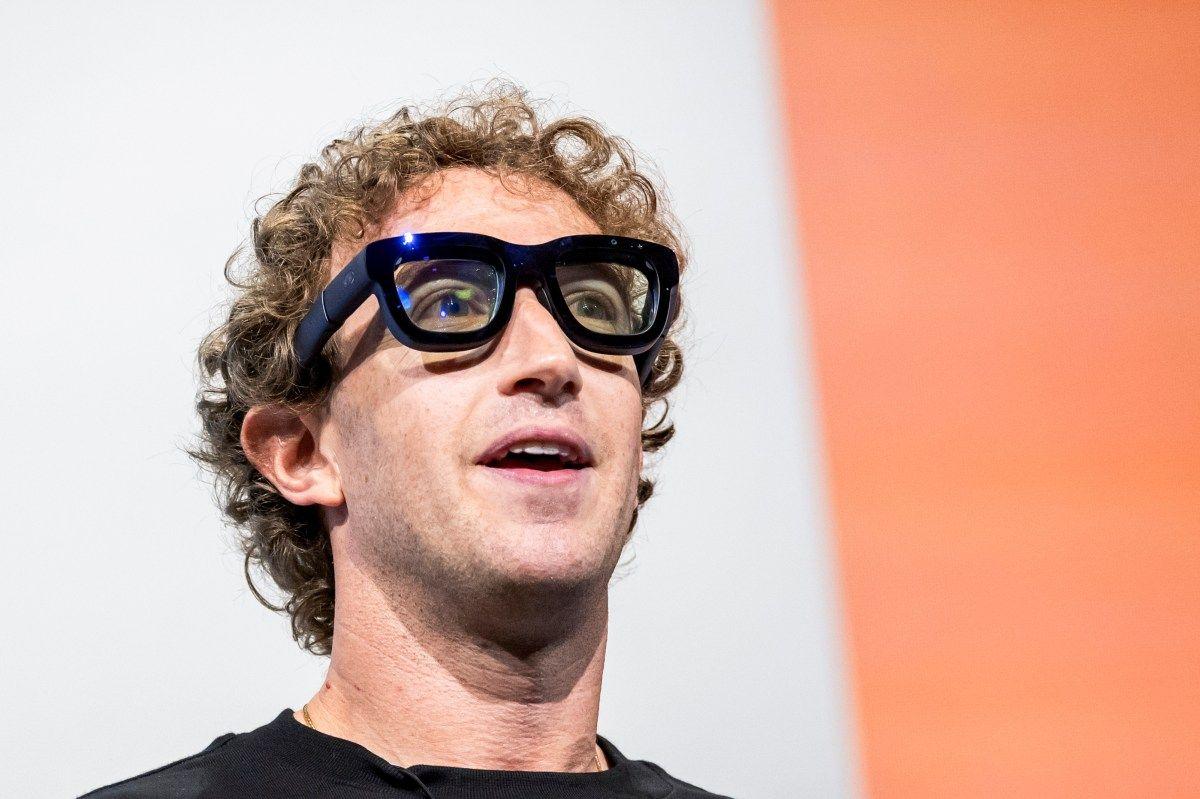
Big Tech Triples Down on AI Infrastructure Spending Despite Bubble Concerns
23 Oct 2025•Business and Economy
Big Tech's AI Spending Spree: Reshaping the Economy and Raising Concerns
02 Aug 2025•Business and Economy

Recent Highlights


Recent Highlights
Today's Top Stories








Your Daily Dose of Curated AI News
Don’t drown in AI news. We cut through the noise - filtering, ranking and summarizing the most important AI news, breakthroughs and research daily. Spend less time searching for the latest in AI and get straight to action.

