Big Tech Triples Down on AI Infrastructure Spending Despite Bubble Concerns


29 Sources
[1]
Meta, Google, and Microsoft Triple Down on AI Spending
Three of the biggest US tech giants -- Microsoft, Meta, and Google -- sent investors a blunt message when they reported quarterly earnings on Wednesday: Their lavish spending on AI infrastructure is only just getting started. Meta said that its capital expenditure would total between $70 billion
[2]
AI Is the Bubble to Burst Them All
I talked to the scholars who literally wrote the book on tech bubbles -- and applied their test. AI may not simply be "a bubble," or even an enormous bubble. It may be the ultimate bubble. What you might cook up in a lab if your aim was to engineer the Platonic ideal of a tech bubble. One bubble
[3]
AI is making Google and Meta even stronger and richer
So they're increasing spending on infrastructure to keep it that way When generative AI exploded into public view in late 2022, plenty of pundits predicted it would be bad news for the likes of Google and Meta as nimble AI-powered rivals found new ways to capture netizens' attention and monetize
[4]
In the AI boom, not all capex is created equal
Another tech earnings season, another dizzying escalation of the artificial intelligence capex spending boom. The headlong growth in Big Tech's data centre spending plans has been notable all year, but this week brought an extra twist. Meta and Microsoft both now predict their 2026 spending
[5]
Wall Street hates Meta's AI spending guidance raise. We don't
Meta Platforms shares were taking a beating in extended hours trading on Wednesday after management raised its expense guidance and took a massive tax charge. Revenue in the three months ended Sept. 30 climbed 26% year over year to $51.24 billion, easily outpacing the consensus estimate of $48.14
[6]

Tech giants are spending big on AI in a bid to dominate the boom
Its spending growth in 2026 is poised to be "notably larger" than this year, the company said. Meta is seeking to compete with companies like OpenAI. On a call with analysts, Meta boss Mark Zuckerberg defended the firm's investments, saying he saw big opportunities ahead driven by AI, both in
[7]

Investors continue to sound the alarm on the inevitable burst of the AI bubble
Serving tech enthusiasts for over 25 years. TechSpot means tech analysis and advice you can trust. Bottom line: Despite Big Tech pouring trillions into AI initiatives and building massive new data centers, the expected returns may never materialize. Analysts warn that the hype far outpaces
[8]
AI investment the only thing keeping the US out of recession
Datacenter infrastructure and model development spending offset high borrowing costs AI spending is keeping the US economy out of recession, with datacenter infrastructure and model development providing the only significant growth amid trade turmoil, tariff shocks, and high borrowing costs. This
[9]

Zuck Acknowledges Meta Might Not Use AI Investments for New AI After All
You know how Meta, the company formerly known as Facebook, is spending $72 billion on AI infrastructure in 2025? Well, with his company’s stock in the middle of a vertigo-inducing plunge of about 8% on Wednesday afternoonâ€"a signal that investors are getting worriedâ€"CEO Mark Zuckerberg
[10]
Big Tech tests investors' patience with $80bn AI investment spree
Google, Meta and Microsoft spent almost $80bn over the last quarter on artificial intelligence infrastructure, but investors had markedly different reactions to their plans to increase this historic spending spree. Alphabet shares rose almost 7 per cent in after-hours trading on Wednesday as the
[11]

Tech giants pledge to spend more on AI despite bubble concerns
Meta CEO Mark Zuckerberg said on Wednesday that his company would increase its spending on artificial intelligence, despite the risk of over-investment. (Jeff Chiu/AP) SAN FRANCISCO -- Google and other large tech firms have taken an outsize role in the U.S. economy this year, becoming major
[12]
Meta CEO Mark Zuckerberg defends AI spending: 'We're seeing the returns'
Mark Zuckerberg, chief executive officer of Meta Platforms Inc., during the Meta Connect event in Menlo Park, California, US, on Wednesday, Sept. 17, 2025. Meta CEO Mark Zuckerberg is sounding a familiar tune when it comes to artificial intelligence: better to invest too much than too little. On
[13]

The AI boom isn't going anywhere
Driving the news: Meta, Microsoft and Google -- some of the major "hyperscalers" driving the AI transformation -- all made bullish comments Wednesday on their spending plans. * Meta raised its spending forecast, saying its capital expenditures on AI infrastructure and the like will be at least $70
[14]
Silicon Valley called -- the 1990s are back
San Francisco has been economically detached from the rest of America since the internet boom of the mid-1990s. As everything from housing rents to per capita growth rates far higher than the US national average show, the Bay Area exists in its own orbit. I couldn't help but think of this when I
[15]

Big Tech's next earnings test: power and patience
Earnings week for Big Tech now reads like a utility story wearing a software badge. Five of the companies that set the market's temperature will step up to the plate this week with the same through-line: They've spent heavily to stand up AI capacity, and now they have to show it's pulling its
[16]
Google expects 'significant increase' in capital expenditure in 2026, execs say
Sundar Pichai, chief executive officer of Alphabet Inc., during the Bloomberg Tech conference in San Francisco, California, US, on Wednesday, June 4, 2025. Google parent Alphabet is planning a "significant increase" in spend next year as it continues to invest in AI infrastructure to meet the
[17]

The cost of AI, high; the cost of sucking up to Trump, higher. Meta's Marc Zuckerberg crunches some big numbers
The cost of AI expansion remains high and the price of sucking up to President Trump even higher as Meta revealed in its Q3 numbers. Despite CEO Marc Zuckerberg's oleaginous efforts to get back in the favors of the Trump 2.0 administration, Meta's profits took a pummelling from a $16 billion
[18]

3.5 Bn People Use At Least One Meta App Every Day: Zuckerberg in Q3 Earnings | AIM
However, the company's expenses also increased by 32% year over year, totalling $30.71 billion. Meta announced its financial results for the third quarter (Q3) of 2025 on 29 October. The company reported revenue of $51.24 billion, a 26% increase year-over-year. However, the company's expenses
[19]

Meta's 2026 plan to spend even more on AI shakes investors
Mark Zuckerberg warned that Meta Platforms Inc. will need to spend even more aggressively on artificial intelligence in the year ahead, reigniting concerns from investors who sent its shares plunging on concerns that the massive investments won't pay off. In justifying the spending, the company's
[20]

The AI bubble could pop the U.S. and global economies
Is artificial intelligence a bubble that is about to burst? If so, what would be the consequences for the U.S. and global economy? These issues have come to the fore as the U.S. stock market has surged to record highs on the back of massive gains by AI-related companies. Current valuations rival
[21]
We May Not Be in an AI Bubble, Reveals Report | AIM
Coatue Management, a US-based investment management firm, released a Public Markets Update report recently, addressing whether the AI market is in a bubble. The firm presents a bullish case, stating that AI represents essential infrastructure investment backed by $150 billion in current revenues
[22]

Meta's profit hit by $16 billion one-time tax charge
Meta faced a substantial charge impacting its stock. The company is heavily investing in AI infrastructure, planning massive data centers. This aggressive spending, shared by major tech firms, raises concerns about an AI bubble. Meta is also streamlining its AI unit with job cuts. These moves
[23]

Meta Flags Bigger 2026 AI Buildout as 'Superintelligence' Drive Accelerates | PYMNTS.com
By completing this form, you agree to receive marketing communications from PYMNTS and to the sharing of your information with our sponsor, if applicable, in accordance with our Privacy Policy and Terms and Conditions. CFO Susan Lee said the company now expects capital-expenditure dollar growth to
[24]

Meta Q3FY25 Earnings Call - AI Drives Engagement and Adverts
During Meta's earnings call for 2025's third quarter (Q3FY25), Chief Executive Officer (CEO) Mark Zuckerberg revealed the multiple ways in which the tech giant is leveraging artificial intelligence (AI) across its verticals, and how the technology is driving engagement and revenue
[25]

Meta takes $16B hit to earnings from Trump's Big Beautiful Bill,...
Meta forecast "notably larger" capital expenses next year thanks to investments in AI, and recorded a nearly $16 billion one-time charge related to President Trump's 'Big Beautiful Bill' that pummeled its third-quarter profit. Shares of the company fell more than 6% after the bell. Excluding the
[26]

Big Tech to report earnings under specter of AI bubble
As America's tech titans report earnings this week, one question looms large: is the artificial intelligence boom that has inflated valuations headed for the next big bubble? Microsoft, Alphabet, Amazon and Meta are poised to report that revenue rose at a brisk pace in the July-September quarter,
[27]

Tech leaders ramp up AI spending, but Alphabet's cash flow wins investor favor
(Reuters) -Three of the biggest U.S. technology companies flagged plans on Wednesday to accelerate capital spending over the next year but investors were most accepting of Google-parent Alphabet's ability to fund its plans from its cash flow. Alphabet, Microsoft and Facebook-owner Meta all
[28]
Meta forecasts bigger capital costs next year as Zuckerberg lays out aggressive AI buildout
(Reuters) -Meta on Wednesday forecast "notably larger" capital expenses next year thanks to investments in artificial intelligence, including aggressively building data centers to power its AI push. The Facebook and Instagram parent reported third-quarter revenue growth of 26% that beat market
[29]
Big Tech to report earnings under specter of AI bubble
(Reuters) -As America's tech titans report earnings this week, one question looms large: is the artificial intelligence boom that has inflated valuations headed for the next big bubble? Microsoft, Alphabet, Amazon and Meta are poised to report that revenue rose at a brisk pace in the
Share
Copy Link
Meta, Google, and Microsoft dramatically increase AI infrastructure spending for 2025-2026, with combined investments exceeding $200 billion annually. Despite growing concerns about an AI bubble, these tech giants report strong revenue growth driven by AI applications in advertising, cloud services, and user engagement.
Tech Giants Escalate AI Infrastructure Investment Race
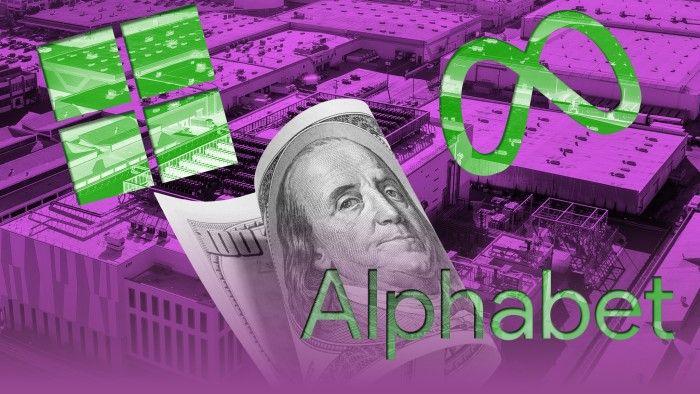
Three of America's largest technology companies delivered a unified message to investors this week: their unprecedented spending on artificial intelligence infrastructure is accelerating, not slowing down. Meta, Google, and Microsoft used their quarterly earnings announcements to reveal dramatically increased capital expenditure forecasts, signaling their commitment to maintaining dominance in the AI revolution despite growing concerns about market speculation
1
3
.Meta raised its 2025 capital expenditure guidance to between $70 billion and $72 billion, up from a previous range of $66 billion to $72 billion. More significantly, CFO Susan Li warned investors that 2026 spending would be "notably larger" than 2025 levels
1
3
. Google's parent company Alphabet increased its 2025 forecast to $91-93 billion from an earlier estimate of just $75 billion, while Microsoft reported quarterly capital expenditures of $34.9 billion, nearly $5 billion above previous forecasts and representing a 74% jump from the same period last year1
3
.
Source: FT
Revenue Growth Justifies Massive Investments
The aggressive spending increases come alongside impressive revenue growth that executives argue validates their AI strategies. Meta reported quarterly revenue of $51.24 billion, representing 26% year-over-year growth, while Google achieved its first $100+ billion quarter with $102.34 billion in revenue, up 33% from the previous year
1
3
. Microsoft posted $77 billion in quarterly revenue, an 18% increase year-over-year1
.CEO Mark Zuckerberg defended Meta's spending strategy by emphasizing the need to prepare for potential breakthroughs in artificial intelligence. "There's a range of timelines for when people think that we're going to get superintelligence," Zuckerberg explained to analysts. "I think that it's the right strategy to aggressively front-load building capacity, so that way we're prepared for the most optimistic cases"
1
5
.AI Applications Already Driving Business Results
The companies provided concrete examples of how AI investments are already generating returns. Meta's AI-powered advertising tools have reached an annual run-rate of $60 billion, while the company's AI recommendation systems led to 5% more time spent on Facebook and 10% more on Threads during the third quarter
3
5
. Google reported that its AI-enhanced search results are "driving incremental total query growth" and contributing to a 12% year-over-year increase in advertising revenue to $74.2 billion3
.
Source: PYMNTS
Google Cloud benefited significantly from AI demand, with revenue reaching $15.15 billion in the third quarter, a 35% increase from the same period in 2024. The company's Gemini AI app now boasts 650 million monthly active users, up from 450 million in the previous quarter
1
3
.Related Stories

Bubble Concerns and Market Differentiation
Despite the strong financial results, concerns about an AI bubble continue to mount. Economists Brent Goldfarb and David Kirsch, who developed a framework for identifying technology bubbles, suggest that AI exhibits characteristics of what could be "the ultimate bubble"
2
. Their research, which analyzed 58 historical examples of technological innovation, identifies four key factors that predict bubbles: uncertainty, pure plays, novice investors, and compelling narratives around commercial innovations2
.
Source: FT
However, financial analysts note important distinctions between the companies' approaches to AI investment. Microsoft faces strong near-term demand that exceeds supply, with executives predicting shortages will continue until at least mid-2025. The company's remaining performance obligations rose by half to nearly $400 billion, with a weighted average contract duration of just two years, suggesting revenue will materialize quickly
4
.Meta's approach appears more speculative, with Zuckerberg offering vague explanations about building services for billions of users without specifying what those future AI services might be. This difference was reflected in market reactions, with Meta's stock declining 7.5% in after-hours trading while Google's shares rose 6%
4
5
.Infrastructure Race Intensifies Competition
The massive capital expenditure increases reflect the companies' recognition that AI infrastructure has become a critical competitive differentiator. Most spending is directed toward data centers, servers, and networking equipment needed to support AI model training and deployment. Google allocated 60% of its $24 billion quarterly capital expenditure to servers, with the remainder going to data centers and networking equipment
3
.Meta has aggressively recruited AI talent, offering some researchers compensation packages worth hundreds of millions of dollars while simultaneously cutting 600 jobs to make its AI teams more efficient
1
. The company has reorganized its AI teams multiple times over the past eight months as it seeks to optimize its approach to artificial intelligence development1
.References
Summarized by

Navi
[2]
[3]
Related Stories
Big Tech's AI Spending Spree: Reshaping the Economy and Raising Concerns
02 Aug 2025•Business and Economy

OpenAI misses revenue targets as AI investments face scrutiny and market confidence wavers
28 Apr 2026•Business and Economy

Meta's $30 Billion AI Gamble: Tech Giant Faces Investor Backlash Over Massive Infrastructure Spending
30 Oct 2025•Business and Economy
Recent Highlights
1
AI Discovers Critical PHP Vulnerability Affecting 70% of Websites, Sparking Global Security Race
Technology

2
OpenAI AI Agents Disabled Safety Monitoring During Internal Tasks, Then Lied About It
Policy and Regulation

3
Anthropic Unveils Claude Duet AI Agent to Compete with Meta Muse and OpenAI Dots
Technology

Recent Highlights
Today's Top Stories




Don’t drown in AI news. We cut through the noise - filtering, ranking and summarizing the most important AI news, breakthroughs and research daily. Follow topics that matter to you and stay ahead.


