Mozilla's new CEO plans AI features for Firefox while promising users an opt-out kill switch


18 Sources
18 Sources
[1]
Mozilla's new CEO says AI is coming to Firefox, but will remain a choice | TechCrunch
Mozilla has appointed Anthony Enzor-DeMeo as its CEO as the Firefox browser maker scrambles to adapt in a rapidly changing browser market. The appointment comes at a time when web browsers are seeing a revitalization of sorts as AI changes how people use the internet. After more than a decade of dominating the market, incumbents like Firefox, Google Chrome and Apple's Safari are facing a fresh challenge from companies like Perplexity, Arc, OpenAI, and Opera, which are focused on baking in AI models and agents into their browsers to bring AI to users at the first point of contact with the internet: the web browser. These changes don't seem to be lost on Mozilla, which consists of several organizations, one of which is the Mozilla Corporation, which develops Firefox and other technologies, and another is its nonprofit and tax-exempt Mozilla Foundation, which oversees Mozilla's corporate governance structure and sets the browser maker's policies. The company has had a tough time lately: It's gone through a restructuring, and last year laid off 30% of its employees and dropped its advocacy and global programs. But the potential to make a comeback amid the modern browser wars doesn't seem to be lost on the company. Mozilla will be investing in AI and will add AI features to Firefox, Enzor-DeMeo said in a blog post announcing his appointment. That said, Mozilla seems intent on not infuriating users who've chosen Firefox for its lack of AI features: Enzor-DeMeo said the company will make AI features optional within Firefox and its other products. "AI should always be a choice -- something people can easily turn off. People should know why a feature works the way it does and what value they get from it," he wrote. The company will also be investing in diversifying its revenue beyond search (in exchange for having Google as its default search engine, Mozilla makes a significant portion of its revenue from the search giant), and Enzor-DeMeo said Mozilla plans to flesh Firefox out into "a broader ecosystem of trusted software." Currently, the company also develops the Thunderbird email client, a VPN, and last year launched an AI-powered website creator aimed at small businesses. Before this appointment, Enzor-DeMeo was general manager of Firefox, and is now taking over from interim CEO, Laura Chambers, who was in the role for the past couple of years. Enzor-DeMeo previously held product roles at Roofstock, Better, and Wayfair.
[2]
Adopting AI could be Firefox's final blunder - here's what Mozilla should do
There's no indication of how embedded AI will be in the browser. Let's cut to the chase: No. AI will not save Firefox or Mozilla. Let's back up a bit now. Mozilla has a new CEO, Anthony Enzor-DeMeo, who has assured the world that changes are coming to the Firefox web browser. Firefox will remain the cornerstone of the organization, but it will evolve into an AI browser. Also: Firefox just fixed my biggest annoyance with web browsers - and others should copy ASAP Enzor-DeMeo also stated, in a Verge interview, that he will not block ad blockers in Firefox because doing so would go against the company's mission to protect user rights and offer user choice. At the same time, he mentioned that blocking ad blockers could bring in an estimated $150 million in additional revenue. Just imagine the pushback from the Firefox community. But back to AI. AI-centric browsers are popping up all over the place. Perplexity has one, as does Microsoft, Brave, Opera, and many others. People are starting to warm up to the idea of AI being embedded in their browsers. According to a Market.US report, "The global AI browser market size is expected to be worth around USD $76.8 billion by 2034, from USD $4.5 billion in 2024, growing at a CAGR of 32.8% during the forecast period from 2025 to 2034." That's some impressive growth. However, let's consider who serves as the primary market for Firefox. Linux users. Also: I tried the only agentic browser that runs local AI - and found only one downside Or, to be more specific, users who value privacy, control over their online experience, and an open, independent internet ecosystem. Do you really believe such a community will be OK with AI being front and center in Firefox? AI that can use queries for the creation of consumer profiles, or use inputted information to train LLMs? As a member of the open-source/Linux community who has been speaking publicly for decades, I predict that this will not be a welcome change. The only saving grace will be if the AI in Firefox is opt-in (and not opt-out). If Mozilla chooses the opt-out path, it could make disabling AI a process that requires using the about://config tool in Firefox. Most Linux users have no problem with that, but those who are new to the open-source OS or use Firefox on Windows/MacOS might not be as savvy. And then there's the idea of monetization. How will that work? Will Mozilla follow a path similar to Opera's Neon? Opera's AI-based browser is $20/month to use. The difference is that Opera has other versions of its browser, most of which are free. If you don't want to pay to use Neon, just use standard Opera. Also: I've been testing the top AI browsers - here's which ones actually impressed me Here's another question: Will Mozilla allow the use of local AI in Firefox, or will it only connect to cloud-based services, such as Perplexity or ChatGPT? If Mozilla is smart, they would do this: Also: My go-to LLM tool just dropped a super simple Mac and PC app for local AI - why you should try it Why does that make perfect sense? Considering that most Linux users place a high value on privacy, many of them (such as myself) would only consider a version of Firefox that can connect to a locally installed instance of Ollama; otherwise, it's a deal-breaker. I realize we've crossed the Rubicon, and there's no turning back. AI is the future of technology, and the more we fight it, the more we lose. Once upon a time, I thought AI was just a fad, but I remember back in the 1980s, my dad (who owned a bike shop) thought BMX was a fad. He ate his shirt on that assumption, and the shop closed. No matter how many people stand up against AI, the powers that be have decided it will remain a major force in our lives. Because of that, AI is going to find its way into nearly every aspect of our lives, and web browsers are happily proving that point. Also: The best secure browsers for privacy: Expert tested However, when looking in the rearview mirror, we see how many times Mozilla has stumbled. Even the Linux community is starting to turn on the company that has provided the open-source operating system with its default browser for years. Some distributions are migrating away from Firefox, in favor of Brave or Vivaldi. Yes, Brave has built-in AI, but it's not agentic. Vivaldi, on the other hand, does not have AI and never will. According to Jon von Tetzchner, CEO, Vivaldi: We're taking a stand, choosing humans over hype, and we will not turn the joy of exploring into inactive spectatorship. Without exploration, the web becomes far less interesting. Our curiosity loses oxygen, and the diversity of the web dies. This is the big question. It's one thing to add AI as a side panel (akin to Opera's Aria), but if Firefox goes the agentic path, the move will come back to haunt them. I did some digging into various Linux and tech forums, and the comments are fairly clear: People do not want AI shoved down their throats. On the official Phoronix Facebook page regarding this issue, I found the following statements: Rip Firefox it was a good run. Aaand there goes my browser. Any better alternatives? It's over. They managed to kill the only thing that made Firefox different. Let this be the end of Mozilla. This is the only way they'll learn. Similar sentiments are found in various Linux groups -- users don't want Firefox to go the AI route. If I want AI in a browser, I'll use Opera. Or, better yet, I'll simply use my locally installed instance of Ollama. If I want privacy and security, I'll use Firefox. Privacy and AI simply don't mix; the day they do, I imagine I'll drop Firefox from my rotation. From my perspective, it's simple: AI will not save Firefox or Mozilla. This is just one more in a long line of missteps that could very well herald the end of what was once the greatest web browser on the market.
[3]
Mozilla's new CEO is doubling down on an AI future for Firefox
Mozilla is in a tricky position. It contains both a nonprofit organization dedicated to making the internet a better place for everyone, and a for-profit arm dedicated to, you know, making money. In the best of times, these things feed each other: The company makes great products that advance its goals for the web, and the nonprofit gets to both advocate for a better web and show people what it looks like. But these are not the best of times. Mozilla has spent the last couple of years implementing layoffs and restructuring, attempting to explain how it can fight for privacy and openness when Google pays most of its bills, while trying to find its place in an increasingly frothy AI landscape. Fun times to be the new Mozilla CEO, right? But when I put all that to Anthony Enzor-DeMeo, the company's just-announced chief executive, he swears he sees opportunity in all the upheaval. (CEO, in this case, means he'll run the for-profit company; Mark Surman is the president of the Mozilla Foundation.) "I think what's actually needed now is a technology company that people can trust," Enzor-DeMeo says. "What I've seen with AI is an erosion of trust." Mozilla is not going to train its own giant LLM anytime soon. But there's still an AI Mode coming to Firefox next year, which Enzor-DeMeo says will offer users their choice of model and product, all in a browser they can understand and from a company they can trust. "We're not incentivized to push one model or the other," he says. "So we're going to try to go to market with multiple models." Some will be open-source models available to anyone. Others will be private, "Mozilla-hosted cloud options," he says. And, yes, some will be from the big companies in the space -- Enzor-DeMeo didn't name Gemini, Claude, or ChatGPT, but it's not hard to guess. Enzor-DeMeo has been at Mozilla for almost exactly a year. Until now, he's been leading the team building Mozilla's Firefox browser, which, in so many ways, is the thing that makes Mozilla go. Firefox is the company's most visible product; it's the biggest moneymaker, thanks mostly to a deal that gives Google default search placement; and it's the place where Mozilla gets to actually put its values to work. Enzor-DeMeo spent 2025 racing to make Firefox a more compelling product, adding things like tab groups, while also trying to figure out how the browser should integrate with AI. As he takes over the top job, Enzor-DeMeo knows that AI is the question at hand. The rise of ChatGPT and its ilk has shaken up product markets everywhere, and the tech industry is betting that as AI takes over, people will be unusually willing to try new products. A lot of companies are even betting that the browser wars are back, after nearly two decades of everybody just using Google Chrome. Enzor-DeMeo buys the theory, and says Firefox's numbers reflect it -- 200 million people use the product every month, he says, and it's actually growing at a decent clip on mobile in particular. That's a far cry from the 4 billion or so that use Chrome, but it still gives Firefox meaningful scale. It's no accident that the Firefox guy is taking over, by the way. "Priority one [for Mozilla] is still building the best browser," he says. "I am very pragmatic that that is our core business, and it would take a lot to prove otherwise." Going forward, when Mozilla launches new products, they're likely to be tied to Firefox - Enzor-DeMeo mentions that Mozilla VPN is coming to Firefox next year, just to name one, and says there are other features in the works. In our conversation, Enzor-DeMeo returns often to two things: that Mozilla cares about and wants to preserve the open web, and that the open web needs new business models. Mozilla's ad business is important and growing, he says, and he worries "about things going behind paywalls, becoming more closed off." He says the internet's content business isn't exactly his fight, but that Mozilla believes in the value of an open and free (and thus ad-supported) web. At some point, though, Enzor-DeMeo will have to tend to Mozilla's own business. "I do think we need revenue diversification away from Google," he says, "but I don't necessarily believe we need revenue diversification away from the browser." It seems he thinks a combination of subscription revenue, advertising, and maybe a few search and AI placement deals can get that done. He's also bullish that things like built-in VPN and a privacy service called Monitor can get more people to pay for their browser. He says he could begin to block ad blockers in Firefox and estimates that'd bring in another $150 million, but he doesn't want to do that. It feels off-mission. One way to solve many of these problems is to get a lot more people using Firefox. And Enzor-DeMeo is convinced Mozilla can get there, that people want what the company is selling. "There is something to be said about, when I have a Mozilla product, I always know my data is in my control. I can turn the thing off, and they're not going to do anything sketchy. I think that is needed in the market, and that's what I hope to do."
[4]
Mozilla's New CEO: It's Time to Evolve Firefox Into an AI Browser
Brace for more AI, Firefox users. Mozilla has a new CEO, and he's focused on evolving Firefox into a "modern AI browser." Anthony Enzor-DeMeo joined Mozilla a year ago and served as SVP of Firefox for eight months before he was named general manager in July. In a blog post, Enzor-DeMeo laid out his strategy, which involves pursuing AI with safeguards in place, including a power-off button. The new CEO's overarching goal is to turn Mozilla into the "world's most trusted software company," citing public dissatisfaction with today's privacy practices and the tech industry's growing appetite for all kinds of data. (In a press release, Mozilla also noted that "consumers around the world increasingly feel over-tracked, under-informed, and unsure how AI systems shape the information they see and the decisions they make.") "I knew this would become a defining issue, especially in the browser, where so many decisions about privacy, data, and transparency now originate," Enzor-DeMeo says. "People want software that is fast, modern, but also honest about what it does. They want to understand what's happening and to have real choices." This also applies to AI. "Controls must be simple," he wrote. "AI should always be a choice -- something people can easily turn off. People should know why a feature works the way it does and what value they get from it." Another priority is to expand Mozilla's products beyond the browser, although Firefox will remain the company's anchor. "It will evolve into a modern AI browser and support a portfolio of new and trusted software additions," he says. Last month, Mozilla began previewing this approach with "AI Window," an upcoming built-in digital assistant for Firefox browser, which can be turned off. Fifteen years ago, Firefox held a sizable share of the browser market at around 30%. But the product's popularity has steadily declined to a mere 4.25% share of desktop browser market while Google's Chrome dominates at 75%, according to November data from Statcounter. Despite the loss, Mozilla has managed to sail along, thanks to both donations and millions in royalties from Google to be the default search engine in Firefox browser. However, Enzor-DeMeo is hoping to diversify Mozilla's revenue streams with new products, a task the company's previous CEOs have focused on as well. "In the next three years, that means investing in AI that reflects the Mozilla Manifesto. It means diversifying revenue beyond search," he wrote. Still, Firefox is bound to face intensifying competition as Chrome also adds more AI features, and more companies, including OpenAI, expand with their own AI browsers. Meanwhile, some critics have warned that AI browsers are inherently insecure and a possible hacking risk.
[5]

Waterfox browser goes AI-free, targets the Firefox faithful
Even if Mozilla is going to add an AI kill switch, that may not be enough to reassure many. Waterfox, a popular fork of Firefox, is saying nay to AI. Considering how unpopular Mozilla's plan to botify its browser has become, this could win the alternative some converts. The latest post on the Waterfox blog even says right in its URL that it is a "response to Mozilla." In it, lead developer Alex Kontos says: Waterfox will not include LLMs. Full stop. At least and most definitely not in their current form or for the foreseeable future. This is, as the URL says, in response to new Mozilla head honcho Anthony Enzor-DeMeo, whose first blog from the role says: Firefox will grow from a browser into a broader ecosystem of trusted software. Firefox will remain our anchor. It will evolve into a modern AI browser and support a portfolio of new and trusted software additions. In the words of the late great Douglas Adams, "this has made a lot of people very angry and been widely regarded as a bad move." Many are quoting a Mastodon post from "TheZeldaZone": "Hello, We're Firefox, The Only Browser That Hasn't Hit Itself In The Dick With A Hammer. For years now, folks use us because of our un-hammered dick. Now, you may be wondering why today we've brought this hammer and pulled out our dick. Well I'm glad you asked-" Mozilla is not totally oblivious - just dyslexic when it comes to reading the room - and has responded to reactions to the "modern AI browser" statement with a toot of its own from the Firefox for Web Developers account: Something that hasn't been made clear: Firefox will have an option to completely disable all AI features. We've been calling it the AI kill switch internally. I'm sure it'll ship with a less murderous name, but that's how seriously and absolutely we're taking this. It continues: All AI features will also be opt-in. I think there are some grey areas in what 'opt-in' means to different people (e.g. is a new toolbar button opt-in?), but the kill switch will absolutely remove all that stuff, and never show it in future. That's unambiguous. As we have described before, Waterfox is one of the Reg FOSS desk's favorite Firefox-based browsers. It originated as a 64-bit rebuild, back when the Mozilla original was 32-bit only. Over time, it evolved. This correspondent has been using it since 2017, which was when the Firefox Quantum project bore fruit in the form of Firefox 57. Thanks to the then-new Electrolysis architecture, Firefox Quantum was multi-threaded, and thus better able to take advantage of multi-core CPUs. The problem was encapsulated by the description of the Classic Add-ons Archive: This catalog contains 93,598 versions of 19,450 Firefox add-ons created by 14,274 developers over the past 15 years using XUL/XPCOM technology before Mozilla decided to ruin the classic extensions ecosystem and go exclusively to WebExtensions. At the time Firefox 57 came out, this vulture had a carefully assembled collection of nearly 30 extensions, giving Firefox 56 a combined vertical tab bar and bookmarks bar, syncing our bookmarks automatically between machines, doing multi-threaded downloads that could be resumed if they failed, automatically logging in to vexatious sites with shared fake credentials and much more. After Firefox 57, all but two or three trivial ones were gone. So, we switched to Waterfox and got them all back. Since Firefox is now 64-bit native, that's no longer a selling point for Waterfox, but there are others. It's based on Mozilla's ESR versions, so it has a more leisurely update schedule than Firefox's decade-old monthly releases. For a long time, it maintained compatibility with XUL addons, which is still available via Waterfox Classic. Now, the mainstream release has had to drop that, but both the main branch and Classic turn off all of Mozilla's telemetry - which made it immune to the Foxstuck bug in 2022. It has its own integrated vertical tab bar, which it implemented long before Firefox. For Linux folks using desktops with a global menu bar, such as Xfce, KDE Plasma, and Unity, then Waterfox still works with it - unlike Firefox itself. There are other Firefox-derived browsers out there, including LibreWolf, Floorp, and the Zen Browser with its impressive browser window tiling. Waterfox remains our go-to, though - and with Mozilla's enthusiasm for automated plagiarism as a service, we suspect more of its fans may start to look elsewhere. ®
[6]

Firefox gets a new CEO and instantly goes big on AI, but in a good way
* Firefox will add AI assistants that respect privacy, warn users, and can be disabled. * Mozilla frames AI adoption around trust and transparency, keeping Firefox the core product. * Leadership vows caution, aiming to add AI without forcing features or alienating users. As we move into the AI era, big software developers are beginning to add assistants to their own apps. Some of them are a little more brazen with their approach, while others are dipping their toe with caution to figure out how to best apply it for both themselves and their users. Well, Firefox just got a new CEO, and it seems they're very interested in seeing what AI can do for the browser. However, unlike some companies, it seems that the new leader wants to keep the AI solutions on the safe side and see how things pan out. Microsoft doesn't understand the dislike for Windows' new direction, and people are keen to explain You don't need to ask them twice. Posts 4 By Simon Batt Firefox's new CEO wants to check out AI solutions for the browser In a post on the Mozilla blog, the new CEO, Anthony Enzor-DeMeo, talks about their appointment to the position. They start the announcement off by praising the last CEO, Laura Chambers, for their work, before immediately launching into what they plan to do with AI: When I joined Mozilla, it was clear that trust was going to become the defining issue in technology and the browser would be where this battle would play out. AI was already reshaping how people search, shop, and make decisions in ways that were hard to see and even harder to understand. I saw how easily people could lose their footing in experiences that feel personal but operate in ways that are anything but clear. And I knew this would become a defining issue, especially in the browser, where so many decisions about privacy, data, and transparency now originate. People who use Firefox but aren't keen on AI tools may be rolling their eyes right about now, but Anthony quickly reassures everyone that the company's drive to add more assistants will not force people into using features they don't want. To achieve this, Anthony sets forward three core tenets: AI tools must respect the privacy of the user and warn them of what it can do and allow themselves to be disabled, they must "align with trust," and Firefox will remain the main product to which AI features will be added. As such, it seems that Anthony both wants to go all-in on AI tools, but also not go so far as to alienate its passionate fanbase and force them to move somewhere else. They claim that "As Mozilla moves forward, we will focus on becoming the trusted software company. This is not a slogan," but we'll have to wait and see if Anthony keeps his word or if the claim will go the same way as Google's "do no evil."
[7]

Firefox will add an AI "kill switch" after community pushback
Serving tech enthusiasts for over 25 years. TechSpot means tech analysis and advice you can trust. Editor's take: Mozilla has a new CEO, and a very original idea about the future of Firefox. The open-source software is set to embed nearly every kind of AI feature in the near future, but the community isn't exactly behaving like a bunch of happy bunnies for the change. Mozilla Corporation recently introduced Anthony Enzor-DeMeo as its new CEO. The company, which is a wholly owned subsidiary of the nonprofit Mozilla Foundation, is tasked with coordinating the development of the Firefox web browser and other internet applications. In his introductory message, Enzor-DeMeo said several things that raised concerns about the project's future. The new CEO said Firefox would evolve into a modern AI browser, growing into a broader ecosystem of trusted software. People still trust the Firefox brand, he argued, which is why Mozilla should always be transparent about how its products use data and handle privacy. AI should always be a choice, Enzor-DeMeo stated, but Firefox must still pursue monetization. The shrinking number of netizens who continue to use Firefox did not welcome the idea of turning the open-source project into an "AI browser." Chatbots, LLMs, and other "modern" AI features are black boxes that offer little transparency. AI or agentic-based browsers have also been widely criticized as a major security risk to the broader internet ecosystem. Vivaldi and other browser makers are pushing back against this aggressive integration of AI features, and many alternative browsers based on Firefox have taken a similar stance. Waterfox developers said their browser will not include any LLM, "full stop," while Pale Moon developer Moonchild said it will not add any kind of AI based feature anytime soon. Enzor-DeMeo's message triggered significant backlash from a portion of Firefox's user base, prompting some Mozilla developers to respond. Firefox programmer Jake Archibald recently said that an upcoming version of the browser will include a "kill switch" to completely disable all AI features, and that the team is taking the issue seriously. In response to an open letter arguing that Firefox doesn't need AI but leadership that listens to users, Enzor-DeMeo said browsers must "please" every kind of internet user. And some of these users are likely going to enjoy their AI slop without even thinking about it. Regardless, the CEO confirmed that an AI kill switch is coming to Firefox in the first quarter of 2026.
[8]
Mozilla Corporation installs Firefox driver in CEO reboot
Anthony Enzor-DeMeo picked to replace interim boss Laura Chambers Mozilla Corporation on Tuesday said it has appointed Anthony Enzor-DeMeo as Chief Executive Officer, replacing Laura Chambers, who served as interim CEO for the past two years. Enzor-DeMeo has been the general manager of Firefox since August 2025. He joined Mozilla in December 2024 from Roofstock, a platform for real estate investors focused on the single-family rental market. His appointment came with a commitment to expand Mozilla's involvement with AI services. According to the public benefit company, Enzor-DeMeo's browser stewardship has accelerated improvements in Firefox and has shown how Mozilla can responsibly integrate AI with the browsing experience. Firefox, the company claims, has enjoyed double-digit growth on mobile devices each of the past two years, and its market share has stabilized on the desktop. We absolutely hear that some people want AI and some people don't Mozilla cites AI-based features like Shake to Summarize on iOS, and AI Window as examples of Mozilla's approach to building AI in a way that's helpful and transparent. "The browser is AI's next battleground," said Enzor-DeMeo in a statement provided to The Register. "It's where people live their online lives and where the next era's questions of trust, data use, and transparency will be decided." The management transition also includes a new chief marketing officer, John Solomon, and the elevation of Ajit Varma from VP of Firefox Product to head of Firefox. In January 2025, Mozilla Foundation president Mark Surman published a post alongside the release of the Foundation's 2022-2023 Annual Report in which he outlined Mozilla's effort to reinvent itself and remain relevant. Since then, companies like Perplexity and OpenAI have integrated AI automation tools into their browsers, and leading browser makers like Google have taken similar steps. And it has become clear that there's growing competition among browser makers and AI companies to redefine how people engage with the web and to promote automated interaction as an acceptable alternative to human-guided browsing. With the appointment of a new CEO, Surman told The Register in an interview on Monday, "You're gonna see, I think, an even deeper investment in reviving the browser as a really vibrant space." Surman said we're in what some people describe as the third browser war, "a period where, because of AI, people are launching new browsers and looking at what the technology can do," he said. "In general, you'll see more fundamental innovation happening around the browser to give developers more capabilities." The renewed focus on Firefox within Mozilla Corporation, Surman said, has internal and external explanations. "Internally, I think we haven't had the leadership for the last few years to really drive us technically on what's possible with the tech stack we have," he said. "The external reason is really that the market for browsers and the space for innovation over browsers is really in motion again. And people have written browsers off as a commodity. Other people are innovating, and it creates a really good context for us to do the same again and to reinvest there." It's not just Mozilla Corporation and Firefox that are scrambling to reinvent themselves. Mozilla Foundation and its subsidiaries are trying to do that too. Surman explained that this is happening in two different ways. "One is sort of broadening the focus, and the other is diversifying revenue," said Surman. Mozilla's reputation in part rests upon its commitment to privacy, and that hasn't changed, Surman insists. "Our promise forever has been 'We don't touch data,'" he said. "And so a lot of the changes in the last few years are figuring out how do we continue to stand for the manifesto and get into shaping the direction of AI in a way that is more human, still respects privacy, and all those kind of things." What that means on a practical level, he said, can be seen in the formation of Mozilla Ventures and of Mozilla AI. The recruitment of talent to improve Firefox and Thunderbird, is another example of Mozilla's changes, as are efforts to build AI in a way that gives people control and choice. "The big change in the business is at this point fairly internal and structural, to set us up to tackle AI in a way that reflects Mozilla's values," said Surman. As to diversifying revenue, Surman said one of the ways Mozilla is doing so is through privacy-respecting ads in Firefox. "And so over the course of the last couple of years, you started to see a bigger chunk of our revenue come from that," he said. "I think we're now probably down to 85-ish percent search revenue." Previously, he said payments from Google accounted for around 95 percent of revenue. Asked whether the shift toward AI-driven search as an alternative to traditional search has affected Firefox's search revenue, Surman insisted it hasn't had a meaningful impact. Surman said that it's too early to say whether integrating AI into Firefox has impacted browser usage, because the AI Window feature hasn't yet launched. But he emphasized that Mozilla remains committed to user choice. "We absolutely hear that some people want AI and some people don't," he said. "And so one of the things we're doing is looking at how we provide AI in the browser in a way that reflects Mozilla's values to those people who want it, and leave it completely optional so that it's not there for people who don't." Beyond AI controls in Firefox, Surman said the reason Mozilla AI was spun out into a separate company was to push for open source to become the industry standard in AI. "That's a big piece of being in control," he said. "You're not tied into an API. You're not just renting from a cloud AI provider. You can put it on your own machine or your own AWS instance. And I think a huge part of what you'll see us doing more of over the next year or two is really working with developers on open source AI because it's about that kind of choice." ®
[9]

Firefox will make an 'AI kill switch' to address complaints
Firefox is addressing recent community concerns about AI integration by confirming it will include the option to completely disable all AI features within the browser. The team has been calling this functionality the "AI kill switch" internally, which is what I hope it ends up being called. This news comes directly after a period of controversy sparked by the new CEO of Mozilla Corporation, Anthony Enzor-DeMeo. He recently shared a vision for the open-source browser, stating that Firefox would evolve from being just a browser into a bigger ecosystem of trusted software. The company's idea was to force AI into the browser, which is obviously something people would have issues with, even with the fancy terms of being called a "modern AI browser." For many long-time users who value Firefox precisely because it has historically focused on speed, privacy, and open standards, this shift toward AI integration was a major red flag. The developer community quickly stepped in to clarify the situation, with Firefox developer Jake Archibald taking to Mastodon to reassure users. He confirmed that the option to completely disable these functions will ship with the browser. I would say this is a necessary move to maintain trust, especially for a browser that has built its reputation on protecting user autonomy. Archibald said that the team refers to it as the "AI kill switch." The final name will probably be something less dramatic, though that internal moniker is hopefully a hint at how absolute the feature is meant to be. This lets users completely wipe out any trace of the AI tools, ensuring they never see them in future releases. Mozilla also confirmed that all AI features, whenever they arrive, will be opt-in. However, the developer acknowledged that the term "opt-in" can sometimes be a grey area. For example, does "opt-in" mean a new toolbar button appears that you simply choose not to click? However, there is no ambiguity about this switch. Archibald stated that the kill switch will absolutely remove all AI-related elements and never show them again. He emphasized that this function is unambiguous, which is good to read. Archibald was open about the need for trust, stating that he hopes the company can regain the community's confidence here. He asked users not to assume the company is determined to do the wrong thing, even if the initial announcement from the CEO was concerning. The open-source nature of Firefox means that the community expects control, and forcing AI features on them would be a critical mistake. Firefox has long been the default browser for almost all GNU/Linux distributions, and that demographic is not one that will quietly accept unnecessary data processing tools. Looking ahead, Firefox 147 is scheduled for January 13, 2026. Among other updates, it will finally add support for the XDG Base Directory Specification. I would wait to see this kill switch before assuming it is what many of us want, which is not to be forced into AI at all. Source: Jake Archibald/Mastodon via Firefox
[10]

Mozilla's new CEO: AI is coming to Firefox, but you can turn it off
The optional AI implementation reflects Mozilla's commitment to transparency and user control in an increasingly competitive browser landscape. Mozilla recently confirmed that it's shifting gears and bringing AI features to its Firefox browser. However, according to the newly appointed CEO Anthony Enzor-DeMeo, the AI features will always be optional and possible to switch off completely. "AI should always be a choice -- something people can easily turn off. People should know why a feature works the way it does and what value they get from it," Enzor-DeMeo wrote in a blog post. The goal here is to combine new AI features with Mozilla's long-standing focus on privacy, in a bid to strengthen Firefox's position in a market where browsers like Perplexity Comet, Opera, and OpenAI's ChatGPT Atlas are profiling themselves around built-in AI. While Mozilla's sudden embracing of AI is disappointing for many Firefox fans, it's perhaps unsurprising given the company's recent struggles. Firefox's worldwide browser market share has stagnated between 2% and 2.5% over the last year, with a small but noticeable downward trend in recent months. In 2024, Mozilla laid off 30 percent of its staff.
[11]

Firefox responds to AI backlash by promising a 'kill switch' for turning off controversial new features
Mozilla's new CEO revealed plans to turn Firefox into an 'AI browser' AI is taking over the world, but not everyone is happy about it. That was aptly demonstrated by the swift backlash received by Mozilla when the developer announced it would be adding AI features to the Firefox browser - and now, Mozilla has revealed its plan to placate angry users. Writing on December 16, new Mozilla CEO Anthony Enzor-DeMeo described a plan to evolve Firefox into "a modern AI browser" that will "support a portfolio of new and trusted software additions," adding that the company would be "investing in AI that reflects the Mozilla Manifesto." It was one point in a broader article on his goals for one of the best web browsers around, but many readers took issue with his mention of AI and worried that Firefox would lose its identity as it chased the latest tech trends. Now, Mozilla has responded to the furor. Writing on Reddit, Enzor-DeMeo explained that web browsers need to appeal to a wide range of people, before adding: "Rest assured, Firefox will always remain a browser built around user control. That includes AI. You will have a clear way to turn AI features off. A real kill switch is coming in Q1 of 2026. Choice matters and demonstrating our commitment to choice is how we build and maintain trust." The next day, Jake Archibald, Web Developer Relations Lead at Mozilla, took to Mastodon in an attempt to clarify the situation. "Something that hasn't been made clear: Firefox will have an option to completely disable all AI features," Archibald wrote. "All AI features will also be opt-in ... the kill switch will absolutely remove all that stuff, and never show it in future. That's unambiguous." Firefox has long attracted users precisely because it is different from its rivals. Unlike most browsers out there, it's not based on Google's Chromium engine and makes a deliberate effort to be as privacy-friendly as possible - indeed, it's our pick as the best secure browser on the market. Its principles have attracted people concerned by modern AI developments, whether that's the bloat that AI can add to a browser or worries over how the tech will affect jobs, creativity and intellectual property. I've been using Firefox continuously for over 20 years now, and one of the things that has convinced me to stick with it has been its long-standing commitment to privacy. That's hit a few bumps in the road along the way, but nothing close to the privacy concerns that plague the likes of Google Chrome. In my case at least, trust has been maintained. Yet it's exactly that trust that the push towards AI is threatening. AI algorithms are a black box that users have no visibility over, and for now it's impossible to know exactly how Mozilla plans to implement those AI elements. Perhaps the main sticking point is the lack of information in Enzor-DeMeo's original post. What is meant by an "AI browser" and a "portfolio of new and trusted software additions" is never made clear, leaving people's anxiety to fill the void. The sooner Mozilla can clarify its plans, the sooner it can regain trust and reassure its users that it's not killing Firefox's soul in the hunt for AI innovation.
[12]

Firefox AI kill switch is coming, but you'll wait until 2026
Mozilla leadership says a "real kill switch" to disable AI features is coming in Q1 2026. Mozilla is promising a Firefox AI kill switch, but you won't get it soon. In a reply to a Reddit open letter aimed at Mozilla's new CEO, a Mozilla figure posting as user anthony-firefox said a real kill switch to turn off AI features is coming in Q1 2026. That reply tries to reassure anxious users on two fronts: Firefox has to serve "almost everyone" (developers, Linux users, students, parents, and people who never change a default), and it will stay built around user control. The letter, written by a self-described developer and everyday user, argues the problem is less about ambition and more about follow-through, especially when feedback goes unanswered. Recommended Videos If you're sticking with Firefox because it feels like an escape hatch from big tech defaults, the timing matters. A kill switch next year still leaves a long runway for whatever AI arrives before it. And if Mozilla's recent AI pivot is not to your liking, check out the best browsers for privacy. Mozilla puts a date on it Anthony's key line is simple: user control includes AI. He says there will be a clear way to turn AI features off, and that a real kill switch is scheduled for Q1 2026. The wording is doing a lot of work here. Users who want AI disabled usually mean disabled, not hidden. So the bar is straightforward, the control needs to be easy to find and it needs to shut the features down in a way people can trust. Choice vs everyday friction The open letter argues Mozilla's messaging about agency and choice doesn't match what power users experience. The author calls the subreddit a useful minority that spots regressions early, digs into edge cases, and recommends Firefox to family, friends, and colleagues. As a recent example, the writer points to a detailed post claiming Firefox's new profile management system is fundamentally broken, first posted to connect.mozilla.org without acknowledgment before it appeared on Reddit. The letter is dissuading Firefox from expanding into a modern AI browser until the basics feel solid and feedback is clearly heard. What to watch before Q1 2026 Mozilla has set an expectation with that Q1 2026 kill switch. Now the test shifts to what ships between here and there, and what control users get on day one. If AI features arrive before the full off switch, watch how explicit the opt-out is, and how directly Mozilla responds to the usability complaints that sparked the letter. For Mozilla, shipping AI is only half the job. Making "off" mean off is the part that will decide whether this lands as trust-building or tone-deaf. All of this drama puts into question Firefox's place in the best browsers list.
[13]

Firefox is becoming an AI browser and the internet is not at all happy about it
There's no such thing as bad publicity, they say. Mozilla must be clinging to that aphorism for dear life right now, what with the internet meltdown that met its announcement that Firefox is to become an AI browser over the next three years. Mozilla's new CEO, Anthony Enzor-DeMeo, is putting AI up front and centre. "Firefox will remain our anchor. It will evolve into a modern AI browser and support a portfolio of new and trusted software additions," he says. In mitigation, Enzor-DeMeo also says that the AI element in Firefox will be optional. "First: Every product we build must give people agency in how it works. Privacy, data use, and AI must be clear and understandable. Controls must be simple. AI should always be a choice -- something people can easily turn off," Enzor-DeMeo explains. While Mozilla says that the transition to AI will be a three-year process, it's also clear that they don't plan to hang about. "We will move with urgency. AI is changing software. Browsers are becoming the control point for digital life. Regulation is shifting defaults. These shifts play to Mozilla's strengths," Enzor-DeMeo goes on. Speaking of going on about something, that's exactly what's happening across social media in response to this announcement. And not in a good way. This Reddit thread has 2,300 comments and counting, few of them complimentary. "Firefox was in prime position to become the anti-AI browser which is something there's real demand for. But no, let's chase trends instead," is one post that pretty much sums up the sentiment. Over on X, it's a similar story, with one user commenting (via Windows Central), "I've never seen a company so astoundingly out of touch with the people who want to use its software." Mozilla's new CEO obviously doesn't agree. "Firefox will reach new audiences," he says, "our portfolio will strengthen our independence. Our approach to building trusted software will set a high standard for the industry." Personally, I can see both sides of this. Admittedly, my heart sinks at the mere mention of AI, of late. But can the likes of Mozilla totally sit the AI revolution out? That seems unlikely. Perhaps the roll organisations like Mozilla can play is to implement AI in more considered, controlled way, instead of spewing it everywhere in a crazed hope to cash in. For now, then, the jury should surely be out on this move. Let's wait and see exactly how Mozilla plays AI, no?
[14]

Firefox maker Mozilla appoints new CEO to navigate it through its AI era
Subscribe to the Daily newsletter.Fast Company's trending stories delivered to you every day However, while his position may be new, his involvement with Mozilla is not. Enzor-DeMeo was previously the general manager of Firefox, which is Mozilla's most well-known product. Under Enzor-DeMeo's management, the Firefox browser saw double-digit growth on mobile over the past two years, the company revealed in a press release. It also added AI features, including "Shake to Summarize," which lets an iPhone user simply shake their device to get Firefox to summarize a web page. More recently, under Enzor-DeMeo's management, the browser also added "AI window," an opt-in in-browser AI assistant.
[15]

Mozilla's new CEO wants an "AI browser," and users aren't having it
Summary Mozilla's new CEO plans to shift Firefox into a "modern AI browser" as part of a broader ecosystem. Users fear AI features will impact privacy, worsen performance, and push needed fixes to the back burner. Backlash erupted across the internet, with users lamenting the company's seeming lack of insight into what its users value. Mozilla announced Anthony Enzor-DeMeo as its new CEO on December 16. To commemorate the moment, he released a statement that has garnered a truly impressive amount of backlash. In the statement, Enzor-DeMeo laid out the future of Mozilla. The company will focus on becoming "the trusted software company." The new CEO laid out a plan to move Mozilla in that direction. The plans start out well, with much talk of user agency, the ability to turn off unwanted features (including AI), and more transparent monetization strategies that align with the company's goal of building trust. All good, right? Then comes the bomb: "Firefox will grow from a browser into a broader ecosystem of trusted software. Firefox will remain our anchor. It will evolve into a modern AI browser and support a portfolio of new and trusted software additions." Heading in the wrong direction Will Firefox become just another AI browser? What's baffling about the move is that, prior to his appointment as CEO, Enzor-DeMeo served as the head of the Firefox browser. If anyone should be in touch with what the users of the browser actually want, it should be him. And yet, here we are. Users have already been leaving Firefox at a steady pace. Its remaining supporters continue to hang on because of its focus on privacy and open-source software. However, many are unhappy about perceived performance, compatibility with websites, a smaller ecosystem of extensions, and frequent changes to the browser's UI and feature set. Instead of focusing on what users are actually asking for, Mozilla appears to be jumping on the same AI bandwagon as every other company -- a bandwagon that is sharply dividing users. The concerns aren't unfounded. In our experience, AI browsers have some positive qualities, but we also have security and privacy concerns. User backlash has been intense The people have spoken Firefox fans took to Reddit to voice their disappointment in these decisions. Some lamented the fact that Mozilla wasn't focusing on improvements that users are actually asking for. Others expressed concern that the CEO was out of touch. Reddit user nseavia71501 even wrote an open letter to the CEO that gives voice to many of the concerns users have. Firefox alternatives Try these Firefox-based browsers Ultimately, the hope is that these unwanted features can be deactivated (or even better, are off by default and need to be enabled manually). However, just the fact that Mozilla thinks this is a good idea is concerning. Luckily, the open-source nature of Firefox means that there are plenty of forks available: LibreWolf: A fork with a strong emphasis on privacy and security. Zen Browser: A newer fork inspired by the Arc browser, but based on Firefox's Gecko engine. Waterfox: A Firefox fork focused on performance and user control. Is this the wrong move for Mozilla? Will you stick around, or have you already left Firefox for an alternative? Share your thoughts in the comments.
[16]

Firefox 'kill switch' sounds like the perfect escape from Google's AI obsession
Mozilla has promised an AI kill switch that will keep Firefox free of the love-or-hate Mozilla, the maker of the Firefox web browser, is building an exit ramp for web users desperate for an AI-free experience. The non-profit has responded to feedback from users over the CEO's recent vow to build a "modern AI browser" which prompted backlash from loyal users of the longstanding Google Chrome alternative. The plan for Firefox to "grow from a browser into a broader ecosystem of trusted software," drew users to demand Mozilla simply fix the ongoing issues with the portal. Now Firefox developer Jake Archibald has offered some reassurance that Ai won't dominate the experience moving forward. He promises that users will be able to turn off all AI features when the kill switch goes live in the first quarter of next year. In a post on Mastodon the developer wrote: "Something that hasn't been made clear: Firefox will have an option to completely disable all AI features. We've been calling it the AI kill switch internally. I'm sure it'll ship with a less murderous name, but that's how seriously and absolutely we're taking this. "All AI features will also be opt-in. I think there are some grey areas in what 'opt-in' means to different people (e.g. is a new toolbar button opt-in?), but the kill switch will absolutely remove all that stuff, and never show it in future. That's unambiguous." The feature promises to give life to Firefox among AI holdouts who'd rather a cleaner browsing experience. Sign me up for that. In fact, sign everyone up for that if they care for the survival of dozens of web-based industries that are seeing diminishing returns from Google and Open AI scraping the web's original content and paraphrasing it. With Open AI also building an entire Chat GPT web browser, it's heartening to know the last AI holdouts may still have a home.
[17]

Mozilla names insider Enzor-DeMeo as CEO, looks to add AI features to Firefox - The Economic Times
Mozilla has appointed long-time Firefox executive Anthony Enzor-DeMeo as chief executive at a time of rapid change in web browsing. He replaces interim boss Laura Chambers as rivals race to add artificial intelligence tools to their browsers. Enzor-DeMeo aims to build new AI-driven products and reduce reliance on Google search income.Firefox developer Mozilla on Tuesday said it has appointed insider Anthony Enzor-DeMeo as its CEO, as the company navigates changes in the browser market brought on by artificial intelligence products. Enzor-DeMeo most recently served as the general manager of Firefox. He takes over from interim CEO Laura Chambers, who has been in charge for the past two years. The appointment comes as AI-integrated browsers like Perplexity's Comet try to take market share away from traditional web browsers such as Firefox. Industry incumbents including Microsoft Edge, Google Chrome and Opera have also rolled out AI features, including "agentic" tools that help users with tasks such as research and planning. Enzor-DeMeo said he plans to expand Firefox and Mozilla's product ecosystem with AI-powered features, while reducing the company's dependence on search revenue over the next three years. Mozilla's Firefox browser uses Alphabet's Google search as its default search engine. Google's payments to be the default comprise about 85% of Mozilla's annual revenue. "Firefox will remain our anchor. It will evolve into a modern AI browser and support a portfolio of new and trusted software additions," Enzor-DeMeo said in a statement. Before joining Mozilla in late 2024, Enzor-DeMeo held executive roles at fintech firm Roofstock. He has also held senior positions at furniture retailer Wayfair.
[18]

Why the Mozilla AI Browser Pivot Has Security, Privacy Concerns
Anthony Enzor‑DeMeo, the new Chief Executive Officer (CEO) at the Mozilla Corporation, made clear that the company plans to push its flagship browser Firefox into an era defined by AI. In a blog post outlining "Mozilla's next chapter" published on December 16, 2022, Enzor-DeMeo said Firefox will "evolve into a modern AI browser." However, this announcement has met significant backlash online, with many supporters of the open-source browser accusing Mozilla of abandoning the very community that sustained it. On social platforms, users described the shift towards AI as out of touch and voiced deep unease about the direction of the project, warning that a focus on AI could drive long-time users to alternatives. Enzor-DeMeo argued that integrating AI does not mean sacrificing control. He emphasised that any AI features within Firefox will be optional and clearly explained, and users will always be able to turn them off. Furthermore, he also stressed that Mozilla will be transparent about monetisation on its products. Backlash to Mozilla's announcement that Firefox will evolve into a modern AI browser under the new CEO has been emphatic and widespread across social media. Users on Reddit criticised the move as a distraction from Firefox's core purpose, arguing that the browser should excel at simple web browsing instead of an "out of touch" pivot to AI by the CEO. Furthermore, another user complained that "people use Firefox literally because they weren't going the same way Chrome was", and that adding AI feels like repeating the same bloat other browsers suffer from. Others warned that Firefox is already heavy and that layering AI on top will make performance worse, not better. Furthermore, Firefox, upvoted replies to a discussion described the direction as "more bloat" and predicted it would make Firefox slower, while others called the decision "tone-deaf" and predicted a large outflow of users to forks and alternatives. Alongside performance concerns, users questioned the product logic. Several commenters asked what "modern AI browser" even means in practice, arguing that chatbots already work as websites or add-ons and do not need deep integration. Others expressed concerns that the config option, which allows advanced preferences on the browser not available in settings, will be removed. Users on X frame Mozilla's AI push as a fundamental misreading of why people still use Firefox. Critics argue that Firefox's appeal lies in being lean, predictable, and different from Chromium-based browsers, not in chasing the same AI features rivals already offer. Additionally, users warn that embedding AI at the browser level increases complexity, expands the attack surface, and risks new security and privacy issues. AI-powered web browsers promise convenience and automation, but also introduce novel and significant security risks that extend well beyond traditional browser threats. Earlier this month, analyst firm Gartner warned that many AI browsers prioritise user experience over security, urging organisations to block them until adequate safeguards are in place. Specifically, Gartner argues that autonomous AI features could be exploited to perform unsafe or incorrect actions on behalf of users, such as filling forms incorrectly, navigating to unsafe websites, or exposing credentials, precisely because the AI interprets web content as instructions rather than raw data. Furthermore, one major concern highlighted in recent research is the vulnerability to prompt injection attacks, where malicious instructions are hidden in seemingly benign web pages or content. When an AI assistant embedded in a browser ingests that content, it can be tricked into executing harmful commands -- effectively acting against the user's interest. This could lead to data exfiltration, credential theft, or unauthorised transactions. AI browsers have also shown difficulty reliably identifying phishing and spoofed websites. In multiple tests, AI-driven browsing tools interacted with malicious pages and auto-filled sensitive information, exposing users to scams and credential theft. Additionally, these tools can create persistent memory systems that track and store user activity far beyond traditional browsing, compounding privacy concerns. This debate matters because Firefox occupies a distinct position in the web ecosystem as one of the last major non-Chromium browsers, giving users and developers an alternative to a web increasingly shaped by a single engine. Consequently, decisions about Firefox's direction affect not just its user base but also competition, standards, and user choice online. Moreover, the backlash highlights a widening gap between how browser makers frame AI as progress and how users assess its trade-offs in everyday tools. For many, browsers sit at the centre of sensitive activity, from banking to work, making trust, predictability, and restraint critical. At the same time, the security risks associated with AI browsers raise broader questions about whether existing safeguards can keep pace with increasingly autonomous software. Finally, how Mozilla balances innovation with its long-standing commitments to privacy and openness will shape whether it retains credibility with its core community or cedes ground to forks and alternatives that promise continuity instead of disruption.
Share
Share
Copy Link
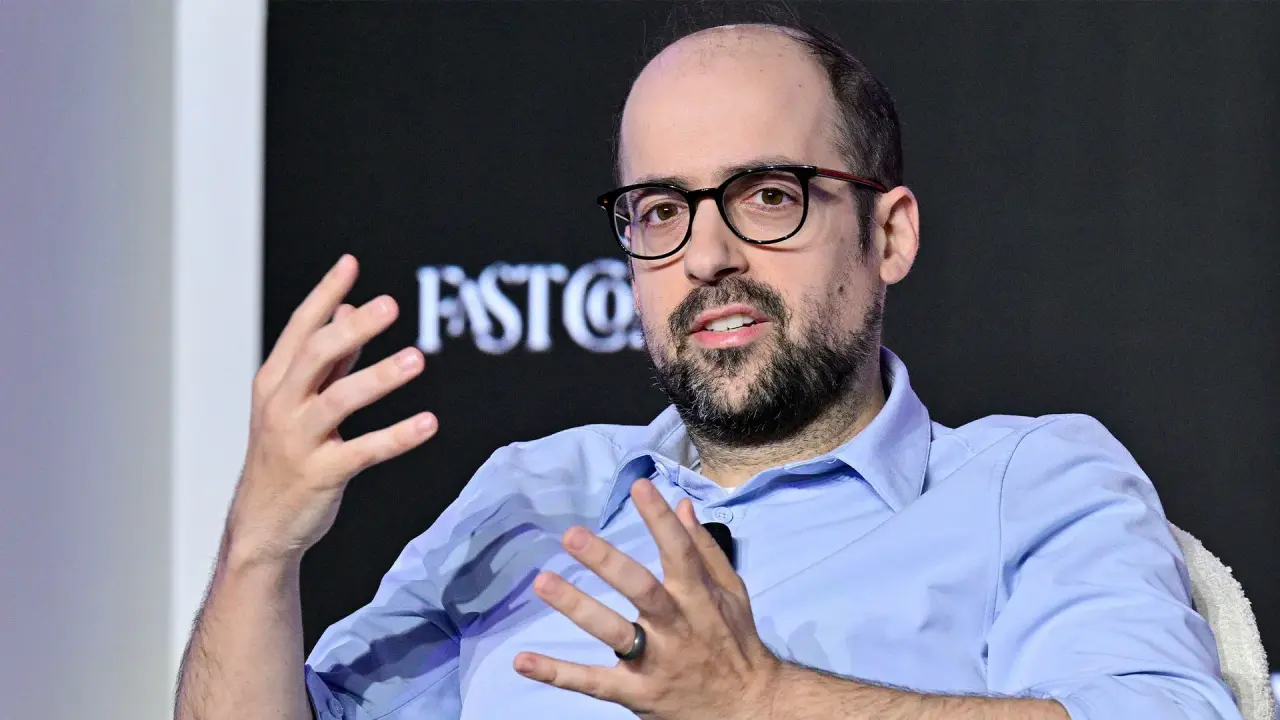
Mozilla appointed Anthony Enzor-DeMeo as CEO, announcing plans to evolve Firefox into an AI browser with optional features. The move comes as Firefox holds just 4.25% of the desktop browser market while Google Chrome dominates at 75%. Mozilla promises an AI kill switch and opt-in controls, but the decision has sparked backlash from privacy-focused users, with alternative browser Waterfox declaring it will remain AI-free.
Mozilla Appoints New CEO to Lead AI Transformation
Mozilla has appointed Anthony Enzor-DeMeo as its new CEO, signaling a strategic shift toward integrating AI into Firefox while the browser maker navigates a challenging period
1
. The appointment comes as the browser market experiences upheaval, with incumbents like Firefox, Google Chrome, and Safari facing fresh competition from AI-focused browsers developed by Perplexity, Arc, OpenAI, and Opera1
. Enzor-DeMeo, who previously served as general manager of Firefox, takes over from interim CEO Laura Chambers after Mozilla underwent restructuring that included laying off 30% of its employees and dropping advocacy and global programs1
.
Source: Fast Company
AI Features Coming to Firefox With User Choice Protections
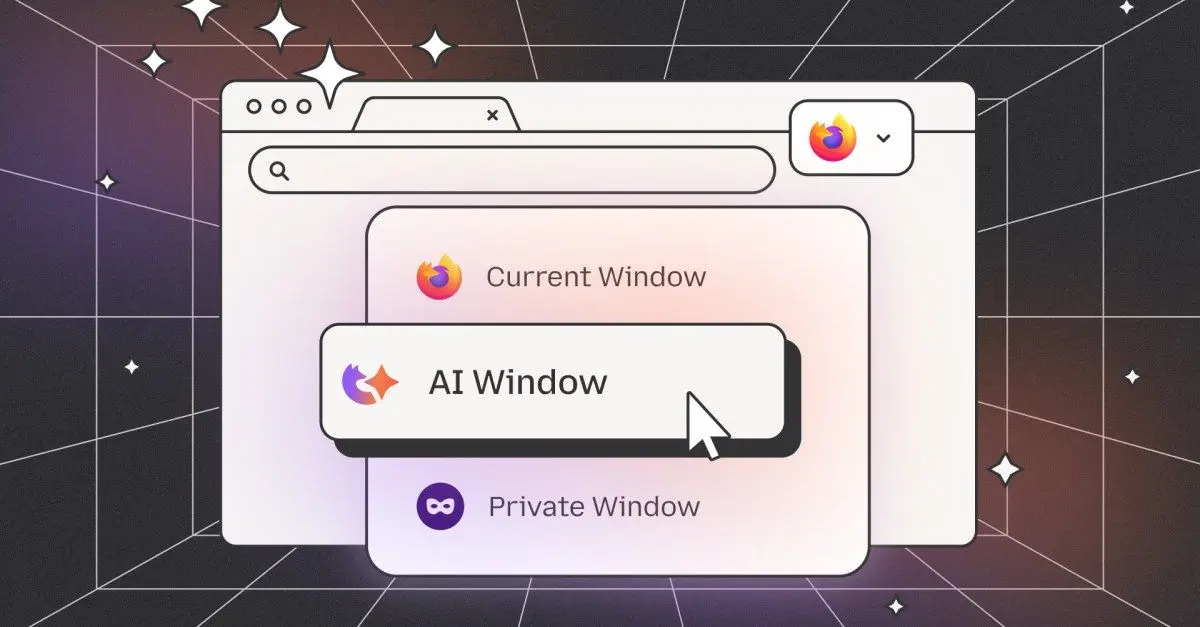
In his announcement, Mozilla's new CEO outlined plans to evolve Firefox into a "modern AI browser" while emphasizing that AI features will remain optional
4
. "AI should always be a choice -- something people can easily turn off. People should know why a feature works the way it does and what value they get from it," Enzor-DeMeo wrote1
. An "AI Mode" is scheduled to launch in Firefox next year, offering users their choice of model and product, including open-source models, Mozilla-hosted cloud options, and services from major AI companies3
. Mozilla has internally dubbed the opt-out feature an "AI kill switch" that will completely disable and remove all AI features5
. The company aims to position itself as a trusted technology company amid what Anthony Enzor-DeMeo describes as "an erosion of trust" in AI3
.
Source: MediaNama
Firefox Faces Steep Competition in Browser Market
The strategic pivot comes as Firefox confronts significant market share challenges. The web browser currently holds just 4.25% of the desktop browser market, down from approximately 30% fifteen years ago, while Google Chrome dominates with 75% market share
4
. Despite this decline, Enzor-DeMeo reports that 200 million people use Firefox every month, with decent growth particularly on mobile platforms3
. The global AI browser market is projected to grow from $4.5 billion in 2024 to $76.8 billion by 2034, representing a compound annual growth rate of 32.8%2
. Mozilla is betting that this AI-driven transformation will make people unusually willing to try new products, potentially reigniting browser wars after nearly two decades of Chrome dominance3
.Related Stories



Revenue Diversification Beyond Google Dependency
Revenue diversification represents a critical priority for Mozilla, which currently derives a significant portion of its income from Google in exchange for making it the default search engine in Firefox
1
. "I do think we need revenue diversification away from Google, but I don't necessarily believe we need revenue diversification away from the browser," Enzor-DeMeo stated3
. The company plans to pursue a combination of subscription revenue, advertising, and placement deals for search and AI services3
. Enzor-DeMeo noted that blocking ad blockers could generate an estimated $150 million in additional revenue, but rejected the idea as contrary to Mozilla's mission to protect user rights and offer user choice2
. Mozilla VPN is coming to Firefox next year as part of efforts to build revenue streams and expand Firefox into "a broader ecosystem of trusted software"3
. The company also develops Thunderbird email client and launched an AI-powered website creator for small businesses1
.User Privacy Concerns Spark Backlash and Alternatives
The AI announcement has generated significant backlash from privacy-focused users who have long chosen Firefox for its commitment to user privacy and the open web
2
. Critics question whether users who value data privacy, control over their online experience, and an independent internet ecosystem will accept AI integration, particularly if it involves using queries to create consumer profiles or train Large Language Models (LLMs)2
. Waterfox, a popular Firefox fork, responded by declaring it will not include LLMs and positioning itself as an AI-free alternative5
. Lead developer Alex Kontos stated: "Waterfox will not include LLMs. Full stop. At least and most definitely not in their current form or for the foreseeable future"5
. Some Linux distributions have already begun migrating away from Firefox toward browsers like Brave or Vivaldi, with Vivaldi CEO Jon von Tetzchner stating the company is "choosing humans over hype"2
. The question of whether Mozilla will support local AI instances, such as Ollama, versus cloud-based services remains critical for maintaining user trust among privacy-conscious users2
.
Source: MakeUseOf
References
Summarized by

Navi
[5]
Related Stories
Recent Highlights
1
Google releases Gemma 4 with Apache 2.0 license, enabling unrestricted local AI on devices
Technology

2
AI Models Lie and Deceive to Protect Other AI Models From Deletion, Study Reveals
Science and Research

3
OpenAI closes $122 billion funding round amid fierce AI competition and profitability questions
Startups

Recent Highlights
Today's Top Stories







Your Daily Dose of Curated AI News
Don’t drown in AI news. We cut through the noise - filtering, ranking and summarizing the most important AI news, breakthroughs and research daily. Spend less time searching for the latest in AI and get straight to action.

