MSI and Minisforum race to deliver powerful AI PCs in ultra-compact designs


4 Sources
4 Sources
[1]
MSI's new tiny PC has 96GB unified memory and Ryzen AI Max CPUs
Small desktop PCs can often be a compromised experience compared to full-size desktops, but they don't have to be. MSI just revealed its new AI Edge desktop, and the Ryzen Max+ chipset under the hood should deliver excellent performance. The MSI AI Edge is a new compact desktop PC, revealed for the first time at CES 2026. It's powered by AMD's updated Ryzen AI Max+ 300 series of processors, with the highest-end model using the Ryzen AI Max+ 395. Much like Apple Silicon chips, the 96GB of memory is shared across RAM and VRAM, depending on what is needed for the current workload. There's also RDNA 3.5 graphics with 40 compute units, and a dedicated NPU for up to 50 TOPS of AI acceleration. MSI said in a press release, "A distinct advantage of the AI Edge is its memory configuration, which effectively removes VRAM bottlenecks. The system utilizes up to 128GB of LPDDR5X 8000 on-board Unified Memory, designed for low-latency speed. Critically, up to 96GB of this high-speed memory can be dynamically and exclusively allocated to the GPU." Earlier versions of those Ryzen AI Max already deliver great performance in the Framework Desktop, HP Z2 Mini, and other computers. That should mean the MSI AI Edge will be great for local machine learning and generative AI, as well as 3D rendering, some gaming, and other tasks that benefit from more GPU power and lots of VRAM. MSI didn't provide exact physical dimensions for the MSI AI Edge, except that it has a 4-liter internal volume, with a built-in power supply. For context, the Framework Desktop is 4.5 liters. That's not quite as small as some other small PCs, but most of those are using lower-power integrated graphics -- the GPU in this PC is more comparable to an NVIDIA GeForce RTX 4060. There's also MSI's "Glacier Armor thermal solution" to keep everything cool at high workloads. The announcement also highlighted an important difference between this and a Mac Mini or Mac Studio -- the ability to run any traditional PC operating system. The latest Mac desktops with Apple Silicon chips are stuck with macOS (Asahi Linux is only up to M2 chips so far), but this is a standard 64-bit x86 PC, so you can safely install Windows or desktop Linux. Even though existing local AI apps like LM Studio or Ollama would work well, MSI is also working on its own front-end software for productivity work. The announcement said, " This multimodal software leverages the device's on-premises computing resources. It features powerful capabilities for essential productivity tasks, such as generating meeting notes and creating mind maps, all while maximizing data privacy. Additionally, the software integrates advanced Retrieval-Augmented Generation (RAG) technology, enabling users to securely process and query local datasets for highly contextual and data-specific output." Subscribe for in-depth coverage of compact AI PCs Get deeper hands-on analysis -- subscribe to the newsletter for buyer's guides, performance breakdowns, thermal and memory insights, OS and compatibility comparisons, and practical setup tips for compact AI desktops. Subscribe By subscribing, you agree to receive newsletter and marketing emails, and accept Valnet's Terms of Use and Privacy Policy. You can unsubscribe anytime. MSI did not provide an exact release date or price tag for the AI Edge. You'll have to keep an eye on MSI's online store and other retailers if you want to buy one.
[2]
MSI's AI Edge mini PC delivers massive LLM support and local privacy
MSI has entered the growing market for mini PCs powered by the Ryzen AI Max+ 395, joining a crowded field that currently includes over 30 devices. The new AI Edge device is designed to handle AI workloads on the desktop while also providing general computing capabilities for work and gaming. It includes RDNA 3.5 graphics with 40 compute units and XDNA 2 NPU architecture delivering up to 50 TOPS. The AI Edge supports up to 128GB of LPDDR5X 8000 unified memory, with 96GB dynamically allocated to the GPU, a configuration which enables large language models up to 120B parameters to run at around 15 tokens per second. The AI Edge fits into a small 4-liter form factor, which aims to save desk space while maintaining full desktop functionality. It also features a built-in power supply, and users can choose either Windows or Linux for their preferred computing environment. The system can also provide gaming performance comparable to a GeForce RTX 4060-class GPU. With this level of gaming performance, MSI uses the Glacier Armor thermal design, which applies advanced heatsinks to key components and helps sustain consistent performance during long AI inference or gaming sessions. Bundled software on the AI Edge leverages on-device computing resources for productivity tasks such as generating notes, creating mind maps, and processing personal datasets. Retrieval-Augmented Generation (RAG) technology allows users to query local datasets securely, ensuring sensitive data remains on the device. Financial records, for example, can be analyzed for insights directly on the AI Edge without cloud involvement. The AI Edge supports real-time AI inference for multimodal models, making it suitable for developers testing natural language, image, or mixed-input models. Local AI workloads can run independently without external servers, reducing latency and preserving privacy. The AI Edge offers a straightforward set of front-facing ports for everyday connectivity. Users can access a USB-C port for fast data transfer and potential power delivery, while two USB-A ports allow connection of standard peripherals such as external drives, keyboards, or mice. A 3.5mm audio jack supports headphones or microphone input, ensuring the system can handle basic audio needs without additional adapters. An SD card slot also enables quick access to external storage or media, supporting workflows that rely on portable storage and file transfer. In a market crowded with over 30 Ryzen AI Max+ 395 mini PCs, MSI's AI Edge will likely compete through its high memory capacity, on-device AI capabilities, and gaming performance. Its success will likely depend on how well these features meet the needs of developers and professionals seeking a compact, versatile AI desktop.
[3]
Minisforum beats Dell, HP and Lenovo to unveil first Ryzen AI 9 HX470 PC -- AI X1 Pro-470 mini PC supports 12TB SSD storage and up to 128GB DDR5
At CES 2026, Minisforum unveiled its latest mini PC, the AI X1 Pro-470 - marking the first system built around AMD's Ryzen AI 9 HX470 processor. Aimed at creators, developers, and power users who want solid local AI performance in a small footprint, the 12 core, 24 thread chip offers boost speeds up to 5.2GHz, paired with Radeon 890M integrated graphics. Live demos showed how the machine handles AI assisted tasks, content creation, and everyday productivity, working as a compact alternative to full size workstations. Compared with the Ryzen AI Max+ 395 found in a growing number of AI focused mini PCs, the Ryzen AI 9 HX470 targets heavier workloads. Its higher core count and faster peak clocks give it more headroom for demanding local AI models, sustained multitasking, and heavier creative workloads. While the Ryzen AI Max+ 395 suits general AI and creative tasks, the AI 9 HX470 is aimed at users pushing larger models and more complex projects, particularly when paired with large memory and fast local storage. AI workloads are handled by an onboard NPU rated at 86 TOPS, supporting local inference, creative tools, and AI enhanced applications. The AI X1 Pro-470 has two DDR5 SO-DIMM slots, supporting speeds up to 5600MHz and capacities up to 128GB. On the storage side, there are three M.2 2280 NVMe slots inside the chassis. Two of those slots support PCIe 4.0 x4 drives up to 4TB each, while a third PCIe 4.0 x1 slot supports up to 4TB, allowing up to 12TB of internal storage. Wireless connectivity includes Wi-Fi 7 and Bluetooth 5.4, while wired networking is handled by dual 2.5 Gigabit Ethernet ports. Display output covers HDMI 2.1, DisplayPort 2.0, and two USB4 ports, each supporting resolutions up to 8K at 60Hz or 4K at 120Hz. Audio support includes dual speakers, HDMI audio output, a 3.5mm combo jack, and dual digital microphones. The front and rear I/O selection also includes USB Type A ports, an SD card slot, OCuLink for external GPUs, and a dedicated Copilot button. A fingerprint sensor with Windows Hello support is built in, alongside a Kensington lock slot for physical security. The system runs Windows 11 Pro and is powered by a 134.9W internal DC adapter. Physically, the device measures 195mm x 195mm x 42.5mm to 47.5mm and weighs 1.5kg. While pricing has yet to be announced, Minisforum says the AI X1 Pro-470 will be available worldwide "soon".
[4]
MSI Unveils 0.5-Liter Panther Lake-Based Cubi NUC AI+ 3MG Mini PC With Up To Core Ultra 9 386H
New Panther Lake-based mini PC from MSI is here, and it's incredibly small and powerful. Apart from introducing many mainstream PC hardware at the CES event currently being held in Las Vegas, MSI has also debuted a new ultra-compact AI mini PC. This is the Cubi NUC AI+ 3MG, which uses just a 0.51-litre chassis to achieve an incredibly compact form factor that can be carried easily anywhere. Despite its small footprint, the mini PC houses incredibly powerful hardware for intensive computing and AI workloads. The Cubi NUC AI+ 3MG showcases MSI's dedication to providing powerful AI-driven solutions in the smallest possible form factor. Our collaboration with Intel allows us to offer customers advanced performance, versatile connectivity, and a sustainable design -- perfectly suited to meet the demands of modern workplaces, - James Yeh, VP, System & Display Group, MSI Cubi NUC AI+ 3MG uses the latest Intel Panther Lake, aka Core Ultra Series 3, processors to bring powerful compute and enhanced AI performance. The mini PC is a certified Copilot+ PC, thanks to the latest NPU5 (5th gen NPU), which can deliver 50 TOPS of AI performance. Users will have the flexibility to choose between different processors as it will be available with three different SKUs to fit users' budgets. For users on a tight budget, the Core Ultra 5 322 processor will be available, but for faster processing, the higher core-count Intel Core Ultra 7 355 processor will be best. The flagship configuration will offer the Intel Core Ultra 9 386H processor, which will bring 16 cores to the system for intensive operations. Moreover, this SKU also brings a decently-capable integrated graphics with 4 Xe3 GPU cores. For memory, users will have up to 32 GB using the 2x SO-DIMM slots, and a single NVMe slot for adding fast storage. Connectivity is also top-notch, bringing the latest WiFi 7, dual LAN ports, and multiple USB ports for peripheral connectivity. For display, users can use dual Thunderbolt 4 ports, which can support up to 4 displays simultaneously. This is especially convenient for those who want to have greater multitasking prowess at their fingertips. Talking of fingertips, the mini PC comes with a fingerprint-recognition power button for streamlined authentication and improved protection.
Share
Share
Copy Link
MSI unveiled its AI Edge mini PC with 96GB unified memory and Ryzen AI Max+ 395, entering a crowded market of 30+ similar devices. Meanwhile, Minisforum beat major manufacturers to launch the first Ryzen AI 9 HX470 mini PC, and MSI also introduced a 0.5-liter Panther Lake-based system. The launches highlight intensifying competition in compact AI computing.
MSI AI Edge Enters Crowded Mini PC Market with 96GB Unified Memory
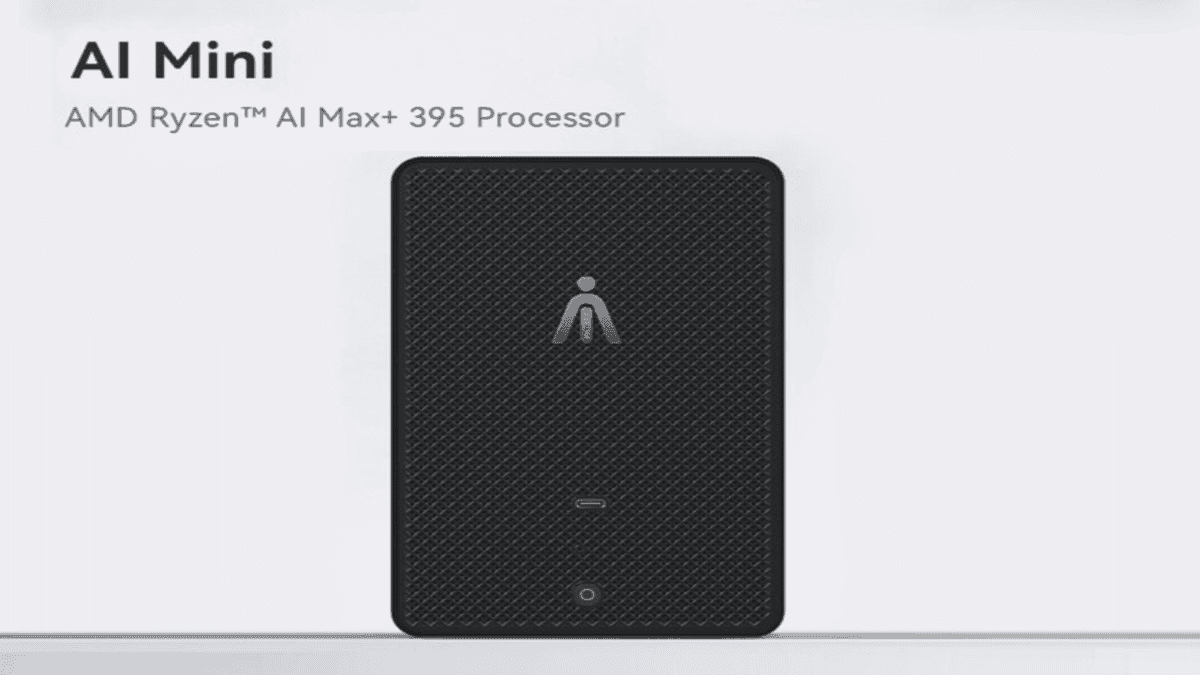
MSI revealed its AI Edge compact desktop PC at CES 2026, powered by AMD's Ryzen AI Max+ 395 processor with up to 128GB of LPDDR5X 8000 unified memory
1
. The system dynamically allocates up to 96GB exclusively to the GPU, removing VRAM bottlenecks for local AI workloads including large language models (LLM) and 3D rendering tasks2
. This AI PC features RDNA 3.5 graphics with 40 compute units and an NPU delivering 50 TOPS of AI acceleration for generative AI applications1
.
Source: How-To Geek
The device fits into a 4-liter form factor with built-in power supply and MSI's Glacier Armor thermal solution to maintain performance during intensive operations
1
. Gaming performance matches an NVIDIA GeForce RTX 4060-class GPU, while the high memory support enables running models up to 120B parameters at approximately 15 tokens per second2
. MSI is developing proprietary software leveraging Retrieval-Augmented Generation (RAG) technology for productivity tasks like generating meeting notes and creating mind maps, with all processing happening through on-device computing to maximize data privacy1
.Facing Intense Competition in Saturated Market
MSI enters a market already crowded with over 30 mini PC models using the same Ryzen AI Max+ 395 chipset, including devices from Framework, HP, and numerous other manufacturers
2
. The AI Edge's success will depend on differentiating through its memory configuration, bundled software, and AI performance capabilities2
. Unlike Mac Mini systems locked to macOS, this standard x86 PC supports Windows or Linux, offering flexibility for developers and professionals1
.Minisforum Launches First Ryzen AI 9 HX470 Mini PC
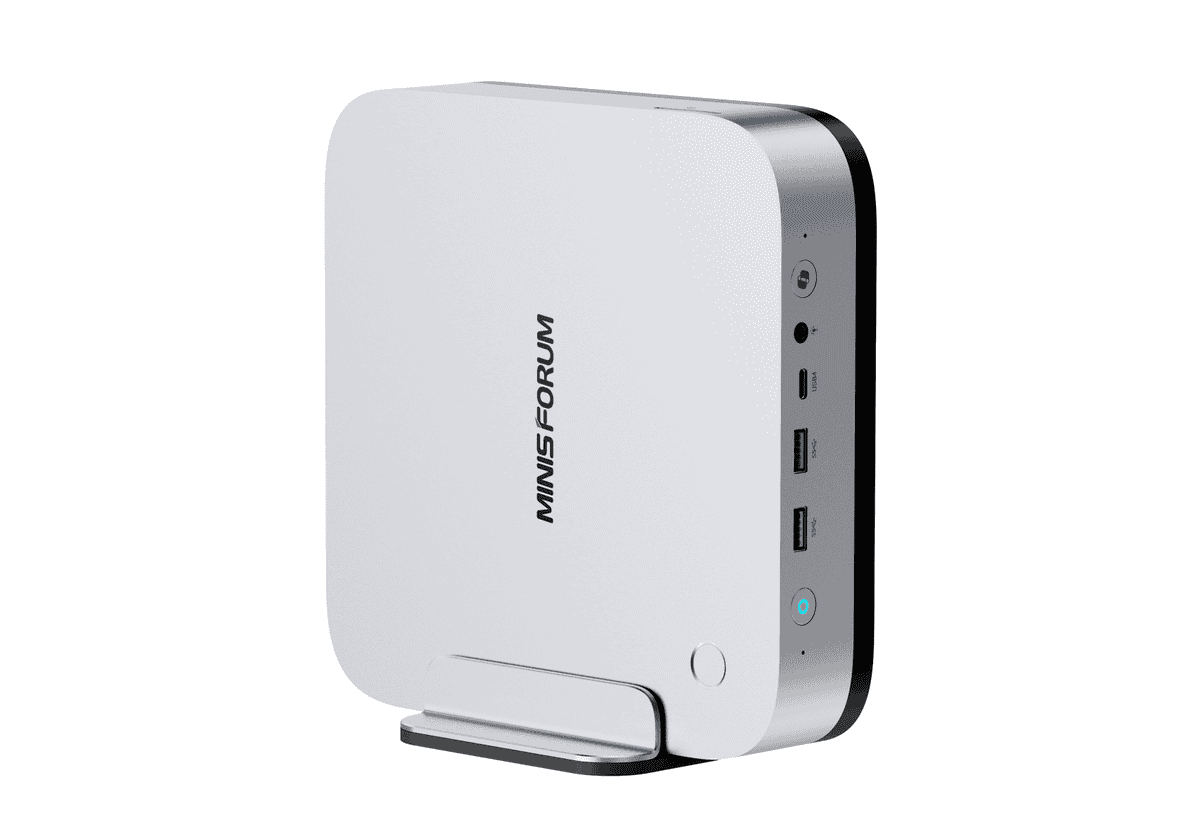
Minisforum beat Dell, HP, and Lenovo by unveiling the AI X1 Pro-470, the first mini PC built around AMD's Ryzen AI 9 HX470 processor at CES 2026
3
. The 12-core, 24-thread chip reaches boost speeds up to 5.2GHz with Radeon 890M integrated graphics, targeting creators and developers requiring heavier workloads than the Ryzen AI Max+ 395 handles3
. An onboard NPU rated at 86 TOPS supports local inference and AI-enhanced applications, significantly exceeding the 50 TOPS available in competing systems3
.
Source: TechRadar
The system supports up to 128GB DDR5-5600MHz memory and up to 12TB internal storage across three M.2 NVMe slots
3
. Display outputs include HDMI 2.1, DisplayPort 2.0, and two USB4 ports supporting up to 8K at 60Hz or 4K at 120Hz, while OCuLink connectivity enables external GPU expansion3
.Related Stories
Intel Panther Lake Powers Ultra-Compact Cubi NUC
MSI also introduced the Cubi NUC AI+ 3MG, an ultra-compact 0.51-liter mini PC powered by Intel's Panther Lake Core Ultra Series 3 processors
4
. As a certified Copilot+ PC, it features Intel's NPU5 delivering 50 TOPS of AI acceleration4
. Available configurations range from Core Ultra 5 322 to the flagship Core Ultra 9 386H with 16 cores and 4 Xe3 GPU cores4
. The system supports up to 32GB memory via dual SO-DIMM slots and includes dual Thunderbolt 4 ports capable of driving four displays simultaneously4
. According to MSI VP James Yeh, the device represents the company's dedication to providing AI-driven solutions in the smallest possible form factor through collaboration with Intel4
.
Source: Wccftech
References
Summarized by

Navi
Related Stories
Recent Highlights
1
Google releases Gemma 4 with Apache 2.0 license, enabling unrestricted local AI on devices
Technology

2
AI Models Lie and Deceive to Protect Other AI Models From Deletion, Study Reveals
Science and Research

3
Anthropic discovers functional emotions in Claude that actively shape AI behavior and decisions
Science and Research

Recent Highlights
Today's Top Stories



Your Daily Dose of Curated AI News
Don’t drown in AI news. We cut through the noise - filtering, ranking and summarizing the most important AI news, breakthroughs and research daily. Spend less time searching for the latest in AI and get straight to action.

