MyFitnessPal Acquires Cal AI, the Teen-Built AI Nutrition App That Hit $30M in Annual Revenue


2 Sources
2 Sources
[1]
MyFitnessPal has acquired Cal AI, the viral calorie app built by teens | TechCrunch
After deal talks lasting almost a year, MyFitnessPal has successfully acquired its up-and-coming rivaI Cal AI. Cal AI is the AI calorie counting app startup built by two high school teenagers that soared to over 15 million downloads and over $30 million in annual revenue in under two years, MyFitnessPal tells TechCrunch. The Cal AI team of seven employees, including its co-founder CEO Zach Yadegari (pictured, above), plus a small team of contractors, have been retained by MyFitnessPal, according to MyFitnessPal CEO Mike Fisher. The Cal AI app will remain independent, with its same ease-of-use mission: estimating calories by taking pictures of food. One upgrade for Cal AI users has occurred already since the deal closed in December: the AI app has now been integrated with MFP's monster huge nutrition database. That database spans 20 million foods, 68,500 brands, and meals served at 380+ restaurant chains. Terms of the deal were not disclosed except that Fisher noted that since the Cal AI team didn't have to sell, they were happy with the offer. With that $30 million revenue number, we can make an educated guess that this was a good outcome for the now 19-year-old co-founders, Yadegari, and his high school friend Henry Langmack. In fact, the deal took considerable perseverance, Fisher said. The larger company noticed Cal AI as it started to rise in the ranks on the app store, visible through tools like Sensor Tower, he said. "We watch the entire competitor suite," Fisher said, which, he said, encompasses some 70 competitors big and small. "They definitely caught our eye, I would say, early last year, and we have been talking to them ever since, on and off." What convinced Fisher and team to pursue the acquisition wasn't just watching Cal AI rise on app download charts (the two are neck-and-neck in the top rankings in their category on Sensor Tower). He was also impressed with the focus of the team run under its young CEO. "They got a lot of media attention because they're pretty young, and it's easy to dismiss," he said, "You have a conversation with them, like I did late spring last year, and you walk away saying this is an impressive young man." For instance, Cal AI's regular stand-up meeting occurs on Sunday night. Because the founders are still in school, Yadegari works all weekend on his startup and his team is dedicated enough to join him on Sundays for a weekly check in. "So it's small, small details like that, that when you put them together, you say, this is someone who's not doing this as a hobby," Fisher said. "They're really serious about it." Fisher declined to specify how long the retention period was for the founders and team to remain at MyFitnessPal post acquisition. Four years is a pretty industry-standard term, often tied to payouts, though again, he wouldn't comment on it, even when pressed. We do, however, know that Yadegari is still running the app, now as a unit of MFP, while attending college. The young founder also went viral last year on X after he revealed that out of 18 top colleges he applied to, even with a 4.0 GPA and a successful company, he was rejected by 15. He told TechCrunch at the time that he hadn't intended on going to college at all and instead wanted to focus on his company. But then a summer at a hacker house surrounded by a bunch of classic Silicon Valley college dropouts made him see that his options would remain forever better with a college degree. Fisher said MFP currently has no plans at the moment to integrate the app into its main product, such as replacing MFP's current photo-meal scan feature, nor to peel Cal AI users away. He believes that the apps serve different markets. Cal AI is for those preferring speed over accuracy. MFP is for those wanting the reverse. "We both do meal scan, right? So, take a picture of your meal, we both do it," Fisher said. But if MFP users take a picture of a hamburger, they can fine-tune the inputs right down to specifying three pickles, not two. With Cal AI, "We realized that there is an audience of people that want they want is fast, they want AI based. They want it to not interfere with their life and not have to think about it much."
[2]
MyFitnessPal acquires AI nutrition app Cal AI, built by teens
MyFitnessPal Inc., the long-established digital nutrition tracking platform, has acquired Cal AI, an AI-driven calorie estimation app that amassed tens of millions of installs and substantial revenue under its young founders. Financial terms, including consideration and valuation, were not disclosed in public reporting. Cal AI began as a simple idea: put nutrition estimation into the hands of the camera. Users snap a photo of a meal, and computer vision and machine learning models estimate calories and macronutrients without manual entry. In under two years the mobile app scaled to more than 15 million downloads and, by public estimates, has been generating tens of millions in annual revenue. Its core appeal lies in quick, photo-based logging and an interface that reduces friction compared with traditional food diaries. The business model appears to blend freemium access and in-app monetisation, though precise pricing tiers and conversion metrics are not widely published. Post-acquisition, the app continues to operate as a separate product within the MyFitnessPal portfolio, with access to MyFitnessPal's extensive nutritional database. MyFitnessPal itself is a freemium health and fitness app that combines calorie tracking, meal logging, activity sync, and optional premium subscription features. Its dataset, historically exceeding 14 million food items, underpins nutrition analyses across its user base. This event is an acquisition rather than an equity funding round. Public reporting does not disclose the purchase price or implied valuation. The Cal AI team of roughly seven employees, including its co-founders, joined MyFitnessPal as part of the transaction; additional contractor relationships were also retained. There is no indication of new institutional capital raised in conjunction with the deal. Use of funds in an acquisition context reflects integration costs and continued operations under the MyFitnessPal banner. Digital health and wellness is a crowded category with heavy consumer usage but mixed monetisation pathways. Established players such as MyFitnessPal and Noom have long-standing footprints; both combine behavioural tools, database scale, and optional paid tiers. The acquisition of an AI-centric product built around imagery reflects a broader trend of legacy app platforms incorporating AI-enhanced experiences that originated outside their core stacks. The deal also fits a pattern of acquisitions as a response to the rapid proliferation of consumer-facing AI utilities that draw engagement around simplicity and immediacy. Consolidation activity in adjacent digital health verticals has accelerated, though public comparable acquisition data in this narrow niche is limited. MyFitnessPal's chief competitors include generalist health tracking platforms, specialised nutrition apps, and emerging AI-augmented tools that automate food analysis from photos or receipts. Apps such as SnapCalorie and the built-in Meal Scan feature within MyFitnessPal itself offer overlapping functionality, though model accuracy, interface, and data access differ. Other wellness ecosystems combine diet tracking with behavioural or coaching services, often in subscription tiers. Structural risks include reliance on app store distribution, user retention challenges in a free-to-try market, and the need to maintain large, labelled datasets for AI accuracy. Even without disclosed financial terms, the acquisition signals a strategic preference for established platforms to absorb fast-growing, AI-centric products rather than replicate them internally. For European operators and investors, it underscores the commercial pressure within consumer health tech: user experience and adoption curves can attract established incumbents seeking incremental innovation without the drag of internal development cycles. The move also illustrates how nascent products with low overhead and strong growth can become leverage points in broader product portfolios, particularly when anchored by familiar user behaviours like photo-based engagement. Cal AI's integration into MyFitnessPal's ecosystem will test whether the simplicity that drove its rapid adoption can scale alongside a mature platform without diluting its appeal. For founders building AI-first consumer utilities, this deal highlights pathways out of standalone scale challenges, especially in categories with entrenched incumbents. How Cal AI evolves within MyFitnessPal's broader ecosystem will reveal whether a dual-product strategy can sustain the lightweight, AI-centric experience that drove its growth.
Share
Share
Copy Link
MyFitnessPal has acquired Cal AI, the AI-powered calorie counting app built by two high school students that scaled to over 15 million downloads and $30 million in annual revenue in under two years. The deal, which closed in December after nearly a year of negotiations, keeps Cal AI operating independently while integrating it with MyFitnessPal's massive nutrition database spanning 20 million foods.
MyFitnessPal Acquires Cal AI After Year-Long Pursuit
MyFitnessPal has successfully acquired Cal AI, the viral AI nutrition app built by teens that transformed calorie tracking through simple photo-based logging
1
. The acquisition, finalized in December after nearly a year of deal talks, brings together the established digital nutrition tracking platform with one of its fastest-growing competitors. Cal AI, created by high school students Zach Yadegari and Henry Langmack, achieved remarkable traction by allowing users to estimate calories by taking food pictures rather than manually logging meals1
.The calorie estimation app scaled to over 15 million downloads and generated more than $30 million in annual revenue in under two years, according to MyFitnessPal CEO Mike Fisher
1
. While financial terms remain undisclosed, Fisher noted the Cal AI team didn't have to sell and were satisfied with the offer, suggesting a significant outcome for the now 19-year-old co-founders. The entire Cal AI team of seven employees, including CEO Zach Yadegari, plus contractors, have been retained by MyFitnessPal1
.Computer Vision and Machine Learning Drive Rapid Growth
Cal AI's success stems from its friction-free approach using computer vision and machine learning to deliver instant macronutrient estimation
2
. Users simply snap photos of meals, and AI models automatically estimate nutritional content without manual entry. This AI-powered calorie counting app caught MyFitnessPal's attention as it climbed app store rankings, becoming neck-and-neck with the industry leader in their category on platforms like Sensor Tower1
.Fisher explained that MyFitnessPal monitors approximately 70 competitors and noticed Cal AI early last year as it began rising through the ranks. What impressed him beyond the download numbers was the dedication of the team built by teens. Yadegari holds regular stand-up meetings on Sunday nights because he works weekends while attending school, with his team joining him for weekly check-ins. "This is someone who's not doing this as a hobby," Fisher said. "They're really serious about it"
1
.
Source: TechCrunch
Integration With Massive Nutrition Database
Since the deal closed, Cal AI has been integrated with MyFitnessPal's extensive nutrition database, which spans 20 million foods, 68,500 brands, and meals from 380+ restaurant chains
1
. This represents a significant upgrade for Cal AI users, combining the app's speed and simplicity with MyFitnessPal's comprehensive data infrastructure. The Cal AI app will continue operating independently, maintaining its core mission of quick, photo-based meal scan functionality1
.Fisher emphasized that MyFitnessPal has no immediate plans to merge the products or replace its current photo-meal scan feature with Cal AI's technology. He believes the apps serve distinct markets: Cal AI targets users prioritizing speed over precision, while MyFitnessPal caters to those wanting detailed accuracy, allowing them to fine-tune inputs down to specifying exact ingredients like three pickles instead of two
1
.Related Stories

Consolidation Activity in Digital Health Signals Broader Trend
This acquisition reflects broader consolidation activity in digital health and wellness, where established platforms are absorbing AI-centric products rather than building them internally
2
. The deal illustrates how legacy app platforms are incorporating AI-enhanced experiences that originated outside their core technology stacks. For founders building AI-first consumer utilities, this transaction highlights viable exit pathways in categories dominated by entrenched incumbents2
.The market for digital nutrition tracking platforms remains crowded, with competitors including Noom, SnapCalorie, and various AI-augmented tools automating food analysis from photos. Whether Cal AI's lightweight, AI-centric experience can scale within MyFitnessPal's broader ecosystem without losing its appeal remains to be seen. The dual-product strategy will test if simplicity that drove rapid adoption can coexist with a mature platform's complexity . For now, Yadegari continues running the app as a MyFitnessPal unit while attending college, balancing his education with leading a product that reached millions of users before his twentieth birthday.
References
Summarized by

Navi
[2]
Related Stories
MyFitnessPal Integrates AI for Personalized Meal Planning Following Startup Acquisition
13 Feb 2025•Technology

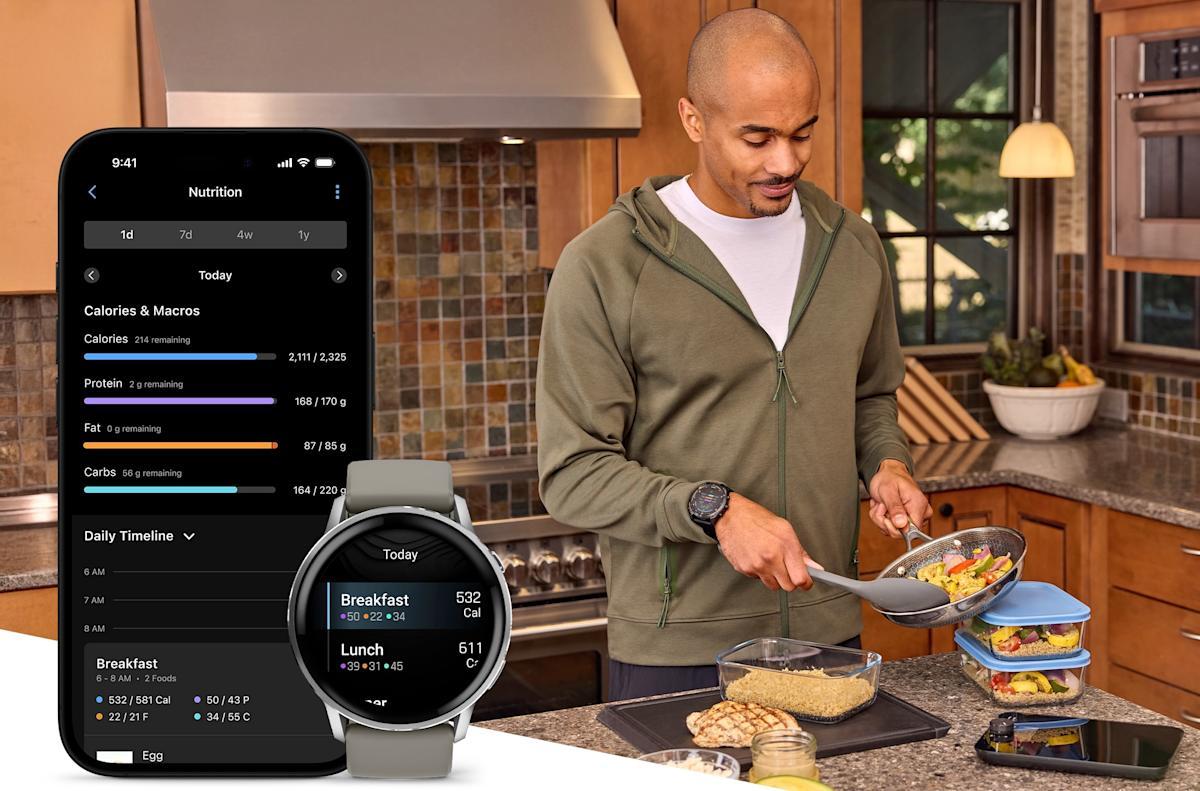
Garmin launches AI-powered food tracking feature at CES 2026, exclusive to Connect+ subscribers
06 Jan 2026•Technology
Apple's AI Acquisitions Hint at Intelligent Calendar Features in iOS 19
10 May 2025•Technology

Recent Highlights
1
Tennessee Teens Sue Elon Musk's xAI Over Grok AI-Generated Child Abuse Images
Policy and Regulation

2
Supermicro Co-Founder Indicted in $2.5 Billion Nvidia AI Chip Smuggling Scheme to China
Policy and Regulation
3
Val Kilmer to appear posthumously in As Deep as the Grave through AI-generated performance
Entertainment and Society

Recent Highlights
Today's Top Stories



Your Daily Dose of Curated AI News
Don’t drown in AI news. We cut through the noise - filtering, ranking and summarizing the most important AI news, breakthroughs and research daily. Spend less time searching for the latest in AI and get straight to action.

