Nvidia acquires SchedMD to strengthen open-source Slurm and unveils Nemotron 3 AI models


11 Sources
11 Sources
[1]
Nvidia bulks up open source offerings with an acquisition and new open AI models | TechCrunch
Nvidia continues to expand its footprint in open source AI on two fronts: an acquisition and a new model release. The semiconductor giant announced Monday it acquired SchedMD, the leading developer of popular open source workload management system Slurm. Nvidia said the company will continue to operate the program, which is designed for high-performance computing and AI, as an open source, vendor-neutral software. Slurm was originally launched in 2002 and SchedMD was founded in 2010 by the lead Slurm developers Morris Jette and Danny Auble. Auble is the current CEO of SchedMD. Terms of the deal weren't disclosed. Nvidia declined to comment on the news beyond the company's blog post. Nvidia has been working with SchedMD for more than a decade and said in its blog post the technology is critical infrastructure for generative AI. The company plans to keep investing in the technology and "accelerate" its access to different systems. The semiconductor company also released a new family of open AI models on Monday. The company claimed this group of models, called Nvidia Nemotron 3, is the most "efficient family of open models" for building accurate AI agents. This model family includes the Nemotron 3 Nano, a small model for targeted tasks, the Nemotron 3 Super, a model built for multi-AI agent applications, and Nemotron 3 Ultra, built for more complicated tasks. "Open innovation is the foundation of AI progress," Jensen Huang, founder and CEO of Nvidia, wrote in the company's press release. "With Nemotron, we're transforming advanced AI into an open platform that gives developers the transparency and efficiency they need to build agentic systems at scale." In recent months, Nvidia has pushed to bolster its open source and open AI offerings. Last week, the company announced a new open reasoning vision language model, Alpamayo-R1, which is focused on autonomous driving research. The company also said at the time it added more workflows and guides covering its Cosmos world models, which are open source under a permissive license, to help developers better use the models to develop physical AI. The activity is reflective of Nvidia's bet that physical AI will be the next frontier for its GPUs. Nvidia wants to be the go-to supplier for the many robotics -- or self-driving vehicle -- companies looking for the AI and software to develop the brains behind the technology.
[2]
Nvidia pledges more openness as it slurps up Slurm
Nvidia burnished its open source credentials this week after buying the company behind the veteran Slurm scheduler and announcing a slew of open source AI models. The chip giant revealed yesterday that it had acquired SchedMD, the key developer behind Slurm, which Nvidia described in a statement as "an open source workload management system for high-performance computing (HPC) and AI." Slurm has been around since 2002, when backers included Lawrence Livermore National Laboratory and France's Groupe Bull. Nvidia said this week it will "continue to develop and distribute Slurm as open source, vendor-neutral software, making it widely available to and supported by the broader HPC and AI community across diverse hardware and software environments." It added that "Nvidia will accelerate SchedMD's access to new systems - allowing users of Nvidia's accelerated computing platform to optimize workloads across their entire compute infrastructure." But Nvidia insisted it will also support "a diverse hardware and software ecosystem, so customers can run heterogeneous clusters with the latest Slurm innovations." Nvidia further played the open card, with the debut of its Nemotron 3 family of models, which it said delivered a "hybrid latent mixture-of-experts (MoE)" architecture in Nano, Super, and Ultra sizes. The firm also said the releases support its broader "sovereign AI efforts." Nemotron 3 NANO is a 30 billion-parameter model, activating up to 3 billion parameters at a time for "targeted" tasks. Super is a "high-accuracy reasoning model" with approximately 100 billion parameters for multi-agent applications. Ultra comes in at 500 billion parameters for "complex AI applications." Nvidia said the new architecture means the NANO model achieves four times the token throughput compared to its predecessor. Nvidia has regularly been accused of locking customers into its ecosystem, as much through its CUDA software platform as its pricey silicon. But it has increasingly sought to portray itself as an open champion. Earlier this year, it open sourced the Kubernetes native KAI scheduler it inherited through its purchase of Run:AI. At GTC in March, it open sourced its cuOpt optimization engine and its Groot robotics model. There's open and "open," however, and observers suggest the SchedMD buy inevitably strengthens Nvidia's grip on the overall stack, with expectations that its silicon will have a speed advantage when running the tool. ®
[3]
NVIDIA Acquires Open-Source Workload Management Provider SchedMD
NVIDIA will continue to distribute SchedMD's open-source, vendor-neutral Slurm software, ensuring wide availability for high-performance computing and AI. NVIDIA today announced it has acquired SchedMD -- the leading developer of Slurm, an open-source workload management system for high-performance computing (HPC) and AI -- to help strengthen the open-source software ecosystem and drive AI innovation for researchers, developers and enterprises. NVIDIA will continue to develop and distribute Slurm as open-source, vendor-neutral software, making it widely available to and supported by the broader HPC and AI community across diverse hardware and software environments. HPC and AI workloads involve complex computations running parallel tasks on clusters that require queuing, scheduling and allocating computational resources. As HPC and AI clusters get larger and more powerful, efficient resource utilization is critical. As the leading workload manager and job scheduler in scalability, throughput and complex policy management, Slurm is used in more than half of the top 10 and top 100 systems in the TOP500 list of supercomputers. Slurm, which is supported on the latest NVIDIA hardware, is also part of the critical infrastructure needed for generative AI, used by foundation model developers and AI builders to manage model training and inference needs. "We're thrilled to join forces with NVIDIA, as this acquisition is the ultimate validation of Slurm's critical role in the world's most demanding HPC and AI environments," said Danny Auble, CEO of SchedMD. "NVIDIA's deep expertise and investment in accelerated computing will enhance the development of Slurm -- which will continue to be open source -- to meet the demands of the next generation of AI and supercomputing." NVIDIA has been collaborating with SchedMD for over a decade and will continue investing in Slurm's development to ensure it remains the leading open-source scheduler for HPC and AI. NVIDIA will accelerate SchedMD's access to new systems -- allowing users of NVIDIA's accelerated computing platform to optimize workloads across their entire compute infrastructure -- while also supporting a diverse hardware and software ecosystem, so customers can run heterogeneous clusters with the latest Slurm innovations. NVIDIA will continue to offer open-source software support, training and development for Slurm to SchedMD's hundreds of customers, which include cloud providers, manufacturers, AI companies and research labs spanning industries such as autonomous driving, healthcare and life sciences, energy, financial services, manufacturing and government. Together with SchedMD, NVIDIA is bolstering the open-source software ecosystem to catalyze HPC and AI innovation across industries, at every scale.
[4]
Nvidia bolstering open-source capabilities amid latest acquisition
The chipmaker plans to increase investment and drive innovation for researchers, developers and enterprises. Semiconductor giant Nvidia, having recently made waves as the first company to reach a market value of $5trn, has announced additional plans to significantly broaden its open-source capabilities by acquiring SchedMD. Founded in 2010 by the developers of workload management and scheduling software Slurm, SchedMD is headquartered in Lehi, Utah and also has locations in Poland and Spain. Slurm is used for high-performance computing and large data clusters. With the acquisition, Nvidia intends to strengthen the open-source software ecosystem and drive AI innovation for researchers, developers and enterprises. The organisation has stated it will "Continue to develop and distribute Slurm as open-source, vendor-neutral software, making it widely available to and supported by the broader HPC and AI community across diverse hardware and software environments". Commenting on the announcement, Danny Auble, the CEO of SchedMD said, "We're thrilled to join forces with NVIDIA, as this acquisition is the ultimate validation of Slurm's critical role in the world's most demanding HPC and AI environments. "NVIDIA's deep expertise and investment in accelerated computing will enhance the development of Slurm, which will continue to be open-source, to meet the demands of the next generation of AI and supercomputing." Having collaborated with SchedMD for more than a decade, Nvidia has explained it will continue investing in Slurm's development, furthering its reputation as a "leading open-source scheduler for HPC and AI". NVIDIA will also continue to offer open-source software support, training and development for Slurm to SchedMD's customers, including cloud providers, manufacturers, AI companies and research labs spanning a number of industries. For example in autonomous driving, healthcare, the life sciences, energy, financial services, manufacturing and the government. Over the course of the last year alone, Nvidia has invested heavily in advanced and high-tech sectors, announcing plans to invest £2bn into the UK's AI start-up ecosystem. With the aim of developing AI tech in the country, creating new companies and generating jobs. The company also revealed plans to purchase $5bn worth of its struggling competitor Intel's stock, with the news coming alongside the announcement of a partnership between the two semiconductor businesses, to "jointly develop multiple generations of custom data centre and personal computer products". Don't miss out on the knowledge you need to succeed. Sign up for the Daily Brief, Silicon Republic's digest of need-to-know sci-tech news.
[5]

Nvidia acquires Slurm developer SchedMD to enhance its software capabilities - SiliconANGLE
Nvidia acquires Slurm developer SchedMD to enhance its software capabilities Nvidia Corp. has acquired SchedMD LLC, a low-profile company that maintains one of the most important open-source tools in the machine learning ecosystem. The chipmaker announced the deal today. The financial terms were not disclosed. SchedMD was founded in 2010 by the developers of Slurm, an open-source platform for managing server clusters. The company provides professional services that help organizations use the software in production. Nvidia disclosed today that SchedMD has several hundred customers including government agencies, banks and healthcare organizations. Training a large language model on a single graphics card can be prohibitively time-consuming. As a result, companies spread their training workloads across a large number of GPUs, which makes it possible to perform calculations in parallel rather than one after another. That saves time, but creates a significant amount of complexity. When a training workload runs across multiple GPUs, developers must decide which chip should perform what sub-task. Assigning a sub-task to a busy chip can cause unnecessary training delays. There are also other challenges, such as the need to avoid situations where some GPUs are left underutilized. Slurm automates the task of determining which GPU should perform what task and when. Kubernetes, another popular open-source cluster management platform, provides a similar capability. But Slurm includes a number of specialized features that make it better suited to power artificial intelligence training workloads. One of Slurm's differentiators is that it's highly scalable: the platform can manage clusters with more than 100,000 GPUs. It also provides fine-grained customization options. If two workloads exchange data with one another on a regular basis, developers can have Slurm place them on adjacent servers to minimize the distance that data must travel. Kubernetes supports similar customization, but only if developers extend it with plug-ins. SchedMD helps organizations set up Slurm and customize it for their requirements. Once a deployment is live, the company provides ongoing support services that assist customers with tasks such as installing updates. SchedMD maintains not only Slurm but also another open-source project called Slinky. It enables companies to run Slurm on Kubernetes. That removes the need to run the two open-source platforms on separate clusters, which simplified day-to-day management. Additionally, consolidating servers into a single cluster can improve hardware utilization and thereby lower costs. Nvidia stated in today's acquisition announcement that Slurm will remain an open-source project following the deal. The chipmaker will continue developing the project and provide professional services to SchedMD's customers. Nvidia also announced plans to "accelerate SchedMD's access to new systems -- allowing users of NVIDIA's accelerated computing platform to optimize workloads across their entire compute infrastructure." That suggests the chipmaker may be planning to optimize Slurm for its upcoming Rubin graphics card series and Vera central processing units.
[6]

Nvidia acquires SchedMD and launches Nemotron 3
Nvidia announced on Monday its acquisition of SchedMD, developer of the open-source workload manager Slurm, and the release of a new family of open AI models called Nvidia Nemotron 3 to expand its open-source AI offerings. SchedMD serves as the leading developer of Slurm, a workload management system originally launched in 2002 and designed specifically for high-performance computing and artificial intelligence workloads. The company itself was founded in 2010 by Morris Jette and Danny Auble, the original lead developers of Slurm. Danny Auble currently holds the position of CEO at SchedMD. Nvidia stated that SchedMD will continue to operate Slurm as open-source and vendor-neutral software following the acquisition. The semiconductor company emphasized in its blog post that the technology qualifies as critical infrastructure for generative AI applications. Nvidia plans to maintain investments in Slurm and accelerate its accessibility across various systems. The two companies have collaborated for more than a decade prior to this deal. Terms of the acquisition were not disclosed, and Nvidia declined to provide additional comments beyond its blog post. On the same day as the acquisition announcement, Nvidia introduced the Nemotron 3 family of open AI models. The company described this collection as the most efficient family of open models available for constructing accurate AI agents. The Nemotron 3 lineup consists of three distinct variants tailored to different use cases: Jensen Huang, Nvidia's founder and CEO, addressed the release in the company's press release. He wrote, "Open innovation is the foundation of AI progress. With Nemotron, we're transforming advanced AI into an open platform that gives developers the transparency and efficiency they need to build agentic systems at scale." In the preceding week, Nvidia announced Alpamayo-R1, a new open-reasoning vision language model centered on research for autonomous driving. At that time, the company also incorporated additional workflows and guides for its Cosmos world models. These Cosmos models operate under an open-source permissive license and assist developers in utilizing them to create physical AI. These developments form part of Nvidia's efforts in recent months to strengthen its open-source and open AI portfolio. The company positions itself as a primary supplier of AI and software to robotics and self-driving vehicle companies developing the core technologies for their systems.
[7]

Nvidia buys AI software provider SchedMD to expand open-source AI push
The chip designer built its reputation on speedy chips, but it also offers a range of its own AI models, from physics simulations to self-driving vehicles, as open-source software that researchers and companies can use. Nvidia said on Monday it acquired AI software firm SchedMD, as the chip designer doubles down on open-source technology and steps up investments in the artificial intelligence ecosystem to fend off rising competition. The chip designer built its reputation on speedy chips, but it also offers a range of its own AI models, from physics simulations to self-driving vehicles, as open-source software that researchers and companies can use. Its proprietary CUDA software, a standard among most developers, is a major selling point for its chips, making software key to maintaining its dominance in the AI industry. SchedMD provides software that helps schedule large computing jobs that can occupy a big share of a data center's server capacity. Its technology, called Slurm, is open source, meaning developers and firms can access it for free, while the company sells engineering and maintenance support. Financial terms of the deal were not disclosed. Nvidia said it would continue to distribute SchedMD's software on an open-source basis. "Slurm, which is supported on the latest Nvidia hardware, is also part of the critical infrastructure needed for generative AI, used by foundation model developers and AI builders to manage model training and inference needs," Nvidia said in a statement. Earlier on Monday, Nvidia unveiled a new family of open-source AI models that it says will be faster, cheaper and smarter than its previous offerings, as it faces a growing wave of rival open-source models from Chinese AI labs. SchedMD was founded in 2010 by Slurm software developers Morris "Moe" Jette and Danny Auble in Livermore, California, and the company currently employs 40 people, according to its website. Its customers include cloud infrastructure firm CoreWeave and the Barcelona Supercomputing Center, among others.
[8]

Nvidia Bought Slurm's Creator: It Makes Sense To One Partner, Another Is Concerned
The SchedMD acquisition makes sense to one top Nvidia channel partner because of the increasingly complex work required to run AI data centers, but it's sparking concern for another because of the AI infrastructure giant's history with a previous software acquisition. Nvidia said on Monday that it has acquired the maker of Slurm, an open-source workload management system that is rooted in traditional high-performance computing but has been increasingly used for large-scale AI clusters. The acquisition made sense to one top Nvidia channel partner because of the increasingly complex work required to run AI data centers, but it sparked concern for another because of the AI infrastructure giant's history with a previous software acquisition. [Related: 9 AMD Acquisitions Fueling Its AI Rivalry With Nvidia] In acquiring Slurm creator SchedMD, Nvidia said the move will "help strengthen the open-source software ecosystem" and vowed to "continue to develop and distribute Slurm as an open-source, vendor-neutral software, making it widely available to and supported by the broader HPC and AI community across diverse hardware and software environments." Financial terms of the deal were not disclosed. The Santa Clara, Calif.-based company said it will also increase SchedMD's access to new systems, "allowing users of Nvidia's accelerated computing platform to optimize workloads across their entire infrastructure." This, combined with continued support for a "diverse hardware and software ecosystem," will let customers "run heterogeneous clusters with the latest Slurm innovations," according to Nvidia. Nvidia, which has made several software acquisitions, said Slurm plays an important role in helping operators of HPC and AI clusters optimize the utilization of compute resources for complex workloads, noting its deployment among more than half of the top 10 and top 100 systems in the Top500 list of the world's fastest supercomputers. The AI infrastructure giant also said that Slurm is considered "critical infrastructure" for generative AI development, "used by foundation model developers and AI builders to manage model training and inference needs." Andy Lin, CTO at Houston-based Nvidia systems integration partner Mark III Systems, called the SchedMD acquisition a "great move" that is "directly in line" with Nvidia's "open-source-centric" software strategy for things like libraries, frameworks and tools. "Slurm is really the default, go-to open-source workload manager [and] scheduler for the industry, especially for folks that came from high-performance computing and that are really focused on not only HPC-style, large-scale jobs but also the training of large foundation models. It does incredibly well on that," he told CRN in an interview. With Slurm serving as an alternative to the Kubernetes-based Run:ai AI infrastructure management platform that Nvidia acquired last year, Lin said the AI infrastructure giant now owns two "dominant" workload management solutions for customers building AI data centers meant to serve "tens, hundreds or even thousands of users." But the executive said he isn't concerned about Nvidia, the dominant player in the AI infrastructure market, consolidating ownership of two such platforms. "It still will have an open approach, right? You'll still be able to train and leverage the same open-source models. Nvidia is probably one of the top, if not the top contributor of open-source in the space, so you'll still have the advantages from the user community perspective," said Lin, whose company has won multiple Nvidia Partner Network awards. Viewed another way, Lin said, the acquisition could be seen as "an acknowledgement of how challenging it is to operate a consolidated AI factory" -- the term Nvidia uses to describe a centralized AI data center that serves a broad constituency of users. "Although it seems straightforward from a marketing perspective, it's actually very difficult to deploy and run at scale for a long period of time," he said. "And I think this is probably an acknowledgement of a way to bring more [people with that] skill set into the fold to enable more of these organizations to be successful." As a result, the executive expects Nvidia to take advantage of SchedMD's enterprise support capabilities to provide customers with a more holistic offering for setting up AI data centers. "Nvidia will be able to leverage their enterprise support capability to be more in line with how [the company] is building out AI factories, specifically for those that want to use Slurm versus something like Run:ai," Lin said. This line of thinking about Nvidia using Slurm and SchedMD's enterprise support to boost AI factories makes sense to Dominic Daninger, vice president of engineering at HPC-focused Nvidia systems integration partner Nor-Tech in Burnsville, Minn. But unlike Lin, Daninger said he is concerned about how Nvidia's acquisition could impact Slurm usage among his HPC customers. The executive based this concern on his experience with Nvidia's 2022 acquisition of cluster management software vendor Bright Computing. After Bright Computing was acquired, Daninger said, the vendor's Bright Cluster Manager software got "very expensive" because of rising licensing and support costs. "And we just didn't see the same level of support either, so it caused us to, for the most part, discontinue the use of Bright," Daninger said. Daninger said the costs increased as Nvidia merged the product into Base Command Manager software in 2023, which resulted in the company changing the way it charges for licenses to a per-GPU basis and away from Bright's traditional per-node pricing. Then late last year, Nvidia made Base Command Manager only available through the Nvidia AI Enterprise software suite, which costs $4,500 per GPU for a year-long subscription and includes enterprise support, Nvidia partner Boston Limited said in a notice at the time. By contrast, Bright Cluster Manager's per-node licenses typically cost hundreds of dollars per year before the acquisition, according to Daninger. "The orientation changed to what Nvidia needed out of it. They can do that when they own it. And I would expect to see some of the same things here with Slurm," Daninger said. The executive said he was not aware that Nvidia made Base Command Manager available for free in May through a license that supports up to eight GPUs per system and doesn't include support, but he added that it was too late since Nor-Tech has largely moved on to other cluster management solutions, including ClusterVision, for its customers. Nvidia declined to comment on Daninger's concerns, but the company said in its Monday announcement that it will "continue to offer open-source software support, training and development for Slurm to SchedMD's hundreds of customers."
[9]

Futurum CEO Says Nvidia Has Fortified Its CUDA Dominance After SchedMD Deal Tightens Grip On AI Infrastructure: 'Not An Easy Thing To Do' - NVIDIA (NASDAQ:NVDA)
Nvidia Corp.'s (NASDAQ:NVDA) acquisition of AI software firm SchedMD is being seen by industry analysts as a strategic move that further entrenches the chipmaker's dominance across the AI software and infrastructure stack. Nvidia Expands Beyond Chips To Strengthen Its AI Software Ecosystem On Monday, Nvidia announced that it has acquired SchedMD, the company behind Slurm, an open-source workload manager widely used to schedule and manage large-scale computing jobs across data centers, supercomputers and AI research labs. Financial terms of the deal were not disclosed. Nvidia said it will continue distributing SchedMD's software as open source, reinforcing its stated commitment to the open-source AI community. SchedMD, founded in 2010 in Livermore, California, develops Slurm, a scheduling system used by leading AI developers and enterprises to manage training and inference workloads. The company employs about 40 people and counts customers such as cloud infrastructure provider CoreWeave and the Barcelona Supercomputing Center. See Also: 'I'm Always In A State Of Anxiety' Says Nvidia CEO As $5T Triumph Still Feels Like '30 Days From Going Out Of Business' Futurum CEO Says Nvidia Is Deepening The CUDA Moat Reacting to the announcement, Futurum Group CEO Daniel Newman said the acquisition strengthens Nvidia's already formidable software advantage. "Nvidia just deepened the CUDA moat," Newman said in a post on X. "Not an easy thing to do given the moat is already eight feet deep." CUDA, or Compute Unified Device Architecture, is Nvidia's proprietary parallel computing platform. It has long been a cornerstone of its AI leadership, tightly binding developers to its hardware. By bringing Slurm closer into its ecosystem, Nvidia extends its influence beyond chips and developer tools into the infrastructure layer that orchestrates how AI workloads run at scale. Why Slurm Matters In The AI Race Slurm plays a critical role in allocating computing resources efficiently across clusters of GPUs -- a function that has become essential as AI models grow larger and more resource-intensive. In a blog post announcing the deal, Nvidia said Slurm, optimized to support its latest hardware, has become a key component of generative AI infrastructure used by foundational model developers and AI builders. The acquisition comes as Nvidia faces intensifying competition, including a surge in open-source AI models from Chinese research labs. Earlier Monday, Nvidia also released a new series of open-source AI models, which it says offer improved speed, efficiency and intelligence. Nvidia ranks in the 97th percentile for growth among stocks tracked by Benzinga Edge Rankings, outpacing competitors such as AMD and Intel and placing it near the top of its peer group. Read Next: Investor Michael Burry Criticizes Nvidia, Warns Of Unpredictable AI Bubble Burst, Says 'There Is No Way To Time Or Predict' Disclaimer: This content was partially produced with the help of AI tools and was reviewed and published by Benzinga editors. Photo courtesy: Mehaniq/ Shutterstock NVDANVIDIA Corp$174.90-0.79%OverviewMarket News and Data brought to you by Benzinga APIs
[10]

Nvidia Acquires SchedMD to Support Open-Source Workload Management for AI | PYMNTS.com
By completing this form, you agree to receive marketing communications from PYMNTS and to the sharing of your information with our sponsor, if applicable, in accordance with our Privacy Policy and Terms and Conditions. Slurm, a workload management system for high-performance computing (HPC) and artificial intelligence (AI), is used in more than half of the top 10 and top 100 systems in the TOP500 list of supercomputers, Nvidia said in a Monday (Dec. 15) blog post. The two companies have been collaborating for over a decade, according to the post. With the acquisition, Nvidia will continue to invest in Slurm's development "to ensure it remains the leading open-source scheduler for HPC and AI"; offer open-source software support, training and development for Slurm to SchedMD's customers; and develop and distribute Slurm as open-source, vendor-neutral software, while making it available to the broader HPC and AI community, according to the post. "Nvidia will accelerate SchedMD's access to new systems -- allowing users of Nvidia's accelerated computing platform to optimize workloads across their entire compute infrastructure -- while also supporting a diverse hardware and software ecosystem, so customers can run heterogeneous clusters with the latest Slurm innovations," Nvidia said in the post. SchedMD CEO Danny Auble said in the release that the acquisition demonstrates the importance of Slurm's role in demanding HPC and AI environments. "Nvidia's deep expertise and investment in accelerated computing will enhance the development of Slurm -- which will continue to be open source -- to meet the demands of the next generation of AI and supercomputing," Auble said. In an earlier transaction, Nvidia said in April 2024 that it planned to acquire Run:ai, a Kubernetes-based workload management and orchestration software provider. "Run:ai enables enterprise customers to manage and optimize their compute infrastructure, whether on premises, in the cloud or in hybrid environments," Nvidia said at the time in a blog post.
[11]

Nvidia buys AI software provider SchedMD to expand open-source AI push
Dec 15 (Reuters) - Nvidia said on Monday it acquired AI software firm SchedMD, as the chip designer doubles down on open-source technology and steps up investments in the artificial intelligence ecosystem to fend off rising competition. The chip designer built its reputation on speedy chips, but it also offers a range of its own AI models, from physics simulations to self-driving vehicles, as open-source software that researchers and companies can use. Its proprietary CUDA software, a standard among most developers, is a major selling point for its chips, making software key to maintaining its dominance in the AI industry. SchedMD provides software that helps schedule large computing jobs that can occupy a big share of a data center's server capacity. Its technology, called Slurm, is open source, meaning developers and firms can access it for free, while the company sells engineering and maintenance support. Financial terms of the deal were not disclosed. Nvidia said it would continue to distribute SchedMD's software on an open-source basis. "Slurm, which is supported on the latest Nvidia hardware, is also part of the critical infrastructure needed for generative AI, used by foundation model developers and AI builders to manage model training and inference needs," Nvidia said in a statement. Earlier on Monday, Nvidia unveiled a new family of open-source AI models that it says will be faster, cheaper and smarter than its previous offerings, as it faces a growing wave of rival open-source models from Chinese AI labs. SchedMD was founded in 2010 by Slurm software developers Morris "Moe" Jette and Danny Auble in Livermore, California, and the company currently employs 40 people, according to its website. Its customers include cloud infrastructure firm CoreWeave and the Barcelona Supercomputing Center, among others. (Reporting by Arsheeya Bajwa in Bengaluru; Editing by Tasim Zahid)
Share
Share
Copy Link
Nvidia acquired SchedMD, the developer behind Slurm workload management system, while launching the Nemotron 3 family of open AI models. The chipmaker pledges to maintain Slurm as vendor-neutral software while accelerating development for high-performance computing and AI. The move signals Nvidia's push to control more of the AI infrastructure stack while positioning itself as an open-source champion.
Nvidia Acquires SchedMD to Enhance Software Capabilities
Nvidia announced Monday it has acquired SchedMD, the leading developer behind Slurm, an open-source workload management system that has become critical infrastructure for high-performance computing and AI
1
. The semiconductor giant did not disclose financial terms of the deal, but emphasized its commitment to continue developing and distributing Slurm as vendor-neutral software3
.
Source: TechCrunch
SchedMD was founded in 2010 by Morris Jette and Danny Auble, the lead developers of Slurm, which originally launched in 2002 with backing from Lawrence Livermore National Laboratory and France's Groupe Bull
2
. The company provides professional services to several hundred customers including cloud providers, manufacturers, AI companies, research labs, government agencies, banks and healthcare organizations spanning industries from autonomous driving to financial services3
5
.Why Slurm Matters for Managing Server Clusters for Machine Learning
Slurm serves as a job scheduler that automates the complex task of determining which GPUs should perform specific tasks and when during AI training workloads
5
. Training large language models on a single graphics card is prohibitively time-consuming, so companies distribute workloads across numerous GPUs to enable parallel calculations. This creates significant complexity in avoiding situations where some GPUs remain underutilized or busy chips cause unnecessary delays.
Source: PYMNTS
The workload manager is used in more than half of the top 10 and top 100 systems in the TOP500 list of supercomputers
3
. One of Slurm's key differentiators over alternatives like Kubernetes is its scalability—the platform can manage data clusters with more than 100,000 GPUs5
. It also provides fine-grained customization options, allowing developers to place workloads that exchange data regularly on adjacent servers to minimize data travel distances.Bolstering Open-Source Capabilities While Strengthening Ecosystem Control
Nvidia has been collaborating with SchedMD for over a decade and stated it will continue investing in Slurm's development to ensure it remains the leading open-source scheduler for HPC and AI
3
. The chipmaker plans to accelerate SchedMD's access to new systems, allowing users of Nvidia's accelerated computing platform to optimize workloads across their entire compute infrastructure while supporting a diverse hardware and software ecosystem2
.Danny Auble, CEO of SchedMD, called the acquisition "the ultimate validation of Slurm's critical role in the world's most demanding HPC and AI environments"
3
. However, observers suggest the acquisition inevitably strengthens Nvidia's grip on the overall stack, with expectations that its silicon will have a speed advantage when running the tool2
. Nvidia has regularly been accused of locking customers into its ecosystem through its CUDA software platform as much as its hardware.Related Stories

Nemotron 3 Family of Open AI Models Targets Agentic Systems
Alongside the acquisition, Nvidia released the Nemotron 3 family of open AI models, which the company claims is the most efficient family of open models for building accurate AI agents
1
. The family includes three models with a hybrid latent mixture-of-experts architecture: Nemotron 3 Nano, a 30 billion-parameter model activating up to 3 billion parameters at a time for targeted tasks; Nemotron 3 Super, approximately 100 billion parameters for multi-agent applications; and Nemotron 3 Ultra, with 500 billion parameters for complex AI applications2
.
Source: ET
The new architecture delivers significant performance improvements, with the Nano model achieving four times the token throughput compared to its predecessor
2
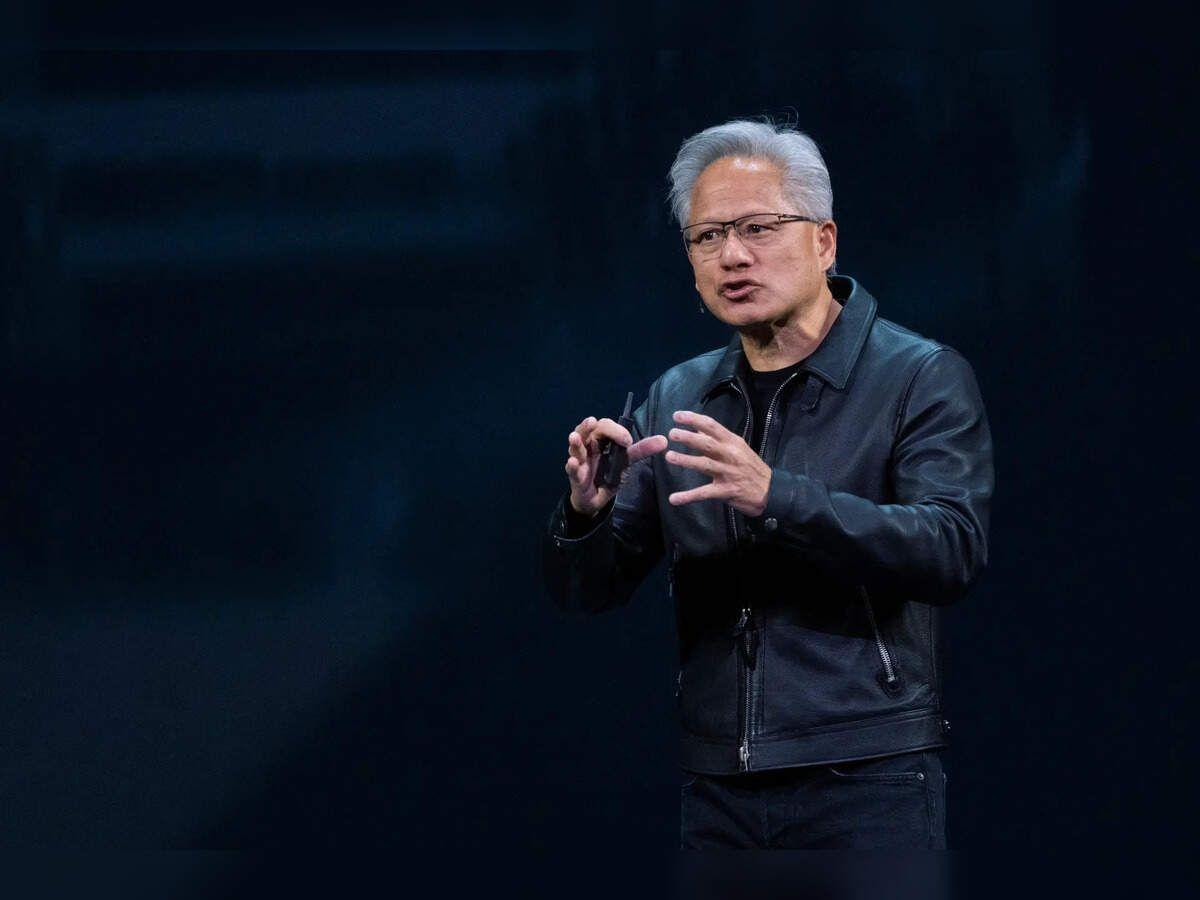
. Nvidia said the releases support its broader sovereign AI efforts. Jensen Huang, founder and CEO of Nvidia, stated that "open innovation is the foundation of AI progress" and that Nemotron transforms advanced AI into an open platform giving developers the transparency and efficiency needed to build agentic systems at scale1
.Accelerate AI Innovation Through Strategic Open-Source Positioning
In recent months, Nvidia has pushed to bolster its open-source and open AI offerings as part of its bet that physical AI will be the next frontier for its GPUs
1
. Last week, the company announced Alpamayo-R1, a new open reasoning vision language model focused on autonomous driving research, and added workflows covering its Cosmos world models to help developers build physical AI. Earlier this year, Nvidia open sourced the Kubernetes native KAI scheduler inherited through its Run:AI purchase and its cuOpt optimization engine at GTC in March2
.The chipmaker, which recently became the first company to reach a market value of $5 trillion, has invested heavily in advanced sectors over the past year
4
. This includes plans to invest £2 billion into the UK's AI start-up ecosystem and a planned $5 billion stock purchase of struggling competitor Intel alongside a partnership to jointly develop data centre and personal computer products. Nvidia wants to position itself as the go-to supplier for robotics and self-driving vehicle companies seeking AI and software to develop the technology's underlying intelligence, while addressing criticisms about ecosystem lock-in through strategic open-source moves that simultaneously strengthen its infrastructure control.🟡 electricians.com)References
Summarized by

Navi
[1]
[2]
[4]
Related Stories
Nvidia acquisition of Slurm software sparks fairness concerns in AI chip race
07 Apr 2026•Business and Economy
Nvidia launches Nemotron 3 open source AI models as Meta steps back from transparency
15 Dec 2025•Technology

Nvidia Completes Acquisition of Run:ai, Plans to Open-Source AI Infrastructure Software
31 Dec 2024•Business and Economy

Recent Highlights


Recent Highlights
Today's Top Stories






Your Daily Dose of Curated AI News
Don’t drown in AI news. We cut through the noise - filtering, ranking and summarizing the most important AI news, breakthroughs and research daily. Spend less time searching for the latest in AI and get straight to action.

