Nvidia Must Accept Strict Licensing Terms for H200 AI Chip Sales to China, Lutnick Says


9 Sources
9 Sources
[1]
Nvidia Is Heading Back to China. Here's Why It's Fraught
Nvidia Corp.'s Jensen Huang finally got what he spent months lobbying for when the US government authorized the company to sell its workhorse artificial intelligence chip to China. The Nvidia chief executive has argued that export controls imposed by Washington to limit Chinese access to his company's most cutting-edge AI accelerators were depriving American companies of a lucrative and strategic foothold in the world's biggest chip market. Relaxing the restrictions to allow Nvidia to sell the H200 AI accelerator there has given it a chance to grab a piece of the action and helped to sustain its position as the world's most valuable company. But Huang will need to tread carefully. Suspicion of China runs deep in Washington, which could quickly reinstate the H200 ban if it emerges that the Beijing government is using the powerful chip for military purposes -- or if US President Donald Trump simply changes his mind. The government in Beijing will also scrutinize every sale and could block shipments or ask Chinese companies to justify the purchases. Why was Nvidia locked out of China? Citing national security concerns, Washington limited the export of high-performance semiconductors to China during Trump's first presidency, a policy that was upheld by his successor Joe Biden and tightened again when Trump returned to the White House. Policymakers still worry the same chips that power AI services such as ChatGPT and Claude risk accelerating the development of China's nuclear weapon systems, military intelligence and cyberwarfare capabilities. US export license requirements have effectively blocked Nvidia and US rival Advanced Micro Devices Inc. from supplying their best products to Chinese customers. The two California-based companies lead the market for AI accelerators -- the chips that create and then run AI software. Both tried to offer China-only versions of their product lines. These parts are less capable and are designed not to trigger the rules. Even these offerings were later caught in a tightening of the restrictions or largely rejected by Chinese customers under instruction from Beijing. Why is China crucial for Nvidia? In the first place, it's the world's biggest single market for chips, accounting for $229 billion in annual revenue -- a third of the industry total -- in 2024. Huang expects Chinese companies will be spending $50 billion annually on AI chips alone within two to three years. For Huang, it's not just about securing a share of that business. Nvidia's decisive technological edge has made it the world's preeminent provider of the equipment powering the AI boom. By forcing China's army of AI developers to seek out alternatives to Nvidia for their computation needs, the US chip export restrictions have energized China's efforts to create an AI chip ecosystem that could ultimately threaten Nvidia's leadership. The longer Nvidia is excluded from China, the bigger the potential market opportunity for Chinese rivals such as Huawei Technologies Co. and Cambricon Technologies Corp. Why did the US change its mind on the H200? Huang convinced the Trump administration that to protect America's technological advantage over an increasingly capable China, the world needs to be building AI systems on US technology. Excluding China incentivizes Beijing to develop an alternative AI ecosystem that would compete with the US chip hardware "stack" in the global market. Huang and other critics of the export restrictions argue that, even if Nvidia is allowed back into China, the Chinese military would not use US technology for their crucial systems any more than the US defense establishment would adopt Chinese technology, so the national security argument is overblown. In fact, they say, getting Chinese companies hooked on Nvidia chips gives the US potential leverage over Beijing as it could cut off supply or force the company to stop supporting its equipment installed in the country. Foreign policy hawks in Washington have dismissed these arguments as self-interested sophistry, and counter that China will use US technology anyway it wants and can't be trusted. What's changed in the US stance, and what hasn't? The US government will allow the export of the H200 to approved Chinese customers, who will be selected on a case-by-case basis, and subject to conditions. It will also seek to prevent unauthorized users such as military actors from accessing the processors. The US federal government will get a 25% cut of the revenue under the framework. The H200 was first unveiled in 2023 and went on sale in the second quarter of 2024. It's since been superseded by the Blackwell B200 and now by the Rubin, which will go on sale this year. So the US is still depriving China of Nvidia's leading-edge chips. That said, the H200's Hopper design is a major part of the world's data centers and regarded as more capable than anything Nvidia's Chinese rivals are able to offer. Washington has given itself the option to limit H200 exports to China if it decides that US customers aren't getting enough of them. Nvidia has said it can make enough H200s to meet Chinese orders without needing to reduce shipments to other customers. Nvidia hasn't projected possible revenue for the H200 as it waits for the Chinese government to give its companies the go-ahead to buy US chips, and for the US to issue the necessary export license. What is China's stance? China objected forcefully to the US chip export controls, calling them "discriminatory" and a "double standard." Yet it also restricted the sale of Nvidia's less capable H20 chip in August 2025 because it saw a security risk in embedding American technology in sensitive systems and infrastructure. Behind closed doors, China has told tech companies it will allow limited access to H200s, while reporting suggests it plans to block the chip's use in sensitive sectors such as the military, government agencies and critical infrastructure. Get the Tech Newsletter bundle. Get the Tech Newsletter bundle. Get the Tech Newsletter bundle. Bloomberg's subscriber-only tech newsletters, and full access to all the articles they feature. Bloomberg's subscriber-only tech newsletters, and full access to all the articles they feature. Bloomberg's subscriber-only tech newsletters, and full access to all the articles they feature. Bloomberg may send me offers and promotions. Plus Signed UpPlus Sign UpPlus Sign Up By submitting my information, I agree to the Privacy Policy and Terms of Service. In doing so, the Beijing government is trying to balance two priorities. It's striving to end China's reliance on imported semiconductors. But it also needs to access the hardware required to overtake the US in AI, a technology that promises to boost productivity across multiple industries and accelerate scientific breakthroughs. Chinese tech leaders such as Alibaba Group Holding Ltd. and ByteDance Ltd have been struggling to secure enough accelerator chips from the likes of domestic suppliers such as Huawei and Cambricon to achieve their AI ambitions. Partly to limit the commercial threat to homegrown AI chipmakers, China's government is insisting that customers buying from Nvidia or AMD also purchase a set number of domestically produced chips. It remains to be seen how many US chips Beijing allows its AI developers to purchase. Are Chinese chipmakers catching up with Nvidia? The extent of Nvidia's capability edge is the subject of considerable debate. Huang said in September that China is not years behind the US, but nanoseconds. He cited the country's ability to build infrastructure more quickly than the US and said as much as half of the world's AI researchers hail from China. One reason why China's progress in AI continues apace despite the US chip curbs is that Chinese AI companies have rolled out large language models -- the systems powering today's generative AI -- that can achieve more with less computing power. In January 2025, Chinese AI developer DeepSeek unveiled a model that performed on par with the likes of US rival OpenAI Inc.'s ChatGPT, yet was trained on less advanced chips at a fraction of the cost. A plethora of Chinese firms, including Alibaba and ByteDance, have since rolled out ever-more sophisticated AI services -- all without access to the best silicon. Huang remains bullish about his company's lead and others agree, for now. According to Bernstein researchers, the H200 is still significantly better than products from Chinese rivals. But China's ecosystem of chip manufacturers is growing fast and attracting investor attention: Moore Threads Technology Co. and MetaX Integrated Circuits surged several-fold in their stock market debuts last year, reflecting bets that they will benefit from Beijing policy support during China's pursuit of technological self-sufficiency. Whether an influx of H200s hurts China's own AI chipmakers depends in large part on the quantities of Nvidia chips allowed, the extent of their adoption in the country and whether Beijing insists on Chinese tech companies buying from domestic players too.
[2]
Nvidia must live with guardrails around its AI chip sales to China, Lutnick says
WASHINGTON, Feb 10 (Reuters) - AI chip company Nvidia "must live with" the licensing terms on sales of its second most advanced AI chip to China, Commerce Department Secretary Howard Lutnick said at a hearing on Tuesday. "The license terms are very detailed. They've been worked out together with the State Department, and those terms Nvidia must live with," he said. When asked if he trusted the Chinese to abide by restrictions on the use of the chips, known as the H200, Lutnick deferred to President Donald Trump. Reuters reported last week that Nvidia has not agreed to proposed conditions for use of its chips in China, including the Know-Your-Customer requirement - which ensures China's military does not access the chips. Permission for Nvidia to sell its prized AI chips to China came after U.S. and Chinese Presidents Trump and Xi Jinping brokered a trade truce in South Korea in October. It included a U.S. pledge to postpone by a year a rule barring shipments of American technology to thousands of Chinese firms. When asked about the decision on Tuesday, Lutnick again deferred to Trump, noting that the "complex relationship" between the U.S. and China is in the hands of Trump and the secretary of state. "They help us and instruct us and we follow their lead." "We all are familiar with the weaponization of critical minerals and rare earths and magnets, and so the resolution of those topics is really with the president," he added. Reporting by Alexandra Alper and David Lawder Editing by Rod Nickel Our Standards: The Thomson Reuters Trust Principles., opens new tab
[3]
Exclusive: Nvidia's AI chip sale to ByteDance hinges on conditions set by Trump administration
Feb 4 (Reuters) - The Trump administration is willing to allow China's ByteDance to buy Nvidia's H200 chips, but the AI chipmaker has not agreed to proposed conditions for their use, according to a person familiar with the matter. The U.S. said it would approve the license about two weeks ago, the person said, but Nvidia has not accepted the U.S. government's Know-Your-Customer (KYC) requirement as now drafted - to ensure China's military does not access the chips - among other conditions. More broadly, Nvidia (NVDA.O), opens new tab is negotiating with the U.S. over the terms of licenses to ship its H200 AI chips to companies in China, according to the person and two others familiar with the matter. Nvidia said it was an intermediary between the U.S. government and potential customers that would have to comply with the U.S. restrictions. "We aren't able to accept or reject license conditions on our own," a company spokesperson said in a statement. "Although KYC is important, KYC is not the issue. For American industry to make any sales, the conditions need to be commercially practical, else the market will continue to move to foreign alternatives." ByteDance, which owns TikTok and is one of the biggest AI companies in China, could not be immediately reached for comment. The Commerce Department did not immediately respond to a request for comment. Nvidia and its Chinese customers have once again found themselves caught in the crossfire of the U.S.-China tech war. China has already granted preliminary approval to three of its largest tech companies - ByteDance, Tencent (0700.HK), opens new tab, and Alibaba (9988.HK), opens new tab - along with AI startup Deepseek to import the chips, though the regulatory conditions for China's approvals also are still being finalized. This news from the U.S. side represents the latest twist on whether China will get chip shipments first promised by President Donald Trump in early December, with a 25 percent cut to the U.S. government. The same arrangement applies to similar chips from firms such as Advanced Micro Devices (AMD.O), opens new tab and Intel (INTC.O), opens new tab. Trump's decision was decried by China hawks, who viewed it as a risk to national security, and fear that China will use the chips to strengthen its military capabilities. On January 15, the Commerce Department issued a regulation formally loosening the licensing policy for the chips, but stipulating conditions. For example, it said the applicant had to certify and provide data to support that its customer will use "rigorous" Know Your Customer procedures to screen and prevent unauthorized remote access. In addition, it is required to provide a list of remote users tied to companies in Iran, Cuba, Venezuela and other countries of concern. Before the chips could go to China, a U.S. third-party lab also is required to test the chips to ensure they meet specifications, a requirement viewed by many as a way for the U.S. to collect its 25 percent fee. The Commerce Department typically circulates licenses pending approval to other agencies with the proposed conditions, according to a former Commerce official. Once they agree, the conditions may be sent to the license applicant - in this case, Nvidia - essentially asking the company if they can live with them. The applicant may suggest changes, which would be sent back to the agencies involved for their agreement. The departments of State, Defense and Energy are included. One source suggested at least some chips are likely to go to China by the time Trump plans to meet with Chinese President Xi Jinping in April. Reporting by Karen Freifeld; editing by Chris Sanders and Rod Nickel Our Standards: The Thomson Reuters Trust Principles., opens new tab
[4]
Nvidia must 'live with' guardrails around its AI chip sales to China, Lutnick says
AI chip giant Nvidia must "live with" the licensing terms on sales of its second most advanced AI chip to China, Commerce Department Secretary Howard Lutnick said at a hearing on Tuesday. AI chip giant Nvidia must "live with" the licensing terms on sales of its second most advanced AI chip to China, Commerce Department Secretary Howard Lutnick said at a hearing on Tuesday. "The license terms are very detailed. They've been worked out together with the State Department, and those terms Nvidia must live with," he said. When asked if he trusted the Chinese to abide by restriction on the use of the chips, known as the H200, Lutnick deferred to President Donald Trump.
[5]
What's Going On With Nvidia Stock Wednesday? - NVIDIA (NASDAQ:NVDA)
Lutnick Signals No Wiggle Room For Nvidia On China Chip Controls U.S. Commerce Secretary Howard Lutnick addressed the licensing requirements governing Nvidia Corp.'s (NASDAQ:NVDA) sales of its advanced AI chips to China during a hearing on Tuesday. Lutnick stated that Nvidia must adhere to the detailed licensing terms for the sale of its second-most-advanced AI chip, the H200, to China, Reuters reported on Tuesday. He explained that the terms, which were developed in collaboration with the State Department, are detailed and non-negotiable. Delays and Uncertainty Surround Nvidia's China Deal Reportedly, Nvidia had not agreed to the proposed conditions that would prevent China's military from gaining access to the chips. The U.S. agreed to permit Nvidia to sell its AI chips to China after a trade truce between Presidents Trump and Xi Jinping in South Korea last October. Despite President Trump's approval of Nvidia's export of H200 chips to China, the sale is still awaiting final clearance from the U.S. government, pending a national security review. Competition Increases as Chinese Firms Seek Alternatives This move could have significant implications for Nvidia's market share and potential revenue in China. In December, Nvidia CEO Jensen Huang secured a deal with President Trump to reopen Nvidia's market presence in China, which Huang views as a potential $50 billion opportunity. However, the formal approval, granted in January, has yet to result in final clearance for H200 chip shipments. Despite these delays, China's industry ministries have reportedly approved the import of the first batch of H200 chips, with initial authorizations granted to three major Chinese internet companies. However, the National Development and Reform Commission is still finalizing the terms. As a result of the delays, Chinese AI firms have resorted to purchasing more expensive black-market hardware or lower-performing domestic alternatives, such as Huawei's Ascend series. Resellers reported that black-market servers with 8 H200 GPUs are now commanding a 50% price premium. Orders from Chinese customers far exceeded available stock, prompting Nvidia to scale up chip production in the second quarter of 2026. NVDA Price Action: Nvidia shares were up 0.30% at $189.11 during premarket trading on Wednesday, according to Benzinga Pro data. Photo by JRdes via Shutterstock Market News and Data brought to you by Benzinga APIs
[6]
Nvidia's AI chip sale to ByteDance hinges on conditions set by Trump administration
The U.S. said it would approve the license about two weeks ago, the person said, but Nvidia has not accepted the U.S. government's Know-Your-Customer (KYC) requirement as now drafted - to ensure China's military does not access the chips - among other conditions. The Trump administration is willing to allow China's ByteDance to buy Nvidia's H200 chips, but the AI chipmaker has not agreed to proposed conditions for their use, according to a person familiar with the matter. The U.S. said it would approve the license about two weeks ago, the person said, but Nvidia has not accepted the U.S. government's Know-Your-Customer (KYC) requirement as now drafted - to ensure China's military does not access the chips - among other conditions. More broadly, Nvidia is negotiating with the U.S. over the terms of licenses to ship its H200 AI chips to companies in China, according to the person and two others familiar with the matter. Nvidia said it was an intermediary between the U.S. government and potential customers that would have to comply with the U.S. restrictions. "We aren't able to accept or reject license conditions on our own," a company spokesperson said in a statement. "Although KYC is important, KYC is not the issue. For American industry to make any sales, the conditions need to be commercially practical, else the market will continue to move to foreign alternatives." ByteDance, which owns TikTok and is one of the biggest AI companies in China, could not be immediately reached for comment. The Commerce Department did not immediately respond to a request for comment. Nvidia and its Chinese customers have once again found themselves caught in the crossfire of the U.S.-China tech war. China has already granted preliminary approval to three of its largest tech companies - ByteDance, Tencent, and Alibaba - along with AI startup Deepseek to import the chips, though the regulatory conditions for China's approvals also are still being finalized. This news from the U.S. side represents the latest twist on whether China will get chip shipments first promised by President Donald Trump in early December, with a 25 percent cut to the U.S. government. The same arrangement applies to similar chips from firms such as Advanced Micro Devices and Intel. Trump's decision was decried by China hawks, who viewed it as a risk to national security, and fear that China will use the chips to strengthen its military capabilities. On January 15, the Commerce Department issued a regulation formally loosening the licensing policy for the chips, but stipulating conditions. For example, it said the applicant had to certify and provide data to support that its customer will use "rigorous" Know Your Customer procedures to screen and prevent unauthorized remote access. In addition, it is required to provide a list of remote users tied to companies in Iran, Cuba, Venezuela and other countries of concern. Before the chips could go to China, a U.S. third-party lab also is required to test the chips to ensure they meet specifications, a requirement viewed by many as a way for the U.S. to collect its 25 percent fee. The Commerce Department typically circulates licenses pending approval to other agencies with the proposed conditions, according to a former Commerce official. Once they agree, the conditions may be sent to the license applicant - in this case, Nvidia - essentially asking the company if they can live with them. The applicant may suggest changes, which would be sent back to the agencies involved for their agreement. The departments of State, Defense and Energy are included. One source suggested at least some chips are likely to go to China by the time Trump plans to meet with Chinese President Xi Jinping in April.
[7]

Nvidia must live with guardrails around its AI chip sales to China, Lutnick says
WASHINGTON -- AI chip company Nvidia "must live with" the licensing terms on sales of its second most advanced AI chip to China, U.S. Commerce Department Secretary Howard Lutnick said at a hearing on Tuesday. "The license terms are very detailed. They've been worked out together with the State Department, and those terms Nvidia must live with," he said. When asked if he trusted the Chinese to abide by restrictions on the use of the chips, known as the H200, Lutnick deferred to U.S. President Donald Trump. Reuters reported last week that Nvidia has not agreed to proposed conditions for use of its chips in China, including the Know-Your-Customer requirement - which ensures China's military does not access the chips. Permission for Nvidia to sell its prized AI chips to China came after U.S. and Chinese Presidents Trump and Xi Jinping brokered a trade truce in South Korea in October. It included a U.S. pledge to postpone by a year a rule barring shipments of American technology to thousands of Chinese firms. When asked about the decision on Tuesday, Lutnick again deferred to Trump, noting that the "complex relationship" between the U.S. and China is in the hands of Trump and the secretary of state. "They help us and instruct us and we follow their lead." "We all are familiar with the weaponization of critical minerals and rare earths and magnets, and so the resolution of those topics is really with the president," he added.
[8]

Nvidia must live with guardrails around its AI chip sales to China, Lutnick says
WASHINGTON, Feb 10 (Reuters) - AI chip company Nvidia "must live with" the licensing terms on sales of its second most advanced AI chip to China, Commerce Department Secretary Howard Lutnick said at a hearing on Tuesday. "The license terms are very detailed. They've been worked out together with the State Department, and those terms Nvidia must live with," he said. When asked if he trusted the Chinese to abide by restrictions on the use of the chips, known as the H200, Lutnick deferred to President Donald Trump. Reuters reported last week that Nvidia has not agreed to proposed conditions for use of its chips in China, including the Know-Your-Customer requirement - which ensures China's military does not access the chips. Permission for Nvidia to sell its prized AI chips to China came after U.S. and Chinese Presidents Trump and Xi Jinping brokered a trade truce in South Korea in October. It included a U.S. pledge to postpone by a year a rule barring shipments of American technology to thousands of Chinese firms. When asked about the decision on Tuesday, Lutnick again deferred to Trump, noting that the "complex relationship" between the U.S. and China is in the hands of Trump and the secretary of state. "They help us and instruct us and we follow their lead." "We all are familiar with the weaponization of critical minerals and rare earths and magnets, and so the resolution of those topics is really with the president," he added. (Reporting by Alexandra Alper and David LawderEditing by Rod Nickel)
[9]
Nvidia's ByteDance chip sale hinges on Trump conditions
STORY: Nvidia and its Chinese customers are once again caught in the crossfire of the U.S.-China tech war. A Reuters source says the Trump administration is willing to let Tiktok-owner ByteDance purchase Nvidia's H200 processors, but the chipmaker has not agreed to the proposed conditions. :: File The U.S. signaled approval for a license about two weeks ago, but the company has not accepted Know-Your-Customer rules aimed at blocking access by China's military, among other conditions. In a statement, Nvidia said it cannot accept or reject conditions on its own, and said that any rules must be commercially viable. Sources say talks with Washington continue over the broader terms for shipping the chips to Chinese customers. In mid-January, the Commerce Department loosened its licensing policy. However, it added new requirements, including strict customer screening and third-party testing in the U.S. before shipments can proceed. Later that month, Nvidia CEO Jensen Huang discussed the state of play with reporters: "The goal is to, to balance, to simultaneously achieve national security as well as technology leadership, as well as economic leadership. And every country needs to find that balance and President Trump has found his balance and he encourages us to go back to China with H200 and extend NVIDIA's, extend America's technology leadership and AI leadership." Neither ByteDance nor the Commerce Department immediately responded to a request for comment. Beijing has already given preliminary approval for some major tech firms to import the chips. :: File One source says at least a few U.S. shipments could move ahead before Donald Trump's expected meeting with Chinese President Xi Jinping in April.
Share
Share
Copy Link
Commerce Secretary Howard Lutnick stated that Nvidia must comply with non-negotiable licensing terms for selling H200 AI chips to China, including Know-Your-Customer requirements to prevent military access. The chipmaker has not yet agreed to all proposed conditions, delaying shipments despite Trump administration approval. Chinese firms are turning to black-market hardware and domestic alternatives amid the uncertainty.
Nvidia Faces Non-Negotiable Licensing Terms for AI Chip Sales to China
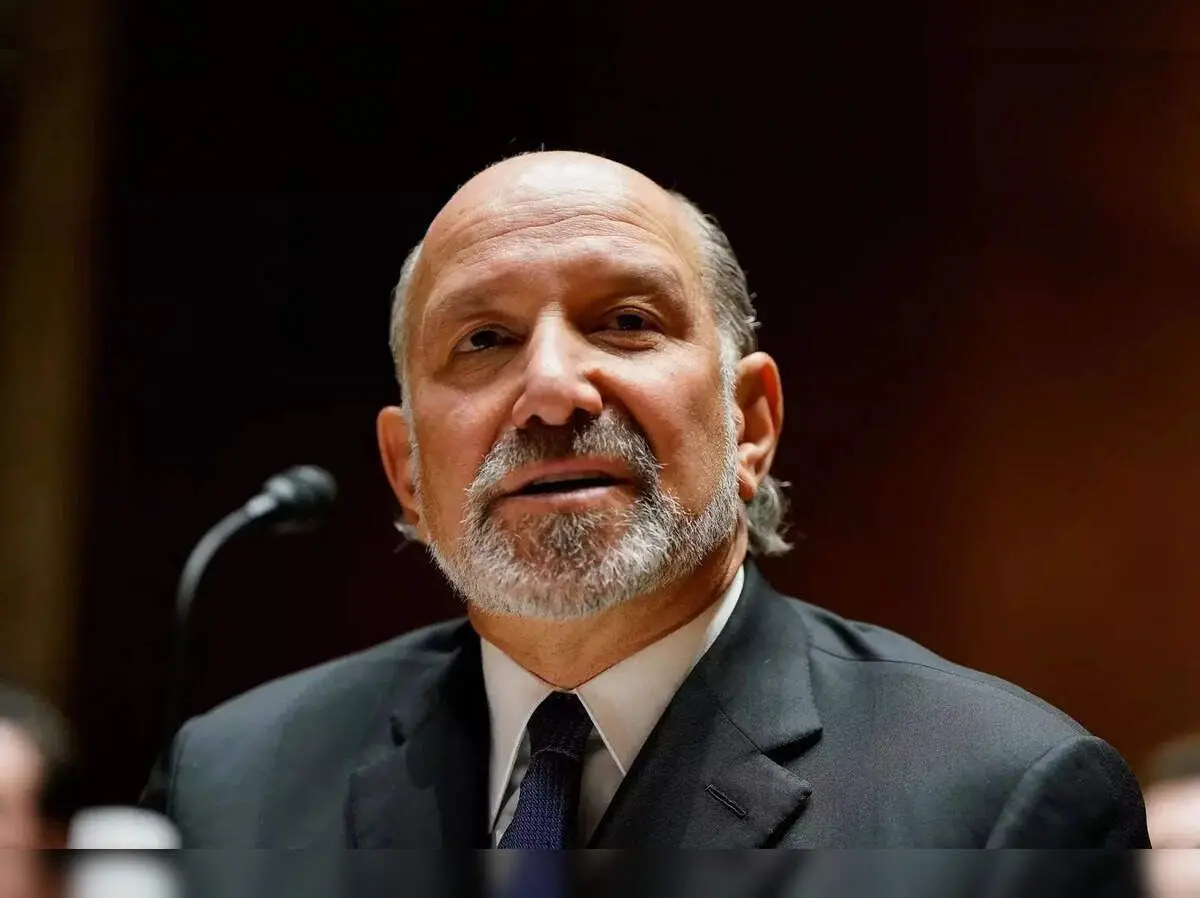
Commerce Department Secretary Howard Lutnick delivered a firm message to Nvidia during a Tuesday hearing: the company must comply with detailed licensing terms for selling its H200 AI chips to China, with no room for negotiation. "The license terms are very detailed. They've been worked out together with the State Department, and those terms Nvidia must live with," Lutnick stated
2
. When questioned about trusting Chinese entities to abide by restrictions on the H200 AI chips, Lutnick deferred to President Donald Trump, emphasizing that the complex U.S.-China relationship remains under presidential oversight4
.
Source: ET
This announcement comes as Nvidia CEO Jensen Huang finally secured what he spent months lobbying for: authorization from the US government to sell the company's workhorse artificial intelligence chip to China
1
. The move followed a trade truce between Presidents Trump and Xi Jinping in South Korea last October, which included a U.S. pledge to postpone export restrictions by a year2
.Know-Your-Customer Requirement Creates Implementation Challenges
Despite the Trump administration's willingness to allow companies like ByteDance to purchase Nvidia's H200 chips, the chipmaker has not agreed to proposed conditions for their use, according to sources familiar with the matter
3
. The primary sticking point involves the Know-Your-Customer requirement, designed to ensure China's military does not access the chips and prevent unauthorized remote access by entities in Iran, Cuba, Venezuela, and other countries of concern.Nvidia pushed back against characterizations that it was rejecting these terms. "We aren't able to accept or reject license conditions on our own," a company spokesperson explained. "Although KYC is important, KYC is not the issue. For American industry to make any sales, the conditions need to be commercially practical, else the market will continue to move to foreign alternatives"
3
. The company positioned itself as an intermediary between the US government and potential customers who must comply with export restrictions.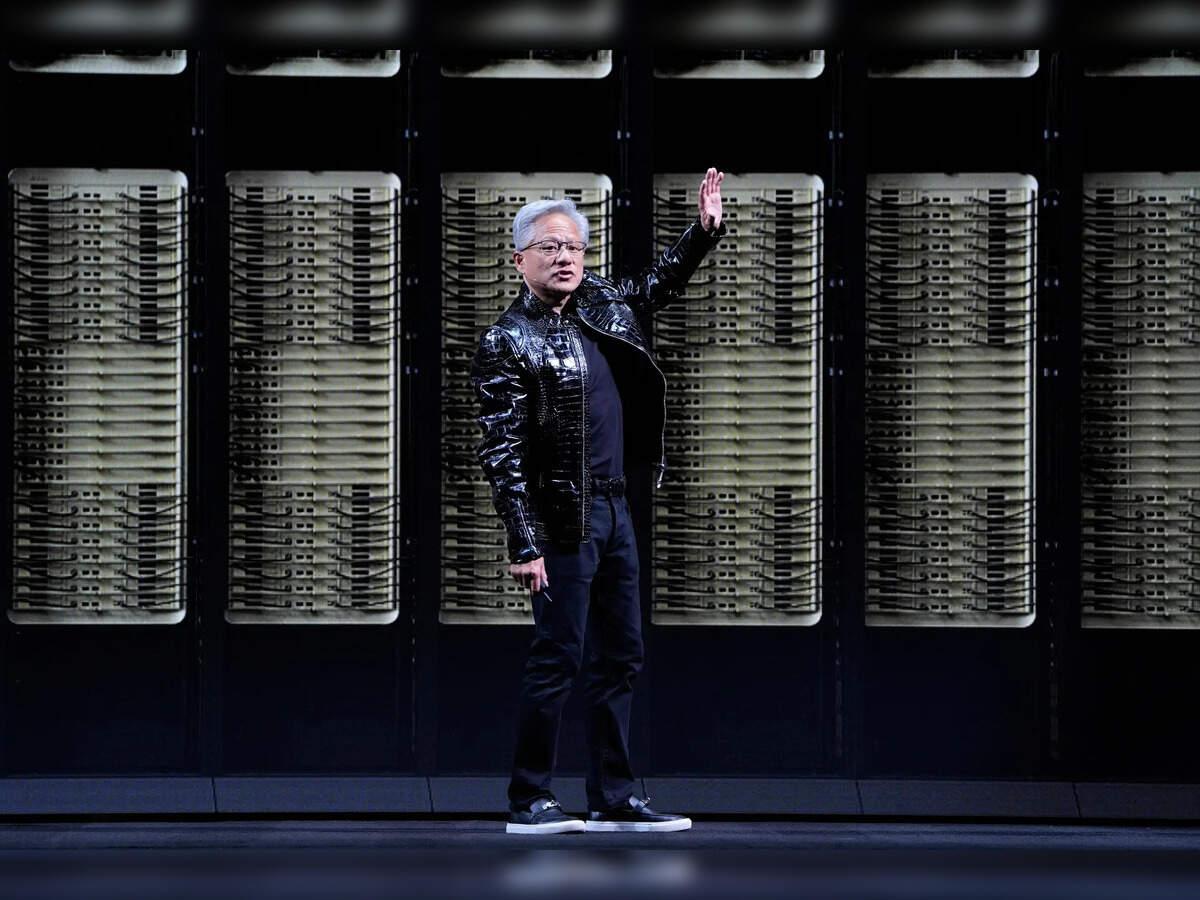
Source: ET
Geopolitical Implications and National Security Concerns
The regulatory framework reflects ongoing national security concerns about high-performance semiconductors reaching China. Export controls were initially imposed during Trump's first presidency and upheld by Joe Biden, with policymakers worried that AI chips powering services like ChatGPT could accelerate development of China's nuclear weapon systems, military intelligence, and cyberwarfare capabilities
1
. Export restrictions have effectively blocked Nvidia and rival Advanced Micro Devices from supplying their best products to Chinese customers.
Source: Bloomberg
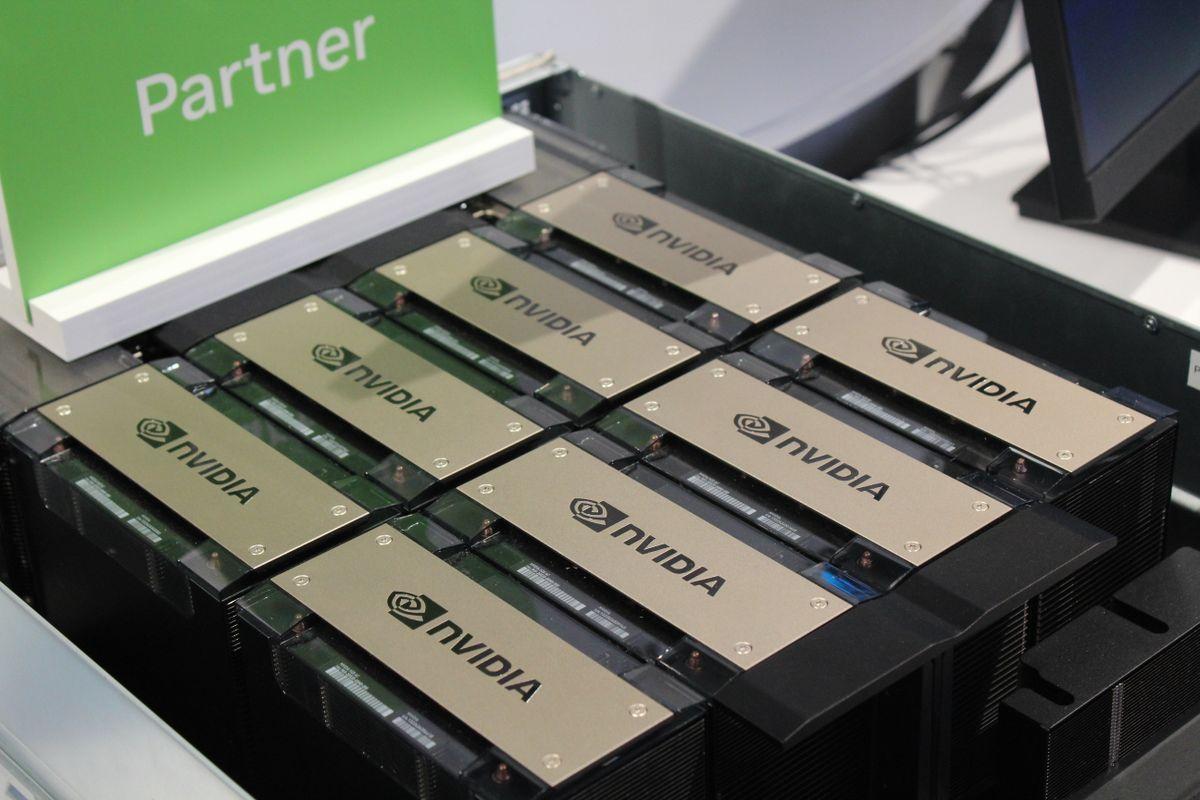
The US government will allow H200 exports to approved Chinese customers selected on a case-by-case basis, with the federal government receiving a 25% cut of the revenue under the framework
1
. Before chips can ship to China, a U.S. third-party lab must test them to ensure they meet specifications, a requirement viewed as a mechanism for collecting the 25% fee3
.Related Stories
Chinese Market Opportunity and Competition from Domestic Alternatives
China represents a massive opportunity for Nvidia, accounting for $229 billion in annual chip revenue—a third of the industry total—in 2024. Jensen Huang expects Chinese companies will spend $50 billion annually on AI chips alone within two to three years
1
. However, the delays have created openings for competitors. China has granted preliminary approval to three major tech companies—ByteDance, Tencent, and Alibaba—along with AI startup Deepseek to import the chips, though regulatory conditions are still being finalized3
.As uncertainty persists, Chinese AI firms have resorted to purchasing black-market hardware or lower-performing domestic alternatives such as Huawei's Ascend series. Resellers reported that black-market servers with 8 H200 GPUs now command a 50% price premium
5
. By forcing China's army of AI developers to seek alternatives, export restrictions have energized China's efforts to create an AI chip ecosystem that could ultimately threaten Nvidia's leadership, with Chinese rivals like Huawei Technologies and Cambricon Technologies gaining ground1
.What Lies Ahead for Nvidia and the Tech War
The H200, first unveiled in 2023 and launched in the second quarter of 2024, has since been superseded by the Blackwell B200 and now the Rubin, set to go on sale this year. The US continues depriving China of Nvidia's leading-edge chips, though the H200's Hopper design remains a major component of global data centers and is regarded as more capable than anything Chinese rivals can offer
1
.Orders from Chinese customers have far exceeded available stock, prompting Nvidia to scale up chip production in the second quarter of 2026
5
. At least some chips are likely to reach China by the time Trump plans to meet with Chinese President Xi Jinping in April3
. Yet the situation remains fraught, with suspicion of China running deep in Washington. The administration could quickly reinstate the H200 ban if Beijing uses the powerful chip for military purposes or if Trump changes his mind1
. The Commerce Department's stance, articulated through Howard Lutnick, makes clear that Nvidia's path back into China will be tightly controlled, with the State Department and other agencies maintaining oversight of every aspect of the supply chain.References
Summarized by

Navi
[3]
Related Stories
Nvidia Set to Resume AI Chip Sales to China Amid Regulatory Shifts
10 Jul 2025•Technology
Nvidia's H200 AI chip sales to China stalled by US security review despite initial approvals
28 Jan 2026•Policy and Regulation
Trump Administration Considers Allowing Nvidia H200 AI Chip Sales to China Amid Trade Détente
21 Nov 2025•Policy and Regulation
Recent Highlights



Recent Highlights
Today's Top Stories








Your Daily Dose of Curated AI News
Don’t drown in AI news. We cut through the noise - filtering, ranking and summarizing the most important AI news, breakthroughs and research daily. Spend less time searching for the latest in AI and get straight to action.

