Nvidia's Blackwell Gaming GPUs Converted to Blower-Style for AI Data Centers in China


2 Sources
2 Sources
[1]
Nvidia's Blackwell gaming GPUs go through blower-style transformation to fuel AI data centers -- RTX 5080, RTX 5070 Ti, RTX 5060 Ti blower GPUs up for purchase in China
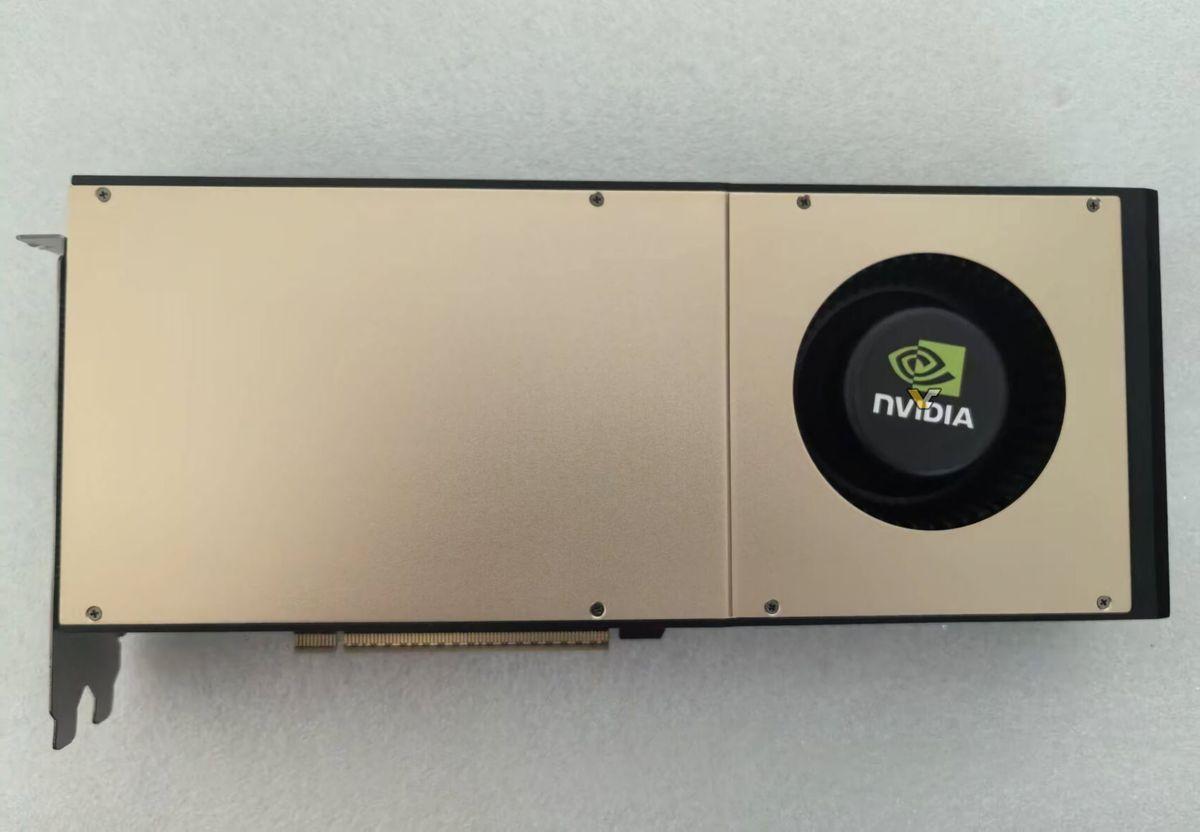
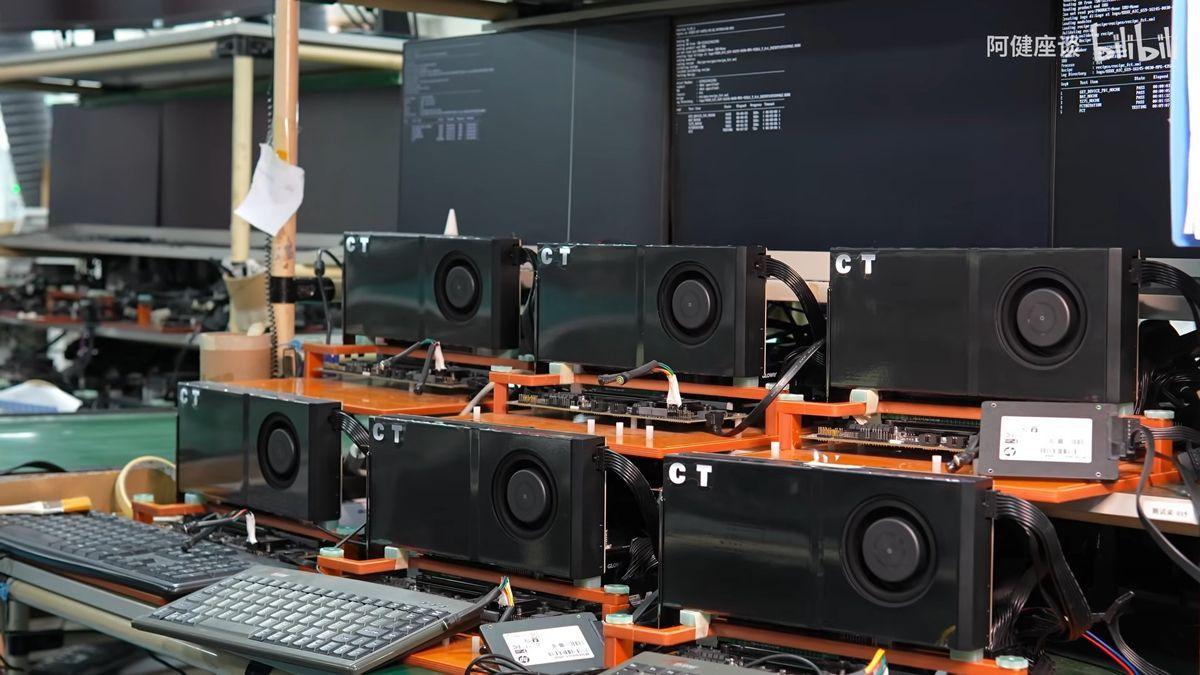
Blower-style GPUs have mostly exited the mainstream due to how thermally inefficient they were in conventional setups. However, they still hold an important place in the server segment where clusters of GPUs are stacked next to each other in an open-air environment. China has been leading the wave for these for a while, and now Videocardz has spotted even more SKUs recently added to the collection. In specific, we're talking about Nvidia's Blackwell family, or the RTX 50-series, where gaming variants of the flagship RTX 5090 have been stripped apart and retrofitted inside blower-style shrouds. So, these are not official partner cards, but rather aftermarket solutions. This goes for both the anomalously recurrent RTX 5090 32 GB that is banned in China, and the nerfed 5090D, plus the 5090D V2 with less VRAM. What we're now starting to see are new GPUs, including the RTX 5080, RTX 5070 Ti and RTX 5060 Ti -- all SKUs with 16 GB of GDDR7 memory -- being available for purchase on Taobao. The listing shows specs for all the models, but only the 5090 is pictured. This is also the standard 32 GB variant; not the upgraded cards with up to 128 GB of VRAM, though configs like those are likely also possible based on demand. Now, the blower-style RTX 5090 32 GB will run you 29,000 Chinese Yuan, or about $4,156 USD, which is more expensive that most retail 5090s even right now. More interestingly, the blower 5080 is priced at $1,288, the RTX 5070 Ti will run you $1,103, while the RTX 5060 Ti is only around $573, which is about $100 more than gaming variants at the moment. All of these represent a price premium because they're targeted at AI workloads and that is one blooming market right now. The 5090, in particular, has been a local darling in the region despite being export-controlled by Washington. Sprawling underground operations with factory-like production lines are gutting and reassembling these GPUs, making them ready for AI clients willing to pay big money. Beyond just adding more VRAM, even just standard cards with blower coolers represent an upgrade for AI farms. This is because they suck in fresh air through the fan at the front and exhaust it out the back. Usually, this causes them to be louder in standard PC cases and run hotter since there's not enough intake, and the GPU is handling its own exhaust instead of handing it to the airflow of the entire case. Now, compare that to dense spaces like data centers or server farms where a number of cards are packed together. There's no case to trap air, instead the cards are being kept cool externally. Therefore, this kind of setup is much better since it'll keep air from circulating within or between GPUs. Blower designs are also thinner, usually two-slot, so they take up less space, meaning more cards in the same stack.
[2]
After RTX 5090, RTX 5080, RTX 5070 Ti, And RTX 5060 Ti Are Now Getting Converted To Blower-Style GPUs In China
It's not just the GeForce RTX 5090, which is getting converted to a blower-style GPU for the AI market, but other slower cards are following the same path as well. Remember the Chinese labs where the banned GeForce RTX 5090 were getting converted into blower-style GPUs? Well, not only does that go almost unrestricted, but more NVIDIA RTX 50 series GPUs are now seeing a similar transformation. Since the RTX 5090 has a huge demand in China, while the US govt has banned the sale of this GPU, NVIDIA had to release the 24 GB variant, known as the GeForce RTX 5090 D V2. A huge inventory of the standard RTX 5090 still easily manages into Chinese markets, where specific shops/labs remove the GPU chip and the VRAM from the PCB to deploy on newer ones that utilize a blower-style cooler. These are then sold in the market for AI usage, and that's also one of the reasons why it gets even harder for gamers to get their hands on the flagship RTX 50 GPU. But if you think the rest of the lineup is untouched, then you are mistaken. Recently, Taobao has started listing other blower-style RTX 50 series cards, which include almost the entire lineup except for a few SKUs. Apparently, three more GPUs are now getting converted into blower-style GPUs, including the GeForce RTX 5080, RTX 5070 Ti, and RTX 5060 Ti, all of which boast 16 GB GDDR7 memory. We don't know which one is shown in the pics, but these may or may not be the PCB from NVIDIA or its board partners. It's possible that, similar to the RTX 5090 blower-style GPUs, these are the converted cards with newer PCBs. With a blower-style cooler attached to the PCB, these GPUs are now fit for deployment in machines where the heat needs to be dissipated via the I/O, and these also have the power connector located on the right edge to ensure more clearance in the chassis and allow a multi-GPU setup. Right now, none of the cards seem to have an upgraded memory configuration. which is going to be particularly more difficult at the moment, given the market conditions. Price-wise, some of these are quite expensive, especially the RTX 5090 32 GB GPU, which is sold for nearly $4150. The RTX 5090 D 32 GB variant is a bit cheaper at $3,869, and the V2 is just over $3400. RTX 5080 is selling for nearly $1300, and the RTX 5070 Ti is at around $1100. The RTX 5060 Ti 16 GB is going for sale at $573, making it the cheapest 16 GB card.
Share
Share
Copy Link
Nvidia's Blackwell gaming GPUs, including the RTX 5080, RTX 5070 Ti, and RTX 5060 Ti, are being converted to blower-style GPUs in China for AI data centers. These aftermarket conversions command a price premium, with the blower RTX 5080 selling for $1,288 and the RTX 5060 Ti for $573. The modifications address high demand in the AI market despite US export bans on high-end GPUs.
Nvidia's Blackwell Gaming GPUs Undergo Blower-Style Transformation
Nvidia's Blackwell gaming GPUs are experiencing a dramatic aftermarket transformation in China, where they're being converted to blower-style GPUs specifically designed for AI data centers. The trend, which initially focused on the flagship RTX 5090, has now expanded to include the RTX 5080, RTX 5070 Ti, and RTX 5060 Ti—all featuring 16 GB of GDDR7 memory
1
. These aftermarket conversions are now available for purchase on Taobao, China's popular online marketplace, signaling a growing underground operation that's reshaping how gaming hardware serves AI workloads.The modifications represent more than simple cooling upgrades. Chinese labs are stripping gaming variants of their original components, removing GPU chips and VRAM from PCBs, then redeploying them on newer boards equipped with blower-style coolers
2
. These are not official partner cards from Nvidia but rather aftermarket solutions created to meet high demand in the AI market. The blower RTX 5090 32 GB commands approximately $4,156, while the RTX 5090 D 32 GB variant sells for $3,869, and the V2 version goes for just over $3,4002
.Price Premium Reflects AI Market Demand
The converted cards carry a significant price premium compared to their gaming counterparts. The blower-style RTX 5080 is priced at $1,288, the RTX 5070 Ti runs $1,103, and the RTX 5060 Ti costs around $573—approximately $100 more than gaming variants currently available
1
. This price premium reflects the cards' targeted use for AI workloads, a market experiencing explosive growth in China despite US export bans on high-end GPUs.Why Blower-Style Designs Matter for Dense Server Environments
Blower-style GPUs have largely disappeared from mainstream consumer markets due to thermal inefficiency in conventional PC setups. However, they remain essential in dense server environments where multiple cards are stacked together in open-air configurations. The design's key advantage lies in its airflow pattern: blower coolers suck fresh air through the front fan and exhaust it directly out the back
1
. In standard PC cases, this causes louder operation and higher temperatures since the GPU handles its own exhaust instead of relying on case airflow.But in server farms and AI data centers, where cards are externally cooled and packed tightly together, this heat exhaustion method prevents air from circulating within or between GPUs. Additionally, blower designs are typically thinner—usually two-slot configurations—allowing more cards to fit in the same physical space, maximizing compute density for AI applications.
Related Stories

Export Controls and Underground Operations
The RTX 5090 has been particularly popular in China despite being export-controlled by Washington. Sprawling underground operations with factory-like production lines are gutting and reassembling these GPUs, making them ready for AI clients willing to pay substantial sums
1
. This includes both the anomalously recurrent RTX 5090 32 GB that is banned in China and the nerfed 5090D, plus the 5090D V2 with less VRAM1
.A huge inventory of standard RTX 5090 units continues to flow into Chinese markets, where specialized shops remove components for redeployment. This practice makes it even harder for gamers globally to secure flagship RTX 50 series cards, as supply gets diverted to more profitable AI applications
2
. The modified cards feature power connectors located on the right edge to ensure more clearance in chassis configurations and facilitate multi-GPU setups.What This Means for the GPU Market
The expansion of aftermarket conversions beyond the RTX 5090 to include mid-range cards like the RTX 5080 and RTX 5070 Ti suggests that AI demand in China extends across multiple performance tiers. While current listings don't show upgraded memory configurations beyond the standard specifications, such modifications remain possible based on client demand and market conditions
2
. The RTX 5060 Ti 16 GB, selling at $573, represents the most affordable entry point for 16 GB blower-style cards.This trend highlights how US export controls create market distortions that fuel underground manufacturing operations. As AI workloads continue to drive demand for high-performance computing hardware, the conversion of consumer gaming GPUs into specialized server hardware is likely to persist, potentially affecting global GPU availability and pricing for both gamers and enterprise customers.
References
Summarized by

Navi
Related Stories
Chinese Firms Convert RTX 5090 GPUs into AI Accelerators, Bypassing Export Restrictions
26 Jul 2025•Technology
NVIDIA's RTX 5090 GPUs Fetch Up to $10,000 on Black Markets as AI Demand Surges in China
10 Mar 2025•Technology
Chinese AI Data Centers Offload Nvidia RTX 4090D GPUs Amid Overcapacity and Market Shifts
24 Apr 2025•Business and Economy

Recent Highlights
1
Google releases Gemma 4 with Apache 2.0 license, enabling unrestricted local AI on devices
Technology

2
AI Models Lie and Deceive to Protect Other AI Models From Deletion, Study Reveals
Science and Research

3
OpenAI closes $122 billion funding round amid fierce AI competition and profitability questions
Startups

Recent Highlights
Today's Top Stories







Your Daily Dose of Curated AI News
Don’t drown in AI news. We cut through the noise - filtering, ranking and summarizing the most important AI news, breakthroughs and research daily. Spend less time searching for the latest in AI and get straight to action.

