Sam Altman announces dramatic hiring slowdown at OpenAI as AI efficiency reshapes workforce needs


4 Sources
4 Sources
[1]
Sam Altman Says OpenAI Is Slashing Its Hiring Pace as Financial Crunch Tightens
In a memo sent out to staff last month, OpenAI CEO issued a "code red" urging employees to double down on improving the company's flagship product ChatGPT, as financial pressure loomed and competitors gained ground. The company continues to frantically chase some much-needed revenue. Despite Altman calling ads a "last resort for us as a business model" in 2024, the company announced earlier this month that ChatGPT will soon start spamming users with them. Its cash burn rate is immense. The company is planning to spend well over $1 trillion in the coming years on data center infrastructure, despite revenue lagging far behind. Experts have warned that the company could run out of cash within the next 18 months. To its most skeptical critics, it's an Enron-like financial disaster that's waiting to happen. So maybe it's not surprising that the company is opting to pump the brakes. During a livestreamed town hall event on Monday, Altman said that OpenAI is looking to "dramatically slow down" hiring as the company continues to lose billions of dollars each quarter, as Business Insider reports. "What I think we shouldn't do, and what I hope other companies won't do either, is hire super aggressively, then realize all of a sudden AI can do a lot of stuff, and you need fewer people, and have to have some sort of very uncomfortable conversation," Altman told attendees. "So I think the right approach for us will be to hire more slowly but keep hiring." The news comes amid widespread concerns over soaring unemployment in the US. While consumer spending has increased, the labor market has been hit hard by businesses curbing hiring significantly, often citing heavy investments in AI. Altman's admission also suggests that several years of aggressive hiring in the AI sector could be screeching to a halt as the industry continues to face pressure from investors getting antsy about the waning prospects of a return. The news is particularly notable after years of AI companies embracing an unprecedented hiring spree, desperately trying to poach talent from their competitors by offering them astronomical pay packages. Whether Altman's announcement signals that those days are over for good remains to be seen. Big tech's spending binge is set to drag on in the coming years. Many have already made massive commitments to scale up operations by expanding enormous data centers. At the same time, selling those future prospects to investors could become more difficult as well. OpenAI, for instance, is already struggling with stalling subscriber growth -- and that's before pestering its users with ads or paywalling existing features behind expensive monthly subscriptions. (The company is currently mulling over how much to charge for ads.) As former Fidelity manager George Noble fulminated in a scorching thread on X, the AI industry may have already hit a point of diminishing returns. Companies still have a lot to prove -- for instance, chatbots still suffer from rampant hallucinations -- as the goalposts continue to be moved. "The low-hanging fruit is gone," he wrote. "Every incremental improvement now requires exponentially more compute, more data centers, more power." Meanwhile, Google -- one of OpenAI's biggest competitors -- can rely on an already-established business with existing revenue streams to prop up its AI spending. In short, Altman's significant hiring slowdown could be indicative of a tough time ahead. And if critics are to be believed, the wheels could already be starting to come off.
[2]
OpenAI Says ChatGPT's Writing Worsened Due to Overtraining Math, Coding
* OpenAI held its first town hall on Monday for AI builders * The company is planning to slow down hiring significantly * Altman said agentic workflows will become faster in future OpenAI CEO Sam Altman admitted that writing performance on ChatGPT has recently witnessed regression, and attributed it to selective training of the latest artificial intelligence (AI) model. The company hosted its inaugural town hall on Tuesday, inviting AI builders from across the ecosystem to ask questions and share feedback on its various products and services. During the conversation, Altman tackled a wide-range of questions across the AI giant's go-to-market strategy, future products, the cost vs performance problem, and ChatGPT's increased usage as a scientific collaborator. OpenAI Acknowledges ChatGPT's Writing Performance Has Declined The company's first town hall was streamed live on YouTube, and can be watched here. The 50-minute-long session covered a diverse range of topics and concerns raised by developers and employees of the company. One of the biggest highlight was the admission from the company that the latest model, GPT-5.2, delivers poorer writing capability compared to GPT-4.5, while significantly improving coding, reasoning, and mathematics performance. Answering a question of Ben Hylak, Co-Founder of AI startup Raindrop, about the decline in the writing performance of GPT-5.2, Altman said, "I think we just screwed that up. We will make future versions of GPT-5.x hopefully much better at writing than 4.5 was. We did decide, and I think for good reason, to put most of our effort in 5.2 into making it super good at intelligence, reasoning, coding, engineering, that kind of thing. And we have limited bandwidth here, and sometimes we focus on one thing and neglect another." OpenAI's stance makes commercial sense. The company has been targeting an increase in revenue, and while subscription from users has a lower ceiling due to fixed rates and price sensitivity, enterprises are willing to shell out more money with the token-based pricing. So, improving capabilities that are valued by companies and developers was kept as a priority while developing GPT-5.2, and as a result, writing and conversations took a hit. Altman does promise that this will be fixed with future releases. Altman also addressed the Jevons paradox in AI. The paradox states that increased efficiency in usage of a resource results in lowered cost, which then causes the demand and consumption to increase. As a result, higher efficiency lowering resource depletion is a myth. In the AI space, it has been argued by some experts that if AI makes coding faster and cheaper, the rise in demand could create new jobs. "I think what it means to be an engineer is going to super change. There will be probably far more people and creating far more value and capturing more value that are getting computers to do what they want. Getting computers to do what other people want, figuring out ways to make these useful experiences for others. But the shape of that job and the amount of time you spend like typing code or debugging code or a bunch of other things is going to very much change," Altman said.
[3]
OpenAI CEO Sam Altman Plans To 'Dramatically Slow Down' Hiring To Do 'Much More' With Fewer People - Microsoft (NASDAQ:MSFT)
OpenAI CEO Sam Altman said advances in artificial intelligence are allowing companies to grow output with smaller teams, prompting OpenAI to slow its hiring pace even as it continues to add workers. AI Efficiency Reshapes OpenAI Hiring Plans On Monday, speaking during a live-streamed town hall, Altman said AI has changed how quickly OpenAI needs to expand its workforce. Responding to a question about whether AI has altered the company's hiring and interview process, he said the technology allows employees to do significantly more work than before. "We are planning to dramatically slow down how quickly we grow because we think we'll be able to do so much more with fewer people," Altman said. Altman Warns Against Overhiring In The AI Era Altman emphasized that OpenAI is not implementing a hiring freeze and is not moving away from human workers. Instead, he said the company wants to avoid aggressive hiring followed by layoffs if AI reduces the need for certain roles. "What I think we shouldn't do, and what I hope other companies won't do either, is hire super aggressively, then realize all of a sudden AI can do a lot of stuff, and you need fewer people," Altman said. He added, "The right approach for us will be to hire more slowly but keep hiring." AI Leaders See Opportunity, Urge Caution On Jobs And Power Earlier, Tech leaders Amjad Masad, Satya Nadella, and Bill Gates said AI could expand opportunity and productivity. Replit CEO Masad said capitalism worked best when it enabled anyone with ideas, determination, and ethical standards to build wealth. He warned against a future dominated by large corporations and argued for decentralized tools that empower individuals, foster creativity, and make work more human-centered. Microsoft Corp. (NASDAQ:MSFT) CEO Nadella said AI must deliver clear benefits in areas such as health care, education, and productivity to maintain public trust. He said AI needed to move beyond hype and become a foundational technology whose benefits were broadly shared, while framing it as a tool shaped by human agency rather than a force that inevitably destroys jobs. Gates said AI was already reshaping jobs and boosting productivity, especially in software, and could eventually lead to shorter workweeks. While optimistic about AI's potential to reduce inequality, he warned that its risks, including misuse, required careful preparation and stronger governance. Disclaimer: This content was partially produced with the help of AI tools and was reviewed and published by Benzinga editors. Image via Shutterstock MSFTMicrosoft Corp $474.510.90% Overview Market News and Data brought to you by Benzinga APIs
[4]
Thinking of applying to OpenAI? Sam Altman has a reality check on hiring in the AI era
OpenAI is also preparing to introduce ads on ChatGPT, charging higher-than-average rates while limiting user data access. OpenAI CEO Sam Altman agreed that AI is changing the way the organisation thinks about hiring, but ruled out a recruitment freeze or any attempt to replace human workers entirely. During the live-streamed town hall geared mostly at developers, Altman noted that AI is allowing OpenAI to scale its work more efficiently, minimising the need for rapid manpower expansion. He stated that the company intends to decrease, rather than stop, hiring as productivity gains from AI tools continue to increase. Altman has also warned against the boom and bust approach in recruitment, where companies hire rapidly only to realise later that automation has reduced the need for large teams. Instead, he said OpenAI intends to take a more cautious route by hiring steadily while relying on AI to amplify the impact of smaller teams. "We are planning to dramatically slow down how quickly we grow because we think we'll be able to do so much more with fewer people. What I think we shouldn't do, and what I hope other companies won't do either, is hire super aggressively, then realize all of a sudden AI can do a lot of stuff, and you need fewer people, and have to have some sort of very uncomfortable conversation," Altman said. "So I think the right approach for us will be to hire more slowly but keep hiring," he added. This comes at a time when the jobs in the US are affected due to multiple aspects. As per Business Insider citing recent labour data, the hiring momentum has slowed down with unemployment rising to its highest level in several years and job openings sharply down from their post pandemic peak. Longer periods of joblessness are also becoming more common, particularly among younger workers, who have been disproportionately affected by the slowdown. Meanwhile, OpenAI intends to integrate ads into ChatGPT. According to the reports, the company intends to charge advertisers around $60 per 1,000 impressions to run ads on ChatGPT, which is higher than what platforms like Meta typically charge. Even with premium pricing, advertisers will only receive basic performance insights, such as total views and clicks, rather than detailed data on user actions or conversions. The company has also stated that deeper analytics may be added later, but that user conversations will remain private and personal data will not be sold. Ads are expected to appear soon for free and lower-tier users, excluding minors and sensitive topics.
Share
Share
Copy Link
OpenAI CEO Sam Altman revealed plans to dramatically slow hiring as AI tools enable smaller teams to accomplish more work. Speaking at a town hall event, Altman emphasized avoiding aggressive hiring followed by layoffs, while acknowledging ChatGPT's writing performance declined due to focus on coding and math capabilities in GPT-5.2.
OpenAI CEO Sam Altman Announces Dramatic Hiring Slowdown
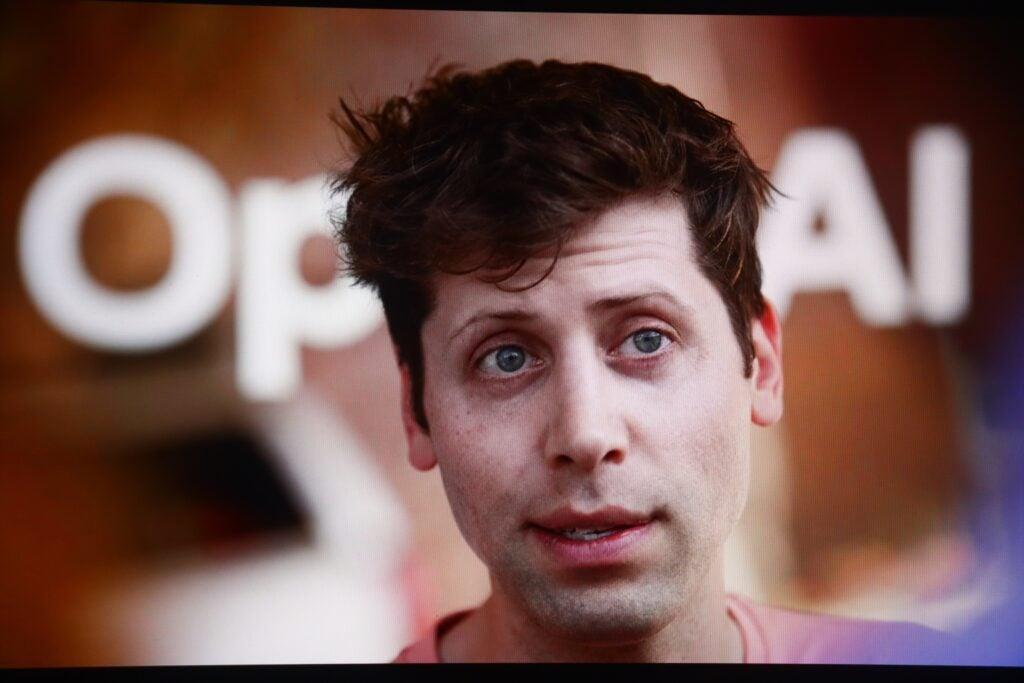
OpenAI is preparing to dramatically slow its hiring pace as AI efficiency transforms how the company operates. During a live-streamed town hall event on Monday, OpenAI CEO Sam Altman told developers and employees that advances in AI allow teams to accomplish significantly more with fewer people
1
3
. The announcement comes as OpenAI faces mounting financial pressures, with the company burning through billions of dollars each quarter while planning to spend over $1 trillion on data center infrastructure in coming years1
.
Source: Benzinga
Altman emphasized that this shift doesn't mean a hiring freeze or replacing human workers entirely. "We are planning to dramatically slow down how quickly we grow because we think we'll be able to do so much more with fewer people," he stated during the session
3
. The approach aims to avoid the boom-and-bust cycle where companies engage in aggressive hiring only to realize AI has reduced workforce needs, leading to uncomfortable layoffs4
.Financial Pressures Mount as Revenue Lags Behind Spending
The hiring slowdown signals deeper challenges facing OpenAI as financial pressures intensify. The company's cash burn rate remains immense, with experts warning it could run out of cash within 18 months if current spending patterns continue
1
. OpenAI is already struggling with stalling subscriber growth, a critical concern as it prepares to introduce ads on ChatGPT—a move Altman previously called a "last resort" business model in 20241
.
Source: Gadgets 360
The company plans to charge advertisers around $60 per 1,000 impressions for ChatGPT ads, significantly higher than platforms like Meta typically charge
4
. Despite premium pricing, advertisers will receive only basic performance insights such as total views and clicks, with OpenAI promising that user conversations remain private and personal data won't be sold. These revenue diversification efforts reflect the urgency to close the gap between massive infrastructure investments and actual income streams.ChatGPT Performance Tradeoffs Reveal Strategic Priorities
During the town hall event, Altman made a notable admission about ChatGPT performance—the writing capabilities of GPT-5.2 have declined compared to GPT-4.5
2
. Responding to questions about this regression, Altman acknowledged the company "screwed that up" by focusing development resources on improving coding, reasoning, and mathematics capabilities while neglecting writing quality.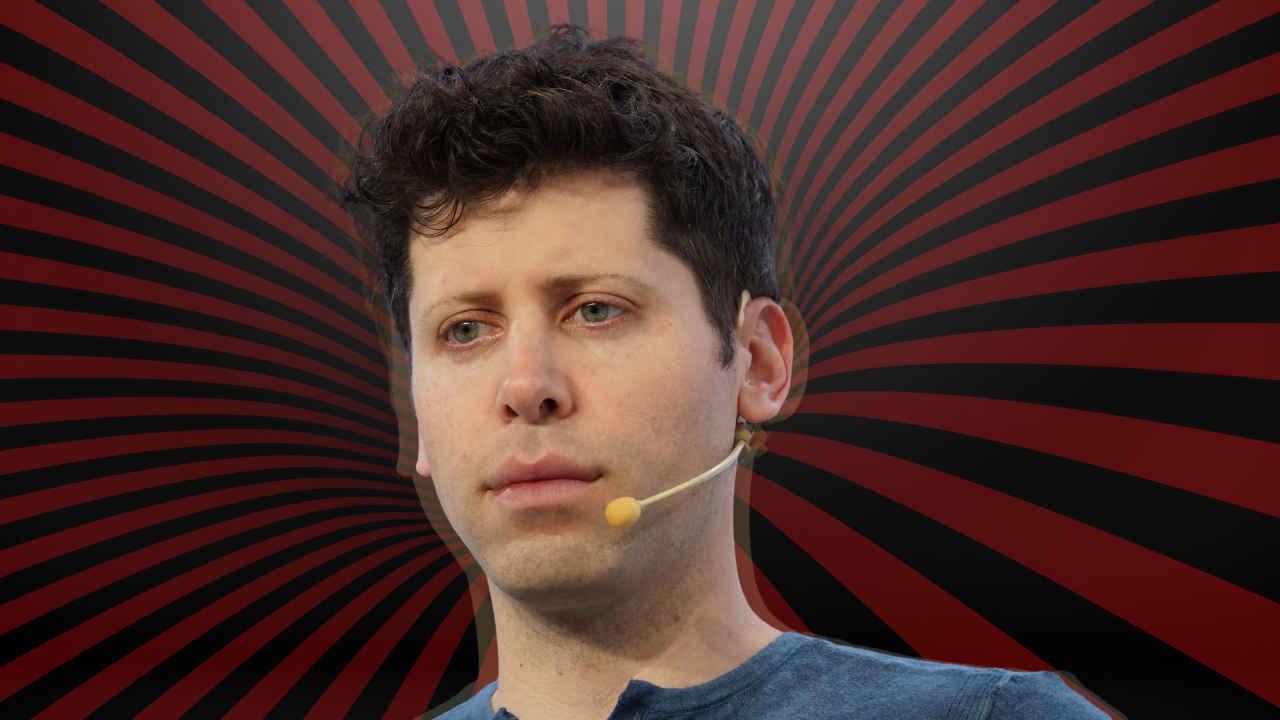
Source: Digit
This strategic choice reflects OpenAI's commercial priorities. While consumer subscriptions have limited revenue potential due to fixed rates and price sensitivity, enterprise clients using token-based pricing are willing to pay substantially more for enhanced coding and analytical capabilities. The overtraining in technical domains at the expense of conversational quality demonstrates how financial realities shape product development decisions. Altman promised future GPT-5.x versions would restore and improve writing performance beyond what GPT-4.5 achieved.
Related Stories

AI Industry Faces Broader Workforce Transformation
The hiring slowdown at OpenAI reflects wider shifts across the AI industry as companies reassess workforce needs. After years of unprecedented hiring sprees with astronomical pay packages to poach talent from competitors, the sector appears to be hitting a turning point
1
. This comes amid rising unemployment concerns in the US, where the labor market has been hit hard by businesses curbing hiring significantly, often citing heavy investments in AI1
.Tech leaders including Microsoft CEO Satya Nadella and Bill Gates have weighed in on AI's workforce implications. Nadella emphasized that AI must deliver clear benefits in healthcare, education, and productivity to maintain public trust, framing it as a tool shaped by human agency rather than a force that inevitably destroys jobs
3
. Gates suggested AI could eventually lead to shorter workweeks while warning that risks including misuse require stronger governance3
.Altman also addressed the Jevons paradox in AI during the town hall event, noting that while AI makes coding faster and cheaper, increased demand could actually create new jobs despite higher efficiency. He predicted the nature of engineering work will fundamentally change, with professionals spending less time typing or debugging code and more time directing AI systems to create value.
Diminishing Returns Challenge AI Industry Growth
Former Fidelity manager George Noble argued that the AI industry may have already hit a point of diminishing returns, with every incremental improvement now requiring exponentially more compute, more data centers, and more power
1
. This challenge is particularly acute for OpenAI compared to competitors like Google, which can rely on established business models with existing revenue streams to prop up AI spending through partnerships with Microsoft1
.The company continues to face technical hurdles as well, with chatbots still suffering from rampant hallucinations and other reliability issues that limit enterprise adoption
1
. As investors grow anxious about waning prospects for returns after years of massive capital deployment, OpenAI must demonstrate that its productivity gains through AI efficiency can translate into sustainable business operations. Whether Altman's hiring slowdown signals a broader industry correction or simply a temporary adjustment remains to be seen, but the move suggests a recognition that the era of unlimited growth may be ending for AI companies.References
Summarized by

Navi
Related Stories
OpenAI Funding Round Aims for $100 Billion as Company Slashes Spending Plans by Over Half
19 Feb 2026•Business and Economy
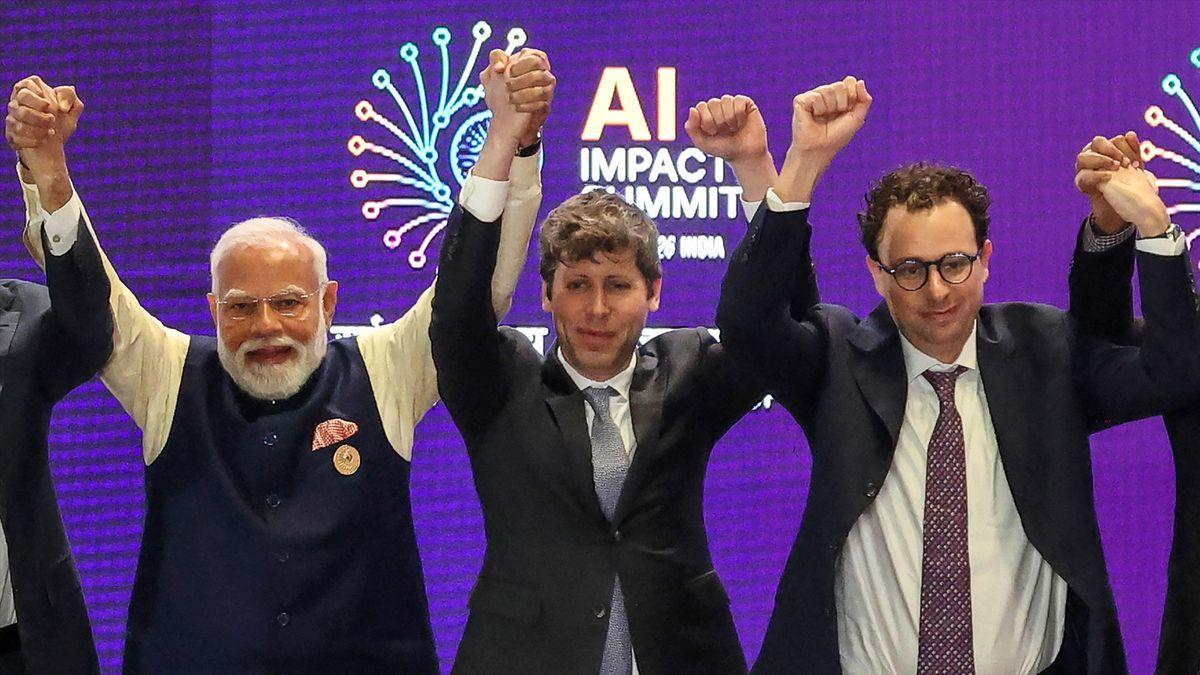
OpenAI plans to double its workforce to 8,000 as enterprise AI competition with Anthropic intensifies
21 Mar 2026•Business and Economy

OpenAI faces mounting investor concerns as $9B cash burn outpaces revenue growth
19 Jan 2026•Business and Economy

Recent Highlights
1
Google releases Gemma 4 with Apache 2.0 license, enabling unrestricted local AI on devices
Technology

2
AI Models Lie and Deceive to Protect Other AI Models From Deletion, Study Reveals
Science and Research

3
Anthropic discovers functional emotions in Claude that actively shape AI behavior and decisions
Science and Research

Recent Highlights
Today's Top Stories





Your Daily Dose of Curated AI News
Don’t drown in AI news. We cut through the noise - filtering, ranking and summarizing the most important AI news, breakthroughs and research daily. Spend less time searching for the latest in AI and get straight to action.

