OpenAI builds biometric social network to create bot-free platform with iris scanning


4 Sources
4 Sources
[1]
OpenAI Working on Social Media Network That Could Require Creepy Eye Scans: Report
Signing up for the bot-free platform will reportedly require submitting some biometric data. OpenAI, the company best known for its AI applications like ChatGPT and Sora, is reportedly working on a social media network designed to be free from AI bots. The catch is that users may need to have their irises scanned for access. Forbes reported Wednesday, citing unnamed sources familiar with the project, that the platform is still in very early stages and is being developed by a small team of fewer than 10 people. The goal is to create a human-only social platform that would require users to prove they’re real people. To do that, the team is reportedly considering implementing identity verification through Apple’s Face ID or through the Orb, an Orwellian eye-scanning device made by a company that was also conveniently founded by OpenAI CEO Sam Altman. This new social media platform seems to be Altman’s latest attempt to solve a problem he himself and his fellow “architects of AI†helped create. Altman first tried to tackle the bot problem in 2019 when he co-founded Tools for Humanity, the company behind the World app, formerly known as Worldcoin. The project aimed to create a global ID and a crypto-based currency that would only be available to verified humans. The project has since evolved into a "super app" called World that has messaging and payment features. But verification requires humans to get their eyes scanned by the soccer-ball-sized Orb device in exchange for a unique digital ID code stored on their phone. In theory, this could help filter out annoying AI bots from gaming, social media platforms, or even financial transactions like concert ticket sales. So far, roughly 17 million people have been verified using the Orb, a far cry from the company’s stated goal of reaching one billion users. Part of that adoption problem is logistical. People have to physically travel to one of the 674 verification locations worldwide to get their eyes scanned. In the U.S., there are only 32 such locations, most of them in Florida. More broadly, the idea of getting your eyes scanned by a company founded by one of Silicon Valley's most controversial figures isn't any easy sell. Unsurprisingly, several countries have already temporarily banned or launched investigations into the company’s biometric technology, citing concerns around privacy and data security. Now, that tech seems like it could be making its way to a new social media network. Sources told Forbes that the new social platform would allow users to create and share AI-generated content like images and videos. And while OpenAI has proven it can build popular apps, it’s far from clear whether a new social network could meaningfully pull people away from existing platforms, especially when you add biometric verification as a barrier. ChatGPT alone now reaches roughly 700 million weekly users, and the company’s AI video app racked up about one million downloads within five days of its launch. In comparison, Meta reported in September that its platforms, which include Facebook, WhatsApp, and Instagram, now reach about 3.5 billion daily active users combined. All of which already allow users to generate and share AI-generated content. OpenAI seems to hope that its promise of a bot-free environment will be enough to draw in users. Altman himself has repeatedly voiced his frustration with bots online. In September, Altman responded to a post showing comments in the ClaudeCode subreddit praising OpenAI’s coding agent Codex. “i have had the strangest experience reading this: i assume its all fake/bots, even though in this case i know codex growth is really strong and the trend here is real,†he wrote in a post on X. He went on to theorize why this might be happening, pointing to people picking up “quirks of LLM-speak†and also “probably some bots.†“But the net effect is somehow AI twitter/AI reddit feels very fake in a way it really didnt a year or two ago.†Altman wrote. A few days earlier, Altman wrote in another post that he had never taken the dead internet theory seriously, “but it seems like there are really a lot of LLM-run twitter accounts now.†The dead internet theory claims that since around 2016, much of the internet has been dominated by bots and AI-generated content rather than real human activity. But maybe there is someone other than Altman who could be trusted to find a solution.
[2]
OpenAI's Social Network Would Require Biometric Proof Of Personhood
A small team is developing the platform, according to sources, which may integrate ChatGPT for content creation while using biometrics for proof-of-personhood. OpenAI-linked token Worldcoin spiked 40% on Wednesday following a report that the artificial intelligence firm is working on a bot-free social media platform that requires "proof of personhood." According to a Tuesday Forbes report citing sources familiar with the matter, OpenAI is aiming to develop a "humans-only platform" as a point of difference from other social media services on the market. Still in its early stages, sources state that a small team of around 10 people is building the platform to compete with X, and that it has reportedly been in development since early 2025, according to tech news outlet The Verge. Forbes' sources claimed that any "proof of personhood" would likely be verified via Apple's Face ID or the World Orb eyeball scanner, which has also been utilized as part of World, the blockchain and crypto project co-founded by OpenAI CEO Sam Altman. The report coincided with a 40% price pump for Worldcoin (WLD) to $0.63; however, the price has since pulled back to $0.54 at the time of writing, according to CoinGecko data. Amid a broader crypto downturn in the latter half of 2025, WLD has had a grim price performance, down almost 70% over the past 12 months. The World Orb, which has seen criticism over its implications for personal data privacy, scans a person's face and their iris to verify that they are a unique human. It is a key part of onboarding genuine users to the WorldCoin ecosystem and helps establish a World ID. Details are sparse on how the reported social media platform could be integrated with OpenAI's suite of products or potentially with WLD. It is believed, however, that OpenAI's ChatGPT will be integrated to help users create content such as videos or photos. Altman has previously criticized bot activity on X and other social media platforms. Back in September, he said the current social media experience in general felt "fake" due to the sheer number of bot-like posts and comments.
[3]
OpenAI Reportedly Working On 'Real-Humans-Only' Social Network With Biometric Verification - Apple (NASDAQ:AAPL), Meta Platforms (NASDAQ:META)
OpenAI is reportedly working on a new social network that will require biometric verification to tackle the bot problem plaguing existing platforms. Plans For 'Real-Humans-Only' Social App The platform, still in its early stages of development, is envisioned as a "real-humans-only" space, setting it apart from other social networks. The company is looking to leverage its successful ChatGPT and Sora apps to establish its presence in the market, Forbes reported on Wednesday. OpenAI did not immediately respond to Benzinga's request for comment. The app's small team of fewer than 10 is exploring adding biometric identity verification, potentially using Apple's (NASDAQ:AAPL) Face ID or the World Orb, an iris scanner from Tools for Humanity, founded by OpenAI CEO Sam Altman. The new social network's launch timeline is currently unknown, and the platform could undergo significant changes before it is publicly revealed, according to the report. Altman Vs. Musk Fuels AI Social Threat Researchers warn that swarms of AI agents could soon flood social media to spread misinformation, harass users, and threaten democracy. These "AI swarms" can mimic human behavior, creating the appearance of genuine online movements while evading detection, according to a report by the Science Adviser last week. Disclaimer: This content was partially produced with the help of AI tools and was reviewed and published by Benzinga editors. Image via Shutterstock Market News and Data brought to you by Benzinga APIs
[4]
OpenAI plans social network: Can Sam Altman stop bots from entering?
OpenAI plans biometric social media to verify humans and stop bots In a digital landscape increasingly cluttered by AI-driven hallucinations and sophisticated bot swarms, the irony has reached a breaking point: the man who helped unleash the most advanced Large Language Models (LLMs) is now building the barricade to keep them out of our social feeds. OpenAI is reportedly developing a biometric-verified social network designed to solve the "personhood" crisis currently crippling platforms like X (formerly Twitter). As X struggles to differentiate between a paying subscriber and a high-level automated agent, Sam Altman's proposed solution is radical and deeply personal. Also read: OpenAI's Prism explained: Can you really vibe code science? Why biometrics? The core issue facing modern social media is the "Sybil attack," where a single entity creates thousands of fake identities to manipulate discourse or drown out real users. Elon Musk attempted to solve this with a $8-a-month paywall, but bot farms simply integrated the cost into their operating budgets. OpenAI's strategy shifts the barrier from the wallet to the body. By utilizing "Proof-of-Personhood" tech - potentially leveraging the hardware-level iris scanning seen in Altman's Worldcoin project - the platform would ensure that every account is tethered to a unique, verified human. If you can't scan a set of human eyes, you can't post. It is a high-tech "No Bots Allowed" sign that software-based AI, no matter how intelligent, cannot bypass. The Worldcoin connection While the Forbes report focuses on OpenAI, the shadow of Worldcoin looms large. For years, the "Orb," Altman's controversial biometric imaging device, has been a solution in search of a problem. A social network owned by OpenAI could be the "killer app" that finally justifies the existence of World ID. By integrating these two ecosystems, Altman could create a "Circle of Trust" that makes X's blue-check verification look like a relic of the past. Also read: Clawdbot security issues: Private messages to AI agent can leak The privacy paradox However, the path to a bot-free utopia is paved with significant privacy concerns. For a journalist or a casual user, the trade-off is stark: Are you willing to hand over your biometric data to a private corporation in exchange for a cleaner feed? OpenAI has already faced scrutiny over data scraping and transparency. Asking users to provide "digital fingerprints" to access a social network raises the stakes of data security to an unprecedented level. If a password is leaked, you change it; if your biometric ID is compromised, the breach is permanent. The success of this venture hinges on whether the public's frustration with bots has finally outweighed their fear of "Big Tech" surveillance. If OpenAI can streamline the verification process - perhaps through the secure enclaves already present in modern smartphones - they might finally achieve what Musk couldn't: a platform where every "Like" and "Retweet" comes from a beating heart. As the AI wars transition from who can build the smartest bot to who can stop them, Sam Altman is positioning OpenAI as both the architect of the future and its ultimate gatekeeper.
Share
Share
Copy Link
OpenAI is developing a social media platform that requires users to verify their identity through biometric data like iris scanning or Apple's Face ID. The bot-free network, led by a small team of fewer than 10 people, aims to solve the AI bot problem plaguing platforms like X by implementing proof-of-personhood technology potentially linked to Sam Altman's Worldcoin project.
OpenAI Develops Bot-Free Social Media Platform
OpenAI is building a social network designed to eliminate AI bots by requiring biometric verification for all users, according to a Forbes report citing sources familiar with the project
1
. The platform, still in early development stages, is being built by a small team of fewer than 10 people and represents a direct attempt to address the bot problem that has plagued existing social media platforms2
.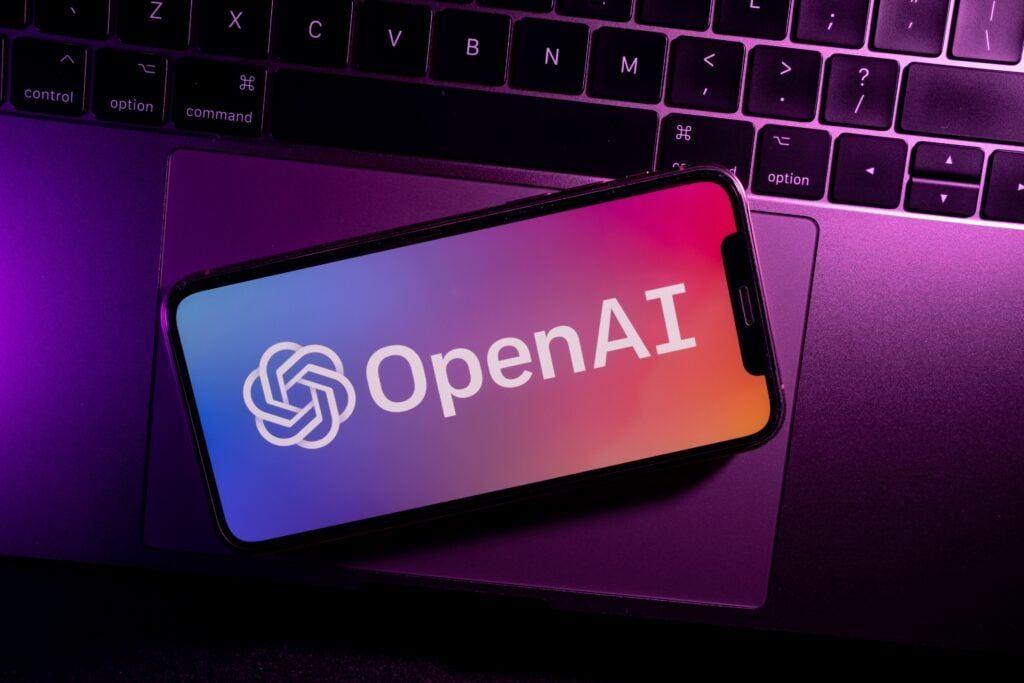
Source: Benzinga
The initiative marks OpenAI's entry into social networking, leveraging its success with ChatGPT, which now reaches roughly 700 million weekly users
1
. The platform has reportedly been in development since early 2025 and aims to compete with X by offering a "humans-only platform" as its key differentiator2
.Biometric Verification Through Iris Scanning and Face ID
The proposed social network would implement identity verification through two primary methods: Apple's Face ID or the World Orb, an iris scanning device created by Tools for Humanity, a company co-founded by OpenAI CEO Sam Altman
1
. This proof-of-personhood approach shifts the barrier from traditional paywalls to physical biometric data, ensuring every account is tethered to a unique, verified human4
.The World Orb technology scans a person's face and iris to verify they are a unique human, establishing a World ID that has already verified roughly 17 million people worldwide
1
. However, adoption has faced logistical challenges, with only 674 verification locations globally and just 32 in the United States, most concentrated in Florida1
.Privacy Concerns and Data Security Challenges
The biometric approach raises significant privacy concerns and data security questions. Several countries have already temporarily banned or launched investigations into Worldcoin's biometric technology, citing concerns around privacy and data protection
1
. The fundamental trade-off is stark: users must decide whether they're willing to hand over permanent biometric data to a private corporation in exchange for a cleaner, bot-free feed4
.Unlike passwords that can be changed if compromised, biometric breaches are permanent, raising the stakes of digital identity protection to unprecedented levels
4
. OpenAI has already faced scrutiny over data scraping and transparency, making the request for biometric data particularly sensitive.Related Stories


Sam Altman's Vision to Combat AI Bots
Sam Altman has repeatedly voiced frustration with bot activity on social media platforms. In September, he responded to posts on X saying he assumes content is "all fake/bots" and noted that "AI twitter/AI reddit feels very fake in a way it really didn't a year or two ago"
1
. He also acknowledged never taking the dead internet theory seriously but admitted "there are really a lot of LLM-run twitter accounts now"1
.
Source: Digit
The platform would reportedly allow users to create and share AI-generated content like images and videos, potentially integrating ChatGPT for content creation
2
. Following the Forbes report, Worldcoin (WLD) token spiked 40% to $0.63 before pulling back to $0.54, though it remains down almost 70% over the past 12 months2
.
Source: Cointelegraph
Competing Against Established Platforms
OpenAI faces significant challenges in pulling users away from established platforms. Meta reported in September that its platforms, including Facebook, WhatsApp, and Instagram, reach about 3.5 billion daily active users combined
1
. These platforms already allow users to generate and share AI-generated content without requiring biometric verification.Researchers warn that swarms of AI agents could soon flood social media to spread misinformation, harass users, and threaten democracy
3
. These "AI swarms" can mimic human behavior while evading detection, creating the appearance of genuine online movements3
. The success of OpenAI's venture hinges on whether public frustration with AI bots has finally outweighed fears of Big Tech surveillance4
.References
Summarized by

Navi
[2]
Related Stories
Recent Highlights
1
Google releases Gemma 4 with Apache 2.0 license, enabling unrestricted local AI on devices
Technology
2
AI Models Lie and Deceive to Protect Other AI Models From Deletion, Study Reveals
Science and Research

3
OpenAI closes $122 billion funding round amid fierce AI competition and profitability questions
Startups

Recent Highlights
Today's Top Stories





Your Daily Dose of Curated AI News
Don’t drown in AI news. We cut through the noise - filtering, ranking and summarizing the most important AI news, breakthroughs and research daily. Spend less time searching for the latest in AI and get straight to action.

