Pine Labs becomes OpenAI's first payments partner in India to enable agentic commerce


3 Sources
3 Sources
[1]
OpenAI deepens India push with Pine Labs fintech partnership | TechCrunch
As India pitches itself as a global hub for applied artificial intelligence, OpenAI has partnered with Pine Labs to integrate AI-driven reasoning into the fintech firm's payments stack, automating settlement and invoicing workflows in a move the companies say could help accelerate AI-led commerce in India. The partnership will see Pine Labs embed OpenAI's application programming interfaces -- software tools that let companies plug AI into their existing systems -- within its payments and commerce infrastructure, the companies said on Thursday, all with the aim of enabling AI-assisted settlement, reconciliation, and invoicing workflows. The deal underscores OpenAI's broader push to expand its footprint in India, one of its fastest-growing markets, as it looks to move beyond being known primarily as the maker of ChatGPT and embed its technology into education, enterprise, and infrastructure. Earlier this week, OpenAI partnered with leading Indian engineering, medical, and design institutions to bring AI tools into higher education, betting that India's large developer base and more than a billion internet users will play a central role in the next phase of AI adoption. Pine Labs is already using AI internally to automate parts of its settlement and reconciliation process, cutting the time it takes to clear daily settlements from hours to minutes, according to Chief executive B Amrish Rau. The Noida-based company previously relied on manual checks by dozens of employees to process funds from multiple banks before markets opened each day, a workflow that is now largely handled by AI-driven systems, he said in an interview. For Pine Labs, the partnership is intended to extend those AI-driven efficiencies beyond internal operations to merchants and corporate clients, starting with business-to-business use cases such as invoice processing, settlements and payments orchestration, Rau told TechCrunch. He noted the company sees faster adoption in B2B workflows, where AI agents can handle large volumes of repetitive financial tasks under predefined rules, before similar capabilities reach consumer-facing payments. "People talk about retail AI, but the bigger impact of all of this is really efficiency improvement, especially in B2B," Rau said. "If you look at invoicing and settlement, those are workflows where agents can actually drive the process end to end, and that's where adoption can happen faster." The rollout of more autonomous, agent-led payment workflows will move faster in overseas markets where regulations already allow such transactions, Rau said, while India is likely to see a more gradual adoption focused on AI-assisted commerce rather than fully agent-initiated payments. He said that Pine Labs is already prototyping agent-driven payments in parts of the Middle East and Southeast Asia, even as Indian regulations require tighter controls on how payments are authorized. For OpenAI, the partnership offers a route deeper into India's payments and enterprise ecosystem as it looks to move beyond consumer-facing tools and embed its models into high-volume, regulated workflows. Rau said the collaboration is aimed at increasing merchant stickiness and expanding Pine Labs' role from a payments processor to a broader commerce platform, with higher transaction volumes over time translating into incremental revenue. Pine Labs says it works with more than 980,000 merchants, 716 consumer brands, and 177 financial institutions, and has processed over 6 billion cumulative transactions valued at over ₹11.4 trillion (about $126 billion), per its prospectus published last year. The fintech operates across 20 countries, including Malaysia, Singapore, Australia, parts of Africa, the UAE, and the U.S., giving the OpenAI partnership reach across both Indian and international markets. Rau said the partnership does not involve revenue sharing between the two companies, with Pine Labs not taking a cut if its merchants choose to embed OpenAI's tools. "We've kept it completely independent of each other -- anything related to payment and payment services, we will get the benefit of it, and anything related to OpenAI revenues will go to them," he said. The arrangement, Rau added, is also non-exclusive. He compared it to OpenAI's partnership with Stripe in the U.S. and said Pine Labs remains open to working with other AI providers. Rau said Pine Labs is building additional security and compliance layers around AI-driven workflows to ensure that sensitive merchant and consumer transaction data remains protected, as the company integrates AI more deeply into its payments systems. He said the focus is on ensuring transactions remain secure and compliant even as more workflows are automated by AI. Pine Labs' interest in AI-driven commerce builds on earlier work through its Setu unit, which has experimented with agent-led bill payment experiences using chatbots including ChatGPT and Anthropic's Claude. Separately, India also began piloting consumer payments directly through AI chatbots last year. The new announcement comes as India hosts its AI Impact Summit in New Delhi, where global AI companies including OpenAI, Anthropic, and Google are showcasing their latest capabilities alongside Indian startups demonstrating AI applications aimed at large-scale deployment across sectors such as finance, healthcare, and education.
[2]
Pine Labs Partners OpenAI to Expand Agentic Commerce for Merchants in India
OpenAI's collaboration will help Pine Labs build Agentic Commerce Pine Labs, the Indian digital payment gateway company, announced that it is collaborating with the Sam Altman-led OpenAI on Thursday. The company will embed OpenAI's APIs into its digital payments infrastructure to enable agentic commerce in the country. The new collaboration was announced on the sidelines of India's AI Impact Summit 2026, which was kicked off by the government on February 16, and is scheduled to conclude on February 21. This is set to be OpenAI's second collaboration with a digital payments company after the AI giant entered into a partnership with Razorpay. Pine Labs to Embed OpenAI's APIs Into Its AI-Native Infrastructure On Thursday, the Indian digital payment gateway company Pine Labs announced that it is collaborating with OpenAI, the US-based AI giant, to embed its APIs into the core of its global merchant ecosystem. The company said that this will help Pine Labs move "beyond traditional automation" and build Agentic Commerce for merchants in the country. Apart from recording digital transactions, Pine Labs' financial system will also autonomously optimise workflows with OpenAI's help. This, the company said, marks a technological leap, shifting from deterministic or "if/then" logical processing to a probabilistic reasoning layer. This will be enabled with the integration of OpenAI's APIs into Pine Labs' payments gateway infrastructure, which will allow its systems to understand context and weigh probabilities, keeping its operations "within a secure, compliant framework". The partnership is also said to facilitate conversational AI's shift from a medium of discovery to creating a mandate for action. Moreover, Pine Labs said that users will be able to delegate "financial lifecycles" to AI-powered agents, along with searching for products. The AI agent will autonomously negotiate supplier terms, optimise settlement cycles, and manage recurring bill payments for merchants. To highlight the scale of the digital payments ecosystem in India, Pine Labs said that India recorded more than 18,000 crore digital transactions annually, and Pine Labs expected the country's fintech sector to achieve a $1.5 trillion (about Rs. 1,37,00,000 crore) valuation this year. This comes soon after OpenAI announced that it is partnering with Razorpay and the National Payments Corporation of India (NPCI) to allow users to buy groceries and other products on ChatGPT. It is claimed to allow customers to place orders with a single click across platforms like BigBasket, via Razorpay's payment stack.
[3]
OpenAI's ChatGPT joins hands with Pine Labs to enable agentic commerce - The Economic Times
With this integration, Pine Labs becomes OpenAI's first payments partner for ChatGPT in India, allowing merchants on its network to process transactions initiated through AI-led interfaces.ChatGPT maker OpenAI has integrated its AI platform with domestic digital payments firm Pine Labs to enable "agentic commerce", a model where AI agents can discover, recommend and complete transactions on behalf of users. With this integration, Pine Labs becomes OpenAI's first payments partner for ChatGPT in India, allowing merchants on its network to process transactions initiated through AI-led interfaces. Speaking to ET, Pine Labs chief executive Amrish Rau said the partnership is aimed at powering transactions in an AI-first consumer internet. "As merchants increasingly operate in an AI-led world, Pine Labs will be able to power those transactions," he said. The move comes as users increasingly rely on platforms such as Google's Gemini and OpenAI's ChatGPT not just for search and discovery, but for product recommendations and purchase decisions. Integrating payments infrastructure closes the loop from discovery to checkout. Globally, OpenAI has been expanding ChatGPT's commercial use cases, including exploring advertising-led monetisation and deeper enterprise integrations. In India, fintech players such as Paytm and Razorpay have rolled out AI-led merchant tools, though direct integrations between global AI chat platforms and domestic payments infrastructure remain limited. Rau added that Pine Labs is also building capabilities to allow AI-powered agents to execute payment transactions, though such deployments are currently limited to select markets in West Asia and Southeast Asia. Internally, Pine Labs is accelerating AI adoption to streamline operations and speed up product rollouts, he said.
Share
Share
Copy Link
OpenAI has partnered with Pine Labs to integrate AI-driven reasoning into the fintech firm's payments stack, automating settlement and invoicing workflows. The collaboration marks a significant push to accelerate AI-led commerce in India, with Pine Labs becoming OpenAI's first payments partner for ChatGPT in the country. The integration allows merchants to process transactions initiated through AI-led interfaces across Pine Labs' network of over 980,000 merchants.
Pine Labs OpenAI Partnership Transforms Digital Payments Infrastructure
OpenAI has deepened its presence in India through a strategic collaboration with Pine Labs, marking the fintech company as OpenAI's first payments partner for ChatGPT in India
3
. The partnership, announced during India's AI Impact Summit 2026, will embed OpenAI's APIs into Pine Labs' digital payments infrastructure to enable agentic commerce—a model where AI-powered agents can discover, recommend, and complete transactions on behalf of users. This collaboration represents a technological leap from traditional automation to systems that employ probabilistic reasoning and AI-driven reasoning to autonomously optimize workflows while maintaining secure, compliant operations.
Source: TechCrunch
AI-Led Commerce in India Gains Momentum Through Merchant Ecosystem Integration
Pine Labs operates across a vast merchant ecosystem, working with more than 980,000 merchants, 716 consumer brands, and 177 financial institutions
1
. The company has processed over 6 billion cumulative transactions valued at over ₹11.4 trillion (approximately $126 billion)1
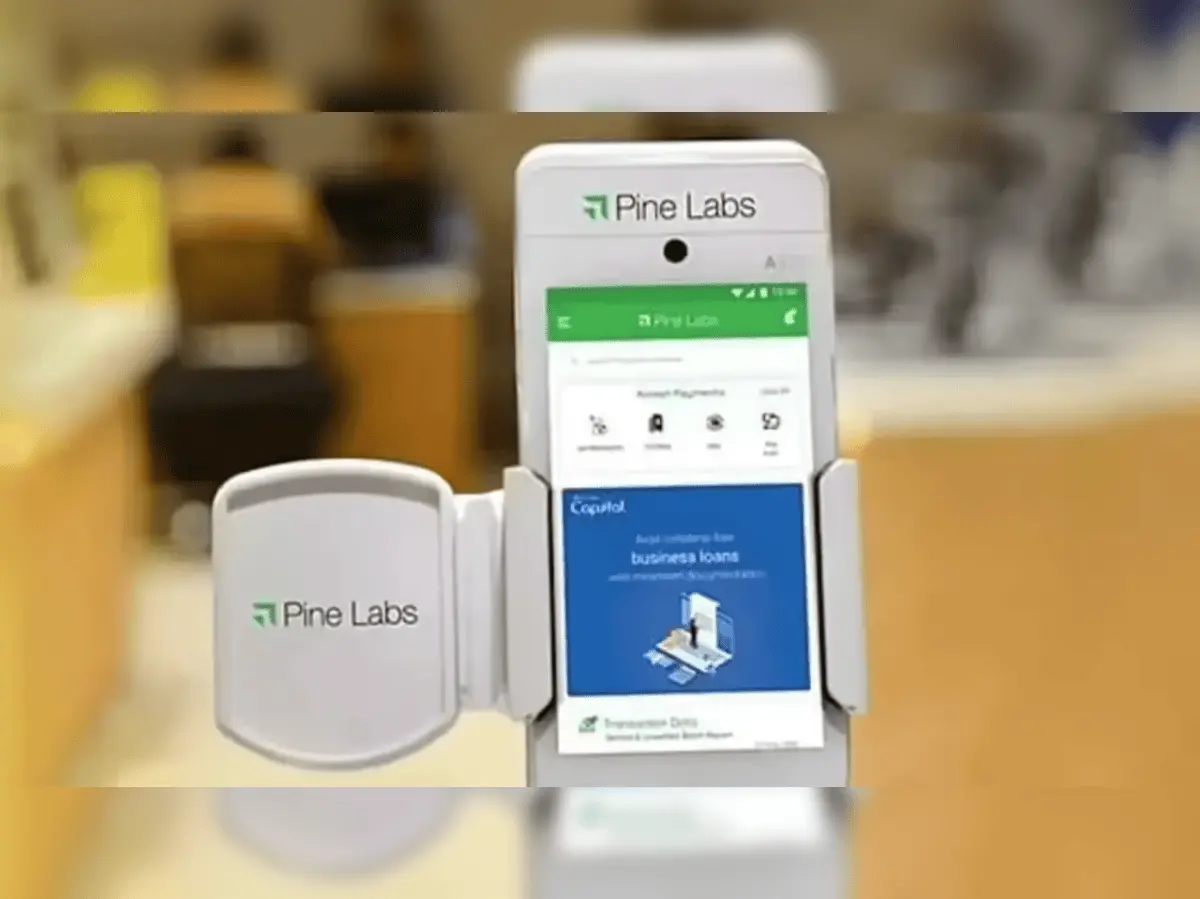
. With India recording more than 18,000 crore digital transactions annually and the country's fintech sector expected to achieve a $1.5 trillion valuation this year, the timing of this AI integration for merchants positions Pine Labs at the forefront of India's digital payment revolution. Chief Executive Amrish Rau told ET that the partnership aims to power transactions in an AI-first consumer internet, stating, "As merchants increasingly operate in an AI-led world, Pine Labs will be able to power those transactions"3
.
Source: ET
B2B Use Cases Drive Faster Adoption of AI-Driven Settlement and Reconciliation
Pine Labs is already leveraging AI internally to automate settlement and reconciliation processes, cutting the time required to clear daily settlements from hours to minutes
1
. The Noida-based company previously relied on manual checks by dozens of employees to process funds from multiple banks before markets opened each day—a workflow now largely handled by AI-driven systems1
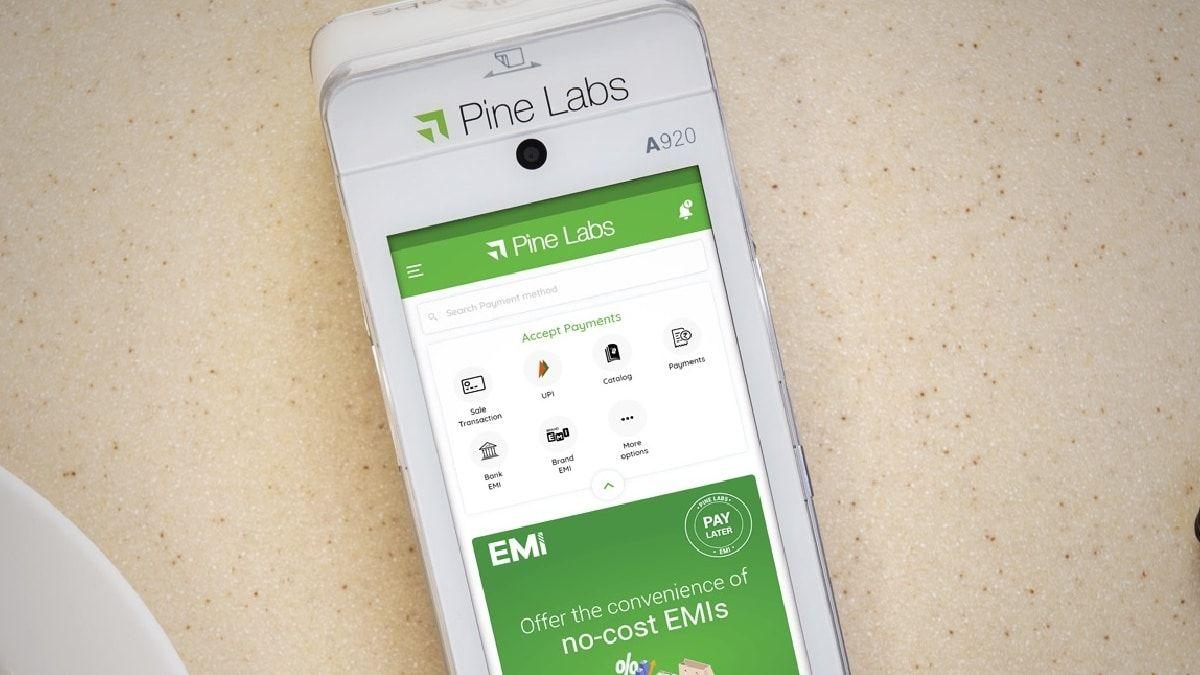
. The partnership will extend these efficiencies to merchants and corporate clients, starting with B2B use cases such as invoicing, settlement, and payments orchestration1
. "People talk about retail AI, but the bigger impact of all of this is really efficiency improvement, especially in B2B," Amrish Rau explained. "If you look at invoicing and settlement, those are workflows where agents can actually drive the process end to end, and that's where adoption can happen faster"1
.
Source: Gadgets 360
Related Stories




AI in India Faces Regulatory Considerations as Global Rollout Accelerates
While the collaboration promises to transform payments infrastructure, the rollout of autonomous, agent-led payment workflows will move faster in overseas markets where regulations already permit such transactions
1
. Pine Labs is already prototyping agent-driven payments in parts of the Middle East and Southeast Asia, though AI in India is likely to see more gradual adoption focused on AI-assisted commerce rather than fully agent-initiated payments due to tighter regulatory controls on payment authorization1
. Rau emphasized that Pine Labs is building additional security and compliance layers around AI-driven workflows to ensure sensitive merchant and consumer transaction data remains protected as AI integrates more deeply into payments systems1
.OpenAI Expands Beyond ChatGPT with Strategic Infrastructure Partnerships
This partnership underscores OpenAI's broader strategy to expand its footprint in India, one of its fastest-growing markets, as it moves beyond being known primarily as the maker of ChatGPT
1
. Earlier this week, the Sam Altman-led company partnered with leading Indian engineering, medical, and design institutions to bring AI tools into higher education, betting that India's large developer base and more than a billion internet users will play a central role in the next phase of AI adoption1
. The Pine Labs collaboration offers OpenAI a route deeper into India's payments and enterprise ecosystem, embedding its models into high-volume, regulated workflows1
. Rau noted the partnership does not involve revenue sharing, with the arrangement kept "completely independent"—anything related to payment services benefits Pine Labs, while OpenAI revenues go directly to them1
. The arrangement is also non-exclusive, comparable to OpenAI's partnership with Stripe in the U.S.1
.References
Summarized by

Navi
Related Stories
Recent Highlights


Recent Highlights
Today's Top Stories










Your Daily Dose of Curated AI News
Don’t drown in AI news. We cut through the noise - filtering, ranking and summarizing the most important AI news, breakthroughs and research daily. Spend less time searching for the latest in AI and get straight to action.

