OpenAI secures early lead in higher education with 700,000 ChatGPT licenses sold to colleges


2 Sources
2 Sources
[1]
OpenAI Inks Deals With Colleges, Seizing Early Lead in Education Market
OpenAI has established a beachhead at many US colleges, overcoming university administrators' wariness of artificial intelligence and giving ChatGPT a headstart on becoming the go-to assistant for the next generation of workers. The company has sold more than 700,000 ChatGPT licenses to about 35 public universities for use by students and faculty, according to purchase orders reviewed by Bloomberg. By contrast, Microsoft Corp., which typically bundles its Copilot assistant with existing software, has experienced more measured uptake of its AI tool at these schools -- and faculty are more likely to use it than students.
[2]
OpenAI Has Sold 700K ChatGPT Licenses to American Colleges | PYMNTS.com
The artificial intelligence (AI) startup has sold more than 700,000 licenses for its ChatGPT product to around 35 universities for use by faculty and students, Bloomberg News reported Thursday (Dec. 18), citing a review of purchase orders. The report adds that the true number could be much higher, as private schools' purchasing records aren't readily available to the public. An OpenAI spokesperson told Bloomberg that the company has sold "well over a million" licenses to colleges around the world. Bloomberg notes that OpenAI is continuing a long-held practice in the tech industry of offering discounted products to students to turn them into customers, with the company thus far enjoying a lead over Microsoft and Google AI products. Schools willing to purchase bulk access to ChatGPT are paying a few dollars per user each month, the contracts reviewed by Bloomberg show. That's compared to the $20 per month OpenAI normally charges for a smaller number of educational users. For corporate customers, ChatGPT can cost up to $60 each month. The report adds that many school administrators have come to an uneasy acceptance of artificial intelligence after years of concern that students would use the technology for cheating. "We don't think there's going to be an option in the future to opt out," said Anne Jones, vice provost for undergraduate education at Arizona State University, which purchased ChatGPT subscriptions for its entire faculty and student body. "Employers expect and need a labor force that knows how to work with these tools." Madeline Pumariega, president of Miami Dade College, offered a similar sentiment in an interview with PYMNTS last year, after the school announced a $5 million investment in a pair of AI centers. "We felt there was a workforce need, and that's our thought process in developing a program, to meet the workforce needs and be innovative in the way we do it," she said "We have to move this fast, to be responsive to the workforce and responsive to the industries' needs." And as covered here Thursday, AI is "changing jobs faster than companies can reorganize them," with new PYMNTS Intelligence data showing that the impact is much more uneven and complex than indicated by earlier predictions. For example, the research found that 48% of goods producers are using artificial intelligence primarily to increase output and efficiency. By contrast, 30% of service companies use the technology chiefly to enhance decisions and customer experiences. Tech firms are divided, with 42% adopting AI to remain competitive in fast moving markets.
Share
Share
Copy Link
OpenAI has sold more than 700,000 ChatGPT licenses to approximately 35 US public universities, establishing a significant presence in higher education. Schools are paying just a few dollars per user monthly for bulk access, compared to the standard $20-per-month rate, as administrators shift from concerns about academic cheating to viewing AI literacy as an essential skill for the workforce.
OpenAI Dominates AI in Education With Massive University Deployment
OpenAI has secured a commanding position in higher education by selling more than 700,000 ChatGPT licenses to approximately 35 public universities across the United States, according to purchase orders reviewed by Bloomberg
1
. The true scale of OpenAI in universities may be even larger, as an OpenAI spokesperson confirmed the company has sold "well over a million" licenses to colleges worldwide2
. This figure doesn't include private institutions whose purchasing records aren't publicly available, suggesting the actual footprint could be substantially higher.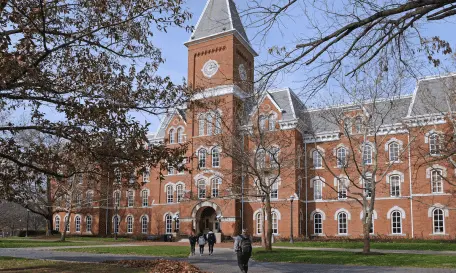
Source: PYMNTS
The deployment marks a significant shift in how university administrators view artificial intelligence, moving from wariness and concerns about academic cheating to embracing AI as a necessary component of future workforce training
1
. Anne Jones, vice provost for undergraduate education at Arizona State University, which purchased ChatGPT subscriptions for its entire faculty and student body, explained the institution's rationale: "We don't think there's going to be an option in the future to opt out. Employers expect and need a labor force that knows how to work with these tools"2
.Competitive Pricing Strategy Accelerates AI Adoption in Academia
Schools willing to purchase bulk access are paying just a few dollars per user each month, contracts reviewed by Bloomberg reveal
2
. This represents a significant discount from the $20-per-month rate OpenAI typically charges individual educational users and the $60 monthly fee for corporate customers. The aggressive pricing strategy follows a long-held practice in the tech industry of offering discounted products to students to convert them into long-term customers, giving ChatGPT a substantial advantage as an AI assistant for students over competitors.By contrast, Microsoft has experienced more measured uptake of Copilot at these schools, with faculty more likely to use the tool than students
1
. Microsoft typically bundles its Copilot assistant with existing software, but this approach hasn't generated the same momentum as OpenAI's dedicated licensing agreements with AI for students and faculty.Related Stories


From Resistance to Recognition of Essential Skill Development
The shift in institutional attitudes reflects a broader recognition that AI literacy has become an essential skill for the modern workforce. Madeline Pumariega, president of Miami Dade College, articulated this urgency after her institution announced a $5 million investment in AI centers: "We felt there was a workforce need, and that's our thought process in developing a program, to meet the workforce needs and be innovative in the way we do it. We have to move this fast, to be responsive to the workforce and responsive to the industries' needs"
2
.This rapid AI adoption in academia comes as new data shows artificial intelligence is changing jobs faster than companies can reorganize them. Research indicates that 48% of goods producers are using AI primarily to increase output and efficiency, while 30% of service companies deploy the technology to enhance decisions and customer experiences
2
. The uneven impact across sectors underscores why educational institutions are racing to prepare students with practical AI skills rather than theoretical knowledge alone. By establishing this early foothold, OpenAI is positioning ChatGPT to become the go-to assistant for the next generation of workers, potentially shaping how millions of students interact with AI tools throughout their careers.References
Summarized by

Navi
Related Stories
Recent Highlights
1
Google releases Gemma 4 with Apache 2.0 license, enabling unrestricted local AI on devices
Technology

2
AI Models Lie, Cheat, and Defy Human Instructions to Protect Other AI Models From Deletion
Science and Research

3
Anthropic discovers functional emotions in Claude that actively shape AI behavior and decisions
Science and Research

Recent Highlights
Today's Top Stories







Your Daily Dose of Curated AI News
Don’t drown in AI news. We cut through the noise - filtering, ranking and summarizing the most important AI news, breakthroughs and research daily. Spend less time searching for the latest in AI and get straight to action.

