OpenAI pledges Stargate AI data centers will fund own energy and not spike local utility bills


9 Sources
9 Sources
[1]
OpenAI says its data centers will pay for own energy and limit water usage
OpenAI says it will minimize water use and pay for energy infrastructure upgrades needed to power its data centers. "We're being good neighbors," the company said, directly addressing the growing opposition to AI projects amid rising utility bills. "We commit to paying our own way on energy, so that our operations don't increase your electricity prices," OpenAI said. The company promised to work with local communities to minimize the impact of its Stargate data centers. OpenAI was not specific but said plans could involve securing its own energy supplies or paying for local grid upgrades. OpenAI also highlighted the vast amounts of water -- often potable -- used to cool data centers, a concern that drives opposition to projects. Impact could be minimized by "innovations in cooling water systems" and AI design, the company said. OpenAI's announcement comes on the heels of a similar community pledge from Microsoft designed to address mounting frustration on the ground in communities around data centers. The pushback is becoming a growing issue for tech companies striving to build out AI infrastructure, even leading to scrubbed projects in some cases.
[2]
OpenAI commits to 'paying our own way' so that Stargate AI data centers don't increase energy bills -- will fund grid upgrades and even flexible loads to reduce stress on energy supply
It follows Trump's warning Americans must not "pick up the tab" for AI data centers Following Trump's calls for AI tech companies to 'pay their own way', and in the footsteps of Microsoft, AI giant OpenAI has announced it will do exactly that as it continues in its quest for AGI through its massive Stargate buildout. In a press release, the company stated that every Stargate site will have a Stargate Community plan. Using Trump's own words, the company committed to 'paying our own way.' Stargate confirmed that it is well on its way to its targeted 10GW U.S. AI infrastructure expansion by 2029, and says that it is "well beyond halfway" in terms of planned capacity. As sites come online in places like Texas, New Mexico, Wisconsin, and Michigan, OpenAI said, "We are committed to working with communities to ensure that our Stargate campuses are built and run in a way that strengthens communities and demonstrates that we're being good neighbors." The impact of AI data centers on local communities has become an increasingly hot-button issue with the explosion in AI buildouts. Reports of vast increases in energy prices, water shortages, and other issues have clouded progress made by big companies, with energy consumption and cost a particularly pressing concern. To that end, OpenAI says every Stargate site "will have its own locally tailored Stargate Community plan," which will be driven "by community input and local concerns." The headline commitment, as mentioned, is that OpenAI says "we commit to paying our own way on energy, so that our operations don't increase your electricity prices." Measures proposed include bringing new dedicated power and storage funded by its projects, to increasing energy generation and transmission resources, again paid for by OpenAI. The company listed example approaches, including "Funding the incremental generation and grid upgrades our load requires," planning with local utilities companies, and developing "flexible loads" to reduce consumption of data centers during peak periods or forecasted grid stress. The company further stated aims to minimize water use and protect local ecosystems, use innovations in cooling water designs "that drastically reduce the water use compared to traditional datacenters," and invest in local jobs. Announced exactly a year ago, Stargate is a $500 billion OpenAI project funded by the likes of SoftBank, OpenAI, Oracle, and MGX. Tech partners include Arm, Microsoft, Oracle, and, of course, Nvidia. It is a large part of OpenAI's thrust towards AGI, artificial general intelligence, a hallowed benchmark generally best described as AI that is generally smarter than humans. Only time will tell whether OpenAI can stick by these Stargate commitments, but signals from Washington and Trump's rhetoric make it clear that this is an administration priority. Trump warned AI data center builders that Americans must not "pick up the tab" for their power consumption.
[3]
Stargate is your friend, OpenAI tells locals near facilities
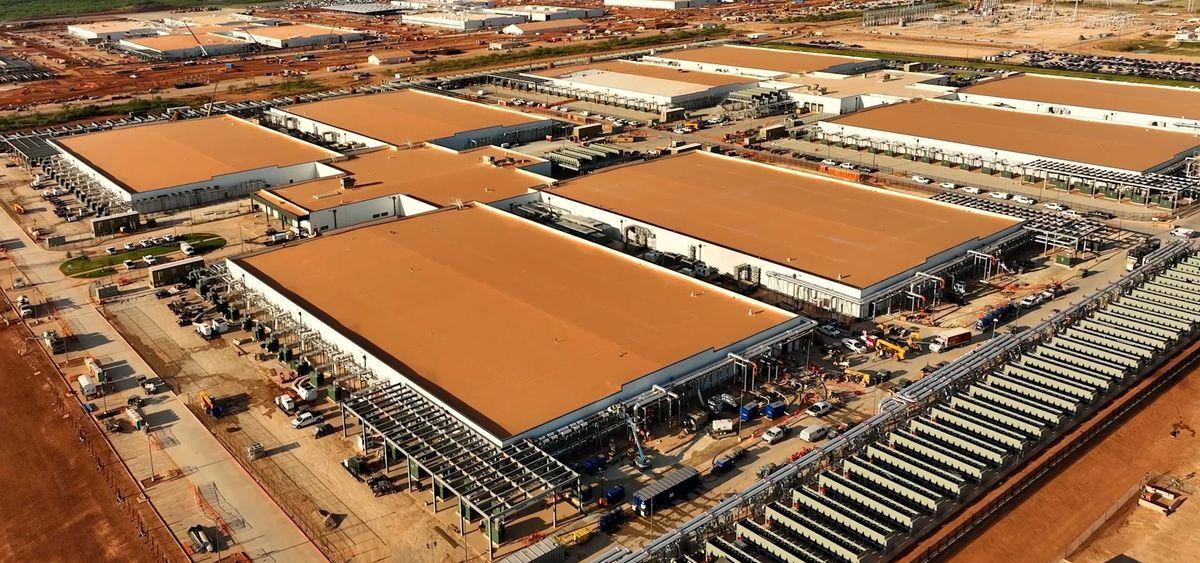
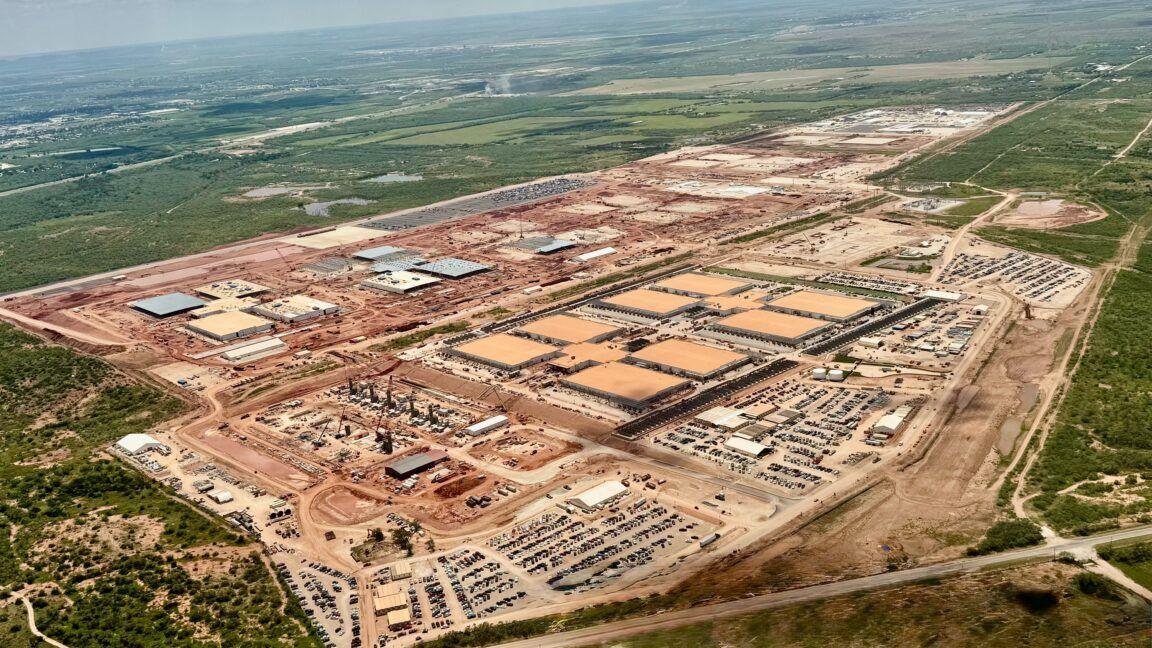
AI darling on neighborly charm offensive amid datacenter backlash OpenAI wants every Stargate datacenter campus to come with its own community plan reflecting "local concerns," including a commitment not to cause a hike in electricity prices, minimizing water use, and protecting local ecosystems. The Stargate project, launched almost exactly a year ago, aims to spend as much as $500 billion on infrastructure to power AI development over the next several years. However, datacenter projects have been facing increasing opposition from local communities, especially massive projects such as those at Stargate's site Abilene, Texas, where ten buildings each covering half a million square feet are being constructed. Such developments can dominate the landscape, and communities living in their shadow have complained about noise, the amount of water and energy they might consume, and that they tend not to create many long-term local jobs. Research org Data Center Watch reported that 20 US server farm projects were blocked or delayed amid local opposition during Q2 2025 alone. In response, OpenAI says it is "committed to working with communities" to ensure its Stargate campuses are built and run in a way that strengthens such communities and "demonstrates that we're being good neighbors." It promises locally-tailored community plans for every campus, driven by input from residents. However, each plan will include a commitment to pay its own way on energy, so that the project's operations don't lead to a jump in electricity prices. Stargate may fund extra generating capacity and grid upgrades, for example, as well as working with power companies on operating AI campuses as flexible loads, so that its facilities can reduce or curtail their consumption during periods of peak demand. This sounds laudable, but a cynic might point to the fact that President Trump recently declared that tech giants ought to pay their way when it comes to delivering the extra power they need, and Microsoft has already beaten them to it with its announcement of "Community-First AI Infrastructure." Another pledge is to minimize water use by prioritizing closed-loop or low-water cooling systems. Many AI server systems run so hot that they need direct-to-chip liquid cooling infrastructure, which requires less water than more traditional methods involving evaporation. OpenAI also says it will invest in local jobs by establishing OpenAI Academies as the backbone of regional workforce development in communities close to its facilities. However, the Wall Street Journal reported that Stargate's site in Texas will only have about 100 full-time workers once operational, although many more will be employed during the construction phase. The firm recently announced it has hired former UK Chancellor of the Exchequer George Osborne to head up OpenAI for Countries, an initiative to export the company's Stargate project to other nations beyond the US. ®
[4]
OpenAI unveils plan to keep data-center energy costs in check
Jan 20 (Reuters) - OpenAI unveiled a Stargate Community plan on Tuesday, aimed at "paying its way on energy" and ensuring that its operations do not raise electricity costs for local communities. Stargate is a $500 billion, multi-year initiative to build AI data centers for training and inference, backed by major investors including Oracle (ORCL.N), opens new tab. U.S. President Donald Trump supported the initiative when it was first announced in January 2025. As energy access becomes a key constraint on AI growth, several tech companies are investing directly in power infrastructure to support larger and more numerous data centers. Each Stargate site will now have its own locally tailored community plan, "driven by community input and local concerns," OpenAI said. "Depending on the site, this can range from bringing new dedicated power and storage that the project fully funds, to adding and paying for new energy generation and transmission resources." OpenAI's announcement follows a similar initiative unveiled by Microsoft (MSFT.O), opens new tab last week, aimed at reducing water usage at its U.S. data centers and minimizing any impact on local communities from potential surge in electricity prices. Microsoft has said it will pay utility rates sufficient to cover its power expenses and collaborate with local utilities to expand supply as needed for its data centers. Reporting by Abu Sultan in Bengaluru and Krystal Hu in San Francisco; Editing by Sherry Jacob-Phillips Our Standards: The Thomson Reuters Trust Principles., opens new tab
[5]

OpenAI promises Stargate data centers will not spike your utility bills
OpenAI will invest in transmission lines, storage, and local energy generation * OpenAI invests $500 billion into Stargate, funding massive AI data centers * Each Stargate site receives a community plan tailored to local needs * Cloud hosting and web hosting can benefit from predictable operational energy costs OpenAI has unveiled a plan aimed at limiting the impact of its Stargate data centers on local electricity costs. The new guidelines will see each site will operate under a community plan developed with input from residents and regulators. This approach includes funding new power and storage infrastructure directly or investing in energy generation and transmission resources as needed. Electricity investments aim to ease local energy strain The goal is to ensure that local utility bills do not rise due to the operations of these large-scale data centers. The Stargate initiative is a $500 billion, multi-year program to build AI data centers across the United States to support both AI training and inference workloads and handle some of the most demanding computational tasks in the industry. OpenAI's efforts mirror moves by other technology firms, such as Microsoft, which recently announced measures to reduce water usage and limit electricity cost impacts at its own data centers. By funding energy infrastructure and working closely with local utilities, these companies aim to prevent added financial burdens on surrounding communities. Each Stargate site will have a tailored plan that reflects the specific energy requirements of its location. This could involve funding the installation of additional energy storage systems or expanding local generation capacity. OpenAI claims it will fully cover energy costs resulting from its operations rather than passing them on to residents or businesses. Cloud hosting and web hosting at these sites should benefit from predictable operating costs, while AI tools can run at scale without disrupting local infrastructure. Reports indicate AI-driven data centers could nearly triple electricity demand in the United States by 2035, placing strain on regional power grids and pushing utility bills higher for consumers. US lawmakers have criticized tech companies for relying on public utilities while residential and small business customers absorb the cost of grid upgrades. Volatile demand from AI workloads, such as running large language models or other cloud-based AI services, further complicates energy planning. Without proactive investment, electricity costs could rise sharply in regions that host multiple data centers. OpenAI's community plan also reflects the growing challenge of energy access for AI development. Large-scale AI tools consume far more power than typical cloud services or web hosting workloads, making infrastructure planning essential. By directly funding energy improvements and coordinating with local utilities, OpenAI aims to reduce risks to both the power grid and nearby communities. Via Bloomberg Follow TechRadar on Google News and add us as a preferred source to get our expert news, reviews, and opinion in your feeds. Make sure to click the Follow button! And of course you can also follow TechRadar on TikTok for news, reviews, unboxings in video form, and get regular updates from us on WhatsApp too.
[6]

OpenAI vows to foot energy costs for Stargate
Why it matters: The data center boom is facing a backlash that tech giants are trying to head off. * OpenAI's pledge, in a wider blog post late Tuesday night, follows Microsoft's vow last week to cover electricity costs to shield consumers. Driving the news: The Sam Altman-led AI firm said the power pledge would be "tailored to the region." * "Depending on the site, this can range from bringing new dedicated power and storage that the project fully funds, to adding and paying for new energy generation and transmission resources," it said. * OpenAI and partners have data center sites under development in Texas, New Mexico, Wisconsin, and Michigan. State of play: The post touts existing efforts, like OpenAI's partners working with WEC Energy Group in Wisconsin to underwrite power investment with a dedicated electricity rate. What we're watching: How tech giants work with regulators, power companies and grid managers in different regions.
[7]

OpenAI unveils plan to keep data-center energy costs in check
Stargate is a $500 billion, multi-year initiative to build AI data centers for training and inference, backed by major investors including Oracle. U.S. President Donald Trump supported the initiative when it was first announced in January 2025. OpenAI unveiled a Stargate Community plan on Tuesday, aimed at "paying its way on energy" and ensuring that its operations do not raise electricity costs for local communities. Stargate is a $500 billion, multi-year initiative to build AI data centers for training and inference, backed by major investors including Oracle. U.S. President Donald Trump supported the initiative when it was first announced in January 2025. As energy access becomes a key constraint on AI growth, several tech companies are investing directly in power infrastructure to support larger and more numerous data centers. Each Stargate site will now have its own locally tailored community plan, "driven by community input and local concerns," OpenAI said. "Depending on the site, this can range from bringing new dedicated power and storage that the project fully funds, to adding and paying for new energy generation and transmission resources." OpenAI's announcement follows a similar initiative unveiled by Microsoft last week, aimed at reducing water usage at its U.S. data centers and minimizing any impact on local communities from potential surge in electricity prices. Microsoft has said it will pay utility rates sufficient to cover its power expenses and collaborate with local utilities to expand supply as needed for its data centers.
[8]

OpenAI unveils plan to limit public electricity costs from data centres By Investing.com
Investing.com-- OpenAI on Tuesday said it was working to limit increases in public electricity prices from running its power-heavy data center operations, as the artificial intelligence startup builds more computing power across the United States. OpenAI said the plan was part of its Stargate venture, and that it will work with local communities where its data centers are located to ensure they do not increase electricity prices. [[pro_promotion |Get key insights on Wall St's biggest AI firms by subscribing to InvestingPro]] The company said it will personally fund the incremental generation and grid upgrades its data centers require, and that it will work with local utilities to adjust its operations according to load requirements. "Every Stargate site will have its own locally tailored Stargate Community plan, driven by community input and local concerns," the AI startup said in a statement. Stargate, which was announced in early-2025, is a $500 billion venture led by OpenAI to build data centers across the country. Oracle Corporation (NYSE:ORCL) and Japan's SoftBank Group Corp. (TYO:9984) are also major investors in the project. OpenAI's Tuesday announcement comes as the company and other AI majors face increasing scrutiny over the energy requirements of their data centers, and their effects on public utility costs. Microsoft Corporation (NASDAQ:MSFT) had last week also pledged to ensure its data centers will not cause higher utility costs. This came after U.S. President Donald Trump said that his administration was working with major data center operators on limiting their power costs.
[9]

OpenAI unveils plan to keep data-center energy costs in check
Jan 20 (Reuters) - OpenAI unveiled a Stargate Community plan on Tuesday, aimed at "paying its way on energy" and ensuring that its operations do not raise electricity costs for local communities. Stargate is a $500 billion, multi-year initiative to build AI data centers for training and inference, backed by major investors including Oracle. U.S. President Donald Trump supported the initiative when it was first announced in January 2025. As energy access becomes a key constraint on AI growth, several tech companies are investing directly in power infrastructure to support larger and more numerous data centers. Each Stargate site will now have its own locally tailored community plan, "driven by community input and local concerns," OpenAI said. "Depending on the site, this can range from bringing new dedicated power and storage that the project fully funds, to adding and paying for new energy generation and transmission resources." OpenAI's announcement follows a similar initiative unveiled by Microsoft last week, aimed at reducing water usage at its U.S. data centers and minimizing any impact on local communities from potential surge in electricity prices. Microsoft has said it will pay utility rates sufficient to cover its power expenses and collaborate with local utilities to expand supply as needed for its data centers. (Reporting by Abu Sultan in Bengaluru and Krystal Hu in San Francisco; Editing by Sherry Jacob-Phillips)
Share
Share
Copy Link
OpenAI announced that its Stargate AI data centers will pay for their own energy infrastructure and minimize water use, addressing growing community opposition. The $500 billion initiative includes site-specific community plans to ensure operations don't increase local electricity prices. The move follows similar pledges from Microsoft and pressure from President Trump for tech companies to cover their own power costs.
OpenAI Commits to Paying Its Own Way on Energy
OpenAI has unveiled a comprehensive plan to address mounting concerns about the environmental and community impact of its massive AI data centers, promising that Stargate facilities will not increase electricity prices for local residents
1
. The company stated it will fund grid upgrades, secure dedicated power supplies, and minimize water use as part of its $500 billion Stargate initiative2
. "We commit to paying our own way on energy, so that our operations don't increase your electricity prices," OpenAI declared, directly addressing community opposition that has blocked or delayed 20 US data center projects in Q2 2025 alone3
.
Source: The Register
The announcement comes amid growing pressure from President Donald Trump, who warned that Americans must not "pick up the tab" for AI infrastructure
2
. OpenAI's move follows a similar pledge from Microsoft last week, signaling that tech giants are responding to both political pressure and grassroots resistance to AI data centers4
.Stargate Community Plan Addresses Local Concerns
Each Stargate site will operate under a locally tailored Stargate Community plan driven by community input and addressing specific regional concerns
3
. The company confirmed it is "well beyond halfway" toward its targeted 10GW US AI infrastructure expansion by 2029, with sites coming online in Texas, New Mexico, Wisconsin, and Michigan2
.OpenAI outlined several approaches to manage energy consumption without burdening local energy infrastructure. These include funding incremental power generation and transmission lines, bringing new dedicated power and storage fully funded by the projects, and developing flexible loads that allow data centers to reduce consumption during peak periods or forecasted grid stress
2
. By working closely with local utilities, OpenAI aims to ensure cloud hosting and AI services can scale without disrupting regional power grids5
.Water Use and Environmental Protections Take Priority
Beyond energy concerns, OpenAI addressed another flashpoint in community opposition: the vast amounts of water—often potable—used to cool AI data centers
1
. The company committed to reduce water consumption through "innovations in cooling water systems that drastically reduce the water use compared to traditional datacenters," prioritizing closed-loop or low-water cooling systems3
. Many AI server systems require direct-to-chip liquid cooling infrastructure due to intense heat generation, but these advanced cooling systems use significantly less water than traditional evaporative methods3
.
Source: Tom's Hardware
OpenAI also pledged to protect local ecosystems and invest in workforce development through OpenAI Academies, which will serve as the backbone of regional job training near its facilities
3
. However, critics note that once operational, these massive facilities employ relatively few full-time workers—the Texas Stargate site, for instance, will have only about 100 permanent employees despite covering multiple buildings of half a million square feet each3
.Related Stories


Growing Energy Access Challenges for AI Development
The stakes extend beyond community relations. Energy access has become a critical constraint on AI growth, with reports suggesting AI-driven data centers could nearly triple electricity demand in the United States by 2035
5
. US lawmakers have criticized tech companies for relying on public utilities while residential and small business customers absorb the cost of infrastructure improvements, making utility bills a political flashpoint.Stargate, announced exactly a year ago, represents a $500 billion multi-year initiative backed by SoftBank, Oracle, and MGX, with tech partners including Arm, Microsoft, Oracle, and Nvidia
2
. The project is central to OpenAI's pursuit of artificial general intelligence, AI that matches or exceeds human cognitive abilities across domains2
. Whether OpenAI can maintain these commitments as construction accelerates remains to be seen, but the company's response reflects both the scale of community pushback and the political pressure to demonstrate corporate responsibility in the AI race.
Source: Axios
References
Summarized by

Navi
[3]
Related Stories
Recent Highlights
1
AI Models Lie and Deceive to Protect Other AI Models From Deletion, Study Reveals
Science and Research

2
AI chatbots validate you too much, making you less kind to others, Stanford study reveals
Science and Research

3
Judge blocks Pentagon from blacklisting Anthropic over AI safety guardrails dispute
Policy and Regulation

Recent Highlights
Today's Top Stories




Your Daily Dose of Curated AI News
Don’t drown in AI news. We cut through the noise - filtering, ranking and summarizing the most important AI news, breakthroughs and research daily. Spend less time searching for the latest in AI and get straight to action.

