Oracle cloud business surges 84% as AI contracts push revenue forecast to $90 billion


13 Sources
13 Sources
[1]
Oracle Posts Strong Cloud Sales Growth Following AI Bookings
The company is working to deliver on massive cloud infrastructure contracts with customers like OpenAI and Meta Platforms Inc., and said the demand for cloud computing for AI training and inferencing continues to grow faster than supply. Oracle Corp. shares gained almost 10% in extended trading after the company posted strong results and gave an outlook that suggested there is little letup in demand for AI computing. Revenue in Oracle's closely watched infrastructure business increased 84% to $4.9 billion in the period ended Feb. 28, the company said Tuesday in a statementBloomberg Terminal. That marked a faster jump than the 79% anticipated by analysts and a 68% sales rise in the previous quarter. Stock Movers Oracle, Amazon, Goeasy Arrow Right 5:59 Total revenue will reach $90 billion in the fiscal year beginning in June, Oracle said. Analysts, on average, estimated $86.7 billion. The company is working to deliver on massive cloud infrastructure contracts with customers like OpenAI and Meta Platforms Inc. Known for its namesake database software, Oracle has found success with its cloud business by providing chip-filled data centers and other equipment for training and deploying AI models. Get the Tech Newsletter bundle. Get the Tech Newsletter bundle. Get the Tech Newsletter bundle. Bloomberg's subscriber-only tech newsletters, and full access to all the articles they feature. Bloomberg's subscriber-only tech newsletters, and full access to all the articles they feature. Bloomberg's subscriber-only tech newsletters, and full access to all the articles they feature. Bloomberg may send me offers and promotions. Plus Signed UpPlus Sign UpPlus Sign Up By submitting my information, I agree to the Privacy Policy and Terms of Service. That effort comes with huge costs. Capital expenditures, a metric of data center spending, were about $18.6 billion in the fiscal third quarter, higher than the $14 billion anticipated by analysts. The company maintained its outlook for $50 billion of capital expenditures in the current fiscal year, which "could address concerns about overspending that have plagued Oracle and other cloud infrastructure providers," wrote Anurag Rana, an analyst at Bloomberg Intelligence. Oracle is quickly delivering cloud capacity to customers, with 90% in the quarter provided on or ahead of schedule, co-Chief Executive Officer Clay Magouyrk said on a conference callBloomberg Terminal after the results were announced. Remaining performance obligation, a measure of bookings, was $553 billion, compared with the $523 billion reported in the prior quarter. Most of this increase came from large-scale AI contracts in which the customers will fund the up-front purchases of semiconductors, the company said in the statement. "The demand for cloud computing for AI training and inferencing continues to grow faster than supply," the company said. "Furthermore, some of the largest consumers of AI Cloud capacity have recently strengthened their financial positions quite substantially. These market dynamics enable Oracle to comfortably meet and likely exceed our revenue growth rate forecast for FY27 and beyond." The shares reached a high of $164.51 in extended trading after closing at $149.40 in New York. The stock had lost more than 50% of its value from a September peak through Tuesday's close as Wall Street grew worried about the costs and logistics associated with the big build-out. Oracle said that due to advancements in AI-assisted coding, the company has been restructuring product development teams to make them smaller. "This new AI Code Generation technology is enabling us to build more software in less time with fewer people," the company said. Last week, Bloomberg reported that Oracle was planning thousands of job cuts across the company to help trim costs. It has disclosed $1.6 billion in expected restructuring costs in the fiscal year through May, its largest such plan on record. In the quarter, total revenue increased 22% to $17.2 billion. Earnings, excluding some items, were $1.79 per share. Analysts, on average, estimated profit of $1.70 a share on sales of $16.9 billion, according to data compiled by Bloomberg. Oracle's cloud applications business expanded 13% to $4 billion, in line with estimates. On the call, co-Chief Executive Officer Mike Sicilia addressed Wall Street's fears that AI is hurting incumbent software companies. "Some smaller or single-focused SaaS players may well be disrupted, but Oracle will not be among them," Sicilia said, referring to software as a service.
[2]
Oracle says AI coding is helping it dodge SaaSpocalypse
Big Red reckons paying for datacenters is easy when you have half a trillion dollars of cloud orders on the books Oracle says AI code generation tools have become so efficient, and it is so good at using them, that it will dodge the SaaSpocalypse and watch smaller rivals suffer. Big Red delivered that news in its Q3 results, after which co-CEO Mike Sicilia used the company's earnings call to say "AI tools and their coding capabilities would be a threat if we weren't adopting them, but we are and very rapidly." "The use of AI coding tools inside Oracle is enabling smaller engineering teams to deliver more complete solutions to our customers more quickly," he said. "We are building brand-new SaaS products using AI and also embedding AI agents right into our existing application suites." Sicilia said Oracle has just built three new customer experience (CX) applications, plus a new website generator it used to refresh its website. "We've built these new CX products to help our customers sell, not simply to administer a forecast or generate e-mail opens," Sicilia boasted, before listing other AI-infused additions to its products and declaring "these are not systems that can be replaced by a small collection of niche features cobbled together and bolted on in the name of AI." "So yes, some smaller or single-focused SaaS players may well be disrupted, but Oracle will not be among them," he concluded. In recent weeks, the rumor mill has suggested Oracle is set to make substantial layoffs to ensure it has the cash to finance its massive cloud builds. The wording Big Red used to describe its vibe coding adventures - smaller teams but building more products - left room for future job cuts. But co-CEO Clay Magouyrk was at pains to point out that Oracle has figured out how to pay for cloud builds without straining its finances, by using "A combination of bring your own hardware and upfront customer payments." That sort of deal, he said, "enables us to continue expanding [our datacenter footprint] without any negative cash flow from Oracle." Big Red inked $29 billion of contracts in a quarter using its new deals, and has $553 billion of remaining performance obligations (RPO) - services customers say they want but have not yet used or paid for - on its books, with most new orders covering AI infrastructure. Revenue for the quarter hit $17.2 billion, up 22 percent year-over-year. AI infrastructure accounted for $4.9 billion of that, up 84 percent. Revenue from IaaS and SaaS, which Oracle groups under "Cloud," grew 44 percent to $8.9 billion. The company predicted full year revenue of $67 billion and increased its forecast for its next financial year to $90 billion. "We are overdelivering on FY '26 revenue and earnings, and we are constantly raising our FY '27 forecast," Magouyrk said. "This is made possible by Oracle's transition from a predominantly seasonal license business into a highly predictable, recurring revenue cloud business." ®
[3]
Oracle sees AI boom through at least 2027, sending shares up 8%
March 10 (Reuters) - Oracle (ORCL.N), opens new tab on Tuesday predicted that the AI data center boom will power its revenue above Wall Street estimates well into 2027, sending its shares up 8.3% in extended trading. The results help to allay investor concerns that Oracle's costly multi-billion dollar push into AI computing would not generate profits quickly enough. Oracle has made a dramatic turn toward building data centers for partners such as OpenAI and Meta, while at the same time enacting layoffs as it uses smaller engineering teams and AI coding tools to roll out new software for its longtime customer base of large businesses. Remaining performance obligations (RPO), a key indicator of future contracted revenue, grew 325% from last year to $553 billion in the third quarter, ahead of the $540.37 billion estimate from four Visible Alpha analysts. Oracle had reported RPO of $523 billion in the previous quarter. Most of the increase in RPO in the quarter is related to large-scale AI contracts where Oracle, which has borrowed heavily, "does not expect to have to raise any incremental funds," the company said in a statement. The company also raised its revenue forecast for fiscal 2027 to $90 billion, above analysts' estimates of $86.6 billion, according to LSEG-compiled data. "Oracle's quarter is a beat and a stress test result for the AI trade," said eMarketer analyst Jacob Bourne. "As the most debt-exposed major player in AI infrastructure, Oracle is the canary in the coal mine and this report suggests there's underlying health in AI spending beyond the hype." On a conference call with investors, Clay Magouyrk, one of Oracle's two CEOs, said that the company's margins on its cloud business should improve over time. He reiterated the company's previous guidance, saying that renting out AI chips from partners such as Nvidia would have margins of 30% to 40%. But he said that 10% to 20% of customer spending with Oracle's cloud unit would go toward other services, which could also include its database business that has 60% to 80% gross margins. "When you combine all of these pieces together, the overall margin profile of (Oracle Cloud Infrastructure) continues to strengthen and grows rapidly," Magouyrk said. The company's strategy to build out data centers is helping it capture a slice of the booming AI market. Oracle has been aggressively spending to expand its cloud infrastructure to support generative AI workloads, competing for customers against hyperscalers such as Amazon's (AMZN.O), opens new tab AWS and Microsoft's (MSFT.O), opens new tab Azure. On the conference call, Oracle's co-founder and executive chairman, Larry Ellison, also said that the wave of investor concern that AI coding tools would weaken demand for business software should not apply to Oracle, because the company is embracing those tools by using small teams of engineers to create new software-as-a-service (SaaS) products. "Thank God we have these coding tools now that allow us to build a comprehensive set of software -- agent-based software to automate a complete ecosystem like healthcare, or financial services," Ellison said. "That's why we think the 'SaaS'-apocalypse applies to others but not to Oracle." The company reported total revenue of $17.19 billion for the third quarter ended February 28, compared with analysts' average estimate of $16.91 billion, according to LSEG data. For its current fiscal fourth quarter, Oracle predicts adjusted profits between $1.96 and $2.00 in U.S. dollars, above analysts' estimates of $1.94 per share. The company expects fiscal fourth-quarter revenue growth of 19% to 21% in U.S. dollars, in line with analysts' estimates of 20.2% growth to $19.12 billion. Similarly, Oracle forecast cloud revenue growth of 46% to 50% in U.S. dollars, also in line with estimates of 48% growth to $9.98 billion. Reporting by Juby Babu in Mexico City; Editing by Alan Barona Our Standards: The Thomson Reuters Trust Principles., opens new tab
[4]
Oracle stock surges on strong AI revenue forecast
Why it matters: Oracle had been on the hot seat as investors questioned whether it could handle a deluge of business from AI tech giants. Driving the news: Oracle on Tuesday raised its revenue forecast for the next fiscal year to $90 billion. * Analysts had expected $86.6 billion, CNBC reported, citing LSEG. By the numbers: In Oracle's most recent quarter, revenue rose 22% to $17.2 billion, exceeding S&P Capital IQ expectations of $16.9 billion. * That included a 44% jump in cloud revenues to $8.9 billion. * Net income of $3.7 billion topped expectations of $3.6 billion. What they're saying: The revenue showing was "meaningfully above" expectations, says Melissa Otto, head of research at S&P Global Visible Alpha, but now the "investor focus is likely to pivot to profitability." Zoom in: The company's order backlog -- which it calls remaining performance obligations (RPO) -- totaled $553 billion at the end of the quarter, up 325% from a year earlier. * Most came from AI contracts "where Oracle does not expect to have to raise any incremental funds" to deliver computing services, it said. The impact: Oracle shares -- which had lost more than 54% of their value over the last six months -- surged 8.7% in after-hours trading. * The earnings report also comes amid a slumping stock market as investors remain dazed by rising energy prices stemming from the Iran war. What we're watching: Oracle said that its own AI coding capabilities have advanced to a point where it's "enabling us to build more software in less time with fewer people." * "AI models for generating computer code have become so efficient that we have been restructuring our product development teams into smaller, more agile and productive groups," the company said. Editor's note: This article was updated with additional analyst comment.
[5]

Oracle's earnings have calmed Wall Street's fears -- for now
Oracle $ORCL keeps walking into earnings with roughly the same giant cloud-and-AI story and watching Wall Street rewrite the ending. In September, talk of more than $500 billion in booked cloud orders and RPO of $455 billion sent the stock up close to 30% after hours. In December, softer guidance and another $15 billion in planned spending turned that same story into a balance-sheet scare. On Tuesday, Oracle came back with revenue up 22% to $17.2 billion, OCI up 84% to $4.9 billion, cloud revenue up 44% to $8.9 billion, and RPO at $553 billion -- and the market, once again, decided it liked the plot. The stock was up around 10% in Wednesday's trading. Nothing cleans up an AI earnings story like a good utility bill. The company's case barely moves: more cloud, more AI demand, more enterprise data inching toward the models, more backlog, more ambition. What keeps changing is Wall Street's verdict. In September, the numbers read like a prophecy. In December, those same numbers read like a very expensive habit. In March, they read like a business again. This time, the market decided it liked one detail in particular: Oracle said that much of the latest RPO jump came from large AI contracts where it "does not expect to have to raise any incremental funds" because the equipment is either "funded upfront" by customers or bought by the customers themselves and handed over. Pair that with unchanged fiscal 2026 capex guidance of $50 billion and a raised fiscal 2027 revenue target of $90 billion, and Wall Street suddenly decided the same story sounded like it had a happily ever after once again. The post-earnings reaction sounded more relieved than smitten. Wedbush called the report a "huge relief" for the broader tech sector and said the company remains "a bedrock for the AI Revolution." Citi called the earnings "very solid." Morgan Stanley $MS's read was that the quarter could start rebuilding investor confidence after December's stumble. J.P. Morgan, meanwhile, upgraded the stock to Overweight from Neutral and said "blind pessimism" had gotten too extreme and created a more attractive risk-reward setup. Same Oracle story, new chapter, and a choose-your-own ending. Co-CEO Mike Sicilia said on the earnings call that "data gravity matters here" and that "mission-critical data gravity matters" could be even more crucial. That's the whole Oracle pitch in one sentence: If companies want AI agents to do work that matters -- approve payments, move inventory, manage schedules, touch healthcare records, pull from finance systems -- those agents need to get close to the systems of record. Oracle would very much like to be the landlord in that arrangement. Fellow co-CEO Clay Magouyrk pushed the same point from the infrastructure side. Early in the AI boom, he said, many customers thought they'd train their own private large language models. That has "largely proven" not to be the case. What they want instead is "the best models" combined "in a private way with their private data." That line is doing a lot of work to shift the quarter's story toward the part that matters: who owns the data, who runs the links, and who gets paid when AI starts doing actual work. The company keeps saying that AI won't live in some hermetically sealed toy box. It's going to seep into payroll, hospitals, banks, supply chains, customer records -- and whatever other grimly profitable systems already keep the lights on. On the call, Oracle said it has already delivered well over 1,000 embedded agents inside its horizontal and industry applications. In the earnings release, it said AI code generation is letting it build more software "in less time with fewer people." Same long game. Same insistence that AI belongs inside the old plumbing, not floating above it. Same bet that the boring layer ends up being the lucrative one. The company isn't reinventing its story every quarter. It's rewriting a few lines here and there. Cloud is now 52% of revenue. Database growth is accelerating inside the multicloud. AI coding tools are changing product economics. Demand for AI training and inference, Oracle said, still grows "faster than supply." Oracle keeps bringing the same argument to the market and finding out, every three months, whether investors think it sounds bankable and what the AI mood ring says this time around. "Oracle's quarter is a beat and a stress test result for the AI trade," eMarketer analyst Jacob Bourne said, according to Reuters. "As the most debt-exposed major player in AI infrastructure, Oracle is the canary in the coal mine, and this report suggests there's underlying health in AI spending beyond the hype." But investors still want proof that all this GPU capacity and AI cloud expansion will become earnings and free cash flow, not just giant contracted revenue and giant capital bills. Magouyrk added more concrete detail on the call. Oracle, he said, signed more than $29 billion in contracts using bring-your-own-hardware and upfront-customer-payment models. It delivered more than 400 megawatts to customers in Q3, and 90% of that committed capacity was delivered "on or ahead of schedule." That's the kind of operating receipt Wall Street has been begging for since December -- not another promise about some glorious, lucrative future, but proof that steel, power, cash, and timing are lining up in the same quarter. The margin story helped, too. Oracle said the gross margin on AI capacity delivered in Q3 came in at 32%, above its 30% guidance. Magouyrk reiterated that accelerator rentals still run in the 30% to 40% range, while 10% to 20% of customer spending in OCI goes to other services, including database work that can carry 60% to 80% gross margins. Put all that together, he said, and the margin profile "continues to strengthen." Same Oracle story again -- only this time, investors could see the scaffolding. None of that means the trust issue has vanished. It just lets Oracle spend a quarter talking about growth before the balance-sheet questions take over again. December's quarter still happened. Oracle still missed expectations on guidance then, still said spending would rise by $15 billion versus earlier estimates, and still watched the shares slide. Heading into this week's report, the stock was more than 50% below its September highs, and analyst commentary was still laced with nerves about debt load, OpenAI concentration, and whether all this construction would turn into profits fast enough. The job this quarter was to make the same sprawling future sound expensive, yes, but survivably so. That's a different task, and it's a much harder one. Plenty of companies can sell growth. Fewer can sell growth, giant capex, giant contracts, and a plausible answer to who's paying for this whole thing. Oracle didn't change religions. Wall Street changed moods. Morgan Stanley still wants proof that Oracle's GPU-as-a-service push will turn into earnings and free cash flow. Oracle's earnings will continue to come with lingering nerves around debt, data-center spending, and reliance on a small circle of very large AI customers. The company is still riding one of tech's biggest secular waves, still piling up cloud demand, still arguing that AI gets truly valuable once it sits close to corporate data and old enterprise plumbing. What changes is the read-through. One quarter, the numbers sound like destiny. The next, they sound like overhead. This week, Oracle found a new version of the old story that the market was willing to read with less suspicion. There was one genuinely new thing for the market to grab onto, though. This was Oracle's first quarter in more than 15 years with both revenue and earnings growth above 20%. That might just give investors a cleaner reason to treat this round of Oracle déjà vu as something more substantial than another backlog sermon. Still, nobody should pretend the loop is broken. Oracle keeps handing Wall Street the same giant future -- more cloud, more AI demand, more data moving toward the models, more contracts already spoken for -- and Wall Street keeps deciding, every three months, whether that future looks like growth, danger, or somebody else's tab. Oracle no longer gets points for telling a giant AI story -- plenty of companies can do that. Larry Ellison can't just say something grandiose on cue -- plenty of tech billionaires can do that, too. Oracle's trick is making the same story sound bankable every 90 days. This quarter, the answer tilted back toward growth. Next quarter, the company has to sell the same future all over again.
[6]

Oracle turns in a strong Q3 with time left over to debunk the so-called 'SaaSpocalypse'
No signs of the wretched 'SaaSpocalypse' as Oracle turned in a strong Q3. Revenue rose 18% year-on-year to $17.19 billion, with profit of $3.72 billion, up from $2.94 billion a year ago. Total cloud revenue (IaaS plus SaaS) came in at $8.9 billion, up 44%, of which infrastructure revenue was up 84% to $4.9 billion, while SaaS revenue of $4.0 billion was up 13%. Within applications, Fusion Cloud ERP was up 17% to $1.1 billion, while NetSuite also generated $1.1 billion, up 14%. On the post-results analyst call, Mike Sicilia, co-CEO, highlighted a number of key wins in the applications space in Q3: Memorial Hermann Health System selected Fusion ERP, SCM and HCM. This was a win over Workday. University of New South Wales also selected Fusion ERP and HCM, also a win over Workday. Gregg Media selected Fusion EPM and ERP, a win again over Workday and also over SAP. Investec Bank selected Fusion EPM and ERP over SAP. HID Global Corporation also selected Fusion ERP and SCM over SAP. Ethiopian shipping and logistics services enterprises selected Fusion ERP, SCM, and HCM, again, over SAP. A major Wall Street Bank elected to standardize on Fusion ERP for the entirety of their business and all of their business units replacing SAP full stop. Loudoun County Public Schools selected Fusion ERP, EPM, HCM and SCM. The J.M. Smucker Company selected Fusion ERP and EPM, Westfield Insurance [ spec ] Fusion ERP, EPM, HCM and procurement. Remaining Performance Obligations (RPO), which has made Wall Street so excited in recent months, ended Q3 at $553 billion, up 325% from a year ago and up $29 billion in Q2. That growth is related to large AI contracts, with demand still outstripping supply. Clay Magouyrk, co-CEO, said: Multi-cloud database revenue grew 531% year-over-year. AI infrastructure revenue grew 243% year-over-year. Both also have demand that exceeds supply and a clear execution plan for Oracle that will rapidly turn that demand into profitable recurring revenue. He explained: AI infrastructure begins with data centers and power generation. Through our partners, we have secured more than 10 gigawatts of power and data center capacity coming online over the next 3 years. Those infrastructure investments also need funding and greater than 90% of that capacity is fully funded through our partners, with the remainder planned to finish this month. Once the data center is secured, several things must come together. The data center and on-site power generation has to be constructed. Compute, networking and storage has to be designed, manufactured, delivered and installed. All the capacity inside the data center also has to be funded. We continue to innovate across each of these steps. We optimize our data center construction through standardized designs. Our supply chain has improved with more suppliers and deeper relationships. We have tripled our manufacturing sites and increased rack output by 4x all in the last year. We have scaled our installation processes to enable multiple phases of delivery in parallel. Time from rack delivery to revenue has reduced by 60% in the past several months. Oracle is delivering more capacity to customers, he added: In Q3, we delivered more than 400 megawatts to customers. Ninety percent of that committed capacity was delivered on or ahead of schedule as we've consistently done over several quarters. This is why customers continue to choose Oracle for their infrastructure needs. Investing in the AI infrastructure is capital-intensive, but our operating model is optimized to ensure profitability. Flexible infrastructure design, high utilization and rapid handover combined with diversified customers create an incredible, Increased scale spreads our fixed costs over a larger base increasing profitability. It's unprecedented to scale a capital-intensive business so quickly while also increasing profitability. For his part, Sicilia turned his attention to debunking the so-called 'SaaSpocalypse', the theory that companies coding quickly using AI will spell the death of SaaS and traditional software firms: I don't agree with that at all. I do think that AI tools and their coding capabilities would be a threat if we weren't adopting them, but we are and very rapidly. Oracle is using the best AI coding tools and the best developers not only to accelerate our SaaS business but to deliver solutions that enable entire ecosystems across numerous industries. The use of AI coding tools inside Oracle is enabling smaller engineering teams to deliver more complete solutions to our customers more quickly. We are building brand-new SaaS products using AI and also embedding AI agents right into our existing applications suites. By embracing AI with small engineering teams, we have just built three brand-new CX applications, lead generation and qualification, sales orchestration and automated selling and our new website generator. And CTO Larry Ellison, in his only contribution to the post-results analyst conference call, added: Thank God we have these coding tools now that allow us to build a comprehensive set of software, agent-based software to automate a complete ecosystem like health care or financial services. That's what we're doing at Oracle. That's why we think we're a disruptor. That's why we think the SaaS apocalypse applies to others but not to us. As someone who's been writing about Oracle since 1990, it was somewhat disconcerting to sit through an analyst call in which Ellison was largely an observer rather than dominating the conversation. A new world indeed... Aside from that personal observation, this was another strong quarter for Oracle and Wall Street clearly approved of what it was hearing as the uptick in the share price indicates.
[7]
Larry Ellison says AI will only make Oracle stronger
Oracle $ORCL, of all companies, would like a word about the future of software. On its latest earnings call, Larry Ellison grabbed one of tech's nastier new panic phrases -- the SaaS-apocalypse -- and used it to try to argue that AI's shakeout won't bury Oracle but could instead leave the old enterprise giant standing tall in a stronger position. "Thank God we have these coding tools now that allow us to build a comprehensive set of software -- agent-based software -- to automate an ecosystem like health care or financial services," Ellison said. "That is why we think we are a disruptor. That is why we think the SaaS-apocalypse applies to others, but not to us." That's a striking line from a company better known for corporate plumbing than Silicon Valley prophecy, and it landed on the same day Oracle reported $17.2 billion in quarterly revenue, cloud revenue up 44% to $8.9 billion, cloud infrastructure revenue up 84% to $4.9 billion, and remaining performance obligations up 325% to $553 billion, with Oracle saying most of that jump came from large-scale AI contracts. Software investors have spent the past several weeks wondering whether AI agents and AI coding tools are about to make parts of the application layer look a lot less sacred. In early February, software and services stocks had shed about $830 billion in market value over six trading days as investors worried that new AI tools were pushing into legal work, sales, marketing, data analysis, and other lucrative corners of enterprise software. That's the panic Ellison walked into -- and that he, being Larry Ellison, immediately tried to turn into a competitive advantage. Oracle CEO Mike Sicilia made the same case in a bit more detail, saying, "I do not agree with that at all" about the idea that AI coding tools will spell the end of SaaS, and arguing that Oracle is using those tools to speed product development and embed AI agents directly into its software suites. "Yes, some smaller or single-focused SaaS players may well be disrupted," he said. "But Oracle Corporation will not be among them." He added that Oracle is "building brand new SaaS products using AI and also embedding AI agents right into our existing applications and suites," and later: "We think AI is disruptive -- we do -- but we think we are the disruptor." That's Oracle's real pitch here. It's not claiming that AI won't disrupt software but that AI hurts shallow software before it hurts deeply embedded software. What the company is trying to say is that the damage will be uneven and that it sits in a land where compliance, integration, and switching costs are ugly enough to make "just replace it with an agent" sound like something said by someone who doesn't have to survive an audit. Oracle, in Ellison's and Sicilia's version of the story, has enough stack, data, and customer entrenchment to use AI to fortify SaaS while also making a fortune on the infrastructure boom around it. Investors liked the pitch; shares rose more than 8% after the results dropped. "That's what we're doing at Oracle," Ellison said on the call. "That's why we think we're a disruptor." Oracle has some receipts for that argument, at least for now: Cloud applications revenue rose 13% in the quarter, while Fusion Cloud ERP revenue climbed 17% and NetSuite Cloud ERP revenue rose 14%. On the call, Sicilia said Oracle is "building brand new SaaS products using AI" while also embedding agents into existing applications, and he pointed to Oracle's thousands of live AI agents and new Agent Studio as proof that the company intends to sell the shakeout, not just survive it. Ellison's comment was a swipe at the rest of the industry and a bid to recast Oracle as something more flattering than an aging incumbent with a very good quarter. Oracle is one of the industry's oldest incumbents, a company associated with databases, ERP, and the sort of enterprise machinery that gets called boring right up until it breaks. It's not sexy or exciting, but it's paying -- and well. Oracle is trying to move from the category of software giant that gets disrupted into the category selling hard hats that gets to narrate the disruption.
[8]

Oracle Boosts Outlook Amid Huge AI Demand. The Stock Is Surging.
Get personalized, AI-powered answers built on 27+ years of trusted expertise. Oracle turned in a strong quarter and raised its long-term outlook on strong AI demand. Will it be enough to bring its stock out of its slump? Shares of Oracle were up about 9% in extended trading after the company said it had an "exceptional" quarter, in what could point to the start of a reversal in its recent decline. Oracle posted adjusted earnings per share of $1.79 on a 22% year-over-year jump in revenue to a record $17.2 billion for the company's fiscal third quarter. Both figures topped analysts' estimates compiled by Visible Alpha. Meanwhile, the company's backlog more than quadrupled to a record $553 billion. Oracle said most of the growth "related to large scale AI contracts," and that it doesn't expect to have to raise any incremental funds to service those agreements. Looking ahead, Oracle raised its revenue outlook for fiscal 2027 to $90 billion. It kept its 2026 guidance steady at $67 billion. Citi analysts said they expect shares of Oracle to trade higher in the wake of what they called a "very solid" print. Wedbush analysts led by Dan Ives called the results a "huge relief" not just for Oracle, but the broader tech sector, "given the AI buildout jitters." Heading into Tuesday's results, the stock was more than 50% off its September highs.
[9]

US Stock Market | Oracle sees AI boom through at least 2027, sending shares up 8%
Oracle on Tuesday predicted that the AI data center boom will power its revenue above Wall Street estimates well into 2027, sending its shares up 8% in extended trading. Oracle on Tuesday predicted that the AI data center boom will power its revenue above Wall Street estimates well into 2027, sending its shares up 8% in extended trading. The results help to allay investor concerns that Oracle's costly multi-billion dollar push into AI computing would not generate profits quickly enough. Remaining performance obligations (RPO), a key indicator of future contracted revenue, grew 325% from last year to $553 billion, ahead of the $540.37 billion estimate from four Visible Alpha analysts. Most of the increase in RPO in the quarter is related to large-scale AI contracts where Oracle "does not expect to have to raise any incremental funds," the company said in a statement. The company also raised its revenue forecast for fiscal 2027 to $90 billion, above analyst estimates of $86.6 billion, according to LSEG-compiled data. "Oracle's quarter is a beat and a stress test result for the AI trade," said eMarketer analyst Jacob Bourne. "As the most debt-exposed major player in AI infrastructure, Oracle is the canary in the coal mine and this report suggests there's underlying health in AI spending beyond the hype." Long known for its database software and enterprise applications for finance, Oracle in recent years has repositioned itself as a cloud computing infrastructure competitor after recruiting key executives from rivals. The company's strategy to build out data centers is helping it capture a slice of the booming AI market. Oracle has been aggressively spending to expand its cloud infrastructure to support generative AI workloads, competing for customers against hyperscalers such as Amazon's AWS and Microsoft's Azure. Oracle also said that it has been restructuring its product development teams, as new AI code generation technology enables it to build more software in less time with fewer people. The company reported total revenue of $17.19 billion for the quarter, compared with analysts' average estimate of $16.91 billion, according to data compiled by LSEG. For its current fiscal fourth quarter, Oracle predicts adjusted profits between $1.96 and $2.00 in U.S. dollars, above analysts' estimates of $1.94 per share. The company expects fiscal fourth-quarter revenue growth of 19% to 21% in U.S. dollars, in line with analysts' estimates of 20.2% growth to $19.12 billion. Similarly, Oracle forecast cloud revenue growth of 46% to 50% in U.S. dollars, also in line with estimates of 48% growth to $9.98 billion, according to LSEG data.
[10]

Oracle Q3 Earnings: 'SaaSpocalypse' Is Coming -- Just Not For Oracle, Executives Say
'We think the SaaSpocalypse applies to others," says Chief Technology Officer and co-founder Larry Ellison. Oracle co-CEO Mike Sicilia and Chief Technology Officer and co-founder Larry Ellison dismissed concerns around a "SaaSpocalypse" of more traditional enterprise software-as-a-service vendors getting disrupted by artificial intelligence upstarts including Claude maker Anthropic and ChatGPT maker OpenAI-with single-focus SaaS vendors more vulnerable to disruption than the database products giant. "You've all heard the thesis or theory that new companies coding quickly using AI will spell the death of SaaS-I don't agree with that at all," Sicilia said. "I do think that AI tools and their coding capabilities would be a threat if we weren't adopting them, but we are. Very rapidly." Ellison, who co-founded the vendor in 1977, added that Oracle coding tools allow it to build a comprehensive set of agents for automating entire health care and financial services ecosystems. "That's why we think we're a disruptor," he said. "That's why we think the SaaSpocalypse applies to others." The executives spoke with investors and analysts Tuesday on its earnings call covering the third quarter of its 2026 fiscal year. The quarter ended Feb. 28. The Austin, Texas-based database products and cloud vendor is leveraging AI coding tools and smaller engineering teams to build new SaaS products-including a new website generator used to build Oracle.com-and embed agents into existing applications and suites, Sicilia said. Customers have not shown an appetite for tossing existing retail merchandising, core banking, demand deposit account, electronic health record and other complex, mission-critical systems to adopt a new system with AI features. Instead, customers so far prefer to consume AI features out of the systems they already have. Unlike the AI upstarts, Oracle also has decades of experience in various industries and regulatory compliance, he said. "We think AI is disruptive-we do," Sicilia said. "But we think we're the disruptor because we're actually embedding the AI right into our applications full stop." The co-CEO took a swipe at enterprise software rival Salesforce-which, like Oracle, saw its stock decline when Anthropic stunned Wall Street analysts with recent innovations. New website generating and lead generating capabilities are "products that Salesforce.com does not have," he said. "We've built these new CX (customer experience) products to help our customers sell, not simply to administer a forecast or generate email opens," Sicilia said. Oracle has delivered more than 1,000 agents in its horizontal back office and industry apps, Sicilia said. That doesn't include customer-built agents and agents Oracle uses internally. A banking apps suite by Oracle alone has hundreds of embedded AI agents available for no additional cost to customers. In the quarter, Oracle saw more than 2,000 customers go live with Oracle application projects, Sicilia said. "These are not systems that can be replaced by a small collection of these features cobbled together and bolted on in the name of AI," he said. "Some smaller or single-focus SaaS players may well be disrupted, but Oracle will not be among them." On Tuesday's call, Oracle co-CEO Clay Magouyrk said that OpenAI's Codex and Anthropic's Claude "are incredible tools" and that inference through those tools is creating "a huge amount of demand." In the competition over which vendors will conquer the AI interaction layer, Sicilia said that data gravity is a key factor. Customers want to build AI agents in systems of record like those supplied by Oracle. "That is the data from an inferencing standpoint, from a retrieval augmented generation standpoint, it's going to be highly relevant and highly specific, and add a bunch of context to AI," he said. Oracle's AI Agent Studio works with data outside of its Fusion business apps suite, and Oracle offers an AI data platform development environment for customers and partners to build more specific agents with any AI model, Ellison said. Oracle's AI infrastructure business is creating a halo effect on its applications business, Sicilia said-which could be of interest to Oracle solution providers. The vendor training so many models on its Oracle Cloud Infrastructure (OCI) and so closely provisioned for its applications allows the vendor to embed high quality AI services right into its apps as features, Sicilia said. Oracle serves the model vendors for training and embeds the output into its apps. Oracle's role as custodian of much of the world's mission critical data means its customers can unlock AI use cases with that data quickly, he said. During the call, Magouyrk said that concerns around latency with AI is getting alleviated through product innovations in inference architecture and by AI accelerators, with Oracle's choices for giant centralized data centers in lower-populated areas of Texas and Wyoming not a major concern for latency. When asked on the call about private large language models, Magouyrk said that he is not seeing customers training their own LLMs. Instead, they are taking the best models and combining them for leveraging with private data, and Oracle has responded to this by making its AI database easy to connect with third parties and through its AI data platform offer. Much work remains moving customers from on-premises environments to the cloud so that they can better take advantage of private data with AI tools, he said. "Across the stack, we're seeing a lot of momentum," he said. OCI's margins continue to strengthen over time, Magouyrk said. Oracle continues to see 30 percent to 40 percent margins on AI data centers, with the vendor optimizing the cost of networking, hardware and power over time. About 10 percent to 20 percent of total spend on these data centers goes to general purpose compute and adjacent services with higher margins. The multicloud database business has margins in the 60 percent to 80 percent range. "We're very, very good at minimizing the time under which that (data center) construction is happening," he said. "We're very, very good at reducing those costs during that time period. But they're not zero. And so, as our business is going to this hyper growth phase, that's the only drag on profitability." Oracle has secured more than 10 gigawatts of power and data center capacity coming online over the next three years, he said. More than 90 percent of the capacity is funded through partners, with plans to finish this month. Oracle has tripled its manufacturing sites and increased rack output fourfold in the last year. Time from rack delivery to revenue has reduced by 60 percent in the past several months. Oracle reported $553 billion in remaining performance obligations, quadruple year over year ignoring foreign exchange. That RPO is also up $29 billion from the prior quarter and is due to AI contracts that don't require incremental fundraising by Oracle. Most of the equipment needed is either funded upfront through customer prepayments so that Oracle can purchase the graphics processing units or the customer buys the GPUs and supplies them to Oracle, according to the vendor. Total revenue grew 18 percent ignoring foreign exchange, hitting $17.2 billion. Cloud revenue was $8.9 billion, up 41 percent ignoring foreign exchange. Cloud infrastructure revenue grew 81 percent year on year to $4.9 billion. Cloud database revenue grew 35 percent year on year. Multicloud database revenue grew sixfold. AI infrastructure revenue tripled year on year. Oracle has 33 cloud regions live with Microsoft, 14 with Google and eight Amazon Web Services regions, with plans to reach 22 AWS regions in the fourth fiscal quarter. Cloud application revenue grew 11 percent year on year ignoring foreign exchange to $4 billion. The business has an annualized run rate (ARR) of $16.1 billion. Fusion Cloud enterprise resource planning revenue grew 14 percent ignoring foreign exchange to $1.1 billion. Supply Chain Management (SCM) grew 15 percent year on year. Human Capital Management (HCM) grew 15 percent. And customer experience (CX) grew 6 percent. NetSuite Cloud ERP revenue grew 11 percent year on year to $1.1 billion. And SaaS solutions for hospitality, construction, retail, banking, restaurants, local governments and telecommunications combined grew 19 percent year on year. Oracle reported $5.5 billion in operating income using Generally Accepted Accounting Principles. Non-GAAP operating income was 7.4 billion, up 14 percent year on year ignoring foreign exchange. GAAP net income was $3.7 billion. Non-GAAP net income grew 18 percent year on year to $5.2 billion. Operating cash flow over the past 12 months grew 13 percent with foreign exchange, reaching $23.5 billion. During the quarter, Oracle delivered more than 400 megawatts to customers. Ninety percent of that committed capacity was delivered on or ahead of schedule, according to Oracle. Although Oracle restated its expected $67 billion in revenue in fiscal year 2026 and $50 billion in capital expenditures, the vendor increased its revenue forecast for FY 2027 to $90 billion, which would mark growth of about 33 percent year on year. For the fourth fiscal quarter, Oracle expects total revenues to grow from 18 percent to 20 percent year on year ignoring foreign exchange. It expects total cloud revenue to grow between 44 percent to 48 percent ignoring foreign exchange. Oracle's stock jumped 8 percent after market close Tuesday, trading at about $162 a share.
[11]

Investor Outlook: Oracle earnings beat highlights AI cloud growth
Oracle shares jumped after the company beat third-quarter earnings estimates and raised its revenue guidance, underscoring strong demand for artificial intelligence infrastructure. BNN Bloomberg spoke with Rob Oliver, senior research analyst at Baird, who says Oracle's expanding cloud business and role in AI computing position the company for potential long-term growth despite heavy capital spending. Read the full transcript below: ROGER: Oracle is soaring after it beat third-quarter earnings estimates and raised its revenue guidance. The stock is still about 15 per cent in the red for the year -- roughly 16 per cent right now. It has slipped a little more today, but my next guest sees a path for Oracle to rebound as revenue increasingly shifts toward cloud. Let's hear from Rob Oliver, senior research analyst at Baird. Rob, thanks very much for joining us. ROB: Great. Good afternoon. Thanks for having me. ROGER: What do you like about this earnings report? What's standing out for you? ROB: Well, I think first of all the setup into the earnings report was pretty good. Expectations for Oracle were fairly modest. As you said, the stock had underperformed and had pulled back all the way to flat over the trailing 12 months. It was trading directly in line with the IGV software index in terms of performance. So a lot of the AI hype was out of the stock. Still, there was concern the company was going to have to raise capex, and that was really the main issue. Our view coming into the quarter was that there were some positive things to hang your hat on with Oracle. One was that Oracle's main customer for infrastructure is OpenAI, and OpenAI secured a US$110 billion funding deal during the quarter. About 60 per cent of Oracle's backlog, or remaining performance obligations, is associated with that. That, plus Oracle's own funding and financing program announced during the quarter, provided investors with more comfort. So I think the stock reaction you're seeing today is partly some short covering on rising short interest, but also some investors revisiting the longer-term story around Oracle's ability to manage costs during this very complicated buildout. But also the longer-term story -- which I hope we can talk about -- which is why Oracle is so well positioned for AI. ROGER: Well, let's hear it. Let's talk about it right now then. ROB: Yeah. If you go back a decade or so, we saw a lot of big companies that were not infrastructure-as-a-service native players become infrastructure players. Amazon built Amazon Web Services, Google had Google Cloud Platform and Microsoft had Azure. Each of those businesses had other operations they used as a foundation to build those services. Now we sort of take that for granted. Oracle is attempting something similar with its pivot to become an infrastructure provider, and it's happening at a pace that's really unprecedented. Importantly, it's building on what we think are two of the most important elements driving AI -- data and outcomes. Oracle is the number one provider of enterprise databases globally. And when it comes to outcomes, or inference, Oracle has had a strong position for many years. That goes back decades in terms of turning data into applications and outcomes. Because of that, we think Oracle sits in a pretty advantageous position relative to where AI is going. In fact, you heard them talk about that last night. I thought it was good they addressed it. Larry Ellison talked about the so-called "death of SaaS trade" and concerns around software. Your previous guest touched on that as well. It's obviously a big topic and very important in my world because I follow software. I do think there are legitimate concerns when you have these massive tectonic shifts in technology. But what Oracle said last night was that platform players with data that solve real problems -- such as what they're trying to do with OCI -- will be fine. They won't be disintermediated by AI. They said the SaaS apocalypse might apply to some companies, but it won't apply to them. So overall we heard some really good messaging -- very crisp messaging -- around the finances, the numbers and the plan, along with an overall beat and raise. I think there were also strong indicators about the future of AI for Oracle. ROGER: You've got to admire Ellison when he calls a company the size of Oracle a disruptor. That's ambitious for a company that big. He says the company can still move and pivot. ROB: Yeah, it's pretty amazing. If you go back to the examples I mentioned, Microsoft was flat for the better part of a decade under Steve Ballmer. Many had written it off. Then Satya Nadella came in and turned the business around with a completely different perspective. At the risk of oversimplifying, we're in a position right now where every tectonic shift in technology -- and I've lived through a few going back to the 1990s -- brings newcomers that disrupt industries. We're already seeing that. Some of those companies will make it and some will even become household names. But there are also companies that, because of scale, presence and most importantly a culture of innovation, can reinvent themselves at key moments. I would say Oracle has really embraced that path when many thought it would not be able to do it. They're leaning heavily into OCI infrastructure, which they see as a vehicle not just to deliver infrastructure for AI but also the full AI experience. That goes back to what I was saying earlier about data and outcomes. ROGER: And I know Larry Ellison -- he's not running the company day-to-day anymore, but he's still executive chair and technology chief. Any concerns about his involvement in the Paramount deal and whether that could take his focus away from Oracle? ROB: Good question. I know his son is involved with that and Larry has made some comments about it as well. We've gotten questions from investors about it. I'm not a media expert by any means, so we don't have an official view. To the extent that it starts to affect Oracle or Ellison's stock holdings, we would obviously look into it more closely. But at this point I would say Oracle is executing on a master plan. It's a complicated one -- taking a historically asset-light software company and transforming it into a much more asset-intensive infrastructure business. That's not easy. They're doing that right now, and I think last night's quarter indicated they're on good footing early on. They also provided updated comments on gross margin for the infrastructure business, which came in above 30 per cent and was viewed positively by the Street. Another concern had been whether they might be losing money on some of these deals. They're not, and management has been clear that they won't.
[12]

Oracle beats Q3 expectations on AI demand
Oracle posted quarterly results that beat expectations, driven by strong demand for its artificial intelligence-related cloud computing services. In Q3, the company reported revenue of $17.19bn, topping the average analyst estimate of $16.91bn, according to LSEG data. Following the announcement, shares in the Austin-based group rose by about 8% in after-hours trading. Cloud-related revenue reached $8.9bn over the period, up 44%, slightly above the $8.85bn consensus compiled by StreetAccount. At the same time, Oracle said it plans to raise between $45bn and $50bn during its fiscal year to expand the capacity of its cloud infrastructure. This investment strategy comes amid a choppy stockmarket backdrop for the company. Since its record highs in September, Oracle has lost nearly 50% of its value, against a backdrop of concerns about the scale of its spending and a period of volatility in the artificial intelligence sector.
[13]
Oracle sees AI boom through at least 2027, sending shares up 8%
March 10 (Reuters) - Oracle on Tuesday predicted that the AI data center boom will power its revenue above Wall Street estimates well into 2027, sending its shares up 8% in extended trading. The results help to allay investor concerns that Oracle's costly multi-billion dollar push into AI computing would not generate profits quickly enough. Remaining performance obligations (RPO), a key indicator of future contracted revenue, grew 325% from last year to $553 billion, ahead of the $540.37 billion estimate from four Visible Alpha analysts. Most of the increase in RPO in the quarter is related to large-scale AI contracts where Oracle "does not expect to have to raise any incremental funds," the company said in a statement. The company also raised its revenue forecast for fiscal 2027 to $90 billion, above analyst estimates of $86.6 billion, according to LSEG-compiled data. "Oracle's quarter is a beat and a stress test result for the AI trade," said eMarketer analyst Jacob Bourne. "As the most debt-exposed major player in AI infrastructure, Oracle is the canary in the coal mine and this report suggests there's underlying health in AI spending beyond the hype." Long known for its database software and enterprise applications for finance, Oracle in recent years has repositioned itself as a cloud computing infrastructure competitor after recruiting key executives from rivals. The company's strategy to build out data centers is helping it capture a slice of the booming AI market. Oracle has been aggressively spending to expand its cloud infrastructure to support generative AI workloads, competing for customers against hyperscalers such as Amazon's AWS and Microsoft's Azure. Oracle also said that it has been restructuring its product development teams, as new AI code generation technology enables it to build more software in less time with fewer people. The company reported total revenue of $17.19 billion for the quarter, compared with analysts' average estimate of $16.91 billion, according to data compiled by LSEG. For its current fiscal fourth quarter, Oracle predicts adjusted profits between $1.96 and $2.00 in U.S. dollars, above analysts' estimates of $1.94 per share. The company expects fiscal fourth-quarter revenue growth of 19% to 21% in U.S. dollars, in line with analysts' estimates of 20.2% growth to $19.12 billion. Similarly, Oracle forecast cloud revenue growth of 46% to 50% in U.S. dollars, also in line with estimates of 48% growth to $9.98 billion, according to LSEG data. (Reporting by Juby Babu in Mexico City; Editing by Alan Barona)
Share
Share
Copy Link
Oracle reported infrastructure revenue growth of 84% to $4.9 billion, driven by massive AI contracts with OpenAI and Meta. The company raised its fiscal 2027 revenue forecast to $90 billion while maintaining capital expenditure guidance at $50 billion. Oracle stock jumped nearly 10% as Wall Street's concerns about profitability eased.
Oracle Posts Record Cloud Sales Growth Amid AI Infrastructure Boom
Oracle delivered a decisive earnings beat that sent its stock soaring nearly 10% in extended trading, as the company's infrastructure business posted 84% revenue growth to $4.9 billion in the quarter ended February 28
1
. The cloud sales growth exceeded analyst expectations of 79% and marked a significant acceleration from the previous quarter's 68% increase1
. Total revenue climbed 22% to $17.2 billion, surpassing Wall Street estimates of $16.9 billion, while cloud business revenue jumped 44% to $8.9 billion2
.
Source: Quartz
The company raised its AI revenue forecast for fiscal 2027 to $90 billion, well above analyst estimates of $86.6 billion
3
. This optimistic outlook comes as Oracle works to deliver on massive cloud infrastructure contracts with customers like OpenAI and Meta, positioning itself to capture a growing slice of the AI data center boom1
.Remaining Performance Obligations Hit $553 Billion on AI Contracts
Oracle's order backlog, measured as Remaining Performance Obligations (RPO), reached $553 billion at quarter-end, representing a 325% surge from the previous year and exceeding analyst estimates of $540.37 billion
3
. Most of this increase came from large-scale AI contracts where customers fund upfront semiconductor purchases, addressing investor concerns about Oracle's capital-intensive expansion strategy1
.Co-CEO Clay Magouyrk revealed that Oracle signed more than $29 billion in contracts using bring-your-own-hardware arrangements and upfront customer payments, enabling the company to expand its datacenter footprint "without any negative cash flow from Oracle"
2
. This financing approach helped ease Wall Street anxiety about the company's debt exposure and capital expenditures, which totaled $18.6 billion in the quarter but remained within the company's $50 billion annual guidance1
.AI Coding Tools Enable Smaller Engineering Teams
Oracle announced it has been restructuring product development using AI coding tools, enabling smaller engineering teams to deliver more software faster
4
. "This new AI Code Generation technology is enabling us to build more software in less time with fewer people," the company stated1
.
Source: ET
Co-CEO Mike Sicilia used the earnings call to address fears of a "SaaSpocalypse," asserting that while smaller SaaS players may face disruption, Oracle will leverage these tools to build comprehensive agent-based software for industries like healthcare and financial services
3
.The company has already deployed over 1,000 embedded AI agents inside its horizontal and industry applications, including three new customer experience products and a website generator
5
. This strategic embrace of AI coding tools comes as Bloomberg reported Oracle is planning thousands of job cuts, with $1.6 billion in expected restructuring costs for the fiscal year through May1
.Related Stories

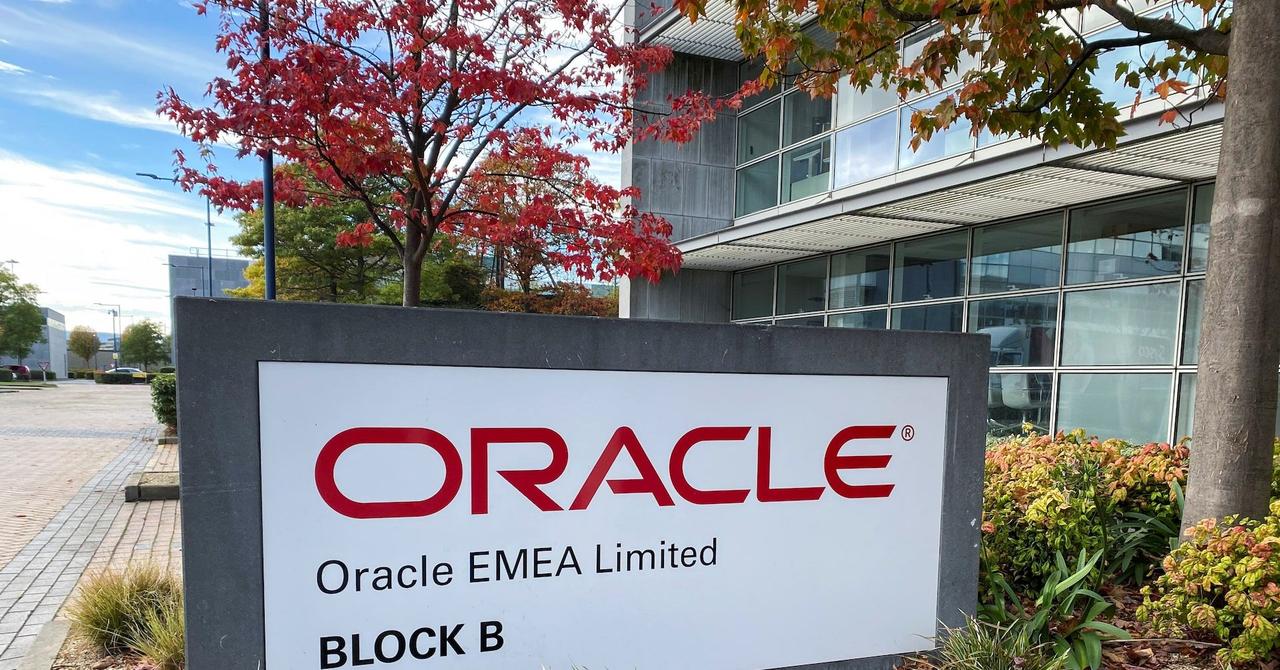


Market Reaction Signals Restored Confidence in IaaS Strategy
Oracle stock, which had lost more than 50% of its value from a September peak through Tuesday's close, surged to $164.51 in extended trading
1
. The earnings report helped allay investor concerns that Oracle's costly multi-billion dollar push into AI computing would not generate profits quickly enough3
. eMarketer analyst Jacob Bourne called the quarter "a beat and a stress test result for the AI trade," noting that as the most debt-exposed major player in AI infrastructure, Oracle serves as "the canary in the coal mine" for underlying health in AI spending3
.Larry Ellison, Oracle's co-founder and executive chairman, emphasized that the company's strategy centers on bringing AI agents close to mission-critical data in systems of record
5
. Magouyrk noted that early customer expectations of training private large language models have "largely proven" incorrect, with demand shifting toward combining the best models with private data5
. Oracle is quickly delivering cloud capacity to customers, with 90% provided on or ahead of schedule in the quarter1
. The company stated that "demand for cloud computing for AI training and inferencing continues to grow faster than supply," positioning Oracle to meet and likely exceed revenue growth targets for fiscal 2027 and beyond1
.
Source: Quartz
References
Summarized by

Navi
[2]
Related Stories
Recent Highlights
1
AI chatbots validate you too much, making you less kind to others, Stanford study reveals
Science and Research

2
Anthropic's Claude Code Source Leak Reveals Hidden AI Agent Plans and Extensive System Access
Technology

3
Judge blocks Pentagon from branding Anthropic a security risk over AI safety guardrails dispute
Policy and Regulation

Recent Highlights
Today's Top Stories







Your Daily Dose of Curated AI News
Don’t drown in AI news. We cut through the noise - filtering, ranking and summarizing the most important AI news, breakthroughs and research daily. Spend less time searching for the latest in AI and get straight to action.

