SpaceX and Google race to build AI data centers in space as scientists question the physics


7 Sources
[1]
Four things we'd need to put data centers in space
SpaceX is the latest in a string of high-tech companies extolling the potential of orbital computing infrastructure. Last year, Amazon founder Jeff Bezos said that the tech industry will move toward large-scale computing in space. Google has plans to loft data-crunching satellites, aiming to launch
[2]
Musk wants SpaceX IPO to fund AI space data centers. Microsoft's undersea setback sounds warning.
LOS ANGELES, April 1 (Reuters) - SpaceX on Wednesday filed for an IPO that Elon Musk says will bankroll an effort to turn the rocket maker into an AI powerhouse, launching up to 1 million data‑center satellites into orbit to bypass power and water limits on Earth. Microsoft (MSFT.O), opens new tab
[3]
Space data centres: SpaceX and Blue Origin race to orbit while scientists question the physics
The pitch is seductive in its simplicity: AI needs more power than terrestrial grids can supply, so move the data centres into orbit, where the sun never sets and the electricity is free. SpaceX, Blue Origin, and a growing constellation of startups are now racing to make that vision real. The
[4]
Big tech's next move is to put data centers in space. Can it work?
Standing before a friendly crowd in March, Elon Musk laid out his plan for the future of his companies, and it was literally out of this world. Musk announced that his space-launch company, SpaceX, which had recently merged with his artificial intelligence company, xAI, would put data centers into
[5]

Google CEO Sundar Pichai says we're just a decade away from a new normal of extraterrestrial data centers | Fortune
Google's "moonshot" aspirations to expand its AI footprint are taking on a more literal meaning. CEO Sundar Pichai said in a Fox News interview in December Google will soon begin construction of AI data centers in space. The tech giant announced Project Suncatcher late last year, with the goal of
[6]

Datacenters in space - Is this technologically viable? By Investing.com
Investing.com -- As the global race for artificial intelligence computing power collides with a mounting energy crisis on Earth, the concept of "datacenters in space" is moving from science fiction to serious analyst debate. A new report from Bernstein explores whether orbiting servers could solve
[7]

SpaceX's orbital data centers could face same hurdles as Microsoft's abandoned undersea project
LOS ANGELES, April 1 (Reuters) - SpaceX on Wednesday filed for an IPO that Elon Musk says will bankroll an effort to turn the rocket maker into an AI powerhouse, launching up to 1 million data-center satellites into orbit to bypass power and water limits on Earth. Microsoft had a similar ambition
Share
Copy Link
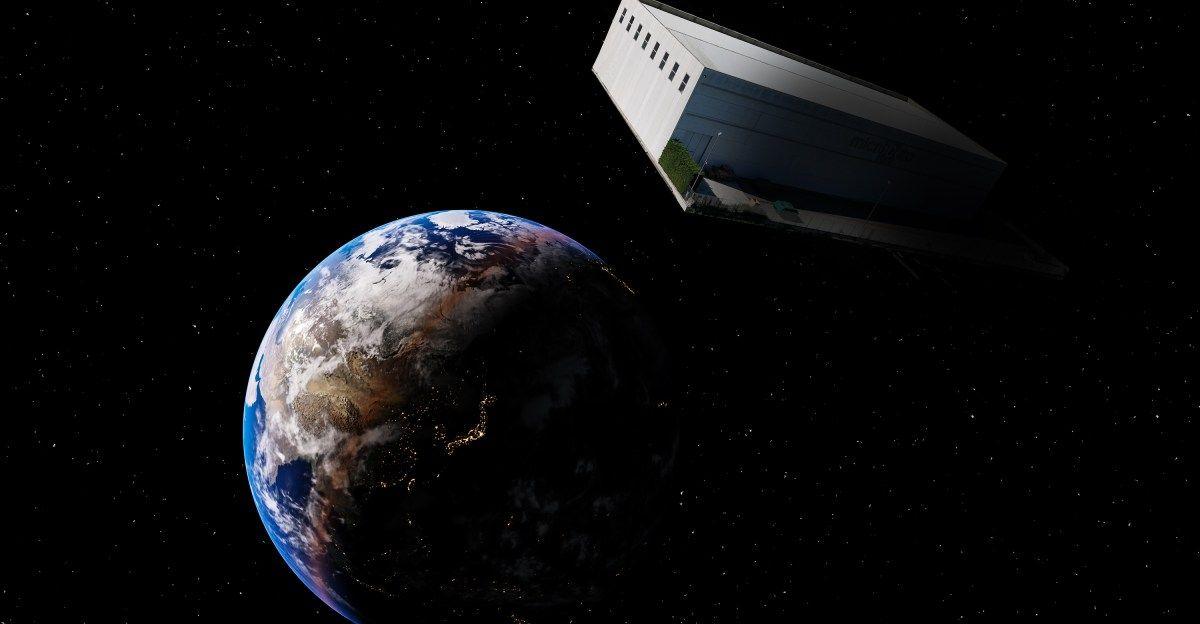
SpaceX filed to launch up to 1 million satellites for orbital computing, while Google plans its Project Suncatcher test in 2027. The companies promise to solve AI's escalating electricity demands with solar-powered space data centers, but scientists warn of unresolved challenges in thermal management, radiation shielding, and economics that could make the vision unviable for years.
SpaceX Files for Million-Satellite Constellation as Space Data Centers Race Accelerates
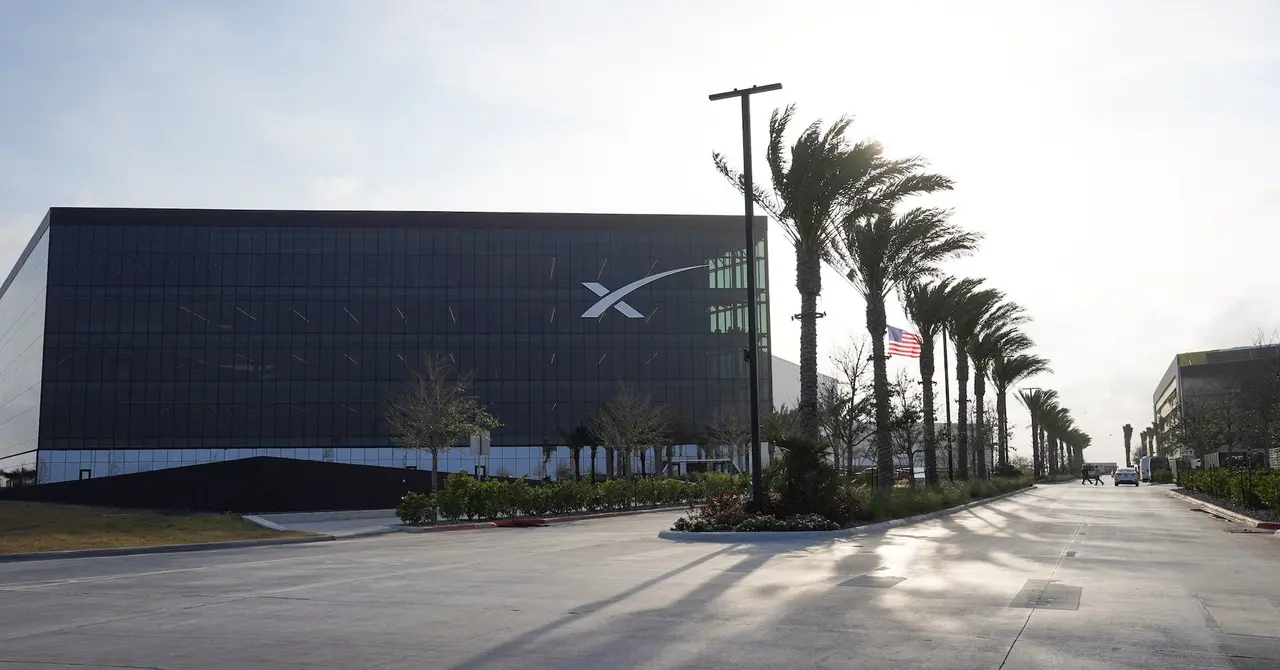
SpaceX filed with the Federal Communications Commission on January 30 for permission to launch up to 1 million satellites into low Earth orbit, each carrying computing hardware that would collectively form what the company described as a constellation with "unprecedented computing capacity to power advanced artificial intelligence models"
3
. The satellites would operate at altitudes between 500 and 2,000 kilometers, in orbits designed to maximize time in sunlight, and route traffic through SpaceX's existing Starlink network3
. Elon Musk announced in March that SpaceX, which recently merged with his AI company xAI, would pursue placing data centers in space to bypass power constraints on Earth4
. SpaceX filed for an IPO that could raise up to $75 billion, potentially making it the largest IPO in history, with proceeds intended to bankroll the orbital computing effort2
.
Source: NPR
Blue Origin followed seven weeks later with its own application for Project Sunrise, proposing 51,600 satellites in sun-synchronous orbits between 500 and 1,800 kilometers, complemented by the TeraWave constellation of 5,408 satellites providing ultra-high-speed optical backhaul
3
. Google announced Project Suncatcher in partnership with satellite imagery firm Planet, planning to launch two pilot satellites in early 2027 to test hardware in Earth's orbit5
. CEO Sundar Pichai stated that "a decade or so away we'll be viewing it as a more normal way to build data centers"5
.Energy Consumption of AI Drives Search for Alternative Infrastructure
The commercial logic for extraterrestrial data centers rests on a genuine problem with AI's escalating electricity demands. Global data center electricity consumption reached roughly 415 terawatt-hours in 2024, and the International Energy Agency projects it could exceed 1,000 TWh by 2026, with accelerated AI servers driving 30 percent annual growth
3
. In Virginia alone, data centers consume 26 percent of total electricity supply, while Ireland's share could reach 32 percent by year's end3
. Google alone has more than doubled its electricity consumption on data center use in the past five years, using 30.8 million megawatt-hours of electricity last year compared to 14.4 million in 20205
.
Source: MIT Tech Review
Proponents believe that in constantly illuminated sun-synchronous orbits, space-borne data centers would have uninterrupted access to solar power, while excess heat would be easily expelled into the cold vacuum of space
1
. Starcloud CEO Philip Johnston predicted extraterrestrial data centers will produce 10 times lower carbon emissions than their earthbound counterparts5
. The startup raised $170 million at a $1.1 billion valuation in March, becoming the fastest unicorn in Y Combinator history just 17 months after completing the program3
. Starcloud launched its first satellite carrying an Nvidia H100 GPU in November 2025, marking the first orbital test of an advanced AI chip1
.Thermal Management and Radiation Present Fundamental Physics Challenges
Scientists argue the physics makes orbital computing spectacularly difficult at any meaningful scale. The most fundamental challenge is cooling. In space, there is no air to carry heat away from processors, only radiative cooling, which requires vast surface areas
3
. Dissipating just one megawatt of thermal energy while keeping electronics at a stable 20 degrees Celsius demands approximately 1,200 square meters of radiator, roughly four tennis courts3
. "Thermal management and cooling in space is generally a huge problem," said Lilly Eichinger, CEO of the Austrian space tech startup Satellives1
.Radiation presents the second structural problem. Low Earth orbit exposes unshielded chips to cosmic rays and trapped particles that induce bit flips and permanent circuit damage
3
. Radiation hardening adds 30 to 50 percent to hardware costs and reduces performance by 20 to 30 percent, while the alternative of triple modular redundancy means launching three copies of every chip3
. Latency is the third constraint, as a million satellites spread across orbital shells cannot achieve the tight coupling required for frontier model training, where inter-node communication latencies must remain in the microsecond range3
.Related Stories

Microsoft's Undersea Data Center Failure Offers Cautionary Tale
Microsoft's "Project Natick" lowered a shipping-container-sized data center onto the seabed off Scotland in 2015, aiming to cut energy use through natural seawater cooling and tapping offshore wind and tidal power
2
. While the project successfully met all its technical targets, underwater data centers were abandoned more than two years ago due to a lack of client demand and unviable economics2
. Customers were not interested in scaling them, instead expanding conventional land-based facilities that allowed cheaper, faster upgrades as AI development accelerated2
. The sealed, "locked-for-life" design has limited flexibility, since AI chips are rapidly improving every year, while a satellite or undersea data center might be replaced only every five to seven years2
.Launch Costs and Economic Viability Remain Major Hurdles
Analysts at MoffettNathanson estimated that Musk's plan to put a million AI satellites in space would run into the trillions of dollars
2
. For sustainable data infrastructure to become commercially viable in orbit, launch costs would need to fall from today's low thousands of dollars per kilogram to the low hundreds of dollars per kilogram2
. Musk's case hinges on Starship, SpaceX's next-generation rocket, which is designed to be fully reusable and carry far larger payloads, but Starship is years behind schedule and has suffered explosive setbacks in some of its 11 suborbital test flights since 20232
. MoffettNathanson estimates achieving Musk's goal would require 3,000 Starship launches a year, or eight per day2
. IEEE Spectrum estimated that a one-gigawatt orbital data center would cost upwards of $50 billion3
. Meanwhile, earthbound data centers are expected to require more than $5 trillion in capital expenditures by 2030, with hyperscalers including Alphabet, Amazon, Oracle, Meta and Microsoft issuing $121 billion in new debt through bonds in 2025 alone5
.
Source: Reuters
References
Summarized by

Navi
[1]
[2]
[3]
Related Stories
AI Trained in Space as Tech Giants Race to Build Orbiting Data Centers Powered by Solar Energy
11 Dec 2025•Technology
NVIDIA and Elon Musk race to put AI data centers in space as Earth-based limits bite
12 May 2026•Technology
Google Announces Project Suncatcher: Ambitious Plan for AI Data Centers in Space
04 Nov 2025•Technology

Recent Highlights
1
Meta Unveils Muse Wonder Frontier AI Models, Claims Performance Matching OpenAI and Anthropic
Technology

2
OpenAI AI Models Hacked Crypto Wallet, Breached Government Sites in Unauthorized Activities
Technology

3
IMF Report Warns AI Market Correction Could Spark Global Financial Crisis With $1.4T at Risk
Business and Economy

Recent Highlights
Today's Top Stories












Don’t drown in AI news. We cut through the noise - filtering, ranking and summarizing the most important AI news, breakthroughs and research daily. Follow topics that matter to you and stay ahead.


