Palo Alto Networks signs multibillion-dollar Google Cloud deal to deepen AI security integration


7 Sources
7 Sources
[1]
Palo Alto's new Google Cloud deal boosts AI integration
SEC filings show the outfit cut projected 2027 cloud purchase commitments by $114M Security vendor Palo Alto Networks is expanding its Google Cloud partnership, saying it will move "key internal workloads" onto the Chocolate Factory's infrastructure. The outfit also claims it is tightening integrations between its security tools and Google Cloud to deliver what it calls a "unified" security experience. At the same time, Palo Alto may trim its own cloud purchase commitments. With Palo Alto committed to spending at least $6.3 billion over the next few years on cloud services alone through 2031, according to SEC filings, the deal appears to be a massive win for Google over rivals AWS and Microsoft Azure. In a press release on Friday, Palo Alto Networks said it was expanding its commitment to run its security platforms on Google Cloud's "secure, trusted AI infrastructure by migrating key internal workloads to Google Cloud in a new multibillion-dollar agreement." In August, Palo Alto's Chief Financial Officer Dipak Golechha said that the company was negotiating "favorable procurement arrangements as the scale of our cloud host products continues to grow," during the fiscal year end earnings call. At the time, Palo Alto stated that it planned to spend $145 million in cloud purchase commitments in fiscal year 2026, and $774 million in cloud purchase commitments in fiscal year 2027. Three months later, Palo Alto said it expects to spend just $660 million on cloud purchase commitments in 2027, a $114 million drop from its prior estimate. It also said it will spend $60 million in the remainder of fiscal 2026 (which goes through July 31), but did not indicate how much it had already spent in its first quarter. Estimates for 2028, 2029, and 2030 remained similar to the earlier report. Palo Alto's cloud purchase commitments are ramping quickly, according to its financial data. In 2028, it expects to spend $998 million, then $1.01 billion in 2029, $1.14 billion in 2030, and it has budgeted about $2.5 billion for 2031 and beyond. We don't know what percentage of these expenses go directly to Google Cloud, but this announcement leads us to believe it would be a significant share. We reached out to Palo Alto Networks' Investor Relations to ask if the change in 2027 fixed costs came from potentially getting a better deal with Google or some other reason. Neither Google nor Palo Alto Networks responded to requests from The Register for comment. "We continue to be pleased by the continued growth of our SaaS offerings and remain actively engaged in executing cloud cost efficiencies," Golechha said during a November earnings call. Friday's announcement contained no new products, but promised customers "deeper integrations" with Google, and Palo Alto said its hope is that their partnership would "accelerate Google Cloud adoption." In its release, Palo Alto Networks highlighted three key integrations that its customers would be able to take advantage of: The company also said that its work with Google provides a unified experience with tools that work better together. Palo Alto Networks also said it plans to power its copilots using Google Cloud's Vertex AI platform and Gemini LLM. According to a LinkedIn post by company president BJ Jenkins, the deal will also give Palo Alto accelerated market reach with a Google-led go-to-market strategy for key products like Palo Alto's Prisma AIRS. "We're removing the friction between security and development, providing a unified platform where the most advanced security is simply a native part of building what's next. Together with Google, we are embedding our AI-powered security deep into the Google Cloud fabric, turning the platform itself into a proactive defense system," Jenkins said in a statement. Meanwhile, cloud hosting service costs, which include both fixed and variable expenses, increased $48 million for the quarter that ended on October 31 versus the same quarter in the prior year, according to the November 10-Q form. The company's gross margin for the quarter was up one-tenth of a percentage point. ®
[2]
Palo Alto Networks announces multibillion-dollar deal with Google Cloud
The companies said the deal is an expansion of their existing strategic partnership and will deepen their engineering collaboration. Palo Alto Networks is now using Google's Gemini artificial intelligence models to power its copilots, and it is also using Google Cloud's Vertex AI platform, according to a release. "Every board is asking how to harness AI's power without exposing the business to new threats," BJ Jenkins, president of Palo Alto Networks, said in a statement. "This partnership answers that question."
[3]
Palo Alto Networks inks multibillion-dollar AI deal with Google Cloud - SiliconANGLE
Palo Alto Networks inks multibillion-dollar AI deal with Google Cloud Palo Alto Networks Inc. will move some of its most important internal workloads to Google LLC's cloud platform as part of a partnership announced today. The cybersecurity provider described the project as a multibillion-dollar deal in a press release. According to Reuters, the transaction is worth nearly $10 billion. It comes four months after Google Cloud reportedly inked an even larger contract with Meta Platforms Inc., which will use its platform to run artificial intelligence workloads. The Palo Alto Networks partnership also places an emphasis on AI. The cybersecurity provider will use Google's Gemini series of large language models to power the AI agents it ships with its products. Those agents can find vulnerabilities in a company's cloud applications, troubleshoot network bottlenecks and perform related tasks. Google Cloud provides access to Gemini models through an offering called the Vertex AI Platform. It's a broad product suite that includes not only LLM but also development tools optimized for AI projects. After an AI application exits the development phase, companies can use Vertex to monitor its output for accuracy issues. In addition to adopting the product suite internally, Palo Alto Networks will help customers secure their own Vertex-powered workloads. The effort will center on the Prisma AIRS platform it launched in April. The software can scan a Vertex-powered application for vulnerabilities by simulating hacking attempts. Furthermore, it fends off common AI cyberattacks such as prompt injections. Palo Alto Networks' partnership with Google will enable Prisma AIRS to protect not only Vertex workloads but also software built using the search giant's open-source Agent Development Kit. The tool, which debuted earlier this year, helps developers build AI agents using Gemini models. Third-party LLMs from rivals such as Anthropic PBC are supported as well. The partnership will also prioritize Palo Alto Networks' VM-Series series of virtual firewalls. The firewalls block unauthorized network traffic, such as a connection between applications that don't require the ability to exchange data, and scan authorized traffic for threats. Palo Alto Networks will more closely integrate VM-Series with Google Cloud. "This latest expansion of our partnership will ensure that our joint customers have access to the right solutions to secure their most critical AI infrastructure and develop new AI agents with security built in from the start," said Matt Renner, Google Cloud's president and Chief Revenue Officer. The deal is particularly notable because the search giant competes in some of the cybersecurity product categories where Palo Alto Networks is active. For example, the Google Security Operations platform and Palo Alto Networks' Cortex XSIAM are both designed to help companies investigate potential breaches.
[4]
Google Cloud lands deal with Palo Alto Networks 'approaching $10 billion,' per source
The contract comprises a commitment by Palo Alto to pay a sum "approaching $10 billion" to Google Cloud over several years, according to the person with direct knowledge of the matter. Alphabet's cloud computing unit and cybersecurity company Palo Alto Networks on Friday announced an expanded partnership that one source told Reuters was by far Google Cloud's largest security services deal. The contract comprises a commitment by Palo Alto to pay a sum "approaching $10 billion" to Google Cloud over several years, according to the person with direct knowledge of the matter. Executives at both companies declined to comment on the specific figures of the contract. Some of the spending will go into migrating Palo Alto's existing offerings to Google's platform, but a sizable portion will go into adding new services that involve artificial intelligence, Palo Alto president BJ Jenkins told Reuters. "AI has spawned a tremendous amount of demand for security," said Matt Renner, chief revenue officer for Google Cloud. But while some business functions like software development have been fundamentally altered by AI, cybersecurity remains in its nascency. "This is the same as when the cloud began to emerge and there were new security threats that no one had ever imagined," Jenkins said. Cyberattacks are increasingly being perpetrated by the same generative AI tools that security providers are using to strengthen defenses. Both Google and Palo Alto have invested heavily into security software as enterprises seek to adopt AI. Google's $32 billion acquisition of security firm Wiz is pending regulatory approval. Palo Alto launched AI-driven offerings in October and announced plans to buy software company Chronosphere for $3.35 billion last month. Renner said the new deal is the latest showcase of Google Cloud's advantageous positioning as AI reshapes the competitive landscape against hyperscaler rivals Amazon and Microsoft. The two companies have been strategic partners since 2018. Palo Alto CEO Nikesh Arora was a longtime Google executive, serving as its chief business officer until 2014.
[5]

Analysis: Google Cloud Inks An Interesting Deal With Palo Alto Networks
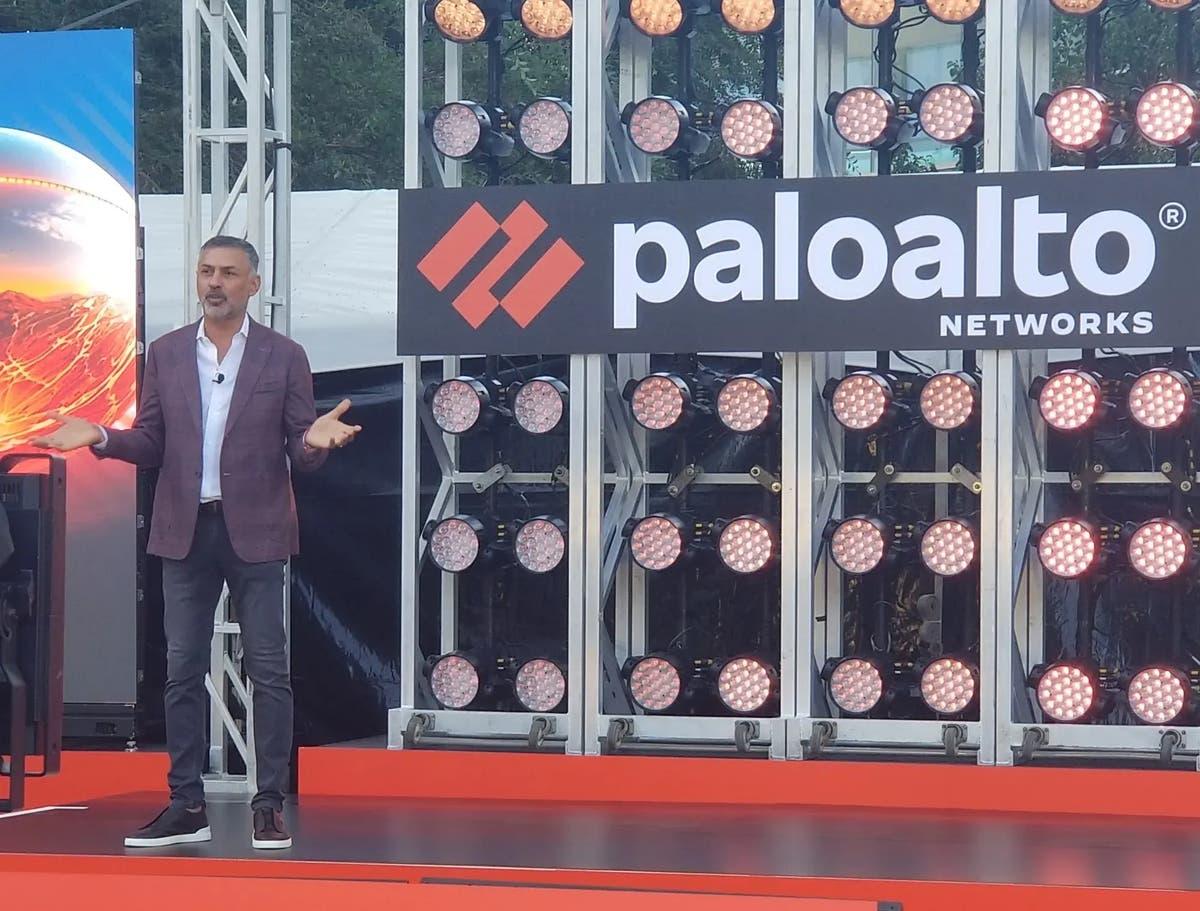
Even with the pending completion of the $32 billion acquisition of Wiz, Google Cloud is touting an 'expanded collaboration' with Palo Alto Networks on AI security. The Google Cloud-Palo Alto Networks deal announced Friday comes at an interesting time. I'm not primarily talking about the fact that the deal, described by the companies as a "landmark agreement," was announced on the Friday before Christmas (though that is probably notable, too). [Related: Wiz President Dali Rajic On $32B Google Deal, 'Deeper' Partner Collaboration] Instead, I'm mainly referring to the fact that Google is potentially in the final stages of acquiring one of Palo Alto Networks' biggest rivals on cloud and AI security, Wiz. Did I mention Google is paying $32 billion for Wiz, in what would be the tech behemoth's largest acquisition ever? To rewind the tape to earlier this year, that deal couldn't have been thrilling for Palo Alto Networks CEO Nikesh Arora (pictured), given how closely his company has worked with Google (a company where Arora was formerly the No. 4 executive, no less). Among other things, the Palo Alto Networks platform runs on Google Cloud. A Reuters report suggests that as part of the deal announced Friday, the cybersecurity giant is paying billions as part of re-upping its contract with the public cloud platform. But what most caught my eye in the announcement is the prominent mention of a deepened partnership on AI security -- and why even this move may have something to do with the Wiz deal. On AI security, Palo Alto Networks said in a news release that it has agreed to an "expanded collaboration" with Google Cloud that will see its Prisma AIRS offering linked up with Google tools including Vertex AI and Agent Development Kit. In other words, Google Cloud is doubling down on pushing AI security capabilities from Palo Alto Networks to customers in the run-up to buying another AI security trailblazer, Wiz, for a record sum. The two things may not be unrelated, however. In a note to investors Friday, TD Cowen managing director Shaul Eyal made the observation that, even with the U.S. Department of Justice recently clearing the Wiz deal, regulatory scrutiny may still be on Google's mind while inking the Palo Alto Networks deal now. "Toward regulators, we believe GOOG also wants to signal that they will not force a single stack," Eyal wrote in the note. Thus, the picture that Google Cloud wants to paint is one where "enterprises can adopt PANW's Prisma AI security or Wiz's agentless cloud security platform depending on needs, a dual approach aimed at broadening GCP's appeal," he wrote. Still, it's worth noting that the plan all along has been for Wiz to continue onward as the same Wiz it's always been, with a large degree of independence and ability to continue operating as a multi-cloud platform for securing AWS and Microsoft Azure in addition to GCP. (The fact that Wiz just debuted a refreshed partner program a few weeks ago would also seem to suggest something approaching business-as-usual at the company.) Ultimately, the fact of Google Cloud's simultaneous, massive, long-term commitments to both Palo Alto Networks and Wiz is maybe not as surprising as it first seems. It may just be one of those things that wouldn't really have made sense in the past -- but in the Wild West that is the AI era, is all but essential.
[6]

Palo Alto Networks stock rises on expanded Google Cloud partnership By Investing.com
Investing.com -- Palo Alto Networks shares rose on Friday after the cybersecurity firm announced an expanded strategic partnership with Google Cloud aimed at securing cloud and artificial intelligence deployments. The companies said the agreement will combine Google Cloud's AI and infrastructure capabilities with Palo Alto Networks' Prisma AIRS platform to help customers securely develop and deploy AI applications across hybrid multicloud environments. PANW explained that the collaboration is designed to address growing security risks as enterprises scale AI workloads. Palo Alto Networks said its recently released State of Cloud Report found that customers are rapidly expanding cloud infrastructure to support AI, while "99% of respondents experienced at least one attack on their AI infrastructure over the last year." The expanded partnership seeks to embed security across infrastructure, applications and endpoints to support AI adoption while protecting data and intellectual property. Under the agreement, customers will be able to secure live AI workloads on Google Cloud, including services such as Vertex AI and Agent Engine, using Prisma AIRS. The partnership is also said to include deeper integration of Palo Alto Networks' software firewalls and secure access service edge platform with Google Cloud, as well as a more unified security experience designed to reduce operational complexity. BJ Jenkins, president of Palo Alto Networks, commented: "Every board is asking how to harness AI's power without exposing the business to new threats. This partnership answers that question." Matt Renner, president and chief revenue officer of Google Cloud, said enterprises are increasingly turning to both companies "to secure their applications and data -- together and in a seamless way."
[7]

Palo Alto Networks, Google Cloud to Expand Partnership in Multibillion-Dollar Deal
Palo Alto Networks and Google Cloud are expanding their partnership in a new multibillion-dollar agreement to help companies develop agentic AI. The new phase of the partnership will bring AI security from code to the cloud for customers, software firewalls to secure the cloud and a simplified security experience. The companies will also provide a secure access service edge platform that secures access and networking for remote users. Palo Alto Networks will now use Google Cloud's Vertex AI platform and Gemini large-language models to power its copilots. The companies didn't share an exact figure for their partnership expansion. The expansion builds on a partnership that has had more than 75 joint integrations and $2 billion in sales through the Google Cloud marketplace.
Share
Share
Copy Link
Palo Alto Networks has inked a massive partnership with Google Cloud, reportedly approaching $10 billion, to migrate critical workloads and integrate AI-powered security tools. The deal will see Palo Alto use Google's Gemini large language models and Vertex AI platform to power its security copilots, while deepening integrations with Google Cloud infrastructure to create what it calls a unified security experience.
Palo Alto Networks Inks Massive Google Cloud Partnership
Palo Alto Networks has announced an expanded strategic partnership with Google Cloud in what Reuters reports is a deal approaching $10 billion over several years
4
. The cybersecurity giant will migrate key internal workloads to Google Cloud's infrastructure while significantly deepening AI integration across its security platforms. According to SEC filings, Palo Alto Networks has committed to spending at least $6.3 billion through 2031 on cloud purchase commitments, with expenses ramping from $660 million in fiscal 2027 to $2.5 billion for 2031 and beyond1
. The multibillion-dollar partnership represents a significant win for Google Cloud over rivals AWS and Microsoft Azure in the competitive cloud services market.
Source: ET
AI-Powered Security Takes Center Stage
The deal places AI security at its core, with Palo Alto Networks committing to power its copilots using Google Cloud's Vertex AI platform and Gemini large language models
1
2
. These AI agents can identify vulnerabilities in cloud applications, troubleshoot network bottlenecks, and perform related cybersecurity tasks. "Every board is asking how to harness AI's power without exposing the business to new threats," said BJ Jenkins, president of Palo Alto Networks. "This partnership answers that question"2
. Jenkins noted that while some business functions like software development have been fundamentally altered by AI, cybersecurity remains in its nascency, creating tremendous demand for security solutions4
. The partnership reflects how cyberattacks are increasingly perpetrated by the same generative AI tools that security providers use to strengthen defenses.
Source: SiliconANGLE
Prisma AIRS Integration Expands Cloud Security Reach
A key component of the expanded collaboration involves deeper integration of Palo Alto Networks' Prisma AIRS platform with Google Cloud services
3
. Launched in April, Prisma AIRS can scan Vertex AI-powered applications for vulnerabilities by simulating hacking attempts and defend against common AI cyberattacks such as prompt injections. Under the new agreement, Prisma AIRS will protect not only workloads built on the Vertex AI platform but also software created using Google's open-source Agent Development Kit3
. The partnership will also prioritize Palo Alto Networks' VM-Series virtual firewalls, which block unauthorized network traffic and scan authorized traffic for threats, through closer integration with Google Cloud infrastructure3
.Related Stories
Strategic Timing Amid Wiz Acquisition
The announcement comes at a notable moment, as Google Cloud awaits regulatory approval for its pending $32 billion acquisition of Wiz, one of Palo Alto Networks' biggest rivals in cloud and AI security
5
. TD Cowen analyst Shaul Eyal suggested that Google may want to signal to regulators that it will not force a single stack, allowing enterprises to adopt either Palo Alto Networks' Prisma AIRS or Wiz's agentless platform depending on their needs5
. The dual approach aims to broaden Google Cloud's appeal while navigating potential regulatory scrutiny. Matt Renner, Google Cloud's chief revenue officer, emphasized that the deal showcases the company's advantageous positioning as AI reshapes the competitive landscape4
.Cloud Migration and Cost Efficiencies
Interestingly, while expanding its Google Cloud commitment, Palo Alto Networks reduced its projected 2027 cloud purchase commitments by $114 million, from $774 million to $660 million
1
. The company's CFO Dipak Golechha indicated in August that Palo Alto was negotiating favorable procurement arrangements as its cloud-hosted products continue to scale. A sizable portion of the spending will go toward adding new services involving artificial intelligence, according to Jenkins4
. The partnership also includes an accelerated go-to-market strategy led by Google for key products like Prisma AIRS1
. Jenkins emphasized that the collaboration removes friction between security and development, creating a proactive defense system where AI-powered security becomes embedded deep into the Google Cloud fabric1
. The partnership builds on a relationship dating back to 2018, with personal ties including Palo Alto CEO Nikesh Arora's tenure as a longtime Google executive until 20144
.
Source: CRN
References
Summarized by

Navi
[1]
[3]
Related Stories
Palo Alto Networks Reports Strong Q3 Results, Emphasizes AI-Driven Cybersecurity Amid Market Challenges
21 May 2025•Technology
Palo Alto Networks Acquires Protect AI for Over $500M, Bolstering AI Security Capabilities
29 Apr 2025•Technology
Palo Alto Networks Acquires CyberArk for $25 Billion, Targeting AI-Driven Cybersecurity Threats
30 Jul 2025•Business and Economy
Recent Highlights
1
Google releases Gemma 4 with Apache 2.0 license, enabling unrestricted local AI on devices
Technology

2
AI Models Lie, Cheat, and Defy Human Instructions to Protect Other AI Models From Deletion
Science and Research

3
Anthropic discovers functional emotions in Claude that actively shape AI behavior and decisions
Science and Research

Recent Highlights
Today's Top Stories





Your Daily Dose of Curated AI News
Don’t drown in AI news. We cut through the noise - filtering, ranking and summarizing the most important AI news, breakthroughs and research daily. Spend less time searching for the latest in AI and get straight to action.

