Physical AI and robots could create trillion-dollar market by 2035, Barclays predicts


2 Sources
2 Sources
[1]
'Decade of the Robot' Paves Way for Trillion-Dollar Market, Barclays Says
The market for AI-powered robots and autonomous machines has the potential to balloon into a trillion-dollar opportunity by 2035, orders of magnitude bigger than it is now, according to a team of Barclays analysts. Autonomous vehicles, which are already relatively advanced, will lead the way, followed by drones and then more complicated general-purpose humanoid robots, the analysts wrote in a report Tuesday titled "The Decade of the Robot." "Advances in brains, brawn and batteries are pushing AI-enabled robotics to an inflection point, setting the investment agenda for the next decade," wrote the team led by Zornitsa Todorova, head of thematic fixed-income research at Barclays. The development of robotics and other real-world, "physical AI" marks a paradigm shift from digital-focused AI, one that lays the foundation for a "value chain" that will be more diverse and deeper than the first wave of AI products, they said. A new report from Barclays projects that in the next decade physical AI could grow to be a trillion-dollar market, with autonomous vehicles leading the way. Barclays Thematic FICC Research Team Director Zornitsa Todorova joins Ed Ludlow on "Bloomberg Tech." While China currently dominates humanoid and industrial robot deployment, the Barclays analysts identified close to 200 public issuers that could be involved in the theme over the next decade, including 100 with at least one corporate bond outstanding. "We see automakers emerging as potential major participants, alongside growing deployment of robotic systems across warehousing, logistics and retail," they wrote. Examples include Mercedes-Benz Group AG's use of Nvidia Corp.'s Omniverse to "virtually retool factories with minimal disruption" and Tesla Inc.'s focus on robots during its fourth-quarter earnings callBloomberg Terminal. The team highlighted the software and hardware underpinning the technology, including semiconductor and infrastructure providers such as Taiwan Semiconductor Manufacturing Co., Samsung Electronics Co. and Nvidia Corp. They also flag "robotic hardware and motion systems that perform physical tasks," along with batteries, which "provide the energy backbone for these platforms," citing Chinese manufacturers like EVE Energy Co. and Contemporary Amperex Technology Co. The Barclays analysts also point to a group they call enablers, which are companies that either build full robots, like Tesla, or "shape the broader ecosystem" by developing technology, like Amazon.com Inc. A shift toward physical AI is already showing in large-scale logistics and retail operations at companies such as Amazon and Walmart Inc. They note Amazon has more than one million robots operating in its fulfillment network, "which is likely still only a fraction of the long-term potential."
[2]
Elon Musk's Trillionaire Goal Could Be Met With Optimus, Robotaxi As Barclays Predicts Trillion-Dollar Market For Physical AI - Tesla (NASDAQ:TSLA)
Analysts at English multinational bank Barclays predict that Physical AI, including Robots and Robotaxis could make up a $1 trillion market, in what could be a boost to Tesla Inc. (NASDAQ:TSLA) CEO Elon Musk's trillionaire ambitions. A Trillion-Dollar Market For Physical AI According to a new research note released by analysts, accessed by Bloomberg on Tuesday, the physical AI sector could transform into a $1 trillion market by 2035. The report comes due to large-scale "advances in brains, brawn and batteries," which would push AI-enabled robotics to "an inflection point," Zornitsa Todorova, the head of thematic fixed-income research at the bank, said in the report. It's worth noting that industry experts suggest that Nvidia's Alpamayo technology could not only help automakers scale their autonomous driving ambitions, but also help with certain tasks in production and manufacturing sectors, which see applications of physical AI. Musk's Trillion-Dollar Pay PackageTesla's Focus On RoboticsOther Robotics Players Musk, during Tesla's earlier earnings call, also warned of potential competitors for the Optimus robot emerging from China. "I do think that by far, the biggest competition for humanoid robots will be from China," he said. The robot, according to Boston Dynamics, is capable of lifting objects weighing up to 110 lbs and can function smoothly in temperature ranges from -4° to 104° F. While the company also mentions that a task learned by a single Atlas unit could be replicated by the entire fleet. Benzinga Edge Rankings show that Tesla scores well on the Momentum metric and offers a favorable price trend in the Long Term. Price Action: TSLA slid 1.63% to $410.63 at Market close on Tuesday, but gained 0.80% to $413.92 during premarket trading on Wednesday. Check out more of Benzinga's Future Of Mobility coverage by following this link. Photo courtesy: Shutterstock Market News and Data brought to you by Benzinga APIs To add Benzinga News as your preferred source on Google, click here.
Share
Share
Copy Link
Barclays analysts project that AI-powered robots and autonomous machines could balloon into a trillion-dollar market by 2035, marking a shift from digital AI to physical AI. The report titled 'The Decade of the Robot' identifies autonomous vehicles, drones, and humanoid robots as key drivers, with companies like Tesla, Amazon, and Nvidia positioned to shape this emerging value chain.
Physical AI Market Poised to Reach Trillion-Dollar Valuation
The market for AI-powered robots and autonomous machines stands at the edge of explosive growth, with Barclays analysts projecting it could expand into a trillion-dollar market by 2035
1
. This forecast represents orders of magnitude expansion from current levels, signaling what analysts describe as an inflection point for the robotics industry. The Barclays report, titled "The Decade of the Robot," outlines how advances in what the team calls "brains, brawn and batteries" are pushing AI-enabled robotics toward mainstream adoption1
.Autonomous Vehicles and Humanoid Robots Lead the Charge
Autonomous vehicles will spearhead this transformation, followed by drones and more complex humanoid robots, according to Zornitsa Todorova, head of thematic fixed-income research at Barclays
1
. This progression reflects the varying levels of technological maturity across different robotic applications. The development of physical AI marks a fundamental shift from digital-focused AI, establishing a value chain that will be more diverse and deeper than the first wave of AI products1
. While China currently dominates humanoid and industrial robot deployment, Barclays identified close to 200 public issuers that could participate in this theme over the next decade, including 100 with at least one corporate bond outstanding1
.Tesla Optimus and Robotaxi Position Elon Musk for Growth
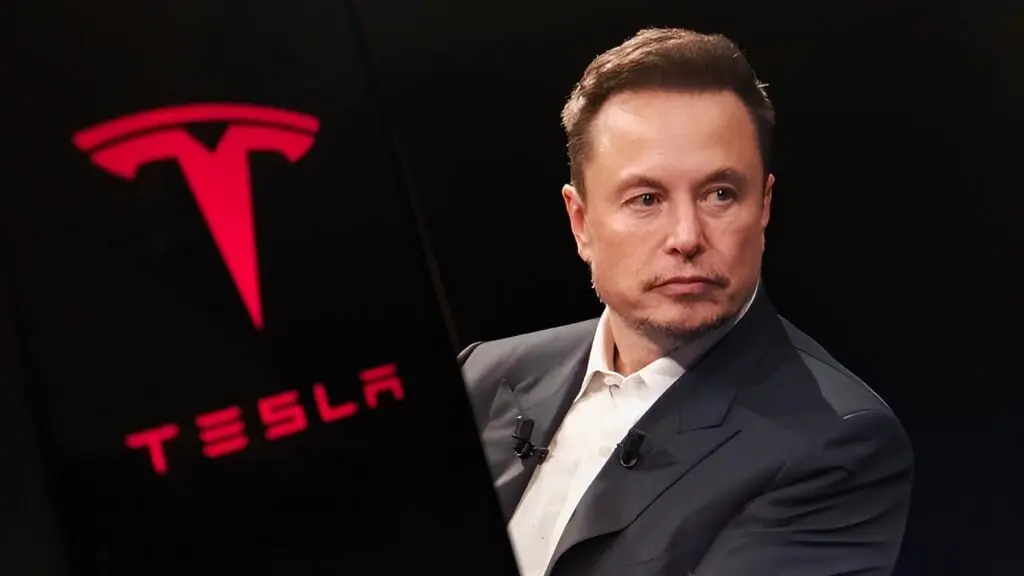
The forecast could significantly boost Tesla Inc. CEO Elon Musk's ambitions, particularly through the company's Tesla Optimus humanoid robot and Robotaxi initiatives
2
. During Tesla's recent earnings call, Musk emphasized the company's focus on robots and acknowledged potential competition, stating, "I do think that by far, the biggest competition for humanoid robots will be from China"2
. Industry experts suggest that Nvidia Corp.'s Alpamayo technology could help automakers scale their autonomous driving ambitions while also supporting tasks in manufacturing sectors where physical AI applications are expanding2
.
Source: Benzinga
Related Stories

Hardware and Semiconductor Infrastructure Enables the Shift
The Barclays team highlighted critical infrastructure components underpinning this technological shift, including semiconductor providers such as Taiwan Semiconductor Manufacturing Co., Samsung Electronics Co., and Nvidia Corp.
1
. Battery technology providers, particularly Chinese manufacturers like EVE Energy Co. and Contemporary Amperex Technology Co., supply the energy backbone for these platforms1
. Automakers are emerging as potential major participants, with Mercedes-Benz Group AG using Nvidia's Omniverse to virtually retool factories with minimal disruption1
.Logistics and Warehousing Deploy Robots at Scale
A shift toward physical AI is already visible in large-scale logistics and retail operations. Amazon has more than one million robots operating in its fulfillment network, which analysts note is likely still only a fraction of the long-term potential
1
. The analysts see growing deployment of robotic systems across warehousing, logistics, and retail sectors1
. Companies that either build full robots or shape the broader ecosystem by developing enabling technology are positioned as key players in this emerging market1
.References
Summarized by

Navi
Related Stories
Elon Musk Bets Tesla's Future on Optimus Robots Amid EV Sales Slump
03 Sept 2025•Technology
Tesla Proposes $1 Trillion Pay Package for Elon Musk Tied to Ambitious AI and Robotics Goals
05 Sept 2025•Business and Economy

NVIDIA CEO Jensen Huang Predicts Tesla Optimus Robot Will Ignite Multi-Trillion Dollar Industry
02 Jan 2026•Technology
Recent Highlights
1
Google Maps unveils Ask Maps with Gemini AI and 3D Immersive Navigation in biggest update
Technology

2
Three Tennessee teens sue xAI over Grok AI creating child sexual abuse material from real photos
Policy and Regulation

3
Meta plans to cut 20% of workforce as AI spending reaches $600 billion, mirroring broader tech trend
Business and Economy

Recent Highlights
Today's Top Stories



Your Daily Dose of Curated AI News
Don’t drown in AI news. We cut through the noise - filtering, ranking and summarizing the most important AI news, breakthroughs and research daily. Spend less time searching for the latest in AI and get straight to action.

