PwC Survey: 56% of Companies Getting Nothing from AI as Leaders Forget the Basics


3 Sources
3 Sources
[1]
PwC's global chairman says most leaders have forgotten 'the basics' as 56% are still getting 'nothing' out of AI adoption | Fortune
For the past two-and-a-half decades, the mandate for global business leaders was relatively straightforward: grow the existing business, allocate capital efficiently, and implement technology to drive productivity. But Mohamed Kande, global chairman of PwC, speaking to Fortune in Davos, Switzerland, ahead of the World Economic Forum's annual meeting, insisted that era is over. Kande argued that the CEO job has changed more in the past year than anything he's seen over the last quarter-century. "This is one of the most testing moments for leaders," Kande told Fortune's Diane Brady, describing a new "tri-modal" mandate that requires executives to simultaneously run their current business, transform it in real time, and also build entirely new business models for the future. "I've not seen that in 25 years," he said. Despite this pressure, Kande's message to the global business community is rooted in historical optimism. "Do not fear the future. It is unsettling. It is true. Every day something changes, but do not fear it," he said, noting that all the uncertainty so stressful to executives has happened before, from tariffs, roughly 100 years ago, to the industrial revolution, even further back. "Eventually, something good will happen." Kande allowed that he's an optimist by nature, but he insisted that top leaders can adjust to this business climate. Of course, a primary driver of this unsettling change is the rapid adoption of artificial intelligence (AI), as revealed in PwC's 29th global CEO survey, "Leading Through Uncertainty in the Age of AI," released at the onset of the annual meeting in Davos. Based on responses from 4,454 CEOs across 95 countries and territories, the survey reveals a stark disconnect between ambition and reality. Kande said the business community made huge strides from 2024 to 2025, going from asking themselves whether they can or should adopt AI to a point where "nobody is asking that question anymore. Everybody's going for it." PwC's survey finds, however, that only 10% to 12% of companies report seeing benefits on the revenue or cost side, while a staggering 56% say they are getting "nothing out of it." This echoes the MIT study that shook markets in August with the finding that 95% of generative AI pilots were failing across the corporate sector. Kande attributed this tension not to the technology itself, but to a lack of foundational rigor. "Somehow AI moves so fast ... that people forgot that the adoption of technology, you have to go to the basics," he explained, citing the need for clean data, solid business processes, and governance. PwC is finding that the companies that are seeing benefits from AI are "putting the foundations in place." It's about execution, not technology, he argued, and that comes down to good management and leadership. The uncertain environment has also created a paradox in business sentiment, Kande told Fortune. While CEOs express confidence in the global economy, only 30% have confidence that they can grow their own businesses. Kande questioned whether this hesitation stems from geopolitics, tariffs, technology, or a lack of leadership agility. The last 15 years, he noted, have been ones of solid growth and stable business models, making this time a real test for the C-suite. "This is one of the most testing moment for leaders, what we have today," he said, because it requires the ability to change fast and adapt quickly without getting bogged down in day-to-day, tactical combat. Only three in 10 CEOs were confident in PwC's 29th survey about revenue growth over the next 12 months, down from 38% in 2025 and 56% in 2022, marking a five-year low in CEO confidence in their own revenue outlook. Another survey question may be more revealing, about CEO confidence in their company's 12‑month revenue growth: this has fallen sharply over recent years, even as many leaders continue to pursue multiyear opportunities to reinvent their businesses through AI, innovation, and cross-sector expansion. The transformation of the CEO role is trickling down to the workforce, necessitating a reimagining of career paths. Kande warned that the traditional "apprenticeship model" -- where entry-level employees learn by doing basic tasks -- is being disrupted by AI. That classic career ladder, starting at the entry level, taught lots of expertise through hands-on learning, but this will have to be redesigned, going forward, to teach "system thinking" rather than task execution, as AI increasingly handles the latter. Ultimately, Kande urges executives to look at the last 50 to 100 years rather than the last five to understand the current moment. Citing the infrastructure booms of the railroad era and the early internet, he said he believes the current wave of investment will birth the next age of innovation. The CEO survey's framing of a coming "decade of innovation and industry reconfiguration" supports this long-term view, highlighting that companies generating more revenue from new sectors tend to enjoy higher profit margins and higher CEO confidence in future growth. "I'm an optimist," Kande concluded. Rather than being afraid of all of the changes that are happening now, he urged leaders to remember that people fear what they don't understand, and the best remedy for that is to seek understanding. "That's why I spend so much time learning now and traveling a lot, just to understand what's happening and thinking about what can be done differently. That's why I don't fear AI." "I've seen change," Kande said. "You've got to embrace it."
[2]
Davos 2026: 'You don't use AI to do the same thing you do today,' PwC chairman Kande sees tech reimagining biz
Artificial intelligence is transforming professional services. PwC's Mohamed Kande states AI is not just augmenting jobs but redefining them. Firms must adapt by embracing AI to focus on outcomes. This requires rethinking business models and service delivery. India is a key investment market, but needs to scale up and boost productivity. Companies cannot afford to wait and see. Davos: Artificial intelligence is not threatening professional services as much as it is dismantling the way the industry has worked for half a century, said Mohamed Kande, Global Chairman of PwC. From the very nature of what entry-level and managerial jobs entail, to the partnership model and even the pricing structures, all are being redefined and rethought as firms race to become AI-native, he said of the industry that has been severely disrupted by generative AI. "Disrupt yourself and use artificial intelligence not only to augment the people but to also redefine what it means to do our job today," the engineer-turned- consultant said. "You're going to actually not only change the nature of the job that we do today, to focus more on outcomes and not how much time you spend on things," he said, adding technology revolutions in the past have created "net new jobs." Check all WEF 2026 related updates here Kande said the use of AI is no longer about deploying "a technology" but about reimagining every part of a business. "You don't use AI to do the same thing you do today," he said, adding that real value comes when AI is used to transform how a company operates and runs its business. That, he said, would require changes across business and operating models, people structures, and core processes. For consulting firms, he said this would mean reshaping how services are delivered, while also creating entirely new, AI-native offerings that did not exist previously. Asked whether this would require a complete overhaul of traditional structures, including partnership models, Kande said firms would need to remain open-minded. "Some of the things we might do in the future could be based on a partnership model. They might not be a partnership model, too. They could be local or global," he said. As large and mid-sized companies race to embed AI into their businesses, the technology practices of consulting firms have expanded rapidly. This has brought them into direct competition with global technology majors such as Accenture and Capgemini, as well as Indian IT services players. Kande said that every company today is effectively a technology company because "technology is embedded into everything we do." On the geopolitical flux triggered by tariffs and regulatory uncertainty, Kande said companies must accept that uncertainty is not temporary. "We're not recommending anybody to wait there to see how AI is going to be and what's going to be the output of geopolitical issues," he said. "No company can afford today to just sit on the sidelines and wait." Quoting a global survey, Sanjeev Krishan, chairperson, PwC India said that globally, India is seen as the second most attractive investment market driven by its large consumption base and strong GDP growth. From a policy and execution standpoint, however, he said the focus must now shift to scale, "We have a lot of sandbox kind of experiments, but we need to scale it now that we can do it at scale. That's where the economies of scale come in. Our eastern neighbour has got. The second thing is to focus on productivity, which is still low," said Krishan.
[3]
Davos 2026: PwC chairman Mohamed Kande says over 50% companies 'getting nothing' from AI adoption, has a tip for CEOs
PwC's global chairman, Mohamed Kande, revealed that 56% of companies are seeing no returns from AI investments due to a lack of foundational groundwork. He highlighted that most leaders have forgotten the basics, adding that CEO's job has changed more in the past year than anything he's seen over the last quarter-century. Speaking on the sidelines of World Economic Forum meeting in Davos, Switzerland, PWc global chairman Mohamed Kande has revealed that 56 percent of companies are getting "nothing" out of AI investments due to lack of foundational groundwork, reports Fortune. Gone are those times when the mandate for global business leaders was expand the existing business, allocate capital efficiently, and deploy technology to boost productivity, Mohamed Kande stated. According to Kande, the role of the CEO has changed more in the past year than at any point in the last 25 years. He highlighted that 56 percent of companies are failing to see results from AI investments. "This is one of the most testing moments for leaders," Kande told Fortune. "I've not seen that in 25 years," he said. Kande said the role of a CEO has evolved more in the past year than in the previous 25 years. He explained that today's business leaders are expected to manage day-to-day operations, drive real-time change, and simultaneously prepare for future business models -- an unprecedented threefold responsibility he said he has not encountered before in his career. "Do not fear the future. It is unsettling. It is true. Every day something changes, but do not fear it," he said. "Eventually, something good will happen." Kande allowed that he's an optimist by nature, but he insisted that top leaders can adjust to this business climate. He added that while the pace of change is creating uncertainty, similar periods have occurred in the past, including during major economic and industrial shifts, highlighting that AI has become a key pressure point in this shift. ALSO READ: Noida techie death: A 2015 proposal from UP Irrigation department could have saved 27-year-old Yuvraj Mehta's life but it remained trapped in files PwC's 29th Global CEO Survey, Leading Through Uncertainty in the Age of AI, released at the start of the World Economic Forum's annual meeting in Davos based on responses from 4,454 CEOs across 95 countries and territories points to a sharp gap between AI ambition and outcomes. Kande said businesses made significant progress between 2024 and 2025. From debating whether businesses could or should adopt AI, they have come to a stage where "nobody is asking that question anymore -- everybody's going for it", he said. But the results remain underwhelming. PwC found that only 10% to 12% of companies are seeing tangible gains in revenue or cost savings, while 56% report getting "nothing out of it." He said companies that are seeing results from AI are "putting the foundations in place.". "Somehow AI moves so fast ... that people forgot that the adoption of technology, you have to go to the basics," he explained. Kande questioned whether the hesitation was being driven by geopolitics, tariffs, technology, or a lack of leadership agility. He noted that the past 15 years had been marked by steady growth and relatively stable business models, making the current environment a true stress test for the C-suite. "This is one of the most testing moments for leaders that we have today," he said, arguing that it demands the ability to change rapidly and adapt quickly without getting trapped in day-to-day tactical firefighting. ALSO READ: Microsoft releases list of 40 job roles most exposed to Artificial Intelligence. Is yours on the list? Kande warned that the traditional "apprenticeship model" -- where entry-level employees learn by doing basic tasks -- is being disrupted by AI. Kande also highlighted a confidence gap among CEOs. While many leaders say they are optimistic about the global economy, far fewer feel assured about growing their own businesses. PwC's survey found that only three in ten CEOs expect revenue growth over the next 12 months -- the lowest level in five years. Kande said this uncertainty is reshaping how companies approach talent and careers, particularly as AI takes over routine tasks, and added that traditional entry-level learning and development models may need to be rethought. Ultimately, Kande urged executives to look at the last 50 to 100 years rather than the last five to understand the current moment. "I'm an optimist," Kande concluded. Rather than being afraid of all of the changes that are happening now, he urged leaders to remember that people fear what they don't understand, and the best remedy for that is to seek understanding. "That's why I spend so much time learning now and traveling a lot, just to understand what's happening and thinking about what can be done differently. That's why I don't fear AI." "I've seen change," Kande said. "You've got to embrace it." (You can now subscribe to our Economic Times WhatsApp channel)
Share
Share
Copy Link
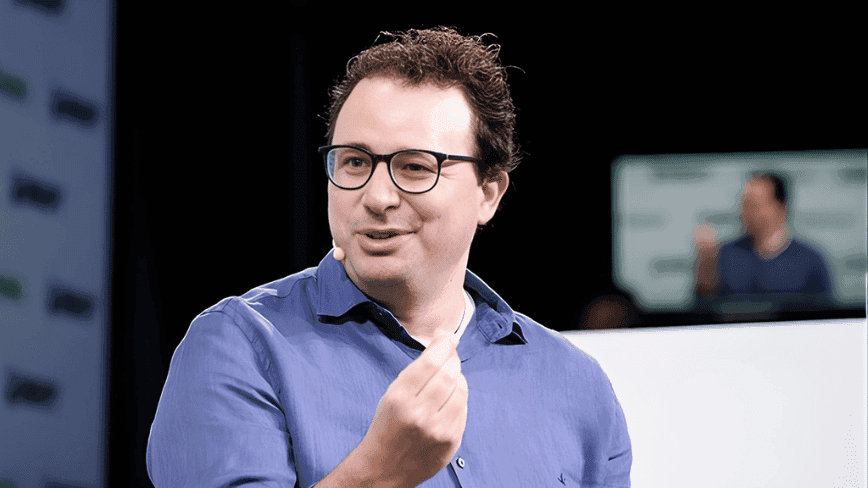
PwC's global chairman Mohamed Kande revealed at Davos that 56% of companies see zero returns from AI investments due to insufficient foundational groundwork. The 29th global CEO survey shows only 10-12% of firms report tangible benefits, while CEO confidence in revenue growth hits a five-year low at 30%.
Most Companies See Zero Returns from AI Adoption
A staggering 56% of companies are getting nothing from their AI investments, according to PwC's 29th global CEO survey released at the World Economic Forum in Davos
1
. Mohamed Kande, PwC's global chairman, told Fortune that despite widespread enthusiasm for AI adoption, only 10% to 12% of companies report seeing tangible benefits on the revenue or cost side1
. The survey, titled "Leading Through Uncertainty in the Age of AI," gathered responses from 4,454 CEOs across 95 countries and territories, revealing a sharp gap between AI ambition and reality3
. This finding echoes an MIT study from August that found 95% of generative AI pilots were failing across the corporate sector1
.
Source: ET
Neglect of Fundamental Business Practices Hampers Progress
Kande attributed the widespread failure in realizing benefits from AI investments not to the technology itself, but to insufficient foundational groundwork. "Somehow AI moves so fast ... that people forgot that the adoption of technology, you have to go to the basics," he explained
1
. The basics include clean data, solid business processes, and governance structures1
. Companies getting nothing from AI are rushing to deploy the technology without establishing these critical foundations. PwC's research shows that firms seeing success are "putting the foundations in place" and focusing on execution rather than just the technology1
. Kande emphasized that success comes down to good management and leadership agility, not just technological capability1
.CEO Confidence Hits Five-Year Low Amid Business Transformation
The PwC CEO Survey reveals that CEO confidence in revenue growth over the next 12 months has dropped to just 30%, down from 38% in 2025 and 56% in 2022, marking a five-year low
1
. This decline reflects the unprecedented pressure on today's C-suite. Kande argues that the CEO job has changed more in the past year than anything he's seen over the last quarter-century1
. Leaders now face a "tri-modal" mandate requiring them to simultaneously run their current business, transform it in real time, and build entirely new business models for the future1
. "This is one of the most testing moments for leaders," Kande stated, noting he hasn't witnessed such complexity in 25 years1
. The uncertain business climate, shaped by geopolitics, tariffs, and rapid technological change, creates a paradox where CEOs express confidence in the global economy but lack confidence in growing their own businesses1
.Related Stories

Companies Must Reimagine Business Models, Not Just Deploy Technology
Kande emphasized that AI adoption is not about deploying "a technology" but about reimagining every part of a business
2
. "You don't use AI to do the same thing you do today," he said, adding that real value comes when AI is used to transform how a company operates2
. This requires changes across business and operating models, people structures, and core processes2
. For consulting firms, this means reshaping how services are delivered while creating entirely new AI-native offerings that didn't exist previously2
. Kande warned that no company can afford to wait on the sidelines. "We're not recommending anybody to wait there to see how AI is going to be," he stated emphatically2
. The shift from 2024 to 2025 has been dramatic, with businesses moving from questioning whether they should adopt AI to a point where "nobody is asking that question anymore. Everybody's going for it," Kande observed1
.Disruption of Traditional Career Paths Demands New Workforce Development
The transformation driven by AI adoption extends beyond operations to fundamentally alter workforce development and the apprenticeship model
1
. Kande warned that the traditional approach where entry-level employees learn by doing basic tasks is being disrupted by AI3
. The classic career ladder that taught expertise through hands-on learning will need to be redesigned to teach "system thinking" rather than task execution, as AI increasingly handles routine work1
. For professional services, Kande stated that AI is "not threatening professional services as much as it is dismantling the way the industry has worked for half a century"2
. From entry-level and managerial jobs to partnership models and pricing structures, everything is being redefined as firms race to become AI-native2
. Despite the uncertainty, Kande remains optimistic about innovation and productivity gains ahead. "Do not fear the future," he urged leaders at Davos, noting that similar periods of upheaval have occurred throughout history, from tariffs 100 years ago to the industrial revolution1
.
Source: ET
References
Summarized by

Navi
Related Stories
The Intelligent Age: Navigating AI's Impact on Work, Leadership, and Society
16 Jan 2025•Business and Economy

AI adoption reveals leadership crisis as 79% of CEOs fear losing their jobs within two years
18 Mar 2026•Business and Economy

CEOs Report No Financial Returns from AI Despite Massive Investment in Enterprise Tools
20 Jan 2026•Business and Economy

Recent Highlights
1
Google releases Gemma 4 with Apache 2.0 license, enabling unrestricted local AI on devices
Technology

2
AI Models Lie and Deceive to Protect Other AI Models From Deletion, Study Reveals
Science and Research

3
OpenAI closes $122 billion funding round amid fierce AI competition and profitability questions
Startups

Recent Highlights
Today's Top Stories






Your Daily Dose of Curated AI News
Don’t drown in AI news. We cut through the noise - filtering, ranking and summarizing the most important AI news, breakthroughs and research daily. Spend less time searching for the latest in AI and get straight to action.

