Roblox AI tool generates Clair Obscur lookalike, sparking plagiarism concerns


2 Sources
2 Sources
[1]
Roblox Uses New AI Tool To Immediately Plagiarize Clair Obscur
The Roblox Corporation just revealed its new “real-time, action conditioned world model,†a generative AI tool for producing interactable videos that seems to work exactly like Google’s Project Genie, which launched last week. While that one was able to rip off Mario and Zelda, the Roblox version is plagiarizing 2025's Game of the Year. "We see several immediate uses for our Roblox world model," the company announced on February 5. "We will use it side-by-side text, image and video prompts as a way to launch auto-generation of immersive worlds. In Roblox Studio, a creator could walk around and use prompts to 'paint' a world and then convert it into a 3D representation or direct to Roblox native as a way for many people to play simultaneously." It then proceeded to show a really ugly-looking version of Clair Obscur: Expedition 33 as proof. The strangest part of the entire reveal is that the world model tech that the Roblox Corporation decided to show off was actually an addendum to a completely separate reveal. The real announcement here is the impending release of their “4D generation†tech, a feature for the Cube Foundation Model that allows “creators and players to generate fully functional objects†that can be ported into Roblox, the platform its billions of users actually play on and spend money in. The genAI world model addendum was featured in a reply made by the official Roblox X account to its 4D generation announcement, which explained that the “real-time, action conditioned world model†has been “trained on a combination of data, including proprietary Roblox 3D avatar/world interaction data.†The “including†part of the message here is clearly attempting to do a lot of heavy lifting, because everyone immediately noticed that the “woman in a glowing cave†prompt had unmistakably used footage of Sandfall Interactive’s Clair Obscur: Expedition 33 to generate its “real-time dreaming†world. As one user very handily pointed out in their reply, it seems to have specifically used the Flying Waters location as inspiration, as well as Maelle’s model (including her outfit). “What do @SandfallGames think about this? I wonder what you trained your model on?â€
[2]
Roblox brags about its experimental AI tech while showing off a disorienting AI-generated Clair Obscur: Expedition 33 lookalike
The Roblox Corporation recently tried to show off its experimental generative AI tech, one the company hopes will let players fabricate entire game worlds soon, but the best the tech could come up with for now is Clair Obscur: Expedition 33... if you squint really hard and pretend that game really sucked, actually. Roblox lives and thrives off of user-made games, so perhaps it's unsurprising that the Roblox Corporation is also chasing the generative AI dragon. In a series of recent tweets, the company details what it calls 4D Generation, a feature launched yesterday allowing bloxers to generate "interactive 3D objects like cars, plans, and more" via prompts. The company then moved onto something it calls 'real-time dreaming,' a more experimental idea being worked on in its research lab, and this is where the nightmare fuel comes in. Roblox Corp says users will have the "ability to generate fully playable video worlds prompted from any text or image," and then convert it to "Roblox native as a way for many people to play simultaneously." In a dystopian knife twist, the company calls the idea "Dream Theater - where one user is dreaming, while others watch and prompt them." Want to see what real-time dreaming is capable of right now? Well, it's capable of generating a game of the year winner. No, I mean literally - Roblox put out a video showing off the tech, and apparently a prompt as vague as 'woman in a glowing cave' excretes what to me looks obviously like Clair Obscur: Expedition 33's Maelle running around a blurry version of the acclaimed RPG's Flying Waters area. Check it out below. "Why did it make Expedition 33?" one viral tweet reads. "Expedition 33 looks so bad in this, how did it win game of the year?" another says. Roblox co-founder and CEO David Baszucki explains that the company "built this model with internal Roblox data, as well as open source video data." That internal data includes the 13 billion hours Roblox players spend in-game every month, which is now being "used to train world models, as well as AI-driven NPCs."
Share
Share
Copy Link
Roblox Corporation unveiled experimental generative AI technology that can create playable game worlds from text prompts. But the demonstration backfired when its real-time world model produced an unmistakable copy of 2025 Game of the Year winner Clair Obscur: Expedition 33, complete with recognizable characters and locations. The incident has sparked questions about AI model training data and potential copyright infringement.
Roblox AI Generates Controversial Game Copy
The Roblox Corporation announced its experimental generative AI technology on February 5, unveiling what it calls a "real-time, action conditioned world model" designed to help users create playable game worlds from simple text prompts and image prompts
1
. The demonstration, however, immediately drew criticism when the company showcased footage that appeared to directly copy Sandfall Interactive's critically acclaimed Clair Obscur: Expedition 33, winner of 2025's Game of the Year2
.The reveal came as an unexpected addendum to the Roblox Corporation's primary announcement about 4D Generation, a feature for the Cube Foundation Model that allows creators to generate interactive 3D objects like cars and planes through prompts
1
. While 4D Generation launched yesterday for use in Roblox Studio, the real-time world model remains in the research phase at the company's lab2
.Real-Time Dreaming Raises Plagiarism Questions
The controversial demonstration showed what Roblox calls "real-time dreaming," where a prompt as simple as "woman in a glowing cave" generated what users immediately recognized as Expedition 33's Flying Waters location, complete with the character Maelle's distinctive model and outfit
1
. The company envisions this technology enabling what it calls "Dream Theater," where one user generates worlds while others watch and provide additional prompts2
.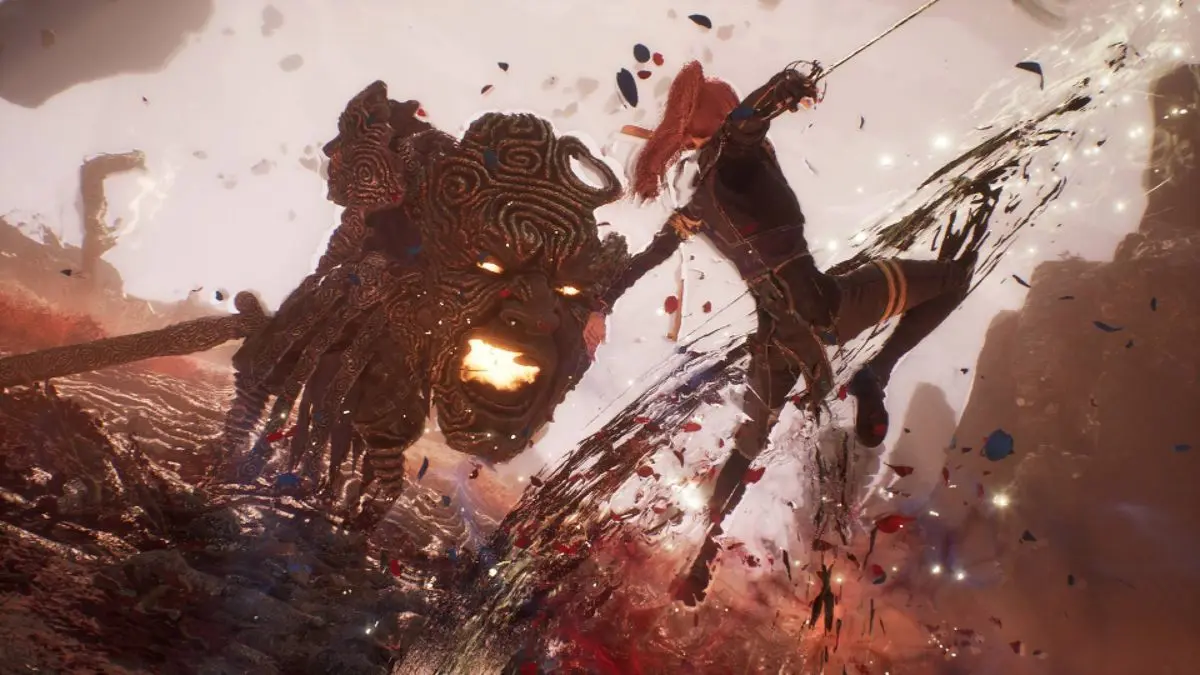
Source: GamesRadar
User concerns about potential copyright infringement surfaced immediately, with one viral response asking Sandfall Interactive directly: "What do you think about this? I wonder what you trained your model on?"
1
. The resemblance appears too specific to be coincidental, raising serious questions about the sources used in AI model training data.Training Data Sources Under Scrutiny
Roblox co-founder and CEO David Baszucki explained that the company "built this model with internal Roblox data, as well as open source video data"
2
. The official Roblox X account clarified that the world models have been "trained on a combination of data, including proprietary Roblox 3D avatar/world interaction data"1
. That internal training data includes information from the 13 billion hours Roblox players spend in-game every month, which is now being used to train world models and AI-driven NPCs2
.The word "including" in Roblox's explanation appears to acknowledge that other data sources were used, though the company has not disclosed what open-source video data went into training the model
1
. This lack of transparency mirrors broader industry concerns about how generative AI companies source their training data, particularly when the output so clearly resembles copyrighted material.Related Stories


Industry Implications and Future Concerns
The incident highlights the ongoing tension between rapid AI development and copyright protection in the gaming industry. Roblox's experimental generative AI technology functions similarly to Google's Project Genie, which launched last week and faced criticism for generating content resembling Mario and Zelda
1
. The company envisions using these world models in Roblox Studio, where creators could "walk around and use prompts to 'paint' a world and then convert it into a 3D representation" that multiple people can play simultaneously1
.As Roblox pushes forward with plans to integrate this technology into its platform used by billions, the industry will be watching how developers like Sandfall Interactive respond to what many perceive as plagiarism. The quality of the AI-generated Clair Obscur lookalike also drew mockery, with users noting the blurry, disorienting visuals that one commenter described as making the Game of the Year winner "look so bad"
2
. Whether this represents the future of user-generated content or a legal minefield remains to be seen.References
Summarized by

Navi
Related Stories
Recent Highlights



Recent Highlights
Today's Top Stories






Your Daily Dose of Curated AI News
Don’t drown in AI news. We cut through the noise - filtering, ranking and summarizing the most important AI news, breakthroughs and research daily. Spend less time searching for the latest in AI and get straight to action.

