Rural India Powers Global AI Models as 200,000 Annotators Drive Machine Learning Revolution


2 Sources
2 Sources
[1]
Rural India powers global AI models
Bengaluru (India) (AFP) - Tending crops by day and then logging on for a night shift of data labelling, 27-year-old Chandmani Kerketta is part of a rising rural Indian workforce helping power an artificial intelligence revolution. From her home in India's eastern Jharkhand state, Kerketta is part of an AI-driven labour shift that the government hopes will transform lives, including by bringing more women into the workforce. The work is basic but essential for machine learning: data labelling, annotation and quality checks. It is the type of information key for driverless cars, for example. "This job helped me finish my studies, and help at home on our farm," Kerketta said as she tended tomatoes and peas. Kerketta, from one of India's constitutionally recognised tribal communities, was the first in her family to attend college. She initially worked as an office assistant at a data-processing firm in Jharkhand's capital Ranchi, where she watched employees working at computers. But after a computer course at her village school, Kerketta joined an estimated workforce of at least 200,000 annotators in India's villages and small towns -- a growing figure, and roughly half of the world's data-labelling workforce, according to US-based Scry AI. Rural-based workers can label hundreds of images, videos and documents during eight-hour shifts, either from home or from modest internet-connected centres. "After my night shift of data work, I sleep a little, and then help in farming," said Kerketta, who now holds a history degree. "In Jharkhand, farming is everything." Anju Kumari, 25, another rural AI worker in Jharkhand using a national fibre-optic cable network laid by Indian Railways, said the job had provided her with a pathway to a wider world. Kumari said work can include painstaking "labelling videos frame-by-frame", giving the example of teaching AI whether a person using an ATM is "likely a burglar, or someone genuinely drawing cash". Small-town offices India, which will host an international AI summit next month, has ambitious plans. It is now third in a global AI power ranking, overtaking South Korea and Japan, based on more than 40 indicators from patents to private funding calculated by Stanford University's Institute for Human-Centered AI. In recent months, US tech giants including Google, Microsoft and Amazon have announced multi-billion-dollar investments to build some of the world's biggest data centres in India. The country is no stranger to back-end work for global technology firms. Cities such as Bengaluru, Hyderabad and Chennai host major international players, but India's AI push is also expanding into more remote regions. In Tamil Nadu state, along a winding rural road, Indu Nadarajan travels to a small-town office where she labels images for autonomous vehicles, such as road markings, headlights and animals. Nadarajan works for NextWealth, an AI-enabling services firm headquartered in Bengaluru, with offices across small towns, supporting clients from the United States, Europe and Asia. "Many go to Chennai and Bengaluru to learn about AI," said Nadarajan, who has a master's degree in mathematics. "But being here in our hometown and learning about AI makes me feel very proud." - 'Anybody can be anywhere' - Every AI model relies on vast amounts of labelled data, regardless of its complexity. The more precise the labelling, the better the technology performs. "When I can design a product for a US company 5,000 miles away, why can't I do it from 200 miles away?" said NextWealth founder Sridhar Mitta, 80, a former chief technology officer at Indian tech giant Wipro. "Anybody can be anywhere and do the things, because the value goes through the internet." His scattered employees earn anywhere between $275 to $550 a month. While AI-driven automation may render some jobs obsolete, Mitta believes it will also generate opportunities. "Micro-entrepreneurship will be the next phase for small towns," Mitta said. "It may not be another billion-dollar company, but they will produce something which will be useful to the region." As AI reaches rural India, it is quietly reshaping lives -- particularly for women from conservative backgrounds. For Amala Dhanapal, a colleague of Nadarajan and the first graduate in her family -- her father is a tailor and her mother a homemaker -- working in AI has changed attitudes. "It's a big thing," Dhanapal said, saying it both provided a gateway to learning and greater financial independence. "Most girls find it difficult to even pursue their education due to their family background." When Kerketta first began her data-annotation work, villagers mocked her. "Now, when they see me going around on my scooter, they look at me with pride," she said. "Just like I do myself."
[2]
Rural India powers global AI models
Tending crops by day and then logging on for a night shift of data labelling, 27-year-old Chandmani Kerketta is part of a rising rural Indian workforce helping power an artificial intelligence revolution. "After my night shift of data work, I sleep a little, and then help in farming," said Kerketta, who now holds a history degree. Tending crops by day and then logging on for a night shift of data labelling, 27-year-old Chandmani Kerketta is part of a rising rural Indian workforce helping power an artificial intelligence revolution. Budget 2026 Critics' choice rather than crowd-pleaser, Aiyar saysSitharaman's Paisa Vasool Budget banks on what money can do for you bestBudget's clear signal to global investors: India means business From her home in India's eastern Jharkhand state, Kerketta is part of an AI-driven labour shift that the government hopes will transform lives, including by bringing more women into the workforce. The work is basic but essential for machine learning: data labelling, annotation and quality checks. It is the type of information key for driverless cars, for example. "This job helped me finish my studies, and help at home on our farm," Kerketta said as she tended tomatoes and peas. Kerketta, from one of India's constitutionally recognised tribal communities, was the first in her family to attend college. She initially worked as an office assistant at a data-processing firm in Jharkhand's capital Ranchi, where she watched employees working at computers. But after a computer course at her village school, Kerketta joined an estimated workforce of at least 200,000 annotators in India's villages and small towns -- a growing figure, and roughly half of the world's data-labelling workforce, according to US-based Scry AI. Rural-based workers can label hundreds of images, videos and documents during eight-hour shifts, either from home or from modest internet-connected centres. "After my night shift of data work, I sleep a little, and then help in farming," said Kerketta, who now holds a history degree. "In Jharkhand, farming is everything." Anju Kumari, 25, another rural AI worker in Jharkhand using a national fibre-optic cable network laid by Indian Railways, said the job had provided her with a pathway to a wider world. Kumari said work can include painstaking "labelling videos frame-by-frame", giving the example of teaching AI whether a person using an ATM is "likely a burglar, or someone genuinely drawing cash". Small-town offices India, which will host an international AI summit next month, has ambitious plans. It is now third in a global AI power ranking, overtaking South Korea and Japan, based on more than 40 indicators from patents to private funding calculated by Stanford University's Institute for Human-Centered AI. In recent months, US tech giants including Google, Microsoft and Amazon have announced multi-billion-dollar investments to build some of the world's biggest data centres in India. The country is no stranger to back-end work for global technology firms. Cities such as Bengaluru, Hyderabad and Chennai host major international players, but India's AI push is also expanding into more remote regions. In Tamil Nadu state, along a winding rural road, Indu Nadarajan travels to a small-town office where she labels images for autonomous vehicles, such as road markings, headlights and animals. Nadarajan works for NextWealth, an AI-enabling services firm headquartered in Bengaluru, with offices across small towns, supporting clients from the United States, Europe and Asia. "Many go to Chennai and Bengaluru to learn about AI," said Nadarajan, who has a master's degree in mathematics. "But being here in our hometown and learning about AI makes me feel very proud." 'Anybody can be anywhere' Every AI model relies on vast amounts of labelled data, regardless of its complexity. The more precise the labelling, the better the technology performs. "When I can design a product for a US company 5,000 miles away, why can't I do it from 200 miles away?" said NextWealth founder Sridhar Mitta, 80, a former chief technology officer at Indian tech giant Wipro. "Anybody can be anywhere and do the things, because the value goes through the internet." His scattered employees earn anywhere between $275 to $550 a month. While AI-driven automation may render some jobs obsolete, Mitta believes it will also generate opportunities. "Micro-entrepreneurship will be the next phase for small towns," Mitta said. "It may not be another billion-dollar company, but they will produce something which will be useful to the region." As AI reaches rural India, it is quietly reshaping lives -- particularly for women from conservative backgrounds. For Amala Dhanapal, a colleague of Nadarajan and the first graduate in her family -- her father is a tailor and her mother a homemaker -- working in AI has changed attitudes. "It's a big thing," Dhanapal said, saying it both provided a gateway to learning and greater financial independence. "Most girls find it difficult to even pursue their education due to their family background." When Kerketta first began her data-annotation work, villagers mocked her. "Now, when they see me going around on my scooter, they look at me with pride," she said. "Just like I do myself."
Share
Share
Copy Link
A growing workforce of at least 200,000 data annotators in rural India now represents roughly half of the world's data labelling workforce, powering global AI models for tech giants. Workers like 27-year-old Chandmani Kerketta balance farming by day with night shifts labelling images and videos essential for machine learning applications like autonomous vehicles. The shift brings new employment opportunities and financial independence, particularly for women in remote regions.
Rural India Emerges as Data Labelling Powerhouse for Global AI Models
Rural India is quietly fueling the artificial intelligence revolution through an expanding workforce dedicated to data labelling and annotation. At least 200,000 annotators now work from India's villages and small towns, representing roughly half of the world's data-labelling workforce, according to US-based Scry AI
1
. This rural Indian workforce performs essential tasks that power global AI models, including labelling images, videos, and documents during eight-hour shifts from home or modest internet-connected centres.
Source: ET
The work itself is foundational to machine learning. Data annotation involves teaching AI systems to recognize patterns—whether identifying road markings and headlights for autonomous vehicles or distinguishing between legitimate ATM users and potential burglars in security footage
1
. Every AI model relies on vast amounts of labelled data, and the more precise the labelling, the better the technology performs. This meticulous work connects rural communities directly to the global digital economy.Women in Workforce Find New Pathways Through AI-Related Job Opportunities
The shift toward decentralizing AI services has created significant employment opportunities, particularly for women from conservative backgrounds. Chandmani Kerketta, a 27-year-old from Jharkhand state and the first in her tribal community family to attend college, balances farming tomatoes and peas by day with night shifts of data work
1
. "This job helped me finish my studies, and help at home on our farm," Kerketta explained, noting that when she first began, villagers mocked her—but now look at her with pride as she rides her scooter through the village.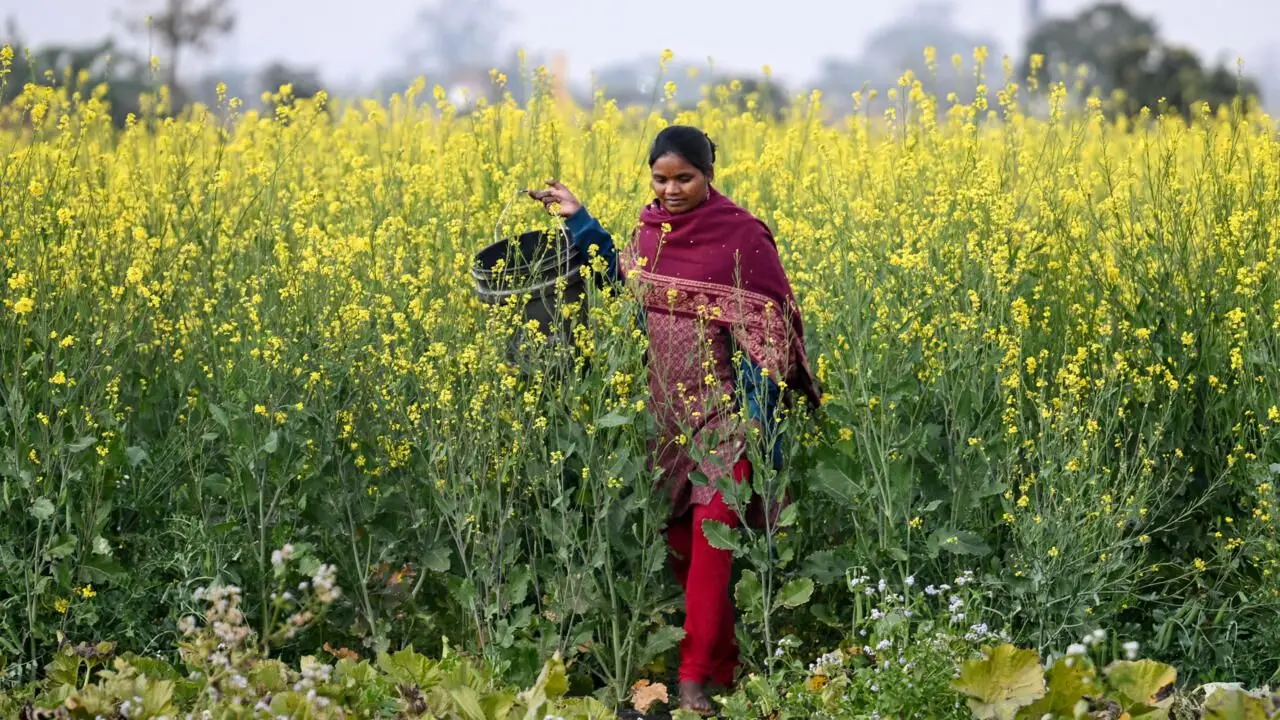
Source: France 24
For Amala Dhanapal, the first graduate in her family where her father works as a tailor and her mother as a homemaker, working in AI has brought both financial independence and socio-economic change. "It's a big thing," Dhanapal said, explaining that it provides a gateway to learning for women who find it difficult to pursue education due to family background
1
. The government hopes this AI-driven labour shift will transform lives by bringing more women into the workforce.Tech Giants Invest as India Climbs Global AI Landscape Rankings
India now ranks third in a global AI power ranking, overtaking South Korea and Japan, based on more than 40 indicators from patents to private funding calculated by Stanford University's Institute for Human-Centered AI
2
. In recent months, tech giants including Google, Microsoft, and Amazon have announced multi-billion-dollar investments to build some of the world's biggest data centres in India. The country will host an international AI summit next month, signaling its ambitions in the sector.While cities like Bengaluru, Hyderabad, and Chennai have long hosted major international players, India's AI push now extends into remote regions. In Tamil Nadu state, Indu Nadarajan travels along winding rural roads to a small-town office where she labels images for autonomous vehicles. She works for NextWealth, an AI-enabling services firm headquartered in Bengaluru with offices across small towns, supporting clients from the United States, Europe, and Asia
1
. "Many go to Chennai and Bengaluru to learn about AI," said Nadarajan, who holds a master's degree in mathematics. "But being here in our hometown and learning about AI makes me feel very proud."Related Stories

Micro-Entrepreneurship and Automation Shape Future Employment Opportunities
NextWealth founder Sridhar Mitta, 80, a former chief technology officer at Indian tech giant Wipro, believes the distributed model will drive future growth. "When I can design a product for a US company 5,000 miles away, why can't I do it from 200 miles away?" Mitta said. "Anybody can be anywhere and do the things, because the value goes through the internet"
1
. His scattered employees earn between $275 to $550 a month.While AI-driven automation may render some jobs obsolete, Mitta predicts new opportunities will emerge. "Micro-entrepreneurship will be the next phase for small towns," he said. "It may not be another billion-dollar company, but they will produce something which will be useful to the region"
1
. Infrastructure improvements, including a national fibre-optic cable network laid by Indian Railways, now enable workers like 25-year-old Anju Kumari in Jharkhand to participate in this digital shift, with Kumari describing the work as providing "a pathway to a wider world."The expansion of annotators into rural areas demonstrates how AI services can be decentralized, connecting remote communities to cutting-edge technology development while addressing local economic needs. As India positions itself within the global AI landscape, this workforce represents both the human foundation of machine learning systems and a test case for how technology can distribute economic opportunity beyond traditional urban tech hubs.
References
Summarized by

Navi
[1]
Related Stories
AI adoption in India transforms farms and classrooms as tech giants invest billions
18 Feb 2026•Business and Economy

India's back office built the world's tech hub. Artificial intelligence is now shrinking it.
27 Feb 2026•Business and Economy
India's Strategic Push to Catch Up in the Global AI Race
16 Apr 2025•Technology

Recent Highlights
1
Tennessee Teens Sue Elon Musk's xAI Over Grok AI-Generated Child Abuse Images
Policy and Regulation

2
Supermicro Co-Founder Indicted in $2.5 Billion Nvidia AI Chip Smuggling Scheme to China
Policy and Regulation
3
Val Kilmer to appear posthumously in As Deep as the Grave through AI-generated performance
Entertainment and Society

Recent Highlights
Today's Top Stories



Your Daily Dose of Curated AI News
Don’t drown in AI news. We cut through the noise - filtering, ranking and summarizing the most important AI news, breakthroughs and research daily. Spend less time searching for the latest in AI and get straight to action.

