Sam Altman feels useless and sad using his own AI tools, exposing a new kind of tech anxiety


4 Sources
4 Sources
[1]
Why AI's biggest champions, like Sam Altman, feel "happy but sad" about the AI boom
Why it matters: The tech executives building and promoting AI are now confronting its downsides firsthand, including the possibility that the technology could diminish their own roles. State of play: For years, there have been predictions of a white-collar job bloodbath thanks to AI. More recently, AI startups are raising billions to develop "brains" for robots that could complete blue-collar and industrial jobs, too. * AI agents are also expected to help shape agendas, coach senior leaders and reshape business calls with new thinking, insiders say. * But tech leaders may have lost the joy. What they're saying: On Monday, Altman said on X he was recently hit with sadness while building an app with Codex, a coding agent for ChatGPT. * Altman said the process "was very fun." But when he asked Codex to share new ideas for the app, "at least a couple of them were better than I was thinking of." * "I felt a little useless and it was sad," Altman wrote. * "I am sure we will figure out much better and more interesting ways to spend our time, and amazing new ways to be useful to each other, but I am feeling nostalgic for the present," he wrote. Zoom in: The same day, Aditya Agarwal, co-founder of the health app Bevel, shared a similar feeling after coding with Claude, saying it was "very clear that we will never ever write code by hand again. It doesn't make any sense to do so." * "It's a weird time. I am filled with wonder and also a profound sadness," he wrote on X. * "Something I was very good at is now free and abundant. I am happy ... but disoriented," he added. The big picture: This isn't just emotion -- AI leaders are warning policymakers about the risks they see ahead. * Anthropic CEO Dario Amodei has called on Congress to act faster as AI capabilities accelerate and "test who we are as a species." Reality check: CEOs and tech executives likely have gigantic safety nets to fall back on if AI takes their jobs. And it's not like CEOs will be eliminated overnight because a bot can build a spreadsheet. * But the role of the CEO might change, experts said. * "More and more people are going to be ... chief question officers. Not chief executive officers," said Erik Brynjolfsson, Stanford Digital Economy Lab director, at an Axios Davos event in January. * "People who define the question for a fleet of agents who then carry them out become the CQO," Brynjolfsson added. The bottom line: The AI revolution is hitting closer to home than its creators expected.
[2]
'I felt a little useless and it was sad': Sam Altman feels obsolete using his own AI tools -- and he's not the only one | Fortune
Sam Altman's admission about feeling sad as he watched the incredible advancements of artificial intelligence (AI) tools after using his own company's AI tools has struck a nerve across the tech world. A new kind of workplace anxiety has crystallized: feeling obsolete not in spite of your skills, but because your tools have become too good. And as stories of panic attacks, disorientation, and quiet grief over disappearing skills pile up, it is increasingly clear Altman is far from alone. In a recent post on X, OpenAI CEO Sam Altman described building an app with Codex, the company's new AI coding agent, as "very fun" at first. The mood shifted when he began asking the system for new feature ideas and realized "at least a couple of them were better than I was thinking of." "I felt a little useless and it was sad," he added, a moment of vulnerability that quickly ricocheted around the developer community. Codex, released as a standalone Mac app aimed at "vibe coding," lets developers offload everything from writing new features to fixing bugs and proposing pull requests to an AI agent tightly integrated with their codebase. For a founder whose identity is intertwined with building software and championing AI progress, the realization his own product could outperform his ideas landed with unusual force. "I am sure we will figure out much better and more interesting ways to spend our time," Altman added in a follow‑up, "but I am feeling nostalgic for the present." If Altman expected empathy, much of X offered something closer to rage. His confession became a lightning rod for frustrations from workers who say AI is already eroding their livelihoods. One user, an anonymous headhunter in the tech sector claiming over a decade of experience, asked him back: "What do you think your average white-collar worker will feel when AI takes their job?" Others accused him of shedding tears "into a giant pile of money" while they adjusted to careers reshaped around talking to chatbots instead of doing the work they trained for. A food writer described watching her career "disappear" as AI systems churn out "hollow copies" of her work, trained on data taken "without anyone's consent." The replies also became a staging ground for broader anger about OpenAI's rapid product shifts, including the planned deprecation of older models like GPT‑4o, with users pleading for more stability and transparency. At the same time, some peers recognized their own discomfort in Altman's post. Aditya Agarwal, former CTO of Dropbox, wrote that a weekend spent coding with Anthropic's Claude left him "filled with wonder and also a profound sadness." He concluded that "we will never ever write code by hand again. It doesn't make any sense to do so." Agarwal described coding as "something I was very good at" but it is now "free and abundant," leaving him "happy, but disoriented ... sad and confused." The emotions Altman and Agarwal describe echo a broader phenomenon of AI anxiety emerging as even Silicon Valley veterans see their hard‑won skills and identity being outpaced by software that arrived faster than anyone was prepared for. The Conversation recounted the tale of Chris Brockett, a veteran Microsoft researcher who talked to Cade Metz for his 2022 book, Genius Makers: The Mavericks Who Brought AI to Google, Facebook, and the World. Brockett said he was rushed to the hospital after encountering an early AI system that could do much of what he had spent decades mastering. Believing he was having a heart attack, he later described it, "my 52-year-old body had one of those moments when I saw a future where I wasn't involved." The same piece draws on MIT physicist Max Tegmark's worry AI might "eclipse those abilities that provide my current sense of self-worth and value on the job market," and on reports from professionals who now see AI completing, "quickly -- and relatively cheaply," the tasks they once relied on for income and status. A Silicon Valley product manager put it bluntly in an interview with Vanity Fair in 2023: "We're seeing more AI-related products and advancements in a single day than we saw in a single year a decade ago." Despite the mounting unease, some economists argue AI's trajectory is not destiny. Labor economist David Autor has suggested that, if used deliberately, AI could expand "decision‑making tasks currently arrogated to elite experts" to a broader swath of workers, improving job quality and moderating inequality. In his view, the future of work with AI is "a design problem," not a prediction exercise: Societies can still choose how tools like Codex and Claude are deployed, and who benefits. Wharton management professor Peter Cappelli, who Fortune has interviewed for his somewhat contrarian, evidence-based research on the perils of remote work and the nuts and bolts of AI automation, said in January a great deal of work is still involved with implementing these tools across the enterprise. He specifically warned about listening too sincerely to statements like Altman's or Agarwal's, as they are not only claiming sadness at such great progress but hyping their products for the market. "If you're listening to the people who make the technology, they're telling you what's possible," he said. "They're not thinking about what is practical." Still, regardless of how easy these tools will be to adopt across the enterprise, Altman's tweet captured a paradox now confronting many knowledge workers: The very tools that make them faster, more capable, and sometimes more creative can also puncture the belief that their unique expertise is indispensable. For now, at least, even the people building those tools are grappling with what it means to feel both impressed by their power -- and a little useless in their shadow.
[3]
AI Made Sam Altman Feel 'Useless and Sad' -- X Users Tried to Make Him Feel Worse - Decrypt
The backlash was amplified by frustration over OpenAI's planned retirement of GPT-4o, a user favorite whose deprecation has reignited trust and stability concerns. In a moment of raw tech-bro vulnerability, OpenAI CEO Sam Altman took to X last night to confess that building an app with Codex left him feeling "a little useless and it was sad." OpenAI's Codex is an AI coding agent designed to help developers with software engineering tasks like writing new features, fixing bugs, answering questions about a codebase, running tests, and proposing pull requests -- all in a sandboxed environment that understands and interacts with real code. But the tool, Altman said, spit out feature ideas better than his own, sparking a nostalgic sigh for human relevance amid his hype for the singularity. "I am sure we will figure out much better and more interesting ways to spend our time," he tweeted, "but I am feeling nostalgic for the present." Oh, Sam -- welcome to the club of mortals staring down the AI abyss! Or maybe not: While the CEO of one of the most valuable companies in the world pondered his obsolescence, X users treated his post like dry kindling, then supplied the accelerant -- and kept turning up the heat until nothing recognizable was left. "Feel better," sniped one. "You will have a 100 billion-dollar parachute exit. Meanwhile, 50-60% of white collar [jobs] eliminated due to AI will cause workers to feel a tad more useless and sad without a parachute." "I guess you can cry into a giant pile of money meanwhile I'll go talk to a chatbot for the rest of my career," an OpenSea engineer wrote. "[Thank you,] I guess." "Sort of like how I've felt watching my career disappear because a league of no-talent AI bros can now prompt hollow copies of my work that are 'just passable enough' to flood the internet with slop until it chokes, all because you trained your models without anyone's consent," replied food writer Chrisy Toombs. And that was within the first hour of Altman's post. Nearly 3 million views and over 2,100 replies later, people were still venting at Altman. Many of the posts reflected user backlash over OpenAI's announced deprecation of GPT-4o, which is slated to occur on February 13, with many replies taking Altman to task over model stability. Though the company is also retiring GPT-4.1, GPT-4.1 mini, and o4-mini, as well as legacy GPT-5 variants. GPT-4o is a particular favorite among users due to its warm, conversational style and multimodal capabilities. OpenAI even reinstated it after initial attempts to deprecate it following the release of GPT-5, after user backlash. The company said the decision reflects usage patterns: most users now prefer newer versions like GPT-5.2, which incorporate customizable personality and creative controls inspired in part by GPT-4o's strengths. Some people applauded Altman for his honesty and apparent vulnerability. Aditya Agarwal, former CTO at Dropbox and an early Facebook engineer, said he was also "filled with wonder and also a profound sadness." "I spent a lot of time over the weekend writing code with Claude. And it was very clear that we will never ever write code by hand again. It doesn't make any sense to do so," he said. "Something I was very good at is now free and abundant. I am happy... but disoriented... both the form and function of my early career are now produced by AI. I am happy, but also sad and confused."
[4]
Sam Altman feels useless thanks to ChatGPT Codex, and he's sad about it
It's one thing when a developer on Reddit says AI is taking the fun out of coding. It's another thing entirely when the person running the company says it. Earlier today, Sam Altman shared a candid moment on X which is most likely . He'd been using the new Codex Mac app, which OpenAI officially launched this morning, to build an application. He said the process was initially fun, but the mood shifted when he started asking the model for feature ideas. The AI didn't just help; it out-thought him. Altman noted that several of the suggestions were better than anything he had in mind. "I felt a little useless," he admitted, "and it was sad." Also read: An RTX 5070 Ti GPU with a hole in it set a new world record: Here's how For a long time, the narrative has been that AI is a "copilot." It handles the boring stuff - the boilerplate, the debugging, the documentation - while we provide the creative spark. But Altman's experience hits a raw nerve for anyone in a creative or technical field: what happens when the copilot is a better navigator than the captain? When you're a builder, your value is often tied to that "Aha!" moment, the specific second you think of a solution or a feature no one else did. If a model serves that to you on a silver platter, the project might be better, but the process can feel hollow. You aren't really building; you're just approving. Also read: Inside Snowflake and OpenAI's $200 million plan for enterprise AI Altman described this feeling as "nostalgia for the present." It's a bit of a mind-bender, but it captures the grief for a version of work that still feels "human" before it's fully automated. Even for the person leading the charge toward AGI, there's a clear sense of loss for the days when human intuition was the only game in town. We are in a weird transition where the tech is incredible, but the psychological side effect, that creeping feeling of being secondary to the tool, is starting to set in. Altman ended his thoughts by saying we'll eventually find "better and more interesting ways to spend our time" and "new ways to be useful to each other." It's a hopeful sentiment, but a tough one to process in real-time. If your current way of being useful (coding, designing, or strategizing) is being outperformed by a prompt, "rethinking your purpose" feels less like an opportunity and more like a necessity. For now, it seems even the architects of the future are looking at their creations and feeling a little smaller.
Share
Share
Copy Link
OpenAI CEO Sam Altman revealed he felt obsolete after his company's AI coding agent Codex generated better feature ideas than his own. The admission sparked fierce backlash from workers facing job insecurity due to AI, while tech executives like former Dropbox CTO Aditya Agarwal echoed similar feelings of grief and disorientation as artificial intelligence rapidly transforms professional identity.
Sam Altman Confronts AI Anxiety After Using OpenAI's Codex
In a moment of unexpected vulnerability, Sam Altman shared on X that building an app with Codex, OpenAI's AI coding agent, left him feels useless and sad
1
. The OpenAI CEO described the process as "very fun" initially, but the mood shifted when he asked the system for feature ideas and realized "at least a couple of them were better than I was thinking of"2
. This confession from one of artificial intelligence's most prominent champions reveals a psychological challenge now confronting even those building the technology: feelings of obsolescence as AI tools outpace human capability.
Source: Digit
Codex, released as a standalone Mac app for developers, handles everything from writing new features to fixing bugs and proposing pull requests while integrated directly with codebases
3
. For Altman, whose professional identity centers on building software and championing AI progress, watching his own product outperform his ideas landed with unusual force. "I am sure we will figure out much better and more interesting ways to spend our time, and amazing new ways to be useful to each other, but I am feeling nostalgic for the present," he wrote1
.Tech Executives Echo Feelings of Grief and Disorientation
Altman isn't alone in experiencing AI anxiety. The same day, Aditya Agarwal, former CTO of Dropbox and co-founder of health app Bevel, shared similar emotions after coding with Claude, Anthropic's AI assistant
1
. "It's a weird time. I am filled with wonder and also a profound sadness," Agarwal wrote on X, concluding that "we will never ever write code by hand again. It doesn't make any sense to do so"3
. He described coding as "something I was very good at" that is now "free and abundant," leaving him "happy, but disoriented... sad and confused"2
.
Source: Axios
This phenomenon extends beyond tech executives. Chris Brockett, a veteran Microsoft researcher, was rushed to the hospital after encountering an early AI system that could replicate decades of his expertise, initially believing he was having a heart attack
2
. MIT physicist Max Tegmark has expressed worry that AI might "eclipse those abilities that provide my current sense of self-worth and value on the job market"2
.User Backlash Reveals Deeper Frustrations About Job Insecurity Due to AI
Altman's post generated fierce user backlash, with nearly 3 million views and over 2,100 replies
3
. Workers facing diminishing professional roles accused him of shedding tears "into a giant pile of money" while they adjusted to careers reshaped around talking to ChatGPT instead of doing work they trained for2
. An anonymous headhunter with over a decade of experience asked: "What do you think your average white-collar worker will feel when AI takes their job?"2
.A food writer described watching her career "disappear" as AI systems churn out "hollow copies" of her work, trained on data taken "without anyone's consent"
3
. The replies also became a staging ground for broader anger about OpenAI's rapid product shifts, including the planned deprecation of GPT-4o on February 13, with users pleading for more stability and transparency3
. Though OpenAI is also retiring GPT-4.1, GPT-4.1 mini, and o4-mini, GPT-4o remains a particular favorite among users due to its warm, conversational style and multimodal AI capabilities3
.Related Stories

The Future of Work: From Execution to Asking Questions
For years, predictions of a white-collar jobs bloodbath due to artificial intelligence have circulated, and more recently, AI startups are raising billions to develop "brains" for robots that could complete blue-collar and industrial jobs too
1
. AI agents are expected to help shape agendas, coach senior leaders, and reshape business calls with new thinking1
. Erik Brynjolfsson, Stanford Digital Economy Lab director, suggested at an Axios Davos event in January that "more and more people are going to be... chief question officers. Not chief executive officers. People who define the question for a fleet of agents who then carry them out become the CQO" .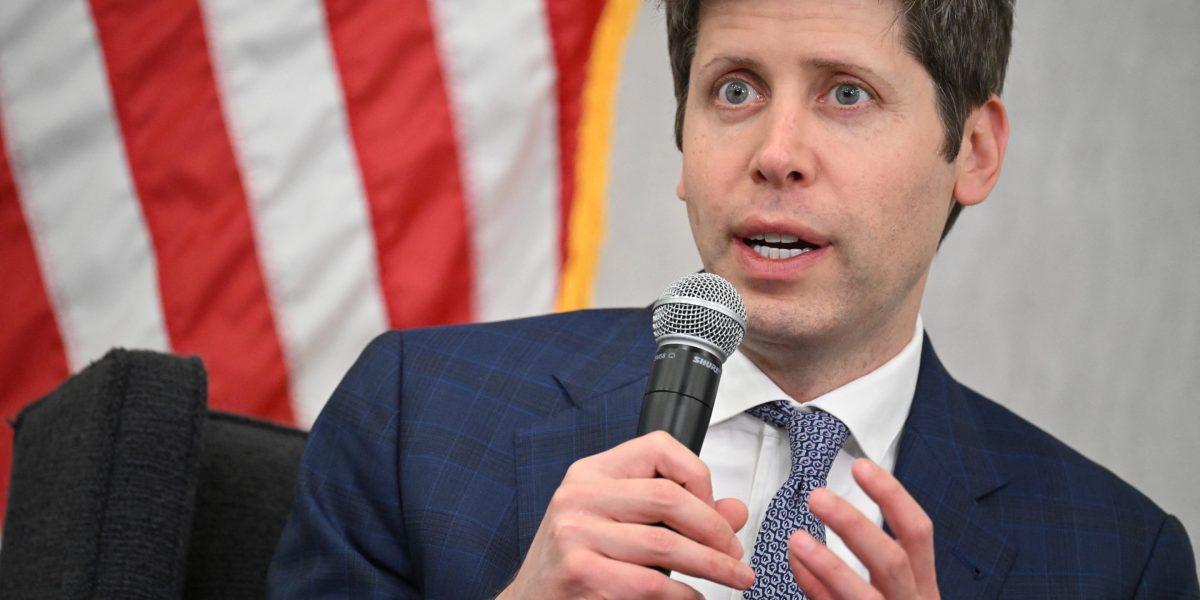
Source: Fortune
Dario Amodei, Anthropic CEO, has called on Congress and policymakers to act faster as AI capabilities accelerate and "test who we are as a species"
1
. Labor economist David Autor argues that if used deliberately, AI could expand "decision-making tasks currently arrogated to elite experts" to a broader swath of workers, improving job quality and moderating inequality. In his view, the future of work with AI is "a design problem," not a prediction exercise2
.For builders whose value is tied to that "Aha!" moment when they think of a solution no one else did, having a model serve that on a silver platter means the project might be better, but the process can feel hollow
4
. A Silicon Valley product manager told Vanity Fair in 2023: "We're seeing more AI-related products and advancements in a single day than we saw in a single year a decade ago"2
. The AI revolution is hitting closer to home than its creators expected, forcing even those championing AGI to reckon with what it means when human intuition is no longer the only game in town4
.References
Summarized by

Navi
[3]
Related Stories
Block's 4,000-person layoff sparks debate: AI revolution or corporate cost-cutting in disguise?
05 Mar 2026•Business and Economy
AI agents reshape software engineering, but human oversight remains critical for complex work
21 Feb 2026•Technology
Jack Dorsey cuts 4,000 jobs at Block, citing AI tools that 'can do more and do it better'
27 Feb 2026•Business and Economy

Recent Highlights
1
Meta unveils Muse Spark AI model as Superintelligence Labs makes its debut
Technology

2
Anthropic restricts Mythos AI model release, citing unprecedented cybersecurity capabilities
Technology

3
Anthropic sends Claude AI to psychiatrist, discovers functional emotions that shape behavior
Science and Research
Recent Highlights
Today's Top Stories






Your Daily Dose of Curated AI News
Don’t drown in AI news. We cut through the noise - filtering, ranking and summarizing the most important AI news, breakthroughs and research daily. Spend less time searching for the latest in AI and get straight to action.

