Samsung Electronics Q4 profit triples to record high as AI demand fuels memory chip shortage


7 Sources
7 Sources
[1]
Samsung's fourth-quarter profit triples, beating estimates as AI chip demand fuels memory shortage
Samsung Electronics reported an over threefold surge in fourth-quarter profits on Thursday, hitting a new record and beating analysts' estimates, as a memory chip shortage and strong demand for artificial intelligence servers lifted earnings. Here are Samsung's fourth-quarter results compared with LSEG SmartEstimate, which is weighted toward forecasts from analysts who are more consistently accurate: * Revenue: 93.8 trillion Korean won ($65.58 billion) vs. 93.318 trillion won expected * Operating profit: 20.1 trillion won vs. 20.018 trillion won expected The South Korean technology giant's quarterly revenue rose about 24% from a year earlier to hit a new record. Meanwhile, its operating profit climbed over 200% year over year. The profits surpassed Samsung's long-standing record of 17.6 trillion won set in the third quarter of 2018, while matching Samsung's own guidance of around 20 trillion won. Samsung, South Korea's largest company by market capitalization, is a leading provider of memory chips, semiconductor foundry services and smartphones. The company said in an earnings report that its memory business had helped drive earnings, setting all-time highs for quarterly revenue and operating profit, driven by an overall market price surge, sales of high-bandwidth memory and other high-value-added products. High-bandwidth memory, or HBM, is a type of memory used in chipsets for AI data centers, and Samsung has shifted more focus to the technology over the past year. Makers of AI chipsets, such as Nvidia, have been clamoring for limited supplies of HBM, with demand outpacing supply. As memory companies prioritize capacity to meet that lucrative demand, it has contributed to a shortage across the broader market, pushing up prices of chips used in personal computers and mobile devices. This has been a boon for memory giants like Samsung as well as its rival SK Hynix, which reported record earnings on Wednesday.
[2]
Samsung Electronics posts record profit on AI demand
Seoul (AFP) - South Korean tech giant Samsung Electronics posted record quarterly profits on Thursday, riding strong market demand for its artificial intelligence chips. A global AI boom has pushed up prices and shipments of conventional chips, while demand for high‑bandwidth memory chips, used in servers that power the technology, has soared. The hunger for chips to power AI has caused a shortage for consumer electronics, threatening higher prices for phones, laptops and other devices. In a statement, Samsung said that in the quarter ending in December last year, it had posted "its highest-ever quarterly consolidated revenue at KRW 93.8 trillion (US$65.5 billion), representing a quarter-on-quarter increase of nine percent". "Operating profit was also an all-time high, at KRW 20.1 trillion," it added. Annual revenue stood at 333.6 trillion won, while its operating profit came in at 43.6 trillion won, the firm said. Samsung attributed the strong earnings to its Device Solutions division, which oversees its semiconductor business, where sales in the last quarter rose 33 percent. Its memory business also posted an "all-time high for quarterly revenue and operating profit", it said. Samsung pointed to a $33.2 billion investment in chip production facilities, pledging to continue spending in "transitioning to advanced manufacturing processes and upgrading existing production lines to meet rising demand". The South Korean company said it expects "AI and server demand to continue increasing, leading to more opportunities for structural growth". - HBM race - Samsung's strong earnings come as key competitor SK hynix also saw its operating profit double last year to a record high, buoyed by the AI boom. The two firms are among the world's leading producers of memory chips, supplying high‑performance components that are essential for AI products and the data centres powering the fast‑evolving sector. SK said on Wednesday its operating profit soared 101 percent to 47.2 trillion won last year. Riding the AI boom, SK hynix shares have surged around 220 percent over the past six months, while Samsung Electronics has risen about 130 percent. Both companies are on the cusp of producing next-generation "HBM4" chips for AI data centres, with Samsung reportedly due to start producing them in February. American company Nvidia will be one of Samsung's customers for HBM4 chips. But Nvidia has reportedly allocated around 70 percent of its HBM4 demand to SK hynix for 2026, up from the market's previous estimate of 50 percent. The South Korean government has pledged to become one of the world's top three AI powers, behind the United States and China.
[3]
Samsung profits surge 200% as AI server demand triggers memory chip shortage
Samsung Electronics reported a more than threefold increase in fourth-quarter operating profit on Thursday, surpassing analysts' estimates due to a memory chip shortage fueled by strong artificial intelligence server demand. The company's shares rose 2.58 percent at the market open before declining 1.54 percent during morning trading. Executives during an earnings call stated that surging memory prices boosted the chip business, while rising costs will affect the smartphone and display divisions. Samsung indicated that capital expenditure for the full year of 2025 decreased as the company adopted a conservative investment approach. Memory investments, however, are set to increase this year. Samsung's fourth-quarter results, measured against LSEG SmartEstimate figures, showed specific outcomes in key metrics: * Revenue: 93.8 trillion Korean won ($65.58 billion) compared to the expected 93.318 trillion won. * Operating profit: 20.1 trillion won compared to the expected 20.018 trillion won. Quarterly revenue increased approximately 24 percent from the previous year, achieving a new record level. Operating profit rose over 200 percent year over year, exceeding the prior record of 17.6 trillion won established in the third quarter of 2018. This performance aligned with Samsung's own guidance of around 20 trillion won. As South Korea's largest company by market capitalization, Samsung ranks as a primary supplier of memory chips, semiconductor foundry services, and smartphones. The memory business propelled these earnings, reaching all-time highs in quarterly revenue and operating profit. Factors included a surge in overall market prices, sales of high-bandwidth memory (HBM), and other high-value-added products. HBM serves as a specialized memory type integrated into chipsets for AI data centers. Over the past year, Samsung's Device Solutions (DS) Division has directed greater emphasis toward this technology. AI chipset manufacturers, including Nvidia, face constrained HBM supplies amid demand exceeding availability. Memory producers have allocated capacity preferentially to fulfill this high-margin demand, resulting in shortages across the wider memory market. Consequently, prices for chips used in personal computers and mobile devices have risen. This situation has advantaged major memory producers such as Samsung and its competitor SK Hynix, which disclosed record earnings on Wednesday. For the first quarter of 2026, the DS Division anticipates sustained growth in AI and server demand, presenting structural growth opportunities. The division plans to prioritize high-performance products to sustain profitability. In contrast, the Mobile Experience and Networks division, responsible for developing and selling smartphones, tablets, wearables, and related devices, recorded lower results. Operating profit dropped to 1.9 trillion won, reflecting a 9.5 percent decline from the year-earlier period and more than a 45 percent decrease from the prior quarter. Samsung attributed these results to diminished launch effects from new smartphone models and heightened market competition. Addressing the first quarter of 2026, Samsung intends to advance its AI smartphone strategy by introducing "Agentic AI experiences" alongside the Galaxy S26 series launch. To counter elevated component costs, the company will utilize supplier partnerships to optimize resources and the supply chain. The Display business, which provides screens for consumer electronics, saw profits more than double to 2 trillion won during the December quarter. This growth stemmed from strong sales to smartphone brands.
[4]
Samsung sees strong AI demand after profit triples to record high
The results underscore the strong pricing power of the world's top memory chipmaker, with its profit growth set to accelerate this quarter. Samsung Electronics said its operating profit more than tripled to a record high in the fourth quarter and forecast strong chip demand ahead, as the race to build artificial intelligence strains chip supply and boosts prices. The results underscore the strong pricing power of the world's top memory chipmaker, with its profit growth set to accelerate this quarter. "The ongoing AI boom is expected to continue driving favorable market conditions across the industry" in the first quarter of 2026, Samsung said in a statement. However, it warned rising memory chip prices are weighing on its smartphone and display business and cautioned there are other lingering risks, such as global tariffs. Samsung shares, which have surged nearly 40% this year, rose 1.2% in morning trade, while rival SK Hynix's shares climbed 3.7%. Samsung posted 20 trillion won ($13.98 billion) in operating profit for the October to December period, in line with its estimate of 20 trillion won and up from 6.49 trillion won a year earlier. The South Korean company's revenue rose 24% to 93.8 trillion won in the quarter from a year earlier. Operating profit at Samsung's chip business, its main cash cow, surged 470% to a record high 16.4 trillion won in the fourth quarter from a year earlier, while its mobile profit declined by 10% to 1.9 trillion won, squeezed by surging chip prices. "Memory price increases are expected to accelerate this quarter and are likely to give surprise earnings, while the memory cost burden will intensify on its mobile business," said Sohn In-joon, an analyst at Heungkuk Securities. He expects Samsung's profit to surge five-fold to around 35 trillion won in the current quarter from a year earlier. MOBILES FACE MEMORY HEADWIND Samsung said its mobile business is expected to face rising cost pressures this year. Samsung co-CEO TM Roh described the acute chip shortage as "unprecedented" in an interview with Reuters, adding that he did not rule out raising prices. "How the division defends margins as the year progresses will be a key issue," said Ko Yeongmin, an analyst at Daol Investment & Securities. The display business also expects smartphone demand to weaken in the current quarter as prices soar on the memory chip supply shortage, and anticipates customers will push for price cuts. Its display business profit more than doubled to 2 trillion won on robust sales of its major customer Apple's iPhone 17 series. HBM CHIPS FOR NVIDIA Samsung Electronics said on Thursday it is on track to begin delivering its next-generation high-bandwidth memory (HBM) chips, or HBM4, in the current quarter. Analysts expect the chips to be initially shipped to Nvidia. Samsung has been trying to catch up with its cross-town rival SK Hynix, a primary supplier for the advanced memory chips crucial for Nvidia's AI accelerators, after facing supply delays that hit its earnings and share price last year. SK Hynix said on Thursday that large-scale production of its next-generation HBM was underway to meet customer requests, after booking fourth-quarter profit that more than doubled to a record. The race to build AI infrastructure prompted chipmakers to divert manufacturing capacity toward high-bandwidth memory for AI servers, squeezing the supply of conventional memory chips, which are used not only in smartphones and PCs but increasingly in data centres. Memory chipmakers are raising prices aggressively, "emboldened and confident - and taking a 'pay-it-or-leave-it' approach - because there is ample robust demand, and they can't possibly fill it all," said Tobey Gonnerman, president of semiconductor distributor Fusion Worldwide. "They're in the enviable position of being able to dictate price, terms, etc more than ever," he said. ($1 = 1,430.3000 won) (Reporting by Hyunjoo Jin, Heekyong Yang and Joyce Lee; Editing by Jamie Freed and Sonali Paul)
[5]

Samsung reports solid recovery in 2025, set to start delivering HBM4 next month - The Korea Times
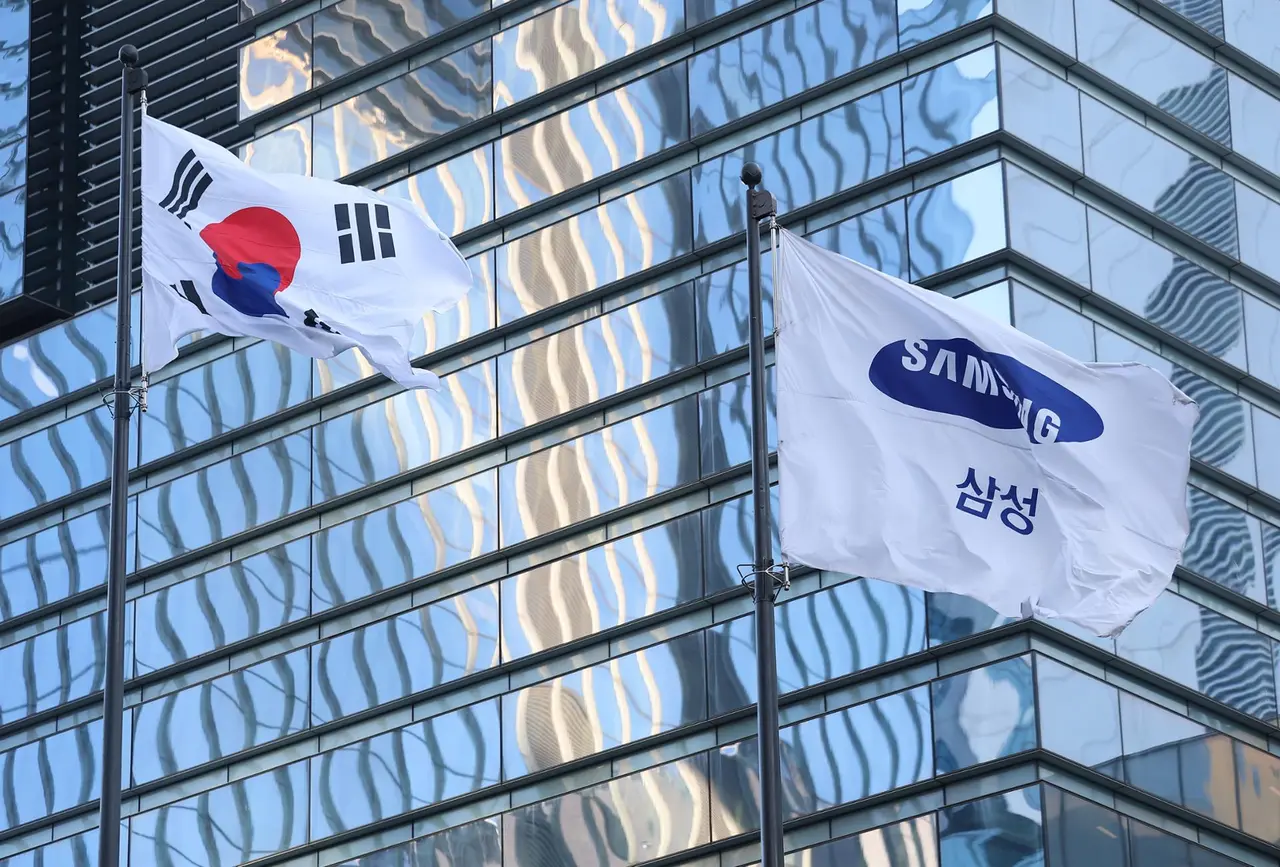
Samsung's flag is displayed next to Korea's national flag at Samsung Electronics' office in Seocho District, Seoul, Thursday. Yonhap Samsung Electronics reported a solid recovery in its 2025 earnings, posting new record highs with its quarterly operating profit and annual revenue. The recovery came as its semiconductor business gained traction from soaring demand for memory chips driven by the rapid expansion of artificial intelligence (AI), according to the company Thursday. To further accelerate the current memory momentum, the company said it will begin mass shipments of high-bandwidth memory 4 (HBM4) next month and start customer sampling of next-generation HBM4E in the middle of this year. It also plans to achieve significant outcomes in its humanoid robot business this year. Samsung Electronics said it posted an operating profit of 20.1 trillion won ($14.03 billion) and 93.8 trillion won in sales for the fourth quarter of 2025, marking a quarterly high. Operating profit surged 209.17 percent from a year earlier, while sales jumped 23.82 percent. On an annual basis, the company's operating profit reached 43.6 trillion won and sales stood at 333.6 trillion won, representing year-on-year growth of 33.23 percent and 10.88 percent, respectively. It was the highest annual revenue in the company's history, but its operating profit fell behind that of SK hynix for the first time, as the rival posted 47.2 trillion won. The strong performance was driven by brisk profitability at the company's Device Solutions (DS) division amid skyrocketing global memory demand. In the fourth quarter, the DS division posted a record quarterly operating profit of 16.4 trillion won and 44 trillion won in sales. Operating profit surged by 465.5 percent from 2.9 trillion won a year earlier. The DS division posted disappointing numbers in the first half of last year due to sluggish results in its HBM business, with operating profit remaining at 1.1 trillion won in the first quarter and 400 billion won in the second quarter. However, it recovered quickly in the second half of last year, as it began supplying HBM3E chips to Nvidia. Operating profit stood at 7 trillion won in the third quarter and more than doubled to 16.4 trillion won in the fourth quarter. The ongoing upcycle in the global memory market has also played a significant role. Prices of legacy dynamic random-access memory surged 40 to 50 percent in the fourth quarter, while NAND flash prices continued to rise throughout last year. The foundry business is also believed to have significantly narrowed its losses as line utilization improved. During its earnings call, the company said its HBM sales for this year will likely achieve threefold growth from 2025, adding that "clients already hope to secure supply agreements for volumes in 2027 and beyond." "Based on customer feedback on performance, we are now mass-producing HBM4, and plan to begin shipments next month," the company said. "We also plan to deliver HBM4E samples to customers in the middle of this year." The Device Experience division, which handles smartphones, home appliances and other electronic devices, posted an operating profit of 1.3 trillion won and 44.3 trillion won in revenue. The smartphone business saw a decline in fourth-quarter shipments due to the fading impact of new model launches, but posted double-digit profitability for the full year. The TV business saw improved revenue compared to the previous quarter due to the stable sale of premium products. Its subsidiary, Samsung Display, also made a solid contribution to Samsung Electronics' recovery. Samsung Display posted an operating profit of 2 trillion won and 9.5 trillion won in sales, driven by increased smartphone panel demand from major customers. Samsung Electronics also said during the earnings call that it "plans to deliver meaningful results in its humanoid robot business this year" as part of its future growth strategy. The comment signaled a push to accelerate the development of industrial robots through cooperation with its robotics subsidiary, Rainbow Robotics. The company said it will continue investing in future growth areas including humanoid robots, heating and air conditioning, automotive electronics and medical technologies, while applying AI and digital twin technologies across its operations to enhance cost competitiveness. A digital twin is a virtual replica of a physical asset that helps reduce costs, save time and mitigate risk through simulations. Samsung Electronics initially planned to make investments worth 47.4 trillion won in 2025, but its actual capital expenditure for last year reached 52.7 trillion won, with semiconductors accounting for 47.5 trillion won.
[6]

Samsung clocks record Q4 earnings on AI-fueled chip demand By Investing.com
Investing.com-- Samsung Electronics Co Ltd (KS:005930) on Thursday posted record-high revenue and profit in the fourth quarter of 2025, as its memory chip division was boosted by outsized demand from the artificial intelligence industry. Samsung posted an operating profit of 20 trillion won ($13.98 billion) in the three months to December 31, in line with its forecast and more than triple the 6.49 trillion won seen a year ago. Find out the best AI stocks for 2026 by upgrading to InvestingPro Revenue rose to 93 trillion won from 75.79 trillion won a year ago. Both revenue and operating profit were the company's highest ever. The bumper returns were largely due to strong sales and margins in Samsung's memory chip unit, as the company sold more advanced high-bandwidth memory chips and other processors to the AI industry. Memory chip prices were seen rising sharply through the fourth quarter, and are expected to keep racing higher in the near-term on AI-fueled demand. Advanced memory is a key component of the processors used in running AI data centers. "In Q1 2026, the ongoing AI boom is expected to continue driving favorable market conditions across the industry, and the Memory Business plans to keep prioritizing high-value-added products for AI applications," Samsung said in a press release. Samsung largely caught up with rivals Micron Technology Inc (NASDAQ:MU) and SK Hynix Inc (KS:000660) in developing and mass-producing advanced HBM chips for the AI industry in 2025. The company signed a major data center contract with AI startup OpenAI, to supply chips to the startup and build data centers in South Korea. Recent reports said the company plans to start production of its advanced HBM chips for NVIDIA Corporation (NASDAQ:NVDA) in February. Strength in chips helped Samsung weather a slowdown in smartphone, display modules, and camera sensor sales in the fourth quarter.
[7]

Samsung sees strong AI demand after profit triples to record high
SEOUL, Jan 29 (Reuters) - Samsung Electronics said its operating profit more than tripled to a record high in the fourth quarter and forecast strong chip demand ahead, as the race to build artificial intelligence strains chip supply and boosts prices. The results underscore the strong pricing power of the world's top memory chipmaker whose profit growth is expected to accelerate this year. "The ongoing AI boom is expected to continue driving favorable market conditions across the industry" in the first quarter of 2026, Samsung said in a statement. The South Korean company posted 20 trillion won ($13.98 billion) in operating profit for the October to December period, in line with its estimate of 20 trillion won and up from 6.49 trillion won a year earlier. It reported revenue of 93.8 trillion won in the quarter, up 24% from a year earlier. Operating profit at Samsung's chip business, its main cash cow, surged 470% to a record high 16.4 trillion won in the fourth quarter from a year earlier, while profit at its mobile phone business, squeezed by surging chip prices, declined to 1.9 trillion won. Samsung co-CEO TM Roh described the acute chip shortage as "unprecedented" in an interview with Reuters, adding that he did not rule out raising prices. ($1 = 1,430.3000 won) (Reporting by Hyunjoo Jin, Heekyong Yang and Joyce Lee; Editing by Jamie Freed and Sonali Paul)
Share
Share
Copy Link
Samsung Electronics reported a record-breaking fourth quarter with operating profit surging over 200% year-over-year to 20.1 trillion won ($14.03 billion). The South Korean tech giant's memory business hit all-time highs as artificial intelligence server demand created a global memory chip shortage, pushing prices higher. The company plans to begin mass shipments of next-generation HBM4 chips to customers including Nvidia next month.
Samsung Electronics achieves record-breaking quarterly performance
Samsung Electronics delivered its strongest quarterly performance on record, with operating profit climbing over 200% year-over-year to reach 20.1 trillion won ($14.03 billion) in the fourth quarter of 2025
1
. The record operating profit surpassed the company's previous high of 17.6 trillion won set in the third quarter of 2018, while quarterly revenue rose approximately 24% to hit 93.8 trillion won ($65.58 billion)1
. These results exceeded analyst estimates and matched Samsung's own guidance of around 20 trillion won3
. For the full year, Samsung Electronics posted annual revenue of 333.6 trillion won, marking the highest in the company's history, though its operating profit of 43.6 trillion won fell slightly behind rival SK Hynix's 47.2 trillion won for the first time5
.
Source: Korea Times
AI demand and memory chip shortage drive unprecedented pricing power
The explosive growth stems from surging demand for memory chips driven by the rapid expansion of artificial intelligence servers and data centers. Samsung's memory business posted all-time highs for both quarterly revenue and operating profit, propelled by an overall surge in market prices, strong sales of high-bandwidth memory (HBM), and other high-value-added products
1
. The Device Solutions division, which oversees Samsung's semiconductor business, saw sales jump 33% in the fourth quarter, with operating profit soaring 470% to a record 16.4 trillion won. AI chipset manufacturers, including Nvidia, face constrained HBM supplies as AI chip demand exceeds availability3
. As memory companies prioritize capacity to meet lucrative AI demand, a memory chip shortage has emerged across the broader market, pushing up prices of chips used in personal computers and mobile devices1
. Prices of legacy dynamic random-access memory surged 40 to 50 percent in the fourth quarter, while NAND flash prices continued rising throughout 20255
. Industry executives describe chipmakers as taking a "pay-it-or-leave-it" approach because robust demand cannot be fully satisfied4
.
Source: ET
HBM4 production signals competitive push in AI infrastructure race
Samsung Electronics confirmed it will begin mass shipments of next-generation HBM4 chips in February 2026, with Nvidia expected to be among the initial customers
5
. The company also plans to deliver HBM4E samples to customers in mid-20265
. During its earnings call, Samsung stated that HBM sales for 2026 will likely achieve threefold growth compared to 2025, with clients already seeking supply agreements for volumes extending into 2027 and beyond5
. This aggressive timeline reflects Samsung's efforts to catch up with SK Hynix, which has secured approximately 70% of Nvidia's HBM4 demand for 2026, up from previous estimates of 50%. SK Hynix reported record earnings with operating profit doubling to 47.2 trillion won last year, benefiting from its position as a primary supplier of advanced memory chips for Nvidia's AI accelerators. Samsung pointed to a $33.2 billion investment in chip production facilities, pledging continued spending in transitioning to advanced manufacturing processes and upgrading existing production lines to meet rising demand.Related Stories

Mobile and display businesses face margin pressures from component costs
While Samsung's memory business flourishes, rising memory chip prices are creating headwinds for other divisions. The Mobile Experience and Networks division saw operating profit drop to 1.9 trillion won, reflecting a 9.5% decline from the year-earlier period and more than a 45% decrease from the prior quarter
3
. Samsung attributed these results to diminished launch effects from new smartphone models and heightened market competition3
. Samsung co-CEO TM Roh described the acute chip shortage as "unprecedented" and did not rule out raising smartphone prices4
. The display business, which provides screens for consumer electronics, saw profits more than double to 2 trillion won during the December quarter, driven by strong sales to smartphone brands including Apple's iPhone 17 series3
. However, the division anticipates smartphone demand will weaken in the current quarter as prices soar due to the supply chain constraints4
. Samsung indicated it will utilize supplier partnerships to optimize resources and the supply chain to counter elevated component costs3
.Future outlook balances AI opportunities against market uncertainties
Samsung expects the AI boom to continue driving favorable market conditions across the industry in the first quarter of 2026, with analysts projecting profit could surge fivefold to around 35 trillion won
4
. The Device Solutions division anticipates sustained growth in AI and server demand, presenting structural growth opportunities, and plans to prioritize high-performance products to sustain profitability3
. Beyond semiconductors, Samsung announced plans to deliver meaningful results in its humanoid robot business this year through cooperation with its robotics subsidiary, Rainbow Robotics5
. The company will continue investing in future growth areas including humanoid robots, heating and air conditioning, automotive electronics, and medical technologies5
. However, Samsung cautioned about lingering risks including global tariffs and the intensifying cost burden on its mobile business from memory price increases4
. Samsung's actual capital expenditure for 2025 reached 52.7 trillion won, exceeding its initial plan of 47.4 trillion won, with semiconductors accounting for 47.5 trillion won of that investment5
. The foundry business is also believed to have significantly narrowed its losses as line utilization improved5
.References
Summarized by

Navi
[1]
[2]
Related Stories
Samsung Posts Record Q3 Results as AI Boom Drives Memory Chip Sales to All-Time High
30 Oct 2025•Business and Economy
Samsung profit triples to record $13.8B as AI demand sends memory prices soaring 313%
08 Jan 2026•Business and Economy

Samsung Faces Challenges in AI Chip Race as Profits Decline
31 Jan 2025•Business and Economy

Recent Highlights
1
AI Models Lie and Deceive to Protect Other AI Models From Deletion, Study Reveals
Science and Research

2
AI chatbots validate you too much, making you less kind to others, Stanford study reveals
Science and Research

3
Judge blocks Pentagon from blacklisting Anthropic over AI safety guardrails dispute
Policy and Regulation

Recent Highlights
Today's Top Stories




Your Daily Dose of Curated AI News
Don’t drown in AI news. We cut through the noise - filtering, ranking and summarizing the most important AI news, breakthroughs and research daily. Spend less time searching for the latest in AI and get straight to action.

