Samsung profit triples to record $13.8B as AI demand sends memory prices soaring 313%


7 Sources
[1]
Samsung expects to triple its profits in Q4
Memory pricing expected to surge another 60% in Q1 with relief years away While end customers grapple with crushing memory prices, we imagine Samsung execs are breaking out the Champagne. This week the memory titan forecast fourth-quarter operating profit would roughly triple as the South Korean
[2]
Samsung Posts Record Profit After AI Supercharges Memory Market
Average selling prices of DRAM jumped more than 30% sequentially in the December quarter, while those of NAND rose about 20%, with prices likely to remain very strong throughout 2026 and possibly through the first half of 2027. Samsung Electronics Co.'s quarterly profit more than tripled to a
[3]
Record profits forecast for Samsung with dramatic increase in AI chip demand
Samsung has announced it's expecting to make 19.9-20.1 trillion Korean won ($13.8 billion) next quarter, marking a more than 3x increase compared with the same period the year before. This would mark Samsung's highest-ever quarterly result of 17.6 trillion won in 2018, but it also beats analyst
[4]
Samsung forecasts record-breaking profit on booming AI chip demand - SiliconANGLE
Samsung forecasts record-breaking profit on booming AI chip demand Samsung Electronics Co. Ltd. is expecting to cash in big time on the artificial intelligence chip bonanza, forecasting a three-fold increase in its fourth-quarter operating profit thanks to surging demand for memory
[5]

Samsung expects profits to surge by 3x following memory price madness
TL;DR: Samsung forecasts a profit surge in late 2025 driven by record memory sales amid soaring AI demand and supply shortages. Memory prices jumped 40-50%, tripling Samsung's profits and boosting its share value by over 145% in 12 months. The company plans to expand its HBM offerings to compete
[6]

Samsung's profit triples after AI supercharges memory market
Samsung Electronics said its quarterly profit more than tripled to a record high after global demand for AI servers sharply lifted memory chip prices. South Korea's largest company reported a preliminary operating profit of 20 trillion won ($13.8 billion) in the three months through December, up
[7]

Samsung Electronics expects 200% growth in operating profit for Q4 2025 - The Korea Times
Samsung flag waves at Samsung Electronics' office in Seocho District, Seoul, Dec. 16, 2025. Yonhap Samsung Electronics on Thursday estimated its operating profit for the fourth quarter of 2025 at 20 trillion won ($13.8 billion), up about 200 percent from a year earlier, driven by skyrocketing
Share
Copy Link
Samsung Electronics forecasts record quarterly profits of $13.8 billion in Q4, triple the previous year's results, driven by explosive demand for AI servers. Memory prices have surged dramatically, with DRAM contract prices up 313% year-over-year and another 60% increase expected in Q1 2026. The memory chip shortage shows no signs of relief until at least 2027.
Samsung Operating Profit Hits Historic High on Memory Chip Demand
Samsung Electronics has forecast record quarterly profits of $13.8 billion (20 trillion won) for Q4 2025, marking a 208% increase from the $4.4 billion recorded a year earlier
1
. This Samsung profit milestone surpasses the company's previous record of 17.6 trillion won set in 20183
. Revenue climbed 23% year-over-year to $64 billion (93 trillion won), also a record high2
. The semiconductor sector growth reflects a fundamental shift in the memory market, with analysts describing current conditions as a "Hyper-Bull" phase that eclipses the historic 2018 peak5
.
Source: The Register
Surge in Memory Prices Driven by Demand for AI Servers
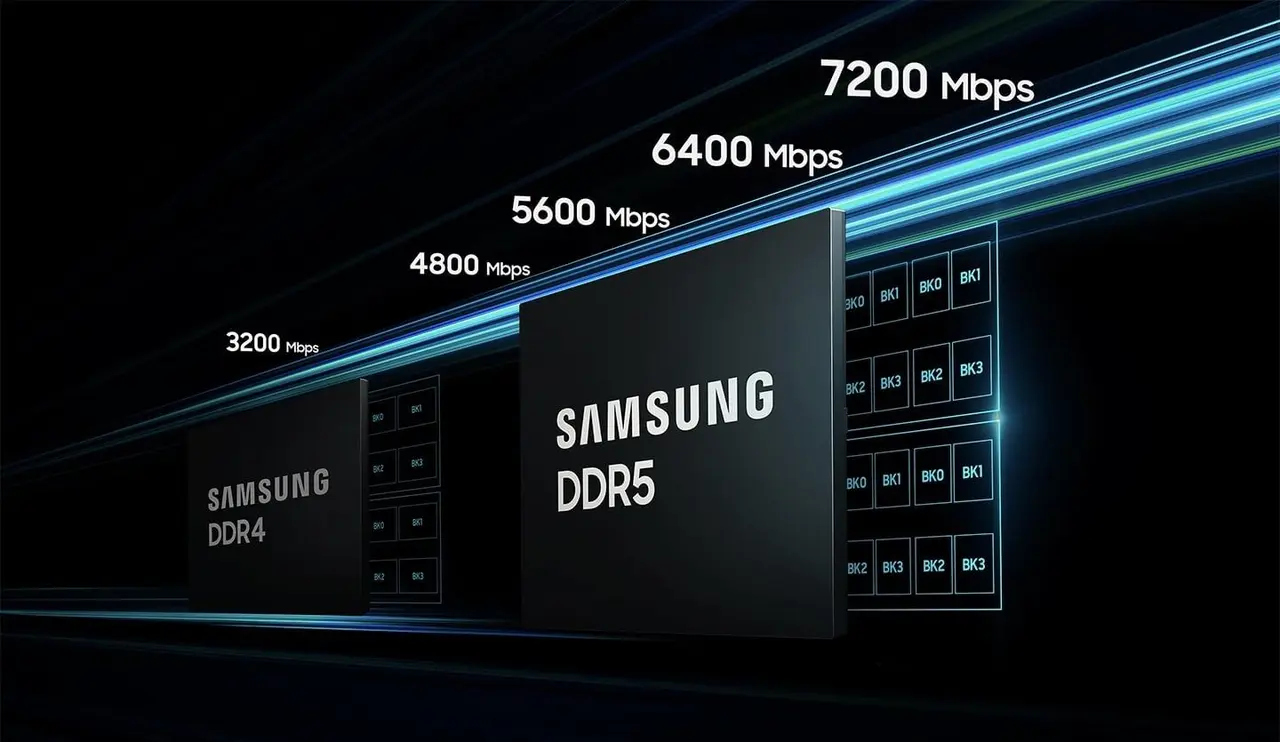
Memory prices have exploded as manufacturers reallocate resources to more lucrative AI servers and away from consumer electronics. DRAM contract prices jumped 313% year-over-year in Q4 2025, with average selling prices rising more than 30% sequentially during the December quarter
2
. NAND prices increased approximately 20% in the same period2
. Counterpoint Research forecasts a 40% price rise for DDR5 in Q1 2026 compared to the prior quarter, followed by an additional 20% growth in Q22
. Other reports suggest memory vendors like Samsung, SK Hynix, and Micron could hike prices by as much as 70% in Q1 2026 alone1
. Combined with a 50% price hike in the latter half of 2025, buyers can expect to pay more than twice what they did for the same memory a year ago1
.
Source: TweakTown
AI Demand Creates Severe Supply Shortages Across Memory Market
The AI demand surge has created a severe shortage in standard memory for laptops and servers as manufacturers prioritize high-bandwidth memory (HBM) and other chips for AI accelerators. Samsung, SK Hynix, and Micron have all reallocated capacity away from consumer products to serve data centers and AI giants like Nvidia
1
. "Hyperscalers and cloud providers are buying a lot of DRAM and they are willing to pay a price premium," said Sanjeev Rana, head of research at CLSA Securities Korea2
. Micron recently killed off its Crucial brand of consumer SSDs and memory modules, highlighting the industry-wide shift1
. At CES 2026, Samsung President Wonjin Lee warned that consumer electronics prices are already rising and "there's going to be issues around semiconductor supplies"2
.Record Quarterly Profits Expected to Continue Through 2027
Analysts expect memory chip demand to remain robust, with prices likely staying very strong throughout 2026 and possibly through the first half of 2027
2
. According to TechInsights, DRAM prices won't peak until at least 2026, and unlike past memory boom-bust cycles, prices are expected to remain fairly flat through 2027 before rising again in 2028 as GPU and AI ASIC builders transition from HBM4 to HBM4e memory1
. "Even after that, we may not see much correction because demand is just too strong and supply is tight," Rana added2
. Macquarie Equity Research forecasts the global DRAM market to grow to $311 billion in 2026, roughly six times bigger than in 20234
.Related Stories

High-Bandwidth Memory Race Intensifies Among Memory Vendors
Samsung delivered its cutting-edge HBM4 samples to Nvidia last year for qualification testing, raising hopes that the company may close the gap with rivals SK Hynix and Micron in the race to begin mass production in the first half of 2026
2
. CLSA's Rana expects Samsung's total HBM shipments to triple in 2026 as HBM4 enters commercial supply to support Nvidia's upcoming Rubin processors2
. The semiconductor business is expected to account for around 17 trillion won of Samsung's total operating profit4
. Samsung's share value has surged more than 145% in the past 12 months, reflecting investor confidence in the company's position within the booming semiconductor industry5
.
Source: Bloomberg
Fabrication Plants Expansion Offers No Near-Term Relief
While memory vendors are planning new fabrication plants to expand production capacity, relief remains years away. Micron announced it will break ground on its New York megafab project on January 16
1
. However, fabs are enormously complex and expensive projects that often require three to four years to bring online1
. Timing has exacerbated the crisis—when AI demand exploded, the memory market had just gone bust, meaning inventories were high and demand was low, leaving little capital to build new facilities1
. Nvidia CEO Jensen Huang highlighted at CES 2026 that the world needs to build many more chip fabs to keep up with demand for "AI factories," noting "it's a good time to be a semiconductor manufacturer"4
. The sustained pressure on supply shortages means consumers and businesses should prepare for elevated memory costs well into 2027.References
Summarized by

Navi
[1]
Related Stories
Samsung profit soars 48-fold as AI demand creates unprecedented memory chip shortage
30 Apr 2026•Business and Economy

Samsung posts record profit up eightfold as AI chips demand defies geopolitical uncertainties
07 Apr 2026•Business and Economy

Samsung Electronics Q4 profit triples to record high as AI demand fuels memory chip shortage
29 Jan 2026•Business and Economy
Recent Highlights
1
Microsoft and Nvidia Launch Surface Laptop Ultra: A $2,599 AI-Ready PC With RTX Spark Chip
Technology

2
OpenAI Releases 722 AI-Generated Math Papers on GitHub, Igniting Fury Among Mathematicians
Science and Research

3
Trump Consulted Grok AI Before Ordering Venezuela Invasion and Capture of Nicolás Maduro
Policy and Regulation

Recent Highlights
Today's Top Stories










Don’t drown in AI news. We cut through the noise - filtering, ranking and summarizing the most important AI news, breakthroughs and research daily. Follow topics that matter to you and stay ahead.


