Samsung pledges AI in every product at CES 2026, from fridges to health monitoring


13 Sources
13 Sources
[1]
Samsung at CES 2026 is an AI washout, and an ominous glimpse of what's to come
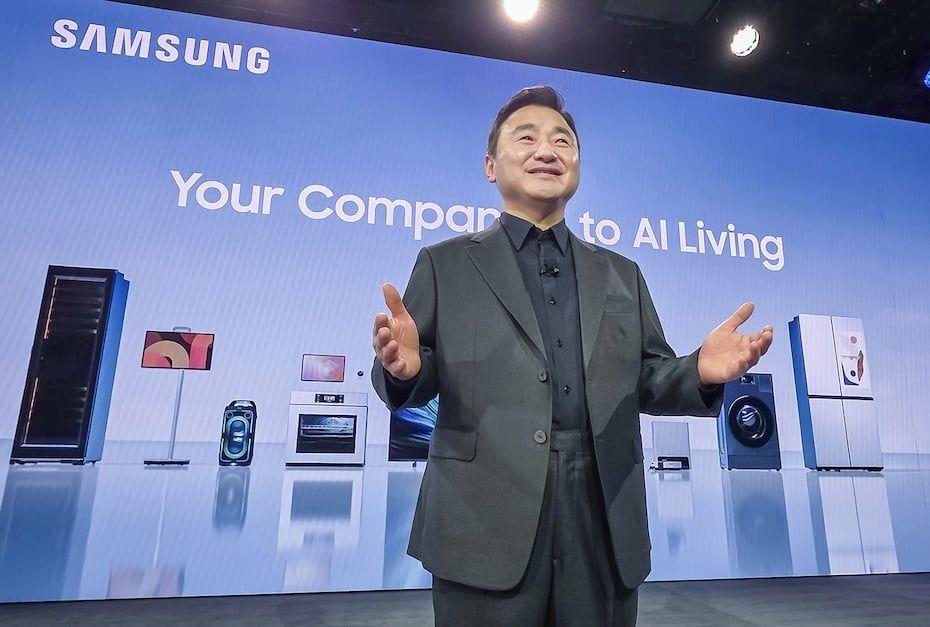
Samsung held a press conference ahead of CES 2026, which starts on January 6, but anyone hoping for news on the Galaxy S26 series, the Galaxy TriFold's US launch, or anything related to a Galaxy Ring 2 will be left feeling disappointed. Instead, as with many previous CES launch events from the brand, it was mostly about televisions and smart home devices. However, underneath all of them was a foundation of AI, and Samsung made it very clear how much AI we're going to see over the coming months and years. TM Roh speaks The one-hour event opened with Samsung's CEO and head of device experiences, TM Roh taking the stage to introduce the proceedings. Most will be aware of Samsung's AI ambitions, and it soon became clear the company has no intention of scaling back, saying: We will harness the full scale of Samsung to create technologies and experiences that truly matter to people. We will embed AI across every category, and every product, and every service to deliver one seamless unified AI experience. Various presenters took to the stage to talk about AI in televisions, washing machines, speakers, and other home appliances, with the promise of features like automatically muting commentators during a sports game coming to convince watchers AI is exciting. At the end of the event, Roh returned with an ominous mission statement, saying: Every part of Samsung moving in harmony, aligned behind one defining mission, to be your companion to AI living. AI experiences everywhere, for everyone. Samsung Health and AI The only mobile-related part of the First Look event centered around Samsung Health, and how AI will play a larger role. Samsung envisions Health switching from reactive health care to proactive care, which it calls Intelligent Care. Through it, in Samsung Health, personalized health coaching based around sleep, activity, nutrition, and mental health will be possible. It also wants other devices in its ecosystem, including appliances, to use data and contribute to creating this plan. While it sounds grand, it's not a dramatic shift from what we're already seeing in Samsung Health and other fitness and health platforms. Samsung says Intelligent Care will create personalized exercise plans, insights and guidance on improving sleep, and eating a balanced diet. Where it gets more interesting is how Health may generate personalized recipes and meal plans based on ingredients in your connected fridge, and also base them on metrics like your blood glucose levels. Samsung also talked about how, in the future, it may be able to monitor for evidence of cognitive change in elderly device owners. It made it clear this wouldn't be about diagnosis, but awareness. It said the feature will be released in beta form, and only in selected markets. Wait for Unpacked and MWC CES is rarely a show about mobile, and those waiting for Samsung's 2026 mobile announcements should look forward to its next Unpacked event, rumored for later in January or into February, and Mobile World Congress in March. Subscribe for AI-driven consumer tech insights Get deeper context on Samsung's expanding AI across TVs, appliances, and Health -- subscribe to our newsletter for expert analysis, practical takeaways, and broader consumer tech perspective that helps you understand how device AI affects everyday life and choices. Subscribe By subscribing, you agree to receive newsletter and marketing emails, and accept Valnet's Terms of Use and Privacy Policy. You can unsubscribe anytime. However, the trend of talking more about AI than hardware looks set to continue, with Roh saying it intends to double the amount of mobile devices with Galaxy AI onboard in 2026, taking the number from 400 million to 800 million, in an interview with Reuters. This, along with its insistence that AI is the future during the CES event, shows why Samsung is more keen than ever to tell us about how its using AI, and that no product or service is safe from its intrusion.
[2]
[CES 2026] An Entertainment Companion for Every Moment Seen and Heard
The Entertainment Companion zone at The First Look 2026 marked a new chapter in Samsung's visual display evolution -- building on two decades as the world's No. 1 TV brand. The space was divided into art, gaming and entertainment sections, anchored by the world's first 130-inch Micro RGB TV and the Vision AI Companion. Samsung Newsroom stepped inside to see how hardware innovation and AI-driven visual intelligence come together to create new immersive experiences. The Micro RGB 130" TV made its debut at First Look. Visitors were first struck by its scale, then by the precision of its color reproduction across varied content. Micro RGB 130" also delivers 100% of the BT.2020 wide color gamut, certified by Verband der Elektrotechnik (VDE), to enable more accurate, life-like colors. As screen sizes grow, maintaining image consistency becomes more challenging. Samsung addressed this with Glare Free technology, enabling uniform image rendering without distracting reflections -- a key reason the Micro RGB 130" TV earned a CES Innovation Awards 2026 Best of Innovation honor. Beyond the technology, the Micro RGB 130" TV's Timeless Frame design reflects a modern evolution of Samsung's TV legacy -- preserving the Timeless Gallery concept first introduced at CES 2013. The lower edge of the frame meets the floor, creating the effect of a window that blends seamlessly into its surroundings. The Micro RGB TVs will be available in 100-, 85-, 75-, 65- and 55-inch sizes. "Which team do you think will win today's soccer match?" "Can you tell me the recipe for the food on screen?" The Vision AI Companion area showcased the range of interactions available through the TV. First introduced in 2025, the Vision AI Companion now understands casual, conversational prompts and delivers intelligent responses -- from providing detailed information about a film to recommending music based on mood and even placing food orders. Building on the art experiences offered through Samsung Art Store, Samsung spotlighted its expanded Art TV lineup with a larger The Frame 98". The built-in Wireless One Connect design simplifies installation, while the packaging box doubles as a wall-mounting guide. Displayed alongside it, The Frame Pro 85" evoked the feel of a gallery space -- showcasing Neo QLED picture quality with vivid clarity. The newly released OLED S95H TV, a CES Innovation Awards 2026 honoree, features an ultra-slim, bezel-free design that resembles a high-end picture frame mounted on the wall. Art TVs can display more than 5,000 works currently exhibited in museums and other venues around the world. Samsung plans to expand the service through collaborations with global partners. The glasses-free Odyssey 3D 32'' (G90XH6K) -- the world's first 6K 3D gaming monitor -- invited visitors to experience their favorite games in new ways. Around 60 games can be enjoyed in 3D including "The First Berserker: Khazan," "Stellar Blade," "Lies of P: Overture" and "Mongil: STAR DIVE." "I tried gaming in 3D for the first time, and it felt completely new and immersive," said Jerry Ruiz, a digital content creator from Kennewick, Washington. "Being able to play 3D games without wearing glasses was especially impressive -- I don't think I'll be able to go back to regular gaming." The new Tizen operating system enables personalized recommendations through expanded content discovery. Viewers can access curated programming based on viewing trends and seasonal themes through a simple, intuitive interface. Samsung extended entertainment beyond watching and listening by inviting visitors to take the mic with Stingray Karaoke on Samsung TV. With microphone connectivity, tambourine effects and applause sounds, the TV transforms into a karaoke system, while features such as echo, reverb and voice tuning recreate the feel of a professional performance. Visitors could also test their skills with Fender Play TV, available exclusively on Samsung TV. The service offers guitar tutorials led by top instructors, along with virtual band sessions through Jam mode. Available in 30 countries, Samsung TV Plus brings a wide range of entertainment programming -- from sports and music to creator content -- across more than 3,500 channels and 66,000 video-on-demand titles. The large-display setup demonstrated Samsung's Glare Free technology, delivering immersive paired with Micro RGB picture quality and spatial audio. The experience reflected Samsung's vision of the TV as an Entertainment Companion. One area of the exhibition resembled a camping trip, featuring the new The Freestyle+ projector. Designed for portability, the device lets users enjoy their favorite content wherever they go. Lightweight and compact, the projector features a minimalist design that blends into any space. AI OptiScreen automatically adjusts the image for different surfaces -- including walls, ceilings and curtains -- ensuring optimal viewing from virtually anywhere. In addition, 3D Auto Keystone delivers an optimized, near-rectangular image even when projected onto uneven surfaces such as three-sided corners or curved curtains. Samsung unveiled a range of audio devices in multiple form factors, each made to deliver high-quality sound. Created in a second collaboration with French designer Erwan Bouroullec -- following his earlier work with Samsung on The Serif TV -- the Music Studio series of Wi-Fi speakers blends refined design with immersive audio, enhancing interior spaces wherever they are placed. The Music Studio series received a CES Innovation Awards 2026 honor. Samsung introduced its most cinematic soundbar to date with the new Q Series All-in-One Soundbar. The system features 13 built-in speakers and Sound Elevation technology -- which raises dialogue toward the center of the screen. With Auto Volume and flexible installation options including wall mounting or tabletop placement, the soundbar delivers a clearer, more natural listening experience. The Sound Tower rounded out the audio lineup. Equipped with a built-in telescopic handle and wheels, the speaker can be easily moved and positioned as needed. Users can adjust lighting colors and effects with Party Lights+ and sound settings to suit different environments. With IPX4 water resistance, the Sound Tower delivers stadium-level energy for an immersive match-day experience. Using microscopic chips that independently render color, the Micro LED delivered lifelike visuals with exceptional clarity. Shown on a massive 140-inch screen, the imagery created an immersive, cinema-like experience that felt true to life. In the next area, visitors entered a space modeled after a powder room where a circular mirror revealed itself as the AI Beauty Mirror. Powered by on-device AI, the technology signaled Samsung's technology expansion into the beauty space. The hybrid design combines a polarized mirror with a half mirror to improve reflectivity and transparency, delivering clearer, more precise visuals. A lineup of visually striking audio devices added a strong visual element to the booth. Reimagining the turntable, the Transparent Micro LED functioned as a music visualizer -- resembling an LP floating in midair -- while a built-in premium sound system ensured audio quality remained uncompromised. Samsung also introduced Spatial Signage, a new display form factor that combines detailed 2D content with immersive 3D effects. Using spatial optical technology measuring just 52 millimeters thick, the display creates a pronounced sense of depth -- as if an additional layer of space exists within the screen. The system integrates with existing Samsung signage, enabling centralized remote management of both content and hardware. With life-size 3D effects and vivid visuals, Spatial Signage can be used for advertising, events, artist exhibitions and museum displays. The Entertainment Companion zone at The First Look 2026 went beyond visual and audio enhancements, illustrating how AI can deliver both convenience and comfort when seamlessly integrated into everyday life. Samsung aims to bring greater comfort and enjoyment to everyday life.
[3]
At CES 2026, Samsung's AI Living vision leaves no device un-AI'd
If there's a single through line at CES 2026, it's AI living. Every major brand wants you fully embedded in its vision of the smart home -- a place where your appliances talk to each other, anticipate your needs, and quietly judge your lifestyle choices. LG even showcased an AI robot butler that resembled R.O.B. from Super Smash Bros., except this one performs laundry and engages in conversation with your air conditioner. Samsung, however, wants to go bigger. Tucked inside the Wynn casino in Las Vegas, Samsung's AI Living Exhibit is a sprawling showcase of what the company calls its "Companion to AI Living" vision -- a fully integrated ecosystem where the term 'AI' is omnipresent. The setup walks press and attendees through a large museum with Samsung products that all promise to think, respond, and collaborate on your behalf. And when I say everything has AI slapped onto it, I mean everything. The company debuted a first-of-its-kind 130-inch Micro RGB TV that uses AI to dynamically tweak picture quality, strip out commentary from soccer broadcasts, or boost crowd noise to stadium levels. There are also AI-enabled appliances that gamify the process of finding a recipe based on what's in your fridge, then send instructions directly to your oven. There's even an OLED "record player" that doesn't play records at all -- it just looks like one, presumably for vibes. Samsung's Vision AI Companion sits at the center of this whole operation, acting as the connective tissue between TVs, phones, appliances, and wearables. Samsung wants its AI to be the omniscient power driving your home. Since at least 2017, tech journalists have been loudly declaring that there's no escaping the smart home (and yes, I'm guilty, too), but with each passing year, we inch closer to that headline becoming less prediction and more lived reality. Your TV suggests dinner, your fridge confirms the ingredients, your washer times its cycle around your schedule, and your robot vacuum keeps an eye on the dog while you're out. Does all of this actually require artificial intelligence? That's debatable. But CES has never been about restraint. Is it excessive? Absolutely. Is it impressive? Also yes, even if "AI living" sometimes feels like marketing. I'll mention this last -- fittingly, since Samsung is treating it the same way -- but tucked inside the AI Living Exhibit is something people actually want to touch: the Galaxy Z Tri-Fold. Because this is CES and not an Unpacked event, Samsung is being low-key about it. There's no stage demo, no dramatic reveal, no "one more thing." That's likely because the Tri-Fold is already on the market in South Korea, and Samsung clearly doesn't want to step on its own marketing calendar. If history is any indication, the phone will surface during a proper Unpacked event. That could mean January, sometime in the late spring or summer, or the fall window around September or October. Converted to U.S. pricing, the Galaxy Z Tri-Fold rings in at roughly $2,400 (or 3,590,400 Korean won), which helps explain why early reviews have been... divided. One particularly blunt headline labeled the device "expensive and half-baked," which feels both harsh and, depending on your tolerance for folding screens, not entirely unfair.
[4]
There will be no escape from Samsung's AI, but I'm okay with that
AI was the dominate theme throughout Samsung's CES 2026 press conference CES 2026 Read and watch our complete CES coverage here Updated less than 1 minute ago "We will embed AI across every category, and every product, and every service, to deliver one seamless, unified AI experience." Those were Samsung CEO, TM Roh's opening words at the firm's CES 2026 press conference. In short, if you buy a Samsung product, there's no escaping its AI. Recommended Videos Whether that's on its phones, tablets or TVs, all the way through to smart devices and home appliances - Samsung is making sure AI will be there if you need it. Now this might seem like overkill. Do we seriously need an AI oven, and an AI washer/dryer, and an AI refrigerator? I am skeptical, but as Samsung's press conference went on, I started to understand this all or nothing approach. AI needs to be everywhere to be truly useful AI in insolation on a device is useful to a point, but it's limited by what the device can and can't do. Samsung's smart fridges with AI can scan what produce you put in and take out, providing a rudimentary stock check, however in its current form it can only recognize a select array of food. The good news is Samsung has partnered with Google to add Gemini to its food checking AI, allowing its refrigerators to recognize a wider array of products, with the ability to also read labels. This will make it easier to keep track of what you have, and provides more ammunition to the Bixby AI when you ask it to come up with recipe ideas based on the food you currently have in your fridge. However, the vision Samsung showed, where all of its products use the same AI, and can communicate between each other, takes this integration to a new level. From health monitoring to dinner plans With is AI available on Galaxy phones and Galaxy watches, your health and workout data can be used to help inform other answers the AI gives you. Asking your refrigerator to suggest meals based on ingredients, and the AI can take into account that you're diabetic and have just finished a workout (using data from Samsung Health collected via your Samsung wearable), to provide recipes which will be best suited to your personal recovery. It can also send an instruction to the oven to switch on to start warming up, while displaying step-by-step instructions for the meal on the fridge's screen. The ability for AI to collect and interrupt information for multiple sources, without additional prompting or annoying steps is exactly how it should work. It should be seamless, it shouldn't require multiple instructions or continuous input from the user. And that's only achievable if AI is baked into all the devices we have in our lives. It feels extreme, but it makes sense. Goooaaallllllllll... or silence Samsung also introduced new audio and game stats AI features for its TVs, just in time for the FIFA World Cup this summer. When watching a world cup soccer game on select Samsung TVs, you'll be able to ask the Bixby AI to mute the commentators, allowing you to enjoy the game with just the crowd noise - as if you were in the stadium. Conversely, you can opt to silence the crowd noise, allowing for improved commentary clarity. And if you want to find out more about the game that's happening, asking the AI "who will win today" will see it collate stats and information from across the web to give you the insight you're after. As a huge soccer fan, I can't wait to try out these features, especially on games where I'm not a fan of the booth pairing the network has selected for the game I'm watching. Your companion to AI living Samsung ships 500 millions devices each year, so it won't be long until its AI-enabled devices account for most of its active portfolio around the world. However, as AI becomes even more deeply engrained into our lives, understands us better, and gains access to more of our personal and sensitive data, it raises concern over just how much we can trust it. As TM Roh closed the press conference he reiterated the importance of consumer trust, noting "privacy and security must be built into the design of our AI." It's now up to you whether Samsung has done enough to gain your trust before you fully welcome AI into every device in your home. Samsung also announced its huge 130-inch Micro RGB TV during the keynote, and its recently announced Music Studio speakers were also given another outing.
[5]
[CES 2026] A Care Companion for Family Health and Safety
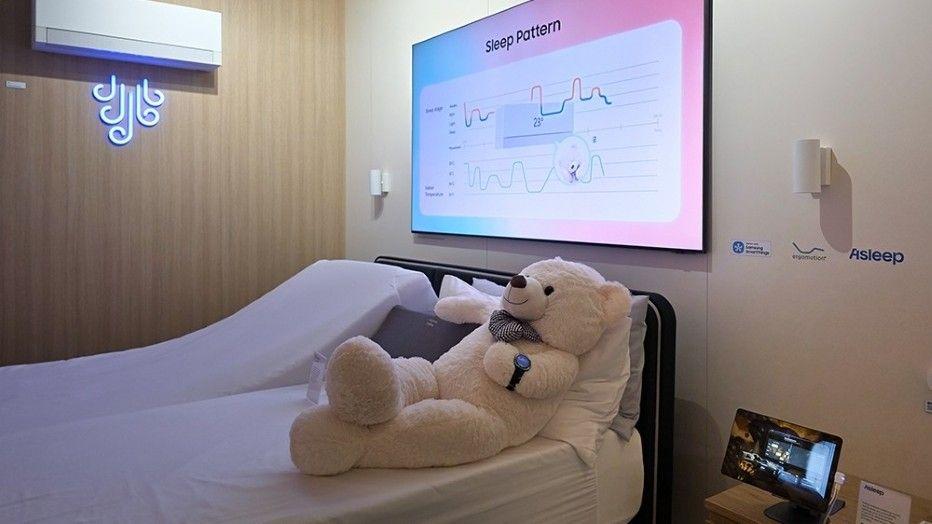
The Care Companion zone concluded Samsung's "Your Companion to AI Living" vision at The First Look 2026 -- highlighting technology's most human purpose, care. For decades, care has been reactive, addressing problems only after they arise. Samsung aims to change that by embedding AI across its product ecosystem to support safety, health and security. The goal is to shift care from response to anticipation -- an approach Samsung calls Intelligent Care. Samsung Newsroom visited the final area of the exhibition to see how Galaxy devices serve as the hub for healthier, safer everyday living. Upon entering, visitors encountered the futuristic Galaxy Z TriFold showcased on a Transparent Micro LED display. In the Self Care - Good Sleep section, visitors learned how wearables such as Galaxy Watch and Galaxy Ring track sleep conditions while working in concert with lighting and connected home appliances including the Bespoke AI WindFree Pro air conditioner and Infinite AI Air Purifier. Without user input, the connected home automatically optimizes temperature and airflow to support a more comfortable sleep environment. "I love being able to take AI out of my pocket and use it right away," said Tristen Menzies, a digital content creator from Guam. "What I appreciate about Samsung is that it creates AI that complements your life, rather than interferes. I think that's the direction we should be heading." Healthcare is expanding beyond individual management to encompass every member of the family. Samsung introduced features designed to help detect dementia early in older adults at the Family Care - Brain Health section. By analyzing lifestyle patterns through mobile and wearable devices, the system can identify early signs of cognitive decline and send alerts to designated caregivers, enabling timely intervention. More important, however, is preventing cognitive decline before it occurs. To that end, Samsung analyzes a wide range of everyday indicators -- including speech, typing, walking, sleep and gait -- to detect subtle changes in cognitive function. The system also recommends brain-training programs to help older adults reduce concerns about cognitive decline and maintain healthier, more independent lives. Samsung's AI extends to pets as well. The SmartThings Pet Care service helps identify common health conditions such as dental disease, patellar luxation, and cataracts. Using AI, SmartThings Pet Care analyzes photos of household animals with on-screen guidance to help identify potential health concerns. When users are away from home, AI-powered home care monitoring offers greater peace of mind. Vision AI analyzes video and audio collected from connected devices such as refrigerators equipped with cameras and TVs, detecting potentially dangerous situations and sending alerts directly to the user's smartphone. When no one is home, TVs and refrigerators with built-in cameras can display summaries of moments flagged as potentially risky. Furthermore, AI home monitoring can compare detected faces with images stored in the user's photo gallery to determine whether the person is a known contact or a stranger. With AI home monitoring, users can feel more at ease even when away from home. "What I like about Samsung's AI ecosystem is how everything is connected," said Dr. Rob Longwell, a member of the media from Beverly Hills, CA. "Home security and safety are especially important to me, and I was impressed by how devices work together to help protect the home." The zone concluded with a look at how Samsung's AI technology works seamlessly with a wide range of partner products, including sensors, cameras and smart door locks, to support safer living. With the Care Companion -- designed to help everyone live with greater peace of mind, safety and well-being -- Samsung concludes the "Your Companion to AI Living" journey presented at The First Look 2026. Looking ahead, Samsung plans to continue expanding its AI ecosystem to create experiences that users can trust and rely on with confidence.
[6]

Samsung reveals "Companion to AI Living" vision at CES 2026
Samsung Electronics unveiled its "Companion to AI Living" vision at The First Look, its CES 2026 event held in the Latour Ballroom at the Wynn Las Vegas, to showcase next-generation AI-powered devices and experiences through an exclusive exhibition running through January 7. The event focused on AI as Samsung's philosophy that connects the company's research and development, product development, operations, and user experience. TM Roh, CEO and Head of Samsung's Device eXperience Division, opened The First Look. He described Samsung's AI leadership and explained how the company's vast AI-enabled connected ecosystem provides users with a true AI companion experience in daily life. This approach allows users to access more than basic functions from their technology. It provides opportunities to find meaningful moments in various settings. "Samsung is building a more unified, more personal experience across mobile, visual display, home appliances and services," said TM Roh. "With our global connected ecosystem, and by embedding AI across categories, Samsung is leading the way to offer more meaningful everyday AI experiences." SW Yong, President and Head of the Visual Display Business at Samsung Electronics, and Sukhmani Mohta, Chief Marketing and Partnerships Officer for the Visual Display Business at Samsung Electronics America, presented the Entertainment Companion. Samsung's displays combine hardware excellence and visual intelligence to serve as a true entertainment companion. Samsung draws from twenty years of leading the TV industry to offer a full AI TV lineup. This lineup provides a new way for users to interact with their televisions. The centerpiece of the display lineup is the 130-inch Micro-RGB TV. This model represents an advance in scale and picture quality. It features the widest and most detailed color spectrum in Samsung TVs. The Timeless Frame design minimizes distractions. It allows the picture to dominate with understated elegance. A micro-sized RGB light source drives the picture quality. Each microscopic red, green, and blue diode shines independently. This produces color in its purest, most natural form. The Micro-RGB AI Engine Pro enables precise control of RGB colors. It creates vivid picture quality in every scene. Vision AI Companion powers the viewing experience. This AI technology works alongside users as a full entertainment companion. It enhances viewing, dining, and mood throughout the home. Users receive guidance on content to watch, meals to eat, and music to listen to. This extends the TV experience beyond simple viewing. VAC offers intuitive modes for personalization. AI Soccer Mode Pro delivers an exciting game-day experience. It uses AI-driven picture and sound tuning for stadium-level quality. AI Sound Controller Pro adjusts volume for crowd, commentary, or background music. This provides personalized listening for TV shows and movies. Users make verbal requests to VAC-equipped TVs. These TVs include Micro LED, Micro RGB, OLED, Neo QLED, Mini LED, and UHD models. VAC carries out requests contextually across these types. For different programming, VAC boosts lifestyle experiences. Users find recipes for on-screen meals by asking. VAC uses up-to-date information for recommendations aligned with health and fitness goals. VAC supports multi-device functionality. It sends recipe recommendations to devices like the newly unveiled The Movingstyle kitchen appliance. The Movingstyle moves easily through the home and kitchen for ecosystem integration. Samsung has led the global soundbar market for eleven consecutive years. The company introduced two new Wi-Fi speakers: Music Studio 5 and Music Studio 7. These expand the integrated ecosystem. They support wider sound system combinations. They enhance audiovisual quality and space aesthetics. Both models feature a timeless dot design by Erwan Bouroullec. This design draws from a universal symbol in music and art. It aligns with Samsung's signature design language. Samsung unveiled products that blend with home aesthetics. The ultra-thin OLED S95H has a refined bezel for art gallery elegance. The Freestyle+ portable projector is powered by VAC. It projects content on walls, ceilings, uneven surfaces, corners, and curtains. The 2026 TV lineup supports HDR10+ ADVANCED. This delivers enhanced brightness, genre-based optimization, intelligent motion smoothing, advanced local tone mapping, and improved gaming experience. As HDR10+ adoption grows among major OTT providers, Samsung launches HDR10+ ADVANCED first in its 2026 lineup. Samsung introduces Eclipsa Audio across all 2026 TVs. This spatial sound system enhances audio performance. Samsung unveiled its most advanced Odyssey gaming monitor lineup. It includes five new models that advance resolution, refresh rate, and immersive visual performance. The lineup is led by Samsung's first 6K 3D Odyssey G9. It debuts world-first display technologies for gamers and creators. The lineup includes the next-generation Odyssey G6 and three new Odyssey G8 models. All models use the most powerful Tizen OS version. This OS provides seven years of upgrades, allowing displays to evolve after entering homes. Cheolgi Kim, Executive Vice President and Head of Digital Appliances Division at Samsung Electronics, and Elizabeth Anderson, Head of Integrated Marketing for Digital Appliances at Samsung Electronics America, outlined the Home Companion vision. Samsung evolves from providing home appliances to true home companions. These companions eliminate stress from daily chores. As of December 2025, SmartThings serves more than 430 million users. This scale provides Samsung with significant insight depth compared to other brands. The Family Hub AI-enabled refrigerator is the home centerpiece. It received an upgrade to AI Vision built with Google Gemini. This redefines living for an AI future. AI Vision recognizes food items accurately. It tracks items placed into and removed from the refrigerator. This simplifies meal planning and food management. The Family Hub has won ten CES Innovation Awards. Samsung's AI-enabled fridges received the award for the past three years. The "What's for Today?" feature provides recipe recommendations. It bases suggestions on refrigerator contents or offers random options. This reduces stress in choosing meals. Selected recipes appear through SmartThings Food. Users get step-by-step guides to start cooking. Recipes send to connected cooking appliances for seamless process initiation. Video to Recipe converts cooking videos into steps. Users follow along without pausing or backtracking. FoodNote delivers a weekly report. It recaps food intake patterns, most-used ingredients, recipe recommendations, and restock needs. Now Brief includes more widgets on the Family Hub screen. Voice ID distinguishes family members. It displays relevant content for each individual. These features provide helpful insights and information weekly. The Bespoke AI Laundry Combo eliminates load transfers between washer and dryer. This solves a major household pain point. The model features a faster super speed cycle and enhanced drying performance. The Bespoke AI AirDresser addresses clothing issues. Auto Wrinkle Care uses strong air and steam jets to smooth shirts. Users hang shirts and wait, easing busy mornings. The Bespoke AI Jet Bot Steam Ultra uses a Qualcomm Dragonwing processor. It features an Active Stereo 3D Sensor to recognize liquids like coffee, juice, or transparent water. A camera aids navigation. It monitors pets and suspicious activity when users are away, sending notifications. Smarter Bixby enables conversational control for tasks. Samsung's Bespoke AI appliances received a CES Innovation Award for connectivity and integration. Samsung announced a partnership with Hartford Steam Boiler. This connects smart appliances to SmartThings for insurance premium reductions. HSB President and CEO Greg M. Barats discussed benefits during the presentation. After a 2025 U.S. pilot, the collaboration expands to more U.S. states and global insurance carriers. This provides increased protections and reduced costs. Praveen Raja, Vice President and Head of Digital Health at Samsung Research America, introduced the Care Companion vision. It shifts care from reactive to proactive using AI across phones, appliances, wearables, and devices. AI provides personalized health coaching. It offers exercise and sleep coaching to decrease chronic disease risks. It suggests recipes based on refrigerator ingredients. Abnormal signs trigger alerts. Health metrics share via Xealth platform for provider consultations. Samsung expands dementia detection through research partnerships. Wearables register changes in mobility, speech, and engagement indicating cognitive shifts. Samsung Knox and Knox Matrix form the security foundation for the ecosystem. They safeguard user data continuously. As AI evolves, Knox and Knox Matrix advance. They identify AI risks, protect data in training processes, and approve models through red-team analysis.
[7]
[CES 2026] Inside Samsung's The First Look 2026: A Vision of AI Companions for Everyday Life
The First Look 2026 by Samsung Electronics unveiled a forward-looking vision for AI under the theme "Your Companion to AI Living." Held in Samsung's dedicated space at Wynn Las Vegas, the exhibition guided visitors through how AI can enhance everyday enjoyment and convenience while supporting health and safety. Samsung Newsroom explored the exhibition, highlighting the company's evolving AI companion experiences across entertainment, home and care. The AI Gallery zone welcomed visitors with iconic works from both Eastern and Western art, seamlessly integrated into the space. Featured pieces included Vincent van Gogh's "Starry Night Over the Rhône," along with selections from the Lee Kun-Hee Collection -- donated to public institutions by the late Samsung chairman and available through Samsung Art Store -- such as Jeong Seon's "Clearing After Rain on Mount Inwang" and the Joseon Dynasty painting "Sun, Moon, and Five Peaks." The Entertainment Companion zone stood out as the exhibition's largest area, featuring a variety of visual display and audio products. Excitement built as Samsung debuted the Micro RGB 130" TV, winner of the CES Innovation Awards 2026 Best of Innovation. Centered on the Micro RGB TV, the Vision AI showcase highlighted hands-free interaction. Through voice commands, visitors could look up match predictions, search for recipes or play music -- demonstrating how the TV functions as an Entertainment Companion. Beyond innovation, this year's lineup emphasized a refined design philosophy balancing simplicity and elegance. Highlights included the Music Studio 5 and Music Studio 7, Wi-Fi speakers developed in collaboration with French designer Erwan Bouroullec; the AI Beauty Mirror for personalized beauty care; the Sound Tower with lighting optimized for sports viewing; and the Transparent Micro LED, reimagining the nostalgic charm of vinyl records as a floating visual audio device. The zone concluded with Spatial Signage -- an interactive display that animates visitors in real time -- combining the clarity of 2D imagery with the depth of 3D expression. The Home Companion zone presented the evolution of Samsung's home appliances -- moving beyond reducing household chores toward eliminating them and pointing to a future with less housework. At the entrance, three flagship Samsung AI home appliances -- the Bespoke AI Refrigerator Family Hub 32", Bespoke AI Laundry Combo washer-dryer and Bespoke AI Jet Bot Combo robot vacuum -- demonstrated how cameras, screens and voice interaction work together to support daily life as an integrated Home Companion. The home appliances highlighted smarter food management through AI Vision and hands-free control through voice recognition, offering greater freedom in the kitchen. A North America kitchen package, unveiled publicly for the first time at the exhibition, also drew attention from visitors. The exhibition showed that a zero-housework home is within reach, highlighting stronger connectivity among washing machines, dryers and garment care systems, alongside advances in the AI capabilities of robot vacuums. In the Care Companion zone, visitors saw how the latest Galaxy form factors -- including the new Galaxy Z TriFold -- connect mobile and wearable devices with home appliances to serve as a central hub for AI-powered living. The area demonstrated how Samsung Health is continuing to improve sleep environments by controlling air conditioners, air purifiers, lighting and sensors. A brain health training program for users concerned with cognitive health was also showcased. Other features of the health platform include analyzing health metrics through connected devices to help identify potential signs of chronic conditions, as well as exercise and sleep coaching and recipe recommendations based on ingredients in connected refrigerators. Samsung further highlighted its Care Companion approach through a Pet Care system that helps identify potential health issues in companion animals and Home Care services, such as SmartThings Safe, that can request emergency assistance in critical situations. "What impressed me was how everything is connected," said Maxence Fleury, a digital content creator from Los Angeles. "The exhibition clearly showed how the ecosystem is expanding and the impact it is having." "Once again, Samsung didn't disappoint," said Lucy Hedges, host of The Travel Show on the BBC. "What I especially liked was how AI blends naturally into everyday life. These connected products ultimately make users' lives easier and more comfortable." As a standalone exhibition, The First Look 2026 presented a more expansive and advanced range of AI products and experiences than ever before. Samsung's vision of AI -- as a trusted companion in everyday life -- offers much to look forward to in the years ahead.
[8]

CES 2026 first look: Samsung frames AI as an everyday utility, not a feature
Samsung unveiled its "AI Living" vision at CES 2026, integrating AI across its ecosystem of screens, appliances, and wearables. The company aims to make AI a constant, personal companion, moving beyond novelty to necessity. This includes AI-enhanced TVs, smart appliances with food management, and proactive health monitoring, all secured by Knox. At CES 2026, Samsung isn't pitching AI as a feature or a buzzword. It's positioning AI as a constant presence, one that lives across your screens, appliances, wearables, and services. At its annual First Look event in Las Vegas, the company unveiled its vision of "Your Companion to AI Living", a tightly connected ecosystem designed to move AI from novelty to necessity. TM Roh, CEO and Head of Samsung's Device eXperience (DX) Division, set the tone early. Samsung's advantage, he argued, isn't just smarter devices -- but scale. With one of the world's largest connected ecosystems, Samsung believes it can deliver AI that feels personal, contextual, and genuinely useful across daily life. Samsung's displays are now being framed as entertainment companions, not passive panels. Leading the lineup is the headline-grabbing 130-inch Micro RGB TV -- a statement product that pushes scale, brightness, and colour accuracy into rarefied territory. Powered by individually controlled microscopic RGB LEDs and the new Micro RGB AI Engine Pro, it's designed to deliver Samsung's most precise colour reproduction yet, wrapped in a minimalist "Timeless Frame" design. But the bigger story is software. Enter Vision AI Companion (VAC) -- Samsung's AI layer that sits across its 2026 TV portfolio, from Micro LED to UHD. VAC doesn't just enhance picture and sound; it actively assists. Ask what to watch, what to cook, or even what music fits the mood, and the TV responds contextually. Watching football? AI Soccer Mode Pro tunes picture and sound to stadium levels, while AI Sound Controller Pro lets you dial crowd noise up or commentary down -- by voice. VAC also bridges lifestyle use cases. Spot a dish in a show? Ask for the recipe. That recipe can then be sent to Samsung kitchen appliances or even to The Movingstyle, a newly introduced mobile display designed to move effortlessly around the home. Samsung also doubled down on audio leadership. With 11 years at the top of the soundbar market, it introduced two new Wi-Fi speakers -- the Music Studio 5 and 7 -- designed by Erwan Bouroullec. The idea: modular sound that looks as good as it sounds. The 2026 TV lineup also becomes Samsung's most future-proof yet, with HDR10+ ADVANCED, the debut of Eclipsa Audio spatial sound, and a promise of seven years of Tizen OS upgrades, a rarity in the TV world. In the home, Samsung wants appliances to act less like machines and more like guides. With SmartThings now crossing 430 million users, Samsung is leaning hard into scale-driven intelligence. At the centre is the Family Hub refrigerator, now upgraded with AI Vision powered by Google Gemini. The fridge can more accurately recognise, track, and manage food -- making meal planning less guesswork, more automation. Features like "What's for Today?", Video to Recipe, and the new FoodNote weekly report turn the fridge into a food management system rather than cold storage. Laundry and garment care also get smarter. The Bespoke AI Laundry Combo eliminates load transfers entirely, while the AI AirDresser tackles wrinkles with automated air and steam cycles -- built for rushed mornings. Then there's cleaning. The Bespoke AI Jet Bot Steam Ultra, powered by a Qualcomm Dragonwing processor, can identify liquids (even transparent ones), steam-clean intelligently, and double as a home monitoring device when you're away. With conversational Bixby integration, even robot vacuums are now part of Samsung's AI dialogue. A notable addition: a partnership with Hartford Steam Boiler (HSB) that could translate smart appliances into lower insurance premiums -- one of the more tangible examples of AI delivering real-world savings. Samsung closed by outlining its Care Companion vision -- where health monitoring becomes preventive rather than reactive. By combining phones, wearables, appliances, and AI, Samsung aims to offer personalised coaching for sleep, fitness, nutrition, and long-term wellness. The roadmap includes early detection of chronic risks, integration with healthcare providers via the Xealth platform, and expanded research into dementia detection, using subtle changes in mobility and behavior captured by wearables. All of this, Samsung emphasised, rests on Knox and Knox Matrix, its security backbone -- now evolving to protect data even during AI model training and deployment. Samsung's CES 2026 message is clear. AI isn't about adding intelligence to devices -- it's about redefining how those devices fit into daily life. Whether Samsung's "AI companion" vision truly feels helpful or overwhelming will depend on execution. But one thing is certain: Samsung isn't building gadgets anymore -- it's building an ecosystem that wants to live with you.
[9]

Samsung's 'First Look' Event: All About Health, AI, And Home Devices
Samsung's presentations at the annual CES typically focus on its ever-expanding portfolio of home devices. And, this year was no exception, barring an usually high, if expected, focus on all things AI-related. This time around, the South Korean behemoth tried to wow the audience of its 'First Look' event with a planned Samsung Health revamp and the upcoming induction of AI in all Samsung "products, functions, and services," along with a host of announcements related to the world's brightest QD-OLED TV, a 130-Inch Micro RGB TV, and new gaming QLEDs. Despite expectations of announcements related to the upcoming Galaxy S26 series, the US launch of the Galaxy Z TriFold, and anticipation of juicy tidbits related to the Galaxy Ring 2, Samsung chose to focus on the Health app as the only major mobile-related announcement during its 'First Look' event at this year's CES. Akin to what Apple intends to do with its own Health App, Samsung appears to be pivoting away from reactive care to a proactive one, courtesy of what it calls Intelligent Care, which embodies personalized health coaching on sleep, active lifestyle, nutrition, and mental health, with data inputs aggregated from a range of Samsung devices. Samsung's Intelligent Care will leverage AI to create personalized exercise plans, and provide insights and guidance on improving sleep, and eating a balanced diet. As an example of this revamp's potential, Samsung says Intelligent Care will soon be able to provide users with personalized meal plans and recipes, based on the blood glucose level and other health-related metrics, as well as the contents of a given user's connected fridge. The South Korean behemoth also intends to equip Samsung Health with the ability to monitor the cognitive decline in elderly users in real-time. Samsung's CEO and head of device experiences, TM Roh, declared at the event that the number of Samsung devices with Galaxy AI onboard will double in 2026 to 800 million units. He went on to note: "We will harness the full scale of Samsung to create technologies and experiences that truly matter to people. We will embed AI across every category, and every product, and every service to deliver one seamless unified AI experience." Basically, Samsung wants to embed AI across its range of smartphones, TVs, washing machines, speakers, and other home appliances, creating an ecosystem of home devices that seamlessly communicate with each other, creating tremendous value in the process. Separately, it appears Samsung intends to power its bespoke voice assistant Bixby with an LLM from Perplexity AI, akin to what Apple intends to do with its Siri by leveraging Google's bespoke 1.2-trillion-parameter AI model. Should this materialize, you would soon be able to perform a variety of AI-based actions using the "Hey Plex" voice command. While this functionality will be available on all Android phones, there are hints that Samsung is further optimizing the feature for its Galaxy devices. According to Samsung, its SmartThings platform now sports 430 million users across the globe, up from 350 million users in September 2024. The South Korean behemoth has also unveiled a brand new robot assistant, replete with an oval, 13.4-inch OLED screen. The assistant is designed to provide scheduling guidance to students.
[10]

Samsung unveils 'Companion to AI Living' Vision at CES 2026
At "The First Look" event held at the Wynn Las Vegas ahead of CES 2026, Samsung presented its new strategic vision titled "Companion to AI Living." TM Roh, CEO and Head of the Device eXperience (DX) Division, outlined the company's shift toward using artificial intelligence not just as a feature set, but as a foundational philosophy connecting R&D, product development, and user experience. The presentation highlighted three core pillars of this new ecosystem: Entertainment, Home, and Care, positioning Samsung devices as active companions in daily life rather than passive tools. Leading the visual display announcements was the unveiling of the 130-inch Micro RGB. This display utilizes a micro-sized RGB light source where red, green, and blue diodes shine independently. Samsung claims this technology offers the widest and most detailed color spectrum in the company's history. The hardware is supported by the Micro RGB AI Engine Pro, designed to precisely control color output for high-fidelity picture quality. A central component of the 2026 lineup is the Vision AI Companion (VAC). This technology is designed to operate across the home ecosystem to offer context-aware recommendations for viewing content, meal planning, and ambient music. VAC also powers specific viewing modes: The 2026 TV lineup, including Micro RGB, OLED, and Neo QLED models, will feature Eclipsa Audio, a new spatial sound system, and will be the first to launch HDR10+ ADVANCED for optimized brightness and tone mapping. In the gaming sector, Samsung introduced five new Odyssey monitors. The flagship model is the Odyssey 6K 3D G9, which leads a lineup including the next-generation Odyssey G6 and three new G8 models. Samsung's Digital Appliances Division, led by Executive Vice President Cheolgi Kim, emphasized the transition of appliances from tools to "home companions." Leveraging the SmartThings platform, which now reports over 430 million users, the company introduced updates to its kitchen and cleaning lineups. The Family Hub refrigerator has been updated with AI Vision, built with Google Gemini. This upgrade addresses previous limitations in food recognition, allowing the fridge to track items placed inside or removed. Key features include: For floor care, the Bespoke AI Jet Bot Steam Ultra was unveiled. Powered by a Qualcomm Dragonwing™ processor and an Active Stereo 3D Sensor, the vacuum can distinguish between different types of liquids (such as juice versus water). It also doubles as a home monitoring device, capable of alerting users to suspicious activity or checking on pets. Additionally, Samsung announced a partnership with Hartford Steam Boiler (HSB). Following a pilot program, this collaboration aims to reduce home insurance premiums for users who utilize connected smart appliances for proactive home monitoring. The final pillar of the presentation focused on Digital Health. Praveen Raja, VP of Samsung Research America, introduced a long-term vision to shift health management from reactive to proactive. The ecosystem utilizes data from phones, wearables, and appliances to detect potential health issues before they escalate. Specific initiatives include: Underpinning these AI advancements is Samsung Knox, which has been updated to identify AI-specific risks and protect data used during AI model training. Samsung CEO TM Roh said:
[11]

Samsung seeks to connect 400 mil. devices annually with 'integrated AI experience' - The Korea Times
LAS VEGAS -- Samsung Electronics aims to connect 400 million devices annually, including smartphones, TVs and home appliances, its CEO said Monday (local time), as the company pushes to become an "artificial intelligence (AI) daily companion" that transforms everyday life and delivers differentiated value to consumers. Ahead of CES 2026, the world's largest electronics trade show, Roh Tae-moon, CEO and head of Samsung's Device Experience Division, held a press conference to outline the division's medium- to long-term business strategy and AI vision. Roh emphasized that Samsung's goal is to deliver a seamless and enhanced experience by integrating AI across all its devices and services. "Through AI, Samsung's products and services will provide innovative experiences that truly enhance daily life," he said. Samsung plans to integrate AI across its entire lineup of products and services this year. All Galaxy smartphones, premium 4K TVs and Wi-Fi-enabled home appliances will feature AI capabilities, with a target of 400 million AI-enabled units in 2026. Mobile devices will serve as an AI hub connecting multiple services, TVs will provide personalized viewing through Vision AI and home appliances will act as AI companions, helping manage household chores while monitoring health and sleep. The company's strategy is intended to enable consumers to enjoy a seamless, holistic AI experience that goes beyond the functionality of individual devices. Samsung is also focusing on advancing its technology across mobile devices, TVs and home appliances, Roh said. Mobile devices will see improvements in performance, camera technology, user experience and battery life. Home appliances will be upgraded for quality and reliability, with product lines customized for local markets. TVs will offer a comprehensive lineup -- including top-tier Micro RGB, Micro LED, Neo QLED, OLED, Mini LED and UHD models -- to meet diverse consumer needs. "Samsung aims to become a comprehensive AI IT company, linking all categories and segments to optimize the customer experience," Roh said. Samsung is accelerating its investment in four key areas for future growth: heating, ventilation and air conditioning; automotives; medical technology; and robotics -- sectors the CEO said could become new growth engines and benefit consumers and society. Last year, the company strengthened its capabilities in these sectors through several strategic acquisitions, including Flakt, Europe's largest air technology company; ZF's Advanced Driver Assistance Systems (ADAS) unit; the digital health care platform Xealth; and the consumer audio business of Masimo. Samsung plans to continue expanding its investments and pursuing strategic mergers and acquisitions to secure leadership in future technologies. Through initiatives such as the Samsung Innovation Campus, the Samsung Youth Software and AI Academy and Solve for Tomorrow, Samsung is nurturing the next generation of AI experts by providing education and hands-on experience to students and young professionals. At CES 2026, Samsung unveiled the industry's largest standalone premium exhibition hall, showcasing a carefully curated connected AI experience that goes beyond simply displaying products. "Through AI innovation, we aim to meaningfully transform consumers' lives, offering unique experiences that only Samsung can deliver," Roh said. Meanwhile, physical AI -- particularly home robots -- is making headlines at this year's CES, highlighted by tech rival LG Electronics' unveiling of its humanoid home robot, LG CLOiD. Designed for real living environments, CLOiD can perform tasks such as folding laundry, organizing dishes, retrieving clothes and adjusting appliances, while operating safely around children and pets. However, Roh made it clear that Samsung's main focus in robotics is industrial applications. "Our top priority is to further enhance robotics for use in these manufacturing environments. By first building proven technologies and capabilities on the factory floor, we aim to gradually expand into both the B2B and B2C markets," he said. "Currently, various preparatory efforts and pilot programs are underway to deploy robots on manufacturing lines. Once the technology reaches sufficient maturity and reliability, robots will be introduced at production sites, and we will make disclosures at that stage." He added: "Home robots are one of the B2C areas we are considering, but they will be pursued based on the capabilities and experience accumulated through manufacturing applications. Please view our home robotics strategy as a longer-term, step-by-step expansion rather than an immediate focus."
[12]

Samsung outlines 'AI living' strategy at CES as it expands connected devices
Image: Supplied Samsung Electronics on Monday unveiled its vision for what it calls "AI living," outlining plans to embed artificial intelligence more deeply across televisions, home appliances and health-focused devices as it seeks to strengthen its position in the global consumer electronics market. At its annual "First Look" event at the CES 2026 technology show in Las Vegas, the South Korean group said AI would serve as a unifying layer across its products, enabling devices to act as companions that anticipate user needs rather than operate as standalone tools. TM Roh, chief executive of Samsung's Device eXperience division, said the company's large connected ecosystem allows it to offer more personalised experiences across mobile devices, displays, appliances and services. Samsung showcased a new lineup of AI-powered televisions, led by a 130-inch Micro RGB display, alongside what it calls a Vision AI Companion, software designed to recommend content, adjust picture and sound settings and interact with users through voice commands. The company said the technology would be available across its 2026 TV range, including OLED, Neo QLED and UHD models. Samsung also said its latest TVs would support HDR10+ ADVANCED and a new spatial audio format, Eclipsa Audio, and would receive operating system upgrades for up to seven years. Samsung highlights expansion of its SmartThings platform In home appliances, Samsung highlighted the expansion of its SmartThings platform, which it said now serves more than 430 million users globally. The company announced upgrades to its Family Hub refrigerator, including enhanced food recognition and meal planning features powered by AI, as well as new laundry, garment care and robotic vacuum products designed to automate household tasks. The company also outlined partnerships aimed at linking smart appliances to insurance services, saying connected devices could help reduce risks and lower costs for consumers in some markets. In digital health, Samsung said it plans to shift from reactive to proactive care by using AI across phones, wearables and home devices to monitor health indicators, provide coaching and flag potential issues. The company said it is expanding research into early detection of conditions such as cognitive decline, while emphasising data security through its Knox and Knox Matrix platforms. Samsung's announcements come as major technology companies race to integrate AI into consumer hardware amid slowing global demand for electronics and rising competition from Chinese manufacturers. The Samsung exhibition at CES runs through January 7, the company said. Read: Samsung's Fadi Abu Shamat on what makes the Galaxy Z TriFold so special
[13]
Samsung targets 400 mil. connected devices annually with 'integrated AI experience' - The Korea Times
LAS VEGAS -- Samsung Electronics aims to connect 400 million devices annually, including smartphones, TVs and home appliances, its CEO said Monday (local time), as the company pushes to become an "artificial intelligence (AI) daily companion" that transforms everyday life and delivers differentiated value to consumers. Ahead of CES 2026, the world's largest electronics trade show, Roh Tae-moon, CEO and head of Samsung's Device Experience Division, held a press conference to outline the division's medium- to long-term business strategy and AI vision. Roh emphasized that Samsung's goal is to deliver a seamless and enhanced experience by integrating AI across all its devices and services. "Through AI, Samsung's products and services will provide innovative experiences that truly enhance daily life," he said. Samsung plans to integrate AI across its entire lineup of products and services this year. All Galaxy smartphones, premium 4K TVs and Wi-Fi-enabled home appliances will feature AI capabilities, with a target of 400 million AI-enabled units in 2026. Mobile devices will serve as an AI hub connecting multiple services, TVs will provide personalized viewing through Vision AI and home appliances will act as AI companions, helping manage household chores while monitoring health and sleep. The company strategy is intended to enable consumers to enjoy a seamless, holistic AI experience that goes beyond the functionality of individual devices. Samsung is also focusing on advancing its technology across mobile devices, TVs and home appliances, Roh said. Mobile devices will see improvements in performance, camera technology, user experience and battery life. Home appliances will be upgraded for quality and reliability, with product lines customized for local markets. TVs will offer a comprehensive lineup -- including top-tier Micro RGB, Micro LED, Neo QLED, OLED, Mini LED and UHD models -- to meet diverse consumer needs. "Samsung aims to become a comprehensive AI IT company, linking all categories and segments to optimize the customer experience," Roh said. Samsung is accelerating its investment in four key areas for future growth: heating, ventilation and air conditioning; automotives; medical technology; and robotics -- sectors the CEO said could become new growth engines and benefit consumers and society. Last year, the company strengthened its capabilities in these sectors through several strategic acquisitions, including Flakt, Europe's largest air technology company; ZF's Advanced Driver Assistance Systems (ADAS) unit; the digital health care platform Xealth; and the consumer audio business of Masimo. Samsung plans to continue expanding its investments and pursuing strategic mergers and acquisitions to secure leadership in future technologies. Through initiatives such as the Samsung Innovation Campus, the Samsung Youth Software and AI Academy and Solve for Tomorrow, Samsung is nurturing the next generation of AI experts by providing education and hands-on experience to students and young professionals. At CES 2026, Samsung unveiled the industry's largest standalone premium exhibition hall, showcasing a carefully curated connected AI experience that goes beyond simply displaying products. "Through AI innovation, we aim to meaningfully transform consumers' lives, offering unique experiences that only Samsung can deliver," Roh said. Meanwhile, physical AI -- particularly home robots -- is making headlines at this year's CES, highlighted by tech rival LG Electronics' unveiling of its humanoid home robot, LG CLOiD. Designed for real living environments, CLOiD can perform tasks such as folding laundry, organizing dishes, retrieving clothes and adjusting appliances, while operating safely around children and pets. However, Roh made it clear that Samsung's main focus in robotics is industrial applications. "Our top priority is to further enhance robotics for use in these manufacturing environments. By first building proven technologies and capabilities on the factory floor, we aim to gradually expand into both the B2B and B2C markets," he said. "Currently, various preparatory efforts and pilot programs are underway to deploy robots on manufacturing lines. Once the technology reaches sufficient maturity and reliability, robots will be introduced at production sites, and we will make disclosures at that stage." He added: "Home robots are one of the B2C areas we are considering, but they will be pursued based on the capabilities and experience accumulated through manufacturing applications. Please view our home robotics strategy as a longer-term, step-by-step expansion rather than an immediate focus."
Share
Share
Copy Link
Samsung unveiled its all-encompassing AI Living vision at CES 2026, with CEO TM Roh declaring AI will be embedded across every category, product, and service. The company showcased AI-powered TVs, appliances, and health features while promising to double Galaxy AI-enabled devices to 800 million by year-end. The strategy raises questions about whether consumers want—or need—artificial intelligence in every aspect of their homes.
Samsung AI Takes Center Stage at CES 2026 With Ambitious Vision
Samsung AI dominated the company's CES 2026 showcase, with CEO and head of device experiences TM Roh delivering a clear message: artificial intelligence will permeate every Samsung product, service, and category
1
. "We will embed AI across every category, and every product, and every service to deliver one seamless, unified AI experience," Roh declared during the opening of the one-hour event4
. The First Look 2026 event, held at the Wynn casino in Las Vegas, transformed into what observers called a sprawling showcase of AI Living—Samsung's vision for a fully integrated ecosystem where connected devices anticipate needs and collaborate on behalf of users3
.
Source: Gulf Business
AI-Enabled Appliances and Smart Home Devices Steal the Show
The CES 2026 presentation featured AI-enabled appliances across Samsung's entire product lineup, from televisions to washing machines and refrigerators. Samsung introduced the world's first 130-inch Micro RGB TV, which uses AI to dynamically adjust picture quality and delivers 100% of the BT.2020 wide color gamut, certified by Verband der Elektrotechnik
2
. The Samsung Vision AI Companion serves as the connective tissue between TVs, phones, appliances, and wearables, understanding casual conversational prompts and delivering intelligent responses—from providing detailed film information to recommending music based on mood and even placing food orders2
3
.
Source: ET
Samsung's smart fridges gained enhanced capabilities through a partnership with Google Gemini, allowing refrigerators to recognize a wider array of products and read labels
4
. The AI ecosystem enables seamless interactions: users can ask their refrigerator to suggest meals based on available ingredients, and the system sends instructions directly to the oven while displaying step-by-step cooking guidance on the fridge's screen3
4
.Samsung Health and Intelligent Care Drive Proactive Healthcare
Samsung Health received significant attention as the company outlined how AI will enable a shift from reactive healthcare to proactive care through what it calls Intelligent Care
1
5
. The platform will offer personalized health coaching based on sleep, activity, nutrition, and mental health metrics. Galaxy Watch and Galaxy Ring wearables track sleep conditions while working with connected devices including the Bespoke AI WindFree Pro air conditioner and Infinite AI Air Purifier to automatically optimize temperature and airflow for better sleep environments5
.
Source: Samsung
The AI ecosystem's cross-device integration enables sophisticated health recommendations. When users ask their refrigerator to suggest meals, the system can access Samsung Health data collected via wearables to account for conditions like diabetes and recent workouts, providing recipes suited to personal recovery needs
4
. Samsung also introduced features designed to help detect dementia early in older adults by analyzing lifestyle patterns through mobile and wearable devices, including speech, typing, walking, sleep, and gait5
. The system sends alerts to designated caregivers and recommends brain-training programs, though Samsung emphasized this capability focuses on awareness rather than diagnosis and will launch in beta form in selected markets1
.Related Stories




Galaxy AI Expansion Targets 800 Million Devices
Samsung plans to double the number of mobile devices with Galaxy AI onboard in 2026, expanding from 400 million to 800 million devices, Roh revealed in an interview with Reuters
1
. The company ships 500 million devices annually, meaning AI-enabled products will soon account for most of its active portfolio worldwide4
. The Galaxy Z Tri-Fold made a low-key appearance at the AI Living Exhibit, though Samsung reserved detailed announcements for upcoming Unpacked events rumored for late January or February, and Mobile World Congress in March1
3
.Privacy and Security Questions Loom Over AI Expansion
As Samsung AI gains deeper access to personal and sensitive data across multiple devices, questions about consumer trust emerge. Roh addressed these concerns during his closing remarks, stating "privacy and security must be built into the design of our AI"
4
. The Care Companion showcased AI home monitoring capabilities where Vision AI analyzes video and audio from connected devices like refrigerators with cameras and TVs, detecting potentially dangerous situations and sending alerts to smartphones5
. The system can compare detected faces with stored images to determine whether someone is a known contact or stranger, raising both security benefits and privacy considerations.Whether this level of AI integration actually requires artificial intelligence remains debatable, though the ability for AI to collect and interpret information from multiple sources without additional prompting represents how seamless technology should work
4
. Samsung also extended its AI ecosystem to pet health monitoring through SmartThings Pet Care service, which helps identify common conditions like dental disease, patellar luxation, and cataracts by analyzing photos with on-screen guidance5
. The Entertainment Companion zone featured AI-powered features for TVs including the ability to mute commentators during soccer games while preserving crowd noise, timed for the FIFA World Cup this summer4
.References
Summarized by

Navi
[4]
Related Stories
Recent Highlights
1
Apple Plans Major Siri AI Overhaul in iOS 27 With Third-Party Chatbot Integration
Technology

2
OpenAI shuts down Sora after six months, ending Disney's $1 billion licensing partnership
Technology

3
AI chatbots validate you too much, making you less kind to others, Stanford study reveals
Science and Research
Recent Highlights
Today's Top Stories



Your Daily Dose of Curated AI News
Don’t drown in AI news. We cut through the noise - filtering, ranking and summarizing the most important AI news, breakthroughs and research daily. Spend less time searching for the latest in AI and get straight to action.

