Samsung plans to double AI-powered devices to 800 million by 2026 amid chip shortage


5 Sources
5 Sources
[1]
Samsung to Supercharge 800 Million Devices With AI This Year, Report Says
"We will apply AI to all products, all functions and all services as quickly as possible," Roh told Reuters. Although Samsung is also a manufacturer of RAM, it is facing supply issues caused by exceedingly high demand resulting from the rise of AI. "As this situation is unprecedented, no company is immune to its impact," Roh told Reuters. The co-CEO also didn't rule out price increases, but said he's working with partners to find solutions. A representative for Samsung didn't immediately respond to a request for comment. ChatGPT maker OpenAI will use up about 40% of DRAM output from South Korean firms Samsung and SK Hynix alone, according to Reuters. DRAM refers to Dynamic Random-Access Memory, the main working memory in computers, phones and servers, and AI relies heavily on it. This memory crunch has reportedly left Google and Microsoft scrambling to secure supply for 2026, leading to firings and heated exchanges, according to South Korean publication Seoul Economic Daily. As a result, consumers may see devices with less RAM hit the market, reminiscent of products from years ago, such as 4GB smartphones and potentially 8-12GB graphics cards.
[2]
Samsung wants AI on basically every device you own
Samsung expands Galaxy AI push with deeper Gemini integration Samsung is going all-in on artificial intelligence, with its new co-CEO setting a massive target: doubling the number of Galaxy AI-enabled devices to 800 million by 2026. This aggressive expansion is more than just a numbers game; it's a strategic play to win back the global smartphone crown and cement its partnership with Google as the AI wars heat up. In his first major interview since taking the co-CEO role in November, TM Roh told Reuters that Samsung's goal is to bake AI into "every product and every service" the company offers. Last year, Samsung already managed to get Galaxy AI onto about 400 million devices. By aiming for 800 million, they are essentially creating a massive, global highway for Google's Gemini models to reach the pockets of nearly a billion people. Recommended Videos "Galaxy AI" is the brand's catch-all term for tools that help you edit photos, translate calls in real-time, and summarize long documents. According to Roh, public awareness of these features has skyrocketed from 30% to 80% in just a single year. People aren't just hearing about AI anymore; they're actually using it in their daily routines. This push isn't happening in a vacuum Samsung is feeling the heat from Apple, which has been nipping at its heels for the title of the world's top smartphone maker. At the same time, Chinese competitors are flooding the market with high-spec, lower-cost devices. By leaning into AI, Samsung is trying to offer something its rivals can't easily replicate at the same scale. This also makes Samsung a kingmaker in the battle between Google and OpenAI. As the biggest player in the Android world, Samsung's massive reach gives Google a huge "distribution" advantage. It's no wonder that OpenAI reportedly went into a "code red" mode when Google's Gemini 3 was unveiled alongside Samsung's ambitious roadmap. It's not all smooth sailing, though Ironically, while the global memory chip shortage is making Samsung's semiconductor division a lot of money, it's also making it much more expensive to build the actual phones. Roh admitted that price hikes might be on the horizon, though they are trying to find ways to keep costs in check so consumers don't get hit too hard. Looking forward, Samsung is betting that AI -- combined with its leadership in foldable phones -- will keep customers from jumping ship. Even though foldables have been a "slow burn," Roh noted that once people switch to a fold, they almost never go back to a flat phone. For Samsung, the plan is simple: make AI so useful that a Galaxy phone becomes the essential gateway to the future of the internet.
[3]
Samsung to Double AI Mobile Devices to 800 Million Units in 2026
Roh said the market for foldable phones was growing slower than expected Samsung Electronics plans to double this year the number of its mobile devices with "Galaxy AI" features largely powered by Google's Gemini, its co-CEO said, which would give the US firm an edge over rivals as the global race in artificial intelligence heats up. The South Korean company, which had rolled out Gemini-backed AI features to about 400 million mobile products, including smartphones and tablets, by last year, plans to boost that figure to 800 million in 2026. "We will apply AI to all products, all functions, and all services as quickly as possible," T M Roh told Reuters in his first interview since becoming Samsung Electronics co-CEO in November. The plan by the world's largest backer of Google's Android mobile platform is set to give a major boost to its developer Google, which is locked in a race with OpenAI and others to attract more consumer users to their AI model. Samsung seeks to reclaim its lost crown from Apple in the smartphone market and fend off competition from Chinese rivals not only in mobile telephones, but televisions and home appliances, all overseen by Roh. It will offer integrated AI services across consumer products to widen its lead over Apple in such features, though the latter was set to be the top smartphone maker last year, according to market researcher Counterpoint. AI Race Alphabet's Google launched the latest version of Gemini in November, highlighting Gemini 3's lead on several popular industry measures of AI model performance. In response to Gemini 3, OpenAI CEO Sam Altman reportedly issued an internal "code red," pausing non-core projects and redirecting teams to accelerate development. The ChatGPT maker launched its GPT-5.2 AI model a few weeks later. Roh expects the adoption of AI to accelerate, as Samsung's surveys on awareness of its Galaxy AI brand jumped to a level of 80 percent from about 30 percent in just one year. "Even though the AI technology might seem a bit doubtful right now, within six months to a year, these technologies will become more widespread," he said. While search is the most used AI feature on phones, consumers also frequently use a range of generative AI editing and productivity tools for images and others, as well as translation and summary features, he said. Galaxy AI is Samsung's term for its suite of AI features, including those powered by both Google's Gemini model and Samsung's own Bixby for different tasks. Samsung shares ended up 7.5 percent on Monday, as the company is set to flag a profit jump for the fourth quarter later this week, fueled by a global chip shortage. 'Not Immune' to Memory Chip Shortage A global shortage of memory chips is a boon to Samsung's mainstay semiconductor business, but pressures margins on the smartphone business, its second largest revenue source. "As this situation is unprecedented, no company is immune to its impact," Roh said, adding that the crisis affects not only mobile phones but other consumer electronics, from TVs to home appliances. He did not rule out raising product prices, saying some impact was "inevitable" from a surge in memory chip prices, but Samsung, the world's No.1 TV maker, is working with partners on longer term strategies to minimise the impact. Market researchers such as IDC and Counterpoint predict the global smartphone market will shrink next year, as the memory chip shortage threatens to drive up phone prices. Roh said the market for foldable phones that Samsung pioneered in 2019 has been growing slower than expected. He attributed this to the engineering complexities and lack of applications suitable for the hardware design, but expected the segment to go mainstream in the next two or three years. A "very high" rate of foldable phone users opt for the same segment for their next purchase, he said, but gave no details. Samsung controlled nearly two-thirds of the foldable smartphone market in the third quarter of 2025, according to Counterpoint. But it faces competition from Chinese companies such as Huawei, as well as Apple, which is expected to launch its first foldable phone this year.
[4]
Samsung to double mobile devices powered by Google's Gemini to 800 million units this year
Samsung seeks to reclaim its lost crown from Apple in the smartphone market and fend off competition from Chinese rivals not only in mobile telephones, but televisions and home appliances, all overseen by T M Roh, Samsung Electronics co-CEO. It will offer integrated AI services across consumer products to widen its lead over Apple in such features, though the latter was set be the top smartphone maker last year, according to market researcher Counterpoint. Samsung Electronics plans to double this year the number of its mobile devices with AI features powered by Google's Gemini, its co-CEO said, which would give the U.S. firm an edge over rivals as the global race in artificial intelligence hots up. The South Korean company, which had rolled out Gemini-backed AI features to about 400 million mobile products, including smartphones and tablets, by last year, plans to boost that figure to 800 million in 2026. "We will apply AI to all products, all functions, and all services as quickly as possible," T M Roh told Reuters in his first interview since becoming Samsung Electronics co-CEO in November. The plan by the world's largest backer of Google's Android mobile platform is set to give a major boost to its developer Google, which is locked in a race with OpenAI and others to attract more consumer users to their AI model. Samsung seeks to reclaim its lost crown from Apple in the smartphone market and fend off competition from Chinese rivals not only in mobile telephones, but televisions and home appliances, all overseen by Roh. It will offer integrated AI services across consumer products to widen its lead over Apple in such features, though the latter was set be the top smartphone maker last year, according to market researcher Counterpoint. AI race Alphabet's Google launched the latest version of Gemini in November, highlighting Gemini 3's lead on several popular industry measures of AI model performance. In response to Gemini 3, OpenAI CEO Sam Altman reportedly issued an internal "code red," pausing non-core projects and redirecting teams to accelerate development. The ChatGPT maker launched its GPT-5.2 AI model a few weeks later. Roh expects the adoption of AI to accelerate, as Samsung's surveys on awareness of its Galaxy AI brand jumped to a level of 80% from about 30% in just one year. "Even though the AI technology might seem a bit doubtful right now, within six months to a year, these technologies will become more widespread," he said. While search is the most used AI feature on phones, consumers also frequently use a range of generative AI editing and productivity tools for images and others, as well as translation and summary features, he said. "Not immune" to memory chip shortage A global shortage of memory chips is a boon to Samsung's mainstay semiconductor business, but pressures margins on the smartphone business, its second largest revenue source. "As this situation is unprecedented, no company is immune to its impact," Roh said, adding that the crisis affects not only mobile phones but other consumer electronics, from TVs to home appliances. He did not rule out raising product prices, saying some impact was "inevitable" from a surge in memory chip prices, but Samsung, the world's No.1 TV maker, is working with partners on longer term strategies to minimise the impact. Market researchers such as IDC and Counterpoint predict the global smartphone market will shrink next year, as the memory chip shortage threatens to drive up phone prices. Roh said the market for foldable phones that Samsung pioneered in 2019 has been growing slower than expected. He attributed this to the engineering complexities and lack of applications suitable for the hardware design, but expected the segment to go mainstream in the next two or three years. A "very high" rate of foldable phone users opt for the same segment for their next purchase, he said, but gave no details. Samsung controlled nearly two-thirds of the foldable smartphone market in the third quarter of 2025, according to Counterpoint. But it faces competition from Chinese companies such as Huawei, as well as Apple, expected to launch its first foldable phone this year.
[5]

Samsung to double Gemini AI-powered devices to 800 million in 2026 By Investing.com
Investing.com -- Samsung Electronics plans to double the number of its mobile devices powered by Google's Gemini AI to approximately 800 million in 2026, up from about 400 million currently. Shares in the company closed 7.5% higher today. "We will apply AI to all products, all functions, and all services as quickly as possible," Samsung co-CEO T M Roh said in an interview. Regarding the ongoing memory chip shortage, Roh did not rule out raising product prices, noting that some impact was "inevitable" from the surge in memory chip prices. The executive added that Samsung is working with partners on longer-term strategies to minimize the impact of the chip shortage on its products and services. This article was generated with the support of AI and reviewed by an editor. For more information see our T&C.
Share
Share
Copy Link
Samsung's co-CEO TM Roh announced plans to double Galaxy AI-enabled devices to 800 million by 2026, up from 400 million last year. The aggressive expansion, powered by Google's Gemini, aims to reclaim the smartphone crown from Apple. However, an unprecedented memory chip shortage threatens price increases across Samsung's entire product lineup.
Samsung Targets 800 Million Devices With Galaxy AI Integration
Samsung Electronics has set an aggressive target to double its AI-enabled devices to 800 million by 2026, marking one of the most ambitious rollouts in consumer technology
1
. In his first major interview since becoming co-CEO in November, TM Roh told Reuters that Samsung will "apply AI to all products, all functions, and all services as quickly as possible"3
. The South Korean tech giant had already deployed Galaxy AI features to approximately 400 million mobile products, including smartphones and tablets, by last year4
. This expansion represents a strategic play to reclaim the global smartphone crown from Apple while fending off pressure from Chinese manufacturers across multiple product categories.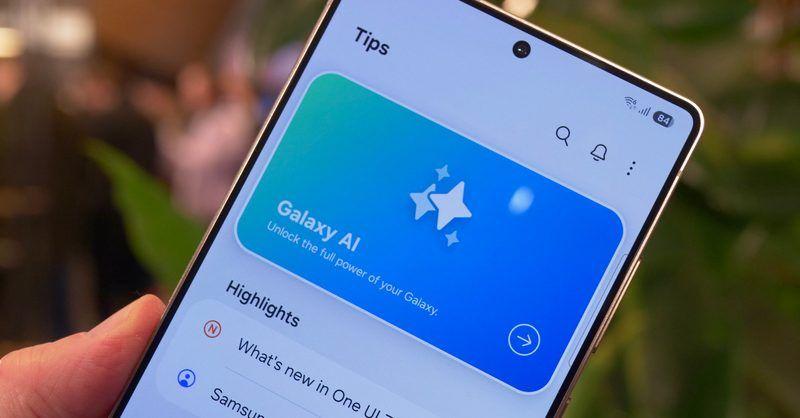
Source: Digital Trends
Google's Gemini Powers Samsung's AI Strategy
The partnership between Samsung and Google's Gemini forms the backbone of this expansion, giving the search giant a significant distribution advantage in the AI race against OpenAI
2
. Galaxy AI encompasses a suite of AI features powered by both Google's Gemini model and Samsung's own Bixby for different tasks3
. According to Roh, public awareness of Galaxy AI has skyrocketed from 30% to 80% in just one year, indicating rapid consumer adoption4
. While search remains the most used AI feature on phones, consumers frequently use generative AI editing and productivity tools for images, along with translation and summary features3
. The plan by the world's largest backer of Google's Android mobile platform gives Google a massive edge as it competes with OpenAI to attract consumer users to their AI models4
.
Source: ET
Related Stories


Memory Chip Shortage Threatens Price Increases
Ironically, while the global memory chip shortage boosts Samsung's semiconductor division profits, it simultaneously pressures margins on its smartphone business, the company's second-largest revenue source
3
. ChatGPT maker OpenAI alone will consume approximately 40% of DRAM output from South Korean firms Samsung and SK Hynix, according to Reuters1
. This unprecedented demand has left Google and Microsoft scrambling to secure supply for 2026, potentially forcing consumers to accept devices with less RAM reminiscent of years past, such as 4GB smartphones and 8-12GB graphics cards1
. Roh acknowledged that "no company is immune to its impact," noting the crisis affects not only mobile phones but televisions and home appliances across Samsung's entire consumer electronics portfolio3
. While Roh did not rule out raising product prices, calling some impact "inevitable" from surging memory chip prices, he emphasized Samsung is working with partners on longer-term strategies to minimize consumer impact5
. Market researchers including IDC and Counterpoint predict the global smartphone market will shrink next year as the memory chip shortage threatens to drive up phone prices3
. Samsung shares closed 7.5% higher on Monday as investors anticipate a profit jump for the fourth quarter fueled by the chip shortage .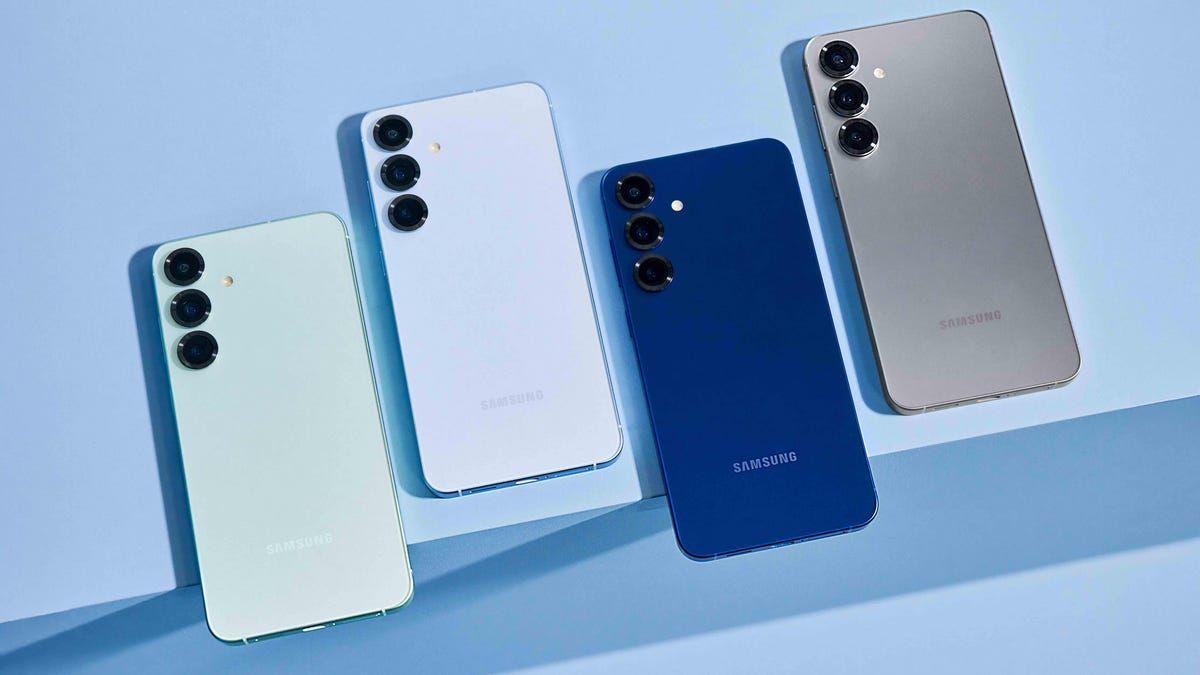
Source: CNET
References
Summarized by

Navi
[2]
Related Stories
Recent Highlights
1
Google releases Gemma 4 with Apache 2.0 license, enabling unrestricted local AI on devices
Technology
2
AI Models Lie and Deceive to Protect Other AI Models From Deletion, Study Reveals
Science and Research

3
OpenAI closes $122 billion funding round amid fierce AI competition and profitability questions
Startups

Recent Highlights
Today's Top Stories







Your Daily Dose of Curated AI News
Don’t drown in AI news. We cut through the noise - filtering, ranking and summarizing the most important AI news, breakthroughs and research daily. Spend less time searching for the latest in AI and get straight to action.

