Semiconductor sales set to hit $1 trillion in 2026 as AI demand fuels historic industry growth


3 Sources
3 Sources
[1]
Semiconductor industry on track to hit $1 trillion in sales in 2026, SIA predicts -- bumper forecast follows $791.7 billion haul for 2025
Having delivered a record performance in 2025 with annual revenue reaching $791.7 billion, up 25.6% from the previous year, the global semiconductor industry is on track to top $1 trillion in sales in 2026, according to data released by the Semiconductor Industry Association (SIA) based on World Semiconductor Trade Statistics (WSTS). The record revenue will be driven by demand from the AI sector and, to some degree, elevated prices on virtually all types of microelectronics. "The global semiconductor industry posted its highest-ever annual sales in 2025, nearly hitting $800 billion, and global sales in 2026 are projected to reach roughly $1 trillion," said John Neuffer, SIA president and CEO. "Semiconductors are the foundation of nearly all modern technology, and emerging technologies like AI, IoT, 6G, autonomous driving, and others will continue to drive robust demand for chips." While the SIA does not provide predictions for different segments of the semiconductor market, it is safe to say that the whole market will be driven by demand for AI infrastructure led by AI accelerators (read: Nvidia GPUs), HBM memory, networking gear, and storage. At least this is exactly how the market performed in 2025. From a product segments perspective, logic devices generated $301.9 billion in revenue after expanding by 39.9% year-over-year (YoY) and represented the largest chunk of the market. Memory products -- which, from WSTS's perspective, probably includes DRAM, NAND, and other types of memory -- followed as the second-largest category with $223.1 billion in sales, up 34.8% YoY. An avid reader would probably ask whether both $791.7 billion and $1 trillion semiconductor sales were solely due to increasing demand for AI (and cloud) hardware, or also due to increasing prices of all microelectronics. A closer look at last year's results indeed indicates that the industry's momentum accelerated toward the end of the year. Sales of chips in Q4 2025 reached $236.6 billion, up 37.1% YoY (which is considerably higher than 25.6% average year-over-year increase) and 13.6% sequentially from the previous quarter, which may reflect increased prices as a driver. When it comes to semiconductor sales results by regions, annual sales increased most significantly in Asia Pacific (and 'all other') markets, which expanded by 45%. Such growth is a result of several factors, including production of the most advanced AI processors in Taiwan, concentration of HBM memory assembly in South Korea and Singapore, as well as AI supply chain clustering. Asia Pacific was followed by the Americas with growth of 30.5%. China saw a 17.3% increase, and Europe a modest gain of 6.3%. Japan was the only major region to decline, with sales falling 4.7% YoY.
[2]
Global chip sales expected to hit $1 trillion this year, industry group says
SAN FRANCISCO, Feb 6 (Reuters) - Global semiconductor sales are expected to hit $1 trillion this year, the Semiconductor Industry Association said on Friday. The group, which represents most U.S. chip firms, said that chip sales hit $791.7 billion in 2025, an increase of 25.6% over the previous year. That booming growth is expected to continue into this year as major technology firms around the world spend hundreds of billions of dollars to build out data centers for artificial intelligence. The growth leader and largest segment of chips was the kind of advanced computing chips made by Nvidia, Advanced Micro Devices and Intel. Sales of those products increased by 39.9%, totaling $301.9 billion in 2025. The second-largest category was memory chips, whose prices are soaring amid an AI-induced shortage. Memory chip sales rose 34.8% to $223.1 billion. But the AI boom has extended to nearly every part of the chip industry, with John Neuffer, the president and chief executive of the Washington, D.C.-based industry group, saying that executives at a range of smaller firms expressed optimism for 2026 when he recently visited Silicon Valley. "The refrain I heard was, 'No one knows what's going to happen with the AI build out a year from now, but my orders are completely full,'" Neuffer told Reuters. "At least for the next year, we're on a pretty, pretty strong glide path." Reporting by Stephen Nellis in San Francisco Editing by Shri Navaratnam Our Standards: The Thomson Reuters Trust Principles., opens new tab
[3]
Global chip sales expected to hit $1 trillion this year, industry group says
The group, which represents most US chip firms, said that chip sales hit $791.7 billion in 2025, an increase of 25.6% over the previous year. That booming growth is expected to continue into this year as major technology firms around the world spend hundreds of billions of dollars to build out data centers for artificial intelligence. Global semiconductor sales are expected to hit $1 trillion this year, the Semiconductor Industry Association said on Friday. The group, which represents most US chip firms, said that chip sales hit $791.7 billion in 2025, an increase of 25.6% over the previous year. That booming growth is expected to continue into this year as major technology firms around the world spend hundreds of billions of dollars to build out data centers for artificial intelligence. The growth leader and largest segment of chips was the kind of advanced computing chips made by Nvidia, Advanced Micro Devices and Intel. Sales of those products increased by 39.9%, totaling $301.9 billion in 2025. The second-largest category was memory chips, whose prices are soaring amid an AI-induced shortage. Memory chip sales rose 34.8% to $223.1 billion. But the AI boom has extended to nearly every part of the chip industry, with John Neuffer, the president and chief executive of the Washington, D.C.-based industry group, saying that executives at a range of smaller firms expressed optimism for 2026 when he recently visited Silicon Valley. "The refrain I heard was, 'No one knows what's going to happen with the AI build out a year from now, but my orders are completely full,'" Neuffer told Reuters. "At least for the next year, we're on a pretty, pretty strong glide path."
Share
Share
Copy Link
The semiconductor industry reached $791.7 billion in sales in 2025, marking a 25.6% year-over-year increase, and is projected to cross the $1 trillion milestone in 2026. The Semiconductor Industry Association attributes this growth to surging demand for AI infrastructure, including advanced computing chips and memory products, as tech firms invest heavily in building data centers for artificial intelligence.
Semiconductor Sales Reach Historic Milestone as AI Drives Growth
The semiconductor industry delivered record-breaking performance in 2025, with global chip sales reaching $791.7 billion, representing a 25.6% increase from the previous year, according to data released by the Semiconductor Industry Association (SIA) based on World Semiconductor Trade Statistics (WSTS)
1
2
. The industry is now projected to cross the $1 trillion threshold in 2026, marking an unprecedented expansion fueled primarily by artificial intelligence (AI) infrastructure demands3
."The global semiconductor industry posted its highest-ever annual sales in 2025, nearly hitting $800 billion, and global sales in 2026 are projected to reach roughly $1 trillion," said John Neuffer, SIA president and CEO
1
. He emphasized that semiconductors form the foundation of nearly all modern technology, with emerging applications in AI, IoT, 6G, and autonomous driving continuing to drive robust demand.Advanced Computing Chips Lead Market Expansion
Advanced computing chips emerged as the growth leader and largest segment within the semiconductor industry. Logic devices, including processors manufactured by Nvidia, AMD, and Intel, generated $301.9 billion in revenue after expanding by 39.9% year-over-year
1
2
. This category represented the largest chunk of the market, driven primarily by AI accelerators and GPUs deployed in data centers worldwide.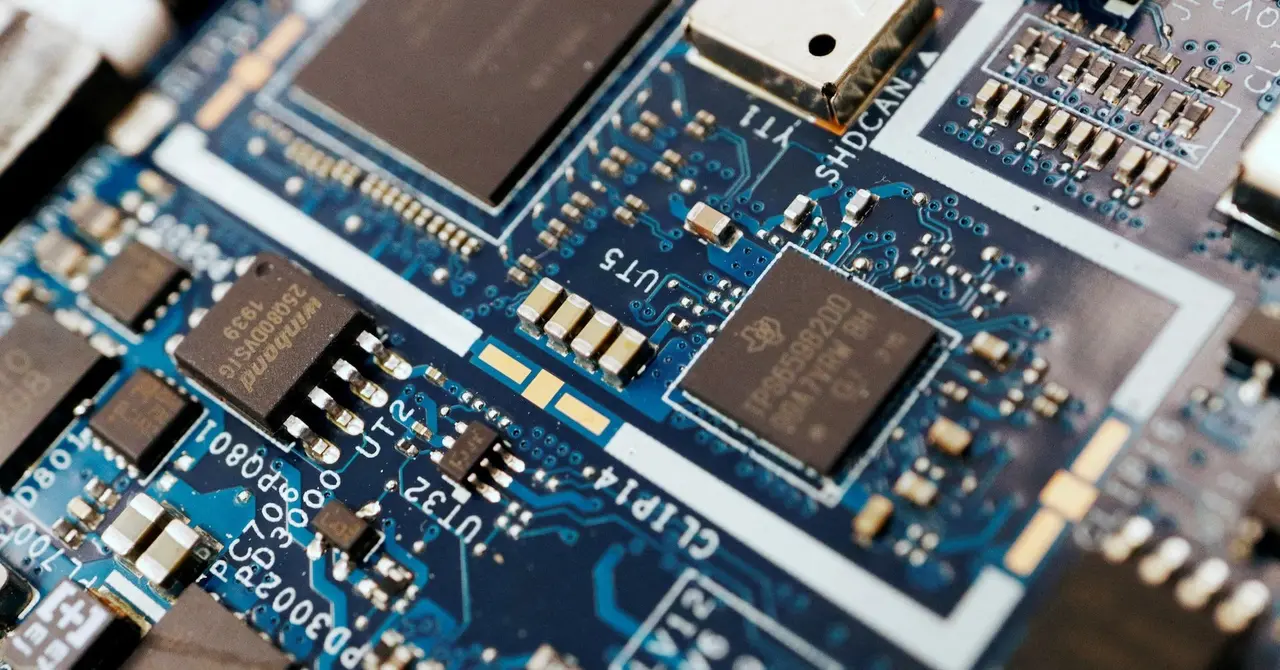
Source: Reuters
The expansion of AI infrastructure has created intense demand for these advanced AI processors, as major technology firms invest hundreds of billions of dollars in building data centers for artificial intelligence applications
2
. The momentum accelerated notably toward the end of 2025, with Q4 sales reaching $236.6 billion, up 37.1% year-over-year and 13.6% sequentially from the previous quarter1
.Memory Chip Sales Surge Amid AI-Induced Shortages
Memory chip sales followed as the second-largest category, totaling $223.1 billion with a 34.8% year-over-year increase
1
3
. This segment, which includes DRAM, NAND, and High-Bandwidth Memory (HBM), has seen prices soaring amid AI-induced shortages2
. The concentration of HBM memory assembly in South Korea and Singapore has positioned these regions as critical nodes in the AI supply chain1
.The combination of surging demand and elevated prices across virtually all types of microelectronics suggests that both volume growth and pricing power are contributing to the industry's record performance
1
.Related Stories

Regional Performance Highlights Asia Pacific Dominance
Regional analysis reveals significant disparities in growth patterns. Asia Pacific markets expanded by 45%, the highest among all regions, reflecting the production of advanced AI processors in Taiwan and the clustering of AI supply chain operations
1
. The Americas followed with 30.5% growth, while China saw a 17.3% increase. Europe recorded modest gains of 6.3%, and Japan was the only major region to decline, with sales falling 4.7% year-over-year1
.Industry Outlook Remains Strong Despite Uncertainty
The AI boom has extended beyond large chip manufacturers to benefit nearly every segment of the semiconductor industry. During a recent visit to Silicon Valley, Neuffer heard consistent optimism from executives at smaller firms. "The refrain I heard was, 'No one knows what's going to happen with the AI build out a year from now, but my orders are completely full,'" Neuffer told Reuters. "At least for the next year, we're on a pretty, pretty strong glide path"
2
3
.This sentiment reflects both the strength of current demand and the uncertainty surrounding long-term AI infrastructure buildouts. While order books remain full for 2026, questions persist about whether the current pace of investment in building data centers for artificial intelligence can be sustained beyond the near term. The industry's ability to maintain this trajectory will depend on continued AI adoption across sectors and the emergence of new applications that justify the massive capital expenditures currently underway.
References
Summarized by

Navi
[1]
Related Stories
ASML Projects $1 Trillion Semiconductor Market by 2030, Driven by AI Boom
14 Nov 2024•Business and Economy

Semiconductor Revenue Hits $793 Billion as AI Chips Drive Historic 21% Growth in 2025
14 Jan 2026•Business and Economy

Global Semiconductor Market Set for Strong Growth, Driven by AI Demand
29 Oct 2024•Business and Economy

Recent Highlights



Recent Highlights
Today's Top Stories








Your Daily Dose of Curated AI News
Don’t drown in AI news. We cut through the noise - filtering, ranking and summarizing the most important AI news, breakthroughs and research daily. Spend less time searching for the latest in AI and get straight to action.

