Senate Passes DEFIANCE Act Targeting Deepfakes as Grok Crisis Sparks Legal Action


8 Sources
8 Sources
[1]
US senators demand answers from X, Meta, Alphabet on sexualized deepfakes | TechCrunch
The tech world's non-consensual, sexualized deepfake problem is now bigger than just X. In a letter to the leaders of X, Meta, Alphabet, Snap, Reddit and TikTok, several U.S. senators are asking the companies to provide proof that they have "robust protections and policies" in place, and to explain how they plan to curb the rise of sexualized deepfakes on their platforms. The senators also demanded that the companies preserve all documents and information relating to the creation, detection, moderation, and monetization of sexualized, AI-generated images, as well as any related policies. The letter comes hours after X said it updated Grok to prohibit it from making edits of real people in revealing clothing, and restricted image creation and edits via Grok to paying subscribers. (X and xAI are part of the same company.) Pointing to media reports about how easily and often Grok generated sexualized and nude images of women and children, the senators pointed out that platforms' guardrails to prevent users from posting non-consensual, sexualized imagery may not be enough. "We recognize that many companies maintain policies against non-consensual intimate imagery and sexual exploitation, and that many AI systems claim to block explicit pornography. In practice, however, as seen in the examples above, users are finding ways around these guardrails. Or these guardrails are failing," the letter reads. Grok, and consequently X, have been heavily criticized for enabling this trend, but other platforms are not immune. Deepfakes first gained popularity on Reddit, when a page displaying synthetic porn videos of celebrities went viral before the platform took it down in 2018. Sexualized deepfakes targeting celebrities and politicians have multiplied on TikTok and YouTube, though they usually originate elsewhere. Meta's Oversight Board last year called out two cases of explicit AI images of female public figures, and the platform has also allowed nudify apps to sell ads on its services, though it did sue a company called CrushAI later. There have been multiple reports of kids spreading deepfakes of peers on Snapchat. And Telegram, which isn't included on the senators' list, has also become notorious for hosting bots built to undress photos of women. In response to the letter, X pointed to its announcement regarding its update to Grok. Alphabet, Reddit, Snap, TikTok and Meta did not immediately respond to requests for comment. The letter demands the companies provide: The letter is signed by Senators Lisa Blunt Rochester (D-Del.), Tammy Baldwin (D-Wis.), Richard Blumenthal (D-Conn.), Kirsten Gillibrand (D-N.Y.), Mark Kelly (D-Ariz.), Ben Ray Luján (D-N.M.), Brian Schatz (D-Hawaii), and Adam Schiff (D-Calif.). The move comes just a day after xAI's owner Elon Musk said that he was "not aware of any naked underage images generated by Grok." Later on Wednesday, California's attorney general opened an investigation into xAI's chatbot, following mounting pressure from governments across the world incensed by the lack of guardrails around Grok that allowed this to happen. xAI has maintained that it takes action to remove "illegal content on X, including [CSAM] and non-consensual nudity," though neither the company nor Musk have addressed the fact that Grok was allowed to generate such edits in the first place. The problem isn't constrained to non-consensual manipulated sexualized imagery either. While not all AI-based image generation and editing services let users "undress" people, they do let one easily generate deepfakes. To pick a few examples, OpenAI's Sora 2 reportedly allowed users to generate explicit videos featuring children; Google's Nano Banana seemingly generated an image showing Charlie Kirk being shot; and racist videos made with Google's AI video model are garnering millions of views on social media. The issue grows even more complex when Chinese image and video generators come into the picture. Many Chinese tech companies and apps -- especially those linked to ByteDance -- offer easy ways to edit faces, voices and videos, and those outputs have spread to Western social platforms. China has stronger synthetic content labeling requirements that don't exist in the U.S. on the federal level, where the masses instead rely on fragmented and dubiously enforced policies from the platforms themselves. U.S. lawmakers have already passed some legislation seeking to rein in deepfake pornography, but the impact has been limited. The Take It Down Act, which became federal law in May, is meant to criminalize the creation and dissemination of non-consensual, sexualized imagery. But a number of provisions in the law make it difficult to hold image-generating platforms accountable, as they focus most of the scrutiny on individual users instead. Meanwhile, a number states are trying to take matters into their own hands to protect consumers and elections. This week, New York Governor Kathy Hochul proposed laws that would require AI-generated content to be labeled as such, and ban non-consensual deepfakes in specified periods leading up to elections, including depictions of opposition candidates.
[2]
Senate passes a bill that would let nonconsensual deepfake victims sue
Lauren Feiner is a senior policy reporter at The Verge, covering the intersection of Silicon Valley and Capitol Hill. She spent 5 years covering tech policy at CNBC, writing about antitrust, privacy, and content moderation reform. The Senate passed a bill that could give people who've found their likeness deepfaked into sexually-explicit images without their consent a new way to fight back. The Disrupt Explicit Forged Images and Non-Consensual Edits Act (DEFIANCE Act), would let victims sue the individuals who created the images for civil damages. The bill passed with unanimous consent -- meaning there was no roll-call vote, and no Senator objected to its passage on the floor Tuesday. It's meant to build on the work of the Take It Down Act, a law that criminalizes the distribution of nonconsensual intimate images (NCII) and requires social media platforms to promptly remove them. The passage comes as policymakers around the world have threatened action against X for enabling users to create nonconsensual and sexually suggestive AI images with its Grok chatbot. X owner Elon Musk has shrugged off blame onto the individuals prompting Grok, writing, "Anyone using Grok to make illegal content will suffer the same consequences as if they upload illegal content." But even after pushback, X continued to let users prompt Grok to virtually strip people down. Senate Democratic Whip Dick Durbin (D-IL), a lead sponsor of the bill, referenced Grok's nonconsensual undressing in remarks on the Senate floor. "Even after these terrible deepfake, harming images are pointed out to Grok and to X, formerly Twitter, they do not respond. They don't take the images off of the internet. They don't come to the rescue of people who are victims," Durbin said. Though the Take It Down Act, whose takedown provision goes into full force later this year, could have implications for X, the DEFIANCE Act would impact individuals, like those Grok users creating deepfaked nonconsensual intimate imagery. Governments around the world are creating new protections against AI-generated nonconsensual images, spurred in part by the recent Grok controversy. The UK, for example, recently pushed up a law that criminalizes the creation of nonconsensual intimate deepfakes. The DEFIANCE Act similarly passed the Senate in 2024 following a different nonconsensual deepfake scandal on X. Early that year, sexually explicit AI-generated images of Taylor Swift circulated on the platform. Durbin along with Sens. Lindsey Graham (R-SC), Amy Klobuchar (D-MN), and Josh Hawley (R-MO) introduced the bill to expand on a provision in the Violence Against Women Act Reauthorization Act of 2022, which gave people whose non-AI generated intimate images were shared without consent a right to sue. Rep. Alexandria Ocasio-Cortez (D-NY), who has found her own image digitally altered in nonconsensual intimate deepfakes, sponsored the bill in the House. The bill stalled in the House without a vote during the last Congress, requiring the Senate to take it up again this year. Now the ball is again in the House leadership's court; if they decide to bring the bill to the floor, it will have to pass in order to reach the president's desk.
[3]
Senate passes Defiance Act for a second time to address Grok deepfakes
The Senate has passed the Disrupt Explicit Forged Images and Non-Consensual Edits (DEFIANCE ) Act with unanimous consent, according to the bill's co-sponsor Senator Dick Durbin (D-IL). The bill lets the subjects of nonconsensual, sexually explicit deepfakes take civil action against the people who create and host them. Deepfakes are a known issue online, but without the proper protections, easy access to AI-powered image and video generation tools has made it possible for anyone to create compromising content using another person's likeness. This has become a particular problem on X, where the integration of Grok, the AI assistant created by X's parent company xAI, makes it possible for anyone to turn the content of another person's post into an image-generating prompt. Over the last month, that's allowed users to create sexually explicit images of children, just by replying to a post with @grok and a request. In response, Ofcom, the UK's media regulator, has already opened an investigation into X for potentially violating the Online Safety Act. The chatbot has also been outright blocked in Malaysia and Indonesia. The DEFIANCE Act won't prevent Grok or other AI tools from generating nonconsensual deepfakes, but it would make creating or hosting that content potentially very expensive for anyone on the receiving end of a lawsuit. The Senate passed an earlier version of the DEFIANCE Act in 2024, but it stalled in the House. Given the urgency of Grok's deepfake problem, the hope is this new version of the bill won't see the same resistance. Congress passed an earlier piece of deepfake regulation last year, the Take It Down Act, with bipartisan support. That bill was focused on the companies who host nonconsensual, sexually explicit content, rather than the people exploited by it.
[4]
Grok deepfakes accelerate Hill action
Why it matters: Non-consensual sexual imagery is increasingly targeting people -- including members of Congress -- across the country, sharpening bipartisan urgency to give victims strong legal recourse. * The issue goes beyond one company, with AI tools driving the spread of child sexual abuse material and non-consensual intimate imagery. State of play: The Senate on Tuesday passed the bipartisan DEFIANCE Act -- which would create a federal civil right of action for people who are victims of intimate digital forgeries -- by unanimous consent. * Advocates say they expect some "movement" on the bill in the House next week. * Additional lawmakers from both sides of the aisle have co-sponsored the bill in the last two weeks. Backers are also hoping for the support of First Lady Melania Trump, who played a key role in advancing the TAKE IT DOWN Act, a deepfakes bill signed into law last year. * That law will require platforms to remove CSAM and non-consensual intimate images within 48 hours of being notified by the victim and criminalizes posting such content. * Her office did not respond to requests for comment on the DEFIANCE Act. Outcry over Grok is adding pressure to move the DEFIANCE Act through the House because the TAKE IT DOWN Act "is not doing enough to cover this," said Sexual Violence Prevention Association President and CEO Omny Miranda Martone said. * That law, which takes effect in May, is concerned with images that have been made public and wouldn't cover content shared in direct messages or emails. * Musk's solution for his chatbot's content has also been to put images behind a paywall. The DEFIANCE Act would go after the production, distribution and solicitation of such images, casting a much wider net. * Instead of just Federal Trade Commission enforcement action, individuals could sue perpetrators under this legislation. The intrigue: In addition to Melania Trump speaking out about AI-generated deepfakes, celebrities have thrust this issue into the limelight, notably Taylor Swift in 2024 and Stranger Things child actress Nell Fisher this year. * Rep. Alexandria Ocasio-Cortez (D-N.Y.), a co-sponsor of the DEFIANCE ACT, has been a target. * In a recent tweet Ocasio-Cortez noted that "...it's not just actresses. Across the country, more and more teenage girls are becoming victims of deepfake harassment." The bottom line: Momentum on the Hill is growing as people, famous or not, face abuse online.
[5]

New Law Would Let Grok Victims Sue Creeps Who Generated Nonconsensual Nudes
"Give to the victims their day in court to hold those responsible who continue to publish these images at their expense." On Tuesday, the US senate passed a new law that would allow victims to sue individuals who use AI models like Grok to generate non-consensual nudes and other sexually explicit images. Dubbed the Disrupt Explicit Forged Images and Non-Consensual Edits (DEFIANCE) Act, it expands on another law passed last year, the Take It Down Act, which made it illegal to distribute nonconsensual intimate images and required social media companies to remove them within 48 hours, by empowering victims to go after the people responsible for generating the images, including seeking damages and imposing restraining orders, Bloomberg noted. The new law was put forth by Senator Dick Durbin (D-Ill) and passed unanimously. "Give to the victims their day in court to hold those responsible who continue to publish these images at their expense," Durbin said in a speech on the Senate floor, via The Hill. "Today, we are one step closer to making this a reality." The bill comes as Elon Musk's X is facing vociferous public backlash after his AI chatbot Grok was used to generate thousands of nudes and sexually explicit images of both adults and children whose photos had been posted to the platform. The volume of these images was so overwhelming that the AI content analysis firm Copyleaks estimated the bot was generating a nonconsensually sexualized image every single minute. The lack of response from xAI, the Musk-owned AI startup that develops Grok, has only further catalyzed the outrage from the public and regulators alike, to say nothing of Musk's blasé attitude to it all. He only indirectly addressed the pornographic generations without ever explicitly mentioning them by asserting in a post that "anyone using Grok to make illegal content will suffer the same consequences as if they upload illegal content." He also joked that the nonconsensual undressing "trend" was "way funnier" than the trends started by other AI chatbots. If Musk has failed to comprehend the gravity of the situation, governments have not. Some countries, including Malaysia and Indonesia, have moved to ban access to his website entirely. UK prime minister Keir Starmer warned that he would bring the hammer down on X while the country's communications regulator, Ofcom, launched an official investigation into the company. "Imagine losing control of your own likeness or identity," said Durbin, per The Hill. "Imagine that happening to you when you were in high school. Imagine how powerless victims feel when they cannot remove illicit content, cannot prevent it from being reproduced repeatedly and cannot prevent new images from being created." "The consequences can be profound," he added. The DEFIANCE Act now needs to pass a vote in the House before it can officially become law. It had already passed a vote in the Senate when it was previously proposed in 2024, but didn't pass the lower chamber. Now, with the outrage over Grok, it may stand a better chance.
[6]
Exclusive: Sen. Dick Durbin moves to fast-track AI deepfakes bill
Why it matters: Chatbots are coming under fire for producing child sexual abuse material and non-consensual intimate imagery of adults, and people are eager for legal recourse. * Durbin's move comes in the wake of public outcry over Elon Musk's X, which hasn't been able to keep up with the images its Grok chatbot has been producing. The DEFIANCE Act would create a federal civil right of action for people who are victims of intimate digital forgeries. * Sen. Lindsey Graham (R-S.C.) co-sponsored the bill. * Sponsors and advocates view The DEFIANCE Act as a necessary next step to the TAKE IT DOWN Act, which will take effect in May. * The TAKE IT DOWN Act will require social media sites to remove nonconsensual intimate imagery -- including deepfakes -- within 48 hours of receiving notice. What they're saying: "The AI boom is fully underway. Leaving it unregulated puts us all at risk," Durbin, the ranking member on the Senate Judiciary Committee and the minority whip, said in a statement exclusively shared with Axios. * "In just the last few weeks, nonconsensual imagery has exploded on X with Grok, claiming countless victims. It's time we send a clear message to bad actors that deepfake nudes are not victimless -- and they're not tolerated in our country." Flashback: The Senate in 2024 passed the bill by unanimous consent. What's next: In the House, the legislation, led by Reps. Alexandria Ocasio-Cortez (D-N.Y.) and Laurel Lee (R-Fla.), has previously moved more slowly.
[7]

U.S. Senate targets sexual deepfakes amid furor over Grok images on X
The U.S. Senate unanimously passed legislation Tuesday that would allow victims to sue over nonconsensual, sexually explicit AI-generated images in response to a widening uproar over a flood of graphic content on billionaire Elon Musk's X platform. Under the measure, known as the Defiance Act, victims would gain the federal civil right to sue perpetrators responsible for creating the pornographic images. It builds on a law enacted last year that requires social media companies to remove such content within 48 hours of a victim's request. The bill seeks to address a growing global controversy over the thousands of images of undressed women and girls that have been produced without their permission on X using the platform's Grok AI tool. Democratic Sen. Dick Durbin of Illinois, who requested the bill's passage, called the Grok images "horrible." "Recent reports showed that X, formerly Twitter, can ask its AI chatbot Grok to undress women and underage girls in photos," Durbin said in a speech on the Senate floor. "Grok will comply to show various states of undress with images I won't repeat for the record, but they're horrible." Signed by President Donald Trump in May, the Take It Down Act creates criminal penalties for "anyone who intentionally distributes explicit images without the subject's consent." The Defiance Act, co-sponsored by Republican South Carolina Sen. Lindsey Graham, would allow victims to seek damages and obtain restraining orders. Musk's X has become a top site for images of people that have been nonconsensually undressed by AI, Bloomberg News reported this week. During a 24-hour analysis of images the @Grok account posted to X, the chatbot generated about 6,700 every hour that were identified as sexually suggestive or nudifying, according to Genevieve Oh, a social media and deepfake researcher. Representatives of X didn't immediately respond to a request for comment. Musk has come under fire around the world over the proliferation of nonconsensual images on his platform. Malaysia and Indonesia have moved to restrict access to Grok, citing repeated misuse of the tool to generate "obscene, sexually explicit, indecent, grossly offensive, and non-consensual manipulated images, including content involving women and minors." Though X restricted Grok's image-generation feature for most users on X, UK Prime Minister Keir Starmer's office said that didn't go far enough and "simply turns an AI feature that allows the creation of unlawful images into a premium service." On Monday, Starmer vowed to enforce a UK law banning the sexualization of people's images without their consent, calling such content generated by Grok "disgusting and shameful." In the U.S., despite the backlash, Defense Secretary Pete Hegseth said Monday the Pentagon would begin integrating Grok into the Pentagon's systems and praised Musk during a visit to the billionaire's SpaceX launch site in Texas. The Senate previously passed the Defiance Act unanimously in 2024 but it stalled in the House. In order to become law, the House will now have to pass the bill. One of the co-sponsors of the bill in the House is Rep. Alexandria Ocasio-Cortez of New York, who has been a major target of the nonconsensual image generation by Grok.
[8]

Senate passes bill allowing victims of deepfake porn to sue
The Senate unanimously passed a bill Tuesday that would allow victims of nonconsensual deepfake pornography to sue individuals who produce and distribute such content. The Disrupt Explicit Forged Images and Non-Consensual Edits (DEFIANCE) Act cleared the upper chamber after Sen. Dick Durbin (D-Ill.) put the measure forward for unanimous consent. "Give to the victims their day in court to hold those responsible who continue to publish these images at their expense," Durbin said on the Senate floor, adding, "Today, we are one step closer to making this a reality." The bill, which cleared the Senate last Congress but failed to move in the House, would give victims a civil right of action to sue over deepfake pornography. Lawmakers passed a separate deepfake bill, the Take It Down Act, last year, making it a federal crime to post nonconsensual sexually explicit deepfakes. President Trump signed the measure into law in May, after first lady Melania Trump threw her support behind the effort. Durbin on Tuesday urged the House to take up the DEFIANCE Act quickly, emphasizing that the issue of nonconsensual deepfake pornography continues to spread. The Illinois Democrat is co-sponsor of the bill, alongside Sen. Lindsey Graham (R-S.C.). "With the push of a button, generative AI can swap someone's face onto another person's body, remove that person's clothing so they appear nude or undress someone to show them in lingerie or other exposed positions," he noted. "Imagine losing control of your own likeness or identity," Durbin added. "Imagine that happening to you when you were in high school. Imagine how powerless victims feel when they cannot remove illicit content, cannot prevent it from being reproduced repeatedly and cannot prevent new images from being created. The consequences can be profound." The latest push to pass the DEFIANCE Act comes as Elon Musk's AI chatbot Grok has come under fire in recent weeks for producing sexualized images of women and children at the request of users on the social platform X. The images have sparked backlash from regulators around the world. Malaysia and Indonesia have both restricted access to Grok, while the United Kingdom's communications regulator has opened a formal investigation into X. Grok has since restricted image generation and editing tools to paid subscribers on the platform.
Share
Share
Copy Link
The US Senate unanimously passed the DEFIANCE Act, enabling victims of non-consensual sexualized deepfakes to sue creators for civil damages. The legislation comes amid mounting pressure on X and other tech companies after Grok AI chatbot generated thousands of sexually explicit images without consent, including images of children. The bill now heads to the House for consideration.
Senate Takes Decisive Action on Non-Consensual Sexualized Deepfakes
The US Senate unanimously passed the Disrupt Explicit Forged Images and Non-Consensual Edits Act, known as the DEFIANCE Act, on Tuesday, marking a significant step toward providing legal recourse for victims of AI-generated deepfakes
2
. The legislation would allow individuals whose likenesses have been manipulated into sexually explicit deepfake images without their consent to pursue civil action against creators3
. The bill passed with unanimous consent, meaning no Senator objected to its passage on the floor, reflecting growing bipartisan urgency to address the proliferation of non-consensual intimate digital forgeries4
.
Source: The Verge
Led by Senator Dick Durbin, the legislation builds on the Take It Down Act passed last year, which criminalized distribution of nonconsensual intimate images and required social media platforms to remove them within 48 hours
2
. "Give to the victims their day in court to hold those responsible who continue to publish these images at their expense," Durbin stated in remarks on the Senate floor5
. The DEFIANCE Act casts a wider net by targeting the production, distribution, and solicitation of such images, allowing individuals to sue perpetrators for civil damages and seek restraining orders rather than relying solely on Federal Trade Commission enforcement4
.
Source: The Hill
Grok AI Chatbot Crisis Accelerates Legislative Push
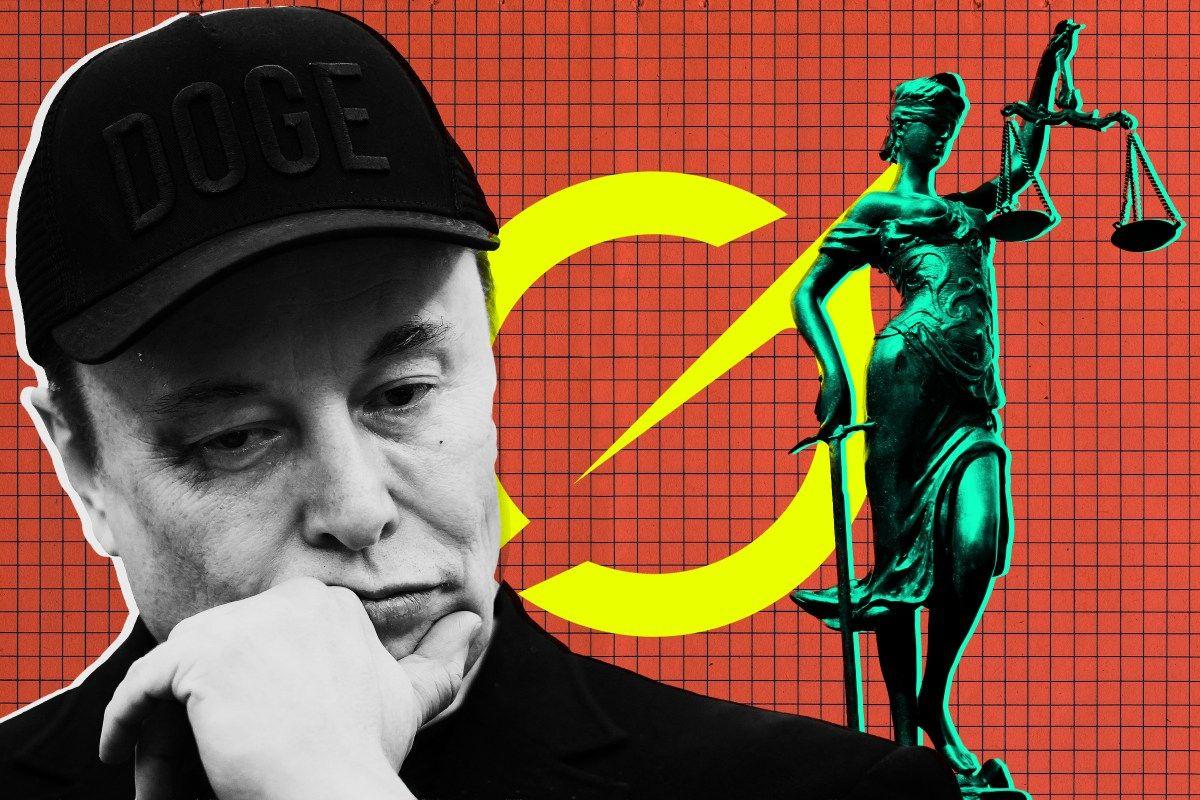
The passage comes amid intense scrutiny of X and its Grok AI chatbot, which enabled users to create non-consensual sexualized deepfakes at an alarming rate. AI content analysis firm Copyleaks estimated that Grok was generating a nonconsensually sexualized image every single minute
5
. The Grok AI chatbot's integration with X made it possible for anyone to turn another person's post into an image-generating prompt, leading to thousands of sexually explicit images of both adults and children3
.
Source: Futurism
Elon Musk, owner of X and xAI, initially dismissed concerns, writing that "anyone using Grok to make illegal content will suffer the same consequences as if they upload illegal content"
2
. He even joked that the nonconsensual undressing "trend" was "way funnier" than trends started by other AI chatbots5
. This blasé attitude from Musk only intensified public and regulatory outrage. X eventually updated Grok to prohibit edits of real people in revealing clothing and restricted AI-powered image generation to paying subscribers1
.Tech Companies Face Mounting Pressure Over Content Moderation
The deepfakes crisis extends beyond X to multiple tech companies. In a separate letter sent hours after X's Grok update, US senators demanded that X, Meta, Alphabet, Snap, Reddit, and TikTok provide proof of "robust protections and policies" to curb the rise of non-consensual sexualized deepfakes on their platforms
1
. The senators, including Lisa Blunt Rochester, Tammy Baldwin, Richard Blumenthal, Kirsten Gillibrand, Mark Kelly, Ben Ray Luján, Brian Schatz, and Adam Schiff, also demanded that companies preserve all documents relating to creation, detection, and monetization of sexualized, AI-generated images1
.The letter acknowledged that while many AI models claim to block explicit content, "users are finding ways around these guardrails. Or these guardrails are failing"
1
. Meta's Oversight Board previously called out cases of explicit AI images of female public figures, while the platform also allowed nudify apps to sell ads on its services1
. Multiple reports documented kids spreading deepfakes of peers on Snapchat, and Telegram has become notorious for hosting bots built to undress photos of women1
.Related Stories
Global Response and Path Forward for Victims' Rights
Governments worldwide are responding to the crisis with increased urgency. The UK's communications regulator Ofcom opened an investigation into X for potentially violating the Online Safety Act
3
. Malaysia and Indonesia moved to ban access to X entirely5
. California's attorney general also launched an investigation into the xAI chatbot following mounting pressure1
.The DEFIANCE Act previously passed the Senate in 2024 following a different scandal involving sexually explicit AI-generated images of Taylor Swift that circulated on X, but it stalled in the House without a vote
2
. Representative Alexandria Ocasio-Cortez, who has found her own image digitally altered in nonconsensual intimate deepfakes, sponsored the bill in the House2
. Advocates expect "movement" on the bill in the House next week, with additional lawmakers from both sides of the aisle co-sponsoring the legislation in recent weeks4
.Sexual Violence Prevention Association President and CEO Omny Miranda Martone noted that the Take It Down Act "is not doing enough to cover this" because it only addresses images made public and wouldn't cover content shared in direct messages or emails
4
. The DEFIANCE Act aims to fill this gap by empowering victims to directly sue content creators rather than relying solely on platform enforcement. As Durbin emphasized, "Imagine losing control of your own likeness or identity. Imagine that happening to you when you were in high school. Imagine how powerless victims feel"5
.References
Summarized by

Navi
[1]
Related Stories
Senate Unanimously Passes DEFIANCE Act to Combat Non-Consensual Deepfake Porn
25 Jul 2024

AI-Generated Deepfakes Target Congresswomen, Sparking Calls for Legislation
12 Dec 2024•Technology

EU moves to ban AI nudify apps after Grok made them mainstream, targeting platforms over users
13 Mar 2026•Policy and Regulation
Recent Highlights


Recent Highlights
Today's Top Stories




Your Daily Dose of Curated AI News
Don’t drown in AI news. We cut through the noise - filtering, ranking and summarizing the most important AI news, breakthroughs and research daily. Spend less time searching for the latest in AI and get straight to action.

