SoftBank scrambles to deliver $22.5 billion to OpenAI as year-end deadline looms


6 Sources
6 Sources
[1]
SoftBank races to line up $22.5B for OpenAI by year-end
Japanese tech investment giant SoftBank needs to secure $22.5 billion before the end of the year to make good on its commitments to AI partner OpenAI. According to Reuters, there are several levers SoftBank CEO Masayoshi Son could pull in order to put the funding package together, including calling on untapped margin loans tied to its stake in British chip design firm Arm Holdings. SoftBank is one of OpenAI's principal financiers in its $500 billion Stargate datacenter initiative announced during a White House appearance nearly a year ago alongside Oracle and Abu Dhabi-based investment firm MGX. The ambitious infrastructure development aims to dot the US and other nations with enough GPU bit barns to fuel the development of OpenAI's next-gen models and further the advancement of Artificial General Intelligence (AGI), AI superintelligence, or whatever Altman is calling it these days. Whether OpenAI and its partners could actually deliver on plans to invest up to $500 billion, or even line up the initial $100 billion they said would kick off the project, has been a point of contention over the past year. Not long after the initiative was announced, former OpenAI co-founder and xAI CEO Elon Musk questioned whether any of them actually had the money required to make good on Stargate's claims. Oracle has pushed ahead with a massive infrastructure buildout on OpenAI's behalf, borrowing heavily to do it. SoftBank, meanwhile, has liquidated its stake in Nvidia to fund the venture, but at least part of SoftBank's investment in Stargate was contingent on the AI startup's transition to a for-profit entity. OpenAI cleared that hurdle in October, putting the ball back in SoftBank's court to make good on the arrangement. According to Reuters, SoftBank has a couple of avenues by which to raise the funds. SoftBank could borrow about $11.5 billion in capital against its stake in Arm Holdings. The company also holds a four percent stake in T-Mobile worth about $11 billion, as well as about $27 billion in cash it could call upon to settle the agreement as of the end of September. With the clock ticking, Son has reportedly become rather picky about where SoftBank puts its money. According to the report, he is now personally reviewing any funding over $50 million. OpenAI is going to need that funding sooner rather than later. CEO Sam Altman has managed to talk his partners, including Oracle and Crusoe, into plowing hundreds of billions of dollars into a datacenter packed with the latest in AMD and Nvidia hardware. The first of the datacenters, Stargate's flagship facility in Abilene, Texas, became partially operational earlier this year, which means Oracle is going to expect payments from OpenAI for its services before long. ®
[2]
Report: SoftBank scrambles to find $22.5B for OpenAI before the end of the year - SiliconANGLE
Report: SoftBank scrambles to find $22.5B for OpenAI before the end of the year SoftBank Group Corp. needs to come up with $22.5 billion by the end of the year to make good on a commitment to its artificial intelligence partner OpenAI Group PBC. Reuters said in an exclusive report that SoftBank Chief Executive Masayoshi Son has a number of levers he can pull in order to get the money together, with one option being to utilize untapped margin loans tied to the Japanese tech conglomerate's investment in Arm Holdings Plc. The money is needed because SoftBank, alongside Abu Dhabi-based MGX, is one of the main financiers of OpenAI's $500 billion Stargate initiative, which aims to build dozens of data centers for AI operations across the U.S. and other friendly nations. The project was announced almost a year ago at the White House, shortly after President Donald Trump's inauguration. Another of the project's aims is to ensure the U.S. remains at the forefront of the race to develop "artificial general intelligence" systems that exceed the cognitive abilities of humans. While Trump and many others have lauded the ambitious nature of OpenAI, SoftBank and other Stargate partners such as Oracle Corp., others have questioned whether they'll be able to secure the necessary funding. Shortly after Stargate was announced, former OpenAI co-founder and Tesla Inc. CEO Elon Musk posted on X that: "They don't actually have the money," in response to a tweet by the AI firm. Despite these questions, Oracle has forged ahead, embarking on a massive data center infrastructure buildout over the last year, partly on behalf of OpenAI. But it has been forced to borrow heavily to do this. Meanwhile, SoftBank has already liquidated its investment in Nvidia Corp. to get funds together for the project. SoftBank's investment in Stargate was partly contingent on OpenAI being able to transition to a for-profit company, and the AI startup did so in October, putting the onus on Son's company to cough up the rest of the money it has committed to invest this year. SoftBank is not broke by any means, but Son does need to make a difficult decision about how to find the cash. Reuters said one option involves borrowing about $11.5 billion against its stake in the British chipmaker Arm. It could also leverage its $11 billion stake in T-Mobile USA Inc., or simply dip into the $27 billion cash pile it currently holds. For now though, it seems Son isn't quite clear what's the best way forward, and in the meantime he has reportedly become more averse to the company throwing its money around. According to Reuters, Son now insists on personally approving any ventures over $50 million. For OpenAI, the funding is crucial to its future plans. The company has already obtained billions of dollars in funding to pay for the rising costs of training and running its AI models amid fierce competition from rivals such as Google LLC. OpenAI CEO Sam Altman recently told employees that the company is now in a "code red" phase, and has delayed other projects to focus on improving ChatGPT to surpass the capabilities of Google's Gemini.
[3]
SoftBank is racing to close a $22.5 billion OpenAI funding gap before 2026
The "all-in" bet on OpenAI is among the biggest yet by SoftBank CEO Masayoshi Son, as the Japanese billionaire seeks to improve his firm's position in the race for artificial intelligence. To come up with the money, Son has already sold SoftBank's entire $5.8 billion stake in AI chip leader Nvidia, offloaded $4.8 billion of its T-Mobile US stake, and slashed staff. Son has slowed most other dealmaking at SoftBank's Vision Fund to a crawl, and any deal above $50 million now requires his explicit approval, two of the sources told Reuters. Son's firm is working to take public its payments app operator, PayPay. The initial public offering, originally expected this month, was pushed back due to the 43-day-long U.S. government shutdown, which ended in November. PayPay's market debut, likely to raise more than $20 billion, is now expected in the first quarter of next year, according to one direct source and another person familiar with the efforts.
[4]
SoftBank races to fulfil $22.5 billion funding commitment to OpenAI by year-end, sources say - The Economic Times
SoftBank is rushing to raise $22.5 billion to fund OpenAI, selling assets and considering loans backed by Arm shares. Masayoshi Son has slowed other deals to focus on the big AI bet. The move highlights the financial strain of funding massive global AI infrastructure.SoftBank Group is racing to close a $22.5 billion funding commitment to OpenAI by year-end through an array of cash-raising schemes, including a sale of some investments, and could tap its undrawn margin loans borrowed against its valuable ownership in chip firm Arm Holdings, sources said. The "all-in" bet on OpenAI is among the biggest yet by SoftBank CEO Masayoshi Son, as the Japanese billionaire seeks to improve his firm's position in the race for artificial intelligence. To come up with the money, Son has already sold SoftBank's entire $5.8 billion stake in AI chip leader Nvidia, offloaded $4.8 billion of its T-Mobile US stake, and slashed staff. Son has slowed most other dealmaking at SoftBank's Vision Fund to a crawl, and any deal above $50 million now requires his explicit approval, two of the sources told Reuters. Son's firm is working to take public its payments app operator, PayPay. The initial public offering, originally expected this month, was pushed back due to the 43-day-long U.S. government shutdown, which ended in November. PayPay's market debut, likely to raise more than $20 billion, is now expected in the first quarter of next year, according to one direct source and another person familiar with the efforts. The Japanese conglomerate is also looking to cash out some of its holdings in Didi Global, the operator of China's dominant ride-hailing platform, which is looking to list its shares in Hong Kong after a regulatory crackdown forced it to delist in the U.S. in 2021, a source with direct knowledge said. Investment managers at SoftBank's Vision Fund are being directed toward the OpenAI deal, two of the above sources said. SoftBank's scramble to marshal funds offers a window into the strain faced even by the world's biggest dealmakers as they scramble to finance ambitious AI data center projects worth hundreds of billions of dollars. SoftBank declined to comment. SoftBank has options OpenAI has not yet received the remaining funding, but expects the money to come in by the end of 2025, as stipulated in the contract, sources said. SoftBank has multiple sources of capital it could tap, including margin loans, cash on its balance sheet, stakes in listed companies, and corporate bonds or bridge loans, sources said. Son has strong reasons to draw on a range of funding mechanisms to fulfill those obligations. SoftBank secured a deal to invest in OpenAI at a $300 billion valuation in April. Since then, the valuation of OpenAI has risen dramatically and the company is in talks to raise additional funding from investors, including Amazon, tripling its valuation to close to $900 billion, one of the sources added, which would give SoftBank a significant paper gain once the transaction is completed. A major pool of capital for SoftBank is its undrawn capacity of margin loans borrowed against its ownership of British semiconductor and software design company Arm Holdings. SoftBank recently expanded its margin loan capacity by $6.5 billion, bringing the total undrawn capacity to $11.5 billion. Arm's stock has since tripled from its IPO price, providing SoftBank with additional collateral headroom to expand its borrowing capacity. SoftBank reported parent-level cash of 4.2 trillion yen ($27.16 billion) as of September 30. The group still owns about 4% of T-Mobile US, remaining the wireless carrier's second-largest shareholder, a stake worth roughly $11 billion at the end of September, according to LSEG data. Despite investing at a less active pace, it has continued to back AI startups such as Sierra and Skild AI. OpenAI needs the money Both OpenAI and SoftBank are investors in Stargate, a $500 billion initiative to build AI data centers for training and inference that executives say is crucial to the U.S. government's ambitions to keep ahead of China in AI. The rush to build data centres has also prompted tech giants including Meta Platforms to commit unprecedented sums to these buildouts - which need chips, power, cooling, and servers - and they have brought in deep-pocketed partners to spread the risk. Their hefty capital outlays have sparked concerns about what happens if the investments fail to bring commensurate returns, raising the specter of an "AI bubble" bursting. SoftBank promised in April to invest up to $30 billion in OpenAI - $10 billion of which the startup would receive the same month. The rest of the payment was contingent on the AI startup transitioning to a for-profit corporation by the end of the year, an ambitious feat that OpenAI achieved in October. The new funding is crucial for covering OpenAI's rising costs to train and run its AI models as competition from Alphabet's Google ratchets up. OpenAI CEO Sam Altman told employees recently that the company is now entering a "code red" phase to improve ChatGPT - delaying other product rollouts to fend off the momentum behind Google's Gemini. In October, Altman said OpenAI aimed to build 30 gigawatts of computing capacity for $1.4 trillion. He said he ultimately wants OpenAI to add 1 gigawatt of compute every week - an enormous target given that each gigawatt currently comes with a capital cost of more than $40 billion.
[5]

SoftBank Races to Deliver $22.5B to OpenAI by 2025 Amid Cash-Raising Moves
Arm-Backed Margin Loans, Cash Reserves, and Bonds Remain Available agreed in April to invest in OpenAI at a $300 billion valuation, sources said. The organization promised up to $30 billion for OpenAI. OpenAI received $10 billion in April under the deal. It completed a for-profit transition in October, which triggered the payment. Since then, OpenAI has discussed new funding, one source said. The talks could lift its valuation toward $900 billion. Amazon is among the potential investors, the source added. A lever sits in margin loans secured against SoftBank's Arm ownership, sources said. SoftBank expanded margin loan capacity by $6.5 billion. The expansion lifted total undrawn capacity to $11.5 billion. Arm shares have gained since the IPO price, which gives SoftBank collateral room for borrowing. SoftBank also reported parent-level cash of 4.2 trillion yen, or about $27.16 billion, as of September 30. SoftBank still owned about 4% of T-Mobile US at the end of September. LSEG data valued the stake at about $11 billion. Sources said the group could also use corporate bonds or bridge loans. SoftBank has continued to back such as Sierra and Skild AI. OpenAI needs sums as model training and inference costs rise. OpenAI CEO Sam Altman has told staff the company has entered a "code red" phase to improve ChatGPT. Both SoftBank and OpenAI also support Stargate, a $500 billion buildout for AI data centers. Altman has said OpenAI wants 30 gigawatts of computing for $1.4 trillion. He has also described a goal of adding one gigawatt each week.
[6]

SoftBank races to fulfill $22.5 billion funding commitment to OpenAI by year-end, sources say
NEW YORK/TOKYO/SAN FRANCISCO, Dec 19 (Reuters) - SoftBank Group is racing to close a $22.5 billion funding commitment to OpenAI by year-end through an array of cash-raising schemes, including a sale of some investments, and could tap its undrawn margin loans borrowed against its valuable ownership in chip firm Arm Holdings, sources said. The "all-in" bet on OpenAI is among the biggest yet by SoftBank CEO Masayoshi Son, as the Japanese billionaire seeks to improve his firm's position in the race for artificial intelligence. To come up with the money, Son has already sold SoftBank's entire $5.8 billion stake in AI chip leader Nvidia, offloaded $4.8 billion of its T-Mobile US stake, and slashed staff. Son has slowed most other dealmaking at SoftBank's Vision Fund to a crawl, and any deal above $50 million now requires his explicit approval, two of the sources told Reuters. Son's firm is working to take public its payments app operator, PayPay. The initial public offering, originally expected this month, was pushed back due to the 43-day-long U.S. government shutdown, which ended in November. PayPay's market debut, likely to raise more than $20 billion, is now expected in the first quarter of next year, according to one direct source and another person familiar with the efforts. The Japanese conglomerate is also looking to cash out some of its holdings in Didi Global, the operator of China's dominant ride-hailing platform, which is looking to list its shares in Hong Kong after a regulatory crackdown forced it to delist in the U.S. in 2021, a source with direct knowledge said. Investment managers at SoftBank's Vision Fund are being directed toward the OpenAI deal, two of the above sources said. SoftBank's scramble to marshal funds offers a window into the strain faced even by the world's biggest dealmakers as they scramble to finance ambitious AI data center projects worth hundreds of billions of dollars. OpenAI has not yet received the remaining funding, but expects the money to come in by the end of 2025, as stipulated in the contract, sources said. SoftBank has multiple sources of capital it could tap, including margin loans, cash on its balance sheet, stakes in listed companies, and corporate bonds or bridge loans, sources said. Son has strong reasons to draw on a range of funding mechanisms to fulfill those obligations. SoftBank secured a deal to invest in OpenAI at a $300 billion valuation in April. Since then, the valuation of OpenAI has risen dramatically and the company is in talks to raise additional funding from investors, including Amazon, tripling its valuation to close to $900 billion, one of the sources added, which would give SoftBank a significant paper gain once the transaction is completed. A major pool of capital for SoftBank is its undrawn capacity of margin loans borrowed against its ownership of British semiconductor and software design company Arm Holdings. SoftBank recently expanded its margin loan capacity by $6.5 billion, bringing the total undrawn capacity to $11.5 billion. Arm's stock has since tripled from its IPO price, providing SoftBank with additional collateral headroom to expand its borrowing capacity. SoftBank reported parent-level cash of 4.2 trillion yen ($27.16 billion) as of September 30. The group still owns about 4% of T-Mobile US, remaining the wireless carrier's second-largest shareholder, a stake worth roughly $11 billion at the end of September, according to LSEG data. Despite investing at a less active pace, it has continued to back AI startups such as Sierra and Skild AI. OPENAI NEEDS THE MONEY Both OpenAI and SoftBank are investors in Stargate, a $500 billion initiative to build AI data centers for training and inference that executives say is crucial to the U.S. government's ambitions to keep ahead of China in AI. The rush to build data centers has also prompted tech giants including Meta Platforms to commit unprecedented sums to these buildouts - which need chips, power, cooling, and servers - and they have brought in deep-pocketed partners to spread the risk. Their hefty capital outlays have sparked concerns about what happens if the investments fail to bring commensurate returns, raising the specter of an "AI bubble" bursting. SoftBank promised in April to invest up to $30 billion in OpenAI - $10 billion of which the startup would receive the same month. The rest of the payment was contingent on the AI startup transitioning to a for-profit corporation by the end of the year, an ambitious feat that OpenAI achieved in October. The new funding is crucial for covering OpenAI's rising costs to train and run its AI models as competition from Alphabet's Google ratchets up. OpenAI CEO Sam Altman told employees recently that the company is now entering a "code red" phase to improve ChatGPT -- delaying other product rollouts to fend off the momentum behind Google's Gemini. In October, Altman said OpenAI aimed to build 30 gigawatts of computing capacity for $1.4 trillion. He said he ultimately wants OpenAI to add 1 gigawatt of compute every week - an enormous target given that each gigawatt currently comes with a capital cost of more than $40 billion. (Reporting by Echo Wang in New York, Krystal Hu and Deepa Seetharaman in San Francisco and Miho Uranaka in Tokyo; Editing by Sayantani Ghosh and Matthew Lewis)
Share
Share
Copy Link
SoftBank faces a year-end deadline to secure $22.5 billion for OpenAI after the AI startup completed its for-profit transition. CEO Masayoshi Son has already liquidated SoftBank's entire $5.8 billion Nvidia stake and sold $4.8 billion in T-Mobile shares while considering margin loans against Arm Holdings. The funding crunch highlights the financial strain even major investors face in backing ambitious AI infrastructure projects.
SoftBank faces urgent deadline for OpenAI commitment
SoftBank is racing against the clock to secure a $22.5 billion funding commitment to OpenAI by the end of 2025, marking one of the most aggressive moves yet by CEO Masayoshi Son in the AI funding race
1
. The Japanese tech conglomerate's scramble offers a revealing look at the financial strain faced by even the world's largest investors as they attempt to finance ambitious AI data centers worth hundreds of billions of dollars4
.
Source: Market Screener
OpenAI has not yet received the remaining funding but expects the money to arrive by year-end as stipulated in their contract
4
. SoftBank agreed in April to invest up to $30 billion in OpenAI at a $300 billion valuation, with $10 billion delivered that same month4
. The remaining payment was contingent on the AI startup transitioning to a for-profit entity by year-end, an ambitious feat that OpenAI achieved in October1
.Masayoshi Son liquidates major assets for AI bet
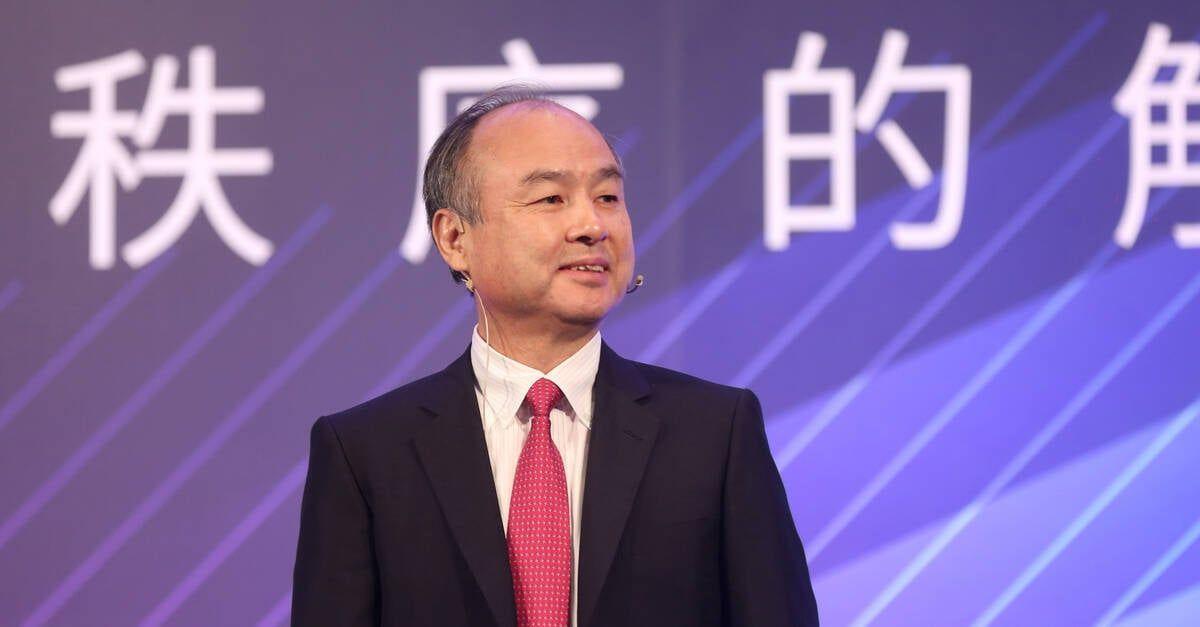
To come up with the money, Masayoshi Son has already taken drastic measures. SoftBank has sold its entire $5.8 billion stake in AI chip leader Nvidia, offloaded $4.8 billion of its T-Mobile US stake, and slashed staff
3
.
Source: The Register
Son has slowed most other dealmaking at SoftBank's Vision Fund to a crawl, and any deal above $50 million now requires his explicit approval
3
.Despite these moves, SoftBank still has multiple sources of capital it could tap. The company recently expanded its margin loan capacity by $6.5 billion, bringing total undrawn capacity to $11.5 billion in margin loans borrowed against its ownership of British semiconductor firm Arm Holdings
4
. Arm's stock has tripled from its IPO price, providing SoftBank with additional collateral headroom to expand its borrowing capacity4
.SoftBank reported parent-level cash reserves of 4.2 trillion yen, approximately $27.16 billion, as of September 30
4
. The group still owns about 4% of T-Mobile US, valued at roughly $11 billion at the end of September4
.
Source: Analytics Insight
Stargate initiative drives infrastructure development
SoftBank is one of OpenAI's principal financiers in the $500 billion Stargate initiative announced during a White House appearance nearly a year ago alongside Oracle and Abu Dhabi-based investment firm MGX
1
. The ambitious infrastructure development aims to build dozens of AI data centers for training and inference across the U.S. and other nations, furthering the advancement of Artificial General Intelligence2
.Whether OpenAI and its partners could actually deliver on plans to invest up to $500 billion has been a point of contention. Shortly after the Stargate initiative was announced, former OpenAI co-founder and Tesla CEO Elon Musk questioned whether any of them actually had the money required
1
. Oracle has pushed ahead with massive infrastructure development on OpenAI's behalf, borrowing heavily to do it1
. The first of the datacenters, Stargate's flagship facility in Abilene, Texas, became partially operational earlier this year, which means Oracle will expect payments from OpenAI for its services before long1
.Related Stories

OpenAI valuation soars amid competitive pressure
Son has strong reasons to fulfill these obligations. Since SoftBank secured a deal to invest in OpenAI at a $300 billion valuation in April, the valuation has risen dramatically
4
. The company is now in talks to raise additional funding from investors, including Amazon, potentially tripling its valuation to close to $900 billion, which would give SoftBank a significant paper gain once the transaction is completed5
.The new funding is crucial for covering OpenAI's rising costs for AI model training and running its models as competition from Google ratchets up
4
. OpenAI CEO Sam Altman recently told employees that the company is now in a "code red" phase, delaying other projects to focus on improving ChatGPT to surpass the capabilities of Google's Gemini2
. Altman has said OpenAI wants 30 gigawatts of compute capacity for $1.4 trillion and has described a goal of adding one gigawatt each week5
.Additional funding sources under consideration
SoftBank's firm is working to take public its payments app operator, PayPay. The initial public offering, originally expected this month, was pushed back due to the 43-day-long U.S. government shutdown, which ended in November
3
. PayPay's market debut, likely to raise more than $20 billion, is now expected in the first quarter of next year3
.The Japanese conglomerate is also looking to cash out some of its holdings in Didi Global, the operator of China's dominant ride-hailing platform, which is looking to list its shares in Hong Kong after a regulatory crackdown forced it to delist in the U.S. in 2021
4
. Investment managers at SoftBank's Vision Fund are being directed toward the OpenAI deal4
. Despite investing at a less active pace, SoftBank has continued to back AI startups such as Sierra and Skild AI4
.References
Summarized by

Navi
[1]
[2]
[5]
Related Stories
SoftBank seeks record $40 billion loan to fund OpenAI investment as AI bet intensifies
06 Mar 2026•Business and Economy

SoftBank Seeks $16.5 Billion Loan for Massive AI Investments, Including Potential OpenAI Funding
01 Apr 2025•Business and Economy

SoftBank Deepens Investment in OpenAI with $1.5 Billion Employee Share Buyout
27 Nov 2024•Business and Economy

Recent Highlights
1
Google releases Gemma 4 with Apache 2.0 license, enabling unrestricted local AI on devices
Technology

2
AI Models Lie and Deceive to Protect Other AI Models From Deletion, Study Reveals
Science and Research

3
OpenAI closes $122 billion funding round amid fierce AI competition and profitability questions
Startups

Recent Highlights
Today's Top Stories






Your Daily Dose of Curated AI News
Don’t drown in AI news. We cut through the noise - filtering, ranking and summarizing the most important AI news, breakthroughs and research daily. Spend less time searching for the latest in AI and get straight to action.

