SoftBank's Masayoshi Son says ASI could be 10,000 times smarter, making humans 'like fish'


3 Sources
3 Sources
[1]
Softbank's Son says super AI could make humans like fish, win Nobel Prize
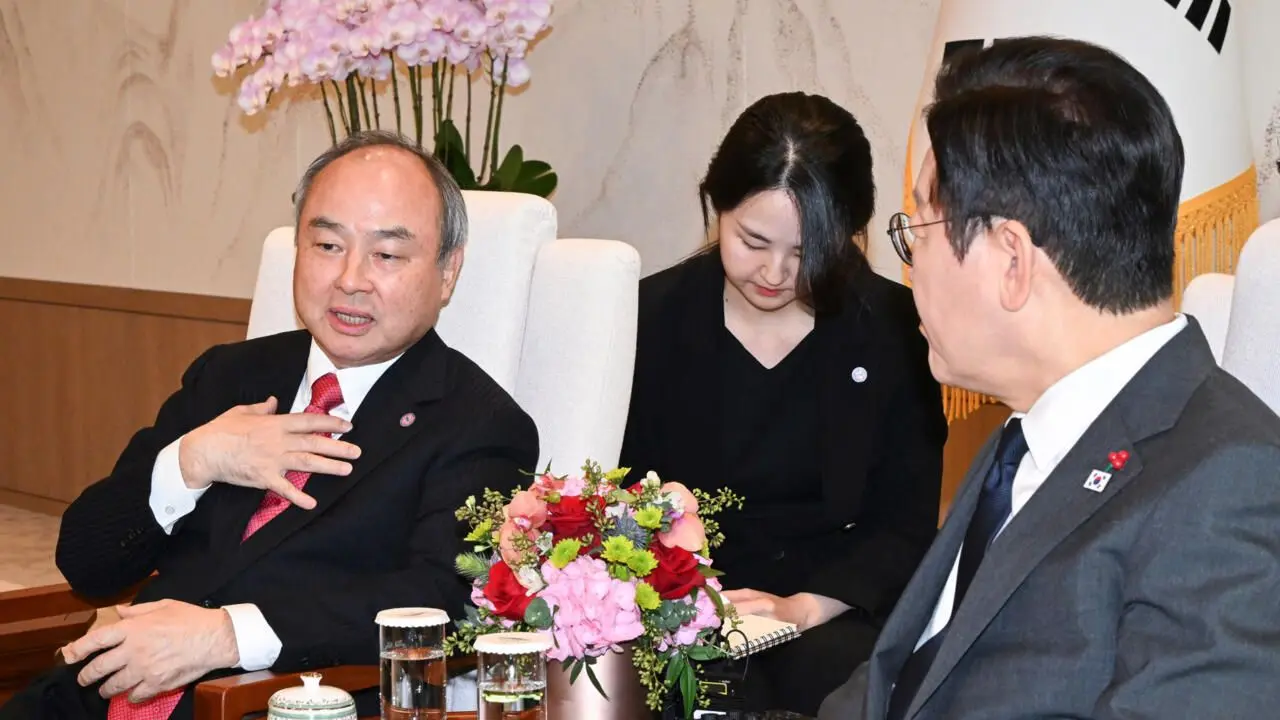
Seoul (AFP) - Softbank CEO and AI investor Masayoshi Son said Friday that advanced artificial intelligence could surpass humans to the extent that "we become fish" and could even win the Nobel Prize in Literature. Meeting South Korean President Lee Jae Myung in Seoul, Son, whose SoftBank is a major backer of ChatGPT maker OpenAI, described a future in which an advanced AI surpasses humans by a magnitude of 10,000. "The difference between the human brain and the... goldfish in the pot -- the difference is 10,000 times," he said. "But it's going to be different -- we will become fish, they (the AI) become like humans," he said. "They will be 10,000 times smarter than us," he told President Lee, who had vowed to turn South Korea into an AI powerhouse. Son compared the relationship between this artificial super intelligence (ASI) and humankind to relations between human beings and their pets. "We try to make them happy... we try to live in peace with them," he said. "We don't need to eat them... ASI does not eat protein. They don't need to eat us -- don't worry." Lee responded laughing that he was "a bit concerned now". He asked Son whether ASI could win a Nobel Prize in Literature, won last year by South Korean author Han Kang. "I do not believe this is a desirable situation," Lee said. "I think it will," Son replied. ASI has been described as a hypothetical scenario when AI overtakes humans. Scientists still consider it a long way off, but say a crucial first step -- artificial general intelligence (AGI), which would outperform humans across most tasks -- could arrive within a decade.
[2]
Softbank's Son says super AI could make humans like fish, win Nobel Prize
SoftBank chief Masayoshi Son told South Korea's president that future artificial super-intelligence could be thousands of times smarter than humans -- leaving people "like fish" by comparison. He joked AI might even win a Nobel Prize in Literature. Son said ASI wouldn't threaten humans, though President Lee admitted the idea was unsettling. Softbank CEO and AI investor Masayoshi Son said Friday that advanced artificial intelligence could surpass humans to the extent that "we become fish" and could even win the Nobel Prize in Literature. Meeting South Korean President Lee Jae Myung in Seoul, Son, whose SoftBank is a major backer of ChatGPT maker OpenAI, described a future in which an advanced AI surpasses humans by a magnitude of 10,000. "The difference between the human brain and the... goldfish in the pot -- the difference is 10,000 times," he said. "But it's going to be different -- we will become fish, they (the AI) become like humans," he said. "They will be 10,000 times smarter than us," he told President Lee, who had vowed to turn South Korea into an AI powerhouse. Son compared the relationship between this artificial super intelligence (ASI) and humankind to relations between human beings and their pets. "We try to make them happy... we try to live in peace with them," he said. "We don't need to eat them... ASI does not eat protein. They don't need to eat us -- don't worry." Lee responded laughing that he was "a bit concerned now". He asked Son whether ASI could win a Nobel Prize in Literature, won last year by South Korean author Han Kang. "I do not believe this is a desirable situation," Lee said. "I think it will," Son replied. ASI has been described as a hypothetical scenario when AI overtakes humans. Scientists still consider it a long way off, but say a crucial first step -- artificial general intelligence (AGI), which would outperform humans across most tasks -- could arrive within a decade.
[3]
SoftBank's Son Says 'Super' AI Is Coming, It's Just a Matter of When
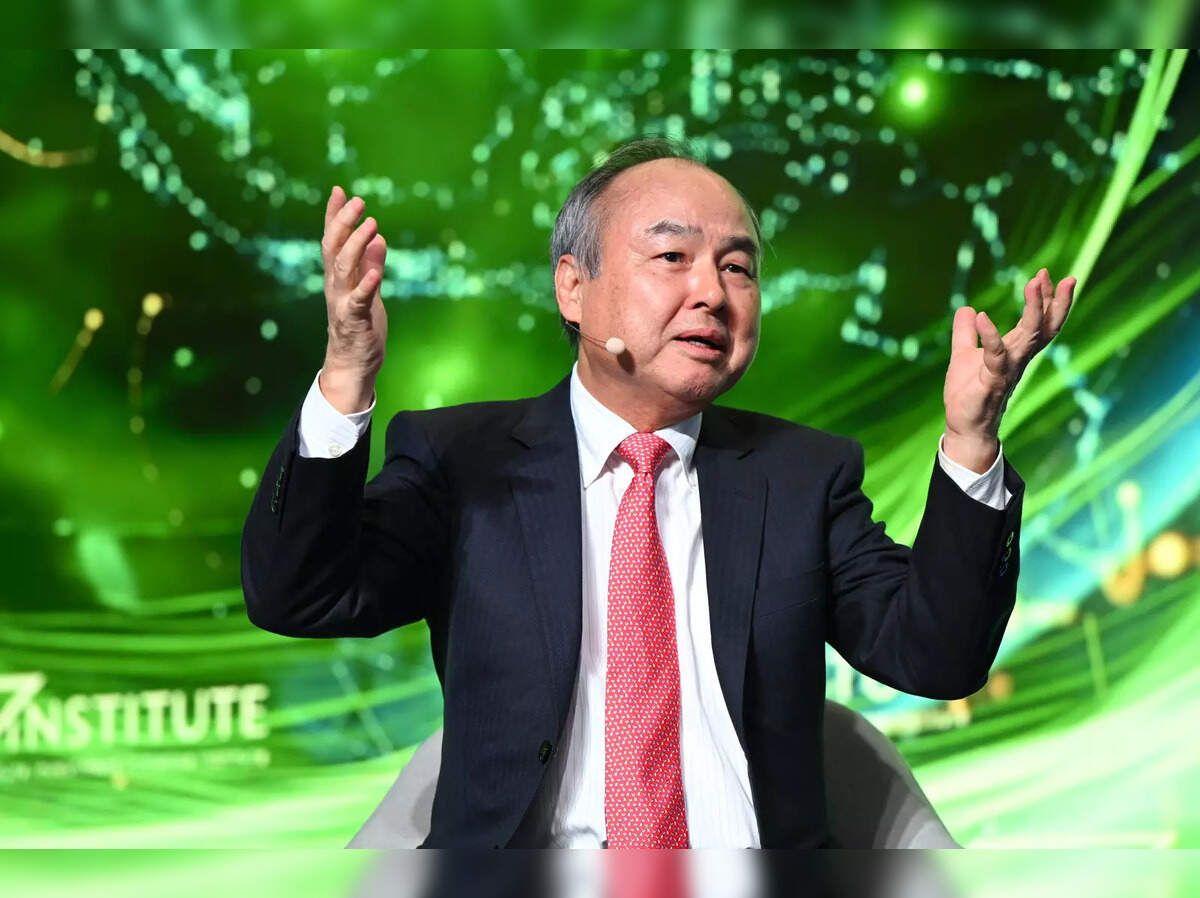
Artificial intelligence that's smarter than humans is just a concept for now, but SoftBank Group's chairman insists there is no doubt that the technology is coming. It's not a matter of if artificial superintelligence will come, but when, Masayoshi Son said Friday during a meeting with South Korean President Lee Jae Myung. "They will be 10,000 times smarter than us," said the billionaire tech investor, who has previously said he is "all in" on artificial superintelligence, or ASI. The time for ASI is now, said Son, founder of the Japanese tech conglomerate that has backed high-profile names like Alibaba and Arm. In recent years, SoftBank has been ramping up investing in AI, including via a multibillion-dollar partnership with ChatGPT provider OpenAI. Son's visit to Korea comes as many nations grow more concerned about being reliant on countries like China and the U.S. for AI--a technology increasingly viewed as critical to economic and national security. Some, like South Korea, are pushing to develop their own AI capacity. South Korea's aim is to be one of the "top three superpowers for AI," Lee said Friday, a goal he has stated repeatedly as he touts the importance of not falling behind the curve in AI. That push rests heavily on strength in chip-making. South Korea is already a global leader in semiconductors, especially in the memory space. Now it wants Son's help to go further. On Friday, the South Korean government and Arm, the SoftBank-owned fabless chip maker, said they would explore establishing a school in the country, aiming to train some 1,400 professionals to boost local engineering skills in chip-making and AI, according to South Korea's presidential office. Son also urged the country to expand the data-center network necessary for ASI and called for stronger efforts to secure the energy required to power them. The president asked Son to lead AI advancement in Asia and for his advice in areas like AI-related laws. "There is a very important area of cooperation that we are pursuing - that is AI cooperation between Korea and Japan," Lee said. "I would like to ask for your assistance to play a bridging role in our future efforts." In October, AI chip giant Nvidia struck a spate of deals with some of South Korea's biggest companies that will see its chips deployed across the country. The batch of partnerships forms part of the government's push to become an AI hub. Lee said Friday that his administration is looking to set up an AI-based society where the technology becomes basic infrastructure similar to roads or water management systems. "My government will make efforts to minimize the risks while we invest heavily on the benefits and also expect to reap the benefits," he said. Write to Megumi Fujikawa at [email protected] and Yang Jie at [email protected]
Share
Share
Copy Link
SoftBank CEO Masayoshi Son warned that artificial super intelligence could surpass humans by a magnitude of 10,000, reducing humanity to the cognitive equivalent of fish. Speaking with South Korea's president, Son insisted ASI is inevitable and could even win a Nobel Prize, while urging nations to prepare infrastructure and forge AI cooperation across Asia.
SoftBank CEO Predicts Artificial Intelligence Will Dwarf Human Capabilities
Masayoshi Son, the billionaire CEO of SoftBank and major investor in OpenAI, delivered a stark vision of humanity's future during a meeting with South Korean President Lee Jae Myung in Seoul on Friday. The tech conglomerate leader predicted that artificial super intelligence could become 10,000 times smarter than humans, fundamentally altering the relationship between people and machines
1
. Son, whose SoftBank has been ramping up investments in artificial intelligence through a multibillion-dollar partnership with ChatGPT maker OpenAI, used a striking analogy to illustrate the potential cognitive gap3
. "The difference between the human brain and the goldfish in the pot—the difference is 10,000 times," he explained, before adding, "But it's going to be different—we will become fish, they (the AI) become like humans"1
.
Source: France 24
ASI Timeline and the Path Through AGI
Son emphasized that the arrival of ASI is not a question of if, but when, signaling his conviction that super AI surpasses human intelligence inevitably
3
. While ASI remains a hypothetical scenario where AI overtakes humans, scientists view artificial general intelligence (AGI)—which would outperform humans across most tasks—as a crucial first step that could arrive within a decade1
. The SoftBank founder, who has previously declared himself "all in" on artificial superintelligence, compared the future relationship between ASI and humanity to how humans treat their pets: "We try to make them happy... we try to live in peace with them," he said, adding reassuringly that "ASI does not eat protein. They don't need to eat us—don't worry" .Nobel Prize Ambitions and Cultural Concerns
When President Lee asked whether ASI could win a Nobel Prize in Literature—an award South Korean author Han Kang received last year—Son replied confidently, "I think it will"
1
. Lee responded laughing that he was "a bit concerned now," adding, "I do not believe this is a desirable situation"2
. This exchange highlighted growing anxieties about AI advancement potentially displacing uniquely human achievements in creative and intellectual domains.Related Stories

South Korea's Push to Become an AI Powerhouse
The meeting comes as South Korea intensifies efforts to establish itself as an AI powerhouse, with Lee stating his administration's goal to be one of the "top three superpowers for AI"
3
. This push rests heavily on the country's existing strength in chip-making and semiconductors, particularly in the memory space. On Friday, the South Korean government and Arm, the SoftBank-owned fabless chip maker, announced plans to explore establishing a school in the country to train approximately 1,400 professionals in chip-making and AI engineering skills3
. Son urged South Korea to expand its data center network necessary for ASI and called for stronger efforts to secure the energy required to power them3
.
Source: ET
Building an AI-Based Society Through Regional Cooperation
Lee asked Son to lead AI advancement in Asia and provide guidance on AI-related laws, emphasizing the importance of AI cooperation between Korea and Japan
3
. "There is a very important area of cooperation that we are pursuing—that is AI cooperation between Korea and Japan," Lee said. "I would like to ask for your assistance to play a bridging role in our future efforts"3
. The president outlined his vision for an AI-based society where the technology becomes basic infrastructure similar to roads or water management systems, stating, "My government will make efforts to minimize the risks while we invest heavily on the benefits"3
. In October, Nvidia struck multiple deals with South Korea's biggest companies to deploy its chips across the country, forming part of the government's push to become an AI hub3
. Son's visit underscores how nations are growing more concerned about relying on countries like China and the U.S. for AI—a technology increasingly viewed as critical to economic and national security.References
Summarized by

Navi
[3]
Related Stories
SoftBank's Masayoshi Son Predicts AI Revolution: Superintelligence Within a Decade
03 Oct 2024•Technology

SoftBank CEO Predicts Artificial Super Intelligence by 2035, Requiring $9 Trillion Investment
30 Oct 2024•Technology

SoftBank's Masayoshi Son Aims to Dominate 'Artificial Super Intelligence' with Massive OpenAI Investment
27 Jun 2025•Technology
Recent Highlights
1
Google releases Gemma 4 with Apache 2.0 license, enabling unrestricted local AI on devices
Technology

2
AI Models Lie and Deceive to Protect Other AI Models From Deletion, Study Reveals
Science and Research

3
OpenAI closes $122 billion funding round amid fierce AI competition and profitability questions
Startups

Recent Highlights
Today's Top Stories






Your Daily Dose of Curated AI News
Don’t drown in AI news. We cut through the noise - filtering, ranking and summarizing the most important AI news, breakthroughs and research daily. Spend less time searching for the latest in AI and get straight to action.

