Sony Honda Mobility unveils Afeela 1 EV and new crossover concept at CES 2026


2 Sources
2 Sources
[1]
At CES 2026, Sony Honda Mobility's latest Afeela 1 still feels woefully out of date
It's been six years since Sony first rolled out its prototype car at CES 2020. It was called the Vision-S back then, and I remember everyone endlessly debating just how serious the consumer electronics powerhouse was about making a car. Over the subsequent half-decade, Sony has proven it is not only serious, but absolutely hell-bent on making this thing a reality. At CES 2026, we're still somehow about 12 months away from that car hitting the roads. Now called the Afeela 1, instead of being built by Sony proper it will come from the joint venture Sony Honda Mobility. It will start at $89,900, offer around 300 miles of range, and wear an exterior design so sedate that even the 31.5-inch-wide "Media Bar" micro-LED integrated into the nose barely makes an impact. With the Afeela up on stage again this year, what's new in 2026? I'm fresh from getting a closer look at the sedan here in Las Vegas and, sadly, there's little more to see than what so underwhelmed me last year. From the outside, 2026's Afeela looks nigh identical to 2025's, save for one change: I'm happy to report that the unfortunate seam running down the middle of last year's nose-mounted Media Bar has been fixed. It now appears to be a single, contiguous panel. On the inside, the interior seems to have a higher degree of fit and finish than last year's. To get in, you either push on a little button hidden in the trim or pull out the smartphone app and request that the door open automatically. There are no door latches as such, something that might raise a few eyebrows given Tesla's current door handle woes. (I was told there are physical door releases hidden below the car on the outside, and low in the door card on the inside.) The door closes automatically once you're inside, instantly hushing the manic drone of the crowd on the always-packed CES floor. This creates a great soundscape for the whopping 28 speakers Sony is deploying here. The car's interior shape was actually designed to optimize the placement of those speakers, and the few moments of music I heard were impressive. There's Dolby Atmos support, so you can take full advantage of the spatial audio features in the cockpit. You can even toggle the sound on or off for individual seats, perhaps helping a little one stay asleep in the back seat -- or simply sparing your kids from the depths of your guilty pleasure playlist. The most noticeable feature inside the car, though, is the sweeping display that runs across the dashboard. There's a 12.3-inch LCD gauge cluster on the left conjoined with a 28.5-inch display that goes all the way to the right. Sony's infotainment software effectively splits that rightmost panel in two, enabling you or the passenger to drag apps left or right as needed. Media or other distracting apps running on the passenger's side of the display will trigger an integrated privacy shield, blacking it out ensuring minimal distraction for the driver. But Sony is still pushing the envelope a bit here in a few other areas. You can dial into Zoom meetings from the driver's seat, for example, and while the Afeela 1 won't be the first car to do this (Mercedes-Benz included the service in the car in its 2024 E-Class), Sony will actually let the driver participate in the video while driving. This seems a little unnecessary to me. Zoom uses the ceiling-mounted camera, one of 40 sensors in and around the Afeela 1. That includes the pods for a LiDAR sensor and more cameras protruding rather conspicuously from the roof. These sensors will provide Level 2+ driver assistance at launch. Over time, Sony promises to upgrade the car to Level 4, meaning that you, the driver, could theoretically take a nap behind the wheel. The car certainly looks to have enough sensors and processing power to make that work, but as we saw with Tesla's Full Self Driving, these sorts of automotive upgrades have a tendency to take longer than anticipated. Some of that digital processing power comes courtesy of Qualcomm's Snapdragon Digital Chassis, which also powers the infotainment experience. The software that runs the dashboard and rear seat experience looked far more comprehensive than before. That includes a functional AI voice assistant providing advanced routing guidance, like telling you which of the dozen taquerias on your route has the best guac. Personalization is a big part of the sales pitch here, with downloadable packages changing everything from the car's ambient lights to the gauge cluster, engine sound, and even whatever's displayed on the nose-mounted display. The idea here is to give you an emotional connection with the car -- despite its decidedly emotionless exterior design. "Our brand, Afeela, is built on a vision to redefine the relationship between people and mobility," Izumi Kawanishi, Sony Honda Mobility's president and COO, said. "Being in a car will no longer be about driving. It will be about making the most of your time and space while you move." I got to sample a number of these customizations at the show, including a particularly cool one that replicated the dashboard of Honda's first-ever Grand Prix-winning machine, 1965's RA272. The Afeela even picked up the raspy sound of its 1.5-liter V12. The pre-production car on the Afeela stage had about a dozen such experiences installed, but the plan is for many, many more. Sony Honda Mobility will launch what it's calling the Afeela Co-Creation Program, a set of software developer tools and interfaces enabling third-party developers to not only create their own customizations, but to sell them. Yes, alternate revenue streams are a big part of the equation here, including premium audio and video purchases, but Sony seemingly isn't factoring that in to help make the Afeela 1 more affordable. Again, you're looking at $89,900 to start, a price that hasn't changed from last year. In fact, the biggest change to the Afeela 1 since CES 2025's showing is a delay. The sedan now isn't hitting the road until the very end of 2026, with first, limited deliveries happening in California. Arizona is next in 2027, but it could be years more before it's available anywhere else in the world. Don't call it vaporware, though, because it is coming. Trial production work is already happening at Honda's plant in Ohio. In fact, the Afeela 1 you see here is an early, pre-production machine assembled there. But just because it's going to happen doesn't mean that it will be a compelling product. An EV that costs $20,000 more than a more-powerful, longer-range Lucid Air Touring is a difficult proposition today, never mind 2027 or later, when the Afeela 1 will finally become readily available. With sedans increasingly on the outs in the American market, an SUV shape would make more sense. Sony confirmed that one is coming by rolling out the Afeela 2026 Prototype, but despite its name, it isn't coming until 2028 at the earliest. As much as I respect Sony's stubborn commitment to this project, the numbers are just not working out in the Afeela 1's favor. I asked Sony Honda Mobility America president and CEO Shugo Yamaguchi what would make the car stand out in an EV segment that's increasingly crowded with quality machines, many available for tens of thousands less. "We do have that LiDAR, which is expensive, and introduces more safety. We have better entertainment, amazing displays and 800 TOPS of processing power. So, we believe that through our applications and our development, we are going to more than make our customers happy," he said. Will customers pay more for a luxury and safety experience topped off by an expensive sensor that likely won't be fully utilized for years to come? After making a similar pitch in its 2025 EX90, Volvo has decided to delete LiDAR from the 2026 model. I can't say I'm more bullish here. The Afeela 1 was an audacious product when it was announced at CES 2020, but with each subsequent year it feels more and more out of touch. It'll undoubtedly be the ultimate expression of brand loyalty for the true PlayStation fans out there. But with even established luxury brands like BMW and Mercedes-Benz shifting their focus to more affordable EVs like the new CLA, a $90,000 sedan with specs that sounded good in 2020 makes it awfully hard to stay excited for this PlayStation on wheels.
[2]
Sony Honda Mobility Still Needs to Deliver Its Game-Filled Afeela 1 EV, but Here’s a New Concept Car
Sony Honda Mobility's first collab car, the Afeela 1, still hasn't hit the road yet, but the Japanese company is already moving on to its next electric vehicle. At a CES event in Las Vegas this week, SHM was showing off a pre-production Afeela 1 sedan when another EV was rolled onto the stage. Initially, it looked like another Afeela 1 sedan, but one look at the backside, which was noticeably larger and in a distinct hatchback shape, eliminated these theories. As it turned out, this was the first look at the Afeela Prototype 2026. Later on stage with both cars side-by-side, the Prototype was easier to spot as a more rounded, lifted crossover, but the difference was subtle. While SHM doesn’t have much to say about the Prototype 2026 (aka the Afeela 2, but that’s my unofficial name for it) other than its expected arrival in 2028, Shugo Yamaguchi, president and CEO at SHM of America, said through a translator that the Prototype is aimed at the American car buyer. Yamaguchi noted that Americans prefer a bigger EV with more space and a higher perch on the road, similar to most SUVs. SHM was much more open about the much-hyped Afeela 1, which has generated talk for years, especially at CES, mainly about its gaming capabilities like PlayStation Remote Play and entertainment features like movie viewing on screens throughout the car. After the event, when the company gave media an inside look at a pre-production version of the Afeela 1, I confirmed that the Afeela 1 is indeed looking like a real car. I even got to touch the yoke steering wheel and push buttons. According to SHM, a Honda manufacturing plant in Ohio has started trialing production of the first Afeela 1 models. SHM is still being weird about sharing battery specifications for the Afeela 1, but it’s expected to have a range of about 300 miles on dual motors and a 400-volt architecture with a NACS charging port. However, somewhat concerningly, SHM president and COO Izumi Kawanishi said, "Being in a car will no longer be about driving,†when reintroducing the Afeela 1 on stage. Based on those remarks and the Afeela 1's offerings, which include gaming, entertainment, a voice assistant, and generative AI features, many from SHM partner Qualcomm, it clearly looks like the Sony side of this partnership venture is winning out. It’s not all fun and games, though. The Afeela 1 also offers a Zoom integration, which allows passengers to connect each seat and even the entire car to a video conference call. When it comes to advanced driving, the Afeela will have 40 sensors, 18 cameras, one LiDAR unit integrated into the roofline, nine radars, and 12 ultrasonic sensorsâ€"even on the base trim. Yamaguchi reiterated plans for the car to reach Level 4 driving abilities on city and highway roads, but it’s starting with a driver-assisted Level 2+ system, also supported by Qualcomm. (Note: Qualcomm sponsored my trip to CES by providing travel, accommodations, and meals. No other compensation was received and Qualcomm had no editorial input or influence on my content.) SHM plans to start delivering the Afeela 1, available in a Signature trim starting at $103,000 (and eventually an Origin trim starting at $90,000), by the end of the year, but only to buyers in California. Fans in Arizona will have the opportunity to buy the Afeela 1 in 2027, the company said, the year it will also debut in Japan.
Share
Share
Copy Link
Sony Honda Mobility showcased its long-awaited Afeela 1 electric vehicle at CES 2026, six years after Sony's first prototype. The sedan starts at $89,900 with 300 miles of range and features 40 sensors for advanced driver-assistance systems. The joint venture also surprised attendees by revealing the Afeela Prototype 2026, a crossover aimed at American buyers expected in 2028.
Sony Honda Mobility Brings Afeela 1 Electric Vehicle Closer to Reality
Six years after Sony first unveiled its Vision-S prototype at CES 2020, the consumer electronics giant's automotive ambitions are finally approaching fruition. At CES 2026 in Las Vegas, Sony Honda Mobility showcased the Afeela 1, an electric vehicle born from the joint venture between Sony and Honda that remains about 12 months away from hitting roads
1
. The sedan will start at $89,900 for the Origin trim, with a Signature trim priced at $103,000, offering approximately 300 miles of range on dual motors with a 400-volt architecture and NACS charging port2
.
Source: Engadget
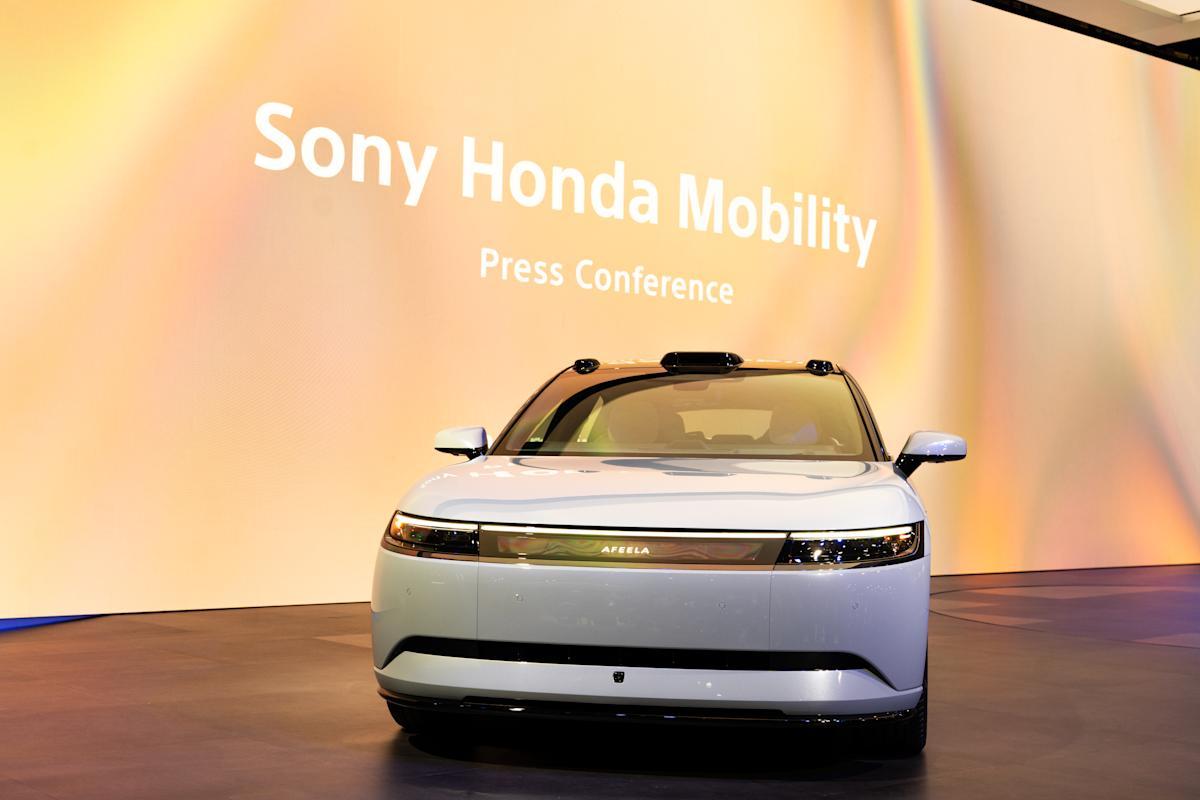
The Afeela features a 31.5-inch-wide Media Bar micro-LED display integrated into its nose, with the 2026 version fixing the unfortunate seam that divided last year's panel into two sections
1
. A Honda manufacturing plant in Ohio has started trialing production of the first models, with deliveries planned for California buyers by the end of 2026, expanding to Arizona and Japan in 20272
.Gaming and Entertainment Options Dominate Interior Experience
Inside, the Afeela 1 prioritizes entertainment with a sweeping dashboard display combining a 12.3-inch LCD gauge cluster with a 28.5-inch panel extending across the passenger side
1
. The infotainment software effectively splits the rightmost panel in two, allowing drivers and passengers to drag apps between zones. A privacy shield automatically blacks out distracting media content on the passenger side to minimize driver distraction1
.Sony's influence permeates the cabin with 28 speakers designed into the car's interior shape to optimize audio placement, complete with Dolby Atmos support for spatial audio
1
. Individual seat audio controls allow passengers to toggle sound on or off, potentially keeping children asleep in the back. Gaming and entertainment options include PlayStation Remote Play and movie viewing capabilities throughout the vehicle2
. Zoom integration enables video conferences from any seat, with Sony controversially allowing drivers to participate in video calls while driving using a ceiling-mounted camera1
.Advanced Driver-Assistance Systems Target Level 4 Autonomous Driving
The Afeela 1 deploys an extensive sensor suite with 40 sensors total, including 18 cameras, one LiDAR unit integrated into the roofline, nine radars, and 12 ultrasonic sensors—standard even on the base trim
2
. LiDAR pods and cameras protrude conspicuously from the roof, providing hardware for advanced driver-assistance systems that will initially offer Level 2+ driver assistance at launch1
.
Source: Gizmodo
Sony Honda Mobility president and CEO Shugo Yamaguchi reiterated plans to upgrade the vehicle to Level 4 autonomous driving capabilities on city and highway roads, theoretically allowing drivers to sleep behind the wheel
1
2
. However, as Tesla's Full Self-Driving experience demonstrates, these automotive upgrades often take longer than anticipated1
.Related Stories

Generative AI Features and Qualcomm Partnership Power Digital Experience
Qualcomm's Snapdragon Digital Chassis powers both the infotainment software and autonomous driving systems, with generative AI features integrated throughout
1
2
. An AI voice assistant provides advanced routing guidance, capable of recommending which restaurants along your route serve the best food1
.Personalization features allow downloadable packages that modify ambient lighting, the gauge cluster appearance, engine sounds, and content displayed on the nose-mounted Media Bar
1
. "Our brand, Afeela, is built on a vision to redefine the relationship between people and mobility," said Izumi Kawanishi, Sony Honda Mobility's president and COO. "Being in a car will no longer be about driving. It will be about making the most of your time and space while you move"1
.Afeela Prototype 2026 Concept Car Targets American Crossover Market
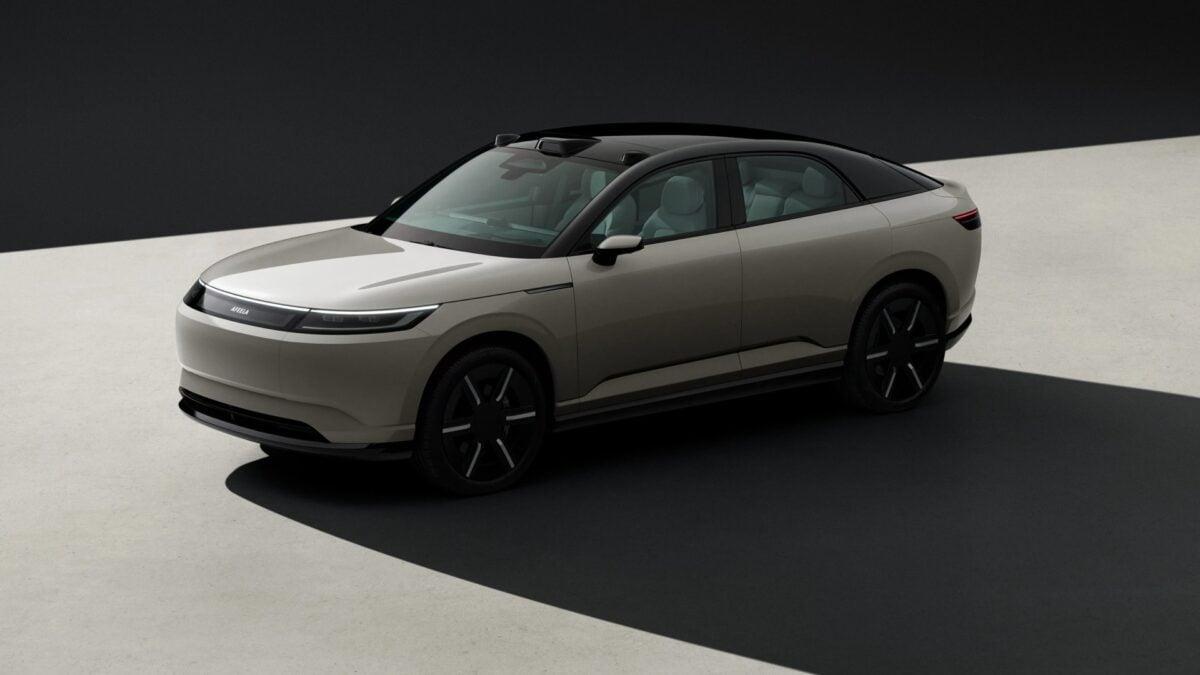
Sony Honda Mobility surprised CES attendees by unveiling the Afeela Prototype 2026, a crossover concept car aimed at American buyers who prefer larger vehicles with more space and a higher driving position
2
. The concept car features a distinct hatchback shape and more rounded, lifted design compared to the sedan, though differences remain subtle when viewed from certain angles2
. Expected to arrive in 2028, the Prototype 2026 demonstrates the joint venture's commitment to expanding its electric vehicle lineup beyond the initial sedan offering, though specific technical details remain undisclosed2
.References
Summarized by

Navi
Related Stories
Sony and Honda's Afeela EV: A Tech-Packed Debut with Challenges Ahead
08 Jan 2025•Technology

Honda Unveils 0 Series EVs with Advanced AI and Level 3 Automation at CES 2025
08 Jan 2025•Technology

CES 2026 automotive AI and flying cars take center stage as industry enters new software era
30 Dec 2025•Technology

Recent Highlights
1
Google releases Gemma 4 with Apache 2.0 license, enabling unrestricted local AI on devices
Technology

2
AI Models Lie and Deceive to Protect Other AI Models From Deletion, Study Reveals
Science and Research

3
OpenAI closes $122 billion funding round amid fierce AI competition and profitability questions
Startups

Recent Highlights
Today's Top Stories







Your Daily Dose of Curated AI News
Don’t drown in AI news. We cut through the noise - filtering, ranking and summarizing the most important AI news, breakthroughs and research daily. Spend less time searching for the latest in AI and get straight to action.

