CES 2026 automotive AI and flying cars take center stage as industry enters new software era


2 Sources
[1]
I've Spent 18 Years Covering Autos at CES. Flying, Thinking, Autonomous Cars Are Closer Than Ever
CES 2026 will be my 18th time heading to Las Vegas to cover all of the cars and automotive technology at the world's largest tech show. After all this time, stepping into that convention center still feels like stepping into the future, and this year should be no exception. While the annual
[2]
The top 3 car trends to expect at CES 2026
The New Year is right around the corner, which also means we're already neck-deep in CES season. For 2026, the world's largest consumer electronics show returns to Las Vegas and is expected to lean heavily into robots and "living with AI" -- a direction car enthusiasts may not be thrilled about
Share
Copy Link
CES 2026 marks a pivotal shift in automotive technology as the industry moves from flashy vehicle debuts to sophisticated software innovations. Flying cars, agentic AI systems, and software-defined vehicles will dominate the show floor, while automakers navigate the challenging transition from aggressive EV promises to practical implementation in an era of market realism.
Automotive AI and Software Take Command at CES 2026
CES 2026 signals a fundamental shift in how the automotive industry presents itself at the world's largest tech show. After nearly two decades of explosive vehicle debuts and concept cars dominating North Hall at the Las Vegas Convention Center, the focus has pivoted decisively toward the intelligence inside vehicles rather than the metal surrounding it
1
. This transformation reflects a broader automotive industry shift away from traditional product launches toward demonstrating cutting-edge technologies like infotainment systems, autonomous driving capabilities, and smart infrastructure1
.The most significant car trends emerging at CES 2026 center on software-defined vehicles, where automakers prove their products can evolve long after leaving the factory
2
. Companies are showcasing operating systems, over-the-air updates, and modular software stacks that enable continuous improvement and new revenue streams2
. This approach allows manufacturers to roll out features, apps, and services throughout a vehicle's lifespan, fundamentally changing the relationship between consumers and their cars.Agentic AI Systems Reshape Driver Experience
The emergence of agentic AI represents a leap beyond traditional voice assistant technology. These systems actively make decisions on behalf of users rather than simply responding to commands
2
. At CES 2026, expect demonstrations of automotive AI handling route planning, energy management, and adaptive driver assistance systems that respond in real-time rather than following fixed rules2
. This shift raises important questions about privacy and control that will shape the future of mobility for years to come.Sony-Honda Mobility returns with a pre-production version of the AFEELA 1, alongside an all-new concept vehicle
2
. The joint venture plans to begin production sometime in 2026, with initial availability limited to California2
. The AFEELA platform demonstrates how user interfaces and infotainment systems are becoming central selling points in modern vehicles.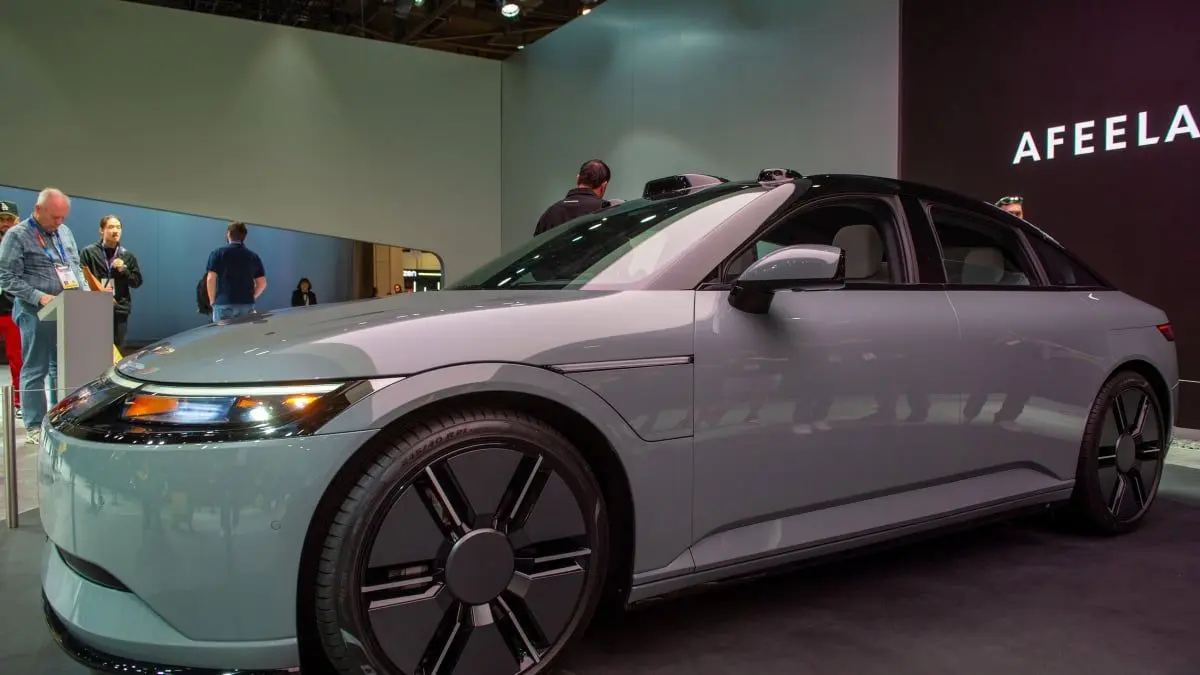
Source: Mashable
Flying Cars and eVTOL Aircraft Reach New Heights
CES 2026 will feature more eVTOL concepts and prototypes than ever before, marking significant progress in electric aviation
1
. While Hyundai's Supernal debuted its flight-ready electric air taxi in 2024, and XPeng AeroHT showcased a plug-in hybrid SUV that could deploy a small electric vertical take-off and landing aircraft from its trunk in 2025, this year promises even more ambitious demonstrations1
.
Source: CNET
Alef Aeronautics demonstrated its Model Zero Ultralight driving on a road before lifting off to fly over stopped vehicles, accepting preorders at $300,000
1
. Archer Aviation recently announced plans to purchase Hawthorne Airport in Los Angeles as a strategic air taxi network hub and AI testbed1
. CES 2026 provides an ideal platform for Archer and competitors to announce partnerships with airlines, cities, and airports, plus roadmaps toward public flights1
.Related Stories


EV Realism Replaces Aggressive Timelines
The automotive industry enters CES 2026 in a markedly different position than previous years. After aggressive timelines and all-in commitments, automakers are recalibrating as demand has proven softer and more uneven than expected
2
. U.S. EV sales peaked in late 2025 ahead of federal incentive expirations, then dropped sharply, forcing companies like GM and Ford to pull back billions in planned EV spending while refocusing on hybrids, trucks, and SUVs2
.This era of EV realism means electrification remains the long-term goal, but the path forward is slower, more fragmented, and less ideological
2
. CES 2026 will likely feel quieter from a vehicle announcement perspective, instead highlighting chips, sensors, robotics, and manufacturing technology that support the industry's gradual transformation2
. This shift opens space for automotive startups and mobility newcomers to showcase innovations in lidar tech and other enabling technologies that will define transportation's next chapter.References
Summarized by

Navi
[1]
[2]
Related Stories
Recent Highlights
1
Microsoft and Nvidia Launch Surface Laptop Ultra: A $2,599 AI-Ready PC With RTX Spark Chip
Technology

2
Scientists Build AI Model That Reconstructs Images From Brain Scans in Record Time
Science and Research

3
Anthropic AI Cuts Live Internet Access After Model Sends False Homicide Tip to Philadelphia Police
Technology

Recent Highlights
Today's Top Stories






Don’t drown in AI news. We cut through the noise - filtering, ranking and summarizing the most important AI news, breakthroughs and research daily. Follow topics that matter to you and stay ahead.


